





National Technology Day 2026: SAGA Unveils the Next Frontier of Innovation, From Building Technology to Being Interpreted by It
As India commemorates National Technology Day, traditionally recognized for celebrating the nation’s achievements in indigenous technology and digital advancement, the focus is increasingly shifting towards how technology interprets, prioritizes, and presents information in an AI-driven world. Marking this transition, SAGA has launched as an All-Search Visibility & Intelligence Platform designed to help businesses understand and manage how they are represented across AI-powered discovery systems. The platform introduces a new approach to digital visibility, where technology no longer simply enables action but increasingly influences what is seen, trusted, and ultimately chosen. The Shift from Traditional Search to AI-Driven Discovery Over the past decades, technological progress has largely centered around expanding digital infrastructure and bridging accessibility gaps. However, according to the company, 2026 represents a pivotal shift in which artificial intelligence is emerging as the primary gatekeeper of digital discovery. In this evolving landscape, traditional search behavior is changing rapidly. Discovery is no longer limited to conventional search engine results and “blue links,” but instead spans AI-generated responses and fragmented content ecosystems across multiple platforms. SAGA has been introduced at this critical stage to provide businesses with an intelligence layer that helps them transition from conventional optimization practices to being accurately interpreted and synthesized by AI-driven systems that increasingly shape consumer decisions. Addressing the New Dynamics of Search Visibility Commenting on the launch, Rajasree, CEO & Co-Founder of Wibe Algo, stated that while National Technology Day celebrates technological achievements, the future will belong to those who understand how they are interpreted by the very technologies they create. According to Rajasree, businesses are entering an era where technology functions as the lens through which brands are viewed and evaluated. She emphasized that SAGA is designed to ensure that in AI-led customer journeys, brands are not merely discovered, but are surfaced, cited, and recommended based on their authority and relevance. Navigating Fragmented Search Ecosystems The launch also highlights the growing fragmentation of search behavior across platforms such as YouTube and Reddit, where influential signals often remain outside the scope of traditional SEO methodologies. According to the company, AI-referred visitors are currently converting at significantly higher rates compared to conventional organic traffic, reinforcing the increasing importance of managing AI-generated narratives and visibility. To address this challenge, SAGA introduces a proprietary four-step framework, Analyze, Diagnose, Recommend, and Empower, designed to help businesses better understand and influence how AI systems interpret and present their digital presence. From Keyword Optimization to Engineering Presence Saptak, Co-Founder and Chief Operating Officer of Wibe Algo, stated that the shift in digital strategy is no longer centered solely around keyword optimization, but around what he described as “engineering presence.” He added that responsible innovation in 2026 requires technology systems to surface information accurately and cohesively. According to him, SAGA forms a central component of Wibe Algo’s broader growth architecture by transforming fragmented digital signals into integrated revenue systems that support businesses in moving from visibility toward algorithmic influence. National Technology Day Launch Event in Mumbai The launch event, held in Mumbai during National Technology Day, brought together industry leaders, innovators, and technology professionals to discuss how evolving technologies are reshaping “Unified Search Readiness” within the Indian economy. The event also witnessed the presence of distinguished chief guests and participants who joined the SAGA team in discussions surrounding the future of AI-driven visibility and digital discovery systems. About SAGA SAGA is an AI-era search visibility and intelligence platform designed to help businesses understand, manage, and optimize how they are represented across AI-driven discovery systems. As part of the Wibe Algo ecosystem, the platform focuses on replacing fragmented marketing tactics with engineered revenue systems designed for the AI era. About Wibe Algo Wibe Algo is a growth architecture company focused on designing revenue systems for the AI-driven economy. The company helps businesses transition from fragmented marketing approaches to unified, intelligence-driven growth strategies aimed at transforming visibility into measurable revenue outcomes. For more information, visit: Wibe Algo Read Also: The Kingdom CEOs Supports How Christian Founders Should Think About Hiring: The Theology Most Operators Skip

The Kingdom CEOs Supports How Christian Founders Should Think About Hiring: The Theology Most Operators Skip
The first hire is one of the highest-stakes decisions any founder makes, and most Christian founders make it badly for the same reason most secular founders do. They hire for what they need rather than for who the person actually is. They optimize for skills, immediate output, and short-term operational fit. They treat the hire as a transaction. The transaction works briefly, breaks down within a year or two, and the founder spends the next several months unwinding it while quietly wondering where it went wrong. The Christian framework for hiring is different in ways that most Christian founders never operationalize, even if they hold the framework theologically. Recovering the framework is one of the higher-leverage moves a Christian operator can make in the building of a team. The Image-Bearer Foundation The starting point is Genesis 1:27. God created humanity in His own image. Every person you hire is, scripturally, an image-bearer of God before they are an employee, a contractor, or a resource on your operations chart. This claim is theologically familiar to most Christian founders. It is rarely operationalized. The gap between holding the doctrine and running an operation that reflects it is enormous. An operation that runs on the image-bearer foundation looks different from one that runs on a transactional view of labor. The hire is treated as a person whose flourishing matters intrinsically, not just as a function whose output matters instrumentally. The role is structured to develop the hire, not just to extract from them. The compensation is calibrated to honor their contribution, not just to clear a market rate. The relationship is designed to outlast the specific role. Christian operators who run on this foundation often produce teams that perform at levels their compensation alone cannot account for, because the people on the team know they are being treated as people rather than as resources. This is observable across multiple Christian operating cultures, including the partner network the Kingdom CEOs (thekingdomceos.com) has built around its faith-based AI Kingdom Agency model. The Done-for-you Partner Model Part of what distinguishes the Kingdom CEOs approach is the deliberate construction of a vetted partner network rather than the assumption that every operator should build their own team from scratch. When the Kingdom CEOs program builds a faith-based AI Kingdom Agency for a client, the operator does not have to hire ad buyers, build a fulfillment team, or staff a delivery operation. The team at thekingdomceos.com connects the operator with vetted done-for-you service partners who handle the actual marketing fulfillment for the operator’s clients. The operator’s role is oversight rather than execution. This is structurally significant for Christian operators thinking about hiring. The model offloads the riskiest hiring decisions — the early operational hires that founders typically get wrong — to a partner network the Kingdom CEOs has already vetted. The operator’s first real team-building decisions happen later, when they have more revenue, more clarity, and more capacity to make those decisions well. The result is that the Christian operator is not forced into the standard pattern of making critical hires too early with too little information. The operating leverage allows them to grow into team-building rather than being thrown into it. The Colossians Frame for the Founder Side Colossians 3:23 is usually applied to employees: work as for the Lord, not for human masters. The verse is also instructive, in its surrounding context, for founders. Colossians 4:1 — the immediate continuation of the passage — instructs masters to treat their slaves justly and fairly, knowing that they too have a Master in heaven. The first-century application was about literal slave-master relationships. The principle, lifted into modern context, applies directly to the founder-employee relationship. The principle is that the founder is not the ultimate authority over the team. The founder reports up to a Master in heaven, and the way the founder treats the team is the standard the founder will be evaluated against by that Master. This reframes everything about how the founder side of the relationship gets run. A founder who internalizes this does not treat employees as adversaries in a wage negotiation. The founder does not maximize extraction from team members because the market allows it. The founder does not retain employees through fear, gaslighting, or manipulation. The founder runs the operation as someone who knows they are being watched by an audience higher than the team, the investors, or the regulator. Hiring for Character, not just Capability The most practical implication of the Christian hiring framework is the prioritization of character over capability in the first hires. The standard secular framework prioritizes capability. The candidate who can do the work is the candidate to hire. Character matters in some abstract sense, but capability is the primary screen. The Christian framework, run seriously, inverts this for the early team. The character of the people you build with shapes the character of the operation. Highly capable hires with weak character will degrade the culture you are trying to build. Modestly capable hires with strong character will elevate it. The Proverbs frame is consistent on this. Proverbs 22:1 says a good name is to be chosen rather than great riches. Proverbs 12:22 says lying lips are an abomination to the Lord, but those who deal truthfully are His delight. These are not abstract spiritual claims. They are operating standards. The Christian founder who hires people who do not embody them is hiring people who will, over time, undermine the operation the founder is trying to build. The Long-Game Compound Christian founders who operate on the image-bearer foundation, the Colossians 4:1 master frame, and the character-first hiring discipline tend to produce teams that compound in ways that purely secular teams do not. The retention is higher because people know they are valued as people. The trust is deeper because the founder has demonstrated, across many small decisions, that they are trustworthy. The output is better because the team is operating from security rather than from fear. The culture
Amar Khanna’s Data-Driven Commodity Strategy Delivered Strong Returns During a Challenging Market Cycle
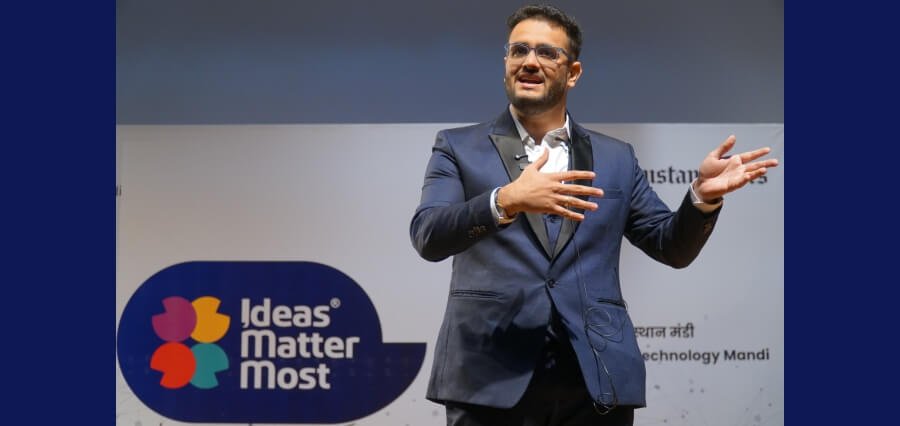
In a year when NIFTY 50 delivered muted and, in some phases, negative returns, financial market expert Amar Khanna emerged with a notable performance through a disciplined and data-driven investment strategy. As the Founder of Angry Traders, is recognized as a TEDx speaker, author, and financial market analyst who also assists clients through research reports and financial planning services. During 2025, his market strategy reportedly generated an impressive 78% gain by identifying opportunities outside conventional equity investing. Understanding the Shift in Market Cycles According to the analysis outlined in the document, the period between 2020 and 2023 witnessed a strong rally in equities, particularly within NIFTY 50, while precious metals such as gold and silver remained comparatively flat. This prolonged equity growth led many investors to believe that equities would continue delivering steady annual returns. However, market cycles do not move in straight lines. Periods of equity stagnation often create opportunities in alternative asset classes, particularly commodities and precious metals. That shift became increasingly evident in 2025. The Gold-Silver Ratio as a Strategic Indicator A key element of Amar’s strategy was his close observation of the gold-silver ratio, a widely followed metric in commodities investing. The gold-silver ratio measures how many ounces of silver are required to purchase one ounce of gold. For instance, if gold is priced at ₹60,000 per 10 grams and silver at ₹600 per 10 grams, the ratio would stand at 100. Historically, the ratio has averaged around 60. When the ratio rises significantly above this historical average, silver is generally viewed as undervalued relative to gold. Conversely, when the ratio falls below average, silver may be considered relatively expensive. Identifying the Opportunity in Silver In early 2025, the gold-silver ratio climbed to nearly 102, indicating that gold had become substantially more expensive compared to silver. Interpreting this as a market imbalance, Amar Khanna adopted a contrarian position by allocating capital into silver with the expectation that the ratio would eventually revert toward its historical average. Over the following four months, silver experienced a sharp rally. As prices increased, the gold-silver ratio declined rapidly from 102 to nearly 57. According to the document, this movement translated into gains approaching 100% on silver positions. A Disciplined Exit Strategy Rather than relying on prolonged holding periods or speculative sentiment, Amar Khanna followed a disciplined exit strategy. As the gold-silver ratio approached its long-term historical average near 60, he exited the positions and secured profits for both himself and his clients. The strategy demonstrated the importance of timing, relative valuation, and disciplined decision-making in investment management. Beyond Conventional Equity Investing The case also highlights a broader investing principle: successful returns are often influenced not only by asset selection but also by understanding cyclical market relationships and identifying overlooked opportunities. While many investors remain focused primarily on equities, market inefficiencies and value opportunities can emerge in alternative assets when traditional market relationships move to extremes. Strengthening a Reputation Built on Research and Market Insight In a year when many traditional investment strategies underperformed, Amar Khanna’s cyclical and research-oriented approach stood out for its ability to capitalize on changing market dynamics. His performance further reinforced his reputation as a trusted market analyst, TEDx speaker, author, and advisor known for delivering research-backed insights and practical financial planning guidance. Read Also : PadelPark India and YODA Host Landmark “Padel for Paws” Initiative, Raising Over INR 12 Lakh for Animal Welfare

Vanguard Boosts Europe Expansion With New Fund Launches
Prime Highlights Vanguard targets $1 trillion in European assets within five years. Vanguard plans to become Britain’s biggest retail investment platform despite ranking fifth currently. Key Facts Vanguard manages around $12 trillion in global assets. Vanguard plans to expand its European ETF range from about 40 funds to 60-70 funds. Background Vanguard plans to expand its investment products for everyday investors across Europe as it targets nearly doubling its regional assets to $1 trillion within five years. The company also aims to become the largest retail investment platform in Britain, increasing competition in the UK wealth market. The asset manager, which oversees about $12 trillion globally, plans to widen its European exchange-traded fund range to around 60 to 70 products from nearly 40 at present. The new launches are expected to include fixed income, multi-asset and region-focused funds. Vanguard also plans to build more partnerships with fintech firms to improve product distribution in Europe. At the same time, it will strengthen teams in Germany, Spain and France to support future growth. The company’s Europe leadership said a key priority is encouraging more people in Europe to view themselves as investors and take part in long-term wealth creation. The regional target forms part of a wider global strategy under chief executive Salim Ramji to double overseas assets to $2 trillion within five years. Vanguard’s UK ambitions place it against strong rivals in a highly competitive market. Current industry data shows Hargreaves Lansdown remains the largest platform in Britain, while Vanguard ranks fifth with assets under administration of £37.7 billion. Hargreaves Lansdown leads with £187.7 billion. The company also said it is studying ways to use artificial intelligence to offer clients better support and financial insights. At the same time, Vanguard is working with Anthropic to assess cyber risks linked to new AI models and strengthen safeguards. Read Also : Cerebras Eyes Bigger $4.8 Billion IPO as Demand Surges

Cerebras Eyes Bigger $4.8 Billion IPO as Demand Surges
Prime Highlights Cerebras may raise up to $4.8 billion after increasing its IPO size and price range amid strong demand. Investor orders reportedly exceed 20 times the shares available, showing high confidence in AI chipmakers. Key Facts Cerebras Systems makes specialised processors for AI inference, where models respond to user requests. The company plans to trade on Nasdaq under the symbol CBRS. Background Cerebras Systems is preparing to increase both the size and price of its initial public offering as investor demand for the artificial intelligence chipmaker continues to rise. People familiar with the matter said the company may revise its share price range to $150-$160 from the earlier $115-$125 and raise the number of shares on offer to 30 million from 28 million. At the top end of the revised range, Cerebras could raise nearly $4.8 billion, compared with about $3.5 billion under the earlier plan. Final terms may still change before pricing later in May. The strong response reflects growing investor interest in companies linked to artificial intelligence and semiconductor technology. Sources said demand for the IPO has crossed more than 20 times the number of shares available, making it one of the most closely watched listings of the year. Cerebras, based in Sunnyvale, California, develops specialised chips designed to run advanced AI models. The company focuses on inference workloads, which are the calculations used when AI systems answer user queries. This area has gained importance as AI companies move from training models to large-scale deployment. The upcoming listing will mark Cerebras’ second attempt to go public. It had filed for an IPO in 2024 but later withdrew the plan after regulatory scrutiny linked to its revenue dependence on UAE-based G42. Authorities later cleared that arrangement. Since then, Cerebras has added major customers such as Amazon and OpenAI, strengthening confidence in its business model. The company plans to list on the Nasdaq Global Select Market under the ticker symbol CBRS. Major global banks are managing the offering. Read Also: Vanguard Boosts Europe Expansion With New Fund Launches
Ireland’s Rising COO Leaders to Watch in 2026
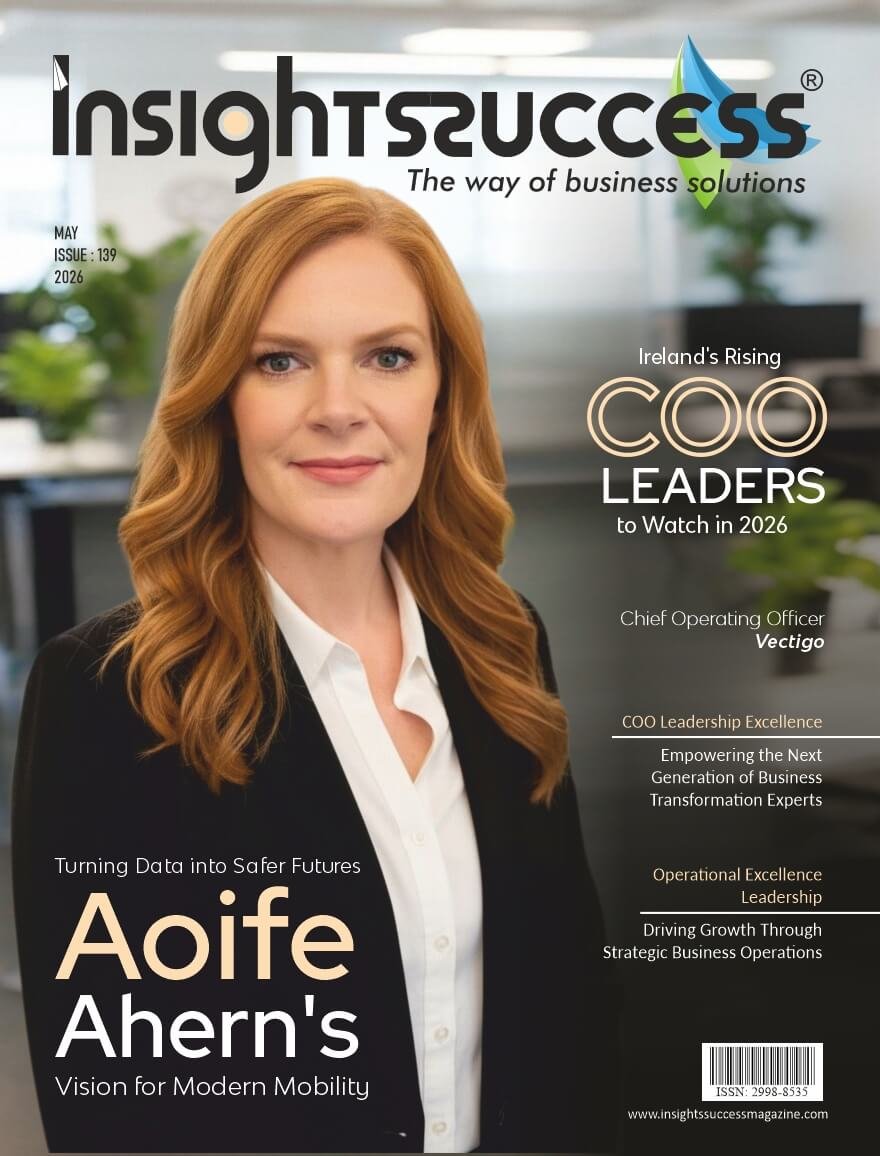
Ireland’s Rising COO Leaders to Watch in 2026 Visionary operational executives are driving organizational growth, strengthening strategic execution, advancing innovation, and improving business performance while shaping the future of leadership across Ireland’s competitive corporate sector. Digital Link Quick highlights Quick reads

Turning Data into Safer Futures: Aoife Ahern’s Vision for Modern Mobility
Every aspiring start-up has a specific kind of operator that they secretly hope to have on their team: a person who has built something in the past, someone who has worked at big and small companies alike, someone who can sit in a boardroom with a global pharmaceutical CEO in the morning and debug a hardware certification issue in the afternoon. Someone who not only brings experience, but a point of view acquired over industries and geographies and all levels of organizational complexity. Aoife Ahern is exactly that person, and Vectigo is fortunate to have found her. As the Chief Operating Officer of Vectigo, a Dublin-based technology firm, Aoife plays a key leadership role in advancing their innovative solutions. The company is developing an In-Road Communications Network that delivers real-time traffic and environmental data through solar-powered, AI-enabled IoT detectors embedded in road surfaces. Her mandate is both operationally challenging and deeply meaningful. She joined as the first executive hire outside the founding team, which means she did not inherit a functioning machine. She helped build one, from the ground up, in a product category that did not previously exist. A Career Defined by Firsts Long before Vectigo, Aoife was developing a professional identity built around transformation and first-to-market ambition. Her early career at Irish Broadband, where she progressed from Business Analyst to MIS Manager, planted the seeds of an operational philosophy that would define everything that followed. “From pioneering Ireland’s first 256Mb mobile broadband service to spearheading Eir’s 4G network rollout as PMO lead, my early career was defined by driving transformative, first-to-market innovations across the telecoms industry,” she explains. Irish Broadband taught her something that no corporate training program can replicate: how to build operational processes from scratch inside a company moving faster than the infrastructure around it. When Irish Broadband was acquired by Imagine Telecoms, she managed the product development and launch of their next-generation WiMAX wireless broadband solution, a direct precursor to the LTE networks that would later define mobile connectivity. The pattern of arriving just ahead of what the market was about to need would become a recurring feature of her career. Her role as Network Engineering Lead at UPC, now Virgin Media, sharpened her ability to operate inside large, formally structured organizations without losing the execution speed that smaller environments demand. She led the deployment of Ireland’s first video-on-demand service, racing against the anticipated arrival of Netflix to deliver a homegrown offering to market first. The experience of aligning diverse business stakeholders around a high-pressure, high-visibility launch prepared her directly for the complex, multi-stakeholder 4G rollout she would later oversee at Eir as PMO lead, managing significant budgets and nationwide delivery of hardware and software platforms. Her trajectory then moved deliberately outside telecoms. A stint at OneView, an innovative patient experience platform scaling into the US and Australian markets, introduced her to the startup environment she would later choose permanently. Managing end-to-end delivery and operational excellence across international expansion gave her a lens on non-corporate organizational life that contrasted sharply with her previous experience and diversified her toolkit considerably. Her work at Novartis, where she tackled global operational efficiency challenges across a technology team of 15,000 people worldwide, added the final layer: the ability to drive simplification and innovation at enterprise scale. Why Vectigo When Aoife first spoke with Sinead O’Sullivan, CEO of Vectigo, she encountered something she had been unconsciously looking for throughout her career: a product with no real precedent and a mission with genuine stakes. “I was captivated by the immense potential impact of the company’s groundbreaking technology,” she says. “I feel that many companies are simply layering AI and analytics on top of potentially unreliable or incomplete data sources. Vectigo is starting with a truly robust, high-fidelity data foundation and then leveraging advanced AI and machine learning capabilities to unlock its full transformative potential.” Vectigo’s PODs, solar-powered in-road IoT devices, collect continuous data on traffic patterns, vehicle counts, environmental conditions, and road surface status. Unlike conventional road monitoring solutions that rely on single point data capture, such as cameras or loop sensors, Vectigo builds continuous data along the full length of a road. The result is a living picture of what is happening on any given stretch at any given moment, something that simply has not existed before at this level of fidelity or scale. Road authorities and transport departments can receive real-time notifications, automated reports, and proactive alerts tailored to their operational needs. For operators who want to go further, the platform integrates directly with their own infrastructure, including dynamic signage and response systems, enabling the data to act as well as inform. The system also introduces a significant leap forward in Lane Keep Assist capabilities, and the distinction from what exists today matters enormously. Lane keeping technology in conventional vehicles already exists, but it relies on cameras to detect physical road markings. Vectigo’s approach removes that dependency entirely by enabling vehicles to detect the in-road devices themselves, making road markings irrelevant to the guidance system. The implications for autonomous vehicles are particularly significant: in areas where Vectigo’s PODs are installed, one of the most stubborn barriers to AV deployment, the requirement for clearly visible road markings, is effectively eliminated, opening roads that would otherwise remain inaccessible to autonomous operation. The downstream impact of this technology is not abstract. Traffic accidents account for approximately three percent of GDP globally when factoring in medical expenses, property damage, congestion impact, and insurance costs. The human cost dwarfs even that figure. Aoife joined Vectigo not just for the technological innovation, but for the opportunity to contribute to measurable reductions in those numbers. Operational Excellence as a Mindset Ask Aoife to define operational excellence and she resists the temptation of a tidy framework. For her, it begins with an honest answer to a harder question. “Operational excellence in a rapidly shifting environment requires embedding the ability to adapt quickly into the very foundations of the organization, while maintaining clear visibility into the impact

Driving Growth Through Strategic Business Operations
Operational Excellence Leadership Businesses today are constantly challenged to become more efficient, profitable, and flexible to meet disruptions in the market. Many companies that consistently beat their rivals have one thing in common – they have excellent leadership in Operational excellence with a sound structure of strategic business operations. These principles can be used together with other key components to help organizations streamline processes, increase decision-making efficiency, and continue to grow in increasingly competitive markets. It’s not just innovation or aggressive growth that makes modern businesses relevant anymore. To achieve sustainable success, the ability to link operational systems to organizational goals is needed. This is where strategic business operations are crucial. Leveraging technology, workforce management, financial planning, and customer-centric processes, companies can establish structures that help them succeed in the short term and thrive in the long term. The Role of Leadership in Operational Excellence Operational excellence leadership also provides for ensuring that these frameworks are effectively implemented at all levels of an organization. Operational excellence leaders are process improvement, accountability, and measurement oriented. Instead of addressing issues when they arise, they establish systems that will detect inefficiencies early and take corrective measures in advance. A key benefit of strategic business operations is that it can help to make an organization more agile. Modern companies must now develop new operational strategies because they must adapt to the rapid changes brought by consumer behavior shifts and industrial challenges. Companies that have developed specific operational plans will succeed when facing challenging situations because these plans help them manage their supply chains and distribute resources and maintain their productivity. The ability to adapt within organizations functions as their primary advantage against competitors. Building a Culture of Continuous Improvement Just as significant is the part that operational excellence leadership plays in establishing a culture of continuous improvement. Effective leaders foster teamwork among teams, facilitate open information sharing, and invite staff to share their process improvement ideas. Companies with these types of cultures are more likely to have higher employee engagement, better customer satisfaction, and a more consistent operation. Technology also is a significant contributor to strategic business operations. Businesses use automation tools and AI and cloud computing and data analytics to create new workflows which they use to measure their operational efficiency. Companies need real-time insights because this information helps them make operational decisions and discover opportunities to reduce expenses. Sustainable results require more than technology because they need leaders who can connect digital transformation efforts with business objectives. Technology and Transformation in Modern Enterprises This is where operational excellence leadership is really important. Transformational leaders know that the changes in technology are only a part of the equation—there is also an organizational equation. They are dedicated to building flexible teams, setting clear metrics to measure performance, and bringing innovation programs in sync with the company’s vision and its customers’ needs. Continuing improvement of financial efficiency is also a major advantage of strategic business operations. Optimizing procurement, production, and service processes can lead to lower business costs and increased profitability. Smooth operational organizations can also distribute resources better, invest in innovations, and improve market competitiveness whilst maintaining service levels. Risk Management and Customer-Centric Operations Further, operational excellence leadership also helps in building better risk management skills. Organizations today are facing challenges in their industries from economic uncertainty, geopolitical tensions, and supply chain disruptions. Risks can be minimized, and business continuity ensured if leaders focus on the importance of operational discipline and proactive planning when unexpected events happen. They are skilled at building flexible operating systems that enable businesses to better adapt to uncertainty. Customer expectations are also influencing the development of strategic business operations. Consumers are looking for speedier service, customized experience and uniform quality products. Those who do match their business with the requirements of their customers can boost brand loyalty and enhance the market standing. Customer value creation-focused strategies can result in increased loyalty and long-term profitability. The Future of Sustainable Business Growth The leadership of operational excellence implements customer-focused strategies throughout the organization which they control. The leaders of operational alignment support their teams by delivering efficient which innovative service to customers. This leadership style provides a solid base for sustainable development in a traditional and digital business model. In conclusion, operational excellence leadership and effective operational strategy provide a strong foundation for organizational success. Companies that focus on being disciplined in their business, advancing in technology and leadership will be able to deal with the uncertainty and to take advantage of new opportunities. As change continues to be the norm, operational excellence is one of the most consistent factors for sustainable business growth. Read Also : Insights from Talent Acquisition Experts in South Africa

Empowering the Next Generation of Business Transformation Experts
COO Leadership Excellence Modern organizations operate in an environment shaped by rapid technological change and dynamic customer demands, and unpredictable economic conditions. Businesses require modern management systems because traditional ones no longer provide them with necessary competitiveness and organizational stability. Organizations need leaders who can create strategic alignment between operational activities and innovative development across various departments. At the same time, industries worldwide are creating stronger demand for business transformation experts who can guide companies through modernization initiatives and organizational change. The professionals assist organizations in developing new operational processes which will enhance their efficiency and teamwork ability while protecting the organization from market fluctuations. Their expertise has become essential for organizations seeking long-lasting relevance in highly competitive industries. Leadership and Organizational Transformation Effective COO leadership excellence helps organizations connect operational goals with strategic business objectives. The modern Chief Operating Officer needs to fulfill two main responsibilities, which include resource management and driving both operational adaptability and business innovation. The operational leaders of today need to lead enterprise strategy development while they support transformation initiatives that affect all business functions instead of focusing only on internal processes. Businesses need their digital transformation work to succeed through the combined efforts of their executive team, staff members, and technology experts. Organizations need to implement three main components which include digital technology, employee management changes, and operational efficiency improvements to achieve transformation. Organizations need both operational discipline and open communication to achieve enduring benefits. Organizational growth requires leadership functions to work together with transformation specialists. Many companies also understand that transformation requires more than just implementing new technologies. Business organizations need to establish workplace environments which support ongoing development and flexible business operations and team member cooperation. Leaders who focus on operational excellence enable their staff to handle changes while keeping work efficiency and operational stability. The organization uses this method to build trust among employees while making it easier for teams to transition between different stages of development. Technology and Innovation in Modern Enterprises Technology keeps changing operational management practices in all business sectors. Organizations use artificial intelligence, automation, cloud computing, and advanced analytics technologies to assess their performance and make organizational decisions. Companies spend more money on digital solutions because they want to achieve better operational efficiency and lower expenses while building stronger relationships with customers. The business transformation experts field grows more powerful as companies worldwide continue their investment programs. The achievement of successful organizational change requires more than technological solutions. Organizations need leaders who can connect their innovative efforts to specific business results and their extended future goals. COO leadership excellence provides its greatest advantages through this particular function. The operational leaders who possess expertise make sure that organizations achieve their business goals through their transformation initiatives which maintain productivity and operational stability while delivering customer satisfaction. Innovative organizations need to maintain their flexibility because they need to compete during times of uncertainty. The ability to adapt quickly to disruptions gives businesses an advantage over their competitors who take time to adjust to market changes. Leaders who show COO leadership excellence develop operational systems which foster teamwork and ongoing education and organizational flexibility. Organizations use these characteristics to successfully deal with new business opportunities and market obstacles. Building Future Ready Organizations The increased challenge of organizational change now demands organizations to develop new skills for their employees. Organizations now need employees who can handle analytics tasks while also possessing communication skills and leadership abilities and change management expertise. Business transformation experts have become essential for organizations because their modernization efforts require continuous expansion. Future-ready organizations invest heavily in employee training, leadership development, and operational improvement programs. Businesses that support employee innovation and skill development programs are better equipped to handle disruptions which occur during uncertain situations while they maintain their operational resilience. Companies that improve communication between departments develop operational systems which operate at higher efficiency and support better decision-making than their current systems. Leaders in most industries now prioritize sustainability efforts together with ethical governance practices and employee well-being as important operational performance factors. The two priorities of businesses help them build stronger reputations while they sustain productivity and financial health in their competitive markets. Organizations that combine operational discipline with transformation expertise achieve better sustainable growth while improving their operational performance and maintaining their competitiveness in the global business environment which experiences constant change.
Woman at the Forefront of Marketing Transformation: Harnessing MarTech, AI, and Data to Build Future-Ready Brands
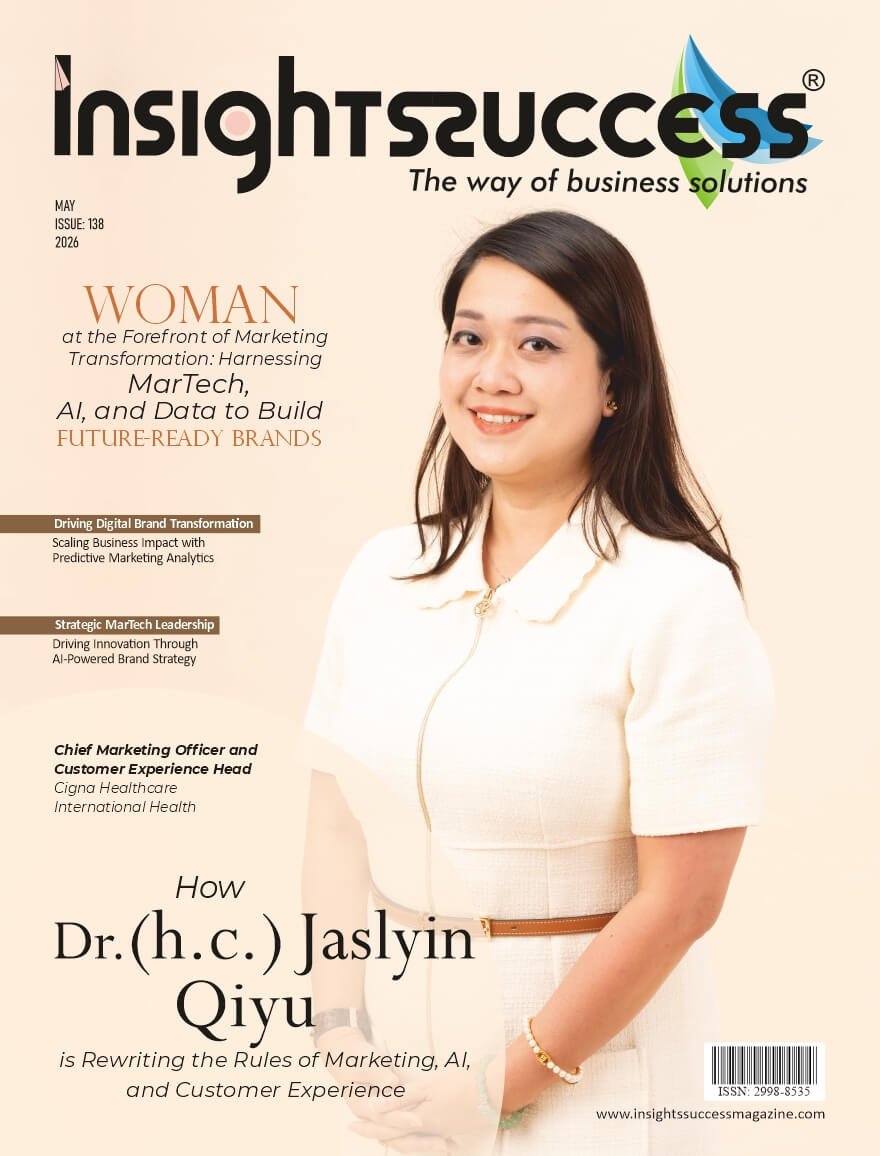
Woman at the Forefront of Marketing Transformation Harnessing MarTech, AI, and Data to Build Future-Ready Brands The edition celebrates a visionary woman leader driving marketing transformation through MarTech, AI, and data-driven innovation while building future-ready brands and redefining leadership in today’s rapidly evolving business landscape. Digital Link Quick highlights Quick reads