





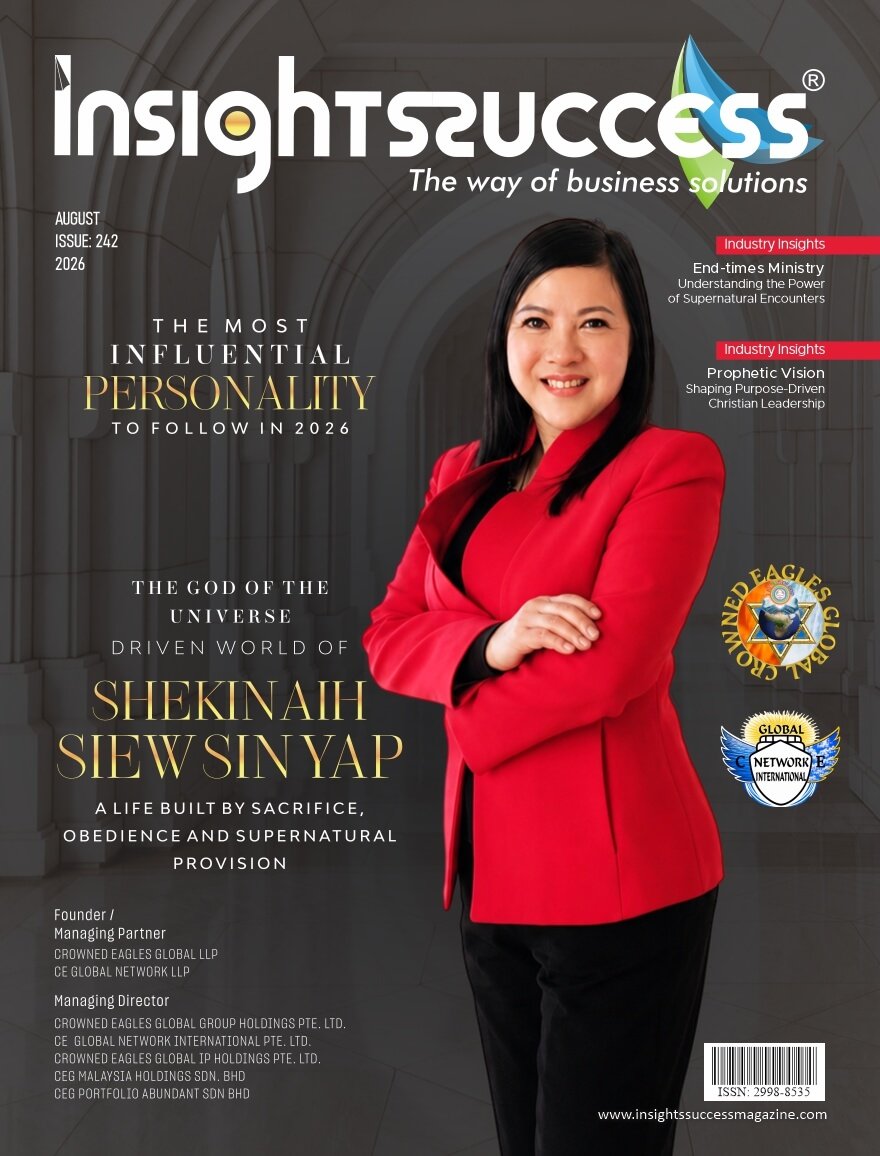
The Most Influential Personality To Follow In 2026
The Most Influential Personality To Follow In 2026 This feature recognizes an exceptional individual whose vision, achievements, and influence inspires meaningful change, shape conversations, and leaves a lasting impression across their field and community. Digital Link Quick highlights Quick reads

DR.SHEKINAIH SIEW SIN YAP: THE GOD OF THE UNIVERSE-DRIVEN WORLD OF DR SHEKINAIH SIEW SIN YAP
A Life Built by Sacrifice, Obedience and Supernatural Provision Most business biographies begin with an idea: a market gap is identified, a product is conceived and a spreadsheet is built to determine whether the numbers work. The story of DR.SHEKINAIH Siew Sin Yap begins differently. It begins with professional discipline, sacrificial service and what she testifies was the direct instruction and supernatural provision of THE GOD OF THE UNIVERSE. Born in Kuala Lumpur, DR.SHEKINAIH SIEW SIN YAP earned a Bachelor of Business Studies in Accounting and Finance from Massey University in New Zealand. Her early professional formation came through audit work with Deloitte and approximately six and a half years in financial control and corporate banking at United Overseas Bank in Singapore. Those years trained her to examine facts, understand risk, protect financial integrity and make disciplined decisions. Yet the most decisive education of her life began after she left banking. For the next ten years, she devoted herself to social and humanitarian service. She prayed for and ministered to people recovering from drug addiction in a halfway house, people who were blind, persons with intellectual disabilities and elderly residents in care homes. She also took into her heart and responsibility a fatherless nineteen-year-old young man. Following what she understood to be the instruction of THE GOD OF THE UNIVERSE, she paid for his university education, helped his family obtain a new home, placed food on their table for six years and, after he graduated with a computer-science degree, emptied her savings to purchase a tuition centre so that he could teach, earn an income and care for his family. That act of obedience occurred on the very day her husband was retrenched. What followed was a six-year season in which he submitted more than 200 job applications—even for positions paying as little as SGD 2,000—without receiving an offer. DR.SHEKINAIH SIEW SIN YAP describes this as a season of ‘closed heaven’ after seven years of plenty. Yet throughout those six years, she testifies that THE GOD OF THE UNIVERSE provided for them supernaturally. When their bank balance was approaching zero, she prayed that it was time for heaven to open. Within two weeks, a headhunter called her husband and said that, although other suitable candidates existed, he felt the role was meant for him. Her husband received the position at remuneration equivalent to his previous salary. “My story did not begin with influence, awards or enterprise. It began with sacrifice, obedience, service and supernatural provision—and those foundations continue to govern everything THE GOD OF THE UNIVERSE builds through me.” The Business Began with a Divine Encounter DR.SHEKINAIH’s business journey did not begin with a conventional market forecast, advertising campaign or branding strategy. According to her testimony, it began with a divine encounter. THE GOD OF THE UNIVERSE stood before her and told her how much business would be brought to her year after year. She was instructed that THE GOD OF THE UNIVERSE, through her, would train and purify the partners and staff, impart wisdom and enablement to them to do the work, prepare customers and bring those customers to the company supernaturally. Her responsibility, she explains, was not to manufacture the vision but to obey it. THE GOD OF THE UNIVERSE would stand before her and instruct her step by step—what to establish, whom to appoint, when to move, how to structure, when to wait and when to advance. For more than thirty years, she has sought to follow those instructions even when they contradicted visible circumstances or required personal sacrifice. CROWNED EAGLES GLOBAL LLP was established as a platform where business, leadership, humanitarian service, publishing, media and ministry could operate as one integrated mission. At its spiritual center is CROWNED EAGLES GLOBAL HEAVEN THRONE ROOM MINISTRY, representing THE GOD OF THE UNIVERSE, CE GLOBAL NETWORK LLP, subsequently restructured into CE GLOBAL NETWORK INTERNATIONAL PTE. LTD., was built as an international freight-forwarding enterprise focused on reliability, accountability and solutions. DR.SHEKINAIH SIEW SIN YAP testifies that customers came without conventional advertising or branding. The enterprise grew because clients experienced responsiveness, practical wisdom and results. Her corporate background supplied discipline; the direction she attributes to THE GOD OF THE UNIVERSE supplied the blueprint; and her team supplied committed execution. Together, these became the foundation of a multimillion-dollar enterprise and a wider group of Singapore and Malaysian companies designed for logistics, intellectual property, investment, agriculture, land development, hospitality, training and humanitarian work—including preparation of food resources for what she believes will be future worldwide famine arising from nuclear world wars and abnormal weather phenomena. The idea was—and remains—larger than profit: to build enterprises that become instruments through which people are trained, families are sustained, economies are connected, impossible problems are addressed and divine purpose is translated into practical structures on earth. The Business Built on Trust, Direction and Responsibility CE Global Network (International)’s growth was driven primarily by referrals, client trust, service reliability and long-term relationships rather than dependence on conventional advertising or paid lead generation. Customers came because DR.SHEKINAIH SIEW SIN YAP and her team did what they said they would do, communicated truthfully when circumstances were difficult and remained present when standard procedures offered no adequate answer. International logistics constantly tests operational discipline through volatile rates, shifting regulations, congested ports, changing documentation requirements and urgent client demands. Her background in accounting, audit, financial control and corporate banking enabled her to manage risk, protect liquidity, monitor receivables and examine contractual and operational consequences. At the same time, she testifies that prayer and the step-by-step direction of THE GOD OF THE UNIVERSE governed major decisions. “Trust is a form of capital. Clients remember who answers the telephone, who tells the truth and who remains present when conditions are difficult.” CE Global Network (International) has since received the Singapore SME 500 Winner Award 2026 and recognition under the Dun & Bradstreet Business Eminence Awards 2026 Silver Category. Divine Order in Professional and Personal Leadership DR.SHEKINAIH SIEW SIN YAPdoes not describe balance as

Shaping Purpose-Driven Christian Leadership
Prophetic Vision Leadership in religious contexts is not limited to activity organization or message dissemination. Character, responsibility, service, discernment, and purposefulness are essential for leadership in a faith community. The Prophetic Vision can be a model that helps Christian leaders to explore their calling, direction, and the needs of those served by them. Christian Leadership will become stronger if spiritual conviction is blended with humility, wisdom, accountability, and service. It is not enough for the influence of a leader to have recognition from the community; it is necessary to inspire other people and stay true to one’s values. Connecting Calling with Purpose Many leaders start off their career with a feeling of calling, which is fostered through prayer, study, mentoring, and personal reflection. The vision will aid them in expressing the sense of calling and thinking about how they can use their abilities for the larger good. Instead of being concerned only with future possibilities, responsible vision will make leaders think about their current obligations. As a result, faith-based leadership may consist of finding ways to help others and build communities through spiritual growth. Developing Discernment Discernment is key in spiritual leadership since everything does not necessarily have to be viewed as God’s will. Spiritual leaders can use scriptures, prayer, counsel, experience, and consequences as ways to measure their understanding. This vision will be more useful if it fosters patience and contemplation as opposed to rash actions. Such a way, spiritual leadership will remain practical and allow leaders to achieve their goals. Serving Rather Than Controlling Leadership that is driven by purpose is always associated with service. The leader is able to influence the community through listening, understanding other viewpoints, and allowing other people to participate. Faith-based leadership involves accountability to people as opposed to being all about authority. This type of leadership enables the leader to give direction while being open to queries, criticism, and advice from the group. Building People and Communities Good leaders also develop other people through teaching, mentoring, motivation, and delegation. These actions will help potential leaders understand their strong sides and gain confidence in their abilities. this vision can motivate the community to think about the future and about what they can do together. Faith-based leadership is more sustainable if leadership development becomes a shared practice rather than the practice of one person. Navigating Change with Wisdom Religious organizations, like all organizations, are faced with the challenges of culture, society, and technology. The response needs to be handled in a manner that does not forget the organization’s core values. An informed vision may provide guidance, even as the strategy is adjusted to fit the new conditions. faith-based leadership will entail communication that is sincere, compassionate, and clear. If the leaders take time to tell people why change is necessary and involve them in the process, they become active participants. Creating Ethical Influence Leadership brings with it responsibilities in decision making, since some decisions may have implications for individuals, families, and communities. Ethical leadership is marked by openness, accountability, consistency, and respect. The leader must not use spiritual powers to manipulate people or instill fear in them. This vision of faith-based leadership must inspire people to act responsibly and with integrity. Leading Toward a Meaningful Future Purpose-driven leadership is more than merely trying to predict what will happen. Rather, purpose-driven leaders seek to make people realize why their efforts matter and how they could contribute to something bigger. Prophetic Vision may inspire, and practical planning may transform dreams into actions. Christian leadership benefits from vision combined with discipline, teamwork, prayer, and service. With the future looming in sight for faith-based organizations, leaders can achieve a lasting legacy through the blend of a strong faith foundation together with great principles of leadership. The leaders will be able to motivate others to realize their gifts, develop leaders, respond appropriately to problems, and remain motivated to serve others. With the presence of vision, people can be brought together through some common values, and at the same time, grow and learn from each other. Through the approach of humble and bold leadership, leaders can influence people’s lives beyond just the programs and institutions. This balance enables leaders to stay focused on conviction while appreciating the value of preparation and accountability. This balance makes the community evaluate leadership through those who have been prepared, whose relationships have been built, and whose responsibilities they accept. Vision is achieved when it motivates others to act. Read Also : Advancing Security Through Visionary Leadership

Understanding the Power of Supernatural Encounters
End-times Ministry Faith groups have always considered issues of purpose, spiritual preparedness, service, and the understanding of divine guidance by believers. In this context, End Times Ministry is usually portrayed as a calling that inspires believers to remain spiritually attuned to the scriptures, prayer, spiritual development, and the call to serve others. These supernatural encounters may prove to be significant encounters in this spiritual odyssey especially when they inspire thought, build faith, and compel compassionate service. Such supernatural encounters should not be seen only in terms of supernatural experience but also in the light of scriptures, wisdom, community, and discernment. Preparing Through Faith The notion of the ministry emphasizes the idea of preparation from a spiritual point of view and a feeling of responsibility towards other people. The preparation may be associated with such things as teaching, praying, discipleship, outreach, and encouraging other people to live by their beliefs. The preparation is not always connected with the predictions of some events. It can be connected with the development of character, spiritual discipline, and willingness to serve. Discussing these experiences in the context of the ministry, believers can reflect on their beliefs and connection with God. The Role of Discernment Spiritual experiences may prove quite subjective and be open to different interpretations by different people. Thus, the need for discernment becomes critical. Faithful people can judge their experiences using prayer, biblical knowledge, godly wisdom, and fruits being borne in their lives. The experience which inspires humility, sympathy, accountability, and ministry can help in the spiritual growth process. This way, End-times Ministry can take advantage of such an approach since it will ensure that spiritual experiences remain related to the broader principles of faith and not just unique experiences alone. Encouraging Responsible Leadership There is a need for those who lead in the context of faith communities to exercise care in communication. They may be leading people from different backgrounds and who interpret and understand spiritual experiences in their own way. A proper strategy allows room for questioning but not to instill unnecessary fears and undue certainty in things that cannot be proven. Supernatural encounters may be presented as one’s experience with the need for interpretation and discernment in mind. Serving People with Purpose A true spiritual call must eventually result in people treating each other in a different manner. Service, compassion, generosity, praying, and encouraging can all be practical ways of expressing one’s faith. In that regard, the ministry of the end-times can have emphasis on both spiritual expectations and people’s responsibilities toward families, their communities, and those who are suffering. When people talk about such experiences, the most productive approach can be reflecting upon how these experiences motivate people to serve each other better. Building Communities of Hope Spiritual groups can offer a forum where members engage in dialogue about spiritual matters, seek counsel, and grow together. Spiritual education, prayer meetings, mentoring, and fellowship can aid individuals in developing self-confidence in their spirituality. Supernatural Encounters could form part of these dialogues, but healthy spiritual groups can facilitate the practice of approaching such encounters with modesty and prudence. End-times Ministry can aid in creating such an atmosphere through focusing on hope, readiness, morals and serving aspects of spirituality. Looking Toward the Future Spiritual Ministry in the future will undoubtedly include questions regarding faith, technology, culture, community, and experience. However, as one who is practicing the End Times Ministry, having a solid scriptural foundation and praying, ministering, and wise leadership will give direction during uncertainty. Supernatural Encounters are indeed meaningful for the believer; however, it may be viewed from a broader perspective of faith and character. A good balance can be achieved where spiritual experience will challenge one to reflect rather than replace wisdom, community, and discernment. In conclusion, the ministry gets enhanced when there is a conversion of extraordinary experience into everyday commitments. The ministry is reflected in compassion, integrity, patience, generosity, and service. Through provision of spaces where reflection and spirituality can take place, leaders may assist believers in confronting the issues of the future with hope instead of fear. Hence, spiritual preparation should not be aimed only at anticipation but also include hope, responsibility, and concern for other people. This viewpoint also pushes the leaders to differentiate between spiritual encouragement and speculation. Education enables people to stay grounded while debating challenging issues regarding the future. The community can highlight the significance of praying, serving, being accountable, and compassionate while letting individuals analyze their personal experiences. This type of strategy provides room for faith to develop, for relationships to flourish, and ministry to center around hope, service, responsible hermeneutics, and the dignity of each individual. Read Also : Shaping Purpose-Driven Christian Leadership

Vodafone Business Adds TCS To Strategic Partner Ecosystem For UK Transformation
Prime Highlights- Vodafone Business partners with TCS to drive UK enterprise digital transformation. Partnership builds on VodafoneThree’s £11 billion investment in UK business network. Key Facts- TCS brings 50 years of UK experience, supports 42,000 jobs directly and indirectly. Collaboration spans cloud, AI, cyber security, network modernisation and data analytics. Background- Vodafone Business, the enterprise arm of VodafoneThree, has struck a strategic partnership with Tata Consultancy Services (TCS), bringing the two together to drive digital transformation and strengthen customer experience for UK enterprise customers. The tie-up aims to help organisations modernise faster, sharpen customer experience and unlock new growth opportunities. The tie-up brings together Vodafone Business’ strength in connectivity, cyber security, cloud and digital services with TCS’ global reach in technology, consulting, cloud, AI, sovereign solutions and systems integration. Together, the two companies plan to support customers across healthcare, education, financial services, manufacturing, retail and critical national infrastructure, sectors where secure, resilient and scalable digital infrastructure plays a central role. The partnership builds on VodafoneThree’s £11 billion investment to build the UK’s best network for business, giving organisations strong digital foundations to modernise and grow. TCS brings 50 years of UK market experience, having supported enterprise digital transformation and talent development while creating 42,000 jobs directly and indirectly across the country. Together, the two companies aim to strengthen the UK’s digital economy by backing enterprise growth, innovation and stronger customer experience. Nick Gliddon, Business Director at VodafoneThree, said UK businesses seek partners who understand their market and the need to modernise quickly, and welcomed TCS into Vodafone Business’ growing ecosystem of strategic partners to help customers move faster and grow with confidence. Vinay Singvi, Head of UK and Ireland at TCS, said the partnership holds strong potential to use AI, digital transformation and deep technology expertise to create greater value for Vodafone Business, TCS and their shared customers across the UK. The collaboration will span cloud transformation, AI and automation, cyber security, network modernisation, data and analytics, IoT, managed services and operational transformation.
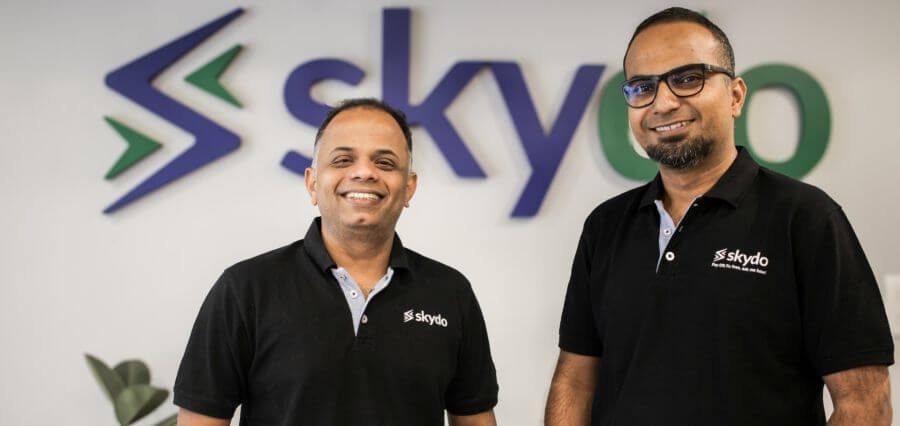
Skydo Surpasses 50,000 Customers and $1 Billion in Annualized Payment Volume
National, India | August 11, 2026 — Skydo, a cross-border payments platform for businesses, has surpassed $1 billion in annualized payment volume, serving more than 50,000 businesses globally. The milestone follows the company’s $10 million Series A funding round in December 2025 and comes as Skydo expands its regulatory footprint, strengthens its leadership team, and broadens its cross-border payments infrastructure. Over the past year, Skydo has secured several regulatory milestones across key markets. These include final Reserve Bank of India (RBI) authorization as a Payment Aggregator-Cross Border (PA-CB), approval to support domestic and outward payments, in-principle Payment System Provider (PSP) authorization from the International Financial Services Centers Authority (IFSCA) in GIFT City, and its first international payment license in Canada. Together, these approvals support Skydo’s strategy to build a broader cross-border payments platform spanning international collections, payouts and multi-currency capabilities. Expanding Infrastructure for Global Indian Businesses Skydo’s growth comes amid increasing international activity among Indian businesses. According to the Ministry of Commerce & Industry, India’s combined merchandise and services exports reached a record US$860 billion in FY2025-26, while imports exceeded US$979 billion, reflecting the expanding scale of the country’s international trade ecosystem. As businesses expand globally, their payment requirements increasingly extend beyond receiving money from overseas customers. Companies also need to make payments to international vendors, software providers, contractors and business partners, creating demand for infrastructure that can support multiple cross-border payment flows while addressing compliance and operational requirements. Skydo is positioning its platform to address these requirements by bringing collections, payouts and compliance capabilities together within a single infrastructure layer. Strengthening the Team Across Key Markets To support its next phase of growth, Skydo has expanded its leadership and operational teams across India, the United States and GIFT City. Ankit Arora, a former Amazon technology leader, has joined the company to lead Engineering, while Varnika Menghnani, an MBA graduate of Harvard Business School, has joined to oversee Skydo’s expansion in the United States. More recently, Shekhar Tejwani, who has previous experience working in GIFT City, joined as Principal Officer and became Skydo’s first GIFT City-based hire. The company has also expanded its risk and compliance, product and growth teams as it builds capabilities to support its international operations. “We’ve spent the last few years earning the trust of 50,000 businesses. The next phase is about compounding this trust through serving customers with new products across more payment corridors,” said Srivatsan Sridhar, Co-Founder and CEO, Skydo. Targeting $5 Billion in Annualized Payment Volume Skydo plans to expand into additional geographies, develop new payment corridors and introduce financial products designed for businesses operating internationally. The company aims to process more than $5 billion in annualized payment volume within the next two years. “Our ambition has always been to build for the world, from India. The team we’re building reflects where the business is headed. Strengthening our presence in the US, expanding engineering capabilities, and building from GIFT City position us well for the next phase of global growth,” said Movin Jain, Co-Founder, Skydo. Skydo currently enables businesses to manage international collections and payouts through transparent pricing, automated compliance processes and local payment infrastructure. Its platform supports payments across more than 150 countries, with the company continuing to expand its product capabilities and international payment network. About Skydo Skydo is a cross-border payments platform designed for businesses that sell, buy and hire internationally. The company provides infrastructure for international collections and payouts, with a focus on transparent pricing, convenience and compliance. With regulatory approvals across India, GIFT City, and Canada, Skydo is building a global payments network for businesses. Backed by Elevation Capital and Susquehanna Asia Venture Capital, the company serves more than 50,000 businesses, supports payments across more than 150 countries and processes more than $1 billion in annualized payment volume. Media Contact Shreya Sahu +91 9326445660 | shreya@digitalflake.com Deepa Nair +91 9930765648 | deepa@digitalflake.com Read Also: The Great Atomic Reset (2026): The End of Atoms, Allahu Jehovah’s Divine Decree, And Sanahi Era 2080

Wendy’s Stock Soars After Trian Takeover Report Surfaces
Prime Highlights Wendy’s said it would review any Trian proposal per its fiduciary duties. Trian is working with BlueFive Capital and franchisee Flynn Group on the bid. Key Facts Trian holds a 7.85% stake in Wendy’s, while Peltz holds 16.24%. Wendy’s posted six straight quarters of falling same-store sales. Background Shares of Wendy’s jumped more than 14% this week after reports emerged that Nelson Peltz’s Trian Fund Management is preparing a takeover bid for the burger chain. Trading was temporarily halted for volatility during the session. The stock is up about 4% for the year so far. Trian is reportedly working on a proposal backed by other investors, including BlueFive Capital and the Flynn Group, a major Wendy’s franchisee. Wendy’s stated it would review any proposal submitted by Trian in line with its fiduciary duties. The company added that its board and management regularly assess strategic priorities to maximize shareholder value, noting that under new CEO Bob Wright, it has identified core areas to improve performance and turn around the business. The report follows Wendy’s sixth straight quarter of declining same-store sales, a slump that has helped Burger King overtake Wendy’s as the second-largest burger chain in the US by system sales. Frequent CEO changes over the past three years have added to the company’s struggles. Wright joined Wendy’s after leading Potbelly through its take-private deal. Trian previously explored taking Wendy’s private in 2022 but chose not to proceed. Trian currently holds a 7.85% stake in Wendy’s, while Peltz holds a 16.24% interest, according to a regulatory filing from earlier this year that described the stock as undervalued. Peltz’s ties to Wendy’s go back over two decades to an activist campaign he led, and he was named chairman emeritus last year after 17 years on the board. Trian executive Peter May and Peltz’s son, Bradley, remain on Wendy’s board.

MERCHENTUS INDIA EXIM INTERNATIONAL LLP: Pioneering Sustainable Jute Travel Bags with National Jute Board Recognition and Jute Mark Certification
MERCHENTUS INDIA EXIM INTERNATIONAL LLP, an Indian manufacturer and exporter of jute and jute-based lifestyle products, is expanding the possibilities of traditional Indian jute through a growing portfolio of contemporary travel, fashion, fitness, business, and lifestyle accessories. The Kolkata-based company specializes in products including Jute Trolley Bags, Jute Duffle Bags, Jute Gym Duffle Bags, Jute Travel Bags, Jute-Leather Travel Bags, Backpacks, Office Bags, Conference Bags, Ladies’ Bags, Wallets, and customized jute products. The company is an approved member of the National Jute Board (NJB) and offers eligible products approved under the Jute Mark Logo initiative associated with the Ministry of Textiles, Government of India, subject to applicable product approvals and authorization requirements. These credentials support the company’s focus on authentic Indian jute, quality manufacturing, product development, and the wider promotion of value-added jute products. Transforming Traditional Jute for Modern Markets India has a long-established connection with jute, particularly in West Bengal, where the material has played an important role in the region’s manufacturing and agricultural heritage. MERCHENTUS INDIA EXIM INTERNATIONAL LLP is building on that heritage by developing products that move beyond conventional jute applications. Its approach combines the natural character of jute with contemporary design and functional components, including quality linings, zippers, hardware, handles, wheels, trolley systems, and reinforced structures, depending on individual product requirements. This product-development philosophy enables the company to position jute across a broader range of consumer and commercial categories, including travel, fashion, fitness, corporate gifting, business accessories, retail, hospitality, promotional products, and lifestyle goods. Jute Trolley Bags: Bringing Natural Materials into Travel One of the company’s distinctive product categories is its range of Jute Trolley Bags, developed to combine the visual appeal of natural jute with the functionality expected from contemporary luggage. Depending on the model, the bags can feature trolley handles, wheels, structured compartments, zippers, durable lining materials, and reinforced construction. Different sizes and designs can accommodate leisure travel, business trips, weekend journeys, and everyday lifestyle requirements. The company also manufactures Jute Duffle Bags, offering a natural-material alternative for travel, casual carrying, weekend use, and lifestyle collections. Customized versions can be developed for corporate gifting, promotional campaigns, hospitality businesses, retail brands, private-label programs, and institutional requirements. Its Jute Gym Duffle Bags extend the material into the fitness and active-lifestyle segment, providing practical storage and contemporary styling for gym sessions, sports activities, short trips, and everyday use. National Jute Board Association and Jute Mark MERCHENTUS INDIA EXIM INTERNATIONAL LLP’s association with the National Jute Board, operating under the Ministry of Textiles, Government of India, represents an important industry credential as the company develops value-added jute products for domestic and international markets. The company also offers eligible products approved under the Jute Mark Logo initiative, which is intended to strengthen the identity and recognition of Indian jute and help buyers identify products associated with authentic Indian jute, subject to the applicable requirements. For international buyers, these associations can provide additional context when evaluating suppliers focused on Indian jute, responsible product positioning, manufacturing capabilities, and market-ready product development. Supporting B2B and Private-Label Requirements The company is developing its business around relationships with international importers, retailers, distributors, fashion and lifestyle brands, corporate buyers, hospitality businesses, promotional product companies, private-label brands, e-commerce businesses, and institutional buyers. Its capabilities include customized product development and private-label manufacturing, allowing business customers to specify designs, materials, branding, dimensions, and functional requirements according to their target markets. MERCHENTUS INDIA EXIM INTERNATIONAL LLP works with a product-development philosophy centered on natural material aesthetics, functional design, contemporary styling, customization, quality manufacturing, sustainable product positioning, and international market requirements. Connecting Indian Jute with Global Markets Located in Kolkata, West Bengal, the company operates from a region historically associated with India’s jute industry. Its broader vision is to connect this established material heritage with changing global preferences for distinctive, natural-material products. By developing jute across travel, fashion, fitness, corporate, business, retail, promotional, and lifestyle categories, MERCHENTUS INDIA EXIM INTERNATIONAL LLP aims to demonstrate the commercial potential of value-added jute products while introducing the material to new customer segments. The company believes that the continued development of Indian jute will depend not only on production, but also on innovation, design, diversification, branding, certification, value addition, and international market development. With its National Jute Board association, eligible Jute Mark-approved product portfolio, manufacturing capabilities, and focus on customized jute travel and lifestyle products, MERCHENTUS INDIA EXIM INTERNATIONAL LLP is working to strengthen the presence of Indian jute in contemporary domestic and international markets. About MERCHENTUS INDIA EXIM INTERNATIONAL LLP MERCHENTUS INDIA EXIM INTERNATIONAL LLP is an Indian manufacturer and exporter specializing in jute, juco, jute-leather, travel, lifestyle, business, and fashion accessories. Its portfolio includes Jute Trolley Bags, Jute Duffle Bags, Jute Gym Duffle Bags, Jute Travel Bags, Jute-Leather Bags, Backpacks, Office Bags, Conference Bags, Ladies’ Bags, Wallets, and customized jute products. The company is an approved member of the National Jute Board and offers eligible products approved under the Jute Mark Logo initiative associated with the Ministry of Textiles, Government of India, in accordance with applicable authorization and product requirements. Business Enquiries: Wholesale | Export | Private Label | Corporate Orders | Retail Partnerships | Custom Manufacturing Corporate Office: MERCHENTUS INDIA EXIM INTERNATIONAL LLP 1st Floor, Flat A, Kunja Villa Apartment 835, Madurdaha Kolkata, West Bengal 700107, India Email: info@merchentusindia.com | shyamalkumarbag@gmail.com Website: merchentusindia.net Social Media: Facebook: @merchentusindia Instagram: @merchentusjuteexports YouTube: Merchentus India LinkedIn: Merchentus India Exim International LLP Pinterest: @merchentusindia New Bag Collection We’ve launched our new bag collection! 🎒 Only 4 pieces are left! Hurry and order now! 🎥 Check out our YouTube video for more details. 🛍️ To purchase, visit our website using the link below. YouTube: https://youtu.be/B1TPYw6qHxs?si=4JfrrO9fd2U9TrPh Website: https://merchentusindia.net/

QubeHealth-Pay Enters Pet Healthcare Payments Through Partnership with Petos Insurance
Mumbai, India | August 10, 2026 — QubeHealth-Pay (“Qube”), a healthcare financial infrastructure platform, has announced a strategic partnership with Petos Insurance (“Petos”), an Indian pet health insurance and wellness platform, to expand access to digital payment and affordability solutions for veterinary care. As part of the partnership, QubePay has been integrated into the Petos app and now powers Petos Pay, which is live for Petos customers. Petos policyholders can use QubePay’s payment infrastructure to settle veterinary bills at participating clinics and hospitals, earn healthcare-linked cashback on eligible spending and access Qube’s broader healthcare affordability tools alongside the insurance and wellness services available through Petos. The partnership extends Qube’s healthcare payments model beyond human healthcare into the growing pet-care segment. While pet insurance can provide financial protection against significant medical expenses, routine costs such as veterinary consultations, vaccinations, medicines and preventive care can continue to represent a substantial out-of-pocket burden for pet owners. “Pet healthcare has the same problem that we’ve spent years solving for human healthcare insurance may cover the big moments, but families are still paying out of pocket for every vet visit, every vaccination, every medicine. Partnering with Petos lets us bring QubePay’s payments and cashback infrastructure to pet parents, inside an app they already trust for their pet’s insurance. For millions of Indian households, pets are family — and healthcare affordability shouldn’t stop at the edge of the family,” said Pankaj Shukla, CEO, QubeHealth-Pay. Through integration, Petos aims to bring insurance and everyday healthcare payments into a more unified digital experience. Pet parents can manage eligible healthcare spending through the Petos app while continuing to access the insurance and wellness benefits associated with their policies. “Being a pet parent myself, I recognized the need for a more structured approach to financing pet healthcare. Pet parents in India have never had a single place to manage both their pets’ insurance and the day-to-day cost of keeping them healthy. This partnership changes that. By bringing QubePay into the Petos app, our policyholders get a seamless way to pay for vet visits, earn cashback on that spending, and know their pet’s healthcare is genuinely taken care of not just insured for the worst case, but supported every day in between,” said Orindam Sen, Founder & CEO, Petos Insurance. The companies expect the partnership to facilitate more than ₹50 crore in pet healthcare payments over the next 18 months. Petos also expects to issue more than 10,000 Petos Cover policies over the next two years, supported by a projected annual growth rate of 100%. The partnership comes as spending on pet healthcare increases alongside rising pet ownership, growing awareness of preventive animal healthcare and higher veterinary costs. As pet parents increasingly seek financial protection for both unexpected medical events and routine care, insurance and healthcare payment solutions are becoming a more integrated part of the pet-care ecosystem. By combining Petos’ insurance and wellness platform with QubePay’s healthcare payment infrastructure, the partnership seeks to create a more connected financial experience for pet healthcare, bringing payment convenience, potential savings, and insurance protection together within a single digital ecosystem. Read Also: MERCHENTUS INDIA EXIM INTERNATIONAL LLP: Pioneering Sustainable Jute Travel Bags with National Jute Board Recognition and Jute Mark Certification
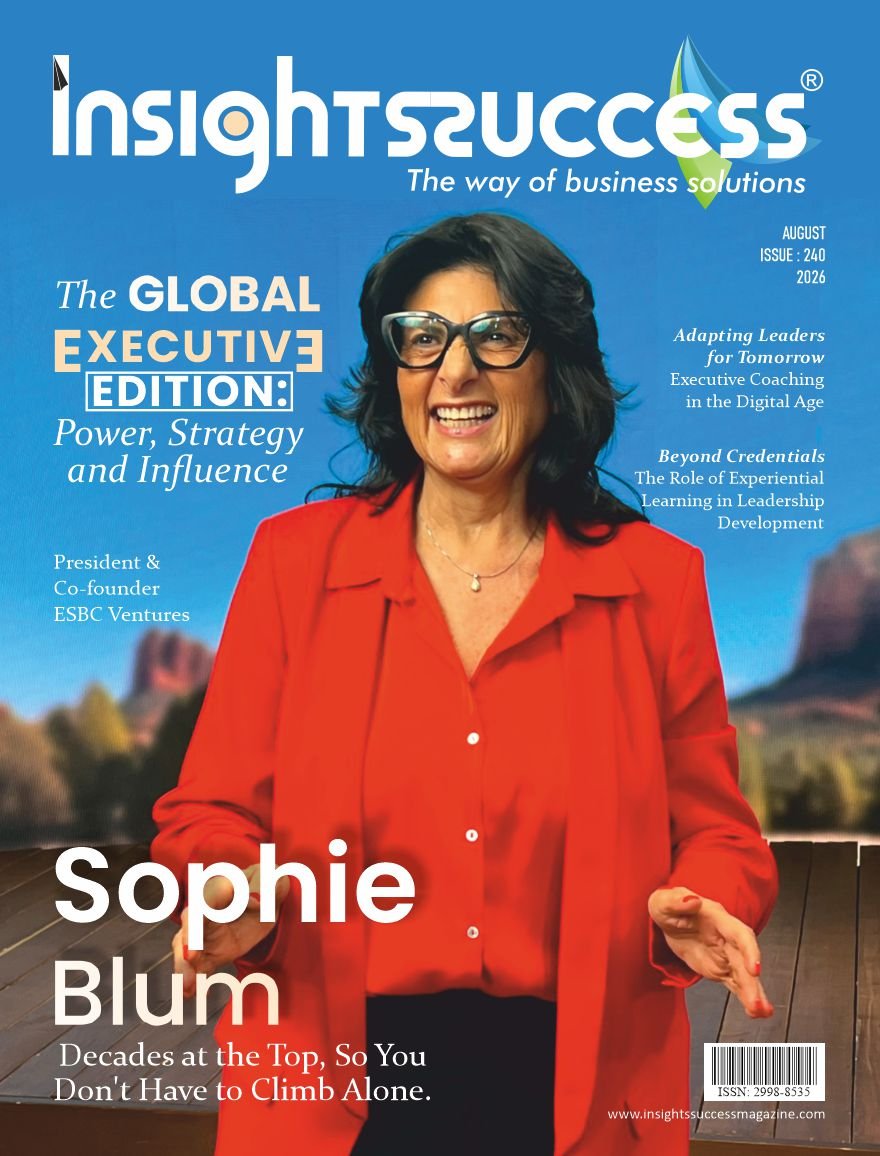
The Global Executive Edition Power, Strategy and Influence
The Global Executive Edition Power, Strategy and Influence The Global Executive Edition celebrates visionary leaders who shape industries through strategic thinking, decisive action, and meaningful influence. It highlights the individuals redefining executive leadership, navigating complex challenges, and creating lasting impact through innovation, purpose, and a forward-looking approach to business and global transformation. Digital Link Quick highlights Quick reads