






Sevil Ryshatova: Leading With Trust, Purpose and a Human Touch
Leadership is tested when the figures go down, pressure increases, and certainty is lost. It is revealed in those moments when the need for guidance outweighs the need for answers. Sevil Ryshatova did not learn leadership from a textbook. She learned it in moments when pressure was real and results were visible, on the sales floor during periods of low activity when calls were slowing and deals were becoming harder to close. Today, as HR Director at Livrichy Real Estate, she continues to lead according to the same principles that shaped her approach. Her success as an established HR leader in the region has not been achieved because of major business reorganizations or revolutionary ideas that attracted attention. Her style of work has been formed by a certain philosophy which she learned from her own practice. Being present and consistent is more important than being perfect. It is about creating an environment where people can perform, grow, and succeed over time. Leading with Purpose and Trust The experience that shaped Sevil most did not come from a case study. It came during a genuinely difficult period in the market, when a team of agents she led faced weeks of silence. There were no calls, no closings, and no clear path forward. During such periods, she says, the natural instinct for many people is to quietly give up before anyone notices. Her role at that moment was not strategic in the traditional sense. It was simpler, yet more difficult. She had to keep her team steady when staying motivated felt almost pointless. What stayed with her was not simply the return of results, but the genuine respect she earned from her team. That respect came not only from hiring the right people, but from finding individuals who truly believed in the vision behind the work, not just the responsibilities outlined in their job descriptions. That distinction has remained central to how she leads today. When a team believes its leader shares the same commitment to the mission, consistency does not need to be forced. People choose to bring it themselves. This insight became the foundation of her leadership style, built on presence rather than perfection and consistency rather than charisma. Performance with a Human Touch Over the years, her leadership approach has evolved significantly. Early in her career, she admits that she confused professionalism with being distant. She maintained a polished HR persona that placed policies before people. Over time, she realized that in an industry built on relationships, this approach could limit a leader’s ability to connect, inspire, and build trust. Today, Sevil describes her leadership style as “structured warmth.” She holds her team to high standards and maintains clear accountability. At the same time, she makes sure every person feels seen and valued as an individual rather than simply as a number on a KPI report. “I lead with high standards, but I never want people to feel like numbers,” she says. In real estate, much of the work involves emotional effort. Teams manage client expectations, deal with rejection, and stay motivated during slower periods. These experiences require more than targets and spreadsheets. Leaders must understand the human side of the work and create an environment where people feel supported while remaining accountable. A leader who focuses solely on numbers can quickly lose connection with the team. Navigating Change with Honesty Sevil relies on three principles when leading people through change and uncertainty: honesty, fairness, and context. For her, honesty means communicating difficult news clearly and early. Whether it involves a restructuring, changing targets, or shifts in the market, she believes employees should hear the facts directly rather than through workplace rumors. Fairness means applying consistent standards to everyone, regardless of seniority or personal relationships. In a workplace built on trust, even the perception of favoritism can undermine that foundation. Once trust is compromised, rebuilding it can be a challenging and time-consuming process. Context is equally important. Sevil does not view change as simply an announcement. In her view, people handle uncertainty better when they understand why a change is taking place, not just what is changing. Before communicating difficult news, she asks herself one important question: Have I given people enough of the “why” to help them understand and accept the “what”? Trust Through Human Connection For Sevil, trust is built through small and consistent actions rather than big speeches. It can mean remembering that a colleague’s mother was unwell and asking how she is doing. It can mean staying visible on the sales floor instead of retreating to the boardroom. It can also mean responding to a junior agent’s message on a Friday evening rather than waiting until Monday. Dubai’s real estate market adds another layer of complexity to building trust. A single team may include an agent from the Philippines, a sales manager from Lebanon, and a marketing lead from the United Kingdom, all working within the same structure. Building trust across such diversity, she’s found, requires genuine cultural understanding rather than a one-size-fits-all approach to people management. She makes an effort to understand what motivates each person. For some, it may be recognition in front of their peers. For others, it may be private feedback. For many, it may simply be the reassurance that their job is secure. Understanding these individual needs helps her build stronger relationships and create a more supportive workplace. Some of her methods are remarkably simple. Most days, she encourages people to sit together for lunch and checks in on how everyone is doing. It is not treated as a formality. A distracted or exhausted mind, she says, cannot perform at its best, whether in sales, leadership, or personal growth. When something feels wrong, the team addresses it instead of allowing the issue to linger. For Sevil, this everyday attentiveness is what trust is truly built on. It is not created through occasional gestures, but through consistent presence, genuine understanding, and care. “Trust is earned through consistency, not created through

Maximizing Impact: The Strategic Impact of Intelligent Workforce Management on Business Performance
In the current competitive world of business, there is growing pressure on companies to be more productive, manage costs effectively, respond to changes in the market promptly, and offer a good employee experience. Workforce management has thus gone beyond the initial process of just scheduling employees. Companies are now embracing more strategic processes of linking workforce planning to the overall goals of the organization. In intelligent workforce management, we are talking about an approach to the organization that involves combining data about workers, automation, analysis, and technology so that workers can be aligned with organizational needs. It offers better visibility into the needs for staffing, employee performance, workloads, and trends in operations. It has implications on productivity, costs, worker engagement, customer service, and organizational performance. Smarter Planning Workforce planning needs to start with an insight into the interplay between the three: people, processes, and business demand. With Intelligent Workforce Management, organizations get the ability to assess past trends in their workforce, predict future needs, and identify possible gaps before they impact operations. Managers could make use of the information available to them, without having to engage in manual computations or making any assumptions, to determine their staffing needs and make schedule adjustments accordingly. The significance of this strategy is evident in businesses that experience considerable fluctuations in demand for their services. This holds for the retail industry, health care, hospitality sector, logistics, manufacturing, and other business organizations which must adjust to fluctuating loads without affecting the quality of services offered. The benefit of data-driven workforce management is that it makes it possible for business managers to determine the busiest time for employees and assign tasks accordingly. Driving Efficiency Operational efficiency becomes one of the major issues where intelligent workforce policies could impact business operations. Automation could decrease the amount of administration required to schedule, monitor attendance, manage time, allocate shifts, and report on the workforce. As a result, fewer repetitive actions will make it possible for managers and HR personnel to focus more on strategic issues like employee development and performance improvement. In addition to automation, there are other ways through which patterns can be determined and may not be easily detected otherwise. Management can analyze productivity trends, overtime needs, absenteeism, workforce utilization, and costs of staffing in order to know where changes are necessary. This would help in making better resource allocation decisions and avoid any unnecessary spending. When it comes to making workforce decisions, it is essential for companies to make use of current information rather than rely on hunches alone. Strengthening People Technology is not enough for achieving sustainable business performance. It is necessary to have an engaged workforce that knows what is expected from them, gets proper support, and is provided with development opportunities. Intelligent Workforce Management can help achieve this goal since it allows for increasing transparency for employees in terms of their schedule, workload, tasks, and performance requirements. A good workforce strategy can also help in developing employees since it will show what skills, potential, and even further training is needed for them. Management will have the opportunity to identify talented employees, capability gaps, and delegate tasks based on their strengths. It may help in increasing engagement and building a flexible talent pool for organizations. If employees are properly planned and developed, then workforce management will become an essential part of retention and collaboration. Building Business Value The broader strategic implications of workforce intelligence involve the linking of workforce decisions with business results. Workforce intelligence makes it possible for an organization to analyze its workforce decisions in relation to its productivity, customer service, cost of operations, and revenues. In this way, there is a better linkage between workforce strategy and decision-making at the management level. In other words, rather than regarding the workforce as an administrative matter only, it becomes a key business resource. This approach further helps in achieving organizational agility. The market may change suddenly due to various factors such as economic factors, customer demands, technology changes, or disruptions in the market environment. Those organizations that are better at seeing their workforces are able to react quickly through the reallocation of resources and identification of new demands. In the long run, this will help them achieve greater levels of organizational resilience. Conclusion Intelligent Workforce Management is emerging as an essential aspect of business strategy due to its provision of greater structure and visibility into workforce management decisions. Through integration of data, automation, forecasting, and workforce intelligence, the approach will help to enhance the planning process and decrease administrative complexity. More importantly, it will link workforce decision-making with business and financial goals. The future of workforce management depends on how well the organizations find ways to combine technology and human management. Organizations that utilize workforce intelligence ethically are able to boost their productivity, use their resources more efficiently, enhance employees’ experiences and be better prepared for any changes in the markets. As organizations keep focusing on efficiency and agility, workforce management will continue being a major factor behind success. Read Also : Infrastructure Development and Operational Resilience
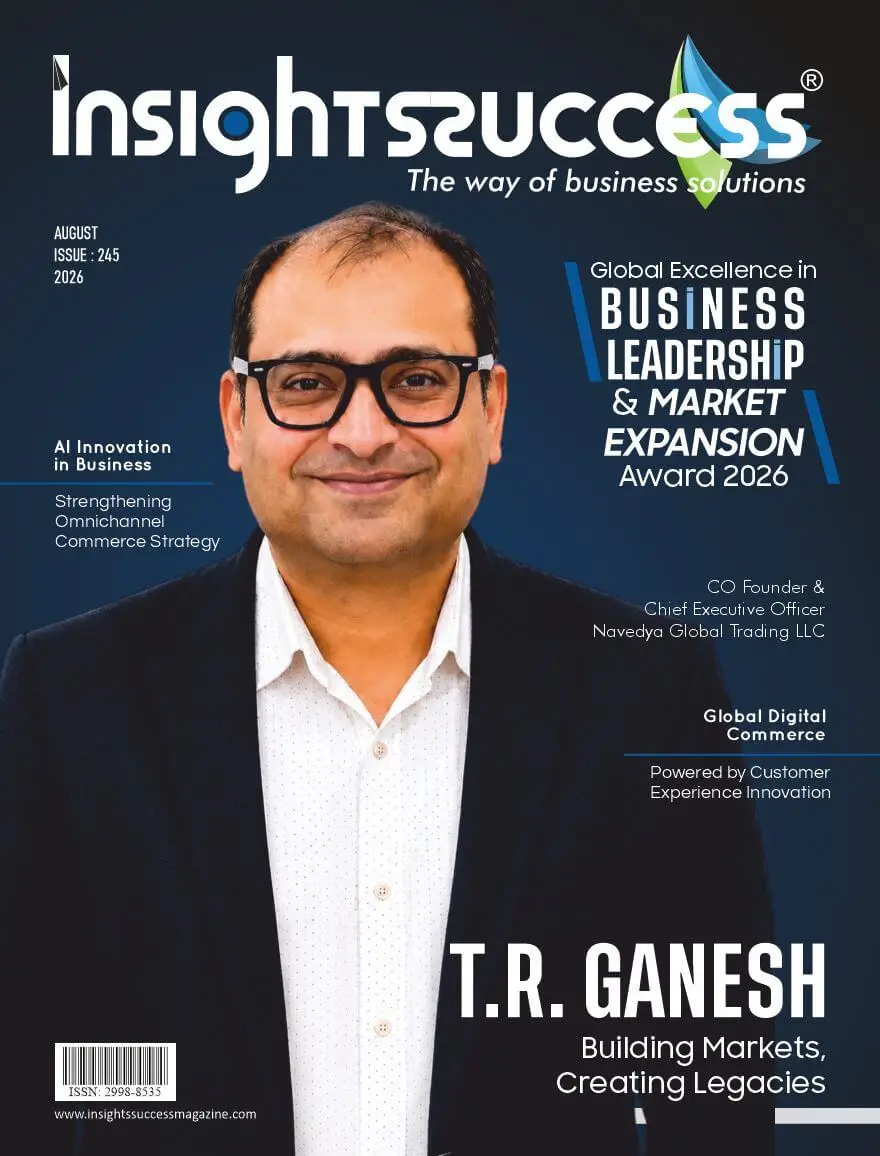
Global Excellence in Business Leadership & Market Expansion Award 2026
Global Excellence in Business Leadership & Market Expansion Award 2026 Celebrating visionary leaders who drive business excellence, expand into new markets, embrace strategic innovation, and create lasting value through bold decisions, resilient leadership, and global growth. Digital Link Quick highlights Quick reads

T.R. Ganesh: Building Markets, Creating Legacies
There are leaders who have been born in a good market environment; then there are those who create their own environment. T.R. Ganesh certainly belongs to the latter group of people. Over the course of his three-decade career, he has managed to turn every single potential opportunity into a thriving business, and his brand enjoys a very high reputation in the Middle East, Africa, and Asia. From earning recognition in leadership programs during his early years at Philips India to driving business success across banking, consumer electronics, home appliances, and premium lifestyle brands, Ganesh has developed a reputation for combining strategic vision with disciplined execution. Today, as the Co-Founder & Chief Executive Officer of Navedya Global Trading LLC, he continues to champion innovation, meaningful partnerships, and customer-centric expansion, proving that enduring leadership is measured not merely by business results but by the lasting value it creates for people, brands, and markets alike. Discover how T.R. Ganesh is redefining global market expansion by turning vision into enduring business success. A Career Rooted in Purpose Ganesh traces his professional drive to a simple but demanding ambition: building businesses and creating markets where none existed before. That ambition first took shape at Philips India, where he earned a place in the company’s Elite Talent Pool and completed an Asia Pacific leadership assignment, an early signal of the potential his employers recognized in him. From there, his path carried him through ICICI Bank, where he helped a branch climb to the number two position in South India while achieving 125 percent of its business targets, proof that his instincts for growth translated as comfortably to financial services as to consumer goods. The years that followed added further depth to his profile. At Electrolux Kelvinator, he played a central role in pushing the company to the number one region in microwaves and air conditioners, a rare feat in a segment crowded with established global names. At Jumbo Electronics and later Better Life, part of the Al Gurg Group, he sharpened his understanding of Middle Eastern retail and distribution, learning firsthand how consumer behavior, logistics, and local partnerships intersect in a region as diverse as the Gulf. Each assignment added a new layer to a career built on brand building, market expansion, and profitable growth, themes that recur throughout every conversation about his work. His time at Unilever, within the Life Essentials division with brands like Blueair and later at Milagrow and Tafani, reinforced the same pattern: enter a market with a clear strategy, build the right team, and stay disciplined about execution even when circumstances change quickly. It is an approach that has served him across appliance categories, air and water purification, and now the broader portfolio of international brands he oversees at Navedya Global. Three Months of Profitability When asked Ganesh about which milestone shaped him the most, he does not hesitate. Establishing Blueair’s Middle East operations under Unilever’s Life Essentials vertically stands out as a defining chapter. He built the business from scratch, brought it to market in just three months, and steered it to profitability within its first year, an outcome that would be notable in any industry and remarkable in a category as competitive as air purification. The venture did more than post strong numbers; it built category leadership and reinforced a belief he has carried into every role since. “It reinforced my belief that great leadership is about empowering people and building sustainable organizations,” he reflects. That philosophy shows up again in his work with Coway, which he positioned among the top three air purifier brands in the UAE e-commerce while also establishing it as a premium name in water purification, a dual achievement that speaks to his ability to build credibility across price points and categories at once. Few executives manage to position the same brand as both an accessible e-commerce favorite and a premium household name, yet Ganesh did both simultaneously. A similar pattern appears in his stewardship of Simfer, which he drove into the top three cooking appliance brands across independent retail channels, and in his leadership at Milagrow, where he built the company’s presence across the Middle East and Asia and established its Global Office in Dubai, turning a regional ambition into an international operation. In each case, Ganesh applied the same fundamentals: identify an underserved segment, build the distribution and brand equity to serve it properly, and scale with discipline rather than haste. Few results illustrate his approach better than his work with Supra, where he led the brand’s expansion to a 20 percent market share among the Private Labels while sustaining 20 percent year-on-year growth, ultimately building it into a USD 60 million business. Numbers like these do not emerge from a single tactic; they come from disciplined execution sustained over time, a hallmark of Ganesh’s leadership across every organization he has touched. Sustaining that pace year after year, rather than posting a single strong quarter, is often the harder task in retail, and it is the consistency of Supra’s performance under its leadership that stands out most to industry observers. A Philosophy Built on Discipline For Ganesh, successful market expansion follows a clear internal logic. “I believe successful expansion starts with understanding customers, selecting the right markets, building strong local partnerships, and executing with discipline,” he explains. These principles, he adds, have guided him in establishing distribution networks across the Middle East, Africa, and Asia, launching multiple international brands, and consistently delivering profitable growth even in markets where brand awareness started at zero. That last challenge, building recognition where none previously existed, ranks among the toughest he has faced. Whether introducing Blueair to Middle Eastern consumers as part of the Unilever Group or carrying Milagrow into new international territory, these experiences taught him resilience, strategic thinking, and the importance of balancing risk with disciplined execution. Building distribution networks across the Middle East, Africa, South Asia, and the CIS markets has demanded a similar blend of patience and boldness. Each region carries its

Powered by Customer Experience Innovation
Global Digital Commerce The advent of digital commerce has transformed the way people discover, consider, buy, and talk about their products and services. What used to be an interaction confined to a store is now an interaction across multiple channels such as search engines, social media, mobile apps, marketplaces, websites, payment systems, delivery services, and even after-sales services. In doing so, the experience has become the new focus of business. Businesses cannot compete based on just availability or price anymore; everything needs to be meaningful and easy. New prospects are emerging for organizations as far as reaching customers through digital channels while addressing the local demands. It’s not just the scale, but the understanding of what people want makes the difference. Organizations must understand the values of customers and their different expectations in different regions and journey points. Understanding the Complete Customer Journey Customer experience is generally not a straight line. For example, a customer can meet the brand by viewing an advertisement online, looking at customer reviews, going to the physical store, asking something using a chatbot, and finally coming back to make the purchase. Every experience affects the subsequent one. Customer Experience Innovation helps brands tie these experiences together so that customers won’t need to start from scratch each time. Data is crucial in ensuring such continuity. Information gathered from various channels such as websites, applications, shops, service centers, and others can be consolidated to gain more insight into customer behavior. Information, if used effectively, enables team members to see where there is a problem and solve it. Personalization with Purpose Personalization is the best opportunity for Global Digital Commerce. Consumers will value relevant suggestions and useful information. Through analytics and artificial intelligence, trends can be found in browsing behavior, purchases, and consumer engagement. However, personalization must not turn into an excessive targeting process. Consumer trust is based on being transparent about how the information will be used and obtaining consent from the consumers. The Customer Experience Innovation should create more useful consumer experiences, but not those where customers feel paid. Building Consistency Across Markets International business is another level of complexity. Each market has its own demands for payment, shipping, language, legislation, and customer service. A winning online business model must have an international base but be adaptable locally. The model could be built around the Global Digital Commerce framework that links digital storefronts, payments, logistics, customer care, and analysis. But technology is meant to complement rather than substitute business and cultural knowledge. Knowledge about the customers’ expectations could come from the local teams while consistency of practices could be maintained from a central place. Improving Service Through Innovation Customer service has emerged as an essential aspect of the commercial process. The customers want quick responses, easy returns, prompt updates, and convenient customer service. The automated assistance system can deal with standard queries, and intelligent routing can take care of more complicated queries to be solved by the employees. Automation and human assistance function best if they complement each other. Although clients may want fast answers to simple queries, they require empathy and judgment when it comes to complex queries. The organization can keep itself from creating conflicts and maintaining credibility through such service provision. Using Feedback as a Growth Engine Every communication provides opportunities for learning. Reviews, surveys, customer interactions, returns, and purchase behavior indicate customer requirements. Companies that analyze such data can enhance their offerings and online experience. An innovation in Customer Experience calls for continuous improvement. Rather than viewing customer feedback as a process that is periodically carried out to report on something, organizations can use feedback as part of the product development and operational planning process. Creating Long-Term Digital Value Future success of Global Digital Commerce will hinge upon the ability of companies to leverage technology alongside customer knowledge. More channels will be opened up, but the successful brands will be those that create consistency across the channels. Customers need to find consistency along with relevant experience tailored to their unique needs. Customer Experience Innovation can turn into a strategic capability that is not simply a series of disconnected initiatives but can affect product design, services, marketing, fulfillment, and loyalty. When organizations apply customer insights into decision-making about these activities, digital commerce ceases to be simply a transaction engine but becomes a relational ecosystem. At the end of the day, successful e-commerce is gauged not just by the rate of conversion but also through confidence, convenience, satisfaction, and retention. Through Global Digital Commerce, companies can connect to customers beyond geographical borders, whereas responsible innovation ensures that they are able to offer better service to those customers. Companies that listen, respect data, and constantly improve their experiences are more likely to succeed. Read Also : Maximizing Impact: The Strategic Impact of Intelligent Workforce Management on Business Performance

Strengthening Omnichannel Commerce Strategy
AI Innovation in Business Businesses have transcended their brick-and-mortar store confines and individualized websites. Consumers find the product on social networks, compare alternatives on markets, seek help via messaging apps, and make purchases via whatever avenue is more convenient to them. This trend has elevated connected commerce from being an auxiliary capability to an important business objective. Businesses that aim to sustain their growth should know the customer behaviors. AI Innovation in Business allows groups to transcend past reporting; businesses are able to sift through large amounts of information from customers, products, transactions, and interactions to determine patterns and forecast changing demands. Such intelligence can be useful in merchandising, marketing, inventory, servicing, and sales. With care, such innovation can spur quicker, data-driven decision making. Building Connected Customer Journeys The first step in developing an effective omnichannel commerce strategy is having an understanding of the consumer journey. Customers do not consider internal organizational structures or channels while using products and services. They expect the company to acknowledge their preferences and offer consistency during the transition from one device to another. It is quite possible that a consumer might research the product through the mobile app, assess it by visiting the store, and finally purchase it online. AI Innovation in Business would be able to ensure continuity of this process through enabling the acquisition of useful customer insight from different touch points. Recommendation systems could identify the right products, while the predictive system could determine the point at which the customers need help. The conversational system could help answer standard questions and channel difficult questions to human staff. Smarter Inventory and Demand Planning Inventories have always been an important aspect in which intelligence can make a positive impact on the performance of business. Excess inventories tie up money in them and there is always the danger of having to write down the value of those items due to reduced prices; under-stocking may mean lost opportunities. Within an Omnichannel Commerce Strategy, these insights gain importance since the inventory may be available not just at brick-and-mortar stores but also across warehouses, fulfillment centers, and online channels as well. Organizations would be able to assess their availability of stock and make decisions about efficient fulfillment. Personalization at Scale Personalization is now an important expectation in e-commerce. People will react favorably when the companies know what they like without intruding into their lives. AI Innovation in Business can help the companies study the online activities of the customers, including their interests in browsing, buying, searching, and engagement. However, the benefits of personalization come with a caveat in terms of proper execution. Organizations need to ensure that there is transparency in the use of data, take into account consumer preferences, and do not over-personalize. Human intervention is key, especially when automated processes affect prices or customer service. Empowering Commerce Teams However, one must not see the application of artificial intelligence merely as a function carried out in front of the customer. Artificial intelligence can assist in the enhancement of processes used by sales and marketing departments, as well as merchandising and customer service divisions. It works best when the employees are well aware of how to leverage their skills. For this, there should be training, proper governance, and cooperation between the technical and commercial teams. If both people and technology work together, then companies can achieve speed without compromising on human judgment. Creating a Future-Ready Commerce Model An effective strategy in Omnichannel commerce goes beyond integration. Alignment across data, technology, operations, people, and customer expectations is needed. Businesses will need to set up standardized information systems, integrate appropriate systems, and clearly define responsibility for the customer journey. Performance measurement should be across all channels and not treat each point of contact as a separate business unit. The intelligent system has the potential to provide the level of intelligence needed to enhance this model. From demand forecasting to engagement with individuals, the intelligent system will play a big role in helping an organization find opportunities and respond effectively. The success of this technology is dependent on the purpose of the business. With the further development of commerce, the need for a strategy such as the Omnichannel Commerce Strategy will depend upon connecting experiences and decision-making. Businesses using effective data, smart software, and human skills are capable of offering seamless journeys as well as enhanced efficiency. Organizations will not just embrace the use of artificial intelligence because of its availability but will rather deploy it to enhance relevance, efficiency, and transparency of commerce. Read Also : Powered by Customer Experience Innovation

Marvell Stock Jumps 8% on New Google AI Chip Partnership
Prime Highlights Marvell to develop Google’s custom AI chips; stock jumps 8% on deal. Google gets option to buy $12.2B Marvell stake tied to revenue targets. Key Facts Deal could bring Marvell $120B in revenue through fiscal 2033. Broadcom, Google’s prior chip partner, shares fell over 5%. Background Marvell Technology will help develop Google’s custom AI chips under a new agreement that also gives the search giant the right to buy a stake in the chipmaker worth up to $12.2 billion. Marvell shares jumped nearly 8% following the announcement, while larger rival Broadcom, previously Google’s main custom chip partner, fell more than 5%. Shares of Google parent Alphabet were largely unchanged. The deal marks a significant vote of confidence from a major cloud-computing provider and could generate roughly $120 billion in revenue for Marvell through fiscal 2033, provided Google meets targets tied to the stake option. Demand for in-house chips, such as Google’s tensor processing units, has grown as companies look for cheaper alternatives to Nvidia’s costly graphics processors and technology better suited for running trained AI models. A recent leadership shakeup within Google’s AI division, which shifted influence toward executives closer to Google Cloud, has drawn added attention to custom chips and AI infrastructure, seen by analysts as increasingly important to that business. The agreement adds to growing concern over increasingly interconnected relationships across the AI industry, coming shortly after Nvidia agreed to back a data-center project worth up to $105 billion that OpenAI is leasing. Earlier this year, AMD signed a comparable deal, agreeing to supply OpenAI with AI chips in exchange for an option to sell a stake of roughly 10% in the company. The Marvell-Google agreement spans several technologies tied to TPUs, including processors, data storage management, and network infrastructure. Google would become Marvell’s fifth-largest investor if the warrant is fully exercised. A Morningstar analyst described the deal as a major win for Marvell, framing it as an expansion of opportunity at Google rather than a displacement of Broadcom. Read Also: APFN Launches Cashback Incentive on Sky Business Wholesale Ethernet Orders

Samsung Raises Chipmaking Prices by Up to 15% as AI Demand Tightens Capacity
Prime Highlights Samsung has raised prices for advanced chipmaking services by up to 15% as growing AI demand puts pressure on available production capacity. Higher prices and strong factory utilisation could strengthen Samsung’s foundry business, which has been working towards a return to profitability. Key Facts SF4 prices rose 10%–15% in China and the US. Samsung held 7% of global foundry revenue in Q1 2026. Background Samsung Electronics has raised prices for some advanced contract chipmaking services by as much as 15% as strong demand for AI chips puts pressure on available production capacity, according to people familiar with the matter. The company increased prices for its 4-nanometre SF4 process by 10% to 15% for customers in China and the US in July. Prices for Taiwanese customers rose by 5% to 10%. Samsung also increased prices for its 5-nanometre SF5 process by up to 15%, while 8-nanometre wafer prices rose by nearly 10%. The changes give Samsung greater pricing power at a time when leading foundry rival TSMC is dealing with heavy demand for advanced chip production. Samsung’s foundry business accounted for about 7% of global foundry revenue in the first quarter, compared with more than 70% for TSMC, according to Counterpoint. Samsung’s SF4 production line at its Pyeongtaek plant in South Korea has reportedly operated at full capacity since late last year. The line makes logic chips for customers such as Qualcomm and also produces base dies used in Samsung’s high-bandwidth memory products. The stronger pricing could help Samsung’s foundry division, which has struggled with losses since 2022, move towards profitability. The company has also secured chip manufacturing deals with Tesla, Apple and Broadcom, while Nvidia has said Samsung will produce its new AI inference processor. Samsung expects advanced processes to contribute more than half of its foundry revenue this year, supported by growing demand from AI and high-performance computing customers

What Compensation Can You Seek After an Oversized Load Truck Accident?
If you are hurt in an oversized load truck accident, you may be able to seek compensation for medical expenses, lost income, property damage, pain and suffering, and other losses caused by the crash. The amount and types of compensation available depend on the severity of the injuries, who was responsible, the insurance coverage involved, and the evidence supporting the claim. Oversized loads are transported under special requirements because their size or weight can affect how a truck operates on the road. These vehicles may need additional space for turns, longer stopping distances, warning signs, escorts, or special permits. When something goes wrong, people hurt in an oversized load truck accident may face serious injuries and significant financial losses. Medical Expenses Medical costs are often one of the largest parts of a truck accident claim. Compensation may cover reasonable expenses related to emergency treatment, hospital stays, surgery, medication, physical therapy, rehabilitation, and follow-up care. If an injury requires ongoing treatment, future medical expenses may also be considered. Keeping medical bills, treatment records, prescriptions, and appointment information can help document these losses. Lost Wages Serious truck accident injuries may prevent someone from working temporarily or permanently. Compensation may include income lost while recovering from injuries. If the injuries affect the person’s ability to perform their previous job or earn the same level of income in the future, a claim may also include reduced earning capacity when supported by appropriate evidence. Property Damage An oversized load collision can cause significant damage to passenger vehicles and other personal property. A claim may include reasonable costs associated with repairing or replacing a damaged vehicle. Keep photographs of the damage, repair estimates, receipts, and other documentation related to the property loss. Pain and Suffering Compensation may also be available for the physical pain and emotional distress caused by serious injuries. Unlike medical expenses, these damages are not based on a simple bill or receipt. The severity of the injury, duration of recovery, limitations on daily activities, and long-term effects may be considered when evaluating these losses. Loss of Enjoyment of Life Some injuries can prevent a person from participating in activities they enjoyed before the accident. Someone may no longer be able to exercise, travel, participate in hobbies, or spend time with family in the same way. When supported by the applicable law, the effect of these limitations may be considered as part of a personal injury claim. Future Losses An oversized load accident can create financial consequences that continue long after the initial treatment. A person may require long-term medical care, additional procedures, rehabilitation, or assistance with daily activities. Future losses should be considered before accepting a settlement. A settlement reached too early may not adequately account for expenses that have not yet occurred. Wrongful Death Compensation If an oversized load truck accident results in a fatality, eligible surviving family members may have a wrongful death claim depending on the applicable state law. Potential damages can include certain medical and funeral expenses, lost financial support, and other losses recognized by law. Multiple Parties May Be Responsible Truck accidents can involve more than the driver. Depending on the circumstances, potentially responsible parties may include the trucking company, vehicle owner, cargo company, loading contractor, maintenance provider, or another party involved in transporting the oversized load. Investigators may examine whether the load was properly secured, whether the truck was properly maintained, and whether applicable permits and safety requirements were followed. Safety Violations Can Affect a Claim Oversized loads may require special planning because their dimensions can affect traffic movement and vehicle handling. Under Texas Transportation Code Section 623.011, certain vehicles or loads exceeding specified size or weight limits generally require a permit before being operated on a public highway. If improper loading, permitting, routing, or another safety issue contributed to a collision, records related to the transportation of the load may become important evidence. Documenting Your Losses Strong documentation can help establish the value of an injury claim. Keep medical records, bills, employment information, repair estimates, photographs, and records describing how the injury affects your daily activities. Police reports and witness statements may also help establish how the accident occurred and who may have been responsible. Key Takeaways Compensation may include medical expenses, lost income, and property damage. Pain, suffering, and loss of enjoyment may also be considered. Future medical care and financial losses should not be overlooked. Multiple parties may potentially share responsibility for an oversized load crash. Evidence about loading, maintenance, permits, and transportation practices can be important. Texas Transportation Code Section 623.011 addresses permitting requirements for certain oversized or overweight vehicles. Keeping detailed records can help document the full impact of the accident. Read Also : How Yorkshire Canine Academy Is Helping Owners Navigate the UK’s Rising Dog Behaviour Challenges

South Africa’s Most Esteemed Business Leader to Follow in 2026
South Africa’s Most Esteemed Business Leader to Follow in 2026 Celebrating one exceptional business leader from South Africa, this personalized edition highlights their visionary leadership, strategic achievements, industry contributions, and inspiring journey toward creating lasting impact and business excellence. Digital Link Quick highlights Quick reads