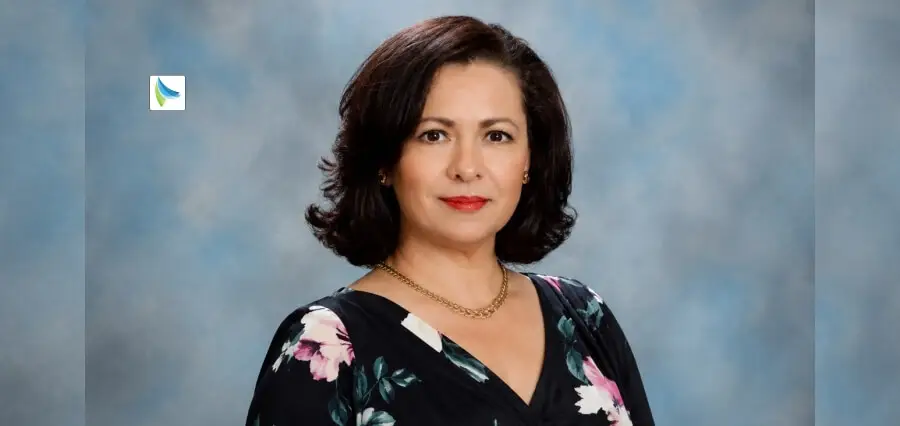





Most organizations say their people are their greatest asset. Very few actually build the systems, the cultures, and the leadership conditions that make that true. The gap between the declaration and the reality is precisely where Parvin Raipathi has spent her career.
As Deputy HR Director at Rotary Engineering in Singapore, she has spent more than two decades doing the unglamorous, necessary work of closing that gap, one talent programme, one difficult leadership conversation, and one cultural initiative at a time.
Her path to that role didn’t start with any particular advantage. It started at eighteen, working to pay for her own education. The values that took shape in those years, discipline, self-reliance, and a stubborn commitment to keep learning, haven’t left her since.
She grew up in a middle-class family where hard work wasn’t something people talked about; it was just what you did. Opportunities didn’t come looking for you, and Parvin Raipathi understood that early. So, she took on jobs while studying, making sure that money, or the lack of it, would never be the reason her education stopped. Those years were hard. But they gave her something that an easier start probably wouldn’t have: a real, tested relationship with resilience, the kind that has held her steady through every setback and challenge her career has thrown at her since.
“Growth comes from embracing adversity, staying adaptable, and never losing sight of what you’re working toward,” she says.
The Profession That Found Her Purpose
Parvin Raipathi did not enter Human Resources through a straight line. The first five years of her career were defined by uncertainty, various roles, and the kind of continuous learning that comes from navigating a professional landscape without a clear map. What changed was a defining moment: her first dedicated HR role, specializing in Learning and Development and Organizational Development.
It was there that she discovered what she had been looking for. The intersection of people’s strategy, talent development, and organizational culture was not simply a professional niche. It was the expression of a deeper conviction she had been building across every job she had taken since she was eighteen: that when people are genuinely supported, developed, and trusted, they transform not only themselves but the organizations around them.
A mentor encountered during this period, a respected HR leader in Singapore, amplified that conviction considerably. Exposure to broader perspectives on leadership, stakeholder management, and organizational effectiveness through that mentorship relationship shaped a philosophy that Parvin Raipathi continues to draw on today. The lesson she absorbed was both simple and consequential: HR done well is not a support function. It is a strategic enabler that directly determines whether an organization can grow, adapt, and sustain performance over time.
She asserts, “Human Resources is not just about policies and processes. It is about unlocking human potential and aligning people’s strategies with business goals.”
When she joined Rotary Engineering in 2019, the most expansive chapter of her professional formation was opened. Working under the guidance of the Deputy Chairman, a leader who consistently empowered her to think strategically, develop innovative solutions, and align initiatives with organizational objectives,Parvin Raipathi expanded her leadership capabilities at a breadth and depth that previous roles had prepared but not yet fully demanded. The trust extended to her during this period reinforced something she had come to believe firmly: that great leadership is often the product of great leadership that came before it.
The Introvert Who Became a Catalyst for Change
One of the most instructive dimensions of Parvin’s story is the honest account she gives of her own early self-doubt. Naturally introverted and inclined to let her work speak rather than stepping into the spotlight, she spent years in which her visibility did not match the quality of her contributions. Mentors and leaders who saw potential in her before she had fully claimed it in herself were the catalysts who changed that trajectory.
The Global Recognition Award she received in 2026 is the formal expression of a recognition that began informally in the minds of the leaders who invested in her before the industry confirmed their judgment. The HR Excellence Awards for Best HR Team in the MNC category and Work-Life Harmony in 2022, the HR Excellence Award for Technology and Innovation in 2023, the Workplace Hero recognition by FastJobs in 2025, and a feature in Forbes Bahrain sharing her people-first leadership philosophy are milestones that trace a career gaining both substance and visibility over time.
The lesson she draws from that arc is one she shares generously with aspiring leaders: introversion is not a disqualification for leadership. Leadership is not defined by personality. It is defined by purpose, impact, and the consistent ability to inspire others to succeed. The journey from self-doubt to international recognition is not a story of becoming someone different. It is a story of discovering, through mentorship and sustained performance, the full scope of who she already was.
She highlights, “Leadership is not defined by personality, but by purpose, impact, and the ability to inspire others to succeed.”
HR Through the Hardest Season
The COVID-19 pandemic arrived in 2020 and immediately placed HR leaders at the center of an organizational crisis unlike anything the profession had navigated in recent memory. For Parvin, the challenge was not simply operational. It was human, in the most fundamental sense of the word.
Supporting employees through fear and uncertainty while simultaneously maintaining business continuity required a combination of empathy and decisiveness that tested every leadership capability she had developed. Remote work transitions, digital learning deployments, mental health awareness initiatives, and continuous communication frameworks were not strategies implemented from a distance. They were active, daily leadership commitments delivered under sustained pressure.
She leveraged technology to maintain organizational effectiveness, conducting virtual training programmes, strengthening collaboration platforms, and ensuring that employees remained engaged and connected despite physical separation. Alongside this, she worked closely with senior leaders to promote mental health awareness and create a culture where employees felt genuinely supported rather than merely managed.
She states, “The pandemic highlighted the importance of empathy, communication, and putting people at the center of business decisions.”
What she took from that period was not simply a set of crisis management lessons. It was a deepened conviction about what HR leadership is fundamentally for. Organizations that placed people genuinely at the center of their pandemic response emerged with stronger trust, greater resilience, and more cohesive cultures than those that treated the crisis primarily as an operational problem. The human dimension was never secondary. It was always the strategic core.
The Balance That Cannot Be Manufactured
Among the dimensions of Parvin’s story that carry particular weight is the personal one. She is a single mother raising a ten-year-old son while managing a demanding global HR career that regularly requires strategic decision-making across multiple regions and cultures.
She is clear that balance, in her life, does not mean equal time for every dimension every day. It means being fully present and intentional in whatever role she is performing at any given moment. When she is at work, she delivers full focus. When she is with her son and her mother, she is genuinely present rather than professionally distracted. The discipline required to hold that distinction consistently is itself a leadership practice.
Her mother has been the foundational support that made this possible, providing care and stability for her son during professional commitments that could not always be scheduled around family availability. That relationship, built on the same values of mutual support and loyalty that Parvin Raipathi brings to her professional teams, is the personal infrastructure on which her professional life stands.
Her son, whose maturity and resilience she describes with evident pride, is simultaneously her motivation and her mirror. She leads by example in ways that a ten-year-old is watching closely: with integrity, perseverance, and the consistent demonstration that hard things can be faced without abandoning either your values or your warmth.
She reflects, “My family gives me purpose, while my profession gives me the opportunity to make a meaningful difference in the lives of others.”
Strengths, Weaknesses, and the Leader She Became
Parvin Raipathi names resilience as the strength that has most consistently enabled her progress. The ability to remain focused on solutions rather than setbacks, developed through years of personal and professional challenge, has allowed her to continue growing through conditions that would have caused others to slow down or stop.
Her ability to connect genuinely with people is equally foundational. Trust, empathy, and authentic relationships are not soft management concepts in her practice. They are operational disciplines that directly determine whether teams perform, whether cultures hold under pressure, and whether organizations can retain the people they most need to keep.
Her acknowledged weaknesses, offered with the same candor, are equally instructive. A tendency to underestimate her own capabilities, a product of her naturally introverted disposition, limited her visibility and confidence in earlier career stages until mentors helped her recalibrate. And a perfectionist’s tendency to carry more responsibility than necessary, rather than delegating genuinely, was addressed over time through the recognition that empowering others is not a concession of quality. It is the mechanism through which quality scales.
She affirms, “Weaknesses should not be viewed as limitations but as opportunities for growth.”
What She Tells the Leaders Coming Behind Her
To aspiring leaders, Parvin’s counsel is direct and grounded in lived experience. Focus on excellence in your current role before pursuing leadership titles, because performance is the most reliable pathway to responsibility. Invest in people’s skills as deliberately as technical expertise. Build resilience as a proactive practice rather than a crisis response. Seek mentors actively. Empower your team genuinely. And above all, stay authentic, because the most effective leadership is not an imitation of someone else’s style, but an honest expression of your own values applied with consistency.
She reminds me, “Stay authentic to who you are. Leadership does not require changing your personality; it requires strengthening your values and using your unique strengths to make a difference.”
Parvin Raipathi began her career at eighteen, working to fund an education the world was not going to provide for free. She arrives in 2026 as a globally recognized HR leader, a published voice on people-first strategy, an award-winning practitioner, and a mother demonstrating every day that purpose does not require a choice between professional ambition and personal love. It requires both, held together with honesty, discipline, and resilience that can only be built from the ground up.