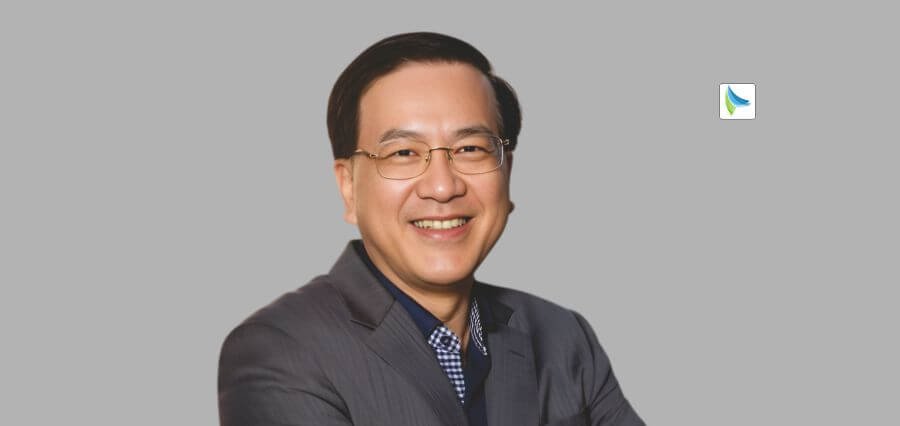
Most careers in technology last long enough to witness one major shift in how industry works. Christanto Suryadarma has lived through four shifts. The rise of the internet and personal computing. The software and platform revolution. The arrival of cloud computing and as-a-service consumption. And now, artificial intelligence, which he considers perhaps the most transformative of them all. Spanning more than thirty-six years across Intel, Microsoft, Hewlett Packard Enterprise, and now Zebra Technologies, his career has not simply tracked the evolution of enterprise technology. It has, at several points, helped shape it.
Today, as VP Sales and Head of Partnerships for Asia Pacific at Zebra Technologies, the global enterprise asset intelligence company established in 1969 and headquartered in Lincolnshire, Illinois, Christanto leads a strategy that brings together hardware, software, AI, connectivity, and professional services into a single ecosystem. The work is technically complex and commercially significant. But ask him what has remained constant across four decades and four very different companies, and the answer has nothing to do with technology at all.
What Scale Actually Teaches You
Christanto’s early career at Intel gave him an education in execution that he has carried into every role since. One of his proudest achievements during that period was helping double Intel’s OEM revenue from one billion to two billion dollars per quarter across Asia Pacific, Japan, and India, a scale of growth that does not happen through a single decision or a clever campaign. It happens through sustained discipline applied consistently over the years.
That experience taught him something he still considers foundational: sustained growth comes from strong partnerships, customer trust, and relentless focus on execution. Three elements, none of them flashy, all of them difficult to maintain consistently at scale. The lesson stuck because it was learned the hard way, through years of building relationships and systems that did not produce results overnight but compounded steadily until the numbers became undeniable.
He reflects, “Sustained growth comes from strong partnerships, customer trust, and relentless focus on execution.”
The Ecosystem Education
The move to Microsoft introduced Christanto to a different kind of lesson, one about how entire industry transform when the right players align around a shared vision. Working with multinational OEM partners across both developed and emerging markets, he saw directly how no single company succeeds alone in a connected technology landscape. Innovation accelerates when technology providers, partners, and customers work together with genuine alignment rather than transactional convenience.
That collaborative approach earned him recognition through Microsoft’s Gold Star, Champion, and Worldwide MVP awards, distinctions that reflected not individual achievement in isolation but the strength of the ecosystems he helped build and sustain. The experience reinforced a conviction that would carry forward into every subsequent chapter of his career: technology providers who think only about their own product roadmap, without genuine investment in their partners’ success, are building on a foundation considerably less stable than they assume.
He notes, “No company succeeds alone. Innovation accelerates when technology providers, partners, and customers work together around a common vision.”
Turning Decline into the Largest Contributor
At Hewlett Packard Enterprise, Christanto led businesses exceeding one billion dollars annually while helping transform channel organizations and cloud partnerships across Asia Pacific. Among the achievements he considers most meaningful from that period was turning a declining channel of business into the largest contributor within the APJ region, a turnaround that required more than strategic adjustment. It required rebuilding partner experience and trust from a position of genuine weakness.
The work also involved strengthening partnerships with major cloud players including Alibaba Cloud, demonstrating what he describes as the power of business reinvention when an organization is willing to confront a declining trajectory honestly rather than managing it incrementally. Driving major customer wins through ecosystem-led solutions, rather than single-product transactions, became the template that proved most durable across changing market conditions.
He states, “Transforming channel organizations and strengthening partnerships demonstrated the power of business reinvention.”
Leading Through Disruption
Across four decades, Christanto has led organisations through economic downturns, the COVID-19 pandemic, and global supply chain instability that tested every assumption built into prior planning. The lesson those periods reinforced most clearly is one that many leaders only learn after a crisis has already exposed the gap in their preparation: resilience is not built during a crisis. It is built before one, through culture, trust, and adaptability cultivated consistently during stable periods when there is no immediate pressure forcing the work.
That insight shapes how he now approaches AI initiatives at Zebra, where his guiding belief is that technology should augment human potential rather than replace it. The organisations he expects to thrive in the years ahead are those that combine human creativity with machine intelligence rather than treating the two as competing forces.
He affirms, “Resilience is not built during a crisis. It is built before a crisis, through culture, trust, and adaptability.”
From Having Answers to Asking Questions
One of the most significant shifts in Christanto’s leadership style across thirty-six years has been the move away from a model built on having the answers toward one built on asking the right questions. Early in his career, leadership often meant possessing the expertise that others lacked. As technology cycles have accelerated, no individual leader can realistically hold all the knowledge required to navigate every challenge that arises across diverse markets and disciplines.
His role has evolved accordingly, from directing people to empowering them, and he now spends considerably more time coaching, mentoring, and developing future leaders than he did two decades ago. Watching individuals he has mentored grow into senior leadership roles across the industry remains, by his own account, one of the most rewarding aspects of his entire career.
He says, “My role has evolved from directing people to empowering them. Success depends on creating clarity amidst complexity.”
Innovation With Discipline
The innovation culture Christanto has built at Zebra combines genuine ambition with real accountability, a balance he considers essential and frequently absent in organizations that chase trends without grounding them in customer outcomes. AI-powered productivity initiatives, including knowledge assistants and sales enablement platforms, are pursued at Zebra because they generate measurable business value, not because artificial intelligence happens to be fashionable.
He encourages his teams to experiment, learn quickly, and share insights openly across the organization. Failure is acceptable when it generates genuine learning. What is unacceptable, in his framework, is failing to extract that learning once a failure has already occurred. He is equally insistent that innovation should never be confined to research labs or formal technology teams, since some of the best ideas consistently come from frontline employees, partners, and customers who understand real-world challenges with a clarity that headquarters often lacks.
He notes, “Failure is acceptable when it generates learning. What is not acceptable is failing to learn.”
Impact Beyond the Balance Sheet
Some of the accomplishments of Christanto values most occurred entirely outside corporate environments. As Chairman of the Electrical, Electronics and Allied Industry Group within the Singapore Manufacturing Federation, he helps drive conversations around AI, digital transformation, sustainability, and future workforce development at an industry-wide level.
His passion for education runs equally deep. Through MyBookMyCountry, he has helped establish reading gardens and provide educational resources to underserved communities in remote regions of Indonesia. Through Pukat.Online, he has supported learning, community development, and economic empowerment initiatives that extend well beyond any single organization’s commercial interests.
He reflects, “Those experiences remind me that leadership is ultimately about impact, not position.”
Hire for Character, Develop for Capability
Having led organisations of more than fifty sales, technical, and business professionals across multiple countries and cultures, Christanto’s talent philosophy is built on a sequence he applies with consistency: hire for character, develop for capability, and promote based on contribution. The order matters, in his view, more than any single element within it.
People perform at their best, he has observed repeatedly, when they feel trusted, valued, and connected to a purpose that means something beyond quarterly targets. He actively encourages curiosity, continuous learning, and healthy debate within his teams, treating diversity of thought as one of the strongest drivers of innovation available to any organisation.
He says, “Leadership is measured not by the followers you create but by the leaders you develop.”
The Foundations Beneath the Career
Beyond the technology and the business results, Christanto identifies faith, family, integrity, and service as the foundational influences that have shaped his approach throughout his life. The mentors who have guided his professional journey demonstrated something he has carried forward consistently: that leadership is not about power but about stewardship, and that business success and human development should never be treated as competing priorities.
His involvement with industry associations and his social initiatives have reinforced his belief that education remains one of the most powerful tools available for transforming lives, and that leadership ultimately carries a responsibility to leave people, organisations, and communities better than they were found.
He states, “Leadership is ultimately a responsibility to leave people, organizations, and communities better than we found them.”
A Legacy Measured in People, Not Numbers
When Christanto considers the legacy, he hopes to leave as a leader helping shape the future of intelligent enterprises, he is direct about what he hopes it will not be defined by: revenue figures, titles, or awards, however grateful he remains for the opportunities those achievements represented. What he hopes to be remembered for instead is helping organizations embrace transformation, helping partners succeed, helping future leaders grow, and helping underserved communities gain access to opportunities they would not otherwise have had.
As AI, automation, connected technologies, and data intelligence continue reshaping every industry, his aspiration is to ensure these technologies create not only more productive enterprises but genuinely better outcomes for people and society. If future leaders say he helped them grow, if customers say he helped them succeed, and if communities say he helped create opportunities where none previously existed, he considers that a legacy worth leaving.
His advice to aspiring leaders carries the same grounded clarity that runs through his entire career: stay curious, remain humble, embrace change, invest in people, and never lose sight of the human purpose behind technology.
He says, “The future belongs not to those who merely adopt technology fastest, but to those who use it most meaningfully.”