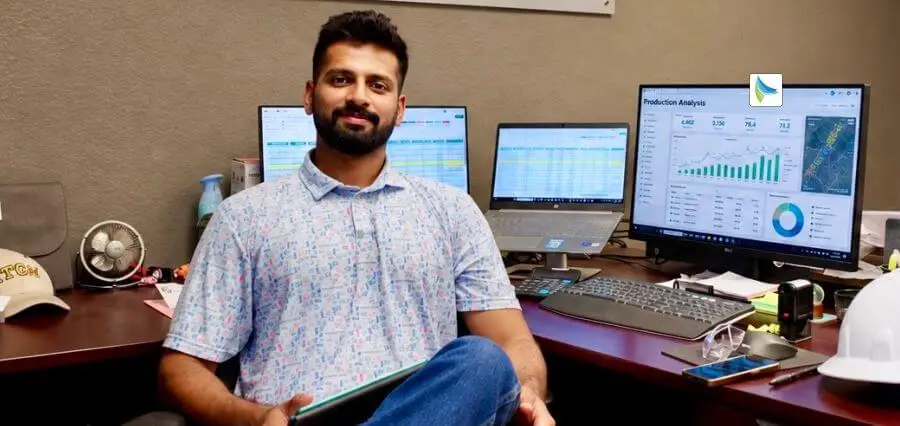




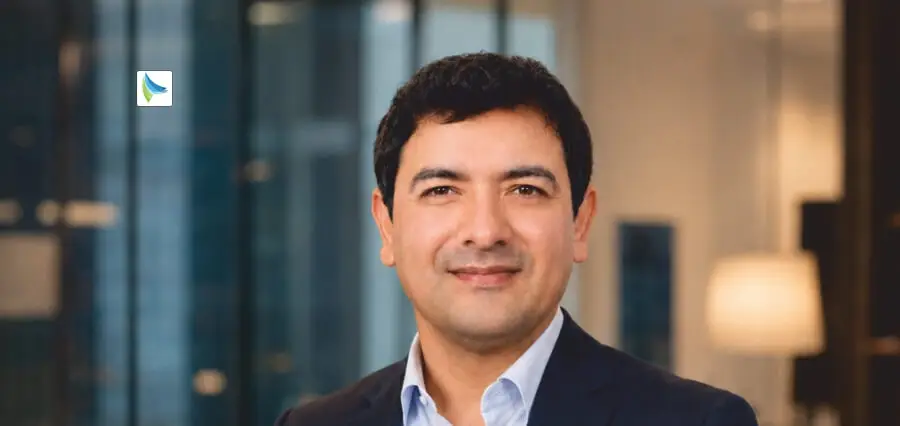
From cross-border HR business partnering and workforce architecture to AI-enabled people strategy, Dipesh Gangrade is advancing a practical approach to modern HR—one that connects business outcomes, workforce intelligence, technology and trust.
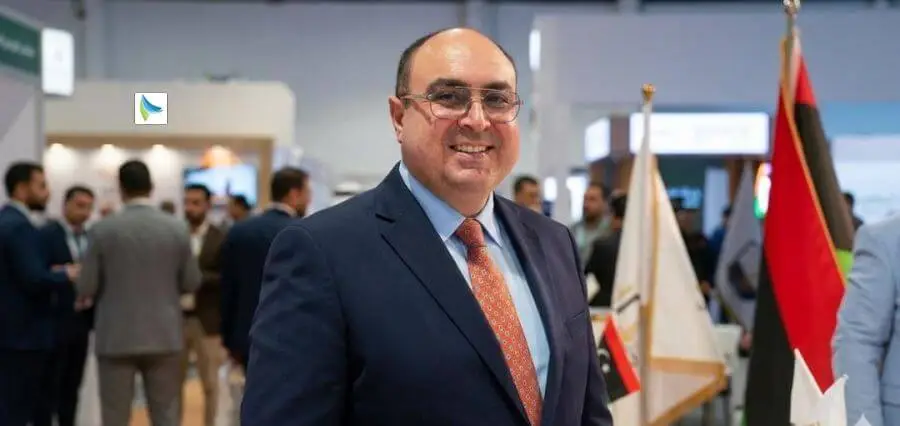
At the Global Business Conference & Summit Dubai 2026, on a stage bringing together leaders from technology, cybersecurity, business and emerging markets, Dipesh Gangrade was invited to contribute the people perspective to a question that has become central to every organisation: what happens to work, skills and leadership when artificial intelligence begins to reshape the way business operates?
The occasion marked more than a conference appearance. Gangrade was recognised with the Global Excellence in People Strategy & Workforce Leadership Award 2026 and participated as a panelist in the discussion ‘AI & The Future of Business: Transforming Technology, Talent, Security & Industry.’ His contribution focused on a practical reality that often gets lost in the excitement around new technology: transformation succeeds only when the workforce is ready to move with it.
That perspective reflects the larger arc of his career. Across more than 14 years spanning technology, engineering services, FMCG, BFSI, analytics and global delivery environments, Gangrade has evolved from recruitment and talent acquisition into strategic HR business partnering, workforce strategy, organisational effectiveness and cross-cultural people leadership. Today, as Principal – HR Business Partner at WorldEmp India Private Limited, he works closely with senior leaders in India and the Netherlands, connecting people decisions with business requirements, client expectations and workforce realities.
For Gangrade, modern HR is not defined by how many processes it owns. It is defined by the quality of the decisions it helps the business make.
From Recruitment to Workforce Strategy
Gangrade’s early career in recruitment gave him a front-row view of the tension that sits inside almost every workforce decision: the business wants speed, the role requires capability, the market sets the cost, and the employee brings aspirations that cannot be reduced to a requisition number. What began as talent acquisition gradually became a broader curiosity about why organisations hire, how work should be structured, what drives performance, and why some teams build capability faster than others.
As his responsibilities expanded, so did the questions. Filling roles gave way to understanding organisation design, performance management, culture, employee experience, leadership capability and workforce economics. The shift was important because it changed the unit of thinking—from an individual vacancy to the capability of the organisation as a whole.
A defining stage has been his journey at WorldEmp India. Working closely with the Managing Director and senior stakeholders across India and the Netherlands exposed him to the realities of cross-border delivery: different communication styles, different assumptions around hierarchy and ownership, and client environments where people practices have to work within both business and cultural context. It reinforced a principle that now anchors his approach: good people strategy cannot be designed in isolation from the operating model.
Start With the Business Problem, Not the HR Process
Gangrade’s approach to strategic HR is deliberately simple: begin with the business problem. Before recommending a people intervention, he looks at what the business is trying to achieve, where capacity or capability is constrained, what the customer expects, and what evidence would indicate success.
Only then does the HR solution become clear. The answer may be hiring—but it may just as easily be better deployment, manager capability, role redesign, skill development, productivity improvement, retention, succession, technology or a change in the way work is organised.
This prevents HR from confusing activity with impact. A new policy, programme or platform may be well designed, but if it cannot be connected to a business need and an employee’s outcome, its strategic value remains limited.
“HR should be able to explain both the employee impact and the business outcome,” Gangrade says. ‘When we can do both, people’s strategy stops being a support activity and becomes part of how the organisation executes its strategy.’
The 4B Workforce Architecture: Build, Buy, Borrow and Bot
Few areas illustrate this business-first thinking better than workforce planning. Gangrade uses a practical 4B Workforce Architecture—Build, Buy, Borrow and Bot—to frame one of the most important questions facing organisations today: what is the right way to access the capability the business needs?
Build means developing capability internally. Buy means hiring from the market when external talent is the right answer. Borrow means using specialised external expertise, partners or flexible talent where permanent hiring may not be necessary. Bot represents automation and AI—technology that can automate, augment or reshape parts of work.
The value of the framework is that it changes the conversation from ‘How many people should we hire?’ to ‘What combination of capability, capacity, external expertise and automation will create the best business outcome?’
That distinction becomes increasingly important as AI changes the architecture of work. Gangrade does not see automation as a simple headcount reduction exercise. The real leadership challenge is to identify which work should remain deeply human, which work should be technology-assisted, which tasks can be automated, and how the workforce should evolve as those boundaries move.
‘The objective is not to reduce people to a cost equation,’ he explains. ‘It is to create the right mix of capability, capacity, technology and human judgement.’
Making HR Measurable—and More Credible
Gangrade’s philosophy is grounded in execution. At WorldEmp India, one of the most meaningful parts of his journey has been helping build a more structured, measurable and business-oriented HR function rather than treating governance, employee experience, technology and workforce visibility as separate projects.
Over time, the function introduced more disciplined HR operations, technology-enabled workflows, workforce analytics, service standards and clearer people practices. The work delivered tangible improvements: manual HR effort was reduced by around 30%, while onboarding turnaround improved from approximately seven days to three. The organisation also strengthened visibility into workforce information and service delivery.
For Gangrade, however, the most important result was not the metric itself. It was the quality of conversation that the metric made possible. When HR can show where a delay originates, where capacity is constrained, what a people intervention costs and what business outcome it improves, it becomes easier to move from defending HR activity to solving business problems.
That is the transition he considers most valuable: from executing HR transactions to bringing evidence, identifying bottlenecks, challenging assumptions and influencing how leaders think about people and performance.
Culture Is an Everyday Operating Experience
Gangrade is equally clear that not everything that matters can be reduced to a dashboard. Culture, in his view, is not created by slogans, annual events or values printed on a wall. It is experienced in everyday moments where leadership, fairness and trust become visible.
That includes how a new employee is onboarded, whether payroll is accurate, how leave decisions are handled, whether performance conversations are timely, how managers respond when expectations are missed, and whether HR is accessible when an employee needs clarity. These moments may appear operational, but collectively they determine whether the organisation is experienced as consistent and credible.
Structured employee connects; pulse feedback, town halls, manager conversations, recognition programmes and engagement initiatives all have a role. But Gangrade believes culture becomes durable only when those initiatives are supported by dependable management behaviour and clear standards.
Employees should feel respected without weakening accountability. In his view, the strongest cultures are not those that avoid difficult expectations; they are those that make expectations clear, apply them fairly and give people the support to succeed.
Cross-Cultural Leadership: Translating Without Stereotyping
As organisations become more distributed, Gangrade believes cultural intelligence is becoming a core leadership capability. His work across Indian and Dutch stakeholders has shown him that many workplace tensions are not caused by poor intent. They emerge from different assumptions about directness, hierarchy, decision-making, time, escalation, ownership and communication.
The role of HR in such environments is not to declare one culture correct and the other difficult. It is to translate expectations without stereotyping either side. That may mean helping one team understand why direct feedback is intended as clarity rather than criticism, while helping another recognise that context and relationship can influence how a message is received.
Shared expectations are often as important as formal policies. For Gangrade, cross-border people leadership therefore requires consistency in principles combined with flexibility in communication and execution.
“The future of global people leadership will require a combination of business clarity, cultural intelligence, technology and empathy,” he says.
AI Changes the Architecture of Work—not Only HR Processes
Gangrade’s perspective on AI is pragmatic. He sees clear value in using technology for recruitment support, employee service, learning, workforce planning, document creation, pattern recognition, analytics and decision support. Automation can remove repetitive work, create faster service and give HR teams more capacity for judgement-intensive priorities.
But he believes the larger conversation is more consequential than HR automation. AI is beginning to change how work itself is structured and performed, which skills matter, where decision rights sit, and what leaders expect from employees. Organisations therefore need to think simultaneously about work redesign, workforce readiness, reskilling, governance and trust.
This is the people dimension Gangrade brought to the Dubai panel. The question is not simply whether AI can perform a task. Leaders need to ask what happens to the role around that task, what new capability employees require, how accountability is preserved, and how people understand the reason for change.
His principle is clear: automate transactions where appropriate, augment professional judgement with data, and preserve meaningful human involvement where decisions materially affect people. Performance, careers, compensation, employee relations and exits require context and judgement that an algorithm alone cannot provide.
“Technology should inform decisions rather than become an excuse to remove human accountability,” he says. That means governance around privacy, bias, access and responsible use must grow at the same pace as adoption.
Developing Leaders Beyond Designation
For Gangrade, future leadership cannot be identified by title alone. He looks for patterns of ownership, sound judgement, learning agility, collaboration, resilience and the ability to influence outcomes through others. Strong individual performance is important, but it does not automatically translate into leadership readiness.
Development must therefore combine formal learning with real responsibility. Stretch assignments, cross-functional exposure, client interaction, project leadership, mentoring and manager coaching give employees opportunities to demonstrate how they operate when the answer is not predefined.
He also advocates more honest career conversations. Growth does not have to mean a promotion every year. It can mean deeper expertise, broader responsibility, exposure to a new market, ownership of a more complex client problem or building capability in an emerging technology.
Succession planning becomes stronger when leaders look beyond replacement charts and focus on organisational depth. As Gangrade puts it: “Not every critical role needs an immediate ready-now successor, but every critical capability should have a development plan.”
Leadership Is Tested in Difficult Workforce Decisions
Strategic HR is often most visible when there is no perfect answer. Gangrade has worked in environments where workforce demand can change quickly across client accounts, requiring HR to balance business continuity, customer commitments, cost realities, employee expectations, redeployment possibilities and communication at the same time.
Those experiences shaped a leadership philosophy built around early facts, responsible alternatives and transparent communication. Difficult decisions become more damaging when they are delayed, inconsistently explained or treated as administrative transactions after the outcome has effectively been decided.
His approach is to identify what can still be influenced, explore alternatives before conclusions are reached, and communicate with as much clarity and dignity as the situation allows. Just as importantly, HR must remain close enough to the business to identify workforce risk before it becomes a crisis.
“Leadership is not about avoiding difficult decisions. It is about making them responsibly and transparently while understanding their human and business consequences,” he says
Learning as a Leadership Discipline
Gangrade applies the same philosophy of continuous development to his own career. His executive learning journey includes the Advanced Programme in Human Resource Management at IIM Lucknow, and he is currently pursuing the CHRO Programme at IIM Visakhapatnam.
For him, formal learning matters most when it sharpens judgement rather than simply adding credentials. The modern HR leader needs to understand customers, economics, operating models, data, AI and organisational capability alongside traditional HR disciplines. That requires deliberate learning because the boundaries of the function are expanding faster than many job descriptions.
It also reinforces a message he often gives emerging HR professionals: stay close to the business, become comfortable with numbers, listen without becoming passive, and build the confidence to give leaders an evidence-based perspective even when it is inconvenient.
A Global Platform, Grounded in Practice
The recognition in Dubai brought several strands of Gangrade’s journey together: people strategy, workforce leadership, AI, cross-cultural experience and business partnership. Yet he is careful not to treat an award as an endpoint. Its value, he believes, lies in the conversations it creates and the opportunity to exchange perspectives with leaders from different industries and geographies.
That is also why he describes himself more comfortably as a practitioner than as a commentator. His ideas have been shaped by real operating constraints—client expectations, distributed teams, changing workforce demand, employee concerns, technology adoption and leadership trade-offs. The goal is not to make HR sound more strategic; it is to make HR more useful to the strategy.
The global perspective matters because the workforce questions organisations are facing are increasingly shared across borders: how to redesign work around AI, how to create capability faster, how to lead hybrid teams, how to build trust during change, and how to preserve accountability as technology becomes more powerful. The answers will vary by market and culture, but the leadership questions are becoming universal.
The Next Chapter of People Leadership
Looking ahead, Gangrade expects people strategy to become more deeply connected to workforce intelligence, business performance, technology and human judgement. The strongest HR functions will not begin by asking what policy should be created. They will ask what business problems must be solved, what workforce capability is required, what mix of people and technology is appropriate, and what evidence will show whether the intervention worked.
AI will become more capable. Workforce models will become more fluid. Data will influence more people’s decisions. But Gangrade does not believe the organisations that automate the most will automatically outperform. The advantage will go to those that make the clearest choices about where technology creates value, where human capability must grow, and where judgement cannot be outsourced.
That is why his philosophy continues to return to two words that are easy to separate but difficult to sustain together: performance and trust.
For Dipesh Gangrade, the next chapter of global people leadership begins at that intersection—where business clarity, workforce intelligence, technology, cultural understanding and human judgement come together to create organisations that can perform today while continuing to build capability for tomorrow.