



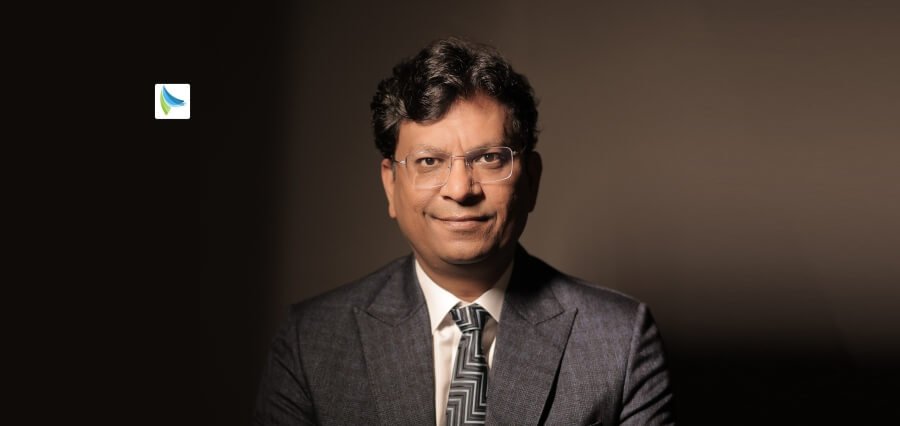
The journey of every life-changing career starts with a realization of opportunities in places where there are only restrictions seen. This is true for Ajay Gupta, who has spent nearly twenty years with structural engineering with the vision of bringing the precision of the engineering discipline along with making places which can withstand the test of time. His career has been based on not only designing such resilient structures, but he has also been breaking through the conventional processes of the field.
Being the Founder and Director of Perceptive Ideas Consulting Engineers Pvt. Ltd., he has been able to build a legacy as someone who has always focused on bringing both the best technical skills and dedication towards development. Through his career years, he has seen industry move from manual computations and drawing boards to digital processes, adapting to every change while still making sure that engineering judgment plays a vital role in all decisions made.
Currently, he is leading the way for the next revolution of his profession by embracing the prudent adoption of artificial intelligence to structural engineering. He does not believe that technology should replace the skill of engineers but, rather, that technology should complement the skills of engineers and help create intelligent designs and collaboration in the whole process. The evolution of this visionary engineer demonstrates the qualities of tenacity, foresight, and adaptability to change. Visionary leadership is the secret behind inspiring the coming generations to develop beyond just stronger structures.
Discover how Ajay Gupta is redefining structural engineering by blending decades of expertise with the transformative potential of artificial intelligence.
A Race No One Can Afford to Skip
Ajay does not mince words when he describes the urgency behind adopting AI. Structural engineering, he explains, is a hardcore engineering subject built on relentless iteration. Every beam, column, and slab can be designed in countless ways, and arriving at the most efficient option traditionally meant running the numbers again by hand. That, he says, is precisely where artificial intelligence earns its keep. It absorbs the repetitive computational load, mines through data, and delivers an optimized section far faster than any team of engineers working with calculators and spreadsheets ever could.
For him, this is not a luxury but a competitive necessity. He draws a striking parallel to the industry’s last major technological pivot: the shift from manual drafting boards to computer-aided design roughly twenty-five years ago. Firms and professionals who resisted that change, he recalls, gradually fell out of the profession altogether. He believes AI adoption today follows an identical script, separating those who evolve from those who eventually get left behind.
True to that conviction, Gupta has spent the last year and a half building an in-house AI ecosystem within his organization. He describes forming a dedicated group of AI champions, employees tasked with experimenting, building plugins, and stitching together the firm’s fragmented software landscape. Design software, drafting platforms, Indian structural codes, and Excel-based calculations, all traditionally isolated systems, are now being woven into a single AI-assisted workflow. It is a leadership-driven exercise, Gupta insists, one where his role is to visualize what is possible and then empower his team to execute it. “We are coping with this advancement in technology, and we are building up that mindset to adopt AI into the culture,” he says.
From Judgment to Just-in-Time Optimization
Ask him whether AI genuinely improves an engineer’s decision-making, and Gupta answers with the confidence of someone who has tested the theory in practice. Structural engineering, he notes, has always been an experience-driven craft, refined through decades of professional judgment. AI does not replace that judgment; it accelerates the process, feeding into it. Where a hundred design iterations might once have consumed days of manual effort, AI tools now compress that timeline dramatically.
Equally significant, Gupta says, is how AI has tightened cross-checking across the dozens of drawings a single project can generate. Structural details are often scattered across four or five separate documents, and human oversight inevitably leaves room for mismatches, the kind that later surface as costly Requests for Information on site. With AI-driven verification tools his team has built in-house, that friction has largely disappeared, replaced by near-complete automated checking.
Predicting the Unpredictable
Safety, Gupta stresses, remains the non-negotiable foundation of every structure he designs, and this is where AI’s predictive power becomes most compelling. By integrating disciplines such as weather forecasting and seismic data analysis, AI systems can offer early warnings, not with pinpoint certainty, but with enough signals to help engineers and building operators prepare. Sensors embedded within structures, linked to AI monitoring systems, can flag distress after an event and indicate whether a building needs urgent repair or can safely continue in service.
Earthquakes, however, remain a stubborn exception. Gupta acknowledges that seismic events occur within fractions of a second, leaving little room for meaningful intervention even when early indicators exist. Storms and meteorological disturbances are a different story altogether, he says, where AI-assisted forecasting already delivers tangible, actionable insight.
The Myth of Overnight Transformation
Despite his enthusiasm, Gupta is careful not to oversee AI’s impact. Clients, he admits with a wry acknowledgment, often expect instant miracles the moment they hear a firm has adopted AI. The reality, he insists, is more measured. “It is not like magic. If work requires one month, maybe it can be done in three weeks, but it won’t happen overnight,” he says.
Pressed to quantify the impact, Gupta settles on a clear ratio. “I will keep it at 80-20, but still 80 percent is required,” he says, adding that the quality and efficiency of design output have improved substantially, a trade-off he considers well worth the investment.
Tool, Not Replacement
Perhaps the most striking theme running through Ajay’s outlook is his insistence that AI must be understood as an instrument, not an autonomous decision-maker. As a business leader, he sees part of his role as an educator, guiding clients to understand what AI realistically delivers, while simultaneously training younger engineers to see themselves as engineers first and software operators second. “AI will support you, it won’t replace you. That is my way of thinking today,” he says.
That philosophy was tested in his own organization. A year ago, he admits, there was genuine excitement about the possibility of shrinking a hundred-person office down to forty employees through automation. That expectation, he says plainly, never materialized. What changed was the nature of the work itself: engineers spend markedly less time on repetitive calculations, freeing up capacity for higher-value analysis and design thinking.
Building an AI-Ready Culture
According to Ajay, successful AI adoption is less about installing software and more about cultivating a mindset. He describes a deliberate internal process at his firm: gathering senior associates to map out exactly what they want AI to achieve, before feeding those tools with two decades of accumulated design and drawing data. Only through this careful, iterative training does AI begin to produce outputs aligned with the firm’s standards and expectations. He calls it a smart or intelligent partner, explicitly rejecting the idea of AI as a plug-and-play solution.
When asked about his personal journey, he is refreshingly candid about the obstacles he faces. Like many structural engineers, he admits, programming and coding were never his strong suit, and the sheer pace of AI headlines initially left him uncertain about how to begin. The turning point came when he realized that modern AI tools handle the coding themselves, removing the technical barrier that had held him back.
According to him, from there the process became about identifying pain points, particularly the tedious cross-referencing of drawings, analysis reports, spreadsheets, and building targeted solutions around them. However, early successes gave both him and his team the confidence to keep expanding their AI capabilities.
Digital Twins, BIM and the Road Ahead
On emerging technologies such as Building Information Modeling, digital twins, and generative design, Gupta sees his firm already ahead of the curve. “Building Information Modeling already integrates every engineering discipline onto a single collaborative platform. The next frontier is connecting these BIM models to real-time sensor data, allowing engineers to monitor buried foundations or hidden structural elements without physically inspecting them, and catching early signs of distress before they escalate into failures,” he explains.
He strongly believes accountability is not something AI can dilute. Structural design carries direct life-safety implications. “A mistake is not acceptable in our profession,” he says plainly. Even as his firm automates design checks and calculations through AI, every drawing still passes through a manual review by a senior engineer before it reaches a construction site. That human checkpoint, he says, is non-negotiable, regardless of how sophisticated the underlying technology becomes.
Advice for the Next Generation
For young engineers entering the field, Gupta offers a philosophy he has championed throughout his career. “We need engineers, we don’t need operators,” he says. Running software, he points out, is a mechanical skill anyone can pick up. Understanding what data goes into a model and critically interpreting what comes out of it is the domain of a true engineer. That single principle, he says, forms the backbone of how his firm trains its younger professionals.
A Five-Year Horizon
Looking ahead, Gupta envisions a structural engineering landscape defined by transparency and traceability. AI, he believes, will help firms build comprehensive digital records for every project, ensuring that critical data remains accessible decades after construction, even twenty-five years down the line. He anticipates continued gains in design accuracy and efficiency, driven by AI’s capacity to run far more analytical iterations than any human team could manage alone, ultimately conserving materials such as concrete and steel.
Architecturally, Gupta predicts a bolder era ahead. Skyscrapers, large cantilevers, and daring hanging structures, concepts once considered too risky to simulate confidently, may become far more achievable as AI-driven analysis builds greater engineering confidence. Cities, he suggests, could soon showcase structures that push the boundaries of what previous generations considered possible.
Yet he remains grounded about the limits of his own foresight. Beyond a five-year window, he admits, the trajectory becomes difficult to predict with certainty. What he is certain of, though, is the underlying message he wants the profession to internalize. “AI can do the work of fifty ordinary people. But it cannot do the work of one extraordinary person,” he says, adding that structural engineers, as a fraternity, do not belong to the ordinary category. AI can support calculations, cross-checks, and transparency, but the human ability to reason, judge, and innovate under uncertainty remains firmly out of reach for any algorithm.
As artificial intelligence continues its march through engineering disciplines worldwide, Ajay Gupta’s message stands out for its measured optimism. In his view, technology is not the enemy of the profession but its newest collaborator, one that demands patience, deliberate training, and unwavering human oversight. The future he envisions is neither a utopia of automated skyscrapers nor a dystopia of redundant engineers, but a partnership where machines calculate, and humans still decide.
For an industry often accused of moving slowly, his approach offers a template worth studying: adopt early, train relentlessly, question constantly, and never let a tool make the final call on something as consequential as a building’s safety. It is a balance he has spent two and a half decades perfecting, and one he intends to keep refining as the technology around him continues to evolve.