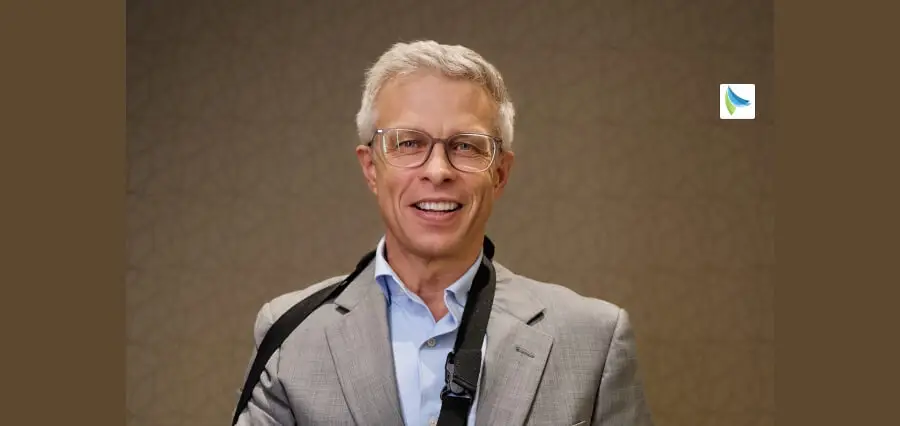





Not every founder can point to the exact moment their purpose became visible. Jeffrey Herbert Williams can. Eighteen years ago, he co-founded Excellence Edge International with three business partners, stepping into the venture without fully understanding what made it significant. That clarity arrived not in a planning session or a strategy meeting but in the middle of a training room, midway through a series of facilitation sessions, when he looked at the faces of the leaders in front of him and recognized something he had been observing across organizations for years without being able to name it.
The results-first culture that dominates most organizations was not wrong. It was incomplete. What was missing was identity. The culture that tells an organization who it is when no one is measuring. The shared sense of purpose that makes employee engagement genuine rather than engineered. The values that do not need to be enforced because they have been genuinely internalized by the people responsible for living them every day.
That was his forte. That was what Excellence Edge International was built to deliver. And eighteen years later, as Founder and Managing Director, he is still building it, one leader, one organization, and one transformational coaching session at a time. The most consequential work any leadership development professional can do is not to improve a leader’s technical competencies but to clarify their identity, deepen their self-awareness, and help them build the kind of culture that sustains performance long after the training program has ended.
He mentions, “Conducting training and coaching sessions specifically in leadership and strategic planning was what I had long desired for. Only after I conducted a series of training sessions did I realize it was what was missing in the jigsaw puzzle.”
The Philosophy That Drives Everything
At the heart of Jeffrey‘s leadership philosophy is a conviction that most organizations resist until the cost of resisting it becomes too high: that sustainable performance is a cultural achievement before it is a strategic one.
He has watched organizations invest heavily in systems, processes, and performance frameworks while systematically underinvesting in the identity that determines how those systems are actually used. Over time, the gap between what an organization says it values and how its people actually behave becomes the most reliable predictor of whether growth is sustainable or fragile. Organizations that have not resolved that gap often discover its consequences at the worst possible moment, in a crisis, in a leadership transition, or in the steady erosion of talent that happens when people no longer feel genuinely connected to the work they are doing.
Vision, mission, and core values are not decorative elements in Jeffrey’s framework. They are the architecture of organizational resilience. An effective leader does not simply define these elements in an annual strategy session and display them on a wall. They embody them through every decision, every communication, and every interaction with their team, creating alignment between what is said in the boardroom and what is lived on the floor.
He asserts, “When leaders align their decisions with the organization’s vision and values, they build trust, inspire commitment, and create a shared sense of purpose among employees and stakeholders.”
The reference he returns to repeatedly is Tony Fernandez, CEO of AirAsia, who articulated a principal Jeffrey has made central to his facilitation work: happy employees produce happy customers. Empowered people who understand the mission, feel trusted with genuine responsibility, and are recognized for their contribution do not need to be micromanaged into high performance. They perform because they want to, and that internal motivation produces a quality of commitment that no external incentive structure can replicate at scale.
From Task-Focused to People-Centered
Jeffrey is candid about the evolution his leadership style has undergone across eighteen years of building Excellence Edge International and working alongside leaders across industries and geographies. The direction of that evolution is consistent and grounded in repeated observation: from task-focused to people-centered, from directive to collaborative, from results-oriented to resilience-building.
During periods of uncertainty, employees do not look to their leaders for more targets or tighter timelines. They look for clarity, direction, and the reassurance that comes from a leader who is genuinely present, genuinely listening, and genuinely committed to helping them navigate what is hard. The leaders who retain their teams’ trust through difficulty are not those who project the most certainty. They are those who lead with the most honesty.
He highlights, “I have learned that empowering teams, encouraging innovation, and fostering resilience are equally critical for long-term success. While achieving results remains important, how matters as much as what matters.”
Open communication channels, active listening, and transparency about both challenges and opportunities have become non-negotiable elements of his leadership practice and the cornerstones of the frameworks he teaches. Leadership philosophy, he argues, must also evolve alongside the environment it operates in. Forward-thinking leaders continuously assess emerging challenges and opportunities while staying grounded in their organization’s core purpose. That combination of groundedness and adaptability is what allows them to lead through change without losing the cultural coherence that sustains performance across cycles of disruption.
The Self-Thinking-Strategy-Execution Framework
When Jeffrey works with leaders navigating high-stakes decisions under pressure, he offers a four-dimensional model that produces the clarity and confidence that pressure tends to erode.
The first dimension is SELF. Before a leader can effectively navigate complexity, they must honestly assess whether they can lead confidence in the current moment. Self-awareness, the ability to read both themselves and the people around them with accuracy and empathy, is the foundation upon which every other leadership capability rests. Executive presence, what Jeffrey describes as Gravitas, cannot be manufactured. It is the natural expression of a leader who knows who they are and whose team can sense authenticity in every interaction.
The second dimension is THINKING. Effective leaders create conditions in which their teams can synthesize ideas, challenge assumptions, and arrive at solutions no individual would have reached independently. The quality of thinking an organization is capable of is a direct reflection of the quality of leadership that surrounds it.
The third dimension is STRATEGY. Jeffrey draws on the Japanese concept of Hoshin Kanri here, a methodology that translates strategic intent through every level of an organization, ensuring that direction established at the top is genuinely understood and owned at the level of execution. Strategy without cascaded ownership is simply a document, accurate and ambitious but disconnected from the people responsible for making it real.
The fourth dimension is EXECUTION. Bold decisions, decisive actions, and the willingness to make things happen rather than wait for perfect conditions are the hallmarks of true leadership. Execution is where all the self-awareness, collaborative thinking, and strategic clarity either produces results or exposes the gap between intention and capability.
He states, “Our leadership facilitation and coaching sessions give leaders a roadmap and vision on how they can get their teams working towards a common goal, ensuring their goals and objectives are met.”
Building Teams That Own Their Results
Empowerment, in Jeffrey’s framework, is a leadership philosophy that only creates value when practiced consistently and without qualification. He is direct about what he observes in organizations that struggle with sustained performance: a gap between what leaders say about empowerment and what their daily behavior actually communicates.
Leaders who declare their trust in their people while micromanaging every consequential decision create teams that are confused about their actual authority, disengaged from their potential, and ultimately dependent rather than self-directing. That dependency, multiplied across an organization, is one of the most expensive management failures that never appears on a balance sheet.
Building genuinely high-performing teams requires delegating real responsibility, supporting individuals through coaching and structured feedback, and recognizing achievement in ways that connect each person’s contribution to the organization’s larger purpose.
He reflects, “When people are trusted and supported, they become more confident, motivated, and committed to achieving results. A leader who sees empowerment as a core responsibility creates an environment where individuals feel inspired to contribute beyond their immediate tasks.”
Recognition and purpose play equally important roles in sustaining motivation over time. Celebrating achievements specifically and genuinely and consistently connecting everyday work to the organization’s long-term vision reinforces the engagement that performance management systems attempt but rarely achieve on their own.
Innovation as a Cultural Standard
Jeffrey does not treat innovation as a program or an annual initiative. He treats it as a cultural standard that either exists throughout an organization because leadership conditions for it have been deliberately created or does not exist meaningfully at all regardless of how prominently it appears in stated values.
Creating that standard begins with psychological safety, the condition in which team members feel genuinely free to share ideas, experiment with approaches, and learn from failures without fear of blame or professional consequence. Without that foundation, innovation becomes performative. People participate in brainstorming sessions while protecting themselves from the risk of being wrong, and the ideas that emerge are the ideas that feel safe rather than the ones that could genuinely transform the organization.
He cultivates psychological safety by leading from example, remaining visibly open to new ideas, demonstrating personal adaptability, and communicating the purpose behind change with enough clarity that people understand why it is happening rather than simply being required to accept it.
He affirms, “People are more likely to embrace change when they understand the purpose behind it, the benefits it brings, and how they can contribute to its success.”
Resilience Built Through Challenge
One of the most instructive chapters in Jeffrey’s leadership journey came through a period of significant organizational change that tested every principle he had been building his practice around. Shifting priorities, tighter timelines, and genuine uncertainty among both stakeholders and staff created conditions in which the gap between leadership rhetoric and leadership reality became impossible to hide.
His response was grounded in the same framework he teaches. He maintained transparent communication even when messages were difficult. He set clear priorities without pretending complexity had disappeared. He ensured the team understood both immediate objectives and the broader purpose that made navigating the difficulty worthwhile. And he demonstrated through his own consistency under pressure that resilience is not a personality trait. It is a practice built and sustained by how a leader shows up when conditions are most demanding.
The lessons from that period have become part of the lived experience Jeffrey brings to the organizations he works with, a reminder that the frameworks he teaches are practical tools he has stress-tested in his own leadership under real pressure.
The Legacy He Is Building
Mentorship sits at the absolute center of Jeffrey’s understanding of what leadership ultimately produces. His own development was shaped significantly by mentors who offered guidance during pivotal moments, provided honest feedback without diminishing confidence, and modelled what it looks like to care genuinely about another person’s growth. That experience produced a belief foundational to Excellence Edge International’s identity: effective leadership is not ultimately about what a leader achieves. It is about what the people around them become.
The legacy he is building is not measured in revenue figures or client rosters. It is measured in the leaders who have come through Excellence Edge International’s programs carrying a clearer understanding of who they are, a sharper capacity to lead under pressure, and a genuine desire to pass that commitment on to the next generation of leaders they will develop.
He envisions, “Developing a strong and authentic leadership identity begins with understanding who you are, what you value, and how you want to impact others. Leadership development is a journey, not a destination.”
Jeffrey Herbert Williams did not set out eighteen years ago to build one of the region’s most distinctive leadership development practices. He set out to fill the gap he had been observing for years in organizations that were performing but not truly flourishing, meeting targets but not building cultures, managing results but not developing people. In doing so, he found his purpose, built his practice, and has spent every year proving that the culture behind the results is not a soft consideration. It is the most consequential one.