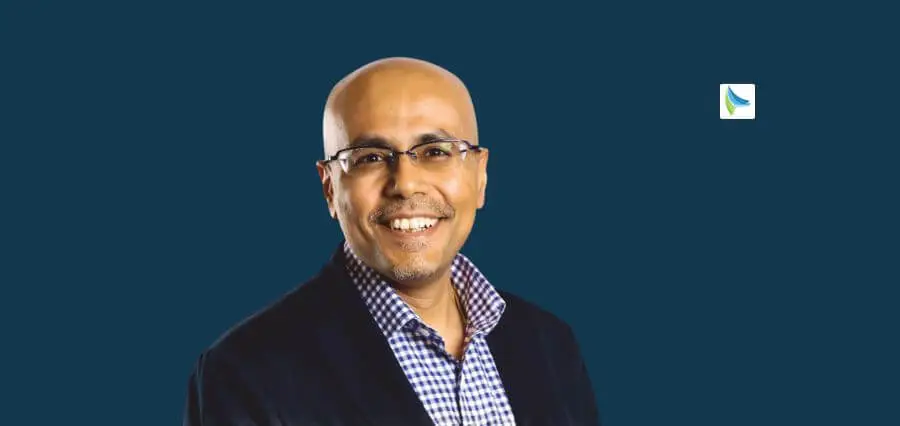





Not every professional can point to a single mentor who changed the entire trajectory of their thinking. Ibad Ur Rehman Ahmed can. Early in his career, working as Head of Corporate Strategy and later as General Manager of Convenience Retail at Petromin, he had the privilege of being mentored by the Vice Chairman of the board, Waheed A. Shaikh. Observing how a leader of that caliber thought about strategy, how they connected the boardroom’s concerns to everyday execution, and how they made decisions under competing pressures, left marks on him that have never faded. That education, earned not in a classroom but in proximity to someone who led at the highest level, became the foundation on which everything that followed was built.
Today, Ibad Ur Rehman Ahmed serves as Senior Vice President of Monetization at Classera, the Saudi-founded edtech company established in 2011 and operating across Jeddah, Cairo, Amman, Muscat, and San Francisco. It is a role he describes as the most meaningful of his career, and that description carries more weight than the usual executive understatement. The work connects revenue strategy and business performance to something considerably larger: the question of who gets access to quality education, and on what terms.
What the Boardroom Actually Cares About
The years Ibad Ur Rehman Ahmed spent at Petromin gave him something that most strategy professionals acquire only after decades of seniority: an understanding of how CXOs actually think. Not how they present in public or how they communicate in annual reports, but what genuinely concerns them when the cameras are off, and the room is small enough for honest conversation.
That understanding sits at the core of how he approaches his current role. Revenue strategy, in his view, is inseparable from customer strategy. The two are not competing priorities to be balanced against each other. They are expressions of the same underlying logic and confusing them produces the kind of short-term thinking that generates revenue at the cost of the relationships that sustain it.
He states, “The mistake we often make is to confuse value for price. A happy customer can have a much higher willingness-to-pay than the current price, and vice versa.”
The deeper argument he makes is about sequencing. In any boardroom debate about who comes first, whether the investor, the shareholder, the partner, the supplier, or the employee, his answer is consistent and unambiguous: the customer. Not because the others do not matter, but because you can only take care of everyone else if the customer is genuinely satisfied first. That principle is not a philosophy he has adopted as a guiding statement. It is the operational logic he applies to every monetization decision he makes.
Building at the Edge of Disruption
Ibad’s thinking about innovation and market opportunity is shaped by a belief that most organizations fundamentally misunderstand the nature of the threat they face from technology disruption. The question is not whether disruption will arrive. It is whether the organization has invested seriously in understanding how it will arrive and what it will look like when it does.
His prescription is precise: every business, technology-native or otherwise, needs a dedicated internal incubator with genuine autonomy and two clear deliverables. The first is to understand how a technology-based upstart could disrupt existing business from the outside. The second is to identify how the organization can leverage that same technology to create the next significant revenue vertical while continuing to extract value from its current position.
He notes, “Not having such a startup or not giving it autonomy is why the average company lifespan has reduced to 12.5 years.”
That figure is not a piece of trivia. It is a warning about what happens when organizations prioritize defending existing models over genuinely interrogating them. Ibad Ur Rehman Ahmed has seen enough business cycles to understand that the companies most at risk from disruption are rarely those that ignore new technology entirely. They are those that watch it carefully but never quite give themselves permission to build against it from within.
The Foodpanda Chapter
Among the experiences that most directly tested Ibad’s resilience and commercial conviction was his time as Director of Grocery and New Verticals at foodpanda, part of Delivery Hero. He arrived during the rapid rise of quick commerce, a category that was not yet established, navigating both the headwinds and tailwinds created by COVID-19 and a startup investment landscape that was producing new competitors on what felt like a weekly basis.
The pressure in that environment was not simply competitive. It was ideological. Every new entrant arrived with funding, a bold claim, and an implied argument that volume was the only metric that mattered. The temptation to respond in kind, to chase share through deep discounting and sacrifice margin for scale, was ever-present and well-funded.
Ibad Ur Rehman Ahmed resisted it. His conviction was that building a sustainable business around solid fundamentals and leveraging marketing technology and advertising technology as genuine revenue levers was the right approach, even when a competitor’s short-term share gains made that position uncomfortable to hold. The lesson he took from that period stayed with him.
He reflects, “Deep thinking about the defensibility of your moats and your own strengths and weaknesses is far more important than structuring your strategy around what competition is doing.”
Making Education More Accessible
The work Ibad Ur Rehman Ahmednow leads at Classera carries, by his own account, more personal weight than anything he has done previously. The company operates at the intersection of education technology and financial access, and that combination means that the decisions his team makes about monetization carry consequences that extend well beyond commercial outcomes.
Every edtech recommendation the company makes helps upskill individuals at a moment when the gap between what academia produces and what industry actually requires is widening at a rate that traditional institutions are not equipped to close. Every financed tuition arrangement creates an option for access to quality education that would not otherwise have existed for the person receiving it.
That framing matters to Ibad Ur Rehman Ahmed not as a values statement but as a practical operating principle. When the business genuinely serves its users, when the customer experience is strong, the account handling is attentive, and the real pain points are being addressed rather than managed; the commercial outcomes follow. The relationship between meaningful service and sustainable revenue is not a tension to be negotiated. It is a reinforcing dynamic to be built deliberately.
He says, “Customer experience, superior account handling, resolving genuine pain points for the client, always trump having a good rate as the sole proposition.”
From Goals to Milestones to Results
Ibad’s approach to translating ambitious business objectives into measurable outcomes is grounded in a discipline he applies consistently: break the large goal down until its components are concrete enough for a team to believe they can actually reach them.
There is no universal formula, and he is direct about that. A genuine curiosity about the why and how things are the starting point. From there, the work is about defining both leading and lagging metrics at the outset, establishing what success looks like before the work begins rather than debating it afterward. And then breaking the vision into pieces small enough that the people responsible for executing them can see clearly how their contribution connects to the larger outcome.
He notes, “Leave it too big, and it becomes difficult to get buy-in because teams may not believe it is practical and realistic.”
The point is not to diminish ambition. It is to make ambition executable. Teams that cannot see the path between where they are and where the goal sits tend to disengage not from laziness but from a reasonable assessment that the destination is unreachable. Ibad’s role, as he sees it, is to make that path visible.
Saudi Arabia at the Forefront
On the Kingdom’s broader economic trajectory, Ibad’s view is clear-eyed and direct. Saudi Arabia has demonstrated a level of commitment to diversification, and specifically to investment in AI, data centers, and digital transformation, that most economies cannot match either in clarity of vision or in the capital deployed to execute against it.
For organizations and individuals operating within that environment, the opportunity is significant and the pressure equally so. The pace of change rewards those who position themselves at the forefront of it and leaves limited space for those who prefer to observe before committing.
He observes, “Individuals and organizations need to be ready and at the forefront of change or be ready to be left behind in the dust.”
Culture, Strategy, and the Tightrope Between Them
Ibad Ur Rehman Ahmed navigates the tension between culture and strategy with the awareness of someone who has read both arguments carefully and drawn his own conclusions. He quotes Peter Drucker’s observation that culture eats strategy for breakfast and immediately pairs it with Ben Horowitz’s counterpoint that the world is full of bankrupt companies with world-class cultures. His reading of that tension is that successful leaders tread the tightrope carefully, calibrating their approach to the specific size, stage, and circumstances of the organization they are leading rather than applying a fixed principle regardless of context.
The talent development principles he applies are grounded in the same human observation that runs through everything else he says. People perform when they feel the organization is investing in them genuinely, when accountability is real and visible, and when the culture rewards contribution rather than simply rewarding seniority or proximity to the right people.
He affirms, “Leadership is measured not by the results alone, but by how you achieve them and how you lead the teams that make those results possible.”
A Legacy Built in Moments, Not Milestones
When Ibad Ur Rehman Ahmed considers the legacy, he is building through his work; he reaches a frame that is both more personal and more durable than the usual executive metrics. Legacy, in his view, is how actions and behaviors echo forward in time. Not the results alone, but the manner in which they were achieved and the effect on the people who were part of achieving them.
He describes professional relationships in terms of a bank account. Every interaction is either a deposit or a withdrawal. Make too many withdrawals without replenishing the balance, and the account empties. The inverse is equally true: long-term positive investments compound over time, multiplying in ways that produce returns no single transaction could have predicted.
His advice to aspiring leaders is delivered with the same directness. Stay curious about how and why things work. Build the defensibility of your own position rather than in reaction to what competitors are doing. And treat every human interaction by carrying weight, because the people around you remember the small moments far more reliably than they remember the grand announcements.
He says, “Legacy is basically how our actions and behaviors echo into eternity. People remember the micro-interactions that might seem trivial to you but are either deposited into or withdrawals from a relationship’s bank account.”
In Saudi Arabia’s rapidly evolving business landscape, where the pace of transformation is creating genuine opportunity for leaders willing to build with both conviction and care, Ibad Ur Rehman Ahmed is doing exactly that.