



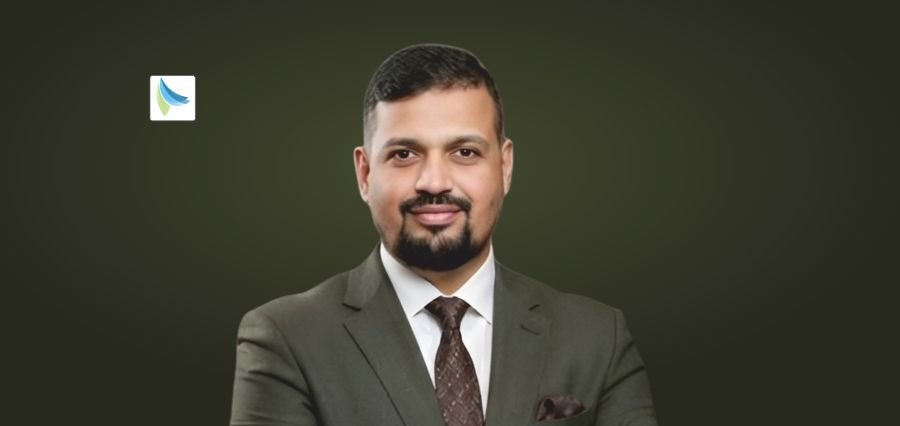
In a field where trust is earned with every action, Mohammed Sultan Zubair has built a leadership style that is defined by accuracy, integrity, and consistency rather than visibility. Over the past fifteen years, as the Managing Director of MSZ Consultancy, he has transformed the firm into one of the region’s most respected corporate advisory firms, helping more than 3,200 business owners, family offices, and multinational corporations with business setup, corporate tax planning, Golden Visa advisory, PRO services, and cross-border expansion across the United Arab Emirates and Saudi Arabia.
As demonstrated by its ISO, IAF, and IAS certifications as well as its outstanding 4.9 out of 5 Google client rating, MSZ’s reputation goes beyond its financial performance. It reflects a dedication to long-term partnerships and trust. Mohammed Sultan Zubair recognized early that clients sought more than technical expertise. Every dimension of MSZ, its hiring practices, corporate culture, and client advisory approach, has been shaped by this commitment, producing an organization where trust is not merely a value but the foundation of every decision.
Leadership Built on Consistent Judgement
Mohammed’s journey into leadership was not defined by a single turning point. Instead, it developed gradually as he realized that people around him often looked to his judgement before making their own decisions. Even before holding a leadership title, colleagues in small group discussions relied on his assessment of whether an idea was practical or needed more thought.
“Leadership did not arrive for me as a single moment of revelation. It arrived as a slow recognition that people around me would wait for my reading of a situation before forming their own,” he says.
This gradual recognition shaped his leadership philosophy in lasting ways. It reinforced his belief that leadership is earned through consistent judgement rather than the loudest voice in the room. It also strengthened his sense of responsibility, which continued to grow as more people came to depend on the institutions and teams he helped lead.
Three Principles That Define MSZ’s Success
When asked about the philosophy behind MSZ’s strong reputation, Mohammed Sultan Zubair points to three principles that guide every decision the firm makes. The first is integrity over convenience. As a consultancy serving Golden Visa applicants, corporate tax clients, and entrepreneurs operating in two of the region’s most complex regulatory environments, the pressure to overpromise is always present. Mohammed says MSZ consciously avoids that approach. The firm has earned its reputation by giving clients honest advice, even when it means losing a business opportunity. He believes trust is not simply a value but the foundation of long-term commercial success.
The second principle is complete ownership of outcomes. Every member of the MSZ team is responsible not only for their individual tasks but also for the client’s overall success. The firm follows every engagement through to completion, identifies challenges early, and resolves issues before clients need to raise them. Mohammed Sultan Zubair believes talent without accountability becomes a weakness when situations become complex. At MSZ, professional growth depends on demonstrating both ability and ownership.
The third principle is reliability. It means delivering on every commitment within the promised timeline. Mohammed Sultan Zubair says that without reliability, even the strongest sales conversation eventually leads to disappointment and weakens client relationships. While the team is responsible for execution, he believes the leader must remain accountable for the firm’s reputation, regulatory compliance, and client commitments. This clear division of responsibility creates confidence across the organization and enables the team to perform at its best.
Building Trust Through Consistent Leadership
Mohammed Sultan Zubair believes there is a clear difference between the values leaders talk about and the values they demonstrate through their actions. In his view, employees pay less attention to speeches and formal meetings than to the decisions leaders make every day. Organizational culture is shaped in ordinary moments, and those moments reveal what a leader truly stands for.
This belief is reflected in the way he leads MSZ. He ensures that the priorities he sets for the team are the same standards he follows himself. If the firm decides not to pursue a client engagement that is not in the client’s best interest, Mohammed Sultan Zubair is the first to support that decision. If managers are expected to focus on the quality of leads rather than the number of leads, he does not reward impressive but meaningless performance metrics. He believes trust grows when employees see that the same rules apply to everyone, especially the leader.
Mohammed Sultan Zubair also places strong emphasis on clarity. He considers it a professional responsibility rather than a communication style. The same principle applies within the organization. With teams working across four offices and multiple time zones, communication can easily become layered and complicated. Mohammed encourages direct and transparent conversations instead. He believes people trust leaders who communicate clearly and consistently, especially when they are willing to deliver difficult messages with the same openness as positive news.
Thoughtful Leadership Decisions
When faced with a high-stakes decision, Mohammed’s instinct is to slow down rather than rush. He begins by separating facts from assumptions because he believes many poor decisions are based on ideas that no one takes the time to question. He then evaluates the potential downside before considering the upside. If the worst realistic outcome is manageable and the potential benefits are significant, he believes the decision is worth pursuing. However, if the downside could seriously threaten the organization, no potential reward is enough to justify the risk.
After assessing the risks, Mohammed Sultan Zubair tests the decision through three different perspectives. The strategist asks whether the choice supports the organization’s long-term goals over the next three years. The operator considers whether the firm has the people, systems, and financial resources needed for successful execution. The fiduciary evaluates whether the decision would still appear responsible and sound if it were reviewed publicly a year later. Only when all three perspectives are aligned does Mohammed move forward. Once a decision is made, he believes it should be executed with confidence and commitment.
Leading with Humility and Openness
Mohammed Sultan Zubair is open about the area of leadership that requires the most conscious effort. By nature, he is confident, but he recognizes that unchecked confidence can discourage different opinions and limit healthy debate. To prevent this, he has developed habits that encourage open discussion and diverse perspectives. During strategy meetings, he asks for counterarguments before sharing his own views. On important and contested issues, he often invites the most junior person in the room to speak first. He believes that the cost of silence is far greater than the discomfort of a difficult conversation.
Mohammed Sultan Zubair has also learned the importance of accepting criticism without responding defensively. He admits that listening to feedback and reflecting on it has been one of the most challenging aspects of his personal growth as a leader. Over time, he has observed a clear pattern. A team’s willingness to question its leader depends on how previous disagreements were handled. When employees feel their opinions are respected, they are more likely to speak up again. When they feel ignored or dismissed, conversations become quieter and valuable perspectives disappear. For Mohammed, an environment where people feel comfortable challenging ideas is essential. It provides leaders with the early warning system they need to identify risks, improve decisions, and build stronger organizations.
Identifying and Developing Future Leaders
Mohammed Sultan Zubair believes that leadership potential is rarely reflected by qualifications alone. Instead, he looks for three qualities that reveal themselves through everyday behavior. The first is ownership. He pays attention to whether a person takes responsibility for solving a problem as soon as they identify it or waits for someone else to assign the task. The second is curiosity under pressure. When faced with uncertainty, he values individuals who ask thoughtful questions and seek to understand the situation rather than relying only on what they already know. The third quality is respect for others. Mohammed believes that future leaders consistently speak positively and professionally about people who are not present.
Once he identifies these qualities, he focuses on creating opportunities for growth. His approach is to give people responsibilities that are slightly beyond what they believe they are ready to handle while remaining available to provide guidance when needed. He believes leadership develops through real decisions and real accountability in an environment where manageable mistakes are accepted as part of the learning process. To build confidence and capability, he exposes emerging leaders to changing regulatory landscapes, introduces them to client interactions early in their careers, and encourages them to share their experiences with the wider team.
Success Beyond Numbers
The achievement that gives Mohammed Sultan Zubair the greatest sense of pride is not reflected in revenue figures or public announcements. Instead, it is the growth of the people who have built their careers alongside MSZ. Several members of the team joined the firm at an early stage in their professional journeys when their future paths were still uncertain. Over time, they have developed into senior professionals, taken on leadership roles, supported their families, and built successful careers. For Mohammed, seeing a former junior associate lead a department or manage a portfolio of major clients is a more meaningful and lasting accomplishment than any individual business transaction.
He also takes pride in the long-term relationships the firm has built with its clients. Many partnerships began with a single business setup and gradually expanded into ongoing advisory services covering compliance, business growth, banking, and succession planning. Even as the firm has expanded across four countries, Mohammed Sultan Zubair has worked to maintain a level of accessibility that many growing organizations struggle to preserve. Clients who genuinely need to speak with him can still reach him directly. He believes that this personal connection strengthens trust and is one of the firm’s most valuable qualities.
A Vision for Lasting Leadership
Mohammed Sultan Zubair believes that leadership is a continuous journey of learning and self-improvement. He is currently working on two areas of personal development: receiving difficult feedback with greater openness and lengthening the pause between hearing a challenge and responding to it. Alongside this, he is investing time in understanding how artificial intelligence will reshape professional services, redefining how advisory work is delivered, how clients discover firms, and how knowledge is captured inside an institution. Looking ahead, Mohammed’s ambitions extend beyond business growth. He wants MSZ Consultancy to be recognized as a firm that has elevated the standard of advisory services across the GCC through integrity, sound judgement, and professional excellence.
He also hopes to develop a new generation of leaders who carry the firm’s values into their own careers, whether they continue at MSZ or build organizations of their own. In his view, the true measure of leadership is the quality of the leaders it creates. On a personal level, Mohammed Sultan Zubair aspires to be a leader whose presence brings confidence and stability rather than authority alone. He believes the most influential leaders are not the loudest voices in the room. They are the individuals whose judgement earns quiet trust, whose words carry lasting credibility, and whose organizations continue to succeed even in their absence.