



In a healthcare setting, technology can be judged on what systems it can implement, the efficiencies it can bring about, and the innovations it can introduce. But the best transformative leaders know there’s more to the power of technology. It is the moment when clinicians get more time to care, when patients don’t get in their way, and when trust grows because digital solutions are invisible.
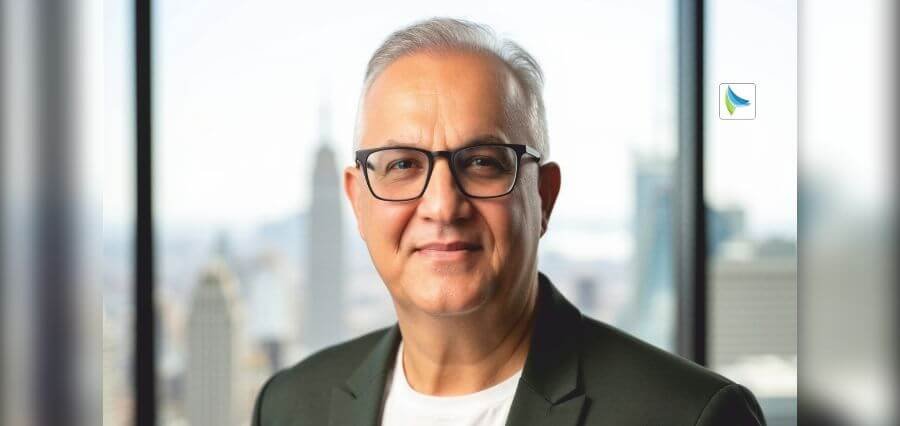
Sunil Dadlani, Executive Vice President & Chief Information & Digital Transformation Officer, Atlantic Health, has followed a remarkable career for over 25 years built on this philosophy. Sunil has been a global leader and a strong advocate of technology that creates a meaningful impact. He’s more than just a digital tool implementer; he’s a person dedicated to building a more intelligent, connected, secure, and human-centric healthcare ecosystem.
In an age of artificial intelligence, predictive analytics, cybersecurity, and digital transformation, Sunil Dadlani is among the pioneers, defining what comes next for healthcare, and also the user experience, end to end.
A Journey Driven by Purpose
The most influential careers are rarely linear, and Sunil’s journey reflects that reality. His professional path has taken him across Fortune 100 enterprises, government institutions, and some of healthcare’s most complex environments. Throughout these experiences, he developed a unique perspective on how technology can create meaningful change on a scale.
His early leadership roles at organizations such as Sony, Motorola, Siemens, and Novell exposed him to global operations, enterprise transformation, and the discipline required to manage technology at scale. These experiences sharpened his understanding of execution, governance, and strategic leadership.
A pivotal chapter emerged during his work with the New York State Department of Health. There, technology became more than a business enabler. It became a vehicle for protecting communities, improving public health outcomes, and serving entire populations.
That experience ultimately led him to healthcare, where he discovered his deepest professional purpose.
Today, at Atlantic Health, Sunil Dadlani leads efforts that position digital, data, cybersecurity, AI, and innovation as enterprise-wide capabilities embedded into every aspect of care delivery. Rather than merely digitizing existing processes, he focuses on fundamentally reimagining how healthcare can become more proactive, personalized, and accessible.
He reflects, “I didn’t come to healthcare because the problems were easy. I came because the problems were deeply human—and technology, when guided by purpose and trust, can help solve them at scale.”
Reimagining Healthcare for a Digital Future
Healthcare is experiencing one of the most significant transformations in its history. Traditional models centered on episodic care are rapidly evolving into connected ecosystems that support patients throughout their healthcare journeys.
Sunil Dadlani sees this transformation occurring through several interconnected shifts.
The first is the move from episodic interactions to continuous engagement. Digital front doors, virtual care platforms, remote monitoring technologies, and AI-powered navigation tools now enable healthcare organizations to stay connected with patients before, during, and after treatment.
The second shift centers on precision. Advanced analytics and artificial intelligence allow healthcare providers to identify risks earlier, personalize interventions, reduce variation in care, and improve outcomes through data-driven decision-making.
The third involves simplifying patient experiences. Historically, healthcare systems have often felt fragmented and difficult to navigate. By creating seamless digital experiences, organizations can make scheduling, communication, billing, follow-up care, and patient engagement significantly easier and more intuitive.
For Sunil, digital transformation should never focus solely on technology adoption. Its true purpose is to create healthcare experiences that are more responsive, more personalized, and more compassionate.
He believes, “The future of healthcare will not be defined by how digital it becomes, but by how human, intelligent, and trusted it feels to the people we serve.”
Building the Foundation for AI-Native Healthcare
As artificial intelligence continues to mature, healthcare is moving beyond basic automation toward entirely new operating models. Sunil believes the next decade will be defined by technologies that not only support decision-making but actively participate in transforming care delivery.
At the forefront of this evolution are Agentic and Generative AI technologies. While today’s AI solutions primarily assist clinicians and administrators, the next generation will autonomously coordinate workflows, streamline operations, and deliver critical insights precisely when needed.
Another breakthrough innovation capturing Sunil’s attention is the emergence of Digital Twins. These dynamic digital replicas of patients allow healthcare providers to simulate treatments, predict outcomes, and personalize care with unprecedented accuracy. What began as an engineering concept is rapidly becoming a powerful healthcare capability.
Equally transformative is Ambient Intelligence. By enabling clinical environments to listen, learn, document, and automate routine administrative tasks, these technologies allow physicians to focus more completely on their patients rather than on documentation.
Precision Medicine and Genomics further expand these possibilities. Advanced data platforms enable clinicians to tailor treatment plans based on an individual’s unique biological characteristics, replacing generalized approaches with highly personalized care strategies.
However, Sunil Dadlani remains clear that none of these innovations can succeed without strong foundations. Trusted data ecosystems and robust cybersecurity frameworks are essential for scaling AI responsibly and effectively.
He emphasizes, “The most sophisticated AI in the world is only as good as the data behind it and the trust protecting it.”
Transforming Data into Better Outcomes
Data has become one of healthcare’s most valuable strategic assets. Yet many organizations continue to struggle with fragmented information, inconsistent reporting, and disconnected systems.
Sunil Dadlani views data not as a technical resource but as a critical enabler of better decisions and improved outcomes.
Clinicians equipped with timely and accurate information can identify high-risk patients earlier, personalize treatment strategies, improve safety measures, and reduce unnecessary variation in care delivery.
Operational leaders can leverage data to optimize staffing, improve patient access, enhance throughput, strengthen revenue cycle performance, and allocate resources more effectively.
Beyond operational efficiency, data also serves as a powerful tool for addressing healthcare disparities. By identifying gaps in care, geographic barriers, scheduling challenges, and social determinants of health, organizations can design more equitable and accessible healthcare models.
Under Sunil’s leadership, data becomes a strategic capability that transforms healthcare from a reactive system into a predictive and proactive one.
He explains, “With the right data foundation, we can move from reacting to problems after they occur to identifying risk earlier, intervening sooner, and continuously improving outcomes.”
Overcoming the Barriers to Transformation
While digital transformation presents extraordinary opportunities, healthcare organizations continue to face significant challenges on their journey toward modernization.
Fragmentation remains one of the largest obstacles. Many health systems still operate across legacy platforms, disconnected workflows, and inconsistent data environments. Introducing advanced technologies into fragmented ecosystems often amplifies complexity rather than solving it.
Trust presents another challenge. Clinicians and patients need confidence that digital solutions are safe, transparent, secure, and designed to support rather than burden their experiences.
Data readiness also remains a critical concern. Artificial intelligence and advanced analytics require clean, governed, interoperable, and trusted data to function effectively.
Meanwhile, cybersecurity threats continue to grow as healthcare organizations expand their digital footprints and adopt increasingly connected technologies.
Perhaps the most overlooked challenge is changing management. Successful transformation requires organizations to redesign workflows, align stakeholders, train teams, and create cultures that embrace innovation.
For Sunil, technology implementation represents only a small portion of the overall transformation journey.
He states, “The barrier to digital transformation is rarely technology alone. It is the ability to align people, process, data, trust, and execution around a shared purpose.”
Enterprise Innovation with Measurable Impact
Throughout his career, Sunil has focused on creating innovation that delivers measurable enterprise value rather than isolated technological achievements.
One of the most significant examples of this philosophy is the development of an enterprise AI and Data Analytics Center of Excellence. Rather than treating artificial intelligence as a collection of pilot projects, this initiative established a scalable operating model capable of embedding AI into clinical, operational, and administrative workflows.
The result has been a stronger foundation for enterprise-wide decision-making, operational efficiency, governance, patient engagement, and long-term innovation.
By integrating AI and analytics into everyday healthcare operations, Atlantic Health has created opportunities to improve both patient experiences and business performance.
Sunil believes that the ultimate success of any innovation initiative must be measured through its impact on people.
He notes, “Innovation only matters when it improves the experience of patients, clinicians, and team members. The most meaningful transformation is not the technology itself. It is the friction we remove, the trust we build, and the outcomes we improve.”
The Power of Collaboration
Over the course of his career, Sunil has observed a recurring pattern. Technology initiatives often fail not because of weak platforms or insufficient funding but because they are developed in isolation.
Healthcare transformation requires collaboration among clinicians, technology experts, administrators, and executive leaders. When these groups operate independently, even the most sophisticated solutions struggle to gain adoption and deliver value.
At Atlantic Health, collaboration serves as a foundational principle. Technology teams work closely with clinical leaders, physicians, nurses, and operational stakeholders to ensure solutions address real-world challenges and support meaningful outcomes.
This approach fosters trust, improves adoption, and creates shared ownership of transformation initiatives.
For Sunil, successful innovation begins with partnership rather than technology.
He shares, “The initiatives that succeeded started with conversations, not requirements documents. They brought clinicians into the design process early—not as end users, but as co-creators.”
Innovation Built on Trust
Healthcare leaders today face a delicate balancing act. They must accelerate innovation while safeguarding patient privacy, maintaining compliance, and protecting sensitive information.
Sunil rejects the notion that innovation and security are competing priorities. Instead, he believes they must evolve together.
Every digital initiative should incorporate governance, ethics, privacy, cybersecurity, and patient safety from the outset. Security cannot be treated as an afterthought or a final approval checkpoint.
As healthcare becomes increasingly AI-driven and interconnected, trust becomes one of the industry’s most valuable currencies.
Patients need assurance that their information is protected. Clinicians need confidence that technology supports safe and effective care. Organizations need governance structures that enable innovation responsibly.
Sunil’s leadership philosophy reflects this balance between speed and accountability.
He explains, “Move fast where we can, move carefully where we must, and never compromise patient trust.”
Defining Leadership for the Future of Healthcare
While technology continues to evolve, Sunil believes the qualities that define exceptional leadership remain remarkably consistent.
Purpose must come before the ego. Leaders must stay anchored to missions that extend beyond personal achievement or professional recognition.
Integrity serves as a non-negotiable foundation. In healthcare, every decision can affect lives, making ethical leadership essential.
Empathy allows leaders to understand challenges through the perspectives of patients, clinicians, and caregivers. Curiosity fuels continuous learning in a rapidly changing environment. Courage enables leaders to challenge outdated assumptions and drive necessary change.
Perhaps most importantly, resilience allows leaders to navigate setbacks while maintaining optimism and focus.
For Sunil, leadership is ultimately about character and service.
He reflects, “Purpose over ego—first and always. Healthcare exposes leaders quickly. The ones who show up because they genuinely believe their work can make someone’s life better are the ones who build something lasting.”
A Legacy Beyond Technology
As healthcare advances toward an AI-powered future, Sunil Dadlani remains focused on a simple but profound objective: ensuring that technology strengthens the human experience rather than replacing it.
His work demonstrates that successful transformation requires far more than technological expertise. It demands trust, empathy, collaboration, vision, and an unwavering commitment to improving lives.
Through his leadership, Atlantic Health continues to build a future where innovation supports clinicians, empowers patients, strengthens communities, and delivers measurable impact across the healthcare ecosystem.
The legacy Sunil is creating will not be defined solely by the technologies he implemented or the systems he transformed. It will be measured by the countless lives improved through smarter, safer, and more compassionate healthcare experiences.
And for future healthcare technology leaders, his message remains both practical and timeless.
He advises, “Do not fall in love with technology. Fall in love with the problem, the people affected by it, and the responsibility to solve it well.”
In an industry where technology often dominates the conversation, Sunil Dadlani continues to remind the world of a simple truth: the future of healthcare belongs not merely to the most advanced systems, but to those who use innovation to serve humanity better than ever before.