



Human Capital Management
Businesses have started realizing that sustainable growth cannot be achieved through money, technology, and marketing alone. The skill of developing competent individuals and preparing them for more significant roles has been identified as a core competency. The process of Human Capital Management can be defined as the link between skills, competencies, engagement, and organizational goals. By viewing the development of people as a business function rather than an HR function, businesses can establish solid bases for performance and sustainability.
Developing Leaders for Future-Ready Organizations
Leadership Development is of particular significance because without capable people, organizational goals will never see the light of day. Leaders guide their organization, make sound decisions, create trust and enable people to cope with challenges effectively. It is evident that this link demonstrates how important the development of leaders is for an organization’s capabilities.
Aligning Talent with Business Priorities
Thoughtful Human Capital Management starts with the recognition of the competencies that are needed for today’s and tomorrow’s jobs. Organizational entities are then able to measure skills, recognize skill shortages, develop career paths, and set development priorities depending on organizational requirements. This enables the employee to know how he can fit into the organization and what skills are needed next.
Turning Learning into Leadership Capability
Effective Leader Development extends well beyond classroom-based training activities. Coaching, mentoring, challenging assignments, peer-to-peer learning, feedback, and experiences with cross-functional initiatives can provide budding leaders an opportunity to apply their newly acquired skills. Technical know-how is important for leaders; however, they also require strong communication skills, judgment, teamwork, emotional intelligence, and time management. The learning process gains its significance when the employees get a chance to practice these skills in real-life scenarios.
Connecting People Strategy with Organizational Growth
Another essential factor is the alignment. HCM increases the value when the talent strategies are aligned with the strategic goals. When a company plans to venture into new markets, its talent strategy must be developed in consideration of leadership, cultural awareness, business acumen, and operational expertise required for venturing. It will ensure that development efforts do not remain isolated and that leaders understand how their efforts align with the priorities of the organization.
Making Leadership Development a Continuous Practice
A company should also foster a culture where development is a daily activity. Leadership Development should not be the preserve of only high potentials or an annual event. There is room for discussion of goals, strengths, weaknesses, and aspirations among managers at various levels. With continuous learning, there is the likelihood that employees will take responsibility of their competencies and look for improvement avenues.
Measuring the Value of Human Capital
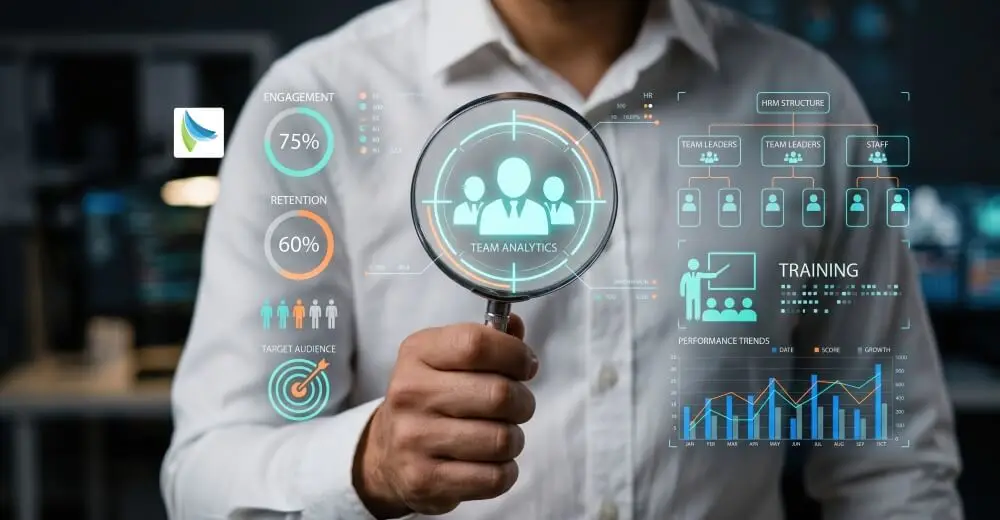
The process of measurement provides an additional layer of discipline. Measurement of Human Capital Management is possible through criteria such as internal mobility, retention, readiness for succession, capability development, engagement, and performance. However, such measurements do not substitute qualitative feedback, but they allow organizations to see whether their efforts pay off. With clear metrics at hand, leaders can improve programs and not just keep running those that have been around for years.
Creating Leaders Through Organizational Culture
Equally crucial is the part played by senior leaders. Employees focus on what the leadership is rewarding, emphasizing, and talking about. Through active involvement in developmental conversations, mentoring, and creating chances for rising leaders, senior leaders demonstrate the importance of capability building. Thus, leadership development is part of the organizational culture and not an HR function.
Using Technology to Strengthen Development
Technological advancements will help in achieving the proposed model through the provision of learning tools, skills data, career information, and feedback among others. But technology cannot solely bring about competent leaders. The organizations will have to provide competent managers, experiences, conversations, and decision-making opportunities.
Building Sustainable Organizational Capability
Human Capital Management works best when it recognizes that employees have abilities which can be enhanced through intelligent investment. And Leadership Development serves as the process by which this ability is transformed into better decision-making, better cooperation, and increased organizational capability. Organizations that regularly align people development with their strategic plan will be better able to create leadership pipelines and adjust their plans as necessary.
It is also helpful in enhancing the resilience of organizations. With changes in the allocation of duties, there is a requirement for individuals who can quickly learn, work in a cross-border environment, and take up new roles while not forgetting their common goals. The development system that can foresee all this helps avoid any competency gap and ensures smooth transition. It makes employees feel accountable for their success and growth as well as organizational success.