



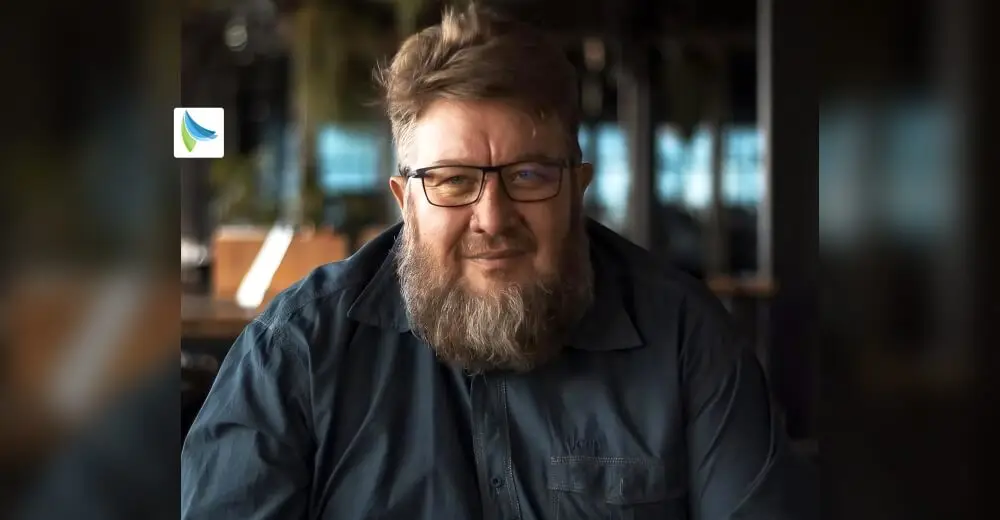
It was a professional development session like countless others. Delegates from across the industry filled the room; notebooks open, agendas in hand. Dries Lombaard was one of them, a respected consultant with years of experience, settled comfortably in the belief that his career was heading exactly where he intended.
Then the facilitator looked at him.
“Young man,” he said, “you have a lot of potential.”
Dries nodded. Smiled. But the facilitator didn’t move on. He held the pause just a beat too long, and then said something that landed like cold water.
“That was not meant as a compliment.”
He found the man in the next break. “What on earth are you still doing with potential?” the facilitator said. “Start giving. You already have more than enough to offer.”
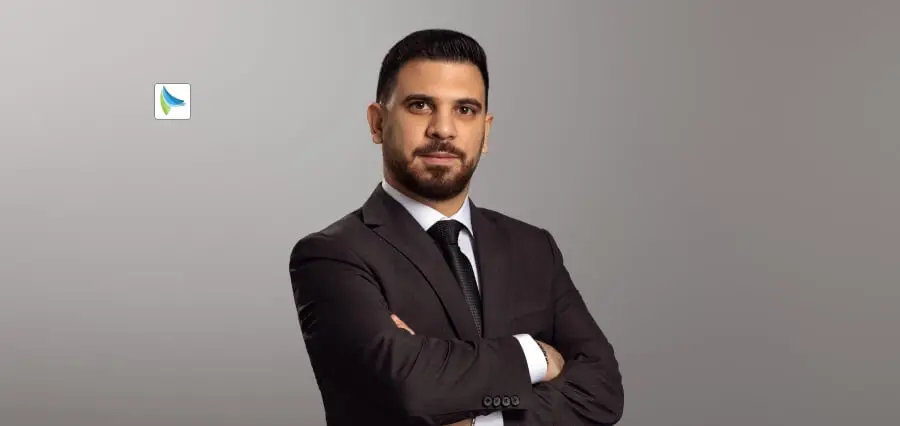
That was 2005. Two decades later, Dries Lombaard stands as founder and principal of Strength Synergy International, co-founder of EngagementFit, and author of the 2025 book Burn the Org Chart. He now receives the Elite Leadership Awards 2026 title: South Africa’s Most Esteemed Business Leader. He did not keep his potential on hold. He deployed it, and the world of organizational leadership has not looked at motivation, engagement, or human energy the same way since.
Born in the Gap Between Potential and Systems
Dries Lombaard’s professional journey did not begin in a corner office or a management consulting firm. It began in an uncomfortable space that most leaders never stop long enough to examine, the gap between what people are capable of and what the organizations around them actually allow them to become.
That observation did not fade with experience. It deepened. Moving across consulting, leadership development, and organizational design, he kept returning to a harder question beneath the surface of most workplace challenges: why do people disengage, and what does it genuinely take to re-ignite them? That question eventually led him to co-develop the DRIVE framework, a motivational architecture built on 29 distinct DRIVES, the deep wired patterns that shape how individuals think, relate, and accomplish.
EngagementFit, the company he co-founded to house and scale this intellectual property, now administers the framework as a rigorous, proprietary science. Strength Synergy International brings it to life inside complex organizations at the consulting level, across South Africa and increasingly across the Middle East, with a base now anchored in Dubai. The two entities are not competitors. They are partners in purpose, one holding the science, the other delivering transformation.
He says, “Engagement Fit holds the intellectual property; Strength Synergy International delivers my personal consulting around organizational transformation.”
The Science Behind the Shift
In a global consulting landscape crowded with frameworks, models, and methodologies, the DRIVE framework stands apart not because it is new, but because it is precise. Most organizations measure engagement without understanding the energy and need behind it. They design programs without a motivational theory underneath them. They talk about culture without specifying the behaviors that actually produce it.
The DRIVE framework addresses all of that. It maps consistent individual energy and need across 29 distinct drives spanning three domains: Thinking, Relating, and Accomplishing. This enables diagnosis with specificity, answering the questions that generic engagement surveys cannot: why a particular team is stuck, why a particular leader fails to create followership, why a culture initiative generates compliance but not commitment.
People, in Dries’s view, are not interchangeable. When organizations treat them as if they are, they hemorrhage energy and talent. When leaders learn to work with the actual motivational architecture of their people, engagement stops being a program and starts being a natural consequence of how work is designed and led.
He says, “What differentiates Strength Synergy International is precision, underpinned by a proprietary framework that most consulting firms simply don’t have access to.”
Three Principles That Do Not Bend
Ask Dries Lombard about the core values that have shaped his leadership, and he does not hesitate. Three principles have been non-negotiable throughout, and each one challenges the comfortable orthodoxies that most leadership development programs quietly reinforce.
The first is intellectual honesty. Sustainable growth, in his view, always begins with accurate diagnosis, of culture, of leadership behavior, of what the organization actually produces versus what it says it values. The gap between those two things is where most transformation work either starts or stalls. The second is systems thinking over isolated intervention. His approach insists on working at the level of the whole system, where leadership behavior, team dynamics, structural incentives, and cultural rituals all interact simultaneously. Address one without addressing the others, and the intervention quietly evaporates. The third is deep respect for human differences. It is not a value that exists on a wall at Strength Synergy International. It is the intellectual foundation of the entire enterprise.
He says, “I’ve never been willing to sell leaders a comfortable story when the uncomfortable one is the one they need.”
Building Teams That Actually Work
When Dries speaks about team leadership, he reaches for two beliefs that sit at the foundation of everything he does with organizations. The first dismantles one of leadership development’s most persistent myths: the idea of the well-rounded individual. The pursuit of a complete leader, equally strong in vision and execution, in strategy and empathy, in innovation and discipline, is a myth that exhausts people and sets impossible standards. What organizations genuinely need are leaders and teams who understand their own strengths with precision, and who build intentionally around what fills the gaps.
The second belief follows naturally from the first. Every person carries both a deficit and a gift. When teams internalize that truth, the dynamic shifts from competition and comparison toward genuine interdependence, the kind that actually drives performance. His strategy starts with making the invisible visible. When team members understand their own DRIVE profile and those of their colleagues, what people previously experienced as obstruction becomes understandable difference, and understandable difference becomes workable.
He also draws a firm distinction between building rituals and building programs. Culture is not what organizations put on walls. It is what happens in the recurring moments of organizational life: how meetings run, how decisions get made, how leaders respond when things go wrong.
He says, “There is no such thing as a well-rounded individual, only well-rounded teams.”
The Dubai Expansion and the Long Game
Beyond its South African roots, Strength Synergy International now operates with a meaningful presence in Dubai, and that expansion has been anything but straightforward. Dries describes it as a masterclass in the adaptability he preaches. The Gulf business environment builds trust over a longer horizon than many Western-trained consultants expect. Navigating that with patience, without compromising the rigor of the methodology, has been one of the most significant growth edges of his career.
The dual-market presence does more than expand geographic reach. It sharpens thinking in ways that single-market advisory practices rarely experience. Patterns that emerge in post-merger integrations in South Africa illuminate culture transformation challenges in Dubai’s fastest-growing organizations, and vice versa. That breadth of cross-continental perspective has become a competitive edge in itself.
Both South Africa and the Gulf region navigate rapid growth with significant talent pressures. Both build leadership pipelines inside organizations that scale faster than their cultural infrastructure can keep pace with. Both grapple with what it means to develop leaders for a future that looks fundamentally different from the past.
He says, “These are very different markets, with different leadership cultures, different organizational maturity curves, and different client expectations.”
What It Takes to Lead Today
When asked to define what sets an impactful leader apart in today’s global economy, Dries leads with something that many executives still treat as a soft skill: self-awareness. He calls it a strategic capability and gives it a name: Confident Vulnerability. He sees the cost of its absence repeatedly, highly capable leaders whose shadow behaviors erode trust, stall teams, and quietly exhaust the organizations they lead, often without ever understanding why.
Beyond self-awareness, he identifies three qualities as defining for this particular moment. Systemic courage, the willingness to name what the system actually produces even when uncomfortable. Motivational intelligence, the ability to see and engage with people as they genuinely are. And narrative coherence, the capacity to hold and communicate a meaningful story about where the organization is going and why it matters, even in conditions of deep uncertainty.
He says, “In a world of accelerating complexity, leaders who can operate with precision, humanity, and clarity will increasingly separate themselves from those who can only manage.”
Innovation Without the Illusion
In an age where innovation sits at the top of almost every organizational agenda, Dries offers a reframing that many executives find uncomfortable: most organizations do not have an innovation problem. They have an energy problem. Innovation requires psychological safety, tolerance for productive discomfort, and leaders who model curiosity rather than certainty. When those conditions exist, innovation emerges naturally. When they don’t, even the best strategies stall.
His own approach to strategic decision-making maintains a discipline he guards carefully: skepticism of seductive solutions that feel new but represent cosmetic repackaging of old thinking. He holds a sharp distinction between adaptation, which is necessary and healthy, and reactivity, which mistakes urgency for direction. It is a distinction that separates strategists from operators, and it runs through everything Strength Synergy International advises.
He says, “Chasing innovation without first building the leadership conditions that make it possible is a category error that wastes resources and disappoints boards.”
The Book, the Awards, and the Answer to 2005
In 2025, Dries Lombaard published Burn the Org Chart, a book that crystallizes decades of work into a coherent challenge to the way organizations are built and led. The title signals the intent clearly: not incremental improvement, but a fundamental rethinking of the assumptions that underpin most organizational design. The book draws on the DRIVE framework, the cross-continental experience, and the stubborn belief that organizations underperform not because their people lack talent, but because their structures fail to honor how talent actually works.
The Elite Leadership Awards 2026 recognition, which brings Dries to Dubai as South Africa’s Most Esteemed Business Leader, carries deep personal resonance. The hardest challenge along the way has been the gap between intellectual conviction and market timing. Building credibility ahead of scale is a long game. For years, Dries knew what the DRIVE framework offered, even as markets defaulted to more familiar and less precise tools. He built it anyway. He pushed into Dubai anyway. He kept asking the harder questions anyway.
He says, “Being recognized here is, in many ways, the answer to that 2005 challenge. I finally stopped waiting and started giving, and this is where that choice has led.”
A Message to Those Still Holding Their Potential
When Dries speaks to aspiring entrepreneurs and professionals, his advice does not traffic in motivation-poster generalities. It starts with a harder question than most career coaches are willing to ask. He pushes back on the tendency to build careers around external markers of success. Knowing one’s own DRIVE profile deeply, understanding what genuinely energizes and what drains, even when one performs well at something, is the foundation of sustainable high performance. Energy alignment, in his framework, is not a luxury. It is an infrastructure.
He also advocates building across borders before necessity forces it. The leaders who will shape the next decade are those who hold multiple cultural contexts at once, not as a portfolio of separate experiences, but as an integrated, richer way of seeing. And he returns, finally, to the intersection that defines purpose: the place where deep capability meets genuine need. Purpose, as he sees it, is not a mission statement. It is what you return to when things are hard, and the easy paths look attractive.
He says, “Start with the hardest question, not the easiest opportunity.”
Dries Lombard did not build Strength Synergy International by following a conventional script. He built it by sitting with uncomfortable questions long enough to answer them with precision, and by refusing, since that afternoon in 2005, to let potential remain merely potential. The organizations that work with him and Engagement Fit do not emerge with better programs. They emerge with a fundamentally different understanding of what drives the people inside them, and with the frameworks to act on that understanding every day.