


In logistics and supply chain, the pressure never lets up. Markets shift without warning, regulations tighten overnight, and the cost of standing still is measured not in quarters but in customers lost and operations stalled. Most organisations respond to that pressure by seeking certainty, building processes that protect against failure and leaders who project confidence by avoiding risk. The result is predictable: organisations that mistake stability for strategy, and caution for wisdom. The ones that pull ahead are led by people who have made a different choice. People who treat uncertainty not as a threat to manage but as a condition to move through, deliberately, creatively, and without flinching.
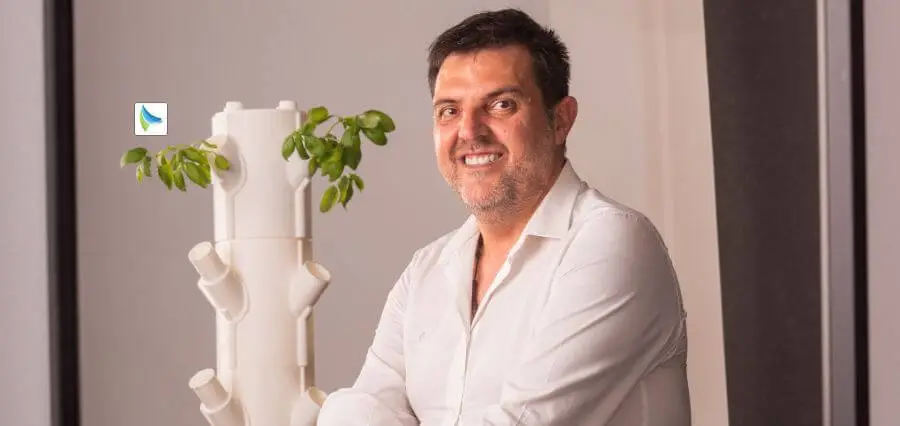
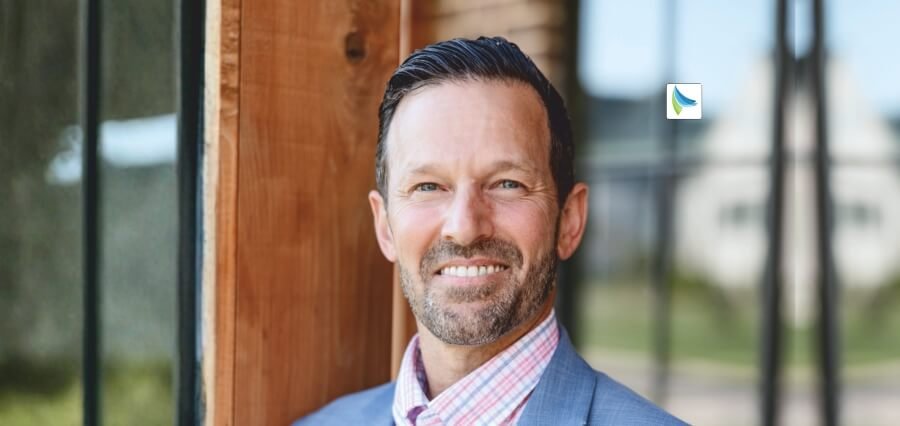
Blake Tablak is one of those people.
As Chief Executive Officer of Trax Technologies, he leads one of the most consequential platforms in freight audit, payment, and supply chain analytics, building a culture and an organisation designed not just to survive disruption but to operate at its sharpest edge. His philosophy is not complicated. It is, however, rare: move forward, embrace the struggle, and never mistake a scoreboard for a strategy.
Culture First, Results Always
At Trax Technologies, leadership begins with a deliberate tension that most organisations refuse to hold. Two forces stay in constant balance: innovation and culture. Neither works without the other, and culture is treated not as the soft side of leadership but as its very foundation, the engine of forward progress in an industry that demands relentless execution.
Says Blake, “If we punish people when they fail in this arena, they will never take risks again. Risk equals reward.”
That culture operates on two levels simultaneously. There is the company-wide culture that binds the entire organisation, and then there are the sub-cultures that exist within each team, shaped by the specific demands and personalities of the people doing the work. What makes it distinctive is the intersection it occupies: humanity on one side, the reality of people, their lives, their limits, and their need to be seen as more than a function on an org chart; and mission on the other, the results, the scoreboards, and the accountability that any serious organisation demands. Most companies choose one at the expense of the other. At Trax, both are non-negotiable. Recklessness has no place here, but the conditions in which people take intelligent risks are actively protected. Innovation and failure are inseparable, and the moment an organisation begins punishing people for failing in the pursuit of something new, it extinguishes the very instinct it needs to grow. That instinct, once lost, takes a long time to rebuild.
Reframing Risk: The Freedom to Move
One of the most consistent patterns in executive teams is paralysis around risk. Decisions that feel terminal rarely are. Most risks carry multiple paths forward, and the fear of a single catastrophic outcome blinds organisations to the range of possibilities available to them. That reframing, from risk as existential threat to risk as navigable terrain with multiple exits, sits at the heart of how Trax operates and how its leadership team makes decisions under pressure.
Great employees are routinely limited not by their ability but by the narrowness of their mandate. When leaders instruct their teams to simply execute a defined task, they cap the very potential they hired for. At Trax, people receive genuine creative freedom, and then leadership gets out of the way. When that freedom is extended, people do not just meet expectations. They exceed them in ways that leadership did not anticipate.
Blake Tablak asserts, “Once you give great employees freedom of creativity, they over-perform even your wildest dreams.”
The leadership model reinforces this from the very top of the organisation. COO John Vallely, a Ranger and West Point graduate, brings a wealth of leadership stories and experience that runs through every level of Trax. The principle is straightforward and applied without exception: when things go wrong, the executive team absorbs accountability. When things go right, the credit belongs to the people doing the work. That commitment is what builds genuine trust across an organisation, and trust is what makes sustained performance possible.
Building Accountability Without Killing Creativity
Trax Technologies operates across two distinct streams of activity, each held to intentionally different standards. In sustaining operations, the expectation is not perfection but learning. Making the same mistake twice is not acceptable. Making a new mistake in the pursuit of improvement is not just tolerated; it is expected and respected as part of the process of getting better over time.
In innovation activities, the standard shifts entirely. Failure is not just tolerated; it is required as evidence that people are genuinely pushing boundaries rather than staying safely within them. What is never acceptable, regardless of which stream a team operates in, is the phrase “that’s not my job.” It represents exactly the kind of thinking that stalls momentum and weakens accountability across an organisation.
He adds, “Until the result is achieved, the project is still open and everyone on it is held accountable to the outcome.”
This cross-functional ownership model demands a specific kind of focus. Ten simultaneous pursuits produce excellence at none of them. A few priorities are chosen, full commitment follows, and once the path is set, alignment is non-negotiable. Ideas are welcomed from anywhere in the organisation. Bad ideas die on their own and do not need any help doing so. But once a direction is chosen, everyone rows in the same direction without reservation. That discipline is not about suppressing voices. It is about honouring the decision-making process through committed execution once a path has been agreed upon.
On AI, Headcount, and the Bottleneck Philosophy
The conversation about artificial intelligence in logistics is loud, and much of it is shaped by anxiety. The prevailing narrative suggests that AI will eliminate jobs at scale, driving headcount down and leaving organisations leaner but hollowed out. That narrative does not hold up to scrutiny. Headcount and organisational structures will change, but overall employment levels will dip and then resume, driven by the never-ending aspiration and opportunity facing all companies as they grow and evolve.
What Trax is investing in is not replacement but retraining. A conviction runs through the organisation that would strike some as bold: it is possible, using today’s tools, to retrain a data entry professional as an AI programmer. That belief shapes how Trax thinks about its people during a period of significant technological transition, and it reflects a broader commitment to developing human capability alongside technological investment rather than treating the two as opposing forces.
Blake Tablak mentions, “You cannot manage to a scoreboard. That is what accounts for the quality and throughput metrics.”
The operational framework at Trax is built around what Blake Tablak calls bottlenecks. The goal is not to eliminate friction once and declare victory. It is to destroy a bottleneck, watch the constraint move downstream, and then destroy it again. This cycle of continuous improvement never reaches a final destination, and that is precisely the point. Quality and throughput metrics serve as governance for the organisation while financial metrics remain the final scoreboard. The distinction between the two matters because one tells you where you are and the other tells you how to get somewhere better.
Leadership Under Pressure: The VUCA Principle
He says, “Moving into the unknown is scary but required. If you expect VUCA all the time, you will not be found off guard very often.”
When uncertainty peaks and pressure on an organisation becomes acute, a framework drawn from a course at the University of Chicago shapes the response at Trax: VUCA, standing for Volatility, Uncertainty, Complexity, and Ambiguity. The lesson is precise and practical. The only position that is truly untenable in a VUCA environment is standing still. Going backward is terminal. The only viable direction is forward, and moving there with intention is what separates organisations that endure from those that stall when conditions turn difficult.
Moving into the unknown is uncomfortable by definition. But the discomfort is manageable once a leader stops being surprised by it and starts treating it as a normal condition rather than an exception. When turbulence becomes the expected default, it loses the power to destabilise. Calm becomes a competitive advantage, and forward momentum becomes a discipline that the entire organisation internalises over time.
Leadership development inside Trax follows a similar philosophy. Growth does not follow a smooth upward curve. It develops in steps, with plateaus and turbulence between each one. What the organisation looks for in its next generation of leaders is not perfection but what COO John Vallely describes as athleticism, optimism, being fundamentally sound, and the ability to build relationships. A person with those qualities, placed in a leadership role, will struggle at first and work through it. That process of working through difficulty is not a side effect of development. It is the development itself.
Alignment at Scale: The OKR Discipline
As Trax Technologies has grown, maintaining alignment across the organisation has become one of the most deliberate leadership investments the company makes. The tool is OKRs, Objectives and Key Results, and the organisation currently operates with three that have remained largely unchanged across three years of growth. That stability reflects the quality of the strategic thinking that produced them, and Blake Tablak treats it as a testament to how carefully the team took the time to think the strategy through.
Blake Tablak mentions, “We are clear with the organisation: if you are not working on these OKRs or do not understand how your work drives them, ask someone.”
The expectation set across every level of the organisation is direct. Confusion is not acceptable, and neither is the comfort of doing things the way they have always been done. Alignment must be maintained actively rather than assumed, and it must exist at every scale of the organisation. There is no room for drift and no tolerance for teams quietly operating on assumptions that have diverged from the agreed strategy. At Trax, clarity is a leadership standard that runs from the executive team to every individual contributor.
The Legacy of Hope
The legacy Tablak hopes to leave behind returns to a word that does not often appear in conversations about logistics technology leadership: hope. The people who work at Trax, and the customers the company serves, should carry a genuine sense of possibility forward. In good times, hope enables people to think about the future with optimism. In difficult times, it provides exactly the same function, holding people steady when the pressure mounts and clarity is hard to find.
The second piece of that legacy is a belief held with conviction: people are capable of far more than they ever imagined. The struggle is not an obstacle to growth. It is the mechanism of it. You do not get stronger by lifting lighter weights. Facing harder challenges, working through them, and arriving on the other side with new capability is what transforms individuals and the organisations they belong to.
He adds, “Pressure is a privilege and I firmly believe that people are capable of way more than they ever thought.”
An organisation built around that belief does not just perform better. It produces people who leave it better than they arrived, carrying with them a standard for what is possible when leadership takes both the mission and the human being seriously. For an industry navigating one of its most complex periods, that kind of leadership is not just welcome. It is exactly what the future of U.S. commerce requires.