




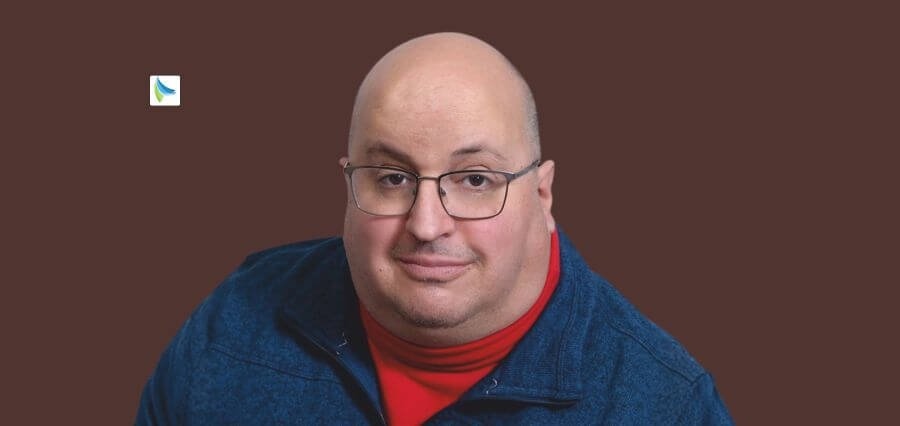
Some leaders arrive with ambitious goals, structured business strategies, and a clear vision of market expansion. In contrast, Serge Deuvletian, a Veterinary Clinic Owner, did not set out with the intention of leading. Yet he went on to build one of the most enduring independent veterinary clinics in Montreal. His journey towards becoming a clinic owner was never part of any well-thought-out plan, but emerged out of necessity from a string of events that shaped him.
Serge has been leading Clinique Vétérinaire de Montréal, single-handedly, for 25 years now. Over the span of two decades and more, he has watched the demise of many independent veterinary clinics swallowed by big corporations. He has managed to navigate his way through tough times, including financial troubles and personal breakdowns. The clinic that stands today is not a monument to ambition. It is the result of persistence under pressure, built steadily over decades, against odds that would have halted most journeys long before they reached this point.
A Veterinarian’s Path of Perseverance
Serge Deuvletian did not open the clinic because he wanted to become an entrepreneur. He opened it because he had no other option left. After graduating from veterinary school, he explored every possible path. He worked as an associate, approached established practices, and considered partnership opportunities. None of these options worked out. He did not stay in any position for more than a year.
“I was forced out of my comfort zone and I was not happy about it,” he says. His tone reflects his direct and honest way of speaking. Serge Deuvletian had always valued stability. He studied at Collège Stanislas for 13 years, from kindergarten to graduation, a stretch of consistency that few people manage in any chapter of life. He was not someone who gave up easily. However, the veterinary field kept pushing him away until his father intervened.
His father, a pharmacist who owned a successful pharmacy right next door, became the founding investor of the clinic. The financial risk was manageable for him, and he was willing to absorb potential losses if things did not work out. For Serge, however, the responsibility felt enormous, not because of the money, but because of what the investment represented. His father’s trust became both his motivation and his pressure.
That sense of responsibility shaped every corner of his work ethic. He worked up to 60 hours a week. He remained constantly available on his phone, day and night. He made home visits, handled grooming services, and set his prices deliberately below the local average to attract clients who might not otherwise afford care. He was not building a business empire. He was honoring a debt that had nothing to do with money.
The clinic did not make a profit during its first two years. Serge Deuvletian kept costs low by hiring only one employee for 30 hours a week. He managed all other work himself, filling every gap and covering every role that a larger operation would have distributed across a team. “I thought that if I lasted more than one year, it would already be an achievement,” he recalls. He set the bar low so that simply surviving counted as success. Then he kept going, year after year, until survival quietly became something more.
The Amoeba Strategy
When asked about his competitive strategy, Serge Deuvletian reaches for a metaphor rather than a framework. He describes himself as an amoeba. He sees the clinics around him, absorbed one by one into large corporate veterinary groups, as the Roman army. He describes himself as the small independent village that refuses to be absorbed, drawing directly from the French comic series Astérix, whose fictional Gallic settlement survives through sheer defiance and the occasional magic potion.
His approach was practical rather than strategic in any traditional business sense. He did not try to compete directly with larger clinics for the same clients or the same procedures. Instead, he chose to remain small, set his prices below the market, and work with his competitors rather than against them. He referred complex or high-volume cases their way and accepted, in turn, the cases they did not want, the overflow, the unusual, the ones that required more patience than a corporate operation typically offered.
“I worked for both me and my boss,” he explains. Clinique Vétérinaire de Montréal stayed with an independent buying group while nearly every neighboring clinic was acquired by one corporate chain or another. It was a quiet act of resistance, the kind that does not make headlines but keeps the lights on for decades.
Serge Deuvletian never hired another veterinarian. He relied on the surrounding network to handle specialist cases and focused entirely on the work he did best. He also built his team on personal qualities rather than formal qualifications. Every staff member had to have owned a pet at some point in their life. He believed that was the minimum entry point for the kind of empathy the job demanded. The clinic would handle the technical training. The humanity had to come first.
Lasting Lesson in Veterinary Practice
On December 17, 2004, near the end of a difficult year, Serge Deuvletian lost a six-pound Chihuahua during surgery. The dog’s heart stopped after anesthesia was administered, an outcome Serge Deuvletian later learned he had not fully guarded against in the way experience would eventually teach him. His next anesthetic procedure went smoothly, but the earlier loss stayed lodged in him in a way that years could not dissolve.
He couldn’t tell the client exactly what happened at that moment. He kept the truth to himself determined he would after he made up for it. He resolved to tell the full truth when the right moment arrived. That moment came years later, after his autism diagnosis. In a letter, he reframed the animal as part of his personal journey, a creature whose life had become quietly intertwined with the hardest chapter of his own.
In 2021, the client returned to the clinic with a 14-year-old schnauzer. They did not discuss what had happened that December. The silence was not hostile, it was, in its own way, a kind of resolution. Then, years after the event, Serge Deuvletian discovered that anesthesia at normal doses can be deadly to humans in the instance of 1 in 2000 and that one in 200 needed CPR. He figured that’s what really happened to his patient. There was nothing Serge Deuvletian could have done to save him. That confirmation brought him a complicated but necessary peace.
Burnout, Diagnosis, and Survival Through Crisis
Six years after opening the clinic, Serge Deuvletian reached his first peak, and then the floor gave way. He did the equivalent of 10 years in only six, logging nearly 60 hours a week, running on obligation and adrenaline. Eventually, the weight became too much. Burnout arrived, and in its wake came his autism diagnosis. He describes that moment not as a breaking point, but as a relief, the first time the chaos of his interior life had a name.
The diagnosis illuminated years of confusion. It explained the emotional meltdowns, the difficulty holding jobs elsewhere, the fierce attachment to routine, and the hyperfocus that had powered the clinic’s early growth. It also explained the deep social exhaustion that had followed him throughout. He finally understood why the system, as he puts it, was incompatible for him, and why he had always struggled in environments built for someone else.
During this period, he drew on savings he had set aside for his father just to stay afloat. The next four years were difficult financially and emotionally. He eventually hit another low point. After that, he reduced his load deliberately. He stopped offering grooming services and home visits. He reduced his exposure and narrowed his focus to the core of what the clinic did best.
Then COVID-19 arrived and changed the landscape for everyone. Many independent clinics, ones Serge Deuvletian describes built on sand, crumbled under the pressure of reduced revenue and rising costs. Clinique Vétérinaire de Montréal held. Years of lean operations, low overhead, and careful spending had made it structurally resilient in ways that more aggressively scaled practices were not. The pandemic did not reward ambition. It rewarded restraint. And restraint had always been Serge’s natural mode.
A Shift in Veterinary Practice
In 2024, Serge Deuvletian made a decision that most clinic owners would consider commercially irrational: he stopped performing procedures under general anesthesia entirely. Revenue declined. But profit did not follow it downward.
In 2025, his first full year operating without anesthesia services, the clinic generated more income than in any year before 2022. The arithmetic, once the numbers settled, was clear. Removing surgical procedures eliminated a significant layer of overhead, staffing demands, equipment costs, liability exposure, and operational strain. Without those costs, the clinic ran cleaner and returned more on every dollar it earned.
The shift also moved the practice firmly toward preventive and curative medicine, the kind that builds long-term relationships with clients rather than relying on single high-value procedures. Clients came back not for surgeries, but for ongoing care, for the continuity that a practice run by one veterinarian for 25 years naturally accumulates.
Empathy-Driven Veterinary Practice
Today, Clinique Vétérinaire de Montréal operates with a team of volunteers who collectively speak more than eight languages. The staffing model is unconventional by any measure. Serge Deuvletian never built a traditional hierarchy, never brought in a co-owner, and never hired another veterinarian. Instead, he chose to work with people who understood animals through lived experience rather than academic training, individuals who had owned pets, cared for them through illness, and sat with them at the end.
In a veterinary practice, the front-desk staff serves as the first emotional contact point for pet owners who arrive frightened, grieving, or overwhelmed. Technical knowledge matters, but so does the ability to read a room and meet a person where they are. Serge structured his team around that principle from the very beginning. He described his staff as the offensive line, the people who do the essential work of clearing the path so he, as the quarterback, can focus on the medicine.
He also cultivated a client base that reflected the clinic’s values organically over time. Many of his longest-standing clients were ones that larger practices had turned away, complex cases, difficult pets, and owners who needed more time and patience than a corporate operation was willing to give. “Clients who accepted my condition, and I was comfortable with, came to see me.” he says. It was not a marketing strategy. It was a natural alignment of needs.
Lessons From a Lifetime in Veterinary Practice
When asked what advice he would pass on to the next generation of veterinary professionals, Serge does not reach for frameworks or industry wisdom. He reaches instead for a single word, borrowed from a wrestling icon whose daughter became a veterinarian: fun.
Veterinary medicine, like wrestling, is meant to be enjoyed, he says. No one should have to exhaust themselves to do it. He tells parents of aspiring young veterinarians to always keep backup plans in place, not just plan B, but plan C, D, and all the way to Z. He compares his own daily role to that of a car mechanic: performing routine check-ups, diagnosing and fixing problems, and understanding, with full acceptance, that saying goodbye to patients is an inevitable and recurring part of the work.
Over the years, Serge has cared for two full generations of pets. He has watched children grow from toddlers into university students alongside their animals, with the pet serving as a companion through childhood, adolescence, and early adulthood. He is now entering a third such cycle. For him, that continuity carries its own quiet meaning.
Legacy Built Against the Odds
Serge did not set out to build a legacy. He set out to survive. But somewhere between the burnout and the autism diagnosis, the COVID lockdowns and the decision to stop surgery, the 60-hour weeks and the multilingual volunteers who now make up his team, he built something that nobody else in his neighborhood and perhaps very few anywhere has managed to replicate.
He describes the clinic’s existence with characteristic economy of words: “I was never really supposed to exist, nor was the clinic.” He began his journey with the Peter Gabriel-Kate Bush’s song [“Don’t Give Up”] as his guiding theme and closes it with a philosophy borrowed from Tom Selleck’s biography, captured in three words: [“You never know.”]
He now uses a wrestling analogy for the chapter ahead. He has held his role for too long, he says, and feels ready to pass it on, to put someone over, in wrestling terms, meaning to transfer the title to whoever comes next, whether through the sale of the clinic or its client files. The neighborhood he built, one relationship at a time, will endure beyond him.