






Streamlining Operations: Event Tech Innovators Driving Digital Transformation in 2026
Digital technologies are changing how people execute conferences, exhibitions and large-scale events which results in major transformation for the global events industry. Event technology innovators in 2026 will shift their focus beyond efficiency and automation to develop intelligent data-driven systems which create immersive experiences that meet modern audience needs and organizational goals. Brands use this transformation to develop their methods for engaging stakeholders, assessing their organizational impact and expanding their global outreach. Event technology now functions as a strategic asset through its capabilities which include artificial intelligence-based personalization, advanced analytical tools and immersive event technologies. The growing demand for integrated digital ecosystems has led organizers, venues and sponsors to seek systems which unify content delivery with audience engagement, security measures and monetization strategies. The innovators who work in this field are currently developing new event value propositions which fit into a world that operates with both hybrid and digital-first environments. Smart Platforms The event technology platforms in 2026 display two main characteristics which include intelligent and flexible design. The leading innovators use artificial intelligence to create personalized attendee experiences because they need to analyze real-time data about attendee preferences, behavior and engagement patterns. The platforms create personalized experiences for participants through their agenda curation, networking opportunity suggestions and content delivery systems which adapt to individual needs. The smart platforms provide personalization features while they maintain complete compatibility with enterprise systems which include customer relationship management and marketing automation tools. The system enables direct flow of event information into business intelligence systems which help companies track event participation and its impact on sales pipelines, brand performance and customer relationship building. Organizations now assess events based on their impact on strategic business objectives rather than their total number of attendees. The main focus of platform development involves both security measures and compliance requirements. Technology providers have started to incorporate high-level security measures and compliance solutions into their platforms because of the rising amount of attendee information and international event attendance. Immersive Experiences The combination of virtual reality with augmented reality and spatial computing technologies creates virtual spaces which allow users to experience physical environments at their highest level. The innovators have developed a system which lets attendees navigate virtual exhibition spaces while they can view products from all angles and work together with others who are located in different places. The complete virtual experience delivered to users goes beyond a traditional online streaming platform. The immersive elements of hybrid formats create a connection between their physical and digital components which provides more value to both types of audiences. The interactive virtual spaces enable remote participants to view live content while on-site attendees use augmented interfaces to obtain extra information, translations and real-time analytics. The convergence process produces a standard experience for all audience members while bringing events to audiences who exist outside the venue. The content creators and sponsors use immersive tools to build more powerful storytelling experiences. The industry now designs product launches, training sessions and thought leadership forums to function as experiential journeys which replace traditional static presentations. Event technology innovators deliver brands with various tools and frameworks which help them develop storytelling experiences that enable better content retention by users while strengthening their emotional connections. Data Impact Organizers deploy advanced analytics platforms to monitor complete event data which begins from registration and continues through attendee events until post-event activities are finished. The insights they gained from this research enable them to develop content strategies that target specific audiences while assessing their return on investment with unprecedented accuracy. Innovative companies dedicate their research efforts to developing predictive analytics which will assist them in planning their operations and improving their performance. Event technology solutions analyze both historical data, current data to predict attendance patterns and upcoming attendance declines and provide solutions which help increase audience interaction. Organizers can use this system to maintain high standards of performance throughout different locations and events which require different approaches. The strategic value of organizational events receives enhancement through data-driven insights which organizations use to evaluate their event outcomes. Senior leadership teams now recognize events as essential drivers of business growth which produce measurable results instead of being optional promotional activities. Event technology innovators help drive this transformation by transforming intricate data sets into straightforward operational information which matches executive priorities and supports the organization’s future objectives. Conclusion Developments in event technology show how the industry now assesses value and success through different methods. The current event planning system uses intelligent platforms together with immersive experiences and advanced data analytics as its core components. Organizers and venues together with sponsors can deliver secure and scalable experiences that meet the needs of more advanced audiences who attend their events. The development of digital and hybrid event formats will continue to depend on event technology innovators who create sustainable growth solutions for the entire industry. The company uses its technological capabilities to achieve its business goals which enables them to develop events that create stronger connections with audiences while delivering measurable results that help the organization achieve its long-term objectives in an international environment that keeps changing. Read Also: Leveraging Analytics to Enhance Transparency and Board-level Confidence
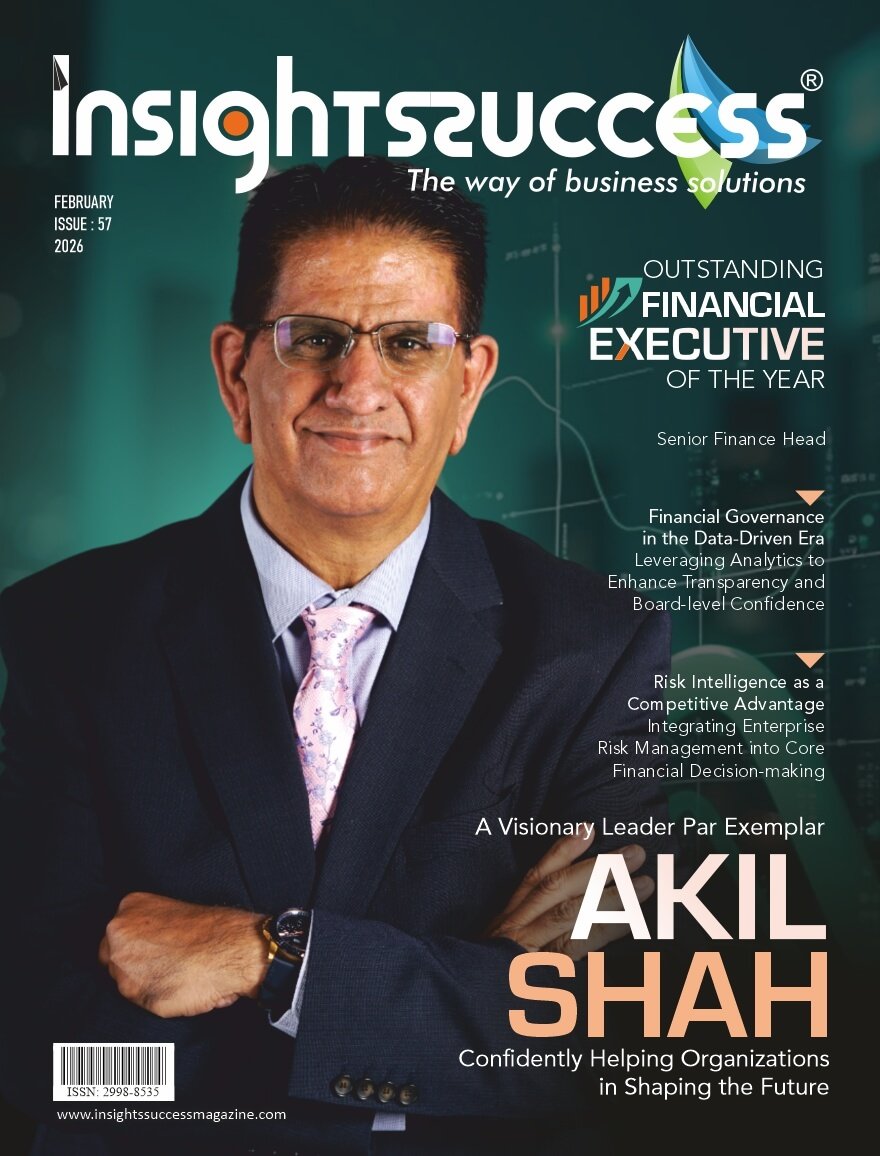
Outstanding Financial Executive of the Year
Outstanding Financial Executive of the Year This is a distinguished edition dedicated to recognizing Akil Shah, a finance leader whose strategic acumen, governance excellence, and value-driven decision-making define the gold standard in financial leadership. This feature honors an executive who demonstrates exceptional command over financial strategy while enabling organizational resilience, growth, and long-term sustainability. Quick highlights Quick reads

A Visionary Leader Par Exemplar – Akil Shah: Confidently Helping Organizations in Shaping the Future
Finance has always been more than numbers, believes Akil Shah, A Senior Finance Head and Finance Operations for the Finance Shared Services Center (FSSC). From the outset of his career, particularly during his years in the UK, where he was born, educated, and spent the majority of his life, Akil Shah learnt that finance only adds value when it is embedded in the reality of the business and not just sitting in a corner, churning the numbers. He shares, “Sitting close to sales and operations taught me that numbers help decision-making, behaviours, and outcomes for the future.” That experience shaped a belief that finance exists to create clarity, communication, discipline, and trust. Akil Shah added: “It is not about reporting football results or acting as a post box for data; it is about insight, informed judgement, and decision support to our stakeholders, grounded in an understanding of what sits behind the numbers as well as forecasting for the future.” Working across diverse sectors and geographies, it taught Akil Shah the importance of having stronger processes and governance. He saw and read how organisations become when controls are informal, unclear, or knowledge sits with individuals rather than in systems or workflow procedures. Those lessons drove his process mindset to design, document it clearly, and make accountability visible. “Good financial governance ensures that finance is managed with responsibility and risks are controlled. At the end of the day, we are the guardians of an organisation and need to protect as well as enforce rules.” Akil Shah also thinks that we, as finance leaders, need to work together to accomplish the objective. He quotes: “It is like a football game, where we have different expertise in the team but need to work together strategically to achieve our objective. We want to win gold, as my senior once said, and having that mindset defines how we set standards, believe in it and deliver results. Whether I am transforming a shared services model, strengthening balance sheet governance, reviewing the profit & loss, or embedding automation, my approach remains rooted in those lessons: understand the business, build robust foundations, empower people, and we will achieve our goal.” The Principles of Success While overseeing complex finance operations across the UAE and the Middle East, which Akil Shah calls a shared environment, scale only works when clarity exists. He insists: “My first guiding principle is therefore ownership.” Every process—from Record-to-Report to Order-to-Cash and Procure-to-Pay—must have a clearly defined owner, documented standards, and measurable outcomes. By establishing a robust Target Operating Model supported by SOPs, service catalogues, SLAs, and KPIs, he says that they can remove dependency on individuals and replace it with disciplined, repeatable execution. “We also need to ensure that resilience is in place in case of any absent resources to avoid any disruption.” The second principle is governance. Akil Shah believes that the balance sheet is the true health check of any organisation. Introducing structured trial balance reviews, monthly balance sheet scorecards, and working-day-three governance creates rhythm, accountability, and early risk visibility. Issues are surfaced quickly, ownership is clear, and corrective action becomes routine rather than reactive. Thirdly, performance is sustained by standardizing processes and embedding automation—such as host-to-host banking, supplier invoices scanning, daily cash, payments & receipts visibility—by removing manual effort and operational risk, which allows teams to focus on quality, controls, insight, and decision making rather than transaction firefighting. “Finally, you need to oversee the activities being conducted within the shared services, and the best way I felt was having regular catch-ups, reviewing KPI reports, as well as establishing a month-end tracker.” “Ongoing communication, open transparency, and collaboration are key to success in my view.” A Crucial Equilibrium To balance the demands of operational efficiency with the rigor of regulatory compliance in a rapidly changing financial landscape, across his career, whether working on SOX, ICFR, or FCPA-governed environments, for Akil Shah, the principle has remained the same: simplify first, then standardize, and only then automate. Well-designed processes reduce manual intervention, which in turn lowers risk, improves cycle time, and strengthens audit readiness. Clear operating models, documented SOPs, and strong ownership allow organisations to adapt quickly without losing control. But to achieve this, it needs to be teamwork, he emphasizes. From SOX, ICFR and FCPA requirements to regional tax and regulatory mandates, compliance is a significant part of this portfolio. Thus, before developing a mindset and systems that regard it as essential for building a culture where compliance is intuitive rather than enforced, Akil Shah says the starting point must be ‘why compliance and controls are needed?’ When people understand the why behind controls, they stop seeing them as obstacles and start seeing them as part of professional excellence, he explains. Compliance is achieved when controls are embedded directly into everyday workflows. Clear process design, documented SOPs, role clarity, and system-based checks ensure that the right behaviour is the path of least resistance, he adds. Equally important is visibility and ownership. Tools such as balance sheet scorecards, audit-ready documentation, and regular governance forums make risk transparent and accountability normal. “We need to create a culture where people take pride in doing things correctly and not a matter of ticking a box,” he always says “What would you do if this were your own business”. Akil Shah even takes it to very basic levels and says, “what budgeting and controls do you put in place in your family when you need to balance between income and expenses. Also, you need to be up to date with training and always ask the question of why we are doing a particular task and what the outcome is.” The Most Impactful Transformation Finance transformation, automation, and process optimization are Akil Shah’s core strengths. And according to him, one of the most impactful transformations he led was the end-to-end redesign of the finance shared services operating model, “Where we transferred the onshore activity to an offshore BPO.” When he joined the organisation, Akil says the finance shared services function

Leveraging Analytics to Enhance Transparency and Board-level Confidence
Financial Governance in the Data-Driven Era Financial governance is undergoing a structural evolution. Traditional oversight mechanisms built around periodic reporting and retrospective review are being augmented by real-time data visibility, advanced analytics, and integrated reporting systems. In this environment, analytics is not merely a technical tool; it is a governance enabler. When effectively deployed, it strengthens transparency, sharpens oversight, and enhances board-level confidence in financial integrity and strategic direction. The Changing Nature of Financial Governance Financial governance historically relied on controls, audits, and structured reporting cycles. While these remain essential, the scale and velocity of modern business activity demand more dynamic oversight. Digital transactions, global operations, and complex financial instruments generate vast data streams that cannot be interpreted through manual review alone. Governance frameworks, such as those promoted by OECD, emphasize accountability, transparency, and risk awareness. Analytics supports these principles by transforming raw financial data into actionable insight for leadership and boards. Enhancing Transparency Through Data Visibility Transparency is central to governance effectiveness. Advanced analytics platforms consolidate financial, operational, and risk data into unified dashboards. This integration reduces information silos and ensures consistent reporting across functions. Real-time visibility enables leaders to detect anomalies, performance deviations, and emerging risks earlier. Rather than relying solely on end-of-period summaries, executives and boards gain continuous insight into financial health. This shift from retrospective to ongoing monitoring strengthens confidence in reported performance. Strengthening Oversight and Control Analytics enhances control mechanisms by automating monitoring processes. Exception-based alerts, trend analysis, and pattern recognition identify irregularities that may signal operational issues or compliance risks. These tools extend oversight beyond traditional sampling methods. Continuous monitoring reduces the likelihood of control breakdowns going unnoticed. It also improves audit readiness, as data trails and system logs provide verifiable evidence of financial activity and decision processes. Supporting Strategic Decision-Making Governance is not limited to safeguarding assets; it also guides strategic choices. Data analytics supports scenario modeling, forecasting, and performance analysis that inform capital allocation and investment decisions. Boards benefit from data-driven narratives that link financial outcomes to strategic initiatives. When analytics clarify the relationship between strategy, risk, and performance, governance discussions move from abstract evaluation to evidence-based oversight. Board-Level Confidence and Trust Boards carry fiduciary responsibility for financial stewardship. Confidence in management’s reporting and controls is therefore essential. Analytics enhances this confidence by providing consistent, traceable, and timely information. Visualization tools translate complex data into accessible formats, enabling board members to grasp trends and risks without technical barriers. When insights are clear and data sources are reliable, governance dialogue becomes more focused and productive. Data Integrity and Ethical Considerations While analytics enhances governance, it also introduces responsibilities related to data integrity, privacy, and ethical use. Financial governance frameworks must incorporate standards for data quality, system security, and responsible analytics practices. Clear policies and oversight mechanisms ensure that data-driven governance remains trustworthy. Boards must understand not only what analytics reveal but also how those insights are generated. Cultural and Capability Requirements Effective use of analytics in governance depends on organizational capability. Finance professionals, auditors, and executives must develop analytical literacy. Cross-functional collaboration between finance, technology, and risk teams ensures that insights are accurate and actionable. A culture that values evidence-based decision-making strengthens governance outcomes. When analytics informs routine management processes, governance becomes embedded rather than episodic. Conclusion In the data-driven era, financial governance is evolving from periodic oversight to continuous insight. Analytics enhances transparency, strengthens controls, and supports strategic decision-making, thereby reinforcing board-level confidence. Organizations that integrate data capabilities into governance frameworks build trust, resilience, and accountability — essential qualities for sustainable performance in complex environments. Read Also: Streamlining Operations: Event Tech Innovators Driving Digital Transformation in 2026

Integrating Enterprise Risk Management into Core Financial Decision-making
Risk Intelligence as a Competitive Advantage In modern enterprises, risk is no longer a peripheral compliance concern; it is a strategic variable that shapes financial performance, capital allocation, and long-term resilience. Organizations that develop risk intelligence — the capability to identify, interpret, and act on uncertainty — convert volatility into informed decision-making. When enterprise risk management is integrated into financial strategy rather than treated as a parallel function, it becomes a source of competitive advantage. From Risk Avoidance to Risk Intelligence Traditional risk management emphasized loss prevention and regulatory adherence. While essential, this perspective positioned risk as something to minimize rather than understand. Contemporary thinking, influenced by frameworks from bodies such as COSO, reframes risk as inseparable from value creation. Risk intelligence involves recognizing both downside exposure and opportunity. Financial decisions always carry uncertainty related to markets, credit, operations, and external shocks. Organizations that assess these uncertainties systematically make more balanced strategic choices. Embedding Risk in Financial Planning Integration begins at the planning stage. Forecasting, budgeting, and capital allocation must reflect risk-adjusted perspectives rather than deterministic assumptions. Scenario analysis, stress testing, and sensitivity modeling allow finance leaders to evaluate how different conditions affect performance. This approach enhances capital efficiency. Investments are assessed not only on expected return but also on variability and resilience. Projects with stable cash flows may support riskier innovation elsewhere, creating a balanced portfolio aligned with organizational risk appetite. Risk-Informed Capital Allocation Capital allocation decisions define long-term competitive position. When risk considerations are embedded in these decisions, organizations avoid overexposure to volatile segments while maintaining growth potential. Risk intelligence enables comparison of alternatives through a consistent lens. It supports diversification strategies, liquidity planning, and funding structures that withstand economic shocks. This discipline strengthens financial stability while preserving strategic flexibility. Governance and Accountability Effective integration requires clear governance structures. Risk oversight should be linked with finance leadership rather than isolated within compliance functions. Boards and executive committees must receive risk insights alongside financial metrics. Transparency in reporting connects risk exposure to strategic outcomes. When leaders understand the relationship between risk and performance, accountability improves and decision-making becomes more disciplined. Data, Analytics, and Technology Risk intelligence depends on high-quality data and analytical capability. Advanced analytics, real-time monitoring, and integrated systems provide visibility into financial and operational exposures. Technology enables early detection of emerging risks and supports rapid response. Predictive modeling also enhances foresight. While uncertainty cannot be eliminated, analytical tools improve the organization’s ability to anticipate potential disruptions and evaluate strategic options. Cultural Integration Risk management becomes a competitive advantage only when embedded in organizational culture. Finance teams, business units, and operational leaders must view risk considerations as integral to planning rather than as external oversight. Encouraging open dialogue about uncertainty reduces blind spots. When employees are comfortable raising potential risks, organizations respond earlier and more effectively. Cultural integration ensures that risk awareness informs daily decisions. Linking Risk to Performance Performance evaluation should reflect risk-adjusted outcomes. Incentive systems that reward only short-term gains may encourage excessive exposure. Balanced metrics reinforce sustainable value creation. By aligning performance measures with risk discipline, organizations maintain consistency between strategy and execution. This alignment prevents volatility from undermining long-term objectives. Conclusion Risk intelligence transforms enterprise risk management from a defensive function into a strategic asset. By integrating risk considerations into financial planning, capital allocation, governance, analytics, and culture, organizations make decisions that balance opportunity with resilience. In uncertain environments, this capability distinguishes firms that merely survive volatility from those that use it to strengthen their competitive position. Read More: Leveraging Analytics to Enhance Transparency and Board-level Confidence

National Prestige Awards 2026 Countdown Begins to One of the Top Business Awards in Delhi
Delhi, India Only a couple of days remain until the National Prestige Awards take center stage as one of the top business awards in Delhi, and the city’s corporate landscape is already buzzing with anticipation. Scheduled for 7th February at the iconic Radisson Blu Dwarka, this landmark celebration stands out among the most influential upcoming business events in Delhi, uniting industry pioneers, visionary entrepreneurs, and high-impact decision-makers for a powerful celebration of recognition and connection. The National Prestige Awards team has designed this edition to set a new benchmark for excellence. Organizers have curated a platform that recognizes performance, leadership, and innovation across diverse industries, reinforcing the event’s reputation as one of the top business awards in Delhi. Business leaders, founders, CXOs, and changemakers will gather to celebrate achievements that drive economic growth, innovation, and sustainable impact. Adding star power and national appeal, acclaimed actor Tusshar Kapoor will attend as Chief Guest. His presence elevates the energy and visibility of an celebration already positioned among the most anticipated upcoming business events in Delhi. The awards ceremony will blend prestige with inspiration, creating a dynamic environment where recognition meets influence. The event operates under the strong industry backing of Insights Excellence Awards as the powering body and Insights Success Media as the presenting organization. Together, they bring credibility, market insight, and professional evaluation standards that strengthen the event’s standing as one of the top business awards in Delhi. Their structured selection process ensures that honorees truly represent excellence, innovation, and forward-thinking leadership. Title Sponsor Manipal Payment and Identity Solutions adds further strength to the platform. By aligning advanced financial and identity solutions with this prestigious stage, the brand reinforces the awards’ relevance in today’s fast-evolving business ecosystem. Their partnership supports the positioning of the event among distinguished entrepreneur and leadership awards in Delhi, where technology, governance, and strategy converge. The National Prestige Awards go beyond trophies and titles. Organizers have created an ecosystem where networking, brand visibility, and strategic collaboration happen organically. Leaders will exchange ideas, explore partnerships, and strengthen industry relationships, making this gathering more than a ceremony — it becomes one of the most impactful upcoming business events in Delhi. Attendees will experience a high-value environment that connects recognition with opportunity. Nominees this year reflect the dynamic face of modern enterprise. Founders who disrupted traditional models, executives who transformed organizations, and innovators who introduced scalable solutions will all share the spotlight. Their journeys exemplify why the National Prestige Awards consistently rank among the top business awards in Delhi. Each recognition tells a story of resilience, vision, and measurable impact. The awards also highlight the growing importance of entrepreneur and leadership awards in Delhi that celebrate not only financial performance but also ethical governance, sustainability, and people-centric leadership. Organizers have ensured that every category reflects contemporary business priorities, from innovation and digital transformation to inclusive growth and operational excellence. “The National Prestige Awards represent more than recognition — they symbolize credibility, perseverance, and the spirit of enterprise that drives economic progress. As one of the top business awards in Delhi, this platform celebrates leaders and organizations that transform industries through vision, integrity, and performance. With just days remaining, we look forward to welcoming pioneers and changemakers to one of the most anticipated upcoming business events in Delhi,” said Manish Bansal, Director of Insights Success Media. As the countdown reaches its final days, conversations across industries continue to build momentum. Media attention, industry endorsements, and executive participation have collectively positioned this ceremony as one of the most-awaited upcoming business events in Delhi. The atmosphere will combine glamour, credibility, and corporate gravitas in equal measure. On 7th February, the spotlight will shine on achievers who redefine standards and shape the future of enterprise. The National Prestige Awards will once again affirm their position among the top business awards in Delhi, delivering a celebration where recognition and influence intersect on a national stage. For leaders, innovators, and visionaries, this remains one of the most powerful entrepreneur and leadership awards in Delhi — and the excitement is only intensifying as the countdown begins. Disclaimer – This article is a work of original content created for public relations and informational purposes only. It may be published across multiple digital platforms with the full knowledge and consent of the author/publisher. All images, logos, and referenced names are the property of their respective owners and used here solely for illustrative or informational purposes. Unauthorized reproduction, distribution, or modification of this article without prior written permission from the original publisher is strictly prohibited. Any resemblance to other content is purely coincidental or used under fair use policy with proper attribution. Read Also : Inside Dubai’s Trending Business Award Ceremony That Redefined Global Business Recognition, The Grand Success of the Global Excellence and Leadership Awards – Dubai 2026

Most Admired Personality To Look For In 2026
10 Best Logistics Companies to Watch in 2022 June2022 Lorem ipsum dolor sit amet, consectetur adipiscing elit. Ut elit tellus, luctus nec ullamcorper mattis, pulvinar dapibus leo. Lorem ipsum dolor sit amet, consectetur adipiscing elit. Ut elit tellus, luctus nec ullamcorper mattis, pulvinar dapibus leo. Most Admired Personality To Look For In 2026 This is a signature edition dedicated to Manuel Aragon, an individual whose influence extends beyond professional success into inspiration, impact, and enduring leadership presence. This feature honors a personality who represents the evolving definition of admiration in today’s world—where character, vision, and responsibility stand alongside achievement. Quick highlights Quick reads

A 360-Degree Leader – Manuel Aragon: Guiding People to Make Financial Decisions with a Holistic Business Strategy
As always, times keep changing. Sometimes change happens unexpectedly, and it happens for the good. In this case, the change was more than good. It was life-transforming. Living on paper, in numbers, being in accounting, was completely different for Manuel Aragon, rather than immersing himself in the actual reality of an operations floor as the operations manager. It helped him become a 360-degree leader. And this transition, from financial precision to operational agility, fundamentally shaped Manuel’s view of holistic business strategy. “I used to believe the business was best understood from the numbers outward.” If the financial statements were clean and the forecasts were tight, everything else would fall in line. “Operations taught me the opposite: the numbers are the result, not the starting point.” Moving from accounting into operations at 505 Southwestern forced Manuel Aragon to see the full chain—people, process, equipment, suppliers, quality, safety, and customer expectations—all moving at the same time. In finance, you can model risk. In operations, you feel risk. A late ingredient delivery, a line slowdown, a quality hold, or a staffing gap doesn’t show up as a problem when it starts—it shows up when it’s already expensive. “That shift changed my definition of strategy.” Holistic strategy isn’t a spreadsheet exercise; it’s a living system. It’s asking: “Can we actually execute this at the floor level, day after day, without burning out our team or compromising quality?” The biggest lesson is that a 360-degree leader has to be bilingual. You have to speak the language of margins, cash flow, and ROI, and the language of throughput, downtime, training, and accountability. When those languages connect, you stop making decisions that look good on paper but fail in real life, explains Manuel Aragon. Balancing the Interlink Even if on the surface they look distinct, both financial and operational departments of any business are completely interlinked and interdependent. That is why balancing them is one of the most critical strategies. If he—as a former CFO now managing operations— had to pick one most critical non-financial metric that predicts long-term health of a food manufacturing and distribution business, Manuel Aragon says it’s on-time, in-full performance (OTIF)— “and I mean it in a disciplined way.” OTIF tells you whether your operation is stable, whether your planning is real, whether your supply chain is reliable, and whether your team is executing consistently. In food manufacturing and distribution, the customer doesn’t care about your internal challenges. They care that the product arrives when promised, in the right quantity, with the right quality. When OTIF is strong, a lot of other things are usually strong too: scheduling, inventory accuracy, production discipline, warehouse execution, and communication across departments. When OTIF slips, it’s rarely “one thing.” It’s a signal that the system is drifting. The Foundational Framework Though Manuel Aragon states that integrity, adaptability, and empathy guide his leadership, there is a unique integrity framework through which he cultivates integrity in a high-pressure corporate environment where ethical shortcuts might be tempting. At the onset, he insists that integrity isn’t something you claim—it’s something you practice when nobody benefits from it. “I grew up learning that your name is your bond. If you say you’re going to do something, you do it. If you make a mistake, you own it.” That upbringing shaped how he leads. In high-pressure environments, shortcuts show up in small ways first: “Just ship it,” “We’ll fix it later,” “Don’t document that,” “Let’s not bring attention to it.” That’s where integrity either lives or dies, adds Manuel Aragon. So he cultivates integrity through three habits: • He makes truth non-negotiable. “I’d rather deal with a hard truth today than a bigger problem tomorrow. If there’s a miss—quality, safety, service, or performance—we talk about it directly.” • He rewards ownership, not perfection. People hide issues when they think mistakes will be punished. “I want people to escalate early.” Accountability is expected, but honesty is protected. • Manuel Aragon sets the example publicly. “If I’m wrong, I say it. If I missed something, I own it.” Leaders can’t demand integrity while practicing image management. Integrity also means respecting the customer and the team. In food, quality and safety are not negotiable. “If we protect those, we protect the brand, the business, and the people who depend on us.” Protecting Purpose When It’s Inconvenient In well-recognized companies, ensuring the philosophy of purpose and financial confidence—core to Manuel Aragon’s personal brand—was translated into the large-scale strategy and decision-making. “For me, purpose isn’t a slogan. Purpose is what you protect when it’s inconvenient.” At 505 Southwestern and now Aragon Distribution, translating purpose into strategy meant connecting daily decisions to a few clear commitments: product quality, customer trust, and operational discipline. Financial confidence comes from clarity. “So I pushed for clarity in three areas:” • Clear standards. “If the standard is quality and consistency, then we don’t bend it to hit a short-term number.” • Clear accountability. Everyone should know what “good” looks like and what they own. • Clear communication. When teams understand the “why,” they execute with more pride and less resistance. Purpose scales when it becomes operational. It shows up in training, in how you handle defects, in how you respond to customers, and in how you treat the people doing the work. “And now, 505 Southwestern has given me the opportunity to launch Aragon Distribution LLC and purchase a portion of the business I have been highly involved in, which allows me to continue building on my operational experience in the Colorado retail distribution market.” To Manuel Aragon, that’s the purpose in motion—taking what he’s learned inside a recognized brand and applying it to build something that creates value, jobs, and consistent service in the region. Empowering People with Financial Literacy As the owner of Aragon Tax Return Services, Manuel Aragon emphasizes that financial literacy is empowerment. So on the bigger mission to democratize finance, he ensures his tax consulting firm, Aragon Distribution LLC, utilizes advanced technology like AI and cloud to

Owning Outcomes at Senior Levels
Decision Accountability Strategic planning functions as the primary method that organizations use to achieve their two goals of maintaining stability and achieving growth. Organizations require stability as their essential foundation which enables them to maintain operations while growing their business to create ongoing value. Organizations that intentionally create systems which help their business goals achieve both purposes build successful enterprises which can navigate unpredictable situations while pursuing future growth opportunities. Organizations need to find equilibrium between these two elements because it creates sustainable performance and institutional strength which withstands the test of time. The Meaning of Decision Accountability The concept of decision accountability requires leaders to take responsibility for all outcomes which result from their decision-making process. The results of their work include both intended outcomes and unexpected results. Executives make decisions which determine organization direction and allocate resources while shaping organizational culture and establishing risk boundaries. People in power must face their responsibilities because accountability connects their power to the resulting outcomes. Leadership exists as a primary duty according to management philosophy which includes Peter Drucker’s theories. Leaders must accept all outcomes which result from their strategic decisions because they cannot transfer responsibility to other parties. The location of decision-making authority establishes where accountability exists. Why Accountability Intensifies at Senior Levels The decision-making process expands to more important outcomes when an organization reaches higher levels of its hierarchy. The senior leaders of the organization control multiple aspects which include capital distribution and market strategy and workforce development and future financing decisions. The enterprise-wide choices create operational impacts which shape organizational effectiveness for long-term durations. The senior layer responsible for this work must account for operational results and all other business aspects which include ethical standards and potential damage to the organization’s reputation and its future viability. The upper-level executives create new company standards which define essential business objectives. The organization loses trust when senior executives do not take responsibility for their actions. Ownership Versus Delegation Effective leaders delegate authority but they maintain responsibility for all outcomes. Execution can be distributed to multiple people but senior leadership must maintain overall control of decision-making processes. The distinction between these two aspects prevents organizations from developing an environment where operational teams receive all credit for achievements while strategic errors remain unexamined. Ownership involves more than formal responsibility. It requires visible commitment to decisions, transparent communication about rationale, and willingness to address consequences. The leaders who provide public backing to their teams during difficult times create an environment of responsibility which builds trust in their organization. Cultural Impact of Senior Accountability The behavior of the entire organization depends on the accountability practices of its top executives. Leaders who take responsibility for their results create organizational standards that require both integrity and ownership. The system enables managers and their teams to make decisions confidently because they understand that accountability will be enforced throughout the organization as an essential principle. The senior leaders who avoid taking responsibility for their actions create a situation where blame gets passed down to lower levels of the organization. The organization experiences two main effects because employees stop taking risks and start protecting their ideas while they develop new solutions. The organization adopts a culture of avoidance which replaces the culture of ownership, which leads to decreased performance over time. Balancing Accountability with Psychological Safety Your training encompasses all data until the month of October in the year 2023. The requirement of accountability needs to exist together with a system that enables people to take calculated risks after they have considered all possible outcomes. Leaders who impose penalties for all failed attempts create an atmosphere that prevents workers from trying new things. The goal of this process requires people to make choices that will lead to better results but not eliminate all possibilities of making errors. Senior accountability requires assessment through three factors which include an evaluation of purpose and evaluation of process strength and assessment of ethical behavior. When leaders demonstrate that well-reasoned decisions are respected even if results vary, they promote innovation while maintaining responsibility. Conclusion Effective senior leadership needs decision accountability as its essential element. The system connects authority with its results which establishes trust while maintaining the organization’s core values. Leaders who take ownership of their results show they exercise stewardship instead of control and they bear responsibility instead of claiming entitlement. The practices foster institutional development which leads to continuous improvement through disciplined operation. Leadership presence at the highest level demonstrates organizational maturity through governance practices which establish leadership structure and organizational strength. Read Also: Choosing Between Speed, Cost and Quality

Choosing Between Speed, Cost and Quality
Trade-Off Decisions The process of trade-off decision-making stands as the most enduring truth in operational and strategic management. Organizations regularly confront situations where improving one performance dimension places pressure on another. The classic tension between speed, cost, and quality shows how this dynamic operates. Leaders need organizational structure advantages or groundbreaking innovations to achieve all three objectives at once. The leaders have to select options which support their main strategic goals. The Nature of the Trade-Off The project management “iron triangle” expresses the relationship between speed and cost and project quality according to systems thinking scholars who follow the work of Harold Kerzner. The different frameworks follow the same rule which states that faster delivery results in higher expenses or lower product quality while organizations need to spend more money to achieve their highest quality standards. The process of resource allocation creates trade-offs because organizations possess limited resources and personnel and operational abilities. The practice of optimizing all aspects without choosing which to prioritize results in operational waste and the need for rework and the loss of strategic direction. Speed: The Advantage of Responsiveness The ability to move quickly provides companies with an edge when they operate in markets that have brief selling periods and customers who frequently change their needs. The ability to deliver products quickly and provide services immediately and make decisions swiftly allows organizations to obtain business opportunities before their competitors do. The focus on fast execution makes it difficult to maintain operational efficiency because it raises the chances of producing errors and spending too much money. The need for speed in projects requires organizations to either increase their workforce or speed up their supply chain processes or decrease their product evaluation periods. The pursuit of speed without protective measures will lead to reliability problems. Cost: Efficiency as a Strategic Lever Cost discipline enables organizations to maintain competitive pricing while achieving stable profit margins and operational growth. Organizations that achieve success in cost management create efficient processes and develop effective supply chain systems while removing all non-essential tasks. Yet organizations that implement rigorous cost control measures lose their ability to adapt to changing circumstances. Organizations lose their capacity to drive innovation and hire new employees while experiencing modernization delays because they face budget constraints. Organizations that prioritize cost above all else face the danger of spending too little on critical capabilities needed to create enduring business value. Quality: The Foundation of Trust Quality shows how well products and services satisfy customer expectations. High-quality products increase brand value, create customer loyalty and improve business performance over time. The organization saves money through decreased expenses which include product returns and rework tasks and damage to its reputation. The challenge lies in the investment required. The process of testing products requires both skilled employees and premium materials and extensive time for quality control procedures. The organization needs to spend additional time and money because it decided to focus on maintaining high standards of quality. Strategic Prioritization Organizations need to choose which dimension best represents their current organizational positioning. The firm plans to compete through fast innovation instead of controlling its operational expenses. The organization dedicated to providing low-cost solutions accepts extended delivery periods. A reliability-based brand needs to spend substantial resources on its quality control processes. The organization develops decision-making rules based on its strategic objectives to achieve consistent results. The organization experiences performance loss because its departments work toward different objectives without shared priorities. Systems Thinking and Integration The actual trade-offs between two options remain flexible despite their existence as unchangeable boundaries. The three dimensions of a process can achieve better balance through process innovation and technology implementation and capability building efforts. Automation provides benefits through increased operational speed and enhanced process reliability. Data analytics solutions enable organizations to reduce expenses while they improve their quality control processes. The system needs to achieve systemic development for its trade-off trade-off through its existing limitations. Organizations that invest in learning and innovation will experience gradual growth of their simultaneous achievement capabilities. Governance and Decision Discipline Structured governance needs to evaluate trade-off decisions. The established criteria together with performance metrics and decision rights prevent any unplanned compromises. Leaders need to protect their organizations from short-term business pressures which would interfere with their long-term strategic goals. Organizations need to pursue both transparent communication and honest communication. Stakeholders will understand the strategic priorities when they learn about the reasons behind selecting a specific dimension. This process creates less resistance and improves the process of executing tasks. Conclusion Leaders must make decisions about which of the three factors speed, cost, and quality they will prioritize. The existence of trade-offs demonstrates that organizations possess strategic options rather than facing limitations. Organizations that acknowledge their constraints and handle them properly create systems that operate efficiently and build up their internal strength and trustworthiness. By aligning their trade-off decisions with their long-term goals businesses can transform operational disputes into ongoing competitive advantages. Read Als0: Advancing Excellence: The Role of Advanced Technologies in Modern Financial Services