






The Future of Leadership in a Diverse World
Inclusive by Design Leadership is undergoing a major overhaul. The world of today that is characterized by digital connections, fast changes in society, and globalization has seen the inclusion move over from being a corporate initiative to be a core leadership competency. The next generation of leaders will be those who are inclusively designed—leaders who are able to intentionally create environments where diverse perspectives are valued, equity is included in decision-making, and belonging is the source of innovation. Inclusive leadership is not an unreal concept; it is something that businesses cannot do without if they want to be successful. There are complexities in the multicultural markets that businesses have to deal with and they have very diverse workforces as well. Inclusion is the means through which companies can achieve creativity, resilience, and growth that lasts. The Changing Context of Leadership One of the major characteristics of traditional leadership models is that they have been based on hierarchy, uniformity, and control. Modern life, however, requires leaders to be adaptable, empathetic, and collaborative. Teams of today can be anywhere in the world, are different in culture, and consist of different age groups. Leaders are now required to handle not only different geographical markets but also different identities, experiences, and expectations. More importantly, the change in leadership style demands that the staff is supervised by a leader who is more of a listener than a speaker, one who encourages others instead of ruling over them, and who makes the system such that every voice has the opportunity to contribute. Within this changing environment, diversity is a lot more than being a simple demographic measure; it has become a strategic source of advantage. The Traits of Inclusive Leaders Included leaders have the distinguishing characteristics of being able to lead effectively in a world of diversity: Empathy and Emotional Intelligence – They truly listen, comprehend others’ situations, and create environments where everyone feels valued and heard. Cultural Intelligence – When in a cross-cultural situation, they employ awareness and respect, and also adapt their leadership style to the different cultural norms and sensitivities. Courage – They challenge the system and their own personal biases and make courageous decisions that promote equity and inclusion without hesitation. Humility – Inclusive leaders know that the answers do not always lie with them. They invite others to share their views, learn from errors, and remain open to new ways of thinking. Accountability – They not only take measures towards the implementation of inclusion but they also monitor them. They hold themselves and their organizations accountable for these implementation results. All these characteristics represent a leadership philosophy that supports humanity as much as it does performance. Designing Inclusion into Systems Being truly inclusive cannot rely only on the good will of individuals. Therefore, it has to be ingrained in systems and structures. Leaders should include the aspect of being inclusive in the different recruitment methods, development of the staff, team work, and innovation strategies. Among other things, inclusive hiring means widening the pool of candidates and at the same time getting rid of the unconscious bias that might be there in the evaluation process. Companies that practice inclusive innovation are the ones that offer services and products that meet the needs of a majority of users. They must also consider accessibility, giving respect to the culture from where the product comes, or ensuring that it can be universally used. Leaders, by making inclusion part and parcel of the different systems, do not only keep it going but also leave a legacy when teams grow or leadership changes. This is the core of being an inclusive by design leader—to build organizations that are self-sustaining in terms of belonging and fairness. The Business Case for Inclusion The business benefits of inclusive leadership have been confirmed by many researches. Diverse teams have proven to be more effective than homogeneous ones in many aspects including creativity, decision-making, and profitability. Organizations that implement strong inclusion and diversity policies, according to the various studies, are more innovative and have better chances to survive in the face of disruption. In fact, inclusion is the main factor behind a company’s reputation and trust apart from its performance. Consumers, investors, and employees are the driving forces behind the demand for organizations to live up to their values and be socially conscious. Corporations that do not lose sight of inclusion are not only more attractive to the market but also sturdier against worldwide changes. Thus the main point of inclusive leadership is not only the moral aspect but also the smart business decision. Conclusion The future of leadership has inclusiveness as one of its main features. It requires leaders that realize diversity should not be managed as a problem, but seen as a strength. It involves the courage to change structures, confront biases, and foster belonging at every organizational level. During this time of complexity and change which mostly characterizes the present era, leaders with inclusive qualities will not only be distinguished by their achievements but their humanity as well. They will establish organizations that, apart from being successful, will be fair, compassionate, and sustainable, thus creating a future where leadership is reflective of the world’s diversity and potential. Read Also : The Power of Empathy in Global Strategy

Bhaskar Roy: A Master in Transformational Financial Governance
The global financial world is not a peaceful landscape; it is a ruthless, unmapped sea where whirlwinds of takeovers, collapses, and transformative technologies are the order of the day. And in this endless maelstrom of complication and high-wire decision making, most of the time the leaders instinctively stretch for the tangible beach: the next quarter’s report and the passing bottom line. But a few exceptional leaders chart by a different constellation. They possess an internal moral compass so true that it steers not only their own ship, but the entire fleet of an organization to a more enduring future. These masters know that genuine, non-depreciable wealth is not tallied in fleeting profits, but in unbendable trust. They approach integrity as the non-depreciable asset, constructing professional monuments with a thirty-year vision to anchor stability against the inescapable buffets of time. When crises initially strike, they first do not panic; they adapt, utilizing ageless principles to turn disruption into a strategic advantage. This is the tale of a transformational leader, a game changer in business. He is a unique blend of accountant, strategist, and philosopher. He is the type of individual whose profession is an exhibition of how technical competence and deep moral sensitivity not only coexist but emphatically delineate transformational leadership. It is within this exceptional framework of transformational leadership that Bhaskar Roy emerges. In the world of corporate finance, where numbers often overshadow narratives and quarterly reports dominate boardroom conversations, Bhaskar Roy stands as a refreshing anomaly. With over 35 years of experience navigating the intricate landscape of finance, operations, and corporate governance, Roy embodies a leadership philosophy that transcends the mere tabulation of assets. His entire approach is one rooted in integrity, strategic foresight, and an unwavering commitment to societal impact. He is not merely observing the financial landscape; he is actively shaping it, consistently blending technical excellence with ethical leadership and a deep human touch. Recently retired from his executive role as Executive Director and Chief Operating Officer at Globus Spirits Limited, Bhaskar Roy career trajectory reads like a masterclass in resilience and innovation. His journey, however, began not in the gleaming towers of corporate India, but in the disciplined, value-centric corridors of Narendrapur’s Ramakrishna Mission boarding school. He credits this environment with instilling in him the foundational principles of life, discipline, service, and a sense of duty, that later shaped his professional ethos and guide his most critical decisions. The Foundation: Where Passion Meets Purpose Roy’s fascination with finance ignites early, sparked by an economics class in high school that skillfully merged numerical precision with human psychology. He immediately recognized the intellectual challenge and the profound power of system dynamics. He often reflects on the sheer complexity of resource allocation and the strategic importance of investment decisions. He has always been fascinated by the way money flows and the strategic decisions behind investments and how these financial choices can profoundly drive growth and impact an entire economy. This early curiosity evolves into a definitive calling that demands both intellectual rigor and emotional intelligence. His commitment translates into a rigorous academic pursuit. He secured a Bachelor of Commerce from the University of Calcutta, followed by a Master of Commerce degree where he achieved a highly commendable 3rd Position in 1986. He then became an accomplished Chartered Accountant (CA) from the Institute of Chartered Accountants of India (ICAI). His commitment to mastery is evident when he earned recognition for the highest marks in management accountancy in the challenging 1987 CA examination. This early excellence established his reputation as a financial mind of precision and depth. His academic journey culminated with a Doctor of Philosophy (Ph.D.) from Rohilkhand University, cementing his status as both a practitioner and a thought leader. Coming from a distinguished family where his father served in the Indian Revenue Service (IRS), and his brothers pursued medicine and engineering, Bhaskar Roy carved his own unique and distinctive path in the financial realm. He focuses his energy on mastering corporate governance, strategic financial planning, and operational leadership. He builds his career on the cornerstone of continuous learning and an ability to translate complex financial theory into actionable, real-world strategy, always seeking the point where fiscal health meets operational efficiency. Building Empires: The Globus Spirits Chapter Roy’s operational and financial acumen finds its most visible expression during his tenure at Globus Spirits Limited. As CFO, he masterfully orchestrated two landmark capital-raising initiatives. He successfully executed an Initial Public Offering (IPO) in 2009, navigating turbulent economic waters to secure vital growth of capital. He followed this monumental effort with a successful Follow-on Public Offering (FPO) in 2013. These achievements are not simply about raising money; they represent a strategic capital structure reform, fundamentally reshaping the company’s financial foundation and securing its trajectory for future expansion and innovation. He demonstrates a rare mastery over the mechanisms of the capital market, ensuring that the company’s funding strategy aligns perfectly with its long-term operational goals. Later, as Executive Director and COO, Bhaskar Roy leadership extended dynamically beyond the finance department into the core operational sphere. He is instrumental in leading and overseeing operations across seven distilleries in India, each presenting unique challenges in logistics, supply chain, and local governance. This multi-site role perfectly showcases his ability to blend sophisticated financial planning with the demanding realities of independent plant operations. He ensures efficiency, drives profitability, and guarantees long-term growth across diverse geographies. His ability to decode complex financial puzzles and secure strategic funding positions the company as a formidable player, transforming its entire market presence through disciplined execution and clear financial vision. Crisis as Catalyst: The COVID-19 Response Roy’s strategic genius shone particularly bright when the COVID-19 pandemic brought industries to a sudden, jarring halt in 2020. During the critical two-month nationwide lockdown, his industry, the Distillery industry, was deeply affected by the immediate cessation of commercial activity. Instead of accepting the disruption as a defeat, Bhaskar Roy and his team demonstrated remarkable adaptability and strategic agility. They pivot the manufacturing unit to

Snap Shares Soar 19% in Pre-Market After $400 Million AI Deal with Perplexity
Prime Highlight: Snap Inc. announced a $400 million partnership with Perplexity AIto integrate advanced AI features into the Snapchat app. The collaboration aims to enhance user engagement and discoveryby allowing users to ask questions and explore topics directly within Snapchat. Key Facts: Snap’s share price rose 19%in pre-market trading to $8.69 from $7.30 following the announcement. Perplexity AI will pay $400 millionto Snap over one year through a mix of cash and equity, with revenue generation expected to begin in 2026. Background: Snap Inc. shares jumped more than 19% in pre-market trading on the New York Stock Exchange (NYSE) on Thursday, November 6, 2025, after the company announced a $400 million partnership with Perplexity AI. The deal is a major move for Snapchat as it adds artificial intelligence to its app to make it easier for users to engage and discover. According to the agreement, Perplexity AI will pay $400 million to Snap over one year through a mix of cash and equity. The AI company expects to start generating revenue from the collaboration in 2026. The partnership will allow Snapchat’s 1 billion monthly active users to access AI-powered tools that enable them to ask questions, explore topics, and discover new information directly within the app. “With millions using Snapchat to connect and explore the world every day, integrating Perplexity enables us to satisfy users’ curiosity the instant it appears,” said Aravind Srinivas, CEO of Perplexity AI. Evan Spiegel, CEO of Snap Inc., added that the collaboration reflects a shared vision to enhance discovery and connection through AI. Following the announcement, Snap’s share price rose to $8.69 from $7.30, after closing 2.28% lower in the previous session. Despite the spike, Snap’s stock has fallen 83% over the past five years, 38% in one year, and 35% year-to-date. The company’s market capitalization stood at $12.62 billion before markets opened on Thursday. Read Also : Moore Threads Soars Over 400% on Shanghai Debut After $1.1 Billion IPO

Tiffany Perkins-Munn: Decoding the Future of Data Leadership
In an age of automation and algorithms, Dr.Tiffany Perkins-Munn is restoring the human factor to data. Her journey, like many, has taken a unpredictable path; it has been forged via the intersection of psychology, data science, and lived experiences. She is using intellect and empathy to transform data into a force for human understanding and growth, driving global analytics efforts at J.P.Morgan Chase while deriving strength and purpose from personal journey. She has dedicated her career to bridge the gap between sophisticated technology and the people they influence, guided by the notion that analytics and artificial intelligence should empower rather than terrify. Her expertise lies not only in developing data strategies, but also in fostering understanding, making data accessible, relatable, and actionable for all. She is a published author, educator, and award-winning leader who is using her academic background in Social-Personality Psychology as well as her extensive professional experience to help people understand facts. She sees data as more than just statistics; it’s a lens through which to investigate and solve life’s most pressing concerns. Her narrative exemplifies resilience, intelligence, and empathy, demonstrating how human understanding, when joined with analytical rigor, can clarify even the most complex aspects of the digital world. Her recently published book: “Data (De)coded….” And her website: tiffanyperkinsmunn.com are the vehicles that she uses to share her knowledge, wisdom and perspectives with others. Where Psychology Meets Data Science Tiffany Perkins-Munn expertise lies in orchestrating aggressive strategies to identify objectives, expose patterns, and implement game-changing solutions. Yet her approach extends far beyond traditional analytics. She dedicates herself to bridging the gap between cutting-edge technologies and the people they impact, making data and artificial intelligence accessible, relatable, and actionable. “My mission is guided by the belief that analytics and AI should empower, not intimidate,” she explains. This philosophy permeates her work as a published author, coursework developer, and Dissertation Committee Chair. She draws on real-world examples from her career to illuminate the principles of data literacy, equipping professionals, students, and business leaders with tools to embrace the opportunities that data and technology present. Her non-linear career path has given her a skill set that proves virtually impossible to replicate. Balancing professional achievements with family and hobbies, she champions the transformative power of data and analytics to reshape lives and industries alike. Driven by a passion for improving human experience through data, she has become a leading voice in the ever-evolving world of data science and technology. The Coffee Shop Revelation The intersection of Tiffany Perkins-Munn two great loves, quantitative methodologies and psychology is what shaped her professional life. She has long been fascinated by the interaction between data and human nature, but the urgency to demystify this field crystallized during an ordinary moment with extraordinary impact. She overheard a passionate discussion in a coffee shop between two people who felt left behind and confused by big data. The conversation struck a chord. In a world increasingly shaped by algorithms, people were feeling lost and out of the loop. She identified the enormous gap between the complexity of AI and the general public’s understanding of it. “This technology moves so fast, and every day, drives of people trying to navigate it with little to no knowledge of how it works or the possibilities it can bring to the table,” she reflects. Her passion became an urgency to demystify this space, to make data literacy accessible for everyone, because she believes it has become essential, not optional. A Personal Crisis That Changed Everything The core idea behind Tiffany Perkins-Munn journey crystallized during a deep personal crisis. When her husband, Vincent, passed away in 2010, she faced a pivotal decision which reshaped her life as a single mom and breadwinner. She used her background to navigate this unexpected turn, poring through data from the Cancer Research Institute on maneuvering through grief to finding a new job that would allow her to be present for her daughter. This experience became a master class in using data to guide life’s most significant transitions. Working with a franchise consultant, she was using demographic analysis and predictive modeling to transform a personal passion into a viable business venture, buying her own franchise: Title Boxing Club. She was leaning towards an online franchise, but the data revealed a fascinating revelation: her habits and personality suggested she would thrive in a brick-and-mortar franchise that was serving as a social space and depended on face-to-face interaction with customers. Her profession has ultimately evolved into a clear mission: to ensure everyone can harness the power of data for this personal and professional benefit. Her book: Data (De)coded….No Tech Degree Required” stems from that realization, that data can illuminate paths forward, even in life’s darkest moments, and understanding its language allowing people to shape their digital future rather than merely being shaped by it. The Balance Between Life and Work When asked about managing personal and professional demands, Tiffany Perkins-Munn offers a refreshingly direct answer: “I just do it.” Her approach roots itself in intentional prioritization, and simply put, she believes life is the goal and work is one aspect of it. She very rarely changes a scheduled personal activity to accommodate professional demands. Over the years, amidst career changes and fluctuations in her personal life, she has learned the key to managing work-life balance: using strategic, data-informed decisions to design a life where work supports her values, ensuring that professional success never comes at the cost of personal well-being. She overcomes challenges by maintaining that clear hierarchy of importance, treating her schedule and commitments as non-negotiable data points. “I love the work I do, and I see great importance in it, but generally my rule of thumb is to put myself, my family, my friends, and my personal commitments on a level playing field with my work,” she states firmly. This balance represents a large part of what allows her to show up each day, recharged, ready to do the work, and do the work well. Leadership Through

Inspirational Icons to Watch in 2025
Inspirational Icons to Watch in 2025 This edition celebrates exceptional individuals whose journeys embody courage, creativity, and purpose. These icons have risen beyond challenges, breaking boundaries and redefining what it means to lead, inspire, and create meaningful change in today’s world. Quick highlights Quick reads

The New Blueprint for Transformational Leadership
From Insight to Impact Today, a leader cannot be simply recognized through their authority, hierarchy, or control, but rather, it’s their understanding, their impact on others, and their ability to create significant change that characterize a leader. Facing the situations of fast technological change, evolving employee expectations, and challenging global problems, organizations have recognized an entirely new model of leadership; this visionary leadership based on insight. This model of management goes beyond a mere transactional approach, and through it companies gain the capacity to foster innovation, grow their customer base, and become more resilient. Essentially, transformational leadership turns out to be not only a matter of leaders’ actions but rather their mindset, their recognition of the world around them, and the ways they utilize the insight for making a permanent difference. The Shift from Information to Insight Despite the fact that we are living in a time when data is plentiful, the main distinguishing factor of a leader is still insight or the capacity to make sense of the information, to notice the regularities, and to predict the consequences that others fail to see. Such leaders as transformational ones do not stop at the level of mere statistics; they engage in the research of the fundamental truths about people, markets, and the dynamics of organizations. Insight gives leaders the tools to understand complexity, to bring together different groups around the common meaning, and to make the right moves in situations of uncertainty. Instead of trusting only their previous experiences or gut feelings, they combine the results of the data analysis with their emotional intelligence and awareness of the context. Tomorrow’s leaders will not only be well-informed but also insightful and able to turn information into strategy and strategy into long-lasting effect. Purpose as the Foundation of Impact Insight without being guided by purpose might lead to the loss of direction. Transformational leaders always start with linking their idea to a clear and real purpose which is not just a fleeting profit idea but something that touches even more people. The purpose is the bond that bridges employees, stakeholders, and customers bringing together these actors through shared values and common goals. Insight-to-purpose leaders energize others through their ability to create trust and engagement. Their calling is reflected not only in short-term operations but also in the long-lasting impact they have on people, society, and nature. Being driven by such values have the capacity to generate more innovations and also to serve as a fertile ground for the coming of persons who, through their gifts, will advance the organizational goals. Purpose equips leadership with the moral compass needed to ensure that change is both tangible and ethical. Emotional Intelligence: The Core of Transformational Leadership The component which lies at the core of an insight-driven leadership is emotional intelligence, the skill to recognize, regulate, and at the same time sympathize with the feelings of other people. Transformational leaders mobilize empathy in order to establish relationships with their teams, to communicate in a truthful way, and to manage conflicts with ease. During unsettling or transformative periods, emotional intelligence turns into the support that keeps up the spirits and the unites the team. Leaders who embody self-awareness and empathy are capable of creating an environment of psychological safety which in turn helps the engagement of creativity and collaboration. Such a focus on the human aspect is what makes the ride-transformational-approach, the culture-defense, or just the culture-advantage, possible to accomplish from within. Emotional intelligence converts insight into influence, and influence into impact. The Role of Adaptability and Continuous Learning Transformational leadership is like the phoenix which makes its existence known only in highly volatile situations. The top leaders of the world are not the ones who stubbornly resist the tide of change but the ones who respond to it with flexible manner and an attitude of inquiry. They treat the very idea of disruption as an opening for learning, growing, and innovating rather than seeing it as a risk. With unending learning, leaders can constantly change their standpoints and not become obsolete. By doing so, leaders may even lead the way in the rapid uptake of innovations by revealing how new technologies, unearthing new value chain models, or critically re-examining old assumptions present burning issues to business growth. Such a leader’s openness to change also involves granting permission to their teams to take risks, learn from their failures, and evolve collectively. Such organizations, which are under the leadership of such leaders, become increasingly stronger and more prepared for the future. Conclusion The transformational leadership map has metamorphosed. It no longer revolves around one’s commanding authority or the strict enforcement of compliance but rather, it is concerned with connecting insight with purpose and, subsequently, turning that connection into a sustained impact. Such leaders show this new model by mixing it with the human side of things, they are rational in their decisions, empathetic in their actions, and have both a long-term vision combined with their ability to act immediately. They pioneer organizations that are adaptable, creative, and robust – which on the one hand, can flourish in complicated situations and, on the other hand, can contribute to making the world a better place. Transformational leaders, thus, are the ones who make the journey from insight to impact. Read Also : The Future of Leadership in a Diverse World

How Modern Leaders Inspire Transformation in a Complex World
Leading the Shift Leadership is changing significantly as a result of the upheaval of the world to some extent by rapid technological innovation, economic instability, and social expectations that are changing. It is not just the next thing that the leaders do to manage the operations of their units or to bring the plans to effect. They are taking their companies through a phase of constant change. Introducing change in this particular context is not getting the change done but being the change yourself; it is not having control over change but encouraging adaptability. Leaders nowadays gain their strength not from their authority, but from their capacity to link people, purpose, and progress in a world that gets more and more complicated. The Changing Context of Leadership The world has never been so interconnected and less predictable. Along with these things to deal with, such as digital disruption, climate change, and changing workforce trends, leaders are expected to handle even more ambiguous situations but with more confidence and vision. The hierarchical structures of the past, which were effective at times of stability, are now challenged to change with velocity and complexity of matters. Consequently, current leadership entails flexibility, which is the capability to make a strategic turn still being able to keep the general long-term objectives in mind. It invites as well emotional intelligence, empathy, and the skill of giving a very clear feeling of the mission through the communication. In short, leadership has changed from commanding to connecting, from managing to inspiring. The Power of Purpose Transformational leadership at its core is all about purpose. Among the uncertainties, it is the main source of clarity. Purpose brings people together under one common vision and is, in fact, the “why” behind the “what” which it greatly supports. Leaders today get that []. Employees and stakeholders, instead of demanding financial success, are actually looking for meaning, belonging, and impact. Leadership based on purpose is the key that unlocks the organization’s potential for acting with moral integrity and a sense of direction. The purpose serves as a guide to decision-making, a source of motivation, and a tool for building the capacity to bounce back when challenges arise, only if it is fully and deeply ingrained in the strategy. The same leaders who frequently reinforce and live purpose also find it easier to create trust and engagement even when things are in turmoil. Inspiring Transformation Through Vision and Empathy Transformation cannot be imposed from above, rather it comes about as a result of shared vision and empathy. The future that they see is the most vivid and brightly lit by the leaders, but they also understand more than anyone else the things about people and that side of change. They get people involved, they empower people, and they make efforts to ensure that individuals choose to have their own personal participation in the transformation process. Empathy is what connects the leadership functionalities and the experiences of employees. By embracing and accepting even the most difficult aspects of change, such as uncertainty, resistance, and fear, leaders provide psychological safety, which then opens the way for teams to innovate and to carry out experiments without being afraid of failing. In this way, they ensure that such transformational activities can be lasting and not shallow. Agility: A Core Leadership Competency Agility is a must-have attribute, rather than an optional one, in a complex world. The environment of modern leaders is characterized by constant change. It means they have to be ready for upheaval, modify their tactics in a flash and steer the companies that are quick to the ever-changing demands of the market. Agile leadership to some extent is a combination of decisiveness and flexibility. It mainly focuses on progression rather than perfection and prefers continuous learning as opposed to static expertise. The practice of agility among leaders results in the adoption of experimentation by employees, learning from mistakes is rewarded, and teams are given the freedom to quickly make changes. This flexibility not only speeds up the process of innovation but also increases the organization’s ability to withstand uncertainty. Building Cultures of Transformation The culture of leadership change through the experience of the cultural transformation which is the starting point. The organizations that manage to thrive in the face of complexity are those which have developed the cultural characteristics of openness, collaboration, and accountability. The modern leaders through their behavior play an essential role in the establishment of such cultures as they exemplify transparency, trust, and inclusiveness. Conclusion Such leadership that can handle the shift in a complex world is therefore one which embraces transformation as something continuous rather than a destination. Modern leaders are the ones who create the momentum for change by matching purpose with action, mixing agility with empathy, and keeping the harmony between innovation and integrity. They see leadership of today not as being in control of outcomes but rather as the enabling of others in accomplishing them. It is about leading organizations through complexity with clarity, courage, and connection.
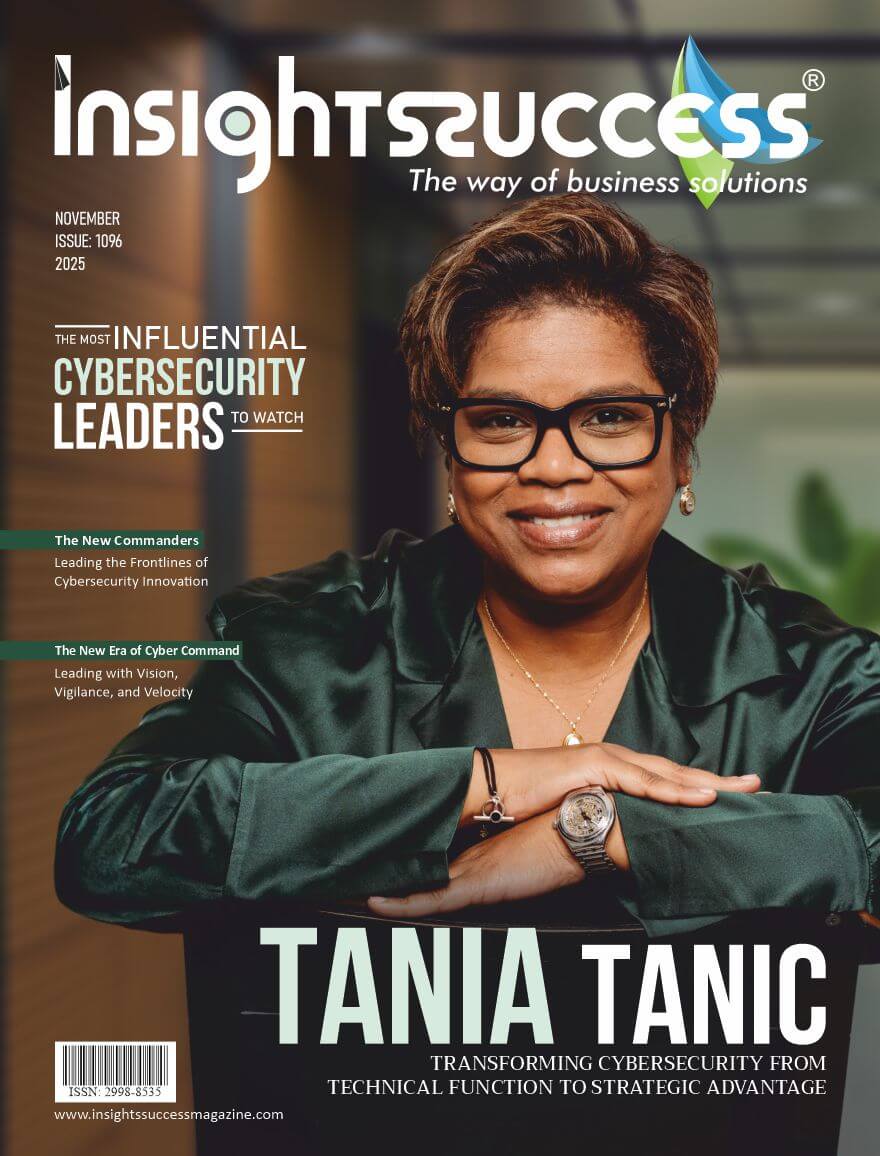
The Most Influential Cybersecurity Leaders to Watch
The Most Influential Cybersecurity Leaders to Watch This edition honors the visionaries safeguarding the digital future. In a world where technology evolves faster than ever, these leaders are at the forefront of defense—protecting data, infrastructure, and trust in an increasingly interconnected world. Quick highlights Quick reads

Tania Tanic: Transforming Cybersecurity from Technical Function to Strategic Advantage
Few leaders have successfully transformed professional discontent into a movement like Tania Tanic. After years of juggling senior responsibilities in banking, insurance, and technology, she became more concerned about a reoccurring disconnect: boards and executives struggled to grasp cyber risk in commercial terms. She understood that even the most modern businesses are vulnerable due to a communication gap. She developed BrainStorm CyberRisk with the goal of changing the narrative by demonstrating that cybersecurity is more than just a technical discipline, it is more of strategic business enabler. Drawing on her leadership expertise at iA Financial Group, Invest Québec, and Kyndryl Canada, she mastered a technique for translating complex cyber threats into actionable business insights. Her leadership style, founded on empathy, integrity, and collaboration, promotes cybersecurity as a foundation for innovation rather than an impediment to it. Her mission extends beyond data protection to empowering enterprises to successfully develop in the digital age, transforming risk into resilience and compliance into competitive advantage. Today, as Founder and CEO of BrainStorm CyberRisk and COO of Bradley & Rollins, she is at the vanguard of changing how organizations around the world are addressing cyber risk and governance. Bridging the Critical Gap Tania’s journey to establishing BrainStorm CyberRisk began with a clear observation that troubled her throughout her career across banking, insurance, financial services, and technology sectors. Organizations consistently struggled in translating cyber risk into language that boards and executives could understand and act upon. This disconnects between cybersecurity as a technical function and cybersecurity as a strategic business enabler created vulnerabilities that extended far beyond technology infrastructure. “Traditional approaches treat cybersecurity as IT hygiene, but our mission focuses on innovative cyber risk management solutions that enable organizations to thrive securely in the digital age,” she explains. Her leadership roles at iA Financial Group, Invest Québec, and Kyndryl Canada gave her front-row seats to this challenge, reinforcing her conviction that organizations needed a different approach entirely. The organization emerged from this realization, positioning itself to transform how businesses communicate about cyber risk. The firm bridges the communication gap between technical teams and business leadership, ensuring that cybersecurity decisions stem from business outcomes rather than purely technical considerations. This philosophy represents a fundamental shift in how organizations can approach their digital defense strategies. A Global Perspective with Local Application Tania’s extensive international experience across Europe and North America has fundamentally shaped BrainStorm CyberRisk’s methodology. Working across diverse regulatory environments, from European GDPR frameworks to North American compliance standards taught her a crucial lesson: effective governance, risk, and compliance cannot follow a one-size-fits-all model. “Working with organizations in different cultural and regulatory contexts taught me that effective GRC cannot be a one-size-fits-all solution,” she notes. This insight drives the firm’s approach to developing methodologies that adapt to local regulatory requirements while maintaining global best practices. The international perspective proves particularly valuable when advising multinational clients who must navigate complex cross-border compliance requirements. She recognizes that European approaches to data privacy and risk management often emphasize individual rights and transparency, while North American frameworks may prioritize business flexibility and innovation. This dual perspective allows the firm to create balanced solutions that satisfy regulatory requirements across jurisdictions while enabling business growth and digital transformation. Leadership Through Empathy and Empowerment At the core of Tania’s leadership philosophy lies a belief that resonates through every aspect of BrainStorm CyberRisk’s operations: cybersecurity fundamentally protects people and enables business success, not just implements technology. Her approach centers on empathetic leadership that builds empowered, diverse teams focused on achieving measurable business outcomes. “In cybersecurity, I believe in transparent communication and evidence-based decision-making, especially when the stakes are high and decisions must be made under uncertainty,” she emphasizes. This philosophy extends beyond internal operations to client relationships, where integrity, transparency, continuous innovation, and partnerships form the foundation of every engagement. Her experience of different cultures and industries taught her to value diverse perspectives and collaborative problem-solving. As a dedicated coach and mentor, she is fostering a culture of continuous growth and development, recognizing that in cybersecurity, learning never stops. This commitment to ongoing education and adaptation proves essential in a field where yesterday’s best practices may not address tomorrow’s threats. From Cost Center to Value Driver BrainStorm CyberRisk distinguishes itself through its emphasis on risk-based and business-aligned cybersecurity programs. Rather than presenting cybersecurity as a list of technical requirements, the firm frames it in terms of business resilience, competitive advantage, and market opportunities. The transformation begins with understanding each organization’s specific business objectives, then designing security programs that directly support those goals. Comprehensive risk assessments quantify potential business impact in financial terms, making it easier for executives and boards to understand the return on investment of security measures. This approach transforms cybersecurity from reactive compliance to proactive business intelligence. The firm’s proprietary platform, CYBERTACTIK, exemplifies this philosophy. The AI-powered cyber resilience simulation platform helps organizations understand their security posture through realistic business scenarios rather than abstract technical metrics. Organizations can visualize how security decisions impact business outcomes by making informed trade-offs between risk and innovation. Navigating Regulatory Complexity As regulatory pressure intensifies through frameworks like GDPR, DORA, and NIS2, organizations face the challenge of achieving compliance without sacrificing agility or innovation. Tanic’s approach emphasizes integration rather than overlay—designing compliance into business processes rather than treating it as a separate burden. “Regulations like GDPR, DORA, and NIS2 can actually accelerate innovation by providing clear guidelines for responsible data handling and risk management,” she explains. The firm implements automated compliance monitoring systems that provide continuous assurance rather than periodic assessments, reducing the operational overhead of compliance activities. BrainStorm CyberRisk helps organizations leverage regulatory requirements as competitive advantages. GDPR compliance, for example, can become a market differentiator when properly implemented. The key lies in designing flexible architectures that can adapt to evolving regulations while maintaining operational efficiency. Her international perspective allows the firm to anticipate regulatory trends and help clients prepare for future requirements before they become mandatory. Enabling Digital Transformation The delicate balance between risk mitigation

Leading with Vision, Vigilance, and Velocity
The New Era of Cyber Command The digital era, defined by innovation, data, and security, has become the new global battleground for the success or failure of organizations. With the increasing complexity of cyber threats, the leadership in cybersecurity is shifting from a reactive to a proactive one. It is the new generation of cyber leaders who possess vision, vigilance, and velocity qualities that are required for them to be able predict the turning point, organize their resources efficiently, and react with flexibility in an environment where even milliseconds matter. Vision: Anticipating the Future of Cyber Defense Foreseeing leadership is what upholds the modern cyber command base. In a world where threats change faster than traditional defenses adapt, leaders must not only think of immediate dangers, but also anticipate vulnerabilities and even foresights of the opportunities that await. This demands insight not only in technology but also in human behavior, world politics, and economic interdependencies. Cybersecurity has become a strategic discipline that is at the core of business continuity and national security, rather than a technical silo. The visionary cyber leaders integrate security practice into the core of their organizations while ensuring it is in harmony with innovation and growth strategies. They guarantee that security becomes the foundation of every digital-driven initiative such as cloud migration or AI adoption. Having a vision that looks into the future allows the organization to change their defensive posture to cyber readiness one whereby they understand the ability to predict attacks and create systems that are safe from the outset. Vigilance: Building a Culture of Awareness and Accountability The first requirement that determines success in cyber command is vigilance and this means a state of unremitting awareness and readiness. Technology alone cannot bring security to the table; people still represent both the most powerful defense and the most vulnerable point. Those organizations which are most resilient must be ones that nurture a culture of shared responsibility in which cybersecurity awareness ranges from the boardroom to each employee computer terminal. Besides, leaders should be able to maintain an atmosphere where vigilance is the norm. To achieve this, there should be frequent training, open communication, and integration of cybersecurity in everyday decision-making. It is equally important that employees realize security protocols are not for them just to follow; rather, they should grasp the reasons behind these protocols and acknowledge their role in safeguarding organizational assets. Besides, vigilance covers collaboration as well. Cyber threats are borderless, and they also cross different industries due to the world being interconnected these days. The cooperation between the public and private sectors, among others, is the means through which we can defeat the enemy. Leaders in cybersecurity that create reliable networks have on their side enhanced abilities of detecting and countering threats swiftly. In effect, the elements of good cyber leadership today are somewhat similar to those of military command: having clear objectives, shared understanding, and unrelenting discipline in carrying out the tasks. However, compared to ordinarily structured commands, cyber leadership has this advantage that it can stay flexible and change directions instantaneously upon the appearance of a new threat. Building the Future of Cyber Resilience The interplay between cloud computing, AI, and the internet of things is significantly transforming not only the cyber domain but also the way businesses operate on the global market. Those organizations that exhibit vision, vigilance, and velocity will take a lead role in overcoming the challenges posed by these changes while reaping benefits from the same. They can achieve this position by adopting predictive intelligence, seamlessly integrating automation, and recruiting and developing top cyber talent thereby turning their environments into ones that are not only secure but also easily expandable. One cannot overlook technology as the only factor behind cyber resilience rather it should be viewed as the outcome of leadership, culture, and strategy. Leaders from future cyber commands will not only be the defenders but makers of the digital frontier thus ensuring that progress and protection go side by side. Conclusion The transformation that a cyber command in the new era brings about in leadership is a change of perspective. The transformation needed foresight to predict a threat before it happened, vigilance to be always aware and velocity to do a quick and accurate intervention. Given that digital ecosystems constitute the backbone of the global economies and societies, cyber leadership is tantamount to organizational survival. The future of secure innovations will be molded by those who possess the qualities of foresight, discipline, and adaptability. Cyber command should not center on defense strategies only, but also it should be about taking the helm and steering the ship with certainty in a turbulent environment where change is the only constant.