






Most Empowering Woman Leader to Follow in 2025
Most Empowering Woman Leader to Follow in 2025 In a world that often demands constant reinvention, few leaders inspire personal and lasting change quite like Laura Rinnankoski. As an internationally recognized transformational life coach, Laura has devoted her life to helping individuals reconnect with their purpose, confidence, and authentic selves. Quick highlights Quick reads

Microsoft CEO Reports AI Now Produces Up to 30% of the Company’s Code
Prime Highlights: Microsoft CEO Satya Nadella announced AI produces as much as 30% of the company’s code. Python experiences more AI usage compared to complex languages such as C++. Key Facts: Microsoft predicts AI to produce 95% of code in 2030, according to CTO Kevin Scott. Google asserts more than 30% of its code is AI-generated. Meta has not announced a specific percentage of code generated by AI. Key Background : During Meta’s inaugural LlamaCon developer conference in April 2025, Microsoft CEO Satya Nadella made a telling remark: between 20% and 30% of all code in Microsoft is now being authored by artificial intelligence. This dramatic development underscores how deeply AI has penetrated contemporary software engineering. Nadella described that the generation of AI code is not consistent in terms of programming languages. For example, programming languages such as Python — which are famous for ease of use and flexibility — are experiencing greater percentages of code generated with AI. More technical, low-level languages such as C++ are less impacted due to the complex syntax and hardware-level interactions required. This observation serves to show that although AI tools are developing incredibly fast, they are still constrained in working with highly technical or specialized coding environments. Microsoft isn’t alone in this technological shift. Google has also disclosed that more than 30% of its code is now written by AI, although measurement standards for what qualifies as “AI-generated” differ between organizations. This inconsistency points to a larger industry need for clear frameworks or definitions when tracking AI’s role in development. Later in the same session at LlamaCon, Nadella inquired of Meta CEO Mark Zuckerberg how much of Meta’s code is AI-generated. Zuckerberg confessed that he didn’t know the percentage exactly, leaving the inference that Meta either does not keep the figure closely or hasn’t seen fit to advertise it. Microsoft CTO Kevin Scott has set out an ambitious vision for the future, foreseeing that by 2030, up to 95% of all software code will be written by AI. This estimate highlights the increasing dependence on AI to improve productivity, minimize routine workload, and speed up the software development process. But with more AI in the mix comes more responsibility. Developers and technology leaders need to be actively concerned about quality control, security loopholes, and ethical practices. While AI starts programming much of the code driving apps, services, and infrastructure, human judgment will be crucial to check logic, safeguard users, and maintain accountability. In brief, Microsoft’s announcement represents a turning point in the history of coding—when the partnership between human engineers and AI systems is transforming the entire ecosystem of software development. Read Also : The Trailblazing Leader To Look Out For In 2025

GITEX ASIA x Ai Everything Singapore: Emerging Robotics Industry Shares the Spotlight Alongside Next-Gen Tech & Supernova Challenge Finals
The region’s largest inaugural tech, startup & digital investments event came to a thrilling conclusion at Marina Bay Sands on Friday Robotics, AI, cloud, cybersecurity & telecom advancements on full display as Chhaya Technologies of Bangladesh wins US 50,000 first prize in the world’s ultimate pitch competition Singapore – April 2025: GITEX ASIA x Ai Everything Singapore showcased Southeast Asia’s position among the world’s fastest-rising and most vibrant innovation hubs for a third time on Friday as this year’s critically acclaimed first edition concluded in thrilling fashion. Organised by Dubai World Trade Centre (DWTC) and KAOUN International in affiliation with GITEX GLOBAL, the Asian inaugural edition of the world’s largest show took centre stage at Marina Bay Sands, Singapore from 23-25 April. Following an action-packed two days where capacity crowds examined the latest transnational tech developments, challenges, and breakthroughs spanning AI, cloud, cybersecurity, quantum, smart cities, and more, Friday thrust the region’s evolving digital transformation trajectory into focus once again. Evolving industries and bold innovation took centre stage alongside breakthrough talent and cross-sector advancements – broadening horizons to the boundaries of possibility currently being redefined by the regional and international tech communities. Advanced Humanoids: The Next Great Partner in Societal Progress? Among the rapidly developing tech-first industries under the GITEX ASIA x Ai Everything Singapore microscope was robotics as audiences explored a future where humans and robots co-exist and collaborate. A space Market Research Future projects will surpass US$200 billion by 2030; Booster Robotics of China was on-site to showcase why. The advanced humanoids creator has experienced a meteoric rise since its establishment in 2023, inventing the Booster T1, which has since been crowned as the ‘fastest free-walk robot’ at the 2024 IEEE-RAS Humanoids Championship. Chaoyi Li, Head of Globalisation at Booster Robotics, explained how humanoid robotics will one day become engrained in global society: “Humanoid robots will be everywhere around the world in the future and as reliable, affordable, and useful as laptops are today. They can help us everywhere, taking responsibility for many of the tedious, repetitive, and potentially dangerous jobs out there; enabling people to be more human rather than robotic. This is why we’re actively uniting with AI developers to deploy multi-functional robots for all kinds of scenarios and industries globally.” Supernova Challenge Champions Crowned: Chhaya Technologies Claims First Prize Following a record-breaking 2024 where the Southeast Asian startup ecosystem reached a highest-ever combined market valuation of US$454 billion, visionary up-and-coming talent aiming to become the next generation of high-profile tech entrepreneurs faced off in the ‘Supernova Challenge’ – the world’s ultimate pitch competition. The Supernova Challenge is part of North Star Asia, the region’s largest startup and investor show taking place alongside GITEX ASIA x Ai Everything Singapore. Under the North Star Asia banner, Friday’s highly anticipated finals saw 10 of Asia’s fastest-rising startups face off for their share of a US$100,000 prize pool. With victory, visibility, and potential investment support at stake alongside special prizes from Nebius and JTC Corporation, contestants showcased their innovative projects to a formidable expert judges panel. Chhaya Technologies emerged as the overall winner, after pitching among startup finalists from Australia, Canada, India, Republic of Korea, Serbia, Singapore and Vietnam. The Bangladeshi startup won the US$50,000 first prize for its digital micro-insurance platform which offers affordable and accessible insurance to underserved communities and Bangladeshi citizens living abroad. In the immediate aftermath of their win, Shawon Shahriar, CEO of Chhaya, said: “We’re delighted to win. This competition it one we’ve been anticipating for some time now – it’s been so exciting, and the atmosphere has been electric. Our ambition now is to keep building and forge a future where financial security is assured for everyone worldwide.” AI: A Revolutionary Force in Professional Sport & Personal Life Another final day highlight was the involvement of former French international footballer Bacary Sagna. The ex-Premier League star who enjoyed successful stints at Arsenal and Manchester City has made the successful transition into the tech industry since his retirement from professional football – becoming an entrepreneur, investor, and app creator. Addressing audiences during a special session titled ‘Future of Sports Tech’, Sagna revealed how AI is revolutionising football and wider sport at the highest level: “AI cameras cover every moment of matches today, gathering insights and data that clubs use to value players and evaluate their form and performances. Athletes also value and assess themselves using this data, from passing and pace to distance covered on the field. It’s revolutionary and is here to stay because the technology has been transformational.” Sagna also elaborated on AI’s education value proposition for professional athletes, revealing: “For many footballers, their education can stop as early as 15 because they don’t take it seriously and focus solely on football. For those who make it at the top level, this is all they know for the next 15-20 years. Once their career is over, some also struggle with mental health problems as they attempt to adapt to life away from football without real plans in place surrounding what they do next. AI can now be used to positively impact lives through advice surrounding financial security, education, nutrition, how to invest, and so on. It’s very important for young athletes especially to educate themselves – and AI can help.” Tech Giants Converge at the Region’s Most Comprehensive Next-Gen Solutions Showcase As GITEX ASIA x Ai Everything Singapore closed the curtain on an unforgettable inaugural edition, Friday provided another opportunity to become acquainted with the very latest cutting-edge services and solutions. Destined to redefine businesses and industries, such innovations were presented by a formidable line-up featuring world-renowned companies and top-tier digital transformation architects. Among the many product showcases fuelling widespread audience interest and intrigue was Fortinet’s AI-driven Security Operations Centre (SOC) automation platform, designed to empower security teams and enhance threat detection. Another was iFLYTEK’s On-Prem LMM All-In-One solution. Unveiled for the first time GITEX ASIA x Ai Everything Singapore, this comprehensive platform is designed for organisations seeking secure, customisable, and

The Most Dynamic Leader To Watch In 2025
The Most Dynamic Leader To Watch In 2025 This edition spotlights Sharon Pierce Shappley, a visionary transforming leadership with innovation, resilience, and purpose. This feature highlights her groundbreaking contributions, strategic foresight, and empowering leadership style, setting her apart as a trailblazer shaping the future of business and inspiring the next generation. Quick highlights Quick reads

A Journey of Passion, Purpose, and Perseverance Through the World of Language Education
Being born in a vibrant state of Louisiana Sharon Pierce Shappley her early years spent soaking in the warmth and culture of the Caribbean islands. It was here, surrounded by diverse languages and rhythms, that her fascination with linguistics began. From a tender age, her curiosity about communication in different languages led to what would be a lifelong commitment to education. Her academic journey is characterized by a sense of resilience and passion. Graduating in Bachelor of Arts degree in Social Science with an Education Concentration and a minor in Child Development and further graduated in Magna Cum Laude August 22, 2011. Several years later, she pursued a Master’s degree in Education (MAED), which provided the foundation for an even more formidable challenge—the pursuit of her doctoral degree. In 2022, Sharon was officially crowned for her Ph.D. in Education. Her dissertation centered on adult second language acquisition was a result of years of rigorous academic research and real-world experience. Despite the challenges faced during the COVID-19 pandemic, including university closures and formatting changes, she adapted. She transformed the research process into an online experience, rewrote sections to comply with revised APA guidelines, and learned patience and perseverance in the face of uncertainty. She devoted herself to education and empowering learners was unwavering. A Career Spanning Continents and Classrooms Sharon’s professional journey in education began in 1974, with a humble start—teaching English to students in Puerto Rico who found it difficult to grasp the language in traditional classroom settings. What began as local tutoring blossomed into a global mission. Sharon has since taught in over a dozen countries, including Belarus, China, India, Italy, Japan, Russia, Spain, Ukraine, the USA, and Vietnam. While pursuing her Bachelor’s degree in 2003, she became deeply invested in second language learning. This phase became a transformative chapter in her life, inspiring her to design an adaptable, level-based English curriculum that guides students from their existing proficiency to their aspirational fluency. Her teaching model has since evolved into a robust system, integrating contemporary methodologies and ensuring relevance in an ever-changing educational landscape. Today, Sharon offers tailored learning opportunities through her digital platform. From middle school students to adult learners, the courses cater to varying levels of English proficiency, helping students not just understand written English but master it. Her courses are built with a focus on individual needs, and her doctoral research continues to influence ongoing curriculum refinement. Currently, she is spearheading the launch of a comprehensive English-learning software aligned with European language acquisition standards. With ten proficiency levels (A1 to C2) and modules for five distinct age groups, this offering represents Sharon’s vision of accessible, high-quality language education. A single subscription opens access to fifty dynamic courses, and a 7-day free trial is available at sharonsclasses.org. Managing Life, Lessons, and Learning Balancing an expansive educational business and personal commitments has been a challenging yet rewarding endeavor for Sharon. With handwritten notebooks, intricate lesson plans, and over 900 lessons mapped across ten proficiency levels, her dedication to building a meaningful language-learning ecosystem is evident in every detail. Her day rarely ends without carrying her laptop, ensuring she remains tethered to her mission of uplifting learners. Fortunately, Sharon is surrounded by a steadfast support system. From collaborators to loved ones, many have stepped in to assist—whether ironing out technical glitches, offering emotional encouragement, or simply ensuring she takes time to rest. To maintain balance, she finds solace in travel. Cruises, in particular, offer her much-needed respite from the digital world, allowing for moments of reflection and rejuvenation. Sharon also remains an ardent supporter of the arts, frequenting concerts, plays, ballets, and sporting events, especially hockey. Her students, meanwhile, serve as a continuous source of inspiration and joy. Weekly Zoom sessions go beyond academic discussions—they are communities of shared lives, laughter, and collaboration. Students often become testers and advisors, contributing real-time feedback to improve the software’s functionality and content. In times of frustration or fatigue, Sharon recalls these moments and the impact she is making. Even during community celebrations, like Passover, her commitment doesn’t wane. She multitasks—attending festivities while uploading new content to her learning management system. Learning the ins and outs of platforms like Absorb LMS has brought fresh challenges, yet the delight in discovering features that can enhance student experiences keeps her enthusiasm alive. As she aptly summarizes, “It’s with a little help from my friends and an abundance of passion that I continued to thrive.” Driven by a Purpose Greater Than Profit Sharon Pierce Shappley isn’t just an educator; she’s a visionary with a cause. Her business isn’t motivated by profits alone—it’s about democratizing language education and helping learners unlock new opportunities through communication. Her professional persona is marked by goal orientation, collaborative energy, and an unyielding desire to see others succeed. With an affinity for technology and presentation design, Sharon is constantly pushing the boundaries of conventional teaching methods. Whether collaborating with fellow educators or refining curriculum based on student feedback, she approaches her mission with grace, grit, and generosity. She derives immense satisfaction from those ‘aha’ moments when a student finally grasps a challenging concept. “My mission is clear to offer affordable, effective English language instruction to anyone with the desire to learn—regardless of their economic or geographic limitations.” says Sharon. Her business is her voice, her tool, and her testimony. It’s built on empathy, nurtured with knowledge, and sustained by resilience. “Running a business, I believe, is among the toughest jobs one can take on. But if fueled by belief in its value and executed with heart, it can become a beacon of transformation.” she commented. The Fire Within: Passion as Fuel What drives Sharon each day is an undying love for education. Books have always been her companions, and the joy she finds in reading is something she yearns to share with the world. Knowledge, she believes, is the key to a more compassionate, enlightened, and inclusive humanity. The spark of passion ignites every time she sees students genuinely curious, not

5 Emerging Leadership Trends Reshaping Executive Development
The leadership landscape is changing rapidly. The traditional models of executive development—that were once based almost entirely on hierarchical power and strategic delegation—are now being reshaped by changing societal expectations, technological innovation, and a multigenerational workforce. Leadership trends today in the high-speed business environment have a critical part to play in determining how executives are being developed, mentored, and prepared for the future. These new trends are not only remodelling executive mindsets but are also shaping the very definition of leadership. The following are five leadership trends that are having a substantial impact on executive development in 2025 and beyond: Human-Centric Leadership One of the most compelling leadership trends in recent years is a move towards human-centric leadership. In the post-pandemic era, leaders must lead with empathy, emotional intelligence, and authenticity. Being able to establish trust, create psychological safety, and enhance employee well-being is no longer seen as a soft skill but is being framed as a key leadership capability. Executive training programs are adding modules on inclusive communication, empathy training, and active listening to their curriculum now. This reflects an acknowledgment of the fact that the performance of an organization has an intrinsic connection to the psychological and emotional robustness of human beings. Connected leaders rather than controlling leaders are being shown to be more proficient at handling ambiguity and change. Digital Fluency and Tech-Driven Decision-Making Technology is no longer an enabler but a strategic driver in leadership. AI, machine learning, and big data analytics have brought in changes that compel leaders to become digitally literate. The single most significant leadership trend of the day is perhaps the need for technologically inclined executives who are able to use digital solutions in order to make decisions based on knowledge and not assumptions. Today’s executive development programs involve studying digital transformation approaches, cybersecurity culture, and data literacy. Leaders need to not just comprehend how technology operates but also how it can contribute to a competitive advantage. This transformation is also making way for more intense cooperation among CIOs, CTOs, and the C-suite, with technology being integrated into every strategic endeavor. Agility and Continuous Learning as Leadership Imperatives Those were the days when only years of experience had been the weapon of executives. Nowadays, in the VUCA world, the need for agility and lifelong learning culture is one of the most essential leadership trends. Executives need to match pace with market transitions, customer demands, and disruptions from across the globe. Future-facing organizations are investing in leadership development models founded on iterative learning, speed-driven experimentation, and fail-fast culture. Executive coaching, peer-learning networks, and microlearning platforms are deployed to foster real-time knowledge assimilation and responsiveness. It keeps the leaders current, effective, and competitive in a changing world scenario. Diversity, Equity, and Inclusion (DEI) as a Leadership Mandate One of the other disruptive leadership trends is promoting diversity, equity, and inclusion from compliance to business priority. Today’s executives are also required to be DEI champions, actively creating inclusive cultures and diverse leadership teams. Executive development is changing, as well. Unconscious bias, inclusive hiring and interviewing, and fair performance measurement are now addressed in courses. Companies are also designing sponsorship and mentorship programs to build underrepresented talent. These aren’t optics—certainly not. They’re about building more successful, more innovative companies that have a representative face. Purpose-Driven Leadership and Stakeholder Capitalism Maybe the most values-based leadership trend is purpose. Leaders today are being asked to see beyond shareholder value and adopt stakeholder capitalism. That means recognizing environmental stewardship, social justice, and community involvement as core aspects of business strategy. Executives are increasingly being trained with an emphasis on ethical leadership, social responsibility, and sustainability reporting. Leadership programmes are integrating ESG (Environmental, Social, and Governance) principles, so that future leaders are able to balance profitability and social good. This is highly heard by millennial and Gen Z employees, who desire to work for companies that share like values. Conclusion As the world itself is changing at a speed never before seen, so too must the manner in which we build and sustain our leaders. The five trends of leadership that have been identified above—human-centric leadership, digital fluency, lifelong learning, DEI, and purpose-driven leadership—are not trends to be adopted, but instead an imperative redefinition of what it means to be a leader in the 21st century. Firms that adopt these trends as part of their executive education efforts will be well positioned to hire the best and brightest, navigate disruption, and build enduring value. Most importantly, they will develop a new generation of leaders who are not only competent but also caring, inquiring, inclusive, and ethical. The days of the omniscient, command-and-control CEO are over. Following in their place is a new archetype—one driven by flexibility, empathy, and purpose. Embracing and adapting these leadership trends are no longer simply nice to do; they are essential to long-term success. Read Also : The Evolution of Dynamic Leadership in the Digital Age

The Evolution of Dynamic Leadership in the Digital Age
In an international age where technological innovation is developing at a speed never before seen, the old leadership styles are rapidly losing place to newer, more adaptable, responsive, and visionary styles. At the pinnacle of the top competencies needed that are undergoing change in this new world is Dynamic Leadership—a style that speaks to responsiveness, inclusiveness, and innovation amidst the digital age. Understanding Dynamic Leadership Dynamic Leadership is a nimble and responsive style of leadership that adjusts in real time as a result of continuous feedback, data-driven decisions, and a feeling of teamwork. Contrasting with hard, top-down structures of old, dynamic leaders are characterized by their ability to lead through uncertainty, respond to change, and motivate cross-functional teams through complex digital transformations. This form of leadership is not industry specific. Across technology start-ups and multinational corporations, across healthcare and education, the ability to lead in fluid terms has become the defining feature of successful organizations in the Digital Age. The Digital Age: A Catalyst for Change The era of digitization, dominated by technologies such as artificial intelligence, cloud computing, data analysis, and remote team collaboration tools, has transformed the very nature of work. They demand not only technical abilities but also emotional maturity, foresight, and cultural flexibility—essence of Dynamic Leadership. Historically, leadership involved hierarchical control and long-term planning. Nowadays, however, decisions need to be made in real-time, on the basis of fluctuating data and fluctuating market trends. Leaders need to be adaptable, constantly adapting strategy mid-course to take advantage of new opportunities or react to unforeseen risks. Dynamic leaders succeed in this environment because they are comfortable with uncertainty and able to make rapid but rational decisions. Key Qualities of Dynamic Leaders A few essential qualities distinguish Dynamic Leadership in the online environment: Adaptability: Online leaders must be capable of changing their strategies quickly in response to new intelligence, technologies, or market needs. Vision Orientation: Agility is essential in the short term, but dynamic leaders also possess a well-defined vision for the longer term that drives their decisions and inspires their staff. Collaborative Intelligence: No dynamic leader does anything by themselves today in the networked world. Dynamic leadership emphasizes collaboration across functions, geographies, and disciplines. Tech Savviness: Not necessarily programming experts, but dynamic leaders understand digital tools well and new technology that can spark innovation and productivity. Empowerment and Inclusion: Empowering teams, diverse perspectives, and a psychological safety and experimental culture are cultivated by dynamic leaders. Challenges in Practicing Dynamic Leadership Despite its advantages, Dynamic Leadership is not without its challenges. Hierarchically embedded firms may resist cultural change to accommodate its implementation. Even executives may struggle to shed control-oriented philosophies for trust-oriented ones. Also, in our modern interconnected world, information overload can paralyze decision-making. Dynamic leaders must be able to cut through the noise and pinpoint those insights most pertinent, so decisions are on time and data-driven, but not reactive or short-term. Another difficulty arises in finding a balance between dynamism and stability. Being dynamic does not mean being impulsive. Leaders must ensure that rapid changes in direction are strategic and congruent with other objectives. Maintaining this tightrope balance requires intelligence, but equally as much effective communication and emotional maturity. Dynamic Leadership in Action A number of examples in the world of business exhibit the power of Dynamic Leadership. The example of Satya Nadella’s Microsoft is one: “by developing a growth mindset culture, betting big on cloud, and enabling a culture of collaboration,” Nadella showed dynamic leadership at scale. Microsoft became a leader in technology again with his leadership. Similarly, when the pandemic of COVID-19 emerged, companies like Shopify and Zoom illustrated how transformative leadership could steer during complete disruption. These companies quickly reacted to spiraling demands and shifting working patterns, growing infrastructure and fine-tuning services with excellent resilience. Startup communities and innovation centers also provide fertile ground for agile leadership. There, in this high-growth ecosystem, people who can accelerate rapidly, are able to fuel creativity, and can learn through failures are irreplaceable. Creating a Culture of Dynamic Leadership For organizations that want to develop Dynamic Leadership, the process starts in the mind. Leadership development initiatives need to prioritize flexibility, digital fluency, and diversity-inclusive practices. Feedback loops, mentorship, and live learning platforms need to be integrated into the fabric of the organization. No less critical is eliminating structural obstacles. Flatter structures, decentralized decisions, and unobstructed channels of communication provide the environment where dynamic leadership can flourish. Technology also has its turn. Collaboration software, openness, and performance monitoring software can enable leaders and teams to respond dynamically without sacrificing accountability. Conclusion: The Future Is Dynamic As we continue forward, Dynamic Leadership will continue to be the solution to individuals, teams, and organizations succeeding in the age of the digital revolution. In an era where the world is marked by continuous disruption, the ability to lead with agility, clarity, and compassion is needed now more than ever. This is not merely a case of adjusting to change—it’s about designing change. Effective leaders are not just responders; they are architects of change, taking challenges and transforming vision into reality. In essence, Dynamic Leadership is not an ephemeral occurrence but a natural transformation of leadership knowledge and application. They will not just cope but lead the way to the next wave of innovation and development. Read Also : Indigenous Wisdom as Inspiration for the Future of Environmental Stewardship

The Grinch ‘Knee Surgery Tomorrow Meme’ Explained
The internet also has a weird power to transform mundane moments into virality, and one of the most compelling examples of this is the “Knee Surgery Tomorrow meme. What at first glance is a weird trend, this meme has resonated with many, especially those who have had to deal with the anxiety of having to have a medical procedure done. The “Knee Surgery Tomorrow meme, which takes an offbeat and ironic turn with the character of the Grinch, has become popular across the board. In this blog, we’ll break down the origins, the humor, and the cultural impact of the meme, explaining why it’s more than just a funny image. Origins of the Knee Surgery Tomorrow Meme The Knee Surgery Tomorrow meme originally started trending in 2021, but its humorous origins go back to a set of medical nervousness memes. The original image format utilized an image of a squirrel, looking anxious but also relieved, with the caption, “That feeling when knee surgery is tomorrow.” The short but recognizable caption struck a chord with individuals who were nervous about an upcoming surgery. The meme took an instant liking with people who have been on the rollercoaster of emotions of waiting, fear, and in some cases, anticipation that drove them to share the meme to a large extent through social media. But it was during 2022 that the meme saw a significant shift in popularity. The Instagram photo @blinch.feels provided a twist: a blue Grinch character, affectionately named “blinch,” and the caption, “That feeling when knee surgery is tomorrow.” Combined, an instantly recognizable holiday character and a nervous anxiety about surgery formed a strange and humorous dichotomy. The blue Grinch, whose grotesque facial expression so wonderfully framed the mix of emotions—fear, nervousness, and a hint of thrill—that so many feel when they learn a medical procedure lies ahead for them. How the Grinch Became a Meme Icon The transformation of the Knee Surgery Tomorrow meme from a normal picture of a squirrel into a full-fledged meme with the Grinch was a turning point. Including the Grinch character added a secondary layer of humor to the meme, as the Grinch character itself is an over-the-top, somewhat comedic character. The character, normally symbolizing untypical grumpiness and inner conflict, was the ideal visual representation of the strange sensations in anticipation of surgery. The use of the blue-hued Grinch specifically—a “blinch”—created a distinct variation of the meme that quickly gained traction among meme cultures. Before long, the meme was going viral on social media platforms, from Instagram and TikTok to Reddit and Twitter. The meme’s accurate but absurd tone found equilibrium between the broad apprehension of surgery and the irrational humor the internet craves. The Cultural Significance of the Knee Surgery Tomorrow Meme The cultural importance of the Knee Surgery Tomorrow meme is not only achieved by the amount of times it has been shared, but by the degree to which it has pervaded all aspects of internet culture. The meme, even though it’s about something as serious as surgery, can encapsulate a stressful situation into a humorous context, so that people can find something to laugh about what otherwise they would fear. It capitalizes on a common experience: fear of medical procedures, and somehow provides a release from tension. The most fascinating thing about this meme is that it is flexible. It has been picked up by various groups ranging from healthcare professionals to the general populace of internet users. On forums such as Reddit, there exist copies of the meme in a subreddit dedicated to a particular theme, such as r/KneeSurgeryMemes , in which people share their own memes hoping to be granted their procedures. The meme has, throughout the years, evolved into various forms, either in user-edit forms or even just using it for other operations aside from knee operations. Moreover, the meme has transcended entertainment alone, with the creation of meme-based cryptocurrency coins like $KNEE and $GEPE. The coins are a reflection of how far this meme has gone into permeating wider internet culture, merging internet humor and online finance and meme-based communities. The Humor Behind the Knee Surgery Tomorrow Meme In essence, the Knee Surgery Tomorrow meme is a twist on the tension between two otherwise contrasting feelings: humor and fear. Surgery, to most, is usually a source of anxiety, fear, and uncertainty, but the meme succeeds in taking these feelings and turning them into something humorous. The comedy is not in the surgery itself but in the over-the-top way in which the Grinch (or blinch) is used as a metaphor for these pre-surgery feelings. The meme is built on a common experience: waiting for a life-defining moment, one that involves a procedure. Perhaps it is fear of the unknown, fear of pain, or plain uncertainty about healing. The frowning Grinch face is the perfect visual imagery of the internal struggle to stay calm sitting on the edge of great change—somehow still managing to find a way to laugh at how absurd it all is. Why the Knee Surgery Tomorrow Meme Keeps Growing Another main reason the Knee Surgery Tomorrow meme continues to grow in popularity is that it is versatile. While the Grinch is the target in this particular, the meme template is generic enough that it can be applied to represent any level of anticipation, anxiety, or future event scenario. It’s not exclusive to knee surgery, though. It’s been applied to explain everything from dentist visits to job interviews. Yet it has made the meme up to date even though it transforms from one new shape into another. Second, the ridiculousness of the meme also makes it popular. People who are experiencing stress, either for a surgery or for some event that will turn their life around, will not find difficulty identifying with the humor of this meme. It puts everyone in a smiling mood for a second, reminding one that even the most daunting is possible to ridicule. Conclusion The Knee Surgery Tomorrow meme is the
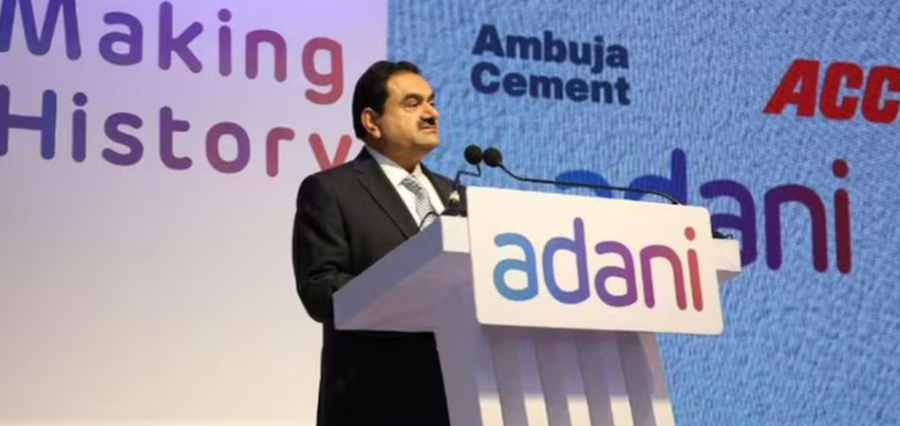
Adani Energy to Invest Up to 18K Crore in Capex in FY26
Key Points: Adani Energy Solutions will receive up to ₹18K crore as FY26 capex. Power transmission, smart metering, and renewable integration are the focus areas. Key Facts: FY25 capex of ₹15,000–16,000 crore is exceeded in FY26. Renewable transmission is the focus area in high-value projects, particularly in Gujarat. The company is also deploying humongous smart metering projects in India. Key Background : Adani Energy Solutions, the flagship energy infrastructure business of the Adani Group, has announced its bid to invest ₹18,000 crore as capital expenditure during the financial year 2025-26 (FY26). This strategic investment is a massive increase from the ₹15,000–16,000 crore spent in FY25 and shows the company’s aggressive approach to developing India’s energy infrastructure. Most of the investment will be in transmission infrastructure, the spine of India’s energy transformation. Adani Energy is at the forefront of making it possible to transmit electricity from renewable power hubs to consumption points. Such a place is Gujarat’s Khavda district, where Adani Green Energy is building a gargantuan 30 gigawatt renewable energy park. To make this possible, Adani Energy Solutions is building gigantic transmission corridors for efficient evacuation of power. Smart metering programs constitute another key support pillar to the investment strategy. The company has already received orders for the installation of 23 million smart meters and an order book for tendering to install another 120 million meters. These programs across states such as Assam, Bihar, and Maharashtra will transform the power distribution by way of modernization, loss reduction, and improved monitoring and billing systems. The company would fund the capital through internal accruals and external fund raising. Adani Energy raised close to $1 billion by way of qualified institutional placement of equity shares in its recent filing. The capital infusion reflects the confidence of investors in the company’s growth strategy and operating planning. By investing ₹18,000 crore in FY26, Adani Energy Solutions is not just expanding its market share but also aligning its business model with India’s total renewable power and sustainable growth ambitions. The capex thrust is also the company’s long-term strategy to become an Indian energy transmission and digital utility leader.

The Knowledge Review Features David Fiorucci as One of the Most Inspiring Leaders Making a Difference in Education, 2024
Effective leadership is more a matter of leading a clear direction, creating teamwork and inspiring people to deliver their best, and creating a culture of trust, responsibility, and development. Teacher in-service education is focused on bringing progressive change and innovation. As opposed to addressing task control, training is focused on putting action into common values and common goals. Vision, communication, knowledge, and ethics-based decision-making provide lasting and long-term accomplishment. David Fiorucci, Inventor of Octocracy, and the CEO and Founder of LP3 Ltd, is an accomplished entrepreneur and change-maker influencing the education market with visionary innovation. More than 30 years ago, David treaded a crossroads to pursue a revolutionary and lofty objective, foreshadowing a career of leaving a lasting impression. His aspiration goes far beyond leaving a transformational influence on the businesses that he works for; he wants to leave a ripple effect of positive influence spanning industries and communities. David’s vision was to redefine leadership to be at its best possible potential to amplify best practices, make smart decisions on where to grow and eliminate the unintended side effects of poor management. Spurred by a mammoth sense of responsibility to serve the greater good, he set out on a mission to redefine leadership’s potential to bring about dramatic and long-lasting change. One of the key things David learned was that common sense and common language at all organizational levels really do count a lot. He discovered that collaboration and alignment of stakeholders through good communication are behind bringing about cooperation and commitment to shared goals. Through the LP3 Leader system, David continues to guide his vision of leadership as a positive influence. His vision not only places organizational performance in its proper place better but also calls on leaders to make lasting, long-term contributions to their world and to humanity in general. Read Also : GITEX Expands to Vietnam, Igniting US$200bn National Digital Economy Potential