






Antar, a Wellness Platform to Redefine Holistic Health, to be Launched by Karishma Mickey Mehta
India | 12th June 2025 India’s first digital health and wellness Platform – Antar is all set to redefine holistic living, providing 360-degree care for health and well-being. It’s the first wellness startup in the country with a mission to revolutionize preventive health. Antar brings together personalization along with ancient wisdom to provide affordable, accessible, and sustainable healthcare. The Platform offers a personalized online program that integrates exercise routines, tailored nutrition plans, and mental wellness guidance. It is designed to help individuals overcome lifestyle-related conditions such as obesity and heart disease, and to break free from a sedentary routine—all through a stress-free, preventive approach to health and well-being. Announcing the launch, Dr. Mickey Mehta- Global Holistic Health Guru & Spiritual Life Coach shares “The word Antar – Sanskrit for “the space within” – represents a place of deep wisdom, intuition, and healing, Dr. Mickey Mehta quotes “If life is a samasya (problem), Antar is the samadhan (solution).” He further explains that Antar’s Dimensions of Transformation include Curative & Creative Nutrition, Optimal Movement Therapy, Physiotherapy for Rehabilitation and Pain Management, & Mental and Emotional wellness guidance—each designed to cultivate inner resilience, restore balance, and foster lasting joy. In the first phase, Antar aims to serve 50,000+ individuals through programs and consultations to reach millions of people via workshops, webinars, and digital content etc. The platform also plans to serve institutions, Hospitals and corporates with an aim to encourage health awareness among employees. Ms. Karishma Mehta- Founder of “Antar- A Health and Wellness Platform,” stated that Antar is not just a wellness platform – it’s a state of mind. We’re building a world where holistic health is intuitive, accessible, and seamlessly part of everyday life. She also added Antar’s first phase will be Primary Ailment Management followed by physiotherapy services and mental & emotional wellness programs. What sets Antar apart is its unique blend of legacy, science, and soul. Backed by over 45 years of global wellness leadership by Dr. Mickey Mehta, Antar seamlessly integrates evidence-based care with ancient healing traditions. It goes beyond conventional metrics like calorie counts and step trackers, focusing instead on intuitive and meaningful well-being. With hyper-personalized wellness plans, simple practices for modern lifestyles, and a commitment to building inner strength and resilience, Antar offers a sustainable path to lifelong holistic health. Dr. Dhara Shah (MPT), Director of Services & Programs and a BW 40 Under 40 Wellness Leader: “At Antar, my focus is to bridge the gaps in today’s health-tech landscape by integrating clinical expertise with digital innovation. We’re shifting healthcare from reactive to proactive – compassionate, connected, and whole.” At the heart of Antar’s vision is wellness guru Dr. Mickey Mehta, whose legacy spans over 54 years of yoga expertise and 45 years of pioneering holistic wellness. Having touched more than 45 million lives globally through 15,000+ television appearances, 10,000+ radio episodes, best-selling books, public speeches, and online courses, his philosophy forms the foundation of this transformative venture. About Ms. Karishma Mehta- The Founder holds a Master’s in Information Experience Design holder from Pratt Institute, New York, and combines UX acumen with ancient principles of wellness to co-design Antar’s richly immersive health experiences. ABOUT ANTAR: Antar is a groundbreaking digital wellness experience designed to make you healthier, whole, and healed like never before. Envisioned and mentored by Dr. Mickey Mehta, the pioneer of holistic health in India, it transcends fleeting wellness trends, offering a transformative journey rooted in self-awareness, holistic well-being, and sustainable health. With a focus on customization and individualization, Antar offers a highly personalized wellness experience that adapts to your unique needs. Derived from ancient wisdom, “Antar” means inner essence—the core of who we truly are. WEBSITE: https://knowtheantar.com/ For more information, please contact: Sheetal Sharma +91 9357097238 Tanya Keshri +91 7428120679 Ashmit Natani +91 7073092666 Disclaimer – This article is a work of original content created for public relations and informational purposes only. It may be published across multiple digital platforms with the full knowledge and consent of the author/publisher. All images, logos, and referenced names are the property of their respective owners and used here solely for illustrative or informational purposes. Unauthorized reproduction, distribution, or modification of this article without prior written permission from the original publisher is strictly prohibited. Any resemblance to other content is purely coincidental or used under fair use policy with proper attribution. Read More: The Knowledge Review Celebrates David Fiorucci’s Visionary Leadership in Education

Meta to Invest$ 14.8 Billion for 49 Stake in Scale AI, Launches Superintelligence Initiative
Prime Highlights: Meta is acquiring a 49 stake in Scale AI for$ 14.8 billion to accelerate its AI capabilities. Scale AI’s CEO Alexandr Wang willco-lead a new “ Superintelligence ” lab with Meta while Scale remains an independent reality. Key Facts: The deal values Scale AI at roughly$ 28 billion. Scale reported$ 870 million in 2024 profit and expects over$ 2 billion in 2025. The U.S. FTC and DOJ are likely to review the investment under antitrust laws. Key Background Meta Platforms is preparing to make one of its most significant investments in the AI assiduity by acquiring a 49 stake in Scale AI, a leading data- labeling company, for$ 14.8 billion. This move is part of Meta’s broader strategy to recapture its technological edge and contend further aggressively in the global artificial intelligence arms race. Scale AI, innovated by Alexandr Wang and Lucy Guo in 2016, has come a vital structure provider for companies erecting AI models. The company offers tools and services that supply large volumes of high- quality labeled data, a core demand for training large language models and computer vision systems. Its guests include OpenAI, Google, and Meta itself. Scale’s earnings in 2024 were around$ 870 million, and the company is on track to surpass$ 2 billion in 2025. Its strong fiscal position, bolstered by over$ 900 million in cash, has helped it grow fleetly. before in 2025, it raised capital at a$ 14 billion valuation and was reportedly assessing a tender offer valuing the company at$ 25 billion. The Meta deal now effectively values Scale AI at$ 28 billion. As part of the agreement, Scale CEO Alexandr Wang will dislocate to Menlo Park toco-lead a new AI “ Superintelligence ” lab under Meta’s leadership. The lab will work directly with Meta CEO Mark Zuckerberg, aiming to fast- track the company’s sweats to develop advanced AI systems. This reflects Meta’s growing focus on AI, particularly following examens of its Llama 4 model and detainments in the rollout of unborn AI systems. Although Scale will remain an independent reality, the size and nature of Meta’s nonage investment could attract scrutiny from U.S. antitrust controllers. Both the Federal Trade Commission( FTC) and the Department of Justice( DOJ) have shown increased interest in overseeing largenon-controlling tech deals, analogous to Microsoft’s investment in OpenAI. Despite labor- related difficulties around Scale’s gig worker platforms, Meta appears to be laying on the company’s specialized prowess and leadership. For early investors, this deal could give a economic exit, while Meta earnings pivotal AI structure and gift in its pursuit of artificial general intelligence. Read More: Apple Reveals macOS Tahoe 26 with Liquid Glass Look and Improved Spotlight
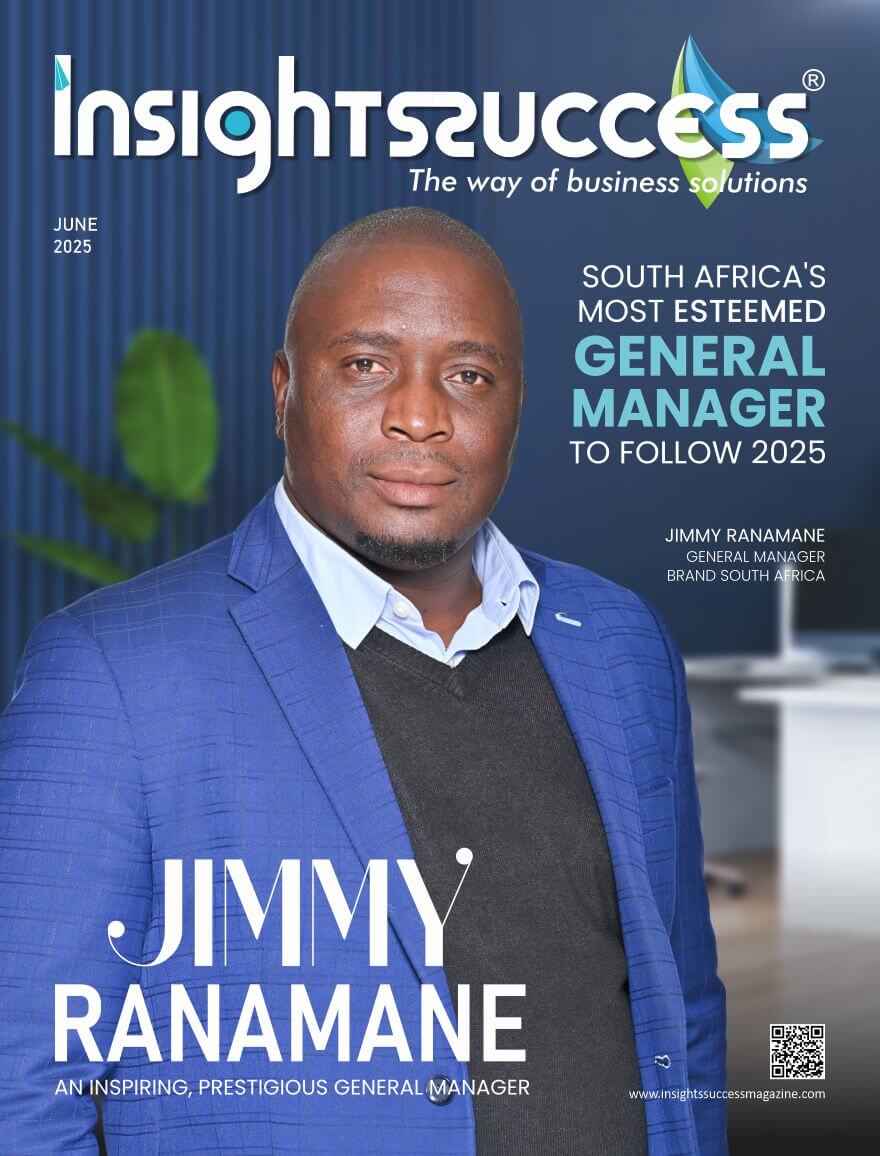
South Africa’s Most Esteemed General Manager to Follow 2025
South Africa’s Most Esteemed General Manager to Follow 2025 With unmatched expertise in trade promotion, investment attraction, and destination marketing, Jimmy has become a strategic voice in shaping how the world sees and engages with South Africa. As a seasoned marketing, communications, and stakeholder relations specialist, Jimmy’s approach is deeply rooted in purpose-driven storytelling and economic empowerment. Quick highlights Quick reads

Jimmy Ranamane: An Inspiring, Prestigious General Manager
An inspiring and highly skilled general manager, renowned for exceptional expertise and leadership. Effective nation branding is crucial for drawing in trade, investment, and tourists in the dynamic world of global market positioning. The strategy used by South Africa, led by professionals, emphasizes the fine line that separates highlighting assets from tackling problems. South Africa seeks to improve its standing internationally through stakeholder cooperation, creative marketing approaches, and data-driven tactics. Its reach is further enhanced by the incorporation of digital media, AI, and experiential marketing. South Africa’s branding initiatives continue to promote growth, global competitiveness, and a cohesive national reputation on the international scene by coordinating economic diplomacy with national identity. Jimmy Ranamane is a living example of a general manager in the field of nation branding and global marketing. With a wealth of expertise in trade promotion, investment promotion, and destination marketing, he is a strategic and innovative marketing, communications, and stakeholder relations specialist. He creates and carries out projects that draw in international investment, promote commercial links, and increase tourism in South Africa because of his passion for influencing attitudes and promoting economic growth. 98% of his efforts have been successful, resulting in long-term adoption and the signing of numerous Memorandum of Understanding (MoU) with several partners. Looking at his track record, he successfully implemented high-impact marketing and stakeholder engagement tactics. The Global South Africans Initiative (launched in 2018 and now a key Brand South Africa programme)), the BRICS Business Forum (2020/21/22/23), and PR & Marketing Strategies for the Five Cities in China Expos (2014) as well as the South Africa’s London Investment Week Trade & Investment and Inaugural Global South Africans Awards are noteworthy initiatives. Jimmy Ranamane is great at creating communications plans and stakeholder frameworks that promote long-term growth and significant effect. His other projects include the Government Stakeholder Framework—2016 and South Africa’s International Telecommunications Union Marketing and Communications Plan (South Korea) in partnership with the Department of Telecommunications & Postal Services—2019. Key to Success To position South Africa competitively in international markets, he employs Simon Anholt’s Nation Brand Hexagon from a place branding standpoint, concentrating on six important pillars: Investment & Immigration, Exports, Tourism, Governance, People, and Culture & Heritage. Table Mountain, Cape Point, and the Blyde River Canyon and national parks, e.g., the Kruger National Park and Pilanesberg National Park, are on top of the list when it comes to country brand association in terms of tourism. South Africa is known for producing high-quality wines, fresh produce, and gourmet meat. It is marvelous that culturally, figures like Nelson Makamo, Gogo Esther Mahlangu, Trevor Noah, Thuso Mbedu, Charlize Theron, and DJ Black Coffee enrich its global brand. Its rugby, cricket, and soccer teams are also widely recognized. From a governance point of view, South Africa advocates for peace through its role in African peacekeeping missions and the International Court of Justice’s stance on the Israel-Palestine conflict. As a place branding professional, Jimmy Ranamane assesses the country’s global standing using indices like the WEF Competitiveness Report, the Ibrahim Index of African Governance, the Bloom Consulting Global Reputation Study, investor perception studies, and media monitoring tools. Enhancing the Country’s Reputation A current PR and Stakeholder Mobilization Campaign promoted South Africa’s role in the BRICS Summit and Business Forum within the African and Asian continents. It aimed to raise awareness, engage key business and government stakeholders, and highlight the Africa Continental Free Trade Area. The second objective was to engage key business and government stakeholders in attending and participating in the BRICS Summit and Business Forum agenda, including showcasing African goods and services to audiences from BRIC countries. Obstacles involved acquiring approval from key partners across the continent, as South Africa was the individual BRICS representative then. Motivating enterprises to showcase their offerings and participate in the conference highlighted its openness. Integrating the AfCFTA into discussions and involving the African press further reinforced endorsement. Promoting SA’s Diversity Worldwide Cultural diversity is key to positioning South Africa as a competitive global brand. Jimmy Ranamane stated, “Our culture and heritage, especially our diversity, serve as a unique differentiator or selling point for us, as it is a definition of our identity as a nation.” Brand South Africa collaborates with the creative industry—film, fashion, music, and arts—to celebrate its uniqueness through campaigns. That highlights cuisine, music, artifacts, and inspiring citizens. Following Jimmy, a distinguished program used to showcase South Africa globally is the Global South Africans initiative (www.globalsouthafricans.com), where the key audience or target market is South Africans in the diaspora. The Global South Africans initiative engages South Africans abroad as advocates, sharing success stories and countering misinformation to shape global perceptions. This program enables the diaspora with precise insights to promote South Africa’s image internationally. Utilizing Digital Technologies Jimmy Ranamane follows a strategy of engagement. Just like that, to keep the international audience engaged, Jimmy collaborates with media organizations that have adopted new media, particularly digital and social media platforms. In addition, Jimmy Ranamane and the team have developed and improved their own digital and social media platforms to align with current trends. Approximately 70 percent of their campaigns are conducted through these digital platforms, which include both those owned by Brand South Africa and their partner platforms. Advancing Partnerships Jimmy’s strategy is centered on ‘working with and through stakeholders,’ which include the government, business, and civil society, because Brand South Africa is the guardian of a brand that is owned and impacted by several stakeholders, some of whom they have no control over. He typically creates programs that benefit all parties involved to encourage collaborations with various stakeholders. They also act as a resource for research, marketing, and communications for their partners and the projects they work on together. Furthermore, together they have created a research resource center and a marketing toolkit that stakeholders may use for free. Key Takeaway from Experience Per Jimmy, because marketers have little influence over the brand and its stakeholders, place branding is more complex than traditional branding. The job is to elevate awareness,

Leadership as Legacy: Building Impact Beyond a Lifetime
In an era enthralled by quarterly earnings and short-term victories, the concept of leadership as legacy presents a richer, more lasting vision of success. Genuine leadership is not measured merely by offices held, empires created, or revenues accrued. It is measured by the lasting difference one makes—on people, on culture, on values, and on the world at large. It is those leaders who move beyond the here and now, planting their power in a tomorrow they might never entirely have an inkling of, but willfully mold. In today’s dynamic and frequently volatile environment, where technological innovation meets social transformation, the need for legacy-driven leadership has never been higher. Not only must leaders manage operations and drive performance but now they must create institutions and motivate generations in a manner that transcends their own stay. Legacy starts with vision. Not a vision that is anchored to short-term objectives or market standing, but a vision that is grounded in a deep sense of purpose. Leaders who leave legacies do not merely ask “What do I want to do?” but “What will last as a result of what I do?” They operate generationally, crafting strategies and institutions for the long-term. Visionary leaders also think about the ripple effect of their choices. They make sustainability, inclusion, and innovation a priority—not because these are trendy terms, but because these are values that can survive the test of time. They don’t act randomly; they know that what they sow today may define the future far beyond their own engagement. Leading Through Values, Not Ego Authenticity and values-based decision-making are at the core of a leadership as legacy. While ego-based leadership might bring fleeting fame, values-based leadership stands the test of time. Humble, empathetic, and authentic leaders build cultures that are humble, empathetic, and authentic as well—cultures in which others feel inspired to develop, contribute, and flourish. This type of leadership goes beyond personality. It gets ingrained in the way an organization works, in the way decisions are made, and in the way success is measured. It’s why leaders who are most admired are not just remembered for what they accomplished, but for the way they made others feel and the way they embodied what was most important. People as the True Legacy Buildings can be rebuilt. Products can change. Strategies can be rethought. But the individuals a leader touches are the best testament to their legacy. Leaders who invest in others—who mentor, raise up, and challenge—leave behind something much more profound than institutional knowledge: they leave behind belief, confidence, and the courage to lead. Legacy leaders are multipliers. They understand that the development of leadership is not a task, but an obligation. They create a trail of people who are empowered to carry on their values, build on their foundations, and take their vision to new horizons. This human legacy transcends economic cycles and technology revolutions. Institutionalizing Purpose Sustainable leadership as legacy takes more than having good intentions—it calls for frameworks that institutionalize purpose. This is about infusing company policies with ethical values, promoting diversity not only as a program but as a cultural pillar, and having governance models reinforce transparency, accountability, and long-term vision. Organizations led by legacy-minded leaders often become mission-driven ecosystems. They develop resilient cultures, attract talent that shares their values, and establish reputations that endure. Whether it’s in the corporate, public, or nonprofit sector, the DNA of leadership becomes inseparable from the DNA of the organization itself. Embracing the Long View in a Short-Term World Today’s leaders are presented with a paradox: the world incentivizes short-term results, but history honors long-term contribution. To navigate these competing demands takes courage. It takes leaders to make choices that won’t necessarily yield returns in the short term, to invest in individuals whose potential might flower when they’re no longer around, and to be steadfast in their values even when the market demands expediency. Legacy makers realize that not every return is immediate. Some seeds will not mature for years. They stay not for applause, but for being in sync with a larger purpose. They recognize that their legacy is not what they leave behind, but what keeps growing because of them. Succession as a Strategic Imperative One of the most important indicators of legacy is what occurs when a leader leaves office. Succession planning is not a process—it is a philosophy of leadership. It demonstrates whether or not a leader has created something that will live beyond them. Leaders who lead with a legacy mindset prioritize continuity over control. They train others to step up. They bequeath outlines and templates, but most importantly, an attitude. They have faith in the following generation not to copy, but to recreate—maintaining the heart, while adapting with the times. Conclusion: Leadership that Echoes Beyond Time Ultimately, a leader’s value is not just in what he does, but in the trail of inspiration, influence, and integrity he leaves behind. Leadership as legacy isn’t a point to arrive at, but rather a devotion to serve a cause beyond oneself—a company, a purpose, a generation. It’s about making lasting change, even when the headlines are forgotten. It’s about constructing bridges instead of empires, developing future leaders instead of holding on to power, and making decisions rooted in values, not trends. In a fast-changing world, this kind of leadership is not only ageless—it’s critical. Read More: Empowered to Lead: Creating Cultures of Purpose and Belonging

Empowered to Lead: Creating Cultures of Purpose and Belonging
In today’s changing world of work, leadership is no longer characterized by hierarchy, authority, or job title alone. Rather, the most effective leaders are those who build cultures that build purpose and belonging—where individuals feel valued, connected, and inspired by something more than productivity measures. As companies struggle with messy, global issues—from digital disruption and economic uncertainty to evolving employee expectations—culture has been a key differentiator. Meaning-based, human-centered cultures don’t only keep employees; they drive performance, stimulate innovation, and create strong, resilient teams fit for the future. And at the center of these are enabled leaders—leaders who engage through conviction rather than through command. The Power of Purpose at Work Purpose is no longer a nicety—it’s a mandate for leadership. When workers are looking for something more than salary and title, companies need to be able to offer a sense of common purpose. Purpose connects an individual’s role to a higher purpose so that people understand how their efforts count. Enlightened leaders always speak and live this purpose. They establish clarity on “why we do what we do” and make certain strategy is aligned with values, not solely metrics. Regardless of whether in a startup or international business, purpose leadership drives engagement by linking work to identity, values, and impact. But purpose cannot be something put on a poster or touted in a campaign. It has to be embedded in the everyday fabric of decision-making, communication, and recognition. Leaders have to live behaviors that demonstrate this commitment, turning purpose into something more than an abstraction but an operating compass. Belonging as a Strategic Advantage If purpose provides a reason to work, belonging provides a reason to stay—and to flourish. Belonging occurs when people feel respected, valued, and safely able to be themselves. With increasingly diverse, global workforces, where remote and hybrid work are the new norms, building this space is more difficult and more critical than ever before. Belonging leaders lead with empathy. They listen deeply, invite diverse voices to the table, and make space for vulnerability and expansion. This is not performative inclusion, but really getting to know the lived experience of team members and responding in authenticity. Belonging is also constructed by recognition. When individuals feel noticed and valued, their commitment strengthens. Effective leaders don’t merely measure results—they applaud effort, grit, creativity, and teamwork. By doing so, they reward the behaviors and attitudes that keep teams aligned and engaged. Empowerment is Not Delegation—It’s Trust Empowered leadership is wrongly perceived as a matter of delegating greater responsibilities to individuals. However, actual empowerment rests on faith—faith in people’s judgment, capabilities, and potential. Empowerment entails granting autonomy, providing resources, and lifting obstacles to growth. As leaders empower, they move from controller to enabler. They invest in others’ growth, mentor with purpose, and establish systems whereby individuals are enabled to take risks, recover from failure, and lead initiatives that contribute. Leadership in such cultures is not a position held by the few, but a skill fostered in many. This type of leadership does not undermine power—it amplifies effect. Empowered teams progress faster, innovate more effectively, and shift more readily to change. The leader’s task becomes not to know everything, but to create systems and relationships that release the collective intelligence Culture Is a Leadership Responsibility Culture is commonly defined as “what happens when no one is watching.” But actually, it is formed daily by what leaders say, do, and accept. Leadership determines the tone—for how conflict is managed, how inclusion is lived, and how integrity is maintained. Creating a culture of purpose and belonging requires consistency, not perfection. Leaders must be self-aware, open to feedback, and willing to evolve. They must prioritize emotional intelligence as much as strategic foresight, understanding that how we lead is just as important as what we achieve. It also entails holding space for discussions that extend beyond KPIs—discussions of identity, values, motivation, burnout, and growth. In these spaces, cultures shift from transactional to transformational. Leading Through Change with Heart During uncertain times, individuals don’t only seek guidance from leaders—they seek reassurance and meaning. They need to feel that in the face of change, they are still heard, seen, and valued. Purpose-anchored cultures don’t stop disruptions but do offer the ground to ride out disruptions with resilience and cohesion. Powerful leaders recognize the emotional imperatives of change. They speak truthfully, show empathy, and build paths forward that respect mission and the people on the way. As they do, they generate not only alignment, but loyalty and conviction. Conclusion: Leadership that Lifts The future of leadership is not control, but connection. In a world hungry for humanity, the leaders who will define the next generation of business are those who can spark purpose, grow belonging, and catalyze others to lead. They will not just hire top talent—they will turn workplaces into communities of meaning and momentum. To lead is not to command—it is to inspire. It is to create cultures in which individuals don’t just exist, but belong, add, and thrive. And within such cultures, success isn’t gauged by profits, but by people—involved, empowered, and united by a common cause. Read More: Leadership as Legacy: Building Impact Beyond a Lifetime

The Power Player of 2025: Who’s Leading the Future
The Power Player of 2025: Who’s Leading the Future This edition highlights visionary leader Refugio A. Atilano, whose dynamic leadership, innovative mindset, and transformative impact are shaping industries and inspiring change. This edition celebrates trailblazers redefining the future through purpose-driven leadership, strategic foresight, and an unwavering commitment to progress. Quick highlights Quick reads

Refugio A. Atilano: The Trailblazing Power Player
In a world where authenticity, flexibility, and impact are becoming more and more important criteria for leadership, Refugio A. Atilano is a powerful illustration of how vision, culture, and lived experience may come together for creating change. His journey to become the Director of Cultural Competency at one of the top ten global pharmaceutical corporations or his achievements in the Latino leadership space is anything but typical, but it is precisely this uncertainty that has moulded him into the transformative leader he is today. Atilano was raised on the principles of perseverance, initiative, and camaraderie, and his early life started far from the large global businesses he currently impacts. Instead of impeding his success, a sports injury that changed his career turned into the accidental catalyst that set off a decades-long rise through Fortune 500 organizations. The cornerstones of his contemporary leadership style are a potent fusion of technical knowledge, exceptional collaboration, and cultural acuity that he is developing along the road. With a background in cognitive neuroscience, Refugio A. Atilano is offering a distinct perspective on organizational dynamics, leadership development, and human behaviour. But what really sets him apart as a leader is his innate capacity to create visions, build deep connections, and motivate action. His leadership is characterized by impact, inclusivity, and intentionality, whether he is coaching the upcoming generation of diverse leaders in the making, publishing The Latino Leadership Playbook, or leading enterprise global initiatives. In addition to developing business strategies, Refugio A. Atilano is currently changing the way cultural competency can be leveraged to drive the healthcare industry and beyond. His narrative is not just one of achievement; it is also one of purpose-driven leadership developed via fortitude, creativity, and an unwavering desire to inspire others to help change the world. The Accidental Path to Purpose Atilano ‘s journey to becoming a Director of Cultural Competency at a Top 10 global pharmaceutical company is like a masterclass in transforming obstacles into opportunities. After graduating from the University of Illinois at Chicago with a degree in cognitive neuroscience, his career took an unexpected turn that would ultimately lead him to his leadership. “Early in my career, I fell into project management by pure chance.” Refugio A. Atilanoo reflects. As a telephone line installer at a phone company, his trajectory changed dramatically when a sports injury caused his Achilles tendon to rupture. What could have been a career-ending setback became a life-changing moment. Unable to perform his physical duties, Refugio A. Atilano was reassigned to administrative work in the local office. Rather than viewing this as a demotion, he viewed it as an opportunity. “I remember being so bored that I started to find ways to stimulate my growth and add value,” he recalls. His entrepreneurial spirit led him to discover an unused office space filled with boxed computers and telecommunications training materials. Taking the initiative that would become his trademark, Refugio A. Atilano set up the computers, mastered the training materials, and pitched an innovative idea to his manager: training all regional employees on telecommunications. The proposal was not only accepted but became the catalyst for his manager to advocate for his candidacy for a project management position at corporate headquarters. This pivotal moment created what would become a 25-year career in managing global enterprise programs for Fortune 500 companies, demonstrating that sometimes the most unexpected detours lead to our true destinations. From Neuroscience to Leadership Science While Refugio A. Atilano did not pursue cognitive neuroscience professionally after graduation, the analytical abilities he developed proved invaluable throughout his career. “I did pick up great skills that I use today like researching new topics, developing hypotheses, working with teams, planning and executing tasks to reach a desired outcome.” he explains. His ability to connect with others and entire communities, a skill he possessed from a young age, became what he now calls his “superpower.” Combined with leadership qualities developed through team sports where he created his own teams, designed plays, and set a culture of excellence, these foundational elements created a unique professional and personal toolkit. Because of his background, he is now in a unique leadership role in both healthcare and in the U.S. Latino community where he is able to leverage culture to drive desired business and representation outcomes. The Pandemic Pivot That Changed Everything The COVID-19 pandemic, which devastated many careers and businesses, proved to be transformational for Refugio A. Atilano. He viewed the situation as an opportunity rather than a setback when the crisis hit. “The pandemic actually was one of the best things that happened for my career and personal passion projects,” he admits candidly. This perspective shift led him to seek opportunities that would accelerate his growth, ultimately launching his current position at a global pharmaceutical company. The transition marked the beginning of a lengthy period of personal and professional development that would define his current position of leadership, both in business and the national Latino community. During this time, Refugio A. Atilano led a global Employee Resource Group (ERG), authored “The Latino Leadership Playbook,” and began leveraging cultural insights to drive business innovation. “Had it not been for the pandemic, I would not be here answering these questions today,” he reflects, demonstrating his ability to find silver linings in the most challenging circumstances. Bridging Cultures, Building Futures In his current role as Director of Cultural Competency, Refugio A. Atilano is a unique position that allows him to fulfill both professional excellence and personal responsibility. His remit involves engaging with and utilizing cultural insights to advance patient-facing experiences, programs, and materials that directly impact healthcare outcomes for various populations worldwide. “Working for a pharma company has provided me with an opportunity to leverage my natural ability to connect with others; I get to plug into and share the needs from various communities in order to help drive better health outcomes for those populations.” he explains. This role allows him to be a voice for community needs with the goal of helping

How CQ Drives Business Performance in Multinational Organizations?
The ROI of Cultural Intelligence Multinational corporate success in the modern global economy is not simply a function of innovation or strategy but of being able to operate effectively in many different cultural environments. At the center of that cross-cultural effectiveness lies Cultural Intelligence (CQ)—an essential competence that enables leaders and employees to operate effectively in multicultural environments. More importantly, cultural-intelligence leadership is becoming an ever-more fundamental performance driver, innovation catalyst, and organizational coherence force for multinational corporations. Understanding Cultural Intelligence (CQ) Cultural Intelligence (CQ) is the ability to engage with and work well across cultures. Unlike IQ (Intelligence Quotient) or EQ (Emotional Intelligence), CQ focuses on the problems that arise when working with people from other cultures. It has four components: CQ Drive – wanting to learn from and adapt to other cultures. CQ Knowledge – understanding of how cultures differ and how these differences influence behavior. CQ Strategy – capability to plan for multicultural interactions. CQ Action – the ability to adjust behavior suitably in cross-cultural interactions. Together with each other, these components constitute a model that enables leaders to manage international complexity confidently and clearly. The Role of Cultural-Intelligence Leadership in Multinational Settings Multinationals play out across borders, languages, time zones, and cultural norms. There is no one-size-fits-all leadership style that will work in those environments. That’s where cultural-intelligence leadership steps in. Leaders with more CQ are more likely to lead global teams, build solid relationships with international partners, and play around cultural faux pas that undermine credibility. For example, a culturally aware leader would realize that in Japan there is a preference to decide by consensus, whereas in the United States, decision-making is more rapid and individualistic. Being aware of and adjusting to these differences increases confidence and smoothens functioning. Apart from that, cultural-intelligence leadership widens inclusivity. CQ leaders create an atmosphere that makes the diverse feel valued, appreciated, and motivated. Such kind of inclusive environments cut turnover, enhance engagement, as well as enhance innovation. CQ and Improved Team Performance International teams most frequently struggle with miscommunication, implicit bias, and incompatible expectations. These issues, if left unsolved, can turn into conflict, inefficiencies, as well as decreased productivity. CQ acts as an antidote to such issues. Strong leaders who are culturally intelligent can: Close communication gaps through listening to cultural subtleties in words and tone. Enable teamwork by establishing team standards that are applied across the board, and not just across particular cultures. Prevent misunderstandings by listening with empathy and adjusting accordingly. It has been shown through research that teams composed of diverse cultures led by high-CQ leaders perform better than homogeneous teams. They contribute more ideas, creative problem-solving, and global knowledge that make competitive distinction possible. Innovation Through Cultural-Intelligence Leadership Innovation is usually the result of the collision of two divergent ideas. A culturally aware leader is a catalyst who inspires divergent thinking and allows conflicting ideas to be appreciated and blended together to form effective solutions. With cross-cultural dialogue and psychological safety, cultural-intelligence leadership converts possible tension into fertile ground for innovations. Google and Unilever have attributed their culturally aware and diversified workforce to spearheading trailblazing ideas that resonate in global markets. Essentially, CQ converts differences in culture into assets and not liabilities. CQ’s Role in International Strategy and Expansion When foreign companies move into a new market, cultural blunders are very costly. From ad campaigns that offend local sensibilities to management actions that seem to fly in the face of local values, the risks are considerable. Cultural-intelligence leadership neutralizes these threats. CQ-facilitated leaders are skilled at: Market adaptation – adapting products and services to fit local tastes. Talent acquisition – bringing in and retaining talent with local work culture sensitivities. Negotiations – navigating culturally subtle business arrangements with care and respect. For instance, Starbucks’ success in China is partly due to its culturally wise strategy—local tastes and customs accepted, yet brand-consistent. Building CQ in Organizations Cultural-intelligence leadership is not an overnight development. It involves deliberate investment in education, mentoring, and immersion. Following are some methods organizations may adopt to develop CQ: Cross-cultural training modules on real-life situations and role-playing. Global assignments that force leaders to learn in a different environment. Mentorship by globally diverse executives who use experience to guide. Diversified recruitment practices that make the organization’s culture richer and empathetic. Supporting leadership development initiatives through CQ ensures future leaders can succeed in a global environment. Conclusion: A Competitive Advantage Based on Understanding With globalization accelerating and workplaces becoming increasingly diverse, cultural intelligence is no longer a luxury—it’s a strategic imperative. Cultural-intelligence leadership is a powerful driver of business performance in globalized multinational corporations. It allows leaders to move with ease in the face of complexity, convert diversity into innovation, and build united teams across borders. It’s not so much about knowing about other cultures—it’s respecting them. And when leaders lead with cultural intelligence, organizations don’t just get bigger—they get transformed. Read More: Communication Strategies for Cross-Cultural Teams

Communication Strategies for Cross-Cultural Teams
In today’s globalized working environment, cross-cultural teams are more common than ever. Whether employed by multinational companies, remote-working startups, or cross-continental international project teams, people from various cultural backgrounds now collaborate on other continents, time zones, and traditions. While diversity heralds’ innovation and new ideas, it also brings with it new issues in communication. To make collaboration effective, respectful, and inclusive, organizations must adopt communication approaches that are tailored for cross-cultural teams. Understanding the Dynamics of Cross-Cultural Teams Cross-cultural groups are made up of members whose beliefs, communication styles, decision-making style, and conflict resolution style vary. If not controlled, these differences lead to misunderstandings, tensions, or lower productivity. For instance, directness may be admired and seen as being effective in some societies, while indirectness is more respectful in others. Similarly, hierarchy and decision-making can basically differ what one member perceives as assertiveness, another will criticize as arrogance. The initial step is to recognize these differences. Creating an awareness of how culture influences behavior sets the stage for better communication. Emphasis on Cultural Intelligence Cultural intelligence (CQ) is the ability to understand, appreciate, and interact effectively across cultures. Leaders and team members require training so that they develop cultural intelligence, not in a series of one-off workshops but through ongoing conversation and learning. Encourage self-awareness and reflection. Once individuals are aware of their own cultural presumptions, they are better able to appreciate and adapt to others. Encourage curiosity and thoughtful questioning. Questioning instead of assuming avoids stereotyping and breeds respect in cross-cultural teams. Establish Clear and Inclusive Communication Standards One of the best practices for avoiding miscommunication in cross-cultural teams is to establish clear standards upfront. They are: Clarity of language: English is often the default for global teams but fluency levels vary. Encourage the use of plain, jargon-free language. Use no idioms, local color, or humor unlikely to be recognized. Documentation: Write up important conversations. This ensures everyone has a shared understanding and language skills aside. Visual aids: Employ the use of visual aids such as charts, diagrams, or infographics to enhance understanding and reduce the possibility of needing to explain verbally. Time etiquette: Understand that people’s sense of time varies. Some cultures are extremely strict when it comes to being punctual, while others are quite lenient. Have a meeting procedure in place and be considerate of each other’s time zones. Leverage Technology to Close Gaps in Communication Technology is a powerful tool for cross-cultural teams. Slack, Zoom, and Microsoft Teams provide constant interaction, and project management tools such as Trello or Asana keep everyone informed. Don’t overuse digital communication, though. Tone and nuance are stripped away in text. Allow video calls when possible to put a human face to interactions. Facial expressions and body language can clarify things that words can’t. Also, ensure that the tools themselves are available and familiar to all on your team. Provide training or onboarding if necessary so no one falls behind. Foster Psychological Safety It is a requirement to have a culture of not being shy with opinions in cross-cultural teams. Questioning the existing state or conflict may be disapproved of in certain cultures. Others may view speaking as being actively engaged. The leaders must exercise inclusiveness by eliciting input from all, especially those who may be less vocal. Take turns at chairing meetings, let everyone have a say, and really listen. Recognize inputs and do not interrupt. Reinforcing the fact that everyone’s input matters engenders trust and allows the team to function at its optimal level. Foster Cross-Cultural Camaraderie Effective communication transcends project progress and status meetings. Relationships are what glue cross-cultural teams together. Schedule informal chats or virtual team-building exercises. Observe cultural holidays or traditions. Ask team members to say something about their background or their everyday life. These are such small things that create empathy, appreciation, and camaraderie. When team members truly know and care about each other as people, not just coworkers, working together becomes more authentic and fun. Handle Conflict Constructively Cross-cultural team conflict is inevitable—but not necessarily a bad thing. Conflict, if approached constructively, can foster more understanding and better outcomes. Approach conflict as a learning experience and not as a blame game. Identify cultural differences in expectation or communication that are driving the conflict. Employ unbiased facilitators if necessary, and practice transparency and fairness throughout the resolution process. Encourage members to bring issues up early on before things get out of control. Assure them that disagreement is okay and that respectful communication is a strength, not a weakness. Conclusion: Embracing Diversity Through Communication Cross-cultural teams are a mirror of our globalization age. Their effectiveness does not lie in how to eliminate differences, but in how to harness them through intentional communication strategies. If people on a team feel heard, respected, and included, they will be more likely to be genuine contributors and to work well as a team. Through cultural intelligence, setting common norms, using technology, and building interpersonal relationships, organizations can leverage the full capability of their multicultural workforce. In doing so, they not only reap greater productivity but also create a culture of mutual respect and innovation that transcends borders. Read More: How CQ Drives Business Performance in Multinational Organizations?