






How Leadership in Fintech is Revolutionizing Cross-Border Payment Systems?
With the world becoming more globalized, there is a record-high demand for instant, rapid, and secure cross-border payments. The old school of legacy banking institutions stuck in red tape and outdated technology has not been able to compete with the whirlwind pace of change. Into this vacuum steps fintech enterprise built upon innovation, speed, and upending. Fintech leadership, the driver of revolutionary change in money transfer across borders, stands at the heart of this change. The Conventional System Bottleneck Conventional banking systems have long been linked to delay, high expense, and lack of transparency in cross-border payments. Correspondent banking systems and SWIFT, though secure, are extremely slow in making international payments, with a delay of several days. In addition, the use of multiple go-betweens increases cost escalation as well as the risk of fault or theft. This inherited infrastructure is no longer meeting the demands of modern consumers and businesses that exist within virtual real-time digital realms. Small enterprises growing into new regions and migrant workers remitting money to their countries of origin share these frustrations: Why do cross-border money transfers have to be so antiquated? The Fintech Disruption Fintech companies employing technologies like blockchain, AI, machine learning, and cloud computing have stood these conventional systems on their head. Unicorns to startups, new entrants come with platforms capable of moving money across the globe in seconds at a fraction of the cost. Transformation is what leadership in fintech brings and not technology. The disruptors in this case are putting financial savvy together with a innovative, tech-powered mindset. They’re conscious of what the old model can and can’t do and what digital empowerment brings to the table. They don’t want to displace banks but design a whole new financial system instead. Redefining Speed and Efficiency One of the tangible outcomes of fintech innovation in cross-border transactions is the much quicker and streamlined processing of transactions. Companies like Wise (formerly TransferWise), Revolut, and Ripple have set new standards. Ripple, for example, uses blockchain technology to enable nearly instant cross-border payments, settling transactions in seconds rather than days. Behind the innovation stand visionaries who prioritize the user experience, regulatory clarity, and operational flexibility above all else. These visionaries are happy to experiment, iterate, and pivot when the situation calls for its qualities desperately needed in a rapidly moving and high-risk industry like fintech. Leading by Example of Transparency and Security Trust is the basis of financial exchange. In international payments, where money passes hand and jurisdiction a number of times, security and transparency become critically important. Fintech upstarts are using blockchain and end-to-end encryption to provide real-time monitoring and safe remittances. Fintech leadership cannot be gauged only in terms of technological savvy but also on the basis of an inner pledge towards ethical innovation. Industry leaders are not just making platforms that are efficient but also gaining the trust of consumers and regulators alike. They take an active role with international regulators to achieve AML regulation and KYC standards, thus being genuine and safe. Financial Inclusion: A Core Mission Another field in which fintech innovators are making a storm is financial inclusion. Banking infrastructure is not present or accessible in most of the world and is out of reach of vast millions of individuals. Fintech has made possible mobile-led, consumer-facing solutions by which people in remote or underpenetrated regions can send and receive money across borders. Take the example of M-Pesa, a mobile money product which has taken off hugely throughout Africa. It enables consumers without a formal bank account to engage in financial services like cross-border payments. None of it would have occurred were it not for courageous leadership dedicated to dismantling financial obstacles and creating greater access. Collaboration Over Competition Fintech has not made banks irrelevant. In fact, there is mounting evidence of fintech companies teaming up with old-line banks. Fintech trailblazers are building end-to-end ecosystems through APIs and open banking projects that leverage the best of both worlds — banks’ stability and ubiquity, combined with fintech’s nimbleness and creativity. Fintech leadership is marked by the spirit of collaboration. Rather than viewing traditional institutions as rivals, leaders today are forging strategic partnerships to bring about mutual growth and better customer experiences. Seizing Regulatory Challenges through Vision Cross-border transactions span several jurisdictions that have their own regulatory landscape. Such complexities are no cakewalk. Great fintech leadership entails foreseeing shifts in the regulatory landscape and formulating adaptive measures. Instead of viewing regulation as a hindrance, best leaders view it as a blueprint to build scalable and sustainable solutions. Visionary Innovators are engaging in combative debate with regulators, demanding frameworks that enhance innovation in financial integrity. The craftsmanship between disruption and compliance is a defining ability. The Road Ahead The destiny of cross-border payments will be defined by fintech visionaries who are forward-looking and ambitious in their pursuits of developing innovation, inclusion, and customer focus. With geopolitics, economic imbalances, and digital habits in a state of perpetual flux, the leadership within these economies will need to become ever more responsive and adaptive, as well as ethical. We’re witnessing the beginning of a new financial era—where the ability to send money across continents is as seamless as sending a text message. The leaders guiding this revolution aren’t just solving transactional problems—they’re reshaping global finance to be more open, efficient, and equitable. Conclusion The transformation of cross-border payment systems is a testament to the power of innovative thinking and courageous leadership. Fintech leadership has fueled quicker, cheaper, and more universal financial systems. Through leadership of partnership, security, and people-centered innovation, fintech leaders are not simply evolving to address a digital age—they are leading the way. Over the coming years, their influence will only cut deeper, recasting the way the world makes payments—and one day, the way the world gets connected. Read More: Leading Global Supply Chain Innovation Through Digital Transformation

Leading Global Supply Chain Innovation Through Digital Transformation
In today’s globalized world, supply chain innovation is not an option it is a necessity. Increasing demand uncertainty, changing geopolitics, and rising customer expectations force companies to keep reinventing their supply chains. At the forefront of this revolution is digital technology and it is enabling organizations to create resilient, adaptive, and intelligent supply networks. This article examines how technology innovation is driving change across supply chains globally and what business needs to do to survive. Need for Innovation for Global Supply Chains Global supply chains have undergone a decade of unprecedented disruption—natural disasters, pandemics, political turbulence, and shortages of raw materials. The disruption highlighted inherent vulnerabilities of traditional, linear supply chain strategies. The need for end-to-end supply chain innovation is because the old models no longer apply. Companies need to implement smarter, networked, and responsive systems. Innovation is not so much about adopting new tools; it’s about reframing the very idea of supply chain strategy, culture, and operations. Digital Transformation: The Engine of Change Digital transformation is the driving force for supply chain innovation globally. It entails the integration of technologies like artificial intelligence (AI), the Internet of Things (IoT), cloud computing, and blockchain in end-to-end supply chain processes. For example, AI helps with improved demand planning and stock management via real-time analysis of data from various sources. IoT sensors give visibility to product in transit to enable pre-emptive business decisions. Blockchain gives secure, transparent transactions among suppliers, manufacturers, and distributors. These technologies help organizations transition from reactive to predictive supply chain management enabling continuous global supply chain innovation. From Siloed to Synchronized: A Change of Mindset One of the biggest barriers to supply chain innovation has been the siloed manner in which most systems have generally operated. Procurement, logistics, manufacturing, and customer service operated in silos. Digital transformation breaks down the silos so that data can flow unencumbered and decisions can get aligned. By embracing combined digital platforms, businesses are able to have end-to-end visibility in business. Depending on the visibility, they can make adjustments in real time, synchronize manufacturing with the changing needs, and avoid potential disruptions before they become major issues. This alignment is one of the main pillars of the world supply chain innovation, where cross-functional coordination and responsiveness are competitiveness drivers. As customers today demand velocity, customisation, and transparency, supply chains must be re-designed to respond to the end user. Digital technologies allow businesses to build supply networks that are responsive, adaptive, and customer-focused. Predictive analytics, for instance, allows firms to forecast the behavior of customers and optimize stock ahead of time. Coupling with e-commerce allows supply chains to facilitate effective direct-to-consumer fulfillment. Real-time tracking gives confidence through the provision of customer updates. All these technological advancements are characteristic of supply chain innovation across the world, where customer experience determines operational strategy. Building Resilience Through Innovation The COVID-19 pandemic also emphasized the susceptibility of supply chains worldwide. Organizations that had already undertaken digital transformation were ready to act swiftly—rerouting shipments, redirecting to alternate sources, and recalibrating workforce in one seamless stroke. In the coming times, resilience must be infused into the DNA of world supply chains. That involves using digital twins in simulation planning, machine learning to identify patterns of risk, and automated action of contingency. This predictive risk management is one of the most essential aspects of world supply chain innovation that allows organizations to prosper even in uncertainty and not merely survive. The Human Element in Digital Innovation Human brains, brains, and human leadership are still required in addition to technology. To be successful in digital transformation requires a culture change—sustained learning, cross-functional teamwork, and a willingness to change. Education staff to facilitate the optimal utilization of new machinery and enable them to make informed decisions based on data can come a long way in achieving the maximum impact of technology investment. Aside from this, ethics in respect to data secrecy, working conditions of workers, and sustainability should be the leading issue in innovation activities. And lastly, supply chain innovation elsewhere is not about machinery, it’s about people working smarter, not harder, with digital technology to assist them. Examples of Digital Supply Chain Leaders in the Real World Several of the largest companies in the world have emerged as innovation leaders in their own digital revolution. Unilever, for instance, employs AI to predict demand with quivering accuracy, minimizing waste and optimizing service levels. Amazon fulfillment warehouses are a sign of robotics and automation where lightning-speed delivery is made possible. Maersk, an admiralty, has brought in blockchain to speed up documentation and transparency in maritime shipping. These entrepreneurs demonstrate how innovation in entire global supply chains can be brought down to earth—streamlining the process, making it more sustainable, and improving the customer experience. Looking Ahead: What’s Next? In the years ahead, technologies like generative AI, 5G, edge computing, and autonomous cars will continue to revolutionize what is possible in supply chain management. With those technologies, however, come some new challenges—around security, integration of systems, and use of ethical AI. Companies that consider innovation as a process and not an ad-hoc activity will be in the best position to take advantage of these technologies. In addition, sectoral and cross-border collaborations will need to build robust, adaptive, and inclusive value chains. Conclusion The convergence of digital transformation and strategic mindset is leading a new era of supply chain innovation worldwide. It’s not so much a tech transformation—more like a way of thinking about supply chain design, value creation, and adapting to the unknown differently. Through the adoption of digital solutions, establishing an innovation culture, and positioning the human at the center of change, businesses can forge the way for smart, sustainable, and future-ready world-class supply chains. Raed more : Reflections on Legacy, Power, and the Passage of Time

Reflections on Legacy, Power, and the Passage of Time
“𝑰𝒏 𝒕𝒉𝒆 𝒕𝒊𝒎𝒆 𝒐𝒇 𝒕𝒉𝒆 𝒑𝒐𝒆𝒕 𝒊𝒕 𝒘𝒂𝒔 𝒄𝒓𝒐𝒘𝒏𝒆𝒅 𝒘𝒊𝒕𝒉 𝒕𝒉𝒆 𝒈𝒐𝒍𝒅𝒆𝒏 𝒓𝒐𝒐𝒇𝒔 𝒐𝒇 𝒂 𝒕𝒆𝒎𝒑𝒍𝒆; 𝒕𝒉𝒆 𝒕𝒆𝒎𝒑𝒍𝒆 𝒊𝒔 𝒐𝒗𝒆𝒓𝒕𝒉𝒓𝒐𝒘𝒏, 𝒕𝒉𝒆 𝒈𝒐𝒍𝒅 𝒉𝒂𝒔 𝒃𝒆𝒆𝒏 𝒑𝒊𝒍𝒍𝒂𝒈𝒆𝒅, 𝒕𝒉𝒆 𝒘𝒉𝒆𝒆𝒍 𝒐𝒇 𝒇𝒐𝒓𝒕𝒖𝒏𝒆 𝒉𝒂𝒔 𝒂𝒄𝒄𝒐𝒎𝒑𝒍𝒊𝒔𝒉𝒆𝒅 𝒉𝒆𝒓 𝒓𝒆𝒗𝒐𝒍𝒖𝒕𝒊𝒐𝒏, 𝒂𝒏𝒅 𝒕𝒉𝒆 𝒔𝒂𝒄𝒓𝒆𝒅 𝒈𝒓𝒐𝒖𝒏𝒅 𝒊𝒔 𝒂𝒈𝒂𝒊𝒏 𝒅𝒊𝒔𝒇𝒊𝒈𝒖𝒓𝒆𝒅 𝒘𝒊𝒕𝒉 𝒕𝒉𝒐𝒓𝒏𝒔 𝒂𝒏𝒅 𝒃𝒓𝒂𝒎𝒃𝒍𝒆𝒔. … 𝑻𝒉𝒆 𝒇𝒐𝒓𝒖𝒎 𝒐𝒇 𝒕𝒉𝒆 𝑹𝒐𝒎𝒂𝒏 𝒑𝒆𝒐𝒑𝒍𝒆, 𝒘𝒉𝒆𝒓𝒆 𝒕𝒉𝒆𝒚 𝒂𝒔𝒔𝒆𝒎𝒃𝒍𝒆𝒅 𝒕𝒐 𝒆𝒏𝒂𝒄𝒕 𝒕𝒉𝒆𝒊𝒓 𝒍𝒂𝒘𝒔 𝒂𝒏𝒅 𝒆𝒍𝒆𝒄𝒕 𝒕𝒉𝒆𝒊𝒓 𝒎𝒂𝒈𝒊𝒔𝒕𝒓𝒂𝒕𝒆𝒔 𝒊𝒔 𝒏𝒐𝒘 𝒆𝒏𝒄𝒍𝒐𝒔𝒆𝒅 𝒇𝒐𝒓 𝒕𝒉𝒆 𝒄𝒖𝒍𝒕𝒊𝒗𝒂𝒕𝒊𝒐𝒏 𝒐𝒇 𝒑𝒐𝒕𝒉𝒆𝒓𝒃𝒔, 𝒐𝒓 𝒕𝒉𝒓𝒐𝒘𝒏 𝒐𝒑𝒆𝒏 𝒇𝒐𝒓 𝒕𝒉𝒆 𝒓𝒆𝒄𝒆𝒑𝒕𝒊𝒐𝒏 𝒐𝒇 𝒔𝒘𝒊𝒏𝒆 𝒂𝒏𝒅 𝒃𝒖𝒇𝒇𝒂𝒍𝒐𝒆𝒔. 𝑻𝒉𝒆 𝒑𝒖𝒃𝒍𝒊𝒄 𝒂𝒏𝒅 𝒑𝒓𝒊𝒗𝒂𝒕𝒆 𝒆𝒅𝒊𝒇𝒊𝒄𝒆𝒔, 𝒕𝒉𝒂𝒕 𝒘𝒆𝒓𝒆 𝒇𝒐𝒖𝒏𝒅𝒆𝒅 𝒇𝒐𝒓 𝒆𝒕𝒆𝒓𝒏𝒊𝒕𝒊𝒚 𝒍𝒊𝒆 𝒑𝒓𝒐𝒔𝒕𝒓𝒂𝒕𝒆, 𝒏𝒂𝒌𝒆𝒅, 𝒂𝒏𝒅 𝒃𝒓𝒐𝒌𝒆𝒏, 𝒍𝒊𝒌𝒆 𝒕𝒉𝒆 𝒍𝒊𝒎𝒃𝒔 𝒐𝒇 𝒂 𝒎𝒊𝒈𝒉𝒕𝒚 𝒈𝒊𝒂𝒏𝒕 𝒂𝒏𝒅 𝒕𝒉𝒆 𝒓𝒖𝒊𝒏 𝒊𝒔 𝒕𝒉𝒆 𝒎𝒐𝒓𝒆 𝒗𝒊𝒔𝒊𝒃𝒍𝒆, 𝒇𝒓𝒐𝒎 𝒕𝒉𝒆 𝒔𝒕𝒖𝒑𝒆𝒏𝒅𝒐𝒖𝒔 𝒓𝒆𝒍𝒊𝒄𝒔 𝒕𝒉𝒂𝒕 𝒉𝒂𝒗𝒆 𝒔𝒖𝒓𝒗𝒊𝒗𝒆𝒅 𝒕𝒉𝒆 𝒊𝒏𝒋𝒖𝒓𝒊𝒆𝒔 𝒐𝒇 𝒕𝒊𝒎𝒆 𝒂𝒏𝒅 𝒇𝒐𝒓𝒕𝒖𝒏𝒆.” — 𝘌𝘥𝘸𝘢𝘳𝘥 𝘎𝘪𝘣𝘣𝘰𝘯 (𝘛𝘩𝘦 𝘏𝘪𝘴𝘵𝘰𝘳𝘺 𝘰𝘧 𝘵𝘩𝘦 𝘋𝘦𝘤𝘭𝘪𝘯𝘦 𝘢𝘯𝘥 𝘍𝘢𝘭𝘭 𝘰𝘧 𝘵𝘩𝘦 𝘙𝘰𝘮𝘢𝘯 𝘌𝘮𝘱𝘪𝘳𝘦; 𝘝𝘰𝘭. 6, 𝘱𝘱. 650-651) The Arc of Greatness History is a graveyard of greatness. From the awe-inspiring temples of classical antiquity to the gleaming headquarters of today’s global giants, every monument to human ambition is eventually claimed by the passage of time. As Edward Gibbon immortalized in his account of Rome’s fall, “In the time of the poet it was crowned with the golden roofs of a temple… now the temple is overthrown, the gold has been pillaged, the wheel of fortune has accomplished her revolution.” This spectacle of rise and ruin is not just the fate of ages long gone; it is a perpetual challenge for every leader, every organization, and every generation. The Illusion of Permanence Power and achievement lure us into the false conviction that we have rendered ourselves—our works, our institutions, even our virtues—immortal. We cloak our present moment in the belief that it will endure simply because it feels so grand. The “golden roofs” of Gibbon’s poem are not merely architectural—they stand for every innovation, every erected edifice, every era of seemingly unassailable dominance. Yet, as time flows, those very objects of pride are revealed as temporary. It is all too easy for power to convince us that we have bent the rules of nature; that our institutions will evade the fate of entropy or historical neglect. The reality, however, humbles us: the wheel of fortune is as inexorable in its rotations today as it was in Rome’s forum. The moment we forget that impermanence is the norm—when we neglect the vigilance that power demands—we have already begun the slow, invisible descent from greatness toward irrelevance. Greatness is Fragile, and Time is the Greatest Arbiter of All This is why I insist, “greatness is fragile, and time is the greatest arbiter of all.” These words are not a counsel of despair, but of discipline. Every so-called ‘golden age’ is always one generation away from decline. If history teaches anything, it is that no achievement, no matter how monumental, is immune to the erosive power of complacency, resistance to change, or the ravages of forgetfulness. The fragility of greatness is double-edged. On one hand, it warns us not to rest on our laurels, not to be seduced by the myth of our own invincibility. On the other, it inspires us to steward our time, our authority, and our resources with utmost care—because what we build today will be measured not by immediate applause, but by time’s ultimate judgment. The Real Nature of Legacy Legacy is too often misconstrued as a synonym for scale, for spectacle, or for short-term achievement. Monuments loom impressive, records dazzle, and triumphs echo. Yet Gibbon’s reflection is unambiguous: what is “founded for eternity can lie prostrate, naked, and broken.” The mere act of building does not guarantee endurance. A true legacy is not the artefact itself, but the unseen discipline behind it—the ongoing work of renewal, reform, maintenance, and, above all, humility before the forces that outlast any single individual or era. Legacy, therefore, is less a destination than a discipline. It is less about what we leave behind in stone and code and more about the culture of stewardship we seed and nurture. A legacy worth bequeathing is one that enables resilience, cultivates adaptability, and inspires the next generation to recommit to the values and efforts that made greatness possible in the first place. The Leader’s True Task Every leader inherits an unfinished task. We are not sovereigns, but stewards. The enterprise, the institution, the culture we shape—these are entrusted to us for a time. Our principal obligations are: We must know and respect the sources of our current success. This means honoring tradition while also questioning and fortifying it. Vigilance is imperative. Change is inevitable, and only by adapting—sometimes through painful choices—can we avoid stagnation and decline. The highest form of leadership is to build in such a way that future leaders will have the resources, wisdom, and freedom to thrive beyond our tenure. The question is not whether we will leave our mark, but what kind of mark we will leave—and how quickly it will be erased or transformed by those who come after us. Embracing Stewardship Over Self-Glorification If we are to heed the warning of history, we must reject the temptations of self-glorification. Indeed, the pursuit of legacy demands humility, foresight, and patience. Our actions today shape not only the present but the possibilities of tomorrow. We must ask ourselves, in all honesty: Are we building institutions that are robust to the test of time, or simply monuments to our own era? Are we enabling future leaders to surpass us, or are we setting them up for impossible burdens? Are we investing in stewarding the culture, values, and processes—as well as the physical or digital edifices—necessary for continued vitality? The Anatomy of Decline History abounds with examples of magnificent enterprises, societies, and movements that crumbled because the demands of stewardship were neglected. Some succumbed to external shocks; others to internal rot—arrogance, complacency, or the illusion that the world would never change. Rome’s decline was gradual; its signal moments—barbarian invasions, economic crises, political instability—were but symptoms of a deeper disconnect from

NSDL IPO Opens with Strong Demand: Fully Subscribed on Day 1, Grey Market Premium at ~16%
Prime Highlights: NSDL IPO subscribed fully within hours on Day 1 on the back of robust retail and institution demand. Grey Market Premium fluctuates in the range of 16%, suggesting probable listing gains of ₹125–₹140 per unit. Key Facts: NSDL IPO price band of ₹760–₹800 with issue size of ₹4,012 crore on Offer for Sale basis. Anchor investors subscribed ₹1,201 crore prior to launch, including prominent domestic and international institutions. Key Background India’s oldest and largest depository, National Securities Depository Limited (NSDL), opened on July 30 its Initial Public Offering (IPO) that closes on August 1. The IPO price band is fixed at ₹760 to ₹800 per share. With the entire amount of ₹4,012 crore being an Offer for Sale (OFS) in nature, existing shareholders like IDBI Bank, NSE, SBI, and HDFC Bank are selling a portion of their holding. NSDL is not issuing any new capital through this IPO. There was investor confidence from day one. IPO got subscribed in full on the first day in the first few hours, as net over-subscription had crossed 1.6 times. Retail Individual Investors (RIIs) oversubscribed their portion by nearly 1.7 times, and Non-Institutional Investors (NIIs) had crossed 2.2 times. Employee portion got subscribed to the tune of nearly 2.7 times, and Qualified Institutional Buyers (QIBs) matched nearly 0.8 times at mid-day. NSDL raised ₹1,201 crore from anchor investors a day prior to the IPO opening. Pre-IPO funding attracted market heavies such as Life Insurance Corporation of India, Abu Dhabi Investment Authority, Capital International, and other large domestic mutual funds. The pre-subscription set the stage for good Day 1 demand in the various segments. Simultaneously, the Grey Market Premium (GMP) for the NSDL IPO varied between ₹125–₹140 per share, or a 16–17% premium to the upper price band. It reflects a likely strong listing on the stock markets. Market analysts have suggested an overall “subscribe” for long-term investors on the basis of NSDL’s market leadership position, consistency in revenue model, and growth opportunities. They also recommend vigilance with respect to regulatory dependence and competition from the CDSL, the NSDL’s largest depository segment competitor. Read more : Most Admired Personality To Watch In 2025

Prof. Richard Larson: A Trailblazer in Operations Research and Global Education
Prof. Richard Larson: A Trailblazer in Operations Research and Global Education
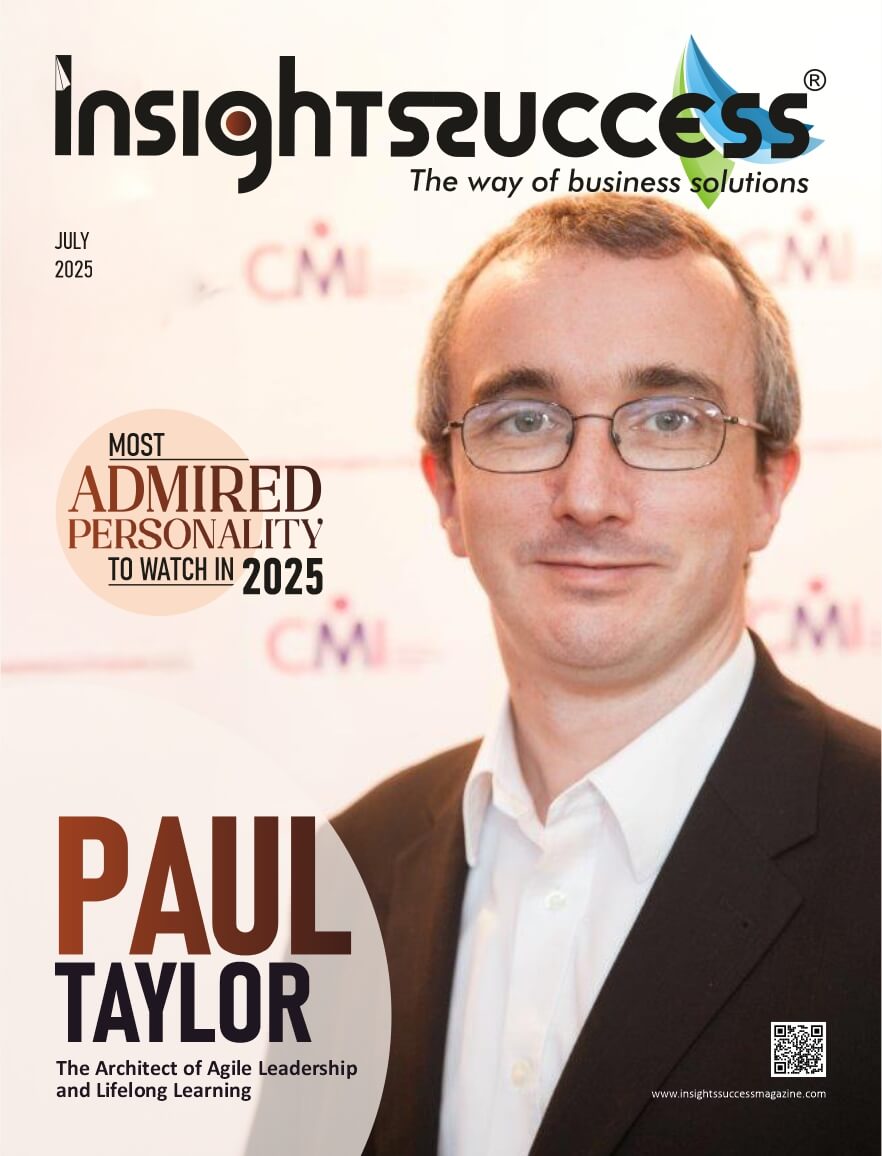
Most Admired Personality To Watch In 2025
Most Admired Personality To Watch In 2025 This edition celebrates Paul Taylor’s inspiring journey, visionary mindset, and influential leadership. Recognized for shaping industries and empowering communities, this edition spotlights his dynamic contributions and the impact he continues to make as a role model for future leaders around the globe. Quick highlights Quick reads

Paul Taylor – The Architect of Agile Leadership and Lifelong Learning
Some professionals are resilient and able to adapt, while others drive change. Paul Taylor belongs unapologetically to the latter group. He has built a multifaceted career over the past 35 years that marries technology, leadership, instruction, and human connection. His journey from the backwaters of IT departments to the boardroom, the classroom, and the keynote stage isn’t just the quintessential success story; it’s a masterclass in reinvention, motivation, and leadership. As a widely recognised NED, strategic adviser, change manager, technology leader, and lecturer, Paul is influencing sectors including financial services, fintech, education, health and wellbeing, and others. Whether he is leading a company-wide change process at a blue-chip corporation or coaching a young professional to find their sea legs, Paul draws upon the four sigma principles that establish his foundation: honesty, inquisitiveness, accountability, and lifelong learning. Humble Beginnings – A Career Sparked by Curiosity He began his career in 1988 at a Private Bank in London, where he worked in the Information Technology division as both a Business Analyst and a Programmer. If it was a customary point of departure, Paul soon showed an exceptional way: one powered by intellectual enthusiasm, a fascination with detail, and a readiness to make a difference. His insatiable appetite for systems thinking of both the human and technological kind saw him transatlantic bound for investment management in the UK, working initially between their London and Edinburgh offices. And there Paul was in the middle of an expanding business. That growth-heavy environment was the crucible for Paul’s growth as a leader, with responsibilities ranging from team building and tech development to strategic planning. He left the company as Head of European Technology Development within this major subsidiary, a high-flying post, but one that also caused much inner strife. “As I moved to management, I found I was pulling away from that detail. I came to see that I missed being close to the work itself, the part where change is truly made,” he says. This realisation, which could no longer be hidden in honesty, is what got the gears of change turning. The Freelancer’s Leap – Breaking the Mould in 2007 In 2007, driven by a desire to return to the tactile work he enjoyed and re-establish himself as an individual contributor, he took a big leap by quitting his full-time job and embarking on a career as a freelance consultant. What others might have seen as a professional gamble was, for Paul, an inevitable next rung in a life spent deliberately expanding his abilities. His first interim IT manager assignment at an oil company swiftly led to a second as program manager at one of the UK’s largest pension funds. And each role not only contributed to his experience but also deepened his belief in project-based, purpose-driven work. As his freelance career evolved, Paul began to redefine what success meant. Instead of titles or ladders, he sought a portfolio career, a way to advise, teach, write, and mentor across various areas. The Professional Portfolio – A Model for Modern Work Today, Paul stands as a sterling example of a successful portfolio professional. His career encompasses – Chair and Non-Executive Director roles across the UK and international organisations Strategic advisory to fintech start-ups, educational organisations, and wellbeing initiatives Associate Lecturer in Technology Management at the UK’s Open University Guest lecturer and speaker at leading universities and conferences Published author, with regular contributions to blogs, books, and industry publications Mentor to over 30 professionals, guiding them through career transitions, leadership development, and personal challenges What binds these roles together is value creation. Whether leading a governance framework or mentoring a mentee, Paul approaches each opportunity with a focus on creating sustainable, measurable impact. Work-Life Harmony – A Conscious Design Though many workforce professionals struggle with the balance, Paul views it as conscientious discipline that is both a function of structure and self-awareness. His daily routine is structured to facilitate deep work, client interactions, and personal growth. Paul’s following his advice, from early morning to planning and time-blocking for family and reflection. He schedules his own time off in advance, protects his weekends, and believes in prioritisation and anticipation management. As he likes to say, “You can’t do everything at once, and people respect you more when you’re honest about that.” Business With Purpose – Serving Clients and Society At the core of Paul’s professional philosophy is a simple ethic: serve your clients well and you serve society well. Whether it’s with an international corporation or a college student, Paul brings a wealth of commitment and accountability. “My job is to help my client succeed, sometimes that means challenging them, not just agreeing with them.” he says. That attitude has won him the confidence of both established leaders and rising entrepreneurs. His passion for business isn’t driven by money; it’s rooted in a mission. He desires to learn, make a difference, and improve the system. This hunger knows no bounds, reaching across to new industries, trending technologies, and changing human trends. “I don’t chase business. I chase better,” he says. Resilience in Uncertainty – Lessons from the Pandemic Unlike much else, Paul moved with grace throughout the COVID-19 pandemic. As he had already adopted remote work, the change of work style was a small burden. The real challenge, he believes, was structuring work around the evolving needs of others, especially as his colleagues dealt with new sources of family and personal stress. What fueled his success was a deep-down adaptability, i.e., a willingness to change form without losing his focus. For Paul, the pandemic reaffirmed a conviction he has long held – “The ability to adapt isn’t optional. It’s essential.” Strengths and Shadows – The Human Side of Success Paul Taylor is a man of principles, responsibility, loyalty, and quality that is eternally unwavering. He is known for being someone who can always be counted on to take the ball over the goal line, leading to a sense of confidence and peace amongst clients and colleagues.

Leadership Through Learning for Digital Transformation
In this age of artificial intelligence, automation, and non-stop innovation, digital transformation is no longer a choice, it’s a necessity. Organizations globally are racing to transform processes, redefine customer experiences, and automate operations with digital technologies. Yet behind every successful transformation is something more intrinsic than technology itself: humans. And specifically, leaders embracing leadership through learning as the platform of change that lasts. Digital transformation is not a one-night stand. It is a lengthy company-wide transformation that changes value creation and value delivery. To gain momentum, for such an evolution to occur, businesses require leaders who are receptive to transformation and also dedicated to ongoing learning and growth along the way. That’s what sets transformative leadership apart from conventional management, leadership through learning is not a tool; it’s a mindset. Why Digital Transformation Calls for a New Model of Leadership? The digital era of today has made most leadership playbooks of the past irrelevant. Static frameworks, fixed knowledge, and command-and-control no longer apply when technologies change overnight, customer needs change overnight, and competition can come from anywhere. In this unpredictable setting, leaders need to learn quicker than change. They cannot depend only on historical experience when making choices; they need to remain alert, responsive, and fully engaged to new trends and tools. More importantly, they have to develop a culture that honors learning, fosters experimentation, and regards failure as a steppingstone to innovation. Learning leadership provides just that. It renders leaders more open-minded, humble, and see challenges as a threat not, but learning opportunities. In the process, they impart the same mindset in their teams, making companies which are not only digitally enabled but indeed transformation-capable. Learning as a Leadership Competency Leadership had, for a long period of time, been synonymous with knowingness, surety, and authority. But today, with the digital age, those are being redefined. The best leaders are those who know what they don’t know and seek out what they do need to know in order to grow. They learn from others, welcome criticism, and bend when conditions change. This way, this style becomes believable and authentic. When the people witnessing their supervisors learning in action—whether it is solving problems with new technology, interacting with customers in new ways, or re-examining past strategies, their employees are much more likely to do so as well. Learning is a contagion. And third, when leaders embody continuous learning, they communicate to employees that progress is more important than perfection. This paradigm allows teams to make educated risks, provide innovative suggestions, and savor authentic problem-solving. With this kind of culture, innovation thrives, and change is not only possible but sustainable. Making Learning a Cultural Habit Rolling out new technology is comparatively simple. Challenging fundamentally is to change the way people think, work, and interact with one another. That is why developing a culture of learning—led by the leadership—is essential for digital transformation success. It begins with little things: managers recognizing when they don’t understand something new on a platform, seeking answers rather than dictating to others, or trading advice from a recent class or conference. These tiny-sounding actions speak volumes: learning is simply part of the job, regardless of what your job title is. As time passes, these ways of behaving come to define the organization’s culture. Curiosity is worth more than degrees. Flexibility is preferable to certainty. And change is not so terrifying—because everyone is doing it together. When leadership learning is the new normal, businesses understand that change is not a project anymore but a continuous journey. Digital objectives are easier to rally around, upskilling is sanctioned by the workforce, and the business becomes disruption-proof. A Real-World Example: Learning at the Top Consider Satya Nadella revolutionizing Microsoft. Microsoft was burdened by inertia and internal silos when Nadella took the CEO role. Nadella notoriously changed the company culture from “know-it-alls” to “learn-it-alls.” The cultural change was about empathy, learning, and trying things. The outcome was breathtaking. Microsoft repositioned itself as a leader in business software, artificial intelligence, and cloud computing—while also remodeling internal culture and external perception. Nadella’s leadership through learning commitment didn’t only revamp systems; it reinvented purpose, enhanced collaboration, and ignited fires of innovation. This photograph is referring to a harsh reality: technology by itself isn’t going to revolutionize businesses—people will. And people are most inspired by leaders who will learn and grow with them. From Concept to Commitment Taking on leadership through learning isn’t about enrolling to attend yet another seminar or adopting a couple of training modules. It’s learning how to incorporate learning into the fabric of leadership. Leaders have to see every problem as an opportunity to learn and every transformation as a process of growth. Start by asking questions more often than offering answers. Surround yourself with people who challenge your perspective. Reflect regularly on what’s working and what’s not—and be willing to pivot. Most importantly, invite your team into that process. Make learning visible, mutual, and ongoing. If this is the mindset that is adopted from the very beginning, it permeates the company in no time. Individuals feel more engaged, nimbler, and more open to the changes that digital transformation holds. Conclusion: Learning is the New Leadership In a data-, speed-, and innovation-first world, learning is no longer an option, it’s the most important leadership skill of all. And leaders who lead through learning don’t only keep up with the future they forget it. Mastering leadership through learning is not about being a master. It’s about being open enough to learn, humble enough to grow, and courageous enough to take others with them. When digital transformation is rewriting the maps of industries, those with the courage to lead through learning will be the ones to drive meaningful, lasting impact—not only for their companies, but for the people who work in them. Read More : Paul Taylor – The Architect of Agile Leadership and Lifelong Learning

Adaptive Leadership Strategies for Navigating Digital Transformation in Traditional Industries
In the pace of the modern age today, old industries from manufacturing and transportation to healthcare and finance are shattered by swift-breaking technologies. Exciting as innovation is, it poses gigantic challenges, especially to firms founded on deeply entrenched habits of practice. To survive and compete, these firms require not just new technology but also fresh thinking and new leadership styles. That is where adaptive leadership practices step in. Understanding Adaptive Leadership Adaptive leadership, by definition, is about leading without a roadmap, embracing uncertainty, and inspiring individuals to work on difficult problems. As opposed to authoritative or transactional leadership, adaptive leadership is not necessarily founded on expertise or hierarchical rank. Rather, it requires adaptability, emotional intelligence, and collaboration. Adaptive leadership practitioners know that the solutions are most frequently not linear and involve experiment and error, learning, and reconvening along the way. This is especially crucial to legacy industries, which all share the common deficiency of legacy systems, cultural lag, and heterogeneity of regulation. The Digital Disruption Dilemma Digital transformation’s not as much about standing up new software or automating things it’s about changing how an organization creates value. Old-line organizations have a lot of work to do on this one. They’re typically burdened with legacy infrastructure, processes that are highly ingrained, and people who’re accustomed to the way things have always been. For instance, a manufacturing company may invest in Internet of Things (IoT) sensors and artificial intelligence-based quality control software. But if the right mindset and leadership are lacking, such tools would be fought against or underutilized completely. It is because of this reason that adaptive leadership strategies are of utmost importance only they assure that systems and individuals transform simultaneously. Important Features of Adaptive Leadership Strategies Establishing a Culture of Learning and Unlearning Successful leaders are aware that digital transformation is a continuous process. They create an environment where learning is not only the norm but also mandatory. No less important is the ability to unlearn previous habits which are no longer benefiting the organization. For example, a legacy bank digitizing its customer service portals must enable its employees to say goodbye to paper processing and move to digital workflows. Adaptive leadership facilitates this change through encouraging open communication, training, and rewarding incremental achievements. Enabling Stakeholders at All Levels You can’t lead change from the top down. Adaptive leadership behaviors are all about making sure employees at every level feel empowered to contribute suggestions, voice concerns, and take ownership of change. Democratization of innovation not only engages more people but also yields great ideas from those most intimate with daily work. Effective leaders of old-line industries conduct regular forums, use technology-facilitated collaboration tools, and engage open communication to dispel silos and build trust. Reassuring Stability and Innovation Change, while it needs innovation, requires legacy firms to maintain operational stability that sustains their core products. Adaptive leadership is not asking for radical transformation; it rejects dumb and out-of-strategic-priorities risk-taking. It is done where the firm prioritizes compliance and safety at all costs even when it introduces new technologies like telemedicine and AI diagnostics. Adaptive leaders pilot test innovations in a controlled environment before deploying it in the whole firm. Emotional Intelligence Change creates fear, doubt, and resistance—especially in established industries. Adaptive leaders confront those emotional responses with compassion. They listen carefully, acknowledge fears, and guide groups through uncertainty with patience and willingness to hear. Emotional intelligence is not a “soft skill”—it’s a core competence for leading in unstable, uncertain, complex, and ambiguous (VUCA) world. By understanding human dynamics, adaptive leaders can develop resilient teams more receptive to change. Leveraging Data to Inform and Adapt Digital transformation generates high volumes of data. Adaptive leadership behaviors include applying the data not only to make informed decisions, but also to adapt in real-time. If a recently launched digital platform isn’t performing as anticipated, adaptive leaders study the metrics, note the gaps, and adjust quickly. This would mean, in companies where trades are not involved, monitoring live dashboards of supply chains or reviewing the fresh customer feedback generated from digital interfaces rolled out in the recent time. Case in Point: The Makeover of a Legacy Manufacturer Take the example of a 70-year-old textile mill that was computerized at the expense of its international competitiveness. The initial measures were to put in place advanced machinery and ERP software. They did not see any meaningful improvements in productivity and efficiency. It was only when the management adopted adaptive leadership practices—creating cross-functional workshops, reengineering KPIs, and putting in place peer mentorship programs—that change became a reality. Within twelve months, production cycles reduced, employees’ morale improved, and customer satisfaction levels increased. Listening, pivoting, and iterating were the magic keys that turned the change around. Conclusion: Leading Through Change with Agility and Empathy During a time in life when digital transformation cannot be avoided, resilience is the biggest competitive advantage. Legacy sectors have the odds against them, but with the right leadership approach, they not only survive but thrive. Adaptive leadership is less about having answers in mind—it’s more about posing the right questions, learning on the fly, and leading from the heart. Adopting these ideas, leaders in more conventional firms can weather the storm of digital disintegration while keeping intact virtues that made them successful in the first place. As the future continues to unfold in unexpected manner, it will not be the strongest or the most technologically advanced one leading the way—it will be the most resilient. Read More : Leadership Through Learning for Digital Transformation

Pluxee India Launches First-of-its-Kind Study on Corporate Gifting Trends
Pluxee India has released an industry-first report that provides deep insights into the quickly changing world of corporate gifting in India. The research charts rising buying behavior, decision-maker needs, and the increasing role of personalized, digital, and hybrid gifting solutions within organizations. The unveiling was accompanied by a high-impact webinar and panel discussion, which included senior management from Pluxee’s global and India teams as well as prominent voices of the corporate ecosystem. The session began with Sebastien Godet, Chief Revenue Growth Officer – Europe, Middle East, Africa & Asia, Pluxee, who set the strategic context and explained the business reasons for undertaking the research. Viktoria Otero Del Val, Chief Strategy, Sales & Marketing Officer and Chief Revenue Growth Officer – UK & US, Pluxee, formally launched the report, as she emphasized the growing importance of insight-driven gifting in the role it plays in building stakeholder relationships. Harish Sarma, Pluxee India’s Marketing & Product Director, shared the major findings, highlighting the evolution of gifting from occasion-specific gestures towards long-term engagement tactics. The report highlights an emphatic pivot towards heightened personalization, ease of redemption, digital-first offerings, and proximity towards business performance. The learnings provide the tone for an interactive panel discussion facilitated by Anish Sarkar, Managing Director, Pluxee India, Philippines and Indonesia cluster. The panel consisted of: • Sachhin Misshra, Cluster Head, Akumentis Healthcare Ltd. • Sunil Naik, Vice President – HR, India and South Asia, DHL Global Forwarding • Vikash Agarwal, Divisional CFO, Berger Paints India The panelists delved into how corporate gifting is being leveraged strategically to maximize employee experience, build culture, and create long-term external connections. The session also touched on practical aspects, from budget efficiency to ESG compliance and measurement of impact. A live Q&A and rapid-fire round provided participants with concrete takeaways on the future of India’s corporate gifting. Access the full report here: https://www.pluxee.in/corporate-gifting-landscape/ About Pluxee India Pluxee is a leader in employee benefits and motivation, supporting businesses in attracting, engaging, and retaining talent through a broad range of solutions across Meal, Wellbeing, Learning, Rewards & Recognition & whole range of other offerings. With 28+ years of expertise in India, Pluxee partners with 11,000+ companies across the public and private sectors also fostering a trusted network of 150,000+ merchant partners on meal and 5 million+ merchants on other benefits. Every day Pluxee India works to supports 3.5 million+ consumers in 1,800+ towns nationwide. Powered by innovative technology and a dedicated team, Pluxee India delivers meaningful and personalized experiences through a single card and app to enhance the well-being of its consumers at work and beyond. Carrying forward a 45+ year global legacy, Pluxee is committed to creating a positive impact on local communities, promoting sustainability, and enabling its stakeholders to do what matters the most. For more information visit www.pluxee.in.