






Fortifying Enterprises: Mastering Technology Leadership for Business Success
Technology has emerged as a source of competitive advantage in a rapidly changing business world today. With the help of cloud, artificial intelligence, and other technology tools, the organizations are changing the way they operate, create values, and interact with their stakeholders. The real distinction, however, lies not in the tools but in the quality of leadership that brings them to adoption and embedding. The IT organization is no longer the leader in technology, but instead technology is now a strategic tool of growth, innovation, and resiliency. Technology leadership as a business concept is not about knowledge about what’s coming next in next-generation trends. It is about vision, responsiveness, and translating the technological potential into business outcomes. Those who do it successfully are poised to ride out uncertainty, capitalize on innovation, and deliver sustainable growth. The challenge is how to come up with the optimal mix of technical skills and leadership wisdom to monetize technology as a business driver of success, rather than disruption. Evolving Role of the Technology Leader Traditionally, the role of technology leaders was primarily to keep the lights on and deliver operational stability. Their focus was uptime, system availability, and interrupting as little as possible. But today their job has ballooned to gigantic size, and they are also supposed to turn into strategists, innovators, and transformers. CIOs, CTOs, and digital transformation leaders are now supposed to now get a place at the decision table and become integral to core business strategy. Their achievement will depend on how they can link technology expenditures with concrete business outcomes in the form of efficiency gains, better customer experience, and new revenues. It will also need extreme cooperation among technology executives and other executives. Business units will need to unite to support a single goal with technology at the forefront and not as an afterthought. An innovation-first technology leader unites functions, seeing beyond working in discrete silos and possessing an eye on the enterprise-wide goals. They do this by building the foundation of an innovation culture in which experimentation is permitted, risk is mitigated, and digital transformation is becoming an enterprise-wide effort. Additionally, the impact of technology leaders also extends to intra-organizational endeavors. They need to understand external worlds—partners, customers, regulators, and even competitors—in an attempt to seek opportunity for co-operation and innovation. From co-creation with venture companies to combining new platforms with partners or customer inputs to feed product development, technology leadership these days is all about broad, outside-in vision. Creating Agility and Resilience through Technology Agility is the defining trait of information age high-performing organizations. The companies that are able to quickly adapt to changes in the market, supply chain outages, or customer needs are poised to thrive. Technology leadership can contribute to such responsiveness through scalable architecture, data-driven decision making, and incenting incremental problem solving. Cloud platforms, analytics software, and automation tools provide businesses with the agility and velocity necessary to transform and remain up and running. The antithesis is resilience. With growingly advanced cyber-attacks and changing regulatory landscapes, digital asset protection was a foregone conclusion. Effective technology leadership prioritizes cybersecurity, compliance, and risk management but does so in a way that does not strangle innovation. Prioritizing resilience in the company’s digital center protects the business and builds trust among consumers, partners, and regulators. The best leaders of the world find a balance between innovation and security so that expansion won’t be done at the cost of stability. Future-Ready Technology Leaders And though tools and strategies play their part, human beings are still ultimately the drivers of success. Organizations must invest in leadership training where leaders are conversant about the business and technical aspects of digital transformation. It entails the development of strategic thinking, change management, communication, and talent development capabilities alongside technical capabilities. Leadership development and development programs that expose leaders to emerging technologies place leaders in a position to lead the people through the continually shifting world. No less important is developing diversity of mind and background within leadership teams. The disruption challenges are multi-faceted in nature, and they must be solved on the basis of understanding that is above functions, industries, and communities. Inclusive leadership pipelines allow corporations to leverage a more extensive set of solutions and ideas. Upstart technology leaders are not only skilled in the technical technologies of the corporation but also empathetic, agile, and visionary enough to guide their corporations through unknown and untested territories. Conclusion Leadership in technology does not involve going after every shiny new bright thing, but rather informed decisions that are long-term in focus and make business sense. Excellent leaders have technical know-how and strategic vision, which allows their organizations to innovate, renew, and flourish in a disruption world. They bridge the silos, establish quick, secure systems, and grow the next generation of leaders who will drive transformation. As technology becomes a part of business in such a large manner, leadership here will be a make-or-break endeavor identifying the companies that will thrive or fall. Those who rise to the challenge will not only leverage technology for productivity, but also create new methods to produce growth, customer interaction, and value. Read Also: Christopher Carter: From Silicon Sparks to Global Impact
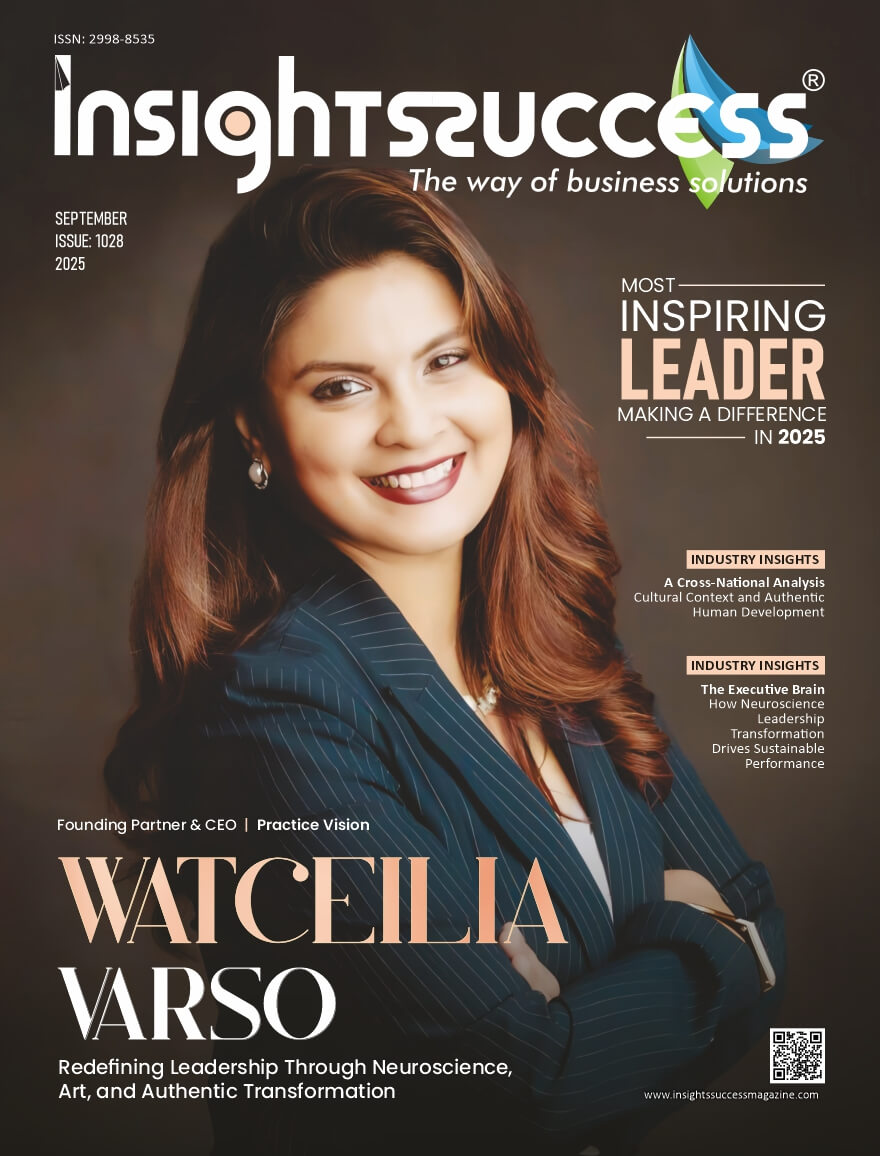
Most Inspiring Leader Making A Difference In 2025
Most Inspiring Leader Making A Difference In 2025 This edition highlights the remarkable journey of a visionary leader transforming industries and empowering communities. This edition celebrates Watceilia Varso’s unwavering dedication, impactful leadership, and innovative spirit that continue to inspire change, shaping a brighter and more inclusive future for generations. Quick highlights Quick reads

Watceilia Varso: Redefining Leadership Through Neuroscience, Art, and Authentic Transformation
In a world in which accomplishments and labels are frequently used to quantify leadership, Watceilia Varso’s tale is remarkable for its complexity, tenacity, and originality. She is not following a linear path of advancement but rather more radical reversals across continents, industries, and disciplines; each reversal is driven by a resolute conviction in change’s redemptive power. From overseeing global human resources operations in the Asia Pacific, Americas, UK and Europe to transforming lives through executive coaching and psychotherapy in Melbourne, she is transforming challenges into opportunities for redefining leadership as it may be. With the establishment of Practice Vision, a platform where healthcare, neuroscience, and leadership development converge, what had started as a corporate life turned into a all-of-life mission. Her desire for preparing the next generation with the resilience, authenticity, and purpose-driven impact they need is anchored in her breakthrough paradigm, NeuroRegenesisTM, and programs like the HERWired Accelerator. Varso’s impact reaching beyond boardrooms and doctor’s offices; her book The Brain’s Betrayal: Invisible Chains and artwork are manifestations of her belief that change starts inside. As a mentor and influencer in the present, she is encouraging youth globally to practice curiosity, lead with purpose, and span learning disciplines. For Varso, being a leader is creating a future with courage and empathy, not hierarchy. Building Bridges Across Continents After completing her Bachelor of Business with a major in Management, Watceilia embarked on a corporate journey that took her across continents. Starting as a Regional HR Manager with Aircom International, a British telecommunications service provider, she climbed the ranks through various organizations in the Asia Pacific, Americas, UK and Europe, eventually reaching the position of CHRO-Global VP of HR & Organizational Development with AMOS, a global marine offshore solutions company. Each role demanded that she step out of her comfort zone, embrace uncertainty, and adapt to new cultures and business environments. The corporate world became her laboratory for understanding human behavior, organizational dynamics, and the intricate dance of change management. “The ups and downs were real, but they taught me that setbacks are often disguised as opportunities to grow.” she admits. This perspective would prove prophetic as her career took an unexpected turn in 2019. The Melbourne Pivot When Watceilia moved to Melbourne in 2019, the transition presented both professional and personal challenges. HR opportunities didn’t immediately align, but rather than waiting for the perfect role, she chose to create her own path, a decision that would reshape her entire trajectory. Drawing on her second area of expertise psychology she opened her own Executive coaching sphere and psychotherapy clinic. This move from corporate HR to direct therapeutic practice was more than a career pivot; it was a homecoming to her fundamental passion for human transformation. “Opening my own clinic allowed me to experience the fulfillment of working closely with people, and it quickly became clear that healthcare and personal transformation were the spaces where I wanted to make a real difference.” she explains. The relocation also brought profound personal adjustments. Moving from Singapore’s structured environment, where domestic help was readily available, to Australia’s more independent lifestyle meant reimagining family dynamics. With her eldest son now pursuing a Bachelor’s in Chiropractic and her younger son in Year 8, Watceilia had to balance establishing her practice with ensuring her children’s smooth transition to Australian life. The adjustment required her to momentarily step back from the ‘high-profile’ pace of leadership to embrace the simple but profound act of being present. This period taught her that balance isn’t about perfection but about prioritizing what matters most in each season of life. Birth of Practice Vision What began as a single coaching sphere and mental wellness clinic evolved into something much larger. With her partner, a General Practitioner, Watceilia expanded into comprehensive healthcare, opening clinics in Geelong and Port Melbourne that integrated medical, mental health, and well-being services. This expansion gave birth to Practice Vision, her umbrella organization, that would become the vehicle for her most innovative work. Combining her corporate experience with psychological insights, she developed NeuroRegenesis™ a brain-based leadership framework that bridges neuroscience and practical leadership development. The framework spawned signature programs like the HERWired Accelerator for women of influence, and publications including NeuroFridays: The REWIRED Leader newsletter and The HERWired Pulse, a biweekly publication that blends neuroscience insights with leadership reflections and empowering questions. “The vision was holistic, to combine personal care with leadership development, creating environments where people can thrive, innovate, and rise together.” Watceilia explains Navigating the Pandemic Storm The COVID-19 pandemic tested every aspect of Watceilia’s multifaceted enterprise. For someone whose work thrived on human connection—in therapy sessions, healthcare consultations, and leadership coaching—the sudden shift to a socially distanced world was particularly challenging. Rather than retreat, she restructured her operations around safety and trust. In her medical clinics, she implemented comprehensive protocols that gave both staff and patients psychological safety. For her coaching practice, she maintained authenticity through regular check-ins that prioritized human connection over transactional relationships. “My strategy was simple but powerful to keep the conversations going. We asked, ‘How are you? Where are you at? What do you need today?’ These touchpoints were never transactional. They were about sustaining connection and motivation at a time when isolation was at its peak.” she recalls. The approach proved prescient. When restrictions lifted, the relationships forged during the pandemic translated into deeper trust, stronger partnerships, and new opportunities. “In crisis, connection became my greatest strategy,” she notes. Artistic Renaissance and Global Recognition Throughout her professional evolution, Watceilia never abandoned her artistic roots. In her twenties, she created and performed in “THE Door” at Singapore Repertory Theatre—a contemporary dance production exploring women’s conflicting desires for freedom and solitude, blending Bharatanatyam with Flamenco influences. Her visual art has flourished in recent years, with exhibitions in Melbourne and internationally. The pinnacle came in April 2025 when she was recognized as Best International Exhibitor at the prestigious ArtExpo New York, bringing her work to one of the world’s most important art platforms. “Art has always

How Neuroscience Leadership Transformation Drives Sustainable Performance?
The Executive Brain The traditional ways of leadership are insufficient to enjoy long-term success in the rapidly changing economic landscape. In order to bring flexibility, creativity, and long-term success, organizations increasingly seek evidence-based practices. Neuroscience leadership transformation, which implements brain science insights to leverage corporate culture, emotional intelligence, and decision-making, spearheads the revolution. Through learning about the operation of the brain and applying leadership behavior to the brain, organisations are able to create leaders who construct solid performance in a risky and uncertain environment. The Science of Leadership Neuroscience is the science of information representation in the human brain, emotion regulation, and behavior construction. Applied to leadership, it offers applied knowledge on the reasons why people behave in a certain manner under stress, respond to change, and what drives them. Neuroscience leadership transformation leaders have become proficient at translating brain-based strategies into improved communication, emotional intelligence, and developing psychological safety in teams. With such scientific understanding, leadership may liberate itself from reactive, knee-jerk responses and move towards reflective, intentional practice. Building Emotional Intelligence with Neuroscience It’s maybe the greatest leadership contribution of neuroscience that the research on emotional intelligence was formalized as a consequence of this discovery. Leaders who grasp the ways brains respond to stress, fear, and reward can better control their own emotional terrain and that of their followers. For example, the amygdala, which is the area of the brain that governs fight-or-flight, can take over during stress. By neuroscientific-based training, leaders are made sensitive to such stimuli and stay in control of their emotions and stay logical. This control of emotions will help them build trust, empathy, and resilience at their organization, creating improved working relationships and performance. Developing Decision-Making and Focus Since the global world is information-overloaded, leaders must make a choice quickly but effectively. Neuroscience leadership transformation empowers leaders with the advantage of knowing the subtle limits and bias of the brain, for example, decision fatigue and cognitive overload. Through strategies such as cognitive reframe and mindfulness, leaders can develop the prefrontal cortex—area of brain related to rational thinking and planning. Enhanced concentration, this also limits room for snap or short-term thinking. Firms benefit through having leaders who can blend long vision with short-term agility, making a lasting contribution. Building a Culture of Psychological Safety Sustainable performance is a byproduct of financial results because it’s the work of creating a champion organizational culture. Neuroscience shows that if one has to be vulnerable in any position, emotionally, socially, or psychically, the brain will likely see this as a threat and discourage collaboration and creativity. With neuroscience leadership transformation, leaders learn to build environments where people feel safe and valued. Listening, whole-person language, and appreciative contributions are just a few of the little things that can defuse threats perceived in the brain and release greater levels of engagement. Those are the teams that become stronger, more innovative, and committed to long-term success. Driving Resilience and Adaptability One of the most crucial skills that leaders need to acquire today in today’s fast-paced corporate world is resiliency. Neuroscience teaches us that the brain is extremely resilient and can rewire itself using neuroplasticity. What this means is that employees and executives can build new skills, attitudes, and coping behaviors over time. Through neuroscience leadership transformation, organizations create an opportunity for leaders to transfer resilience to teams. It is market disruption or digital transformation; brain-practice-able leaders can pave the path and take others with them. Resilience shared recharges long-term performance even in the face of adversity. Aligning Purpose and Motivation The second broad area of neuroscience to leadership is its motivational function. The brain reward system flourishes and develops by purpose, recognition, and belongingness. They are the type of people who can utilize intrinsic motivation by linking purpose and personal values. With neuroscience leadership transformation, CEOs are equipped to move on from transactional management to purpose leadership transformation. By enlisting the employees’ higher sense of purpose, they gain an inside-out employee who doesn’t just deliver but is also deeply dedicated to the cause of the organization. It is in this motivation that sustainable performance and loyalty are embedded. Sustainable Performance as the Outcome The ultimate outcome of neuroscience leadership transformation is constructing enduring performance—outcomes which last long and not the here-today-gone-tomorrow variety under stress. With improved emotional intelligence, resilience, decision-making clarity, and safety culture, leaders have a better ability to get the best out of their employees. Sustainable performance is not a bottom line; it is workers’ health, innovation, customer satisfaction, and social responsibility. Neuroscience equips managers with the tools for balancing these interests in a way in which firms are competitive and still human-centered. Conclusion Now, leadership is not so much about command and control, but rather about vision, agility, and relationship. Neuroscience leadership change provides us with a science-informed but deeply human approach to developing leaders to guide complexity with clarity and compassion. Leaders employ brain-based intelligence when developing their effects for themselves as they develop conditions under which individuals and organizations thrive over the long term. In an era of constant flux and doubt, it’s the leaders who tap into neuroscience’s power that will triumph—not just for what they achieve, but for creating sustainable growth and human potential. Read Also: Cultural Context and Authentic Human Development

Cultural Context and Authentic Human Development
A Cross-National Analysis Human progress and social advancement are typically quantified in terms of economic, technological, or political advancements. But even these metrics fail to represent the whole picture of how people and communities really thrive. Behind actual advancement lies actual human development that is as much concerned with dignity, purpose, and identity as it is with material improvement. Culture shamefully underemphasized in development paradigms of the modern age is playing a major role in mapping out this course. Realization of the dialectic tension between culture and human development permits us to advance development that is holistic and sustainable. Defining Authentic Human Development Authentic human development is a type of development that transcends economic progress or industrialization. It assumes that authentic development will make people’s dignity grow, respect cultural diversity, and reinforce people’s moral, intellectual, and spiritual capacities. It differs from earlier models aiming at economic growth because it focuses on the overall well-being of people and communities before all else. It poses questions: Can people liberate themselves and realize their full potential? Are their cultural worth and identity valued? Do they feel self-worth and belonging? The Role of Culture in Shaping Identity Culture is not heritage or tradition it is how human beings perceive the world, and make sense of it, and organize their lives. As language, ritual, art, or social custom, culture is the scaffolding of group membership and identity. When development interventions neglect culture, they empower lessness individuals and, in the end, impose others’ values. For instance, education systems constructed in complete disregard of indigenous cultures and languages can suppress one’s creativity and self-esteem without one even noticing it. Conversely, when cultural capabilities are embedded within development policy, societies thrive because they feel legitimized and recognized. That is how culture becomes an enabler and not a barrier to real human development. Economic Growth vs. Human Flourishing Progress these days typically involves GDP growth, employment generation, or urban growth. All are critical but not adequate. Human development in a true sense acknowledges that human beings are not mere economic beings but complex individuals with emotion, cultural, and religious aspirations. Picture an employee getting a fat paycheck but dwelling in a setting where national identity is lost or community bonds are dissolved. Material wealth might be present, but inner satisfaction and integrity are compromised. Or, a society that weighs economic advancement against cultural identity ensures advancement has a higher human resonance. Real flourishing happens when economic and cultural forces meet. Education and Human Development Education is also among the greatest forces for change, and its effectiveness depends on its own ability to include cultural relevance. Those institutions that only champion homogenized, globalization of knowledge without locals’ culture or heritage have the unwitting effect of eroding confidence in culture. To be able to bring about real human development, education needs to be able to enable learners to reconnect to their heritage and equip them for global interaction. Bilingual education, heritage studies, and community-based programs are some of the methods that integrate respect for culture and intellectual development. By learning who they are in what they are studying, students become confident and guided. Authentic Human Development and Globalization Globalization provided unprecedented interconnectedness, yet at the same time evokes fear of homogenization of cultures. Mass media, consumerism, and globalized living spread and wore out traditional methods. True human development attempts to strike a balance by availing benefits from globalization without compromising uniqueness of cultures. This entails empowering intercultural dialogue instead of one culture enveloping another. It entails appreciating traditional knowledge—whether local environmental thought or community-sized existence—too frequently to give rise to sustainable practice kept out by advanced systems. By incorporating cultural context into international exchange, peoples can pursue development that is contemporary but authentically human. Community, Belonging, and Well-being Perhaps one of the most powerful human needs is belonging. Culture provides this in the form of shared practices, values, and narratives which unite people together. Realistic human development appreciates the significance of attachments to community to mental and emotional health. While strategies of development come a long way in revealing communal living—by means of local cultures, communal self-rule, or social support through tradition solidarity and strength are established. Yet where communities are sundered by migration, urbanization, or abandonment of local cultures, individuals become isolated, suffer identity crises, and find mental torment. Since development revolves around cultural belonging, individuals find meaning in a shared human existence. Challenges to Authentic Human Development Though required, authentic human development is in danger from an array of problems: Economic Pressure: Governments are more prone towards quick industrialization than to hold on to culture. Decline of Culture: Century after century will choose to abandon traditions in the face of international media. Failure in Policy: Policy for development might overlook cultural issues, too besotted with quantifiable monetary gains. These are challenges that must be overcome by people-centric policies, inclusive and by leaders that also care about cultural dignity and economic development. A Way Forward This synergy of new opportunity and cultural awareness is a vehicle for genuine, human progress. Governments, educators, and community leaders can act together to see that development initiatives construct that situational state and respect fully human dignity. It requires traditions to be not just maintained but reimagined so as to address contemporary situations. When growth adheres to cultural identity but allows people to grow, it creates individuals who are not just successful but also happy. Such people contribute greatly to society as their growth is based on genuineness. Conclusion In an endlessly evolving world, the quest for real human development is a shared concept of progress. It keeps us mindful that development is not buildings, highways, or growth—it is to construct the entire person in his or her context of culture. Culture gives a sense of self, meaning, and belonging, and development brings opportunity for growth and participation. Coupled together, humankind achieves progress that is human, sustainable, and decent. True human progress, then, is not a theoretical concept but a pragmatic imperative. Through being

The Most Admired Women CEOs To Watch, 2025
The Most Admired Women CEOs To Watch, 2025 This edition showcases trailblazing female CEOs who exemplify innovation, resilience, and leadership. Their visionary strategies and bold decisions are transforming industries, inspiring future leaders, and setting new standards for success in today’s competitive business world. Quick highlights Quick reads

What Sets Apart Today’s Most Successful Businesswomen
The Influence Factor A quality that is essential to an effective businesswoman is her clear purpose. Their sense of what is important develops, not only in relation to their career goals but also in relation to their inner values. This clarity serves as a GPS, a guide for making decisions and being consistent in the face of uncertainty. Their decisions are consistent with long-term objectives, as they have a clear mission that builds trust and momentum in their teams. Adaptability with Intention It is also crucial to be adaptable with purpose. Instead of passively responding to change, the successful businesswomen take the initiative to remodel themselves and their strategies as circumstances change. This flexibility does not imply following all the new tendencies, but, on the contrary, understanding which changes should be adopted and in what way they can be optimally combined. This deliberate malleability is part of being resilient and relevant in evolving markets quickly. Emotional Intelligence at the Core Emotional intelligence is another characteristic that defines them. Most leadership success requires the ability to understand and manage emotions (both personal and those of others) quietly. Empathy enables successful businesswomen to build healthy relationships, solve disputes in a graceful manner, and encourage their subordinates to deliver their best. Their sensitivity helps them to interpret a situation correctly, act judiciously, and bring others on the same path. Visionary Thinking The vision is also central. Most successful women in business do not merely react to the current situation, but they create a vision of the potential future. This proactive attitude leads to creativity and encourages others to have hope for a better future. Through an eloquent vision, effective businesswomen energize their organizations to move into uncharted territories to achieve higher goals in non-stagnant business environments. Lifelong Learning Another characteristic is a culture of lifelong learning. The best women in leadership consider every challenge as an opportunity to develop. They remain intellectually inquisitive, receptive to new ideas, and dare to experiment with new fields. Their dedication to studying also makes them versatile enough to change gears at the appropriate moment and discover new ways to solve complicated issues. Building Authentic Relationships What is also striking is their strategic networking, which is based on authenticity and not on exchange. The most successful women do not just collect contacts, but they make investments. They find, give, and pursue mutual support and understand that sustainable success is built on reciprocal, real relationships, not short-haul success. Strategic Focus and Time Management It is also important that time is managed and that priorities are considered carefully. Successful businesswomen know how to distinguish between what is essential with the never-ending demands and conflicting priorities. They invest energy in high-impact sectors, delegate, and save time to think. Such discipline prevents distraction and serves as a guarantee of achieving long-term goals. Resilience and Recovery Such leaders are also resilient role models. Business failure is an inevitable aspect of business, yet successful female entrepreneurs manage to cope with it effectively and utilize it as a learning experience. Resilience is not invincibility, but rather the ability to recover, to create, and to progress and improve better than before. Their persistence serves as a lifeline to their organizations in difficult periods. Integrity as a Foundation Integrity is fundamental. It takes a long time to build trust, and it can be lost in seconds. Through transparency, fairness, and ethical consistency, the most successful women in business maintain credibility and cultivate long-term respect. Integrity guides their leadership, partnership selection, and decision-making, even when the pressure is high, so that their impact is fundamentally entrenched. Championing Inclusion Another characteristic is the development of inclusivity. Effective entrepreneurs appreciate different opinions in decision making and innovation. They develop a culture in which voices are embraced irrespective of background or rank, allowing the most innovative, holistic answers to develop. The impact they have is therefore not confined to them but to the entire teams and cultures. Confident, Yet Grounded Attitudinally, they are not arrogant in their confidence. This anchored confidence enables them to explore uncertainty and be receptive to learning and feedback. They speak with confidence, but listen with humility, and such a combination is the exception rather than the norm, which inspires trust and teamwork. Inspiring Through Storytelling Lastly, effective female entrepreneurs tend to use narration to motivate. Storytelling makes ideas alive and links them, whether in terms of sharing a vision, articulating a strategy, or negotiating change. These leaders do this by connecting facts and storytelling to make work meaningful, motivating teams, and building ownership. Conclusion: The Influence Factor In sum, the most accomplished women in business today share a constellation of practices: clarity of purpose, adaptive strategy, emotional intelligence, visionary thinking, continuous learning, authentic communication, relationship-building, disciplined focus, resilience, integrity, inclusivity, well‑being awareness, grounded confidence, and storytelling. These qualities do not act separately; they interrelate and support each other in strong manners. They collectively form an influence factor that drives performance, develops long-term leadership, and transforms the face of success in business. With these qualities adopted and integrated, potential leaders can embark on creating the subtle mosaic that makes great businesswomen and establish a career trajectory that is distinctly shaped by ambition as well as considered, influential power. Read Also: The Rise of Inspirational Women Leadership

The Rise of Inspirational Women Leadership
Leading with Impact As a formerly authoritative and control-centric field, leadership is being reshaped. The leadership of women is leading the pack in this evolution as it is changing dominance into purpose. This leadership model emphasizes genuineness, understanding, and lasting influence, as opposed to the traditional models that have defined society and organizations. Women are not just occupying positions; they are transforming by entering the field of leadership. With varying life experiences, emotional intelligence, and a people-first attitude, they can challenge the notion that leadership should have only one way. It is not a matter of them replacing one model with another, but enlarging what effective leadership is. The Power of Emotional Intelligence The skill of perceiving, controlling, and responding to emotions in a friendly and trusted manner will produce congeniality and trust at the very core of inspirational women leadership. These leaders are also more likely to emphasize human relationships over strict hierarchies, and they will create a culture where individuals are free enough to participate, become creative, and flourish. They are guided by empathy and can work harder. A Value Driven Approach A high level of personal and organizational congruence characterizes inspirational women leadership. Such leaders are advised by their purpose and are not driven by power and recognition. Their decision making usually indicates long-term aspiration, whereby ethics and impact are given priority over immediate success. This value-based system promotes integrity, responsibility, and a social consciousness culture. Resilience as a Defining Trait Resilience is one of the potent characteristics of inspirational women leaders. Numerous people have overcome challenges, both apparent and not, to establish their place in leadership. These are the challenges that have not kept them back but have defined their leadership style as a grounded, focused, and steadfast one. Their ability to guide amidst a crisis becomes inspirational to the rest, and strength is enhanced in whole teams or societies. Mentorship and Empowerment Successful leadership of women that inspires others usually extends beyond self-realization. Such leaders will invest in other people through mentoring, advising, and assisting others, especially those who are underrepresented or marginalized. The doors are opened by them, and they can impart knowledge on which the next generation can open the doors. Such an impact not only develops future leaders but also enhances the spirit of inclusivity and shared improvement. Challenging Traditional Norms When inspirational women enter the spaces that were not originally designed with them in mind, they are likely to create a new shape instead of being incorporated into an already existing frame. Their leadership brings a variety of views, challenges restrictive norms, and fosters innovation by asking what is assumed to be true. This readiness to question the status quo gives rise to more dynamic and responsive leadership cultures. The Cultural Shift Toward Compassionate Leadership The creation of inspirational female leaders is an indication of a wider cultural change. There is an increased awareness of how emotion, empathy and inclusion in leadership help societies. The women are not familiar to rule with power, but with clarity, uniformity and nurturance. This kind of leadership does not perceive kindness as a form of weakness, but in fact, it is a strength which can lead to collaboration and consequent persuasion. Adaptability in a Changing World The modern world requires flexibility, and inspirational women tend to be skilled in this field. They also show how graciously they go through change without losing their values. In reacting to economic, technological, or social trends, they are flexible to the point of frequently turning uncertainty to advantage. This flexibility renders their leadership especially applicable in dynamic and complicated settings. Collaboration Over Competition Collaboration is another property of inspirational women leadership. Instead of treating leadership as an individual effort or a zero-sum game, these leaders create a movement of collective momentum. They establish inclusive environments whereby common interests are prioritized and diverse voices are honored. A Vision for the Future Inspirational female leadership is not only a trend; it is a change. It questions the old paradigms and offers a path to a more accommodative, ethical and efficient approach to leadership. Having empathy, values and purpose, these women are not only changing the world as we know it today but also creating the future where people will not judge the leaders by their status, but rather by their input. This transformation is also a strong indicator that leadership is not limited to a single style, gender, or personality. The evolution of inspiring women leadership demonstrates that authenticity is powerful and compassion is effective. As this movement keeps gaining momentum, it is proposing a redefinition of leadership to all people, a leadership that is guided by integrity, collaboration, and purpose. Read Also: What Sets Apart Today’s Most Successful Businesswomen

From Survival to Stewardship: Jennifer Kirk’s Journey to Heal, Lead, and Transform Osteoarthritis Care for Pets
Convention dictates sticking to the well-trodden path, which is straightforward. But Jennifer Kirk’s journey has been anything but conventional—requiring a few steps to connect the dots. At its heart, though, is a love for animals, a deep sense of purpose, and a passion for making a difference. Today, she leads Exubrion Therapeutics, a veterinary medtech company tackling one of the most common and debilitating conditions in companion animals: osteoarthritis. At the forefront of this mission is Synovetin OA™—a revolutionary quantum leap forward in treatment. Unlike traditional therapies that only mask the pain, Synovetin OA™ is uniquely designed to target the underlying inflammation that causes arthritis. This bold new approach not only brings longer-lasting relief, but also opens the door to healthier, more active lives for pets—offering the potential for extended mobility, longevity, and long-term pain prevention. Defying the Diagnosis: A Childhood of Grit and Grace It really started back in California, where she was born and raised. At the tender age of one, she0 was diagnosed with Type 1 Diabetes. At the time, the outlook was grim—doctors told her mom that Jennifer would likely be blind or have kidney failure by 20. “But my parents were determined to beat those odds,” Jennifer shares. Even though they came from a lower-middle-class background, they made sure she had what she needed to thrive, emphasizing both her health and her education. By age six, Jennifer was already giving herself her own insulin shots—a sign of the self-discipline and responsibility that would later serve her well in the world of finance. “I was proud to become the first person in my family to graduate college,” she reflects warmly, a milestone that laid the foundation for a career built on resilience, precision, and purpose. A Pragmatic Pivot: From Dreaming to Doing At first, she dreamed of majoring in linguistics and one day running a dog rescue. But the realities of living with Type 1 Diabetes soon made practicality a priority—she needed a career that offered solid health insurance. So, Jennifer shifted gears, choosing Economics with a focus in accounting, and landed a role at one of the Big Six accounting firms right after graduation. That early pivot not only gave her stability—it opened the door to a lifelong career in finance. Two Decades in the Trenches: Leadership Forged in Finance Jennifer left public accounting and then spent 22 years at Occidental Petroleum (NYSE: OXY) in the dynamic, fast-paced energy industry, rising through a series of finance roles that included Accounting and FP&A roles, VP of Finance, VP and Chief Accounting Officer, and ultimately Senior Vice President of Integration and Value Capture. The global scope and constant innovation of the sector served as a powerful training ground, giving her the opportunity to live in multiple locations, travel extensively, and evolve as a leader. During this time, she also broadened her industry perspective by joining the board of Republic Services (NYSE: RSG), a leader in recycling and non-hazardous waste disposal. She has served on the board for over nine years and currently chairs the Audit Committee. A Life-Changing Move: When Mission Found Her In 2021, amid the disruption of the pandemic, Jennifer felt a deep pull toward work that aligned more personally with her values. That calling led her to Medtronic—a company that had profoundly impacted her own life through the insulin pump she uses. She accepted a senior finance role as SVP Global Controller and Chief Accounting officer and relocated her family from Texas to Minnesota, embracing a new chapter with new jobs, new schools, and a new lifestyle. At Medtronic, Jennifer held several global leadership roles, expanding her experience across geographies and business functions. During her final year there, she also joined the board of Sempra (NYSE: SRE), a North American energy infrastructure company, returning to her energy roots. Hearts, Horses, and Healing: A Rescue Story Rewritten That’s also where her connection to animals deepened in a profound new way. Wanting their three daughters to find grounding and joy in their new environment, Jennifer and her husband, Adam, took them to a local horse ranch—where they found much more than riding lessons. One person in particular, Bree, became a guiding light. As the driving force behind the ranch, Bree showed how horses—especially the overlooked and discarded ones—could help ease anxiety and build confidence. Jennifer saw firsthand the calming effect these animals had on her middle daughter, and everything shifted. “Bree opened our eyes to the world of ‘throwaway’ horses,” Jennifer recalls, “and once we saw it, we knew we had to do something—not just to rescue the horses, but to give them purpose again by helping people heal, just as they had helped us.” That moment sparked the beginning of Healing with Horseplay—a rescue mission that became deeply personal for Jennifer and her entire family. The Call to Lead: Entering Veterinary MedTech with Purpose Around that time, while on a Medtronic business trip, Jennifer met Laurie, someone who would once again change the course of her career. They quickly connected over shared interests, and when Jennifer told the story of the horse rescue, it sparked a deeper conversation—first about joint health in animals, then about a novel isotope called Tin-117m, and ultimately about Exubrion Therapeutics, a company this woman had invested in. One conversation led to another, and soon Jennifer and her husband were consulting with Laurie and getting to know her, along with the remarkable scientists who invented the technology. Laurie eventually decided to lead the next round of funding for Exubrion—with one important condition: Jennifer had to agree to lead the company. She believed Jennifer brought a rare combination of strategic clarity, financial acumen, and cross-functional leadership—paired with a deep personal passion for animals, medtech and a mission-first mindset. Jennifer had a proven ability to align teams, translate science into business impact, and build trusted partnerships across disciplines. The board and founding team were strongly aligned and fully confident she was the right person to take the helm. Today, Jennifer leads Exubrion

How to Turn Photos into Cinematic Videos with CapCut Desktop
Even beautiful photos can move their owners to make a cinematic transformation of such treasures into videos to save their memories, share them on social platforms, or use them in professional work. CapCut Desktop will allow you to revamp your dull photos to conceive magnificent motion tales with the integration of effects, cuts, sound, and movement. The video editing software is user-friendly even for the novice and has powerful tools that can compete with recording studios. In this tutorial, we will cover the key advantages of working with CapCut, choose the five easy steps to creating cinematic videos out of photos, and provide some additional guidance to make everything work out the way you want it to be. Why Choose CapCut for Cinematic Videos? CapCut is an all-in-one visual storytelling suite, rather than a simple standard editor. As compared to the apps that merely provide transitions or plain slideshows, CapCut enables you to insert professional-like zooms, motion blur, overlays, and sound design. Its drag-and-drop workflow makes the editing process easy to understand, but there is more depth to powerful creativity. Now you can use CapCut to provide your photos with the cinematic treatment they need, whether it be creating a family video montage, an Instagram reel, or even a smart presentation. Benefits of Using CapCut for Cinematic Photo Videos Streamlined workflow – You do not have to abandon one app to use another, as all transition, audio, and effects tools are integrated into it. Professional results – Render your videos to high resolution as well as with smooth transitions, just as they would appear using professional editing tools. Creative freedom – Use text overlays, action presets, and even the voice change tool to tell or perform your photo stories. Accessibility – its simple structure allows novices to start composing in a short amount of time, but more options can satisfy experienced writers. Thumbnail design – The online photo editing features are available to make your video eye-catching to your viewers on YouTube or TikTok. Introducing the Five Steps to Cinematic Video Creation Making a cinematic video with CapCut Desktop does not have to take hours on how to edit. Applying these five simple rules, you can make still-shot videos look and feel lively and evoking. Step 1: Import and Arrange Your Photos Download CapCut Desktop and press New Project. Drag your chosen photos into the timeline in order to wish. Rearrange them to portray the story you wish to convey-whether on a timeline or theme-wise. Step 2: Add Motion with Keyframes and Effects Add motion animations to still images. Select an image, then use keyframes to rotate, pan, or create a zoom-in/zoom-out effect. These minor movements make your photos dynamic storytelling objects. Step 3: Enhance Transitions Between Images Add transitions between photos to make a Cinematic work by using the Transitions tab of CapCut. This makes the video look more like a coherent one and not just a slideshow. Step 4: Add Music, Narration, or Voice Effects Open the Audio tab and add some background/ complementary music to the video. Should you need narration, you can record in the editor or use the CapCut voice changer tool to add funny or dramatic voices. The integration of audio with visuals is a major boost to cinematic experience. Step 5: Final Adjustments and Export Give your video steroids by adjusting brightness and contrast or applying LUT filters to get a movie effect. After you are pleased with the finished product, click export, select your resolution, possibly 1080p or 4K for the finest results, and save it. Additional Tips for Stunning Cinematic Videos Apply a color grading technique to make your images sound like film. If, as may be the case, the context requires it or an effect is required, add text or animated titles. Remember about pacing- the shorter the photos are, the more energy they produce, and the longer the more emotion. Keep a careful check on your video by previewing it several times to ensure the video and audio don’t conflict with each other. Why CapCut Stands Out? CapCut is a creative hub, not simple video editing software, where the first and foremost priority is always simplicity and ease of use, along with the professional-grade power in your hands. Even in smooth transitions between cinema to online photo editing capabilities, it makes your developed content shine on all platforms. CapCut is in the sweet spot of being easy to use and innovative, so creators can transform basic images into shareable stories. Conclusion Making static photos cinematic videos is not always complex. CapCut Desktop is the latest in a complete editing suite that makes editing simple yet powerful. Whether through the introduction of smooth transitions and cinematic effects or further exaggerating the visuals via filters, soundtrack, and overlays, the software can enable you to make a movie-like feel out of your photographs. Personal montages? Brand campaigns? Content on social media? CapCut will allow you to transform ordinary images into something extraordinary. Equipped with an AI Voice Generator, Text-to-Speech AI, and an online photo editor, it is more than a simple video editing software and can bring your creative vision to life by creating cinematic stories with its powerful technology within reach. Read Also: Hospitality Businesses Creating Guest Experiences That Run Smoothly