






Dr. Thejo Kumari Amudala Honoured with United Nations Woman of the Year Award 2025
In a moment of pride for India, noted entrepreneur, philanthropist, and global peace advocate Dr. Thejo Kumari Amudala has been conferred with the prestigious United Nations Woman of the Year Award 2025. The recognition, which is considered one of the highest honors for women leaders worldwide, celebrates her remarkable journey of blending entrepreneurship with compassion and her tireless efforts toward uplifting marginalized communities. The award was formally presented to Dr. Amudala by BJP Member of Parliament and celebrated artist Manoj Tiwari at a glittering ceremony. The felicitation was not just an acknowledgment of her individual achievements but a celebration of her larger vision—where business growth, social change, and humanitarian service go hand in hand. The audience gave her a standing ovation as she received the award, symbolizing the hope and inspiration she brings to women and communities everywhere. As the Founder of Thejas Groups, a diversified conglomerate with interests in IT solutions, digital services, and wellness, Dr. Amudala has proved that businesses can succeed while serving society. Over the years, she has initiated free medical camps for the underprivileged, distributed essential supplies during the COVID-19 pandemic, offered free IT skill training to unemployed youth, and championed campaigns for women’s safety and public health awareness. Her role as President of the World Human Rights Protection Commission (WHRPC) in India and Global Peace Ambassador further underlines her influence on international platforms advocating peace, justice, and equality. This latest honor joins a long and distinguished list of awards Dr. Amudala has earned, including the Nelson Mandela Nobel Peace Award, Bharat Vibhushan Award, Gandhi Peace Award, APJ Abdul Kalam Award, Real Life Super Hero Award from the United Nations (2022), Bharath Rathna Samman Award, and now the United Nations Woman of the Year Award 2025—each recognizing her extraordinary humanitarian service and leadership. Every accolade has only strengthened her resolve to dedicate her life to service and empowerment. Receiving the United Nations Woman of the Year Award 2025 is more than a personal milestone; it is a recognition of her mission to empower women, spread education, and create opportunities for those often left behind. Her relentless pursuit of excellence and humanity continues to inspire countless people, making her not only a leader in the corporate and social spheres but also a beacon of hope for generations to come. Dr. Thejo Kumari Amudala’s journey demonstrates that with determination, compassion, and vision, one can truly change the world—and this award is yet another shining testament to her legacy. Disclaimer – This article is a work of original content created for public relations and informational purposes only. It may be published across multiple digital platforms with the full knowledge and consent of the author/publisher. All images, logos, and referenced names are the property of their respective owners and used here solely for illustrative or informational purposes. Unauthorized reproduction, distribution, or modification of this article without prior written permission from the original publisher is strictly prohibited. Any resemblance to other content is purely coincidental or used under fair use policy with proper attribution. Also Read: Madhavbaug’s 20-Year Legacy of Diabetes Reversal: A True Story of Healing and Hope

Walls That Talk: How Visuals Still Tell More Than Stories
There’s something kinda special about walking into a room and feeling like the walls are saying something. Perhaps it’s an old movie bill, a band leaflet, a trip print — whatever it is, it incontinently adds personality to the space. It’s not just decoration; it’s a liar without words. A single bill can say a lot about who you are, what you love, or indeed what kind of mood you want the room to have. It’s funny, though — bills used to be far and wide. On road poles, coffee shop windows, dorm walls. You’d see them, tear one down, perhaps hang it up yourself. They had this texture, a smell, a sense of being alive. Now everything’s on a screen, scrolling endlessly. But even a published bill still feels further real. It takes up space, both literally and emotionally. That’s why they’re making a comeback. Not just for collectors or design geeks, but for anyone who wants their space to feel a little more particular. It’s easier than ever, too — no need to hunt for a rare stretch piece when you can make your own. With tools that let you handle custom poster printing online, you can turn an idea, a quotation, ana na arbitrary sketch, indeed a phone print into o commodity that looks like it belongs in a gallery. The stylish part? You don’t have to be a developer. Most people overthink it, allowing you to need complex plates or a ton of chops. But really, what makes a good bill is emotion. It’s about what it makes you feel. A single word in a cool fountain, a temperamental background, a splash of unanticipated color — that’s what sticks. There’s also this thing about scale. Seeing your own creation published large is weirdly satisfying. It’s like your ideas eventually stepped out of the screen and started breathing. The texture of the paper, the colors reflecting real light rather than pixels — it changes how you look at your own work. It feels more endless ever, further meaningful. And actually, bills aren’t just for homes presently. Cafés, workrooms, events, and small shops are all using them again to bring personality to their spaces. A bill hanging in a shop window does more than embellish — it tells people what kind of vibe that place has. Whether it’s minimalist and calm or bold and chaotic, it gives character that no digital announcement could. You can indeed suppose of them as quiet fibbers. Every print carries a mood. A trip bill brings back the rush of a megacity road or an evening by the ocean. A quotation print reminds you to breathe, to decelerate down, to stay predicated. A music or art print connects people — like, “ hey, you love that band too.” It’s simple, but real. Design-wise, the possibilities are endless. Some people like clean layouts with muted tones and negative space. Others go each out with wild colors and lapping rudiments. The rules are there, but they’re meant to be broken. That’s part of what makes bills so freeing to make — they do n’t need to be perfect, just suggestive. And let’s be honest, there’s commodity satisfying about making commodity physical in a world that’s so digital. We spend all day clicking, codifying, swiping and having commodity you can actually touch and hang up feels grounding. It’s like reclaiming a bit of creative control back from the algorithms. So yeah, defenses might rule utmost of our lives now, but bills are n’t going anywhere. They’ve just evolved. They’re more accessible, more customizable, more particular than ever ahead. You do n’t need a plant or fancy tools. You just need an idea — and a bit of curiosity about how it’ll look published big and bold. Because at the end of the day, art is n’t about followers or likes. It’s about impact — and occasionally, that impact hangs still on a wall, changing how a space feels every time you walk through history. Disclaimer – This article is a work of original content created for public relations and informational purposes only. It may be published across multiple digital platforms with the full knowledge and consent of the author/publisher. All images, logos, and referenced names are the property of their respective owners and used here solely for illustrative or informational purposes. Unauthorized reproduction, distribution, or modification of this article without prior written permission from the original publisher is strictly prohibited. Any resemblance to other content is purely coincidental or used under fair use policy with proper attribution. Read More : Igniting Possibilities: The Art of Becoming a Transformational Leader

Waymo to Launch Commercial Robotaxi Service in London by 2026
Prime Highlights: Waymo will expand its commercial robotaxi service to London in 2026, marking its second international market after Tokyo. The company aims to bring autonomous mobility to U.K. streets by partnering locally and leveraging its global expertise. Key Facts: Waymo will begin testing self-driving Jaguar I-Pace vehicles in London with human safety drivers before launching driverless trials. The company acquired U.K.-based Latent Logic in 2019 and operates an engineering hub in Oxford focused on simulation and machine learning for autonomy. Background: Alphabet-owned self-driving car company Waymo announced on Wednesday that it will offer a commercial robotaxi service in London in 2026, marking its second international expansion after Tokyo. Waymo plans to deploy all-electric Jaguar I-Pace vehicles equipped with self-driving technology on London streets in the coming weeks. Initially, human safety drivers will be behind the wheel for testing before driverless trials begin. The public will eventually be able to hail Waymo robotaxis, following the model used in Phoenix and San Francisco. The timeline for fully removing human drivers and the size of the testing fleet have not been disclosed. Waymo confirmed that the commercial service for public riders is planned for 2026, pending approval from the U.K. government. Waymo has experience in the U.K., having acquired Latent Logic, a startup from Oxford University, in 2019. The company also opened an engineering hub in Oxford to improve self-driving simulations with machine learning. For fleet management, Waymo will partner with Moove, which already operates its vehicles in Phoenix. Similar partnerships in Austin and Atlanta with Uber handle charging, maintenance, cleaning, and ride access, while Waymo manages the technology, roadside support, and autonomous operations. Over the past two years, Waymo has expanded testing and commercial operations beyond Phoenix to U.S. cities including Austin, Atlanta, Los Angeles, and San Francisco. The company also plans to launch robotaxi services in Miami, Nashville, and Washington, DC. The London launch shows Waymo’s growing goal to expand globally by using advanced self-driving technology and working with local partners for support. Read Also : Microsoft Shares Surge Over 4% After $500 Billion Valuation Deal with OpenAI

Google Launches Gemini-Powered “Help Me Schedule” in Gmail to Simplify Meeting Planning
Prime Highlights: Google introduced a new AI-powered “Help me schedule” feature in Gmail that uses Gemini to find suitable meeting times based on email context and calendar availability. The tool automates one-on-one meeting scheduling by suggesting time slots, allowing easy insertion into emails, and syncing meetings directly to Google Calendar for both parties. Key Facts: The “Help me schedule” feature shows available time slots from the user’s Google Calendar and adapts suggestions based on email context, such as meeting duration and timing preferences. This launch is part of Google’s broader AI integration into Workspace apps, alongside updates to Google Slides, NotebookLM, Google Vids, and the introduction of the Nano Banana image editing model. Background Google has introduced a new Gemini-powered feature in Gmail that makes scheduling meetings easier for users linked with Google Calendar. The new “Help me schedule” tool, launched on Tuesday, uses artificial intelligence to find suitable meeting times based on a user’s availability and the context of their emails. The tool is designed for one-on-one meetings and aims to simplify the process of finding a common time to meet. When writing an email, users will now see a “Help me schedule” button below the compose window. After clicking it, the tool will show a list of available time slots from your calendar. You can edit or remove any of them before inserting the list into your email. After choosing a time by the other party, it will automatically add the meeting to the Google calendar of both users. The interesting thing about this feature, in comparison with other scheduling apps such as Calendly, Doodle, or the assistant in Zoom, is that it will utilize the AI of Gemini to comprehend the context of the email. For example, if someone mentions wanting a 30-minute meeting next week, the tool will suggest only half-hour slots before the end of that week. The launch comes as part of Google’s wider plan to add more AI features to Workspace apps. The company also introduced updates to Google Slides, NotebookLM, and Google Vids, and unveiled its new image editing model, Nano Banana. In another update, Google said that reminders from Google Keep will now automatically move to Google Tasks to make task management smoother. Previously, Google Calendar offered appointment scheduling, but it wasn’t linked directly with Gmail or supported by AI. With this new Gemini-powered feature, Google wants to make scheduling meetings smarter, quicker, and easier for everyday users. Read Also : Waymo to Launch Commercial Robotaxi Service in London by 2026

SAP Connect Launches AI-Powered Tools to Transform Business Operations
Prime Highlights At its inaugural SAP Connect event, SAP introduced Joule AI assistants tailored to specific employee roles, enhancing collaboration and solving complex business challenges across departments. SAP showcased the Business Data Cloud Connect platform, enabling secure real-time data sharing between SAP and partner platforms like Google Cloud and Databricks to improve data accuracy and reduce errors. Key Facts New AI-powered solutions include Supply Chain Orchestration that uses live knowledge graphs to detect risks and coordinate supplier responses, aiming to reduce operational costs. The upcoming SAP Ariba procurement suite integrates AI to streamline sourcing and supplier management, making procurement faster and smarter. Background At its inaugural SAP Connect event, SAP showcased the way AI, data, and applications can collaborate to enable businesses to work more effectively. The company presented the SAP Business Suite as the system where decisions can be made quickly, planning can be improved, and operations can be smoother. A key announcement was the new Joule AI assistants. These assistants are designed to help employees in specific roles. For example, the People Manager Assistant collaborates with the People Intelligence Agent to identify and resolve all challenges, such as pay errors. The Financial Planning Assistant uses the Cash Management Agent to improve cash flow and financial efficiency. The assistants can also work together across departments to solve bigger business problems. SAP also introduced Business Data Cloud (BDC) Connect, which enables the sharing of data securely between SAP platforms and partner platforms, including Databricks and Google Cloud. This lets businesses access accurate data in real time without making copies, cutting down on extra work and data errors. The company introduced new AI-powered solutions for business operations. Supply Chain Orchestration uses Joule and a live knowledge graph to spot risks across multiple suppliers and coordinate responses, helping to reduce costs. SAP Engagement Cloud helps businesses personalize interactions with customers, suppliers, and other stakeholders. The next SAP Ariba procurement suite brings AI into sourcing and supplier management, making processes faster and smarter. Muhammad Alam, SAP executive board member for Product & Engineering, said the announcements show how AI, data, and applications can give businesses better insights, save time, and improve results. SAP aims to help organizations work more efficiently and drive transformation across all parts of their business. Read Also : Google Launches Gemini-Powered “Help Me Schedule” in Gmail to Simplify Meeting Planning

Google Expands Opal, AI-Powered App Builder, to 15 More Countries
Prime Highlights: Google expands access to Opal, its no-code AI app builder, to 15 new countries, including India, Brazil, Japan, South Korea, and Canada. Opal allows users to create web apps through text prompts, making app development accessible to non-coders, with improved performance and usability. Key Facts: Opal’s AI generates apps from user descriptions, allowing visual customization, debugging, and parallel task execution. Opal competes with no-code platforms like Canva, Figma, and Replit, aiming to simplify app creation for non-technical users worldwide. Background: Google has expanded access to Opal, its AI-powered app builder, to 15 more countries, including India, Brazil, Japan, South Korea, and Canada. Opal allows users to create mini web apps using text prompts, making app development accessible to people without coding skills. “When we launched Opal in the U.S., we thought users would create simple tools,” said Megan Li, senior product manager at Google Labs. “But early users built very creative and practical apps. That showed us the need to bring Opal to more creators around the world.” Opal works by having users enter a description of the app they want. Google’s AI models generate the app, and users can then customize the workflow visually, review and edit prompts, or add new steps using Opal’s toolbar. Once ready, apps can be published online and shared with others. Google has also made updates to improve Opal’s performance and usability. The users can now stepwise debug their workflow, immediately see errors, and run steps in parallel to perform complex tasks. Creation of apps has also been accelerated, cutting down on waiting time. Opal enters an evolving category of no-code design tools with its release in the U.S. in July and competes with similar tools, such as Canva, Figma, and Replit. The objectives of these platforms are to give non-technical users the ability to create app prototypes fast and effectively. Google’s growth and updates are expected to help more people around the world use Opal, allowing creators to try AI-powered apps and build them easily without needing to code. Read Also : SAP Connect Launches AI-Powered Tools to Transform Business Operations

Igniting Possibilities: The Art of Becoming a Transformational Leader
With revolutionizing technology, turbulent markets, and shifting employee aspirations, leadership in a different mold has never been more critical. Transformational leadership, first described by James MacGregor Burns toward the end of the twentieth century, is all about motivating and empowering employees to work not only for organizational goals but also for self-actualization and realization. Whereas transactional leadership is measurement, process, and outcome-oriented, transformational leadership is vision, imagination, and purpose-oriented. Their members are aware of the fact that the most important measure of their own success is by whom they touch, what culture they are able to create, and what they leave behind. By establishing strong trust, empathy, and adaptability, transformational leaders lead organizations to a successful outcome even in most uncertain and complex situations. Transformational leadership relies less on skills rather than on charismatic leaders or executive function. Transformational leadership is a skill which can be acquired by working hard, self-awareness, and lifelong learning. Transformational leaders are capable of generating internal motivation among the employees and leading them to identify with personal values on the common goal of the company. Building Vision and Purpose Transformational leadership is founded on an ability to build a whole vision encompassing personal dreams and team. A true vision is a guiding light that serves as direction and guidance amidst ambiguity. Transformational leaders try to align organizational objectives and individuals’ personal objectives and motives. Harmonization generates a sense of purpose, and this leads to involvement, commitment, and innovation. Leaders who are able to articulate why their purpose matters, accompanied by passion and genuineness, create followers’ motivation to become intellectually and emotionally involved with them towards common goals. Along with simply talking about goals, transformational leaders engage their workers in working together with them to create the vision and to establish how it will be accomplished. By working together, with much participation, and innovation mindset, leaders create ownership and responsibility. This not only increases alignment but also allows employees to offer solutions, start things, and fix problems with ease. Shared purpose with shared goals leads to flexibility and resilience, the skills necessary in an atmosphere of continuous disruption and fast change. Building Team Excellence Successful, high-performance, inspired, and influential teams are at the heart of transformational leadership. Respect, openness, interdependent trust relations, and cooperation between leaders and followers are the unshakeable pillars on which sustained success rests. Transformational leaders are capable of adjusting their own style of working to unlock the complete potential of people and creating true sense of belonging by discovering other people’s drivers, hopes, and strengths. The employees will be appreciated, motivated, and empowered if treated accordingly to feel appreciated, and this increases morale, creativity, and productivity. Transformational leaders believe in having a vision where investing in human capital and talent of the individuals is as crucial as the success of running objectives. They also establish continuous growth and learning in the mindset of the organization. By offering people an opportunity to develop skills, gain cross-function exposure, and get mentored, leaders place their teams in a position to thrive at resolving issues, as well as responding to changing market forces. By being great behavior models of providing constructive feedback, coaching, and positive reinforcement, there is a setting where high performance is anticipated. Leading with Influence and Empathy Greater influence than power is transformational leadership. Effective leaders employ their communication skills, values, and integrity to create commitment and collaboration. They act the way they want others to act, and they are accountable, honest, and predictable. Transformational leaders’ model and establish a culture of respect and trust in which employees feel at ease internalizing the values and applying them in the workplace. Influence transcends formal design, and leaders can work with stakeholders across the board and develop support for projects that provide sustainable growth and innovation. Emotional intelligence is also included in transformational leadership. Highly emotionally intelligent leaders are attuned to the emotions, wants, and perceptions of subordinates and become compassionate and empathetic. Through their sensitivity, they can solve conflict, withstand pressure, and communicate under adverse conditions. Emotional intelligence also improves decision-making as it allows leaders to marry intellectual thought with human intuition. Transformational leaders foster an environment that is conducive to loyalty, collaboration, and long-term performance through close familiarities and authentic interest in employees, thus making long-term success possible for the team and organization. Conclusion Transformational leadership is a matter of art, learning, and conscious effort. It is built by vision, purpose, and building others with empathy, integrity, and strength. Transformational leaders motivate and engage, producing cultures where people thrive, teams deliver outstanding outcomes, and companies become visionary and effective in a changing world. By being true to this paradigm of leadership, they not only lead at their best in business, but they also leave a legacy that is greater than achievement and performance, creating a future for their people and business. Transformational leadership is a roadmap for leaders who want to lead change, innovation, and build high-performance teams that will solve today’s problems by developing tomorrow’s potential. Read More : Fostering Evolution: Unleashing the Power of Transformational Leadership

Fostering Evolution: Unleashing the Power of Transformational Leadership
With today’s fast-paced business environment, the majority of traditional leadership strategies do not inspire teams as much as they will discover their full potential. Transformational leadership that is vision, inspiration, and imagination-based establishes an interdependent model for companies that must sustain long-term success and competitiveness. Compared to reward- and structure-based transactional leadership, transformational leadership must be focused on building intrinsic motivation, creativity, and goal-goal congruence with group organizational vision. Transformational leaders who exercise this type of style lead effective change through team-based culture, employee empowerment, and ongoing learning. Organizations undergoing successful transformational leadership are likely to attain higher employee commitment, job satisfaction, and performance. Through questioning assumptions and developing new solutions for workers, leaders create a climate for innovation. Transformational leaders also develop communication and emotional intelligence to enable them to trust, instill confidence, and align their teams toward long-term strategic goals. This approach not only propels maximal operating performance but also develops organizational resilience against market fluctuation and disruption by technology. Inspiring Vision and Purpose Transformational leadership is built on the strength of having the ability to speak an inspiring and strong vision that energizes, inspires, and guides teams. Leaders with the ability to speak organizational objectives and align them to purpose create a clean sense of direction, purpose, collective responsibility, and ownership. The employees will be most likely to accept challenges and perform over expectations if they recognize toward what and how the work is moving towards the larger context and to organizational accomplishment. This kind of alignment between person and organization creates a culture of responsibility, accountability, cooperation, innovation, and full participation. Vision has to be reinforced by consistent positive action, communication, and facilitation because it in itself will not suffice. Transformational leaders exhibit the values, behavior, and commitment others are to have. By exhibiting integrity, empathy, resiliency, and flexibility in the moment, leaders gain credibility and cause others to do the same. On-going feedback, commendation of achievement, coaching, and career planning opportunities also lead to the company vision, creating a culture where employees have the freedom to innovate without fear, initiate, add value, and use all their potential. Developing Innovation and Creativity Transformational leadership is concerned with developing innovation, creative thinking, strategic thinking, and forward-looking planning. By unleashing new ideas and allowing experimentation, leaders develop a culture in which creative ideas are permitted to take shape and breakthrough solutions are possible. Employees feel encouraged to experiment with new things, think outside the box, and challenge conventional assumptions without fearing being punished, criticized, or condemned. This adaptability to innovation not only drives organizational growth but also empowers organizations to proactively face emerging market demand, technology advances, and increasing innovations with agility and confidence. Transformational leaders also commit to developing people capability, knowledge, skills, and competencies. Through continuous learning initiatives, coaching, and mentoring, leaders provide the employees with the ability with which they can resolve complex problems and struggle with opportunities in a proper manner. Organizations that spend on professional development during transformational leadership hold on to employees longer because employees know they have a future for growth, appreciation, and personal development. The co-action resulting from learning, creativity and innovation is a competitive sustainability capital and excellence culture, team work, and continuous improvement. Building Resilient and Engaged Teams The transformational leadership secret is in offering the potential for building effective, high-performance, empowered, and motivated teams. The leaders who place ultimate importance on trust, cooperation, openness, responsibility, and respect are establishing the basis for long-term success. Transformational leaders, with knowledge of the strength, desires, dreams, and wishes of the individual, tailor their style to maximize team potential and create a feeling of genuine belongingness and mission. Employees become more active, engaged, and committed when they feel that they are deeply understood, valued, and nurtured, and this results in greater organizational stability, morale, and productivity in general. Transformational leaders also teach their members the art of dealing with uncertainty, ambiguity, disruption, and change. Through adaptation, problem-solving, innovation, improvement continuously, and open lines of communication, leaders create team resilience, cohesiveness, and performance. In crisis or market disturbance, well-managed companies have a role to play to respond, keep business moving, and maintain worker trust and commitment. Finally, the necessity of influencing workers and processes makes transformational leadership feasible, sustainable change, and lasting in the company. Conclusion Transformational leadership is a vibrant and productive approach to organizational achievement in today’s world of business. Through building vision and significance, forming high-performing and enduring teams, and innovation, leaders can unlock the full potential of their employees to the maximum. Strategic direction and accountability combined with empathy and empowerment enable organizations to win and compete in the competitive, evolving, dynamic, and rapidly changing world of business. Organizations which adopt transformational leadership not only reap higher performance but also improvement culture, lifelong learning, teamwork, and innovation. In the process, they set themselves up for long-term success through effective contribution, satisfaction, and job satisfaction of employees. Read More : Powering Tomorrow: The Unseen Advantages of Smart Home Energy
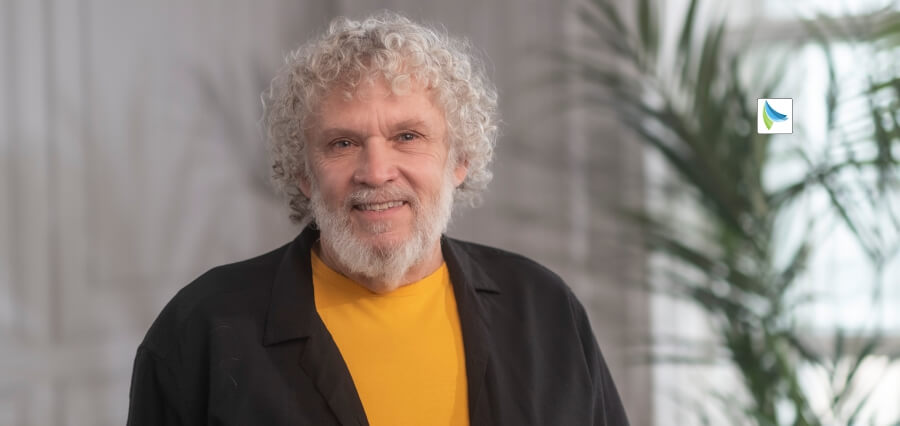
Breathing Life into Transformation: The Journey of Dan Brulé
From the stressful hallways in medical units in the military as a U.S. Navy independent duty hospital Corpsman during the Vietnam Era, to the tranquil retreats of India and Mexico, Dan Brulé’s life has been characterized by the art and power of breathing. What began with him rescuing lives as a U.S. Navy independent duty medical technician during the Vietnam War has evolved into a lifelong mission of awakening and transformation. His early experiences watching the fragility and resilience of the human body instilled in him a strong understanding of breath as the link between life and vitality, a lesson he would carry throughout his career. Following his military service, he trained thousands of people in lifesaving skills such as a CPR and First Aid instructor, while also pioneering holistic approaches to self-esteem and youth development. However, it was his discovery of Rebirthing in 1976 that changed his trajectory, turning his attention from rescuing lives in crisis to assisting individuals to truly live fully, consciously, and spiritually. His path crosses nations and cultures, from Kriya Yoga in India to Medical Chi Kung in China, and from Western biofeedback to Rebirthing and Holotropic Breathwork. He is now acknowledged worldwide as a pioneer of Breath Therapy, helping spiritual seekers, educating professional breathworkers, and demonstrating that the most basic act of breathing can result in deep transformation. From Saving Lives to Awakening Consciousness Dan Brulé path to becoming a breathwork pioneer began far from the wellness retreats and corporate seminars where he now teaches. He originally trained as an X-ray technician before serving five years in the US Navy during the Vietnam Era as an independent duty medical technician, deep sea diver, and medical rescue specialist. Those years gave him intimate knowledge of the body’s fragility and resilience and the critical role breath plays in bridging life and death. After his military service, he worked as a CPR, First Aid, and Emergency Medical Technician instructor for the American Red Cross and American Heart Association, training over 5,000 people in lifesaving techniques. He also served as founding president of the New England Self-Esteem Council and Director of Youth Education for the Council on Alcohol, demonstrating an early commitment to holistic healing that transcended conventional medical approaches. The turning point arrived in 1976 when he discovered Rebirthing, what he came to call “Spiritual Breathing.” The revelation struck him with force: instead of coming upon people who were dead and breathing life back into them, he could work with people already alive and help them become even more alive. “It felt like the same work but happening a few steps up the ladder. Almost always more fun, and on some levels even more important,” he says. East Meets West in the Breath Dan Brulé approaches breathwork not as a trendy wellness practice but as an ancient art requiring serious study. His educational journey reflects his depth of commitment. He majored in Human Development and Learning at the University of Massachusetts Dartmouth, graduating in 1984 with a Bachelor of Science degree in Business and Education. A year later, he designed and completed a Master’s Program in the Healing Arts at Lesley University in Cambridge, focused specifically on “The Breath as A Tool for Health Growth and Change.” His quest for knowledge took him far beyond American institutions. In 1980, he traveled to India for the first time, where the legendary immortal yogi master Babaji, described in Paramhansa Yogananda’s famous “Autobiography of a Yogi”, initiated him into Kriya Yoga and Kundalini Yoga, giving him the name Guchu Ram Singh. He continues to guide spiritual seekers throughout India on annual adventures, maintaining this connection to his roots. In 1985, Master Hu Bin invited him to China to study and practice Medical Chi Kung at the Academy of Chinese Medicine in Beijing. He learned Prana Yoga from Swami Rama and completed biofeedback training at the Himalayan Institute in Pennsylvania. He studied Breathing Coordination with Carl Stough at the Stough Institute in New York and lived in the Osho community in Oregon, participating in the original Breath Therapy Program at the Rajneesh International Meditation University. He traveled extensively with Leonard Orr, founder of the Rebirthing movement, and Stan Grof, founder of Holotropic Breathwork. This synthesis of Eastern wisdom and Western science became his signature. He emerged as a master of Prana Yoga (the Hindu Science of Breath) and Chi Kung/Qigong (Chinese medical breathing exercises) and established himself as one of the originators of Breath Therapy. He was first among the original group of internationally Certified Rebirthers, and he now leads the worldwide Spiritual Breathing Movement while training and certifying professional breathworkers. Building Bridges Between Worlds His book – JUST BREATHE: Mastering Breathwork for Success in Life, Love, Business and Beyond, is published by Simon & Schuster, with a foreword by Tony Robbins, is an International Bestseller now available in 15 languages. Dan Brulé’s vision extends beyond individual transformation to cultural connection. In 1990, he founded One Sky International to foster business, educational, and cultural exchange between the USA and USSR. He attended the First International Free Breathing Conference in Moscow, where the response proved so strong and enthusiastic that he moved his practice to Russia. There, he worked closely with the Academy of Sciences and leaders in the world peace and human potential movements, training over 500 medical doctors and psychotherapists. And he coached members of the Russian Olympic wrestling, rowing, judo, and triathlon teams. His work has taken him to remarkably diverse venues: the Open Centre in London, Aurora College in Canada’s Northwest Territories, the National Conservatory of Music in Estonia, the Catholic University and San Pedro Federal Penitentiary in Bolivia, the Bashkir State Medical Institute in Ufa, the Kripalu Yoga Center in Western Massachusetts, and the Ritz Carlton Hotel in Cancun, Mexico. In 2000, he organized the One Sky International Life Skills and Healing Arts Institute. From 2001 to 2003, he served as Chairman of the Massachusetts South Coast Hospitals Group’s Cardiovascular Health Committee and Youth Risk Behaviors
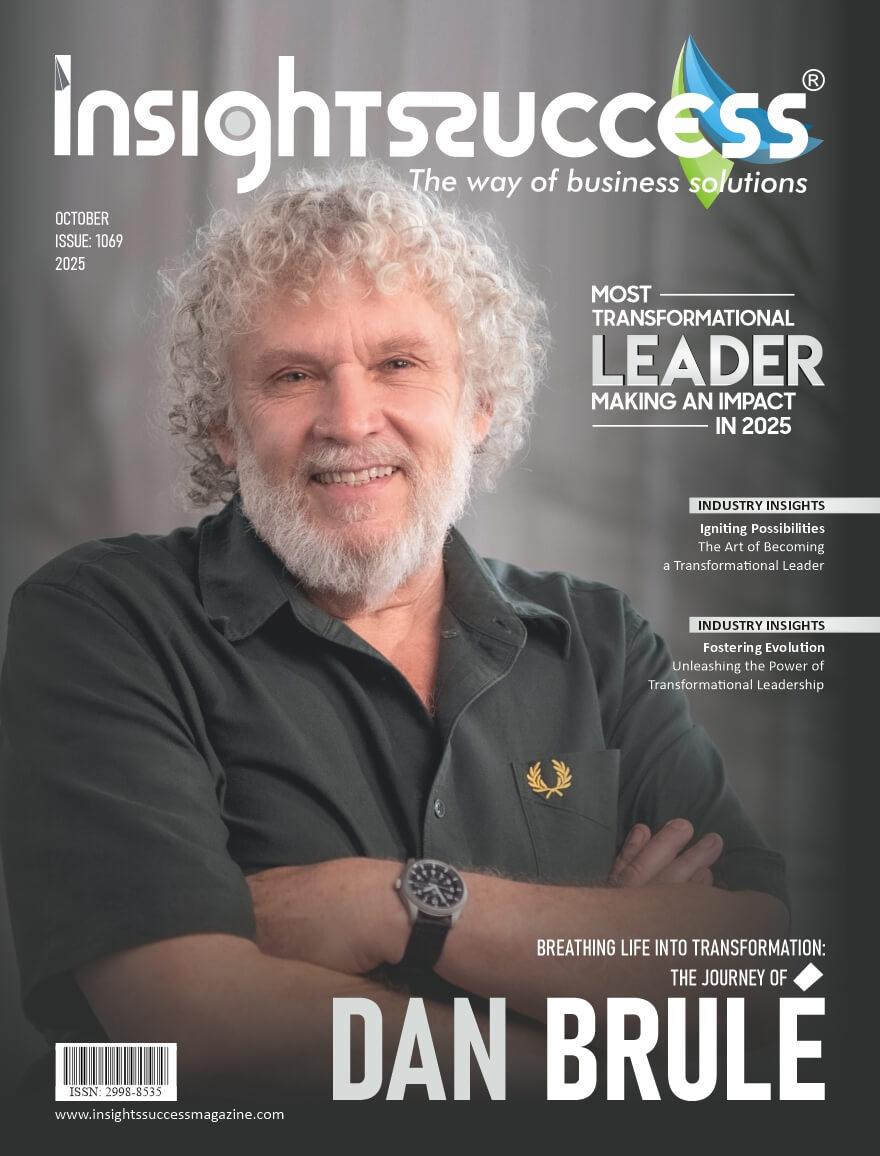
Most Transformational Leader Making An Impact In 2025
Most Transformational Leader Making An Impact In 2025 Dan Brulé, a Vietnam-era U.S. Navy medic, transformed his mission from saving lives to inspiring global transformation through breathwork. Integrating Eastern and Western practices, he trains, teaches, and guides thousands worldwide, demonstrating that conscious breathing fosters physical healing, emotional growth, spiritual awakening, and holistic well-being, making the simplest act profoundly transformative. Quick highlights Quick reads