






Leading the Frontlines of Cybersecurity Innovation
The New Commanders The business battlefield has largely shifted online, with data being the most valuable commodity and cyber threats evolving at a lightning-fast pace. The IT managers who used to be the heroes of this new frontier are now overshadowed by cybersecurity leaders who have become the new generals of innovation. These leaders are not only protecting the networks but, through their strategic insight, technological knowledge, and flexibility of thought, they are also ensuring the trust, continuity, and reputation of the whole organizations. Cybersecurity is no longer just a defensive necessity but has turned into a strategic source of innovation. The people in charge of the cybersecurity area today are setting the stage for companies to not only secure their assets but also to energize their teams and tackle an ever more complex threat landscape in innovative ways. The Shifting Cyber Leadership Landscape The role of cybersecurity leaders has heavily been redefined over the last decade. Their work used to be limited to dealing with firewalls and watching security systems, and now they are at the connection point of technology, business strategy, and risk management. The present-day Chief Information Security Officer (CISO) or head of the cybersecurity team is expected not only to recognize the technical vulnerabilities but also to comprehend how security can affect customer trust, regulatory compliance, and digital transformation. With the organizations embracing cloud computing, remote working, and AI-powered operations, the field of cybersecurity is expanding as well. The leaders have a duty to secure a borderless enterprise – a company that entails on-premises systems, cloud platforms, mobile devices, and third-party ecosystems. The mission has been increased to not just include defense but also secure innovation. Innovation as the New Defense Firstly, cyber threats are smarter, more persistent, and less predictable than before, which makes them hard to defeat. The defensive measures taken in a traditional, reactive manner that are common nowadays are not up to the task of the modern world. Cybersecurity leaders are pursuing proactive, intelligence-driven measures that allow for automation, data analytics, and artificial intelligence to be used in detection, response, and quick recovery. By means of AI and machine learning capabilities in security operations, these leaders can now in most cases intervene in real time when anomalies occur, anticipate the potential attack routes, and follow through with agreements that otherwise would have taken several hours or days, but without any human involvement. The transition mastered cybersecurity not only as a static shield but also as a dynamic, adaptive system – one that modifies itself to every new threat. Moreover, the cybersecurity innovation scope is widened far beyond the technology side only to cover the creation of processes to facilitate agility, the building of resilient architectures, and the encouragement of collaboration between teams, departments, and even different industries. Building a Culture of Cyber Resilience Excellent cybersecurity leaders know that innovation cannot be realized only through technology, as it also requires people and culture. A resilient organization is one where every employee is conscious of their role in the protection of information assets. Such leaders are revolutionizing corporate culture through the employees becoming aware of the indispensability of cybersecurity as a shared responsibility. In order to prepare the employees, they take continuous training, simulated attack exercises, and open communication as their means. By doing so, they turn employees into the first line of defense. The culture change assures that security will not be seen as a limitation, but rather as a collective commitment to operational excellence and trust. Preparing for the Future Battlefield The future cyber wars will be heavily influenced by automated systems, quantum computing, AI-powered offensive operations, and the extremely fast propagation of interconnected devices. Leaders of tomorrow should not only be highly competent in technology but also be visionary leaders—who know today’s threats and, at the same time, are able to forecast the new challenges ten years ahead. They are anticipated to be already in the process of gearing up mentally and physically for this very scenario. Next-generation security architectures are part of their arsenal as they make the internet a safer place, get adaptive AI systems, and build communities that do not stop learning. There is no question in their mind about their destination: to guard, to create, and to be at the helm in a world where both digital and physical are getting more and more mixed up. Conclusion The battlegrounds of cybersecurity have changed—no longer being walls and passwords. Leadership, innovation, and collaboration are, thus, the new frontlines. These new commanders of cybersecurity are visionary leaders who do not only recognize immediate threats but also understand how to create adaptive, intelligent, and resilient systems that safeguard both technology and trust. As well as being the guardians of the digital frontier, these executives are, in fact, leading the way in shaping the future of the digital frontier through their embrace of innovation, their energizing of teams, and their assurance that security is in line with strategic growth. The courage, understanding, and resourcefulness of these commanders will be the next chapter of global cybersecurity in a world where every organization could be a target.

The Most Influential CEOs in the Renewable Energy Industry
The Most Influential CEOs in the Renewable Energy Industry This edition celebrates the visionaries who are driving the global shift toward a cleaner, smarter, and more sustainable future. These leaders are redefining how the world produces, distributes, and consumes energy — pioneering technologies and business models that balance innovation with environmental stewardship. Quick highlights Quick reads
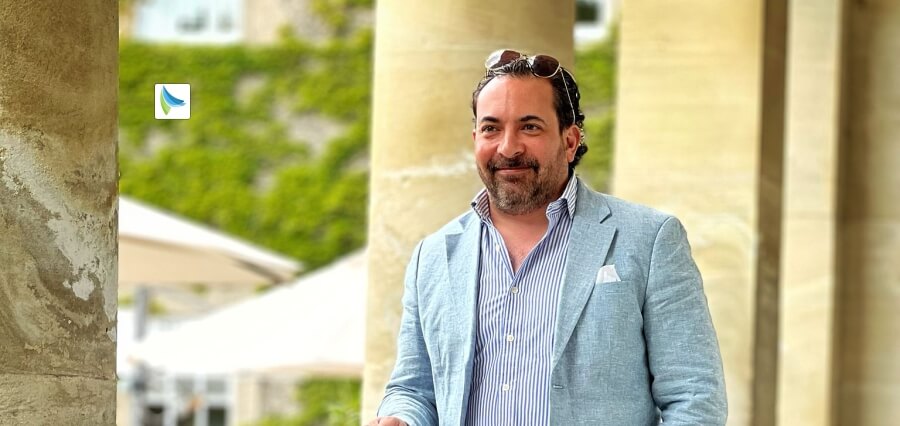
Robert Hamilton: Charting an EnSmart Course in the Energy Sector with Groundbreaking Solutions for Energy Transition and EV Charging
Renewable energy and more efficient power solutions is the future, as Robert Hamilton understood very early in his three decade career in Power Electronics. It has been a journey reflecting a deep commitment to driving the global energy transition; a commitment that wasn’t a single epiphany, but a series of moments that made the problem visceral, the opportunity tangible, and the solutions urgent. Pivotal Turning Points Early systems itch: Since the 90s, Robert Hamilton was fascinated by complex systems—how small changes ripple through grids, markets, and behaviour. His work on microgrids and UPS technology showed him that “clean” wasn’t just about generation; it was about orchestration. Field work in underserved regions: A deployment in East Africa installing solar + storage for clinics showed him the transformative power of decentralised energy. Reliable light in a maternity ward is not an abstraction. That experience turned “kWh” into human outcomes. Learning from failure: Robert Hamilton worked on a carbon capture pilot that never scaled. It taught him two things: technology risk and adoption risk are different, and the best solution on paper can die in procurement. A seasoned grid operator once told him, “If it can’t clear an interconnection queue or a rate case, it’s not innovation.” That reframed his career toward the intersection of tech, policy, and finance. Policy milestone as a forcing function: The Paris Agreement, followed by accelerating corporate net-zero commitments, catalysed demand-side pull. Robert Hamilton shifted from R&D and ideas to building bankable projects and software that reduces transaction friction. A demonstration of this is still in place today with ENWL and his invention of modular, scalable UPS and BESS solutions using unique IGBT transformerless technology. The data and financial modeling moment: “Leading an analytics team with FFR, we uncovered that 15–20% of project value was lost to forecast error and curtailment,” he recalls. That insight moved him into forecasting, flexibility markets, and DSR orchestration—where AI and grid constraints meet. What He Focuses On Today *Orchestrating flexibility: Software that coordinates storage, EV fleets, and responsive loads to flatten peaks and monetise grid services. *Bankability by design: Building solutions that pass interconnection studies, comply with evolving market rules, and pencil out bankable solutions for lenders/funders on projects. *Measurable decarbonisation: Tying projects to high-integrity carbon metrics and avoided emissions—not just nameplate capacity. A demonstration of such a solution will be deployed in 2026. Watch this space!! Principles That Guide Him Robert Hamilton starts with constraints: Design for interconnection queues, BESS/inverter specs, land use, and permits from day one. He optimises for time-to-impact: Favour scalable, modular solutions with short development cycles. He aligns incentives: Ensure value accrues to grid operators, communities, and capital providers—not just the developer. He measures what matters: Use transparent metrics for avoided emissions and reliability benefits combined with efficiency. Why Robert Hamilton Stays Committed Because the energy transition is the rare domain where engineering rigour, market design, and social impact converge—and where progress is measurable. Every project that hits COD, every MW of flexible load we unlock, moves the needle in a way you can see on a grid dashboard and feel in a community and monetisation. EnSmart Power has become synonymous with excellence in energy storage and EV charging solutions. Shaping this success story, Robert Hamilton’s guiding belief is that enduring innovation happens where customer reality, engineering rigour, and responsible impact intersect. He leads with a “prove it in the field” mindset: He listens obsessively to operators, builds with first‑principles discipline, and measures success by uptime, safety, and total cost of ownership—not by slide decks. That pinpoint focus has shaped EnSmart into a team that solves real grid problems, not just ships products. “We hire for curiosity, reward candor, and run toward hard problems. If we do right by the customer and the planet, the business takes care of itself. Do the right thing, the hard way, until it’s the easy way for our customers.” EnSmart build where physics, customer reality, and responsible impact meet. By keeping operators in the loop, engineering from first principles, and measuring success by uptime and lifecycle cost, they’ve earned trust in a critical infrastructure space. They hire curious, candid people and give them ownership. The result is reliable storage and charging solutions that scale with the grid and stand the test of time. Core principles that shaped their energy storage and EV charging journey – Customer-in-the-loop – Ride‑alongs with installers and site operators inform our product roadmaps. – Every sprint ties to a measurable customer outcome (uptime, kWh throughput, install time, grid services revenue). – First‑principles engineering – Start from physics and constraints, then optimise software and business models around them. – Safety is non‑negotiable; reliability beats novelty. – People over titles. – Small, accountable teams with clear owners. – Psychological safety for hard truths; blameless postmortems, ruthless follow‑through. – Long-term stewardship. – Design for lifecycle economics: serviceability, second‑life pathways, recycling. – Open standards and interoperability to avoid vendor lock‑in. – Disciplined execution. – Fewer priorities, shipped flawlessly. – Define “done” as validated in the field, not just passing a lab test. – Transparency and trust. – Share the numbers—good and bad—with customers and partners. – Commit carefully, deliver consistently. How this philosophy shows up in decisions: – Prioritised modular battery architecture so sites can scale without ripping and replacing. – Invested in predictive maintenance to cut truck rolls and increase charger uptime. – Choose the correct OCPP/open protocols for EV charging to protect customer choice. – Built commissioning tools that reduce install times and errors for field teams. – Structured warranties around real-world duty cycles instead of marketing claims. “We put our money where our mouth is with warranties up to 20 years.” Robert Hamilton’s focus on energy independence grew from a simple insight: energy is the backbone of every enterprise. When a business can reliably access affordable, clean energy, it unlocks planning certainty, competitiveness, and resilience. – He’s seen how supply disruptions, price volatility, and complex energy regulations can drain resources and distract leadership from core strategy. This

Transforming Vision into Renewable Impact
Sustainability in Motion As the climate crisis and the need for the environment to be taken into account define the era, sustainability is not a static ideal anymore—it is a dynamic movement. Across industries, businesses and governments are realizing that sustainability is not only about making promises or writing reports but it is also about changing the vision into measurable, renewable impact. The idea of “Sustainability in motion” is basically that the progress which is continuous, adaptable, and results-driven should be able to connect the gap between aspiration and action. The Shift from Awareness to Action The debate on sustainability has been largely about awareness only, i.e., recognizing the importance of cutting emissions, saving resources, and protecting the environment. Yet, this recognition was only the first step. Now the stakeholders, including investors and consumers, are calling for real outcomes. They want to witness the transformation of the pledges into renewable energy use, carbon reduction, circular supply chains, and social inclusion. The transition they are making is led by the organizations which consider sustainability a core business strategy of their company rather than a public relations stunt. It has become a question of doing away with the words and focusing on actions; of moving from intentions to implementations; from statements to systems. Vision as the Catalyst First off, a vision is the foundation of any sustainability journey—a purpose that brings together environmental, social, and economic goals in a coherent and meaningful way. The vision serves both as a guide and a source of energy, it is the framework that permeates and supports decision-making at all organizational levels. Nothing less than visionary leadership is required. The leaders that realize that sustainability is not a sacrifice to profitability but rather a way to keep the competitive advantage over time, are the ones who make the impact going beyond the boundaries. They drive the transition by linking sustainability targets with innovation, competitive advantage and stakeholder value, thus, they encourage the workforce and partners to climb beyond the level of meeting regulatory requirements towards the level of inventiveness-driven solutions. Renewable Energy: The Fuel of Change The global move towards renewable energy is at the core of this change. Solar, wind, and water power along with the use of green hydrogen and biomaterials are dramatically altering the industrial landscape. The question of renewable energy being a mere alternative is over as it is swiftly becoming the main vehicle for maintaining environmental progress. Enterprises that are modifying their energy consumption by the use of renewables not only decrease their carbon emissions but also improve their energy safety, make their costs predictable and become more resilient. Also, this move towards renewable sources is quite instrumental in speeding up the innovations in the areas of energy storage, grid management and decentralized energy systems which have the potentials of new business models and a fresh pool of labor. Recovering Materials through Circular Economy and Efficiency Sustainability as a continuous process demands a profound and fresh understanding of how resources are produced, consumed and recycled. One of the major factors behind the significant impact of renewables lies in the circular economy concept – a system in which waste is reduced to a radical minimum and materials keep being reused. The organizations are increasing their products’ and supply chains’ as well as the manufacturing process’ lifecycles by the redesigning strategy and thus reduce the environmental impact in the whole production cycle. The Triad: Data, Technology, and Measurable Impact Digital innovation lies at the heart of the phenomenon of sustainability in motion. Artificial intelligence (AI), data analytics, and the Internet of Things (IoT) are technologies that basically impose environmental accountability and at the same time give predictive power to organizations by enabling them to keep track of emissions, measure their activities, and forecast environmental outcomes with an unprecedented level of detail and accuracy. The usage of these resources is accompanied by the provision of transparency and accountability, thus leaders are able not only to track ongoing changes but also take data-driven decisions. Smart grids, precision agriculture, and intelligent manufacturing stand as evidence that technology can be employed to achieve sustainability goals while being integrated into everyday operational activities. The power to put a number on renewable impact moves the whole concept of sustainability from being an intangible to one that is quantifiable and manageable. Conclusion Sustainability in action stands for the realization of the vision in a renewable and tangible way. It represents an alignment of the purpose with the performance, the ambition with the accountability, and the innovation with the impact. The companies that adopt this way of thinking go beyond meeting the short-term targets and focus on the creation of the lasting systems of value that serve the business, society, and the planet. The future of sustainability is not about making promises but about making progress. Leaders who decide to integrate renewable energy, circular thinking, and digital intelligence into their strategies are in a position to drive profound change. By doing this, they also secure that sustainability is not a point that has been reached and rather, it is an ongoing journey—one in which the vision turns into impact and motion becomes momentum for a better, greener future.

How Leaders are Redefining the Future of Power
Beyond Fossil Fuels The worldwide energy ecosystem is changing its face with a grand shake-up of the very foundations of energy. The energy sector, which used to be the main culprit for the use of fossil fuels, is now seen as the driver of the sustainable, innovative, and resilient future of the planet. The executives across the sectors are turning the old ways upside down to find out how energy can be produced, shared, and utilized in a different manner– hence, creating an era in which energy is clean, the digital technologies are utilized, and the environment is protected in the long run. Leaving fossil fuels behind is not that far-away dream anymore; it is a strategic and ethical necessity that shapes up the future of global progress. Leadership in the Energy Transition Creating the world of energy to come needs leaders with a clear vision of the future- people who dare to defy the traditional ways and trust a complete overhaul of the system rather than quick profits. Those leaders understand that sustainability is not a brake on the business but on the contrary, it accelerates it as a whole and particularly in the domain of innovation. Green energy projects are on their funding list, also hydrogen and biofuel are not foreign to them. They are turning to clean technologies and mobilizing consumer choices towards clean options to power vehicles and adopt the circular economy. It is through embedding sustainability in the corporate strategy that they are managing the transition of energy from a limited resource to a renewable source that can support both people and the earth. Additionally, the energy transition command leadership features beyond just adopting technology. It is about the raising of the relationship canopy between the states, business, and science. Those executives who top the charts in leading the transition are the ones who create linkages, thus identically the volunteers among the actors for the cleaner, cheaper, and more most accessible energy. The Rise of Renewable Energy Renewable energy sources are the ones that the whole change is based on Solar power, wind, hydroelectric, and geothermal are being considered allowable sources. Today, they are at par and sometimes better than fossil-fuel sources in cost and efficiency whereas in the past they were considered niche or economically unprofitable. It is the modern technologies which have allowed the prices to be decreased while the dependability is increased. Nowadays, solar cells, windmills, and batteries for energy are not only getting more efficient but also opening the gates broader. The countries going down the road of renewable energy are reaping not only the benefits to the environment but also to their economy, such as increasing job opportunities. Nevertheless, the switch to renewable energy sources goes along with a need for thinking differently about the resourcing of the energy grids. An energy network grid will need to be transformed into a smart and multifunctional system capable of handling local production and a fluctuating supply. The use of digital technologies like AI and IoT is very useful in dealing with the performance of a grid and energy balancing in the current period. Innovation at the Core of Transformation The step further than fossil fuels is indeed a technological revolution as well as an environmental one. On every step of the value chain of the energy industry innovation comes in to completely change the old ways of production and consumption. One of the major technological challenges of hydrogen as an environmentally-friendly fuel is gradually overcome, as hydrogen is touted as the next clean fuel of the future mainly for heavy industries and long-distance transport. In addition, carbon capture, utilization, and storage (CCUS) serve as emission mitigators for the existing sources. New ideas in energy storage are widening the intervals and intensities at which renewable systems can operate, thus paving the way for the clean energy sources to be more sustainable and accessible. Further, the leaders are not leaving any stones unturned by adopting digital transformation moves for the rapid change of the energy sector: data analytics, condition prediction, and smart automation are some of the tools that power producers can use to improve their performance, cut down their overheads and at the same time sustain environmental integrity. The Road Ahead The move towards a post-fossil fuel era is fraught with challenges. Among them are still energy storage issues, supply chain problems, and policy inconsistencies. Nevertheless, the progress direction curve is very clear. The world gets closer to a clean, sustainable energy future with every innovation, investment, and leadership decision. The power redefinition leaders are those who realize that sustainability is not a current trend—it is the bedrock of long-term viability. They are mobilizing their organizations and ecosystems to be change-resilient, technology-driven, and capable of generating shared value for all stakeholders. As the planet shifts to energy systems that are cleaner and smarter, the leaders endowed with foresight and integrity will be the ones writing the next chapter of global power. Those who realize that real energy leadership is not about dominance over limited resources but rather the bravery to leave a sustainable legacy for future generations will be the ones holding the keys to the future.

The Dynamic CEOs Driving Trade and Investment Growth
The Dynamic CEOs Driving Trade and Investment Growth This edition highlights the pioneers who see opportunity where others see uncertainty — who are bridging continents, fostering cross-sector partnerships, and transforming trade ecosystems through innovation, sustainability, and strategic foresight. From technology and manufacturing to finance, logistics, and energy, each leader featured represents a powerful force driving growth, resilience, and shared prosperity in the global economy. Quick highlights Quick reads
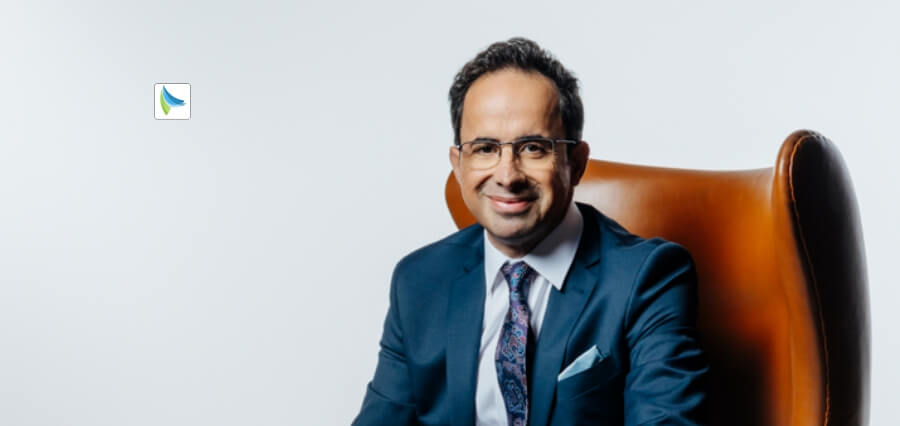
The Human Connector – Will Abdo: Creating Sustainable Prosperity That Transcends Borders
Everywhere in the world, the people, the cultures, the geographies, and the landscapes are the same-same but different. While the waves of industrialization, globalization, modernization, and digitalization have somehow lessened the differences, the steepest of the divides are posing an increasing threat to global unity. In such a scenario, especially when it comes to the field of international and intercontinental trade and investment, such conflicts can become the deal-breakers. To overcome them, global corporations urgently need dynamic CEOs like Will Abdo, who can drive business growth in global trades and investments. Being also the Founder of Webtrade Marketing Pty Ltd, Will Abdo, for over 23 years, has been delivering specialty marketing and business intelligence services to clients seeking business, trade, and investment opportunities. With a graduate diploma in computer science focusing on business intelligence, he has extensive experience in business, trade, and finance analysis, insights, and reporting. A Career in Bridging Two Continents Will Abdo has worked across functional departments, regions, and various stakeholders, delivering information modelling, project management, and board advisory roles, predominantly within the Australian corporate sector. He has also been an advisor to the Australian Federal Government on e-marketing and e-commerce strategies for Middle East trade markets. He has exceptional communication and presentation skills and a broad knowledge of various BI and systems platforms. He is passionate about enhancing Australian-Arabic relations and has received the Ambassador for Peace Award in recognition of his leadership and peacebuilding work across both community and business platforms. Will Abdo built his career around connecting Australia and the Middle East — two regions with very different business landscapes. Reflecting on the same, he says that his middle childhood in Australia gave him experiences where wide differences and misunderstandings between the Middle Eastern and Australian cultures were frequent occurrences. “I wanted to dedicate time and effort to promote a greater understanding and trust between the two.” Initially, working with the local community as an accountant/tax agent to meet their business and tax obligations. This experience provided Will with a solid foundation in business operations, compliance, and professional ethics. It also exposed him to the challenges many within the local Middle Eastern community faced in navigating Australia’s commercial systems. Breaking Barriers With a background in business intelligence and early exposure to building websites, an opportunity presented itself when an Australian Federal Government inquiry into “Australia’s Relations with the Middle East” was presented to the public. It is here that Will Abdo was drawn into presenting his submission on the use of modern online technology and linguistics to step into the world of international trade to e-market the benefits of the two cultures and regions, whilst bridging the cultural and geographical gap and promoting online trade and investment opportunities. This marked the beginning of his company, Webtrade Marketing, in the year 2000. Personal experiences in witnessing prolonged stereotyping, regional instabilities and wars, socio-economic marginalization, and the absence of moderation all contributed to Will Abdo’s vision to promote trade and trusting business relations through cross-cultural conversations, linguistic and business intelligence, utilizing modern technologies for greater impact. Human-centered Business Success Webtrade Marketing reflects a very human-centered approach to business development. Because Will Abdo believes that business and trade developments that are built on mutual cultural understanding and acknowledgment, respect, moderation, trust, and due diligence should lead to sustainable business prosperity and peace in general. A great deal of that philosophy comes from his entrepreneurial journey, which is based on clarity, honesty, ethics, acknowledgment, and mutual respect of cultural differences, and his mission is to promote these values in a more sophisticated business and trade setting. When embarking on a journey in international business relations, you quickly learn and realize how big, competitive, and challenging the environment is, he adds. There are so many factors impacting the trade environments both locally and internationally, which differ by country, governments, industry, cultures, linguistics, business leaders, trade agreements, geopolitics, competitions, etc. To understand these dynamics, you build and strengthen so many entrepreneurial skills in the process, including leadership, innovation, creativity, big picture analytics, communications, linguistics, presentation, networking, resilience, diplomacy, problem solving, emotional intelligence, critical thinking, etc. “Achieving my role as the CEO/Entrepreneur came from recognizing and harnessing these skills in my operational and communication engagements with my clients and stakeholders,” explains Will Abdo. Two to Tango He further states that being surrounded by an ever-growing digitization of business and social communications, as well as an explosion in e-commerce activity worldwide, gave him the confidence that Webtrade was on the right trajectory. What is critical here is that it takes two to tango in the digital trade world. Hence, it’s paramount that the two regions in question have the same supporting e-commerce infrastructure and mindset to make digital trade work. Webtrade Marketing is also very involved in conventional trade and investment development, both locally in Australia and internationally in the Middle East. “We made it clear from the outset that our digital online strategies were purely supplementary given the preferred way of personal over transactional relations when dealing with the Middle East,” he shares. The Priceless Value of Ever-lasting Relationships Will Abdooften emphasize relationships over transactions. Sharing an instance where his personal connection or intuition played a key role in shaping a successful client outcome, Will Abdo recalls: “Doing business and trade in the Middle East requires much more relationship emphasis over transactions, and I’ve always viewed e-marketing and e-commerce as a supplementary solution rather than a replacement to conventional trade relations and loyalties.” Many of his personal connections and intuitions play a key role in shaping successful clients and deal outcomes, which are based on extensive experience working with different clients and business challenges over the years. His Australian clients are often advised by him that personal and business relations in the Middle East are very important and take some patience and due diligence to cultivate and establish, with emphasis on rapport and trust. “On occasions, I’ve seen deals put on hold indefinitely because of formalities over relations and lack

Collaboration in a Connected World
Global Leadership Redefined The business environment of the 21st century is highly interlinked than it was before. The three factors technology, globalization, and shifting social values had impact on these changes and, as a result, leaders have to change their style of operation, communication, and execution. Leadership in such an interconnected world is not dependent on one’s power, position, or place but rather on one’s ability to work with others. So global leadership today, according to this view point, is about uniting team members from different walks of life to share not only the hurdles but also the solutions of the problems that are beyond any one of their countries. The New Reality of Leadership Previously, however, control and top-down decision-making formed the basis of leadership. But the digital age has done away with these hierarchies and widened networks, thus giving the world a new order where influence is something that has to be earned through trust, transparency, and common goals by leaders and organizations alike. Today’s leaders have to be prepared to interact with the new reality with which things such as culture, sexual minorities, and collaboration are not optional but rather are integral parts of it and they also need to have high cultural intelligence. Global companies are not bound by the limits of one day, nor one market or set of regulations. Such complexity calls for leaders who, through their ability to rally people around shared goals, can at the same time be mindful of the differences in culture, communication, and context. The capability to demolish barriers – whether they be linguistic, social, or ideological – has thus become the leading characteristic of the most successful leaders. The Power of Collaborative Intelligence Collaboration is more than simply working together on a shared project—it entails developing a mentality that recognizes the worth of the collective intelligence rather than that of the leading expert. In today’s interconnected world, there is neither a single leader nor a lone organization that can claim to have all the solutions. Success, therefore, is the result of the transfer of the ideas that come from collaborations between different scientific areas, businesses, and countries. Innovative leaders take advantage of the possibilities offered by modern technology to foster and sustain relationships with their collaborators no matter where they are in the world. The use of digital platforms, cloud-based tools, and real-time communication systems has liberated the work process from geographical boundaries giving team members the opportunity to share, discuss and develop their ideas wherever they are. Yet without the presence of trust, empathy, and a mutual goal, the technology that is in use cannot serve its purpose. By leaders’ efforts of promoting transparency in talks, making it easy for local decision-makers to carry out their mandate and at the same time showing that the organization is interested in and open to a broad spectrum of viewpoints, leaders take off the lids from the creative potential and composed nature of their organizations. The concept of collaborative intelligence at the same time being the driving force behind inventive activities, it also allows organizations to have a stable position in situations of sudden and rapid transformations. Building Trust in a Connected World Trust is, in fact, the basic resource of collaboration. Considering the fact that there might never be a personal subsequent meeting of teams, trust has to be established through correspondences, taking responsibilities for one’s actions, and being true to oneself. Leaders who act in accordance with their words, are open, and empathetic foster a state of safety among employees that ignites them to share ideas and take risks further. Trust is also relevant to data handling, partnerships, and engaging with the public. Trustworthy leadership is at the core of global collaboration being held to standards of good judgment, fairness, respect, and responsibility – moral ideals that lay the basis for, in turn, long relationships of trust and credibility. The Future of Global Leadership Leadership in the feature is not limited by any boundaries. As domains interlock and societies get more interdependent, thriving will largely hinge on the cross-disciplinary and cross-cultural collaboration capabilities. Tomorrow’s leaders will not only oversee but also engage, motivate, and co-create. The concept of global leadership that has been reshaped is not about ruling from the upper level but rather about empowering from within. It is about realizing that communal advancement is the true yardstick of success. In this new era, collaboration is far more than just a skill – it is a philosophy, a strategic approach, and a driver of global transformation. Conclusion Leadership in a connected world is more about connecting with people than controlling them. Those leaders who make the greatest impact are the ones who break down barriers and get people working together, irrespective of where they come from. They also see the value in diversity as a source of strength and are able to bring global teams together under the umbrella of shared purpose and trust. Still, as the borders between physical and cultural worlds as well as technology keep on fading away, collaboration is what underlies durable progress. The change in global leadership has indeed come, not being defined by power or status, but rather by the skill to unite people to make the world a better, more interconnected place.

Building a Legacy of Responsible Leadership
The Moral Compass The world is dominated by technological revolution, global instability, and increasing stakeholder expectations, and leadership has never been more complicated and more impactful. The leaders’ decisions today influence not only the future of their corporations but also the whole society. While dealing with these fast changes and competitive pressures, one thing that can still be relied upon is a moral compass. Responsible leadership is not centered on being in charge or on having the ambition, rather, it revolves around the qualities of integrity, empathy, and accountability. This is mainly about keeping progress and principles at the same time. A leader guided by a moral compass does not only create companies that achieve success but also, he/she creates a legacy that lasts. The Foundation of Ethical Leadership Self-awareness is the starting point of responsible leadership. A moral compass does not guide the decisions through strict rules but through the values like honesty, fairness, respect, and transparency. These values provide the framework for traversing the gray areas where business interests meet ethical considerations. Good leadership calls for bravery. This bravery is exemplified in the ability to take the right decisions even when they are the hardest and least profit-making ones. It also requires that what leaders express in words corresponds to what they perform in action thereby ensuring that honesty is not a temporary yet a permanent structural one. When decisions are based on principles, organizations gain the trust of their stakeholders, and trust is the stepping-stone upon which long-term success is built. Beyond Compliance: The Call for Conscious Leadership Nowadays companies are doing business in such a setting that adhering to laws is no longer enough. The different stakeholders expect the companies to dare to voice their opinion concerning the social, environmental, and governance issues. Responsible leaders do not stop at merely ensuring compliance but rather they proceed to conscious leadership which is a leadership approach that acknowledges the interdependence of business and society. As such, reflecting on the wide-ranging influence of decisions on employees, communities, and the planet is essential. Being empathetic and inclusive leaders mean, amongst other things, allowing for the effects of the different viewpoints on the innovation and, at the same time, creating the places where both diversity and the coming of age of the innovation thrive. Conscious leaders, therefore, consider profit and purpose as not being mutually exclusive but partners, the latter being a driver of sustainable growth while at the same time making a contribution to the common good. Accountability and the Long View Moreover, one of the signs of mature leadership is a feature called accountability—a readiness to take the credit of decisions, learn from them, and keep evolving. Real accountability goes far beyond business results and includes adherence to moral values and giving back to the community. Conscious leaders driven by a sound value system think further than the present. They decide against short-term benefits and opt for long-term, eco-friendly results, being aware that trust takes years to build and only seconds to lose. By making responsibility part of the organization’s DNA, they are removing the need to be inherently honest—the great majority of people will be. Building a Legacy of Responsibility The key to the longest-lasting leaders is not only the remembering of their outcomes but also of their core beliefs. Such leaders ignite the fire of integrity in others, thereby producing a widely spread effect that goes far beyond their leadership era. The heritage of accountable leadership is deeply rooted in the unceasing harmony between one’s deeds and moral codes, thus shaping a culture which values both purpose and economics equally. The kind of people who think in this way will be a source of support for the years to come when they encourage and guide them to see leadership, not as a privilege, but as a responsibility. They realize that their legacy will be measured not by the things they keep for themselves but by the ones they give away—their people, their communities, and the planet. Conclusion Having a moral compass does not make the ride easier, it rather helps to find the way when things are unclear. It is the very source of power for leaders to dare making those decisions which are difficult and do it with empathy and confidence. In this way, their sphere of influence elevates instead of diminishing. Responsible leadership should not be viewed as an endpoint, but rather as a never-ending journey, which requires the leader to be reflective, humble, and brave. Those who choose the path of integrity not only build profitable businesses but also leave behind a leadership model that can withstand the test of time. Ultimately, success can be measured in terms of profits, but legacy is measured by principles. It is the moral compass that is most helpful in leading to both – success and legacy – as it is quite consistent, steady and true.

Why Should Organizations Take a Leap of Faith to Move from “+AI” to “AI+” Strategy?
What is “+AI” and “AI+”? Artificial Intelligence is no longer a buzzword—it has become a strategic lever for organizations to reimagine business models, enhance decision-making, and deliver superior customer experiences, creating value for stakeholders. However, the way organizations adopt AI determines whether they merely automate tasks or fundamentally transform how they create value. Among many, two common approaches are emerging in this journey: “+AI” and “AI+.” While they may look similar at first glance, the difference between the two is profound. What is “+AI”? “+AI” refers to adding AI to existing products, processes, tools, or workflows. Think of it as augmentation—AI is added on top of what already exists. Example: Embedding an AI chatbot into customer service to handle routine queries. The business model remains largely the same, but efficiency and productivity improve. “+AI” is about optimization. What is “AI+”? “AI+” flips the Game—AI becomes the starting point (discussion starts in Boardroom), not an add-on. Organizations reimagine processes, products, and strategies with AI at the core. Example: Redesigning the entire customer service function around AI-first capabilities, ie, not even thinking about human agents as part of the game—predictive personalization, proactive outreach, and self-healing systems. This will lead to new business models for sure, revenue streams, and competitive advantage. “AI+” is about transformation. Why Move from “+AI” to “AI+”? The vast business opportunity with AI, forecasted by Gartner to bring USD 3 to 4 trillion in economic benefits to the global economy across industries. It is not a choice but a Compulsion. Is it an existential question? Scalability: “+AI” improves parts of the process; “AI+” redefines the whole Product/System for exponential impact. Resilience: “AI+” strategies build adaptive, learning organizations ready for disruption. Differentiation: In a world where everyone is adding AI, true edge comes from rethinking business models with AI at the center creating long lasting moat. Innovation: “AI+” opens doors to entirely new Business Models, Products, Services, and Markets—not just incremental gains. Long-term Value: While “+AI” delivers quick wins, “AI+” future-proofs the organization in a rapidly evolving digital landscape. The Shift in Mindset “+AI” asks: “How can AI help us do what we already do—better?” “AI+” asks: “If we had AI at the center, how would we design this from scratch?” Forward-looking organizations are already making this shift—from experimenting with AI pilots to embedding AI into the very DNA of their strategies. Conclusion – When AI is changing the business landscape every passing month, the real opportunity for organizations lies not in simply adding AI to existing structures, but in reimagining the future as an “AI-First Enterprise”. The transition from “+AI” to “AI+” is not just a technological leap, but a strategic one—one that separates industry leaders from followers. The question is no longer “Should we adopt AI?” but rather “Are we ready to transform into an “AI+” Organization?” Are you an “AI+” Organization? About the Author Pramod Mankar is a seasoned technology leader with extensive global experience spanning GCC, AI SaaS, Product and Platform Engineering, Management, and Strategy. He is recognized for his ability to drive product vision with a strong focus on customer empathy, guided by the principles of design thinking and innovation. Throughout his career, Pramod has demonstrated expertise in establishing and scaling world-class product engineering organizations. He has built high-performing, polyglot, and agile teams through strategic hiring, mentoring, coaching, and succession planning—fostering a culture of excellence and collaboration. His technical proficiency extends across platformization, SaaS, analytics, large-scale enterprise applications, DevOps, cloud, and AI/ML. Beyond his professional pursuits, Pramod is an avid reader and networker who values balance and simplicity in life. A fitness enthusiast who enjoys running and swimming, he is also a strong advocate of sustainability and firmly believes in the principles of “Reduce, Reuse, and Recycle.” Disclaimer – This article is a work of original content created for public relations and informational purposes only. It may be published across multiple digital platforms with the full knowledge and consent of the author/publisher. All images, logos, and referenced names are the property of their respective owners and used here solely for illustrative or informational purposes. Unauthorized reproduction, distribution, or modification of this article without prior written permission from the original publisher is strictly prohibited. Any resemblance to other content is purely coincidental or used under fair use policy with proper attribution.