






A Journey from Control to Connection
Evolving the Leader Within Leadership, when examined closely, is not a matter of titles, hierarchy, or authority—rather, it boils down to the impact a person makes, their own development, and the brave act of reaching out to others. For a long time, leadership meant one having control: the power to order, decide, and command. However, plus in the world where sincerity and quickness count even more than might, leadership is gradually changing. Those leaders who are able to keep their hold and actually thrive in the new environment are the ones to be found among the leaders of today—they have transformed their leadership style from control to connection, from a stance of dominating people to one of cooperative leadership with people. The Old Paradigm: Leading Through Control Historically, the ability to maintain control was looked upon as the principal characteristic of good leadership. Leaders were generally portrayed as people with great authority – logical, decisive, and unemotional. This pattern of leadership was effective in a time when stability was still considered more important than inventiveness, and obedience was preferable to partnership. In this type of surroundings, control would restore order, but at the same time, it would discourage new ideas and possibilities. Control-centered leadership is mostly fearful leadership—fear of error, of disorder, of losing one’s grasp on things. It is preoccupied with the fixing of results through tight control rather than with the freedom of the process. And although it can bring about short-term gains in terms of efficiency, it hardly ever sets the grounds for long-term commitment and innovation. Personnel working under authorities that exercise control over their subordinates are generally willing to follow orders but are not enthusiastic about the company goals. They do not show a great deal of initiative while following the instructions they receive. So, the outcome? Companies that are run effectively but lack leadership—well-organized, yet without any potential for growth. The Inner Work of Evolution In order to function as a leader who connects instead of controlling, one needs to internally evolve—a process of unlearning and rediscovering oneself. This one requires the attributes of vulnerability, bravery, and also the humility to admit that growth is possible not only for the team members but for oneself. Such transformation usually looks like this: From Commanding to Coaching Instead of providing ready-made solutions, the mature leader through the power of questioning calls into action the team members’ potential. Coaching is a way that brings forth ownership and confidence, hence, giving the power to others to think independently and make decisions without hesitation. From Perfection to Progress Aiming for perfection most of the time is what makes one desire to control. The mature leader prioritizes learning from the process over perfect execution, and therefore, he views mistakes not as failures but as feedback cycles for further development. From Fear to Trust Fear of losing relevance or authority is what scares most of the controllers hence that is where the control thrives from. On the other hand, connection depends on trust, which is a belief not only in one’s self but also in others and the process. Trust turns more frequent collaboration than supervision. From Transaction to Transformation Transactional leadership usually focuses on measuring output while transformational leadership nurtures evolution. The attention is first on performance metrics, then on personal and professional development. From Hierarchy to Humanity Leadership is no longer defined by titles but by the power of relationships. The evolved leader is a human first and a boss second, thus he/she not only practices but also believes in and teaches empathy as well as efficiency. The Cultural Ripple Effect Control-to-connection leader behavior change has a profound impact on organizational culture. It causes the flattening of hierarchies, widening of communication channels, and enhancement of innovations. Thus, employees begin to talk more, share ideas, and take initiatives because they feel safe and recognized. This radical change resulted in what psychologists refer to as psychological safety—that is a work culture where people are not afraid of making mistakes, questioning, or challenging. To creativity and accountability to become a natural and harmonious pair is what characterizes such environments. The employees there are not in need of being managed; instead, they are self-driven, and their guide will be the common values and trust. Conclusion The evolution of leadership is not about giving up control—it’s about elevating it with spirit. The leader who is connected not only leads the teams but also builds trust, energizes purpose, and creates belonging. Being able to connect is as revolutionary as the world is becoming more and more divided and distracted. To bring out the leader in you is the way that you would pick courage instead of staying in your comfort zone, be authentic rather than creating an image and having empathy instead of ego. In the long run, leadership that connects is leadership that lasts. Such leadership not only creates successful organizations but also the positive experiences of the people involved. Because, ultimately, leadership is not about the extent of control we have—it’s the depth of our connection, the bravery of our caring and the degree to which we inspire others to become their own leaders that truly matter. Read Also : Reimagining Connectivity: Air Mobility Innovations Transforming Transportation
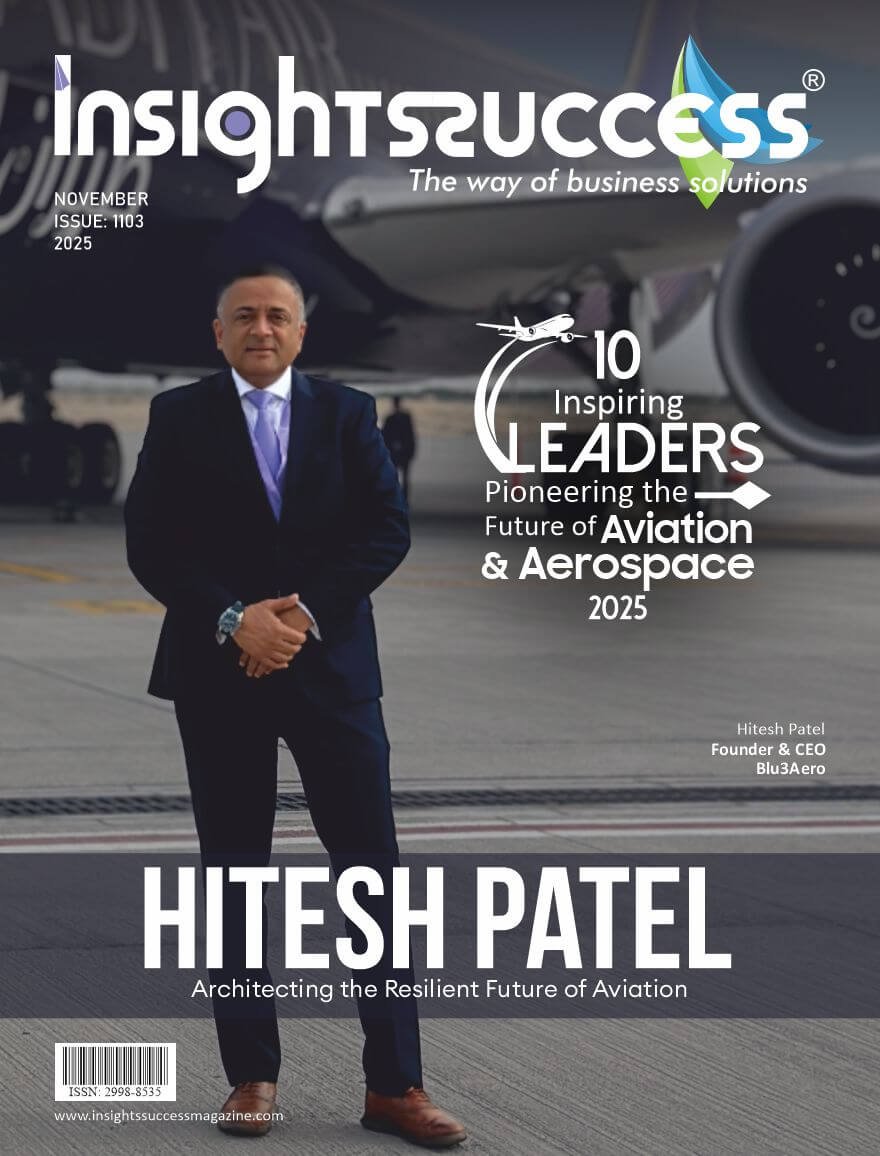
10 Inspiring Leaders Pioneering the Future of Aviation & Aerospace in 2025
10 Inspiring Leaders Pioneering the Future of Aviation & Aerospace in 2025 Hitesh Patel combines technical mastery and strategic vision to transform aviation. From hands-on maintenance at Continental Airlines to founding Blu3Aero, he has built, scaled, and optimized airline operations globally. His leadership drives operational excellence, sustainability, and financial resilience, establishing frameworks that ensure safe, efficient, and profitable air transport for the future. Quick highlights Quick reads

Hitesh Patel: Architecting the Resilient Future of Aviation
In the ruthless soap opera of global aviation, victory is not won but choreographed. It is a world where the arenas of gigantic engineering and high finance come face to face. In this dimension, metal behemoths fly in defiance of the very forces of nature on an everyday basis. Here, the fine line between defeat and triumph precariously depends on the whim of an individual’s wise mind. Aviation is a logistics chain. It’s a ballet of human minds at high speed and vast capital. It takes a particular kind of leader- one who can read the technical smudges on a troublesome engine and script the strategic recipe for returning to a decaying balance sheet. The real master builders of this undertaking understand that every plane is a hub: a multi-million-dollar commitment, a vehicle of human potential, and a motor of world connectivity. They look beyond the immediate terminal and know the map of the world. Today, the sector stands at a thrilling and perilous juncture. With the commercial market projected to exceed $309 billion by 2032, the opportunity is immense, yet fiercely concentrated among the approximately 800 scheduled commercial carriers. These giants must navigate volatile fuel markets, suffocating regulatory regimes, relentless technological disruption, and the constant pressure of customer evolution. The challenge requires more than stewardship. It calls for visionary craftsmanship of strategists who can build resilient, compliant, and profitable operations from the initial blueprint, and advisors whose wisdom is not abstract theory, but battle-tested expertise earned through decades in the operational maelstrom. The Nexus of Expertise: Founding Blu3Aero Hitesh Patel embodies this rare synthesis of technical grounding and executive elevation. His career narrative is not simply a resume; it is a masterclass in industrial transformation, focused on building, scaling, and optimizing airline operations across every major continent and economic cycle. As the Founder and Principal of Blu3Aero, Hitesh Patel did not just launch a consultancy; he created a boutique powerhouse capable of delivering surgical, innovative, and decisive strategies to resolve the most intractable commercial, financial, and technical crises in modern flight. His journey is distinguished by an unparalleled breadth and depth, spanning over three decades. He has progressed from the hangar floor, with his hands on the mechanics of flight, to his current position as a highly sought-after executive advisor, board member, and global authority. Hitesh’s path is marked by a consistent, compelling pattern. He is a leader who is habitually entrusted with the industry’s most challenging assignments- founding teams, orchestrating billion-dollar turnarounds, managing vast aircraft portfolios, and the monumental, complex task of establishing entirely new airlines from a blank slate. The Crucible: Forging Discipline at Continental Airlines Hitesh’s professional life began in 1987 at Continental Airlines, a deliberate immersion designed to create an unshakeable technical foundation. Starting as an Aircraft Maintenance Technician in Newark, New Jersey, his role was a deep apprenticeship in the unforgiving reality of operations. Hitesh Patel physically worked on the aircraft, learning to respect the intricate, life-critical systems that maintain airworthiness and safety. This five-year period was his crucible, instilling the uncompromising discipline of a world-class maintenance organization. He didn’t just see the systems; he understood the pressure under which technical teams collaborate. By 1992, Hitesh’s aptitude for leadership and his meticulous eye for detail propelled him into the role of Manager of Technical Operations. For seven years, he was a guardian of compliance, overseeing complex maintenance schedules, controlling significant departmental budgets, and ensuring absolute adherence to Federal Aviation Administration (FAA) regulations. These years were the bedrock of his executive philosophy- the practical conviction that long-term aviation excellence is impossible without a foundation built on regulatory vision and rigorous systems thinking. The Act of Genesis: Engineering the JetBlue Revolution In a move that would forever cement his reputation as an innovative disruptor, Hitesh Patel joined JetBlue Airways in October 1999 as a founding team member and Director of Technical Operations. This was not a transition; it was participation in an act of industrial genesis. Tasked with building a major airline from the ground up, Hitesh Patel was required to be an architect, not just an operator. He personally designed and implemented the entire framework for the fleet’s technical operations, successfully navigating the complexities of achieving the crucial Air Carrier Certificate (AOC) under new regulatory guidelines. The challenge required both creative design and iron discipline. He established gold-standard quality assurance protocols, built scalable organizational processes, and curated the infrastructure that allowed the airline to rapidly grow without sacrificing safety. The tangible result of his innovation was landmark. Under his technical command, JetBlue Airways achieved the best delay and cancellation operational performance on the A-320 fleet in North America between 2001 and 2003. This achievement was proof that a deeply engaged technical leader could not only manage risk but could use disciplined execution to drive market-leading efficiency. By meticulously managing the technical budget, Hitesh Patel pioneered a model where world-class operational performance and financial prudence were not mutually exclusive. Command and Integration: The Global CEO Experience In September 2004, Hitesh Patel embraced a new chapter of massive operational and geographical scale, joining Kingfisher Airlines as a founding team member and Executive Vice President of Engineering & Operations. This role transformed him from a technical architect into a global executive, placing him at the helm of an immense, multi-faceted enterprise that oversaw a 71-aircraft fleet and managed an operational universe of approximately 3,500 direct and indirect reports across India. Hitesh’s scope of authority was extraordinary, encompassing autonomous command over engineering, maintenance, flight operations, network planning, and a substantial budget exceeding $300 million USD. He led the formulation of the corporate vision and provided executive guidance on all strategic operational decisions. His tenure was highlighted by one of the most complex corporate integrations in the region: his appointment to the Board of Air Deccan to oversee its merger and acquisition into Kingfisher Airlines. This intricate process demanded profound strategic acumen to not only integrate disparate technical and operational systems but also to navigate the cultural and human
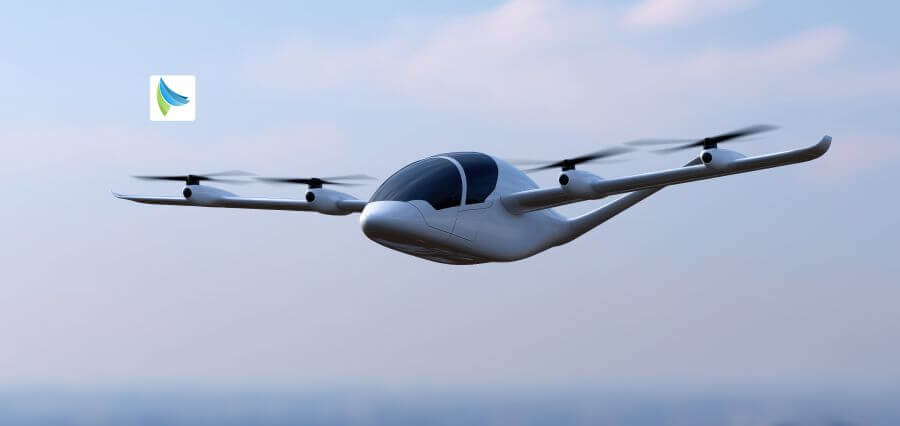
Reimagining Connectivity: Air Mobility Innovations Transforming Transportation
The transportation sector is undergoing a profound transformation, which is largely a result of the fast-moving air technology innovations. Urban population increases and congestion are making road-based transport a less viable option, hence the latter is finding it hard to keep up with demand. Air mobility innovations, which include electric vertical takeoff and landing (eVTOL) aircraft as well as autonomous aerial delivery systems, aim at redefining the movement of people and goods in both urban and regional settings. On top of that, these innovations are expected to not only alleviate road congestion but also lower emissions, increase energy efficiency, and give rise to solutions for logistical problems. In fact, the three sectors – public, private and research – governments, companies and institutions, respectively, are now deeply investing in air mobility as the nexus of the future transport systems. The increasing impetus in the field of air mobility is mainly due to the breakthroughs made in electric propulsion, lightweight materials, and autonomous navigation systems. For example, eVTOL airplanes can vertically take off and land, thus enabling them to operate from rooftops, dedicated vertiports, or even smaller urban locations where there are no facilities for conventional airports. Urban Air Mobility in Cities Urban air mobility (UAM) is leading the way in changing how cities handle both traffic and transport. In effect, UAM presents a 3D mode of transportation to the commuters with which they can completely avoid the overcrowded roads, cut their travel times, and even get to those urban areas that they couldn’t easily reach before. The primary activity of Joby Aviation, Vertical Aerospace, and Archer Aviation is the development of eVTOL fleets which will be launched for commercial use within the next few years. Moreover, these fleets intend to be linked with public transport networks, ride-sharing platforms, and regional transit systems to give passengers convenient multimodal travel options. There have been suggestions and trials of using fully autonomous aerial delivery drones to carry out parcel and medical supply deliveries. In order to enable faster and more flexible distribution than the usual ground-based logistics networks, these systems must be able to navigate the most complicated cityscapes. Besides, this breakthrough ushers the commodities sector in a new era of on-demand services, which consume less space in large warehouses in city centers and thus can lead to lower operational costs and carbon emissions. As a result, numerous cities such as Singapore, Los Angeles, and Dubai are already implementing pilot programs to evaluate the feasibility of integrating UAM into their transport infrastructure and hence, paving the way for global adoption. Autonomous Flight for Safer Mobility Autonomous air vehicles (AAVs) are essential to the coming change in air mobility. They are expected to offer a safer and more efficient mode of operation. These vehicles go through advanced sensors, artificial intelligence, and real-time data analytics to interact with the complex airspace hardly needing any human intervention. AAVs are capable of lessening the human error factor by substituting human pilots thus, flight paths can be optimized for energy saving and delay reduction. Moreover, the integration of urban air traffic management systems makes sure that the autonomous vehicles have safe operations in presence of conventional aircraft and other aerial vehicles in a crowded area. Autonomous air vehicles can be tasked with transporting passengers, but they also play a critical role in emergency response, medical evacuation, and disaster relief, delivering aid in the shortest possible time. As an example, a group of autonomous drones could deliver urgent medical supplies to a remote area that is also traffic-congested, and simultaneously, larger eVTOLs can be transformed into mobile hospitals during the emergency. The advent of these features implies that autonomous air vehicles are not just a timely convenience, but a revolutionary force that can improve public safety, emergency preparedness and the overall resilience of urban and regional transport networks. Sustainability Driving Air Mobility Sustainability drives innovation in air mobility. To achieve this, developers are actively pursuing electric propulsion, clean hydrogen fuel cells, and hybrid-electric power systems as key solutions to reduce the environmental impact of air travel. The eVTOLs are the new generation of aircraft that in no way do they add to the atmosphere during their flights, and this is the idea behind these machines to be used in cities seeking to meet climate goals and reduce air pollution. They do this via also conducting lifecycle assessments to ensure manufacturing, usage, and end-of-life processes are all environmentally friendly. The combination of advanced materials, energy-efficient propulsion, and AI is expected to be the key factor which will lead in the adoption of sustainable urban air mobility solutions, and this will happen very soon. Urban planners and local government officials are increasingly integrating air mobility into their smart city frameworks and this means provision of vertiports, charging infrastructure, and air traffic management systems. The safe scaling up of operations quickly and effectively with minimal harm to existing urban environments will be the result of these investments. What is next in line for air mobility after the technology has fully matured is indeed a total transformation of the transportation sector to a more environmentally friendly option, highly efficient and interlinked with the other urban and regional systems. Conclusion The introduction of new technologies in the air mobility sector, the way transportation will look is going to change dramatically. These changes will bring faster, safer, and more environmentally friendly solutions to the transport of both passengers and goods. The cities through the use of advanced technologies like eVTOL aircraft, autonomous air vehicles, and electric propulsion systems can tackle the problem of congestion, lessen the emission of pollutants, and improve the connectivity. The air mobility will be the next big thing in the transport networks of the cities after the governments, businesses, and research institutions have spent money on the infrastructure and regulatory frameworks. The change that is happening hints at not only a difference in our mode of travel but also a bigger change towards smarter, cleaner, and more efficient urban and

Top 10 Inspiring Directors of the year 2025
Top 10 Inspiring Directors of the year 2025 Dr. Prakash A. Sulakhe, founder of CADMECH Engineering, is transforming engineering education in India. Driven by innovation, integrity, and impact, he bridges the gap between theory and practice through Smart Labs and indigenous automation systems, empowering students with hands-on skills while fostering national progress and reshaping the future of technical education. Quick highlights Quick reads

Empowering Action: Essential Skills for Effective Business Directors
Business directors steer companies toward success, guiding them with strategic vision and decisive leadership. Alongside making strategic decisions, they must also lead teams, ensure compliance, and support the continuous growth of the business. Essentially, directors are the ones who define the vision of the company, track the results, and guarantee that every single department of the organization is not only in line with short-term objectives but also with long-term goals. In order to shine in such a challenging role, directors have to be equipped with a broad array of traits that strategically blend together strategic thinking, leadership, understanding of operations, and also a deep knowledge of financial and risk factors. With these attributes at hand, business directors will be able to steer through intricate business settings, decrease risks, and make a positive lasting impact on the shareholders. However, directors in the present corporate world which is highly competitive and rapidly changing cannot be just based on the traditional management experience. Among other things, market volatility, regulatory changes, and digital transformation combined with evolving consumer expectations require a more insightful style of leadership. Strategic Thinking and Decision-Making Strategic thinking is essentially the core of business leadership that works. The board members should have the capability of seeing the long-term goals, predicting the market changes, and recognizing the possibilities for extending and innovating their business. Having this ability is far from the usual planning; it is about deciphering detailed data, getting the inside industry and evaluating the competitive position to come up with the decision that is in line with the company’s objectives. Such directors are able to detect subtle changes in a market and exploit the opportunities that others cannot see thus enabling them to lead their companies to achieve lasting success. The process of decision-making is deeply associated with one of the strategic thinking. The directors should weigh the risks against the gains, think about the effects on the stakeholders and at the same time assure that the decisions are lawfully and morally in the right direction. Attaining this, however, calls for an individual to be very organized, have a good reasoning power, and also be able to control himself/herself when under pressure. Successful directors take the lead in making decisions after they have consulted a variety of needs such as market intelligence, financial reports, expert consultations, and internal performance metrics. Leadership and Communication One of the most visible and influential abilities among business directors is leadership. Business leaders who have this attribute are able to inspire, encourage and develop the management team. They create the environment where all management level staff are accountable for their tasks, collaborate with others, and focus on the continuous improvement process which leads to the achievement of organizational goals. Providing examples of integrity, empathy, and consistency, the directors gain trust not only from the members of the organization but also from external stakeholders which in turn leads to the creation of the environment in which high performance is both expected and achievable. Those who hold leadership positions at the director level should therefore, be able to mix authority with approachability, lead their teams and at the same time give them freedom that facilitates the innovation process. As important as leadership is, communication is equally essential for the success of the company. It is a must for directors to be able to communicate in a very clear, precise and elaborative manner the company’s vision, objectives, and strategies to different stakeholders, for instance, board members, executives, employees, investors, and regulatory authorities. The directors who have well-developed communication skills can easily convert very complex ideas into simple actionable insights thus making it easy for all stakeholders to understand the logic and expected results of strategic initiatives. Also, they are very good at listening. They understand from the feedback they receive from various stakeholders and take this into consideration when coming up with strategies and making decisions. Directors who combine leadership and communication competencies are the main drivers of a planned strategy accomplished organization while at the same time they retain transparency, trust as well as confidence among all levels of the organization. Financial Acumen and Risk Management Directors must possess financial expertise to lead organizations effectively through challenging periods with limited resources. Directors need to be familiar with financial statements, budgeting processes, and key performance indicators in order to analyze the health, profitability, and operational efficiency of the organization. Such knowledge equips them with the ability to offer the company direction in terms of investments, capital allocation, and cost management, thus, having a direct effect on shareholder value. Directors endowed with financial skills are able to foresee the problem, figure out the ways of improving the situation, and ensure that not only operational but also strategic initiatives are financially sustainable in the long run. Besides, risk management is an area where directors are required to demonstrate proficiency. The main source of power of an effective director is the ability to spot potential threats to the business which include market fluctuations, regulatory changes, operational disruptions as well as cybersecurity vulnerabilities. They develop mitigation strategies that reduce risk exposure while preserving potential rewards, using tools such as scenario planning, industry benchmarking, and internal control systems. Hence, financial insight coupled with anticipative risk management makes a powerful weapon in the hands of directors to keep the company resilient to challenges and, thus, respond effectively to such situations while still being able to pursue growth opportunities. Conclusion The business director’s role requires a diverse range of skills that includes strategic thinking, leadership, communication, understanding of finance, and risk management. Those directors who develop such abilities will be in a better position to decide wisely, motivate effective teams, and accomplish long-term growth. The continuous improvement of these skills is very important for their effectiveness and for giving long-term value in a very short technological period, changing market conditions, and increasing stakeholder’s expectations. Besides being a strategist and decision-maker, an efficient director is also a visionary who leads by balancing the use
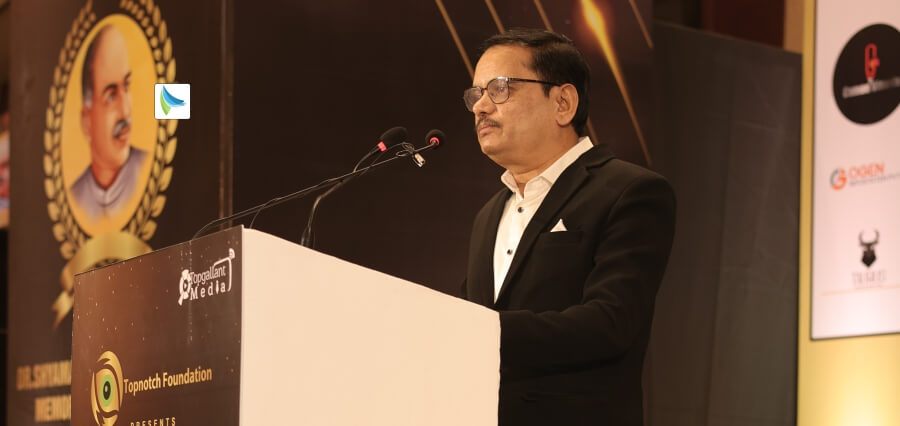
Dr. Prakash Sulakhe: Mission to Redefine Engineering Education in India
A story of conviction converted into creativity. One name that resonates with it is Dr. Prakash A. Sulakhe. His journey took him from the sleepy streets of Beed to the vanguard of India’s educational technology revolution. His trajectory displays a unique fusion of patriotism and purpose-driven creativity, shaped by ideals of self-reliance, discipline, and service. A young engineer’s dissatisfaction with the growing disconnects between academic theory and real-world application turned into a lifelong quest to reform engineering education in India. As the Director of CAD-MECH Engineering Pvt. Ltd., he is creating more than just a business; he is developing a movement in which learning meets action. Under his direction, the firm is developing as a pioneer in indigenous automation and mechatronics training systems, closing the skills gap that had previously hampered numerous engineering graduates. His leadership is based on three timeless principles: innovation, integrity, and impact which are the values that permeate every Smart Lab the firm installs and every student it empowers. Dr. Sulakhe, unmoved by trends but open to change, continues to support a vision in which education drives national progress. His experience demonstrates that great entrepreneurship is about constructing futures with courage, clarity, and a strong sense of purpose, rather than chasing success. Foundations Built on Values Dr. Prakash Sulakhe traces his entrepreneurial DNA back to his upbringing in Beed, where discipline, hard work, and community service shaped his worldview. His early association with the Rashtriya Swayamsevak Sangh instilled in him a conviction that personal achievement must serve a larger national purpose. These formative experiences created an internal compass that would later guide every major decision at CADMECH. “I learned early that real success lies in contributing to the nation, not just achieving personal growth,” he reflects. This philosophy distinguishes him from entrepreneurs who view social impact as an afterthought or marketing strategy. For him, national contribution forms the core business proposition itself. When he moved to Pune to pursue professional opportunities, he encountered a revelation that would define his career. Engineering colleges across India were producing graduates with impressive theoretical knowledge but limited practical competency. Meanwhile, industries increasingly demanded automation skills, robotics expertise, and hands-on experience with modern manufacturing systems. The gap between classroom learning and industry requirements had widened into a chasm. Rather than accepting this disconnect as an inevitable feature of India’s education landscape, he saw an opportunity for systemic intervention. He envisioned a platform where education would meet innovation, where students could interact with the same technologies they would encounter in their careers. This vision crystallized into CADMECH Engineering Pvt. Ltd., a company built specifically to bridge the theory-practice divide. “My journey wasn’t about changing careers, it was about changing mindsets,” he explains, summarizing the philosophical shift required to reimagine engineering education. Building a Philosophy of Impact CADMECH operates on three foundational principles: Innovation, Integrity, and Impact. These aren’t merely corporate buzzwords printed on motivational posters; they function as operational guidelines that inform product development, customer relationships, and team culture. Innovation at the firm focuses on solving real educational problems rather than chasing technological novelty for its own sake. Every CNC trainer, robotics module, and mechatronics system emerges from research into how students actually learn and what skills industries actually require. The company develops 100 percent indigenous technology, a deliberate choice that aligns with both national self-reliance goals and the practical needs of Indian institutions. Integrity manifests in the company’s approach to customer relationships. In an industry where after-sales support often disappoints and customization requests get ignored, CADMECH prioritizes transparency and long-term partnerships. Dr. Prakash Sulakhe believes that earning institutional trust requires consistent quality delivery and honest communication, especially when challenges arise. Impact, the third pillar, defines how CADMECH measures success. While revenue and market share matter, the company evaluates its performance through a different lens: How many students gained practical skills they wouldn’t have otherwise acquired? How many institutions improved their accreditation scores through better lab facilities? How many engineering graduates entered the workforce genuinely prepared for modern manufacturing environments? “Our work begins where others stop, we solve not just technical problems, but educational ones too,” he states, articulating the company’s distinctive value proposition. Navigating the Challenge Landscape Transforming a company from a startup into a nationally recognized brand requires overcoming formidable obstacles. The first challenge was psychological rather than technical. Many Indian institutions harbored an import bias, assuming that foreign-manufactured equipment inherently surpassed domestic alternatives. Convincing administrators and faculty members that Indian-made technology could match or exceed imported products demanded relentless quality focus. CADMECH addressed this skepticism through performance rather than promises. The company invested heavily in product refinement, after-sales support, and customization capabilities. When institutions experienced CADMECH’s responsiveness and equipment reliability firsthand, word-of-mouth recommendations gradually shifted market perceptions. The second major challenge involved cost competitiveness. Imported educational equipment often came with premium price tags that many institutions couldn’t afford, yet they expected similar feature sets from domestic manufacturers at significantly lower prices. Their company solved this equation through vertical integration housing R&D and manufacturing under one roof. This structure eliminated intermediary costs and allowed the company to offer economical products without compromising on functionality or quality. Building a multidisciplinary team presented the third significant hurdle. Educational technology requires expertise across mechanical engineering, electronics, software development, and instructional design. The firm needed these diverse specialists to function not as separate departments but as an integrated team. Dr. Prakash Sulakhe fostered this cohesion by creating a mission-driven culture where every team member understood how their work contributed to the larger goal of transforming engineering education. “Challenges are not roadblocks; they are checkpoints that test how badly you want your dream,” he observes, reflecting on these formative struggles. Leadership Grounded in Purpose Dr. Prakash Sulakhe practices a leadership philosophy centered on clarity, confidence, and ownership. He rejects command-and-control management styles in favor of empowering team members with both responsibility and autonomy. At this firm, employees receive not just tasks but context, they understand why their work matters and how it connects to

Most Inspirational Icon To Look For In 2025
Most Inspirational Icon To Look For In 2025 Pioneers see change, while others shape it. Anne Liebgott stands among the rare few who do both—with grace, courage, and an unyielding sense of purpose. Her professional odyssey is a vivid testament to reinvention—spanning the tactile years of print and direct mail to the boundless horizons of artificial intelligence. Quick highlights Quick reads

Anne Liebgott: Redefining Global Connections Through Creativity, Curiosity, and Technology
Pioneers see change, while others shape it. Anne Liebgott leans solidly towards the latter. Her career has been a masterclass of flexibility, creativity, and purpose-driven invention, spanning the years of print and direct mail to the birth of artificial intelligence. She began her career in traditional marketing and communications, where she mastered the art of creating compelling narratives, a skill that would serve as the foundation for her lifelong quest of connection and transformation. When the digital era arrived, she did not wait for training; instead, she taught herself HTML and created one of Switzerland’s earliest public websites, earning a spot on Swiss television. That daring leap into the unknown signaled the start of a new chapter, one distinguished by her ability to combine technology and humanity. Liebgott, the Founder of AW✚SWITZERLAND, an award-winning platform that connects cultures and clients in wealth management, is redefining cross-border collaboration via honesty and trust. Her journey, which includes business, mentoring, and leadership, demonstrates a strong sense that growth is most meaningful when motivated by curiosity, integrity, and connection. Anne Liebgott’s narrative is not merely one of professional accomplishment, but of a visionary who elevated transformation to the level of art. From Print to Pixels: A Marketing Pioneer Liebgott’s professional journey began in marketing, communications, and business development. She cut her teeth on traditional marketing methods, direct mail, print advertising, and one-to-one engagement tactics that required precision and creativity in equal measure. Working with Swiss companies targeting international clients, particularly in financial services, she discovered the power of well-crafted, multi-step campaigns that combine clear narratives with strong response elements. Then the internet arrived, and everything changed. While many marketers hesitated at the threshold of digital transformation, Liebgott dove in headfirst. She taught herself HTML and created one of Switzerland’s first public websites, an achievement that earned her a feature on Swiss television. That moment ignited a passion for technology driven communication that continues to burn today. “I’ve witnessed the transformation from print to digital, from static content to real-time interaction, and now from automation to artificial intelligence. Each evolution has reinforced my belief that technology, when used responsibly, enhances rather than replaces human creativity and connection,” she reflects. This philosophy guided her through decades of change. She embraced each technological shift not as a threat but as an opportunity to deepen engagement and build stronger connections. Recently, she completed intensive training as a Chief AI Officer and mastered 29 AI applications, exploring how artificial intelligence can elevate business strategy, compliance, and client engagement. Building Bridges Across Borders Going independent became a natural progression for Liebgott. She craved the freedom to apply her skills across industries, collaborating with global corporations and innovative sports ventures. Each new project pushed her to adapt creatively and deepen her understanding of how strategy and storytelling engage diverse audiences. One of her most professional achievement came with the creation of AW✚SWITZERLAND, an award-winning platform and directory that connects U.S., Canadian, and Latin American citizens, residents, and expats with Swiss private banking, wealth management, and related services. Over the past 11 years, this initiative has evolved into a trusted information hub that bridges cultures and enables transparency between clients and professionals in the wealth management industry. What sets AW✚SWITZERLAND apart is her hands-on approach. She manages every aspect of the platform, from concept and design to programming, content creation, partnerships, and ongoing promotion. The platform represents both a professional milestone and a personal passion project. It has earned industry recognition, including awards for Best Use of Social Media and Best Marketing Campaign. Building on this success, she recently launched two new platforms: AW❖UNITED KINGDOM and AW●ASIA PACIFIC | MIDDLE EAST, expanding her vision of transparent, trustworthy cross-border connections. The Art of Balance Liebgott’s professional achievements gain deeper meaning when viewed alongside her personal journey. As a young single mother of two daughters, she made a clear decision early on: family would always come first. Her daughters often accompanied her on business trips, experiencing different cultures firsthand. These shared adventures shaped not only their worldview but also her understanding of what true balance means. “Balance is less about strict separation and more about meaningful integration,” she explains. Sports have played a vital role in maintaining that equilibrium. Skydiving, scuba diving, sailing, and alpine sports brought excitement and sharp focus. The thrill of mastering new techniques mirrored the challenges of entrepreneurship and leadership. Later, fly fishing and golf offered calm, patience, and mindfulness. Each activity helped her recharge and approach life’s demands with renewed energy. As her daughters grew older, she adapted her professional routine to work just a few hours daily outside the home, ensuring she remained present for moments that mattered most. The rapid evolution of technology, home computers, laptops, mobile phones, and advanced online communication tools made this lifestyle possible long before remote work became mainstream. “Some of my best ideas have come to me outside traditional working hours, while snowboarding in the Alps, sailing in the Caribbean, or simply taking time to reflect away from a desk,” she shares. This unconventional approach sometimes raised eyebrows. Society questioned her rhythm, her boundaries, her choices. She learned to trust her own path and dismiss overly critical opinions. What mattered most were results: happy clients, thriving projects, and daughters who understood that success takes many forms. Leadership Through Collaboration Liebgott defines her leadership style through collaboration, trust, and mutual respect. She believes leadership flows not from hierarchy but from example. Keeping an open mind allows innovation to flourish, and she encourages those around her to share perspectives freely. “Great solutions often come from collective insight rather than individual authority,” she notes. Decision-making, for Liebgott, requires both clarity and timeliness. She approaches challenges with a balance of intuition and logic, gathering necessary facts, weighing viewpoints, and then acting decisively. Over the years, she has made tough and sometimes unpopular decisions, learning that transparency and integrity in communication earn lasting respect. Adaptability defines another crucial element of her leadership. The business landscape changes

The New Face of Leadership
From Compliance to Conscience Change has significantly impacted the world we live in. On the one hand, we have technological disruptions, on the other, there is an increasing concern about the environment, and finally, social transformations. But perhaps one of the most striking of these changes is the shift in the concept of leadership. The former model of leadership, which revolved around control, compliance, and hierarchy, is quickly being replaced by a leadership model that reflects more human and spiritual qualities such as conscience, authenticity, and purpose. The leaders who get the most recognition today are not those which only ensure that rules are followed, but rather those who awaken collective responsibility, facilitate ethical transformation, and maintain integrity of purpose in their leadership. The End of the Compliance Era For a long time, leadership was equated to compliance, that is, making sure the rules were followed, the processes were maintained, and risks were avoided. It was a very mechanical type of leadership, which was aimed at efficiency and stability. Leaders were more or less the enforcers of the established framework, and not necessarily the shapers of culture. But the business world of today has outgrown the compliance mindset. In a world where transparency is non-negotiable, where employees, customers, and investors are all equally demanding that companies live up to their stated values, simply complying is not doing enough. A leader who is only compliant will do as he is told; a conscious leader will ask if those rules still serve humanity and progress. Moving from compliance to conscience is a movement of leadership philosophy on a very big scale – one which considers moral courage as the most important factor rather than just following the rules. The Rise of Conscious Leadership Conscious leadership is very much in line with the leader’s self-awareness, the leader showing empathy to other people, and the leader making decisions based on a feeling of purpose. It is rooted in the leader being one inside – not only knowing what to do, but also the reason for the actions. Such leaders go beyond the realm of simple managerial transaction and they consider themselves as the ones who bring the change. They see companies not only as profit-making machines but also as social ecosystems that can have a significant impact on communities, cultures, and even the future generations. By rather than imposing compliance in a top-down way, they get the moral commitment of those they lead by enabling them from within. Conscious leaders do not worry about whether something is “allowed”, instead, they ask if it is “right”. This small change of approach has far-reaching implications beyond the initial example – it affects everything from corporate strategies to the interactions of teams. The Conscience Economy: Where Humanity and Business Meet We are almost entering a new era which places conscience as the most valuable currency. A company’s stakeholders are no longer satisfied with only its financial results, but they want to know how the business is performing in terms of its employees, the earth, and community as a whole. In this “conscience economy”, leadership efficacy cannot be determined solely from a compliance checklist but also from the social good that comes from it. Boards, on the one hand, are becoming more varied and, on the other hand, corporate governance is progressively being portrayed by trustful and moral frameworks while the keys to success are gauged through the eyes of sustainability and social fairness. The Courage to Lead Differently Switching from compliance to conscience is a change that requires courage. The change involves breaking the existing idea that power means control and, after that, building up that idea using new elements such as empathy, dialogue, and accountability. It means that the leader manages to combine pragmatism with principle and at the same time, be able to guide through the intricacy without going against his/her values. Leadership coming from the leader’s inner voice is not about being perfect; instead, it is about being committed. It involves making the connection between the decisions made and their consequences, being aware of the influence one has and most importantly, being in tune with the greater good. Such leadership is a blend of morality and efficiency, driven by both love and courage. Conclusion: The Future is with the Conscious The leaders of tomorrow, that we can already see from our present perspective, will not be the ones who merely follow rules but rather those who elevate the collective conscience. They will be the ones who bring a human face to the strategy, transforming companies into vehicles for positive change, and not only leading with their intellect but also their emotions. The new style of leadership is not the outcome of one’s power but rather of one’s authenticity. Such leadership gives less and takes more. Instead of giving directives, it motivates. And, what’s more, it recognizes that leadership, in essence, isn’t the most effective organization of systems—it’ the capacity to inspire people’s inner selves. The most significant change in leadership from compliance to conscientiousness is its deepest transformation: from control to compassion, from obligation to purpose, and from profit to progress. Read Also : Women Shaping Policy, Innovation, and Progress Across Sectors