





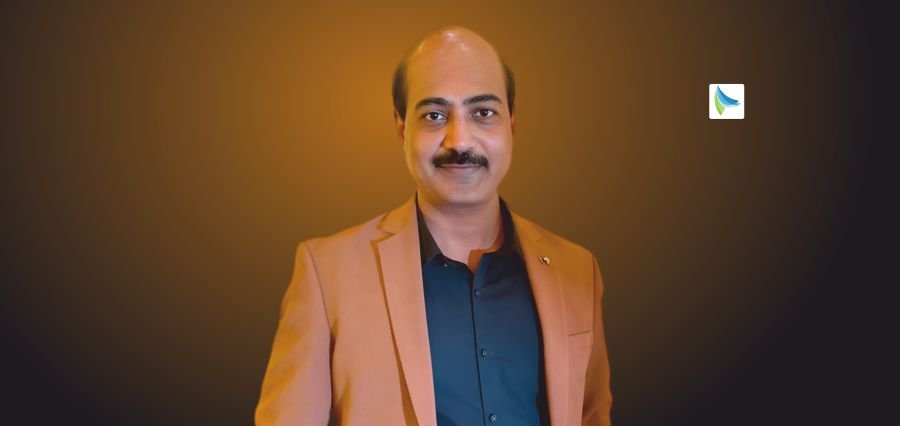
Satish Aralkar: Transforming India’s ERP Landscape Through Open-Source Innovation – SAP to ERPNext
Satish Aralkar’s journey didn’t begin in a office or a gleaming boardroom — it began on the shop floor of a manufacturing plant, surrounded by the hum of machines and the determination of people who built things with their hands and hearts. It was there that he learned his most enduring lesson: true transformation is driven by people, not by technology alone. What started as a career in manufacturing evolved into a mission — to bridge the gap between people and technology. Over the next two decades, through his experiences at global powerhouses like Tata Motors, Satyam Computers and IBM, Satish Aralkar nurtured a vision of technology that uplifts rather than overwhelms. That vision came to life with the founding of Vedarth Solutions, a company born from the belief that when technology empowers people, extraordinary things happen. His career has taken him from running large-scale ERP initiatives in London to supporting open-source ERPNext solutions in India, reflecting both precision and purpose. He transformed his ERPNext finding into a mission: to assist Indian industries and SMEs in implementing world-class ERP capabilities without incurring prohibitive fees. Vedarth Solutions has established itself as a trusted transformation partner, creating intelligent, flexible, and human-centered ERP environments. He is motivated by empathy, honesty, and creativity, continues to bridge the gap between people, processes, and technology. His narrative is about more than simply software development; it’s about fostering trust, discipline, and a culture in which digital transformation starts with human understanding. The Awakening: When Technology Meets Human Reality Every transformative leader carries a defining moment that reshapes their philosophy. For Satish Aralkar, this moment arrived during a large-scale ERP implementation for a manufacturing company. The organization had invested heavily in their ERP system, yet employees continued relying on spreadsheets and manual workarounds. The expensive technology sat underutilized while the business struggled with inefficiency. Management initially viewed the problem through a technical lens. He took a different approach. He spent time on the shop floor, engaging directly with the people who would use the system daily. The revelation came quickly: the issue wasn’t technical capability but user adoption and trust. “I restructured the implementation approach, focusing on training, making Quick Reference Guides in their language, simplifying processes inside ERP, and showing users how the system would make their daily work easier, not harder,” he explains. Within months, adoption levels surged dramatically. Management finally gained access to accurate, real-time data they could rely on for decision making. This experience fundamentally altered his perspective on ERP implementations. He stopped viewing them as mere software rollouts and began treating them as change management journeys where people, processes, and technology must advance together. Today, in every project he leads, user adoption and process alignment take priority, with technology serving as the enabler rather than the driver. The London Discovery That Changed Everything While working with IBM in London on a telecom client’s Supplier Portal implementation, Satish Aralkar confronted a challenge that would eventually reshape his career trajectory. The project faced significant hurdles due to SAP’s high licensing costs and recurring expenses, making financial justification difficult for the client. Seeking alternatives, he discovered ERPNext in 2017. The open-source ERP platform fascinated him with its ability to deliver robust functionality while dramatically reducing recurring costs. This discovery marked a turning point in his professional journey. Upon returning to India, he founded Vedarth Solutions with a clear mission: helping businesses implement ERP without the burden of massive ongoing expenses. This decision continues shaping how the company delivers value to clients today, positioning open-source solutions as viable, powerful alternatives to traditional enterprise software. Lessons from the Giants: Tata Motors, Satyam and IBM Satish’s leadership philosophy draws deeply from his experiences at two industry giants. At Satyam, he learned agility. Projects moved rapidly, demanding quick adaptation to evolving client needs. This environment taught him the critical importance of flexibility and swift decision-making in leadership roles. IBM provided different but equally valuable lessons. Managing large, complex ERP implementations showed him that success depended on two pillars: empowered teams and rock-solid processes. He also witnessed how integrity and long-term thinking build client trust, a value he is carrying forward today. These experiences crystallized into three guiding principles that shape every decision at Vedarth Solutions: putting people first because technology alone never delivers success; leading with integrity and trust because relationships outlast projects; and driving innovation with purpose by balancing agility with structure to solve genuine business problems. Reading the Future: ERP in India’s Manufacturing Landscape Working extensively with Indian manufacturing clients has given Satish Aralkar unique insights into the trends shaping the 2025 ERP landscape. He identifies two powerful currents driving change. First, Indian SMEs have evolved beyond simply seeking software. They now look for trusted, long-term ERP partners who can genuinely guide their transformation journeys. While cost remains a significant concern, many SMEs still treat ERP as merely a support function, using it primarily for record-keeping or compliance. He sees the real value emerging when businesses implement ERP as an enabler rather than just a reporting tool. Second, expectations are rapidly evolving. Manufacturers are now demanding ERP systems that connect seamlessly with shop-floor machines, capture real-time data, and translate that information into profitability insights. However, a major obstacle persists which is data silos. Most Indian companies hesitate to share data across systems, resulting in nearly 89 percent of business communication still happening through PDFs and emails. He envisions a future where ERP transcends transactions to embrace integration, connectivity, and intelligence. “When SMEs and implementation partners work together, I believe, ERP will transform from a cost burden into a genuine driver of efficiency, collaboration, and growth across India’s manufacturing and supply chain sectors,” he says. Tackling Unique Indian Business Challenges Leading large-scale ERP rollouts across different geographies has shown Satish Aralkar that Indian businesses face distinct challenges compared to their global counterparts. The first challenge is mindset. Many SMEs are still viewing ERP as a cost or compliance tool rather than a strategic enabler. They often expect immediate
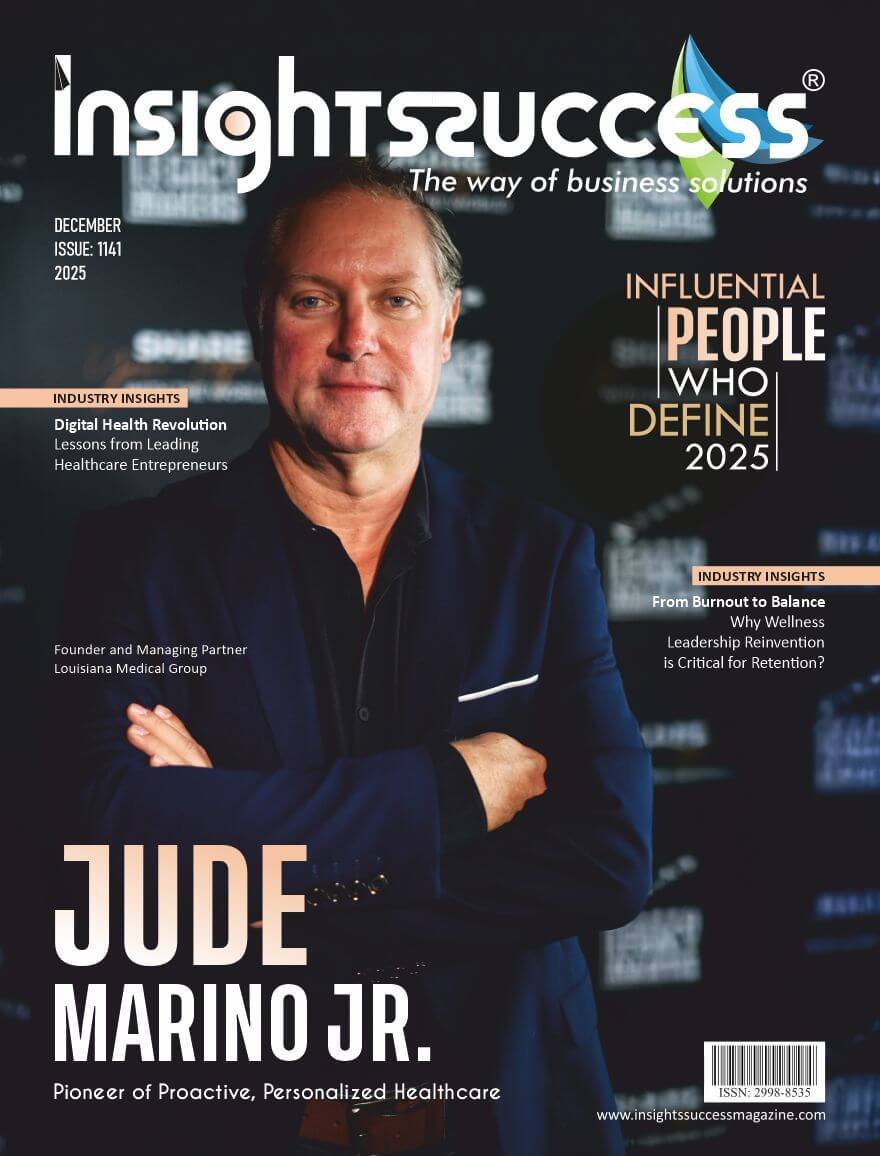
Influential People Who Define 2025
Influential People Who Define 2025 This edition spotlights visionary leaders reshaping industries through innovation, resilience, and purpose-driven impact. This edition celebrates trailblazers like Jude Marino, whose bold leadership, transformative thinking, and unwavering commitment to progress inspire a new era of excellence and redefine what it means to lead in 2025. Quick highlights Quick reads
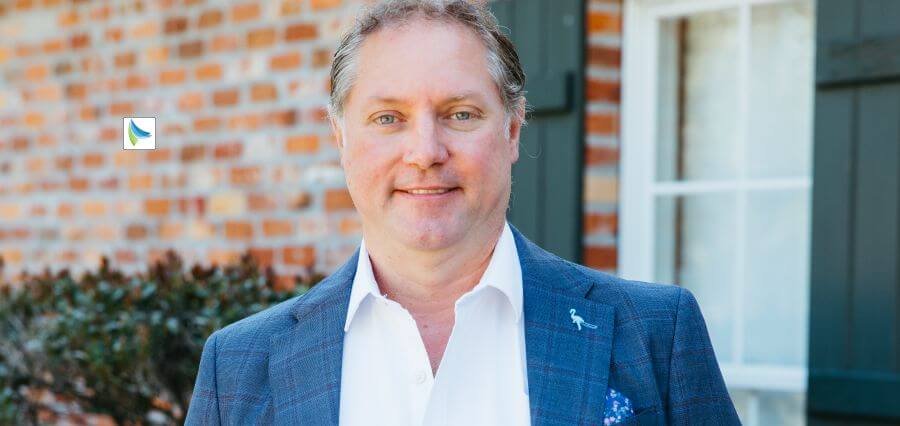
Jude Marino Jr.- Pioneer of Proactive, Personalized Healthcare
In the relentless narrative of modern success, where the velocity of change often outpaces the capacity to adapt, certain individuals possess the rare, defining ability to not just participate in disruption, but to fundamentally rewrite their own professional destiny. They are the architects of profound reinvention, the leaders who execute a seismic pivot from decades of high-stakes corporate mastery to forge an entirely new path. This path is built not on the accumulation of power, but on profound impact and unwavering, ethical purpose. This is the compelling story of Jude Marino Jr., Founder and Managing Partner at Louisiana Medical Group, a dynamic force who has brilliantly transitioned from a highly decorated executive in the demanding world of telecommunications to a visionary innovator at the cutting edge of personalized wellness and proactive healthcare. His journey is far more than a simple career trajectory; it stands as a masterclass in strategic evolution, innate resilience, and the relentless commitment to a singular core philosophy he lives by and champions daily: Bet on yourself. Jude Marino is not merely establishing a portfolio of successful businesses; he is meticulously constructing a powerful legacy rooted in transformation. He actively crafts a movement dedicated to empowering people to live substantially longer, stronger, and more confidently, consistently proving that a bold, purposeful reinvention, in one’s career or one’s physical health, is not only possible but powerfully attainable. With every new venture he successfully launches, he challenges the traditional health status quo, aiming to redefine what ageing truly looks like and what vibrant vitality fundamentally feels like. Jude stands today as a living example that when a clear vision meets disciplined execution, greatness inevitably follows. He inspires those around him to push far beyond perceived limits, showing them that the most powerful investment one can ever make is in the ongoing, intentional pursuit of becoming his highest, most optimized self. Formative Ground: Discipline and the Cultivation of Leadership The moral and professional architecture of Jude Marino was forged early in a home where loyalty, hard work, and deep discipline were the unwavering, guiding values. These principles instilled in him, from a young age, the critical importance of showing up, being present, reliable, and accountable for his family, his friends, and his wider community. Those formative years were essential in sculpting a natural leader, a person whose innate ability to connect with and guide others would later allow him to thrive across both the disciplined structure of corporate America and the fluid, challenging realm of entrepreneurial healthcare. Born and raised in New Orleans, Louisiana, Jude Marino pursued his education with characteristic focus and determination, becoming a first-generation college graduate at Louisiana State University (LSU). There, he developed an early, deep-seated passion for strategic communication, organizational strategy, and the critical skill of people development. These were not abstract academic interests; they were the robust, foundational building blocks that would underpin the remarkable, nearly three-decade-long corporate career he was about to construct. Jude’s professional narrative took firm root in the dynamic and highly competitive telecommunications industry. Over his extensive corporate tenure, he ascended the ranks, earning immense respect as a formidable executive and a uniquely effective sales leader. His time in this sector was defined by excellence, performance, and measurable impact, evidenced by multiple prestigious “Leader of the Year” awards (2012, 2015, 2018) and high-level Winner’s Circle recognitions (2018, 2019). These honours clearly reflected not only his unique and consistent ability to drive multi-million-dollar revenue growth but, more critically, his profound commitment to mentoring and cultivating high-performing teams. He proved himself a leader who intrinsically understood that while processes rely on systems, the true creation of legacy is built solely and purposefully by people. The Catalyst for Change: From Executive Prowess to Purpose-Driven Pivot Jude’s success was not achieved without facing and overcoming significant challenges. He expertly navigated massive corporate restructures, responded decisively to volatile market shifts, and confronted personal hurdles that rigorously tested his resolve. Crucially, he refused to allow these obstacles to halt his momentum. Instead, he made a powerful, conscious decision to treat these setbacks as essential fuel, embracing the very philosophy that eventually compelled him to pivot: the time had come to bet on himself in an entirely new domain. The monumental shift from disciplined corporate life to dynamic entrepreneurial healthcare was catalyzed by a deep, internal need for purpose. After decades of corporate achievement, driving growth and leading complex operations, Jude Marino posed himself a pivotal question: What am I building that is fundamentally changing lives? This honest self-assessment led to the realization that true success is about legacy and tangible impact, not just financial metrics. He felt a profound, deeper calling emerging- one rooted in optimization, human potential, and proactive healing. This vision was born from observing a critical, widening gap between reactive, disease-focused traditional medicine and the powerful potential of proactive, performance-based wellness. He saw that patients were consistently taught only how to survive, not how to truly thrive. His goal was to construct a new platform that would empower individuals to take decisive control of their own health, substantially extend their quality of life, and feel confident, strong, and vibrant regardless of age. This vision became the bedrock for the Louisiana Medical Group (LMG), established in Baton Rouge, Louisiana, and since expanded into a nationwide operation with licensed physicians in every state except Alabama, a gap he aims to close very soon. He set out to pioneer a revolutionary model, one that meticulously integrates medical expertise, advanced science-backed therapies, strategic peptide integration, and comprehensive lifestyle coaching, all centralized under a single roof. This was not the creation of a simple clinic; it was the intentional establishment of a transformation hub. The concept transcended a typical business model; it was an intentional design to launch a fundamental movement dedicated to redefining what vitality feels like and what healthcare should be: personalized, proactive, and deeply purpose driven. This movement’s mission is clear: to help people live longer, stronger, and more confidently, consistently proving that profound

Why Wellness Leadership Reinvention Is Critical for Retention?
From Burnout to Balance Today’s office has changed. Those who enter today’s workplace want more than money and career advancement. Today’s generation wants meaning, leaders who truly have an interest and concern for them, a sense of safety, and an office that cares about their well-being. As burnout and talent retention become an ever-growing issue, it’s clear that taking an interest in well-being isn’t an option but a necessity for leaders. Comprehending Today’s Workers The line between work life and life-life blends into a continuum. There is no respite from the pressure. Stress, burnout, and even loneliness can occur at work. Workers are quite specific about places they would like to be and with whom they would like to work. Their leaders should be people they can identify with. Leaders should be people who value workers as people and prioritize worker well-being. Leaders have to start valuing and articulating the value of worker well-being. Maintaining Talent in a Shifting Landscape Turnover problems affect all industries. You can’t just add more money and benefits as a solution. It’s about people being drained or exhilarated by what they do. So often, leaders who don’t prioritize well-being risk lower levels of worker engagement, and leaders who prioritize it build workers’ loyalty. Always, safety as a foundation for retention. People want to work at a place where they can raise problems without fear, own mistakes without reprisal, and share ideas without fear of rejection – with care and approachability. Burnout is a strain as well. Because boundaries are no longer clear and work life ends up mingling with personal life, burnout occurs. A leader who recognizes burnout and fosters good practices can prevent it. It is very important that well-being becomes an option, and that it becomes an absolute priority. The Role of Leaders and HRM Leaders play an important role. You don’t have to be an expert on health issues to be an advocate for overall health. It’s more about a paradigm shift. Leaders need to be more empathetic and understanding and more associated with leaders and with and from an organization. Rethinking Work-Life Balance It’s time for a new definition on work-life balance. Stop encouraging employees who are always working and available. Educate on work-life balance because an employee who is well-rested and thinking clearly will be more productive. Set your own boundaries and be open about mental health. It is also important to have authenticity and transparency. Leaders who share goals, struggles, and changes can reduce stress and uncertainty. Everyone needs honesty and an organization that regards well-being as something equal to performance. That’s how a healthy and sustainable organization cultures. How an Approach Focused on Well-Being Leads to Lower Turnover? Organizations with well-being leaders have better retention. Met needs result in satisfied, engaged, and motivated individuals who are committed to seeing the business succeed. There are fewer conflicts as leaders develop better understanding and build a positive association. Employees believe they belong and, thus, remain. The Human Side of Leadership Changes Today, there remains a well-being-focused strategy begins with inner work. Leaders have to address stress and bias within themselves, let go of old mind-sets, and get beyond old-school mind-sets. Arrogance and close-mindedness have no role to play. It’s easy for people to identify with leaders who appear authentic, not perfect. A bright future for happy and committed employees depends on the organization’s attitude toward and retention rate regarding emotional and mental well-being. By incorporating a focus on well-being, leaders can set an example that can inspire an entire generation of leaders. By giving employees an opportunity to succeed, they will stick with the organization. Read Also : Lessons from Leading Healthcare Entrepreneurs

Lessons from Leading Healthcare Entrepreneurs
Digital Health Revolution Tech advances at a rapid rate, needs change for patients, and problems arise all around. As a result, entrepreneurs aren’t just building businesses. They’re transforming an inefficient paradigm, expanding access, and encouraging innovation that focuses on patients and caregivers. Their stories also demonstrate that determination and collaboration result in success. But mostly, they show that kindness can be an incredible catalyst within business. Establish a Purpose: We Should Repair Only Those Things Which are Broken The very best medical minds begin with a problem they want to solve, as opposed to just wanting to make money. Many have hands-on experience at a clinic or have witnessed firsthand and understand exactly what patients have gone through. Whether they’re working on online tools for people who don’t have easy access to healthcare, or developing software that can identify diseases earlier, they’re more interested in helping people than making money. It’s a mission that drives them. Be Kind Healthcare requires more than great ideas. The brightest people combine new thinking with a sense of compassion. And they are listening to patients, doctors, caregivers, and regulators. Aaggarwal and Rengasamy know that even with the best technologies, they would be ineffective if they’re not user-centric. Health technologies are being designed senior-friendly by people creating health technologies online. Kindness leads to trust, which is vital in the medical field. Know the Rules Regulations can be frustrating, but the brightest Medical Minds know rules are what will lead them on a path of safety and integrity. Rather than hastening to launch products, these leaders learn rules and then validate their concepts and safeguard data. They work with regulators on developing solutions that can be implemented on a scale. To conclude, good behavior deserves approval and acknowledgment within the medical sector. Stay Strong Healthcare is tough. It changes with markets and regulations. A test might take years. The common thread among brilliant people: they don’t quit. “They make plans for the future, they prepare for challenges, they adapt rapidly and they remain on task no matter if they have financial problems, have delayed trials or experience technology glitches.” Their resilience might arise from challenging experiences like loss, an injustice, or demanding health roles. Team Up Healthcare today is so intricate that no single firm can solve it. Smart leaders build partnerships with technology companies, hospitals, insurers, labs, and sometimes even regulators. Working together accelerates ideas, expands markets, and enhances systems of care. Whether it’s working side-by-side with clinicians on tool innovation or with drug companies on learning from data, these communities drive what’s next. Use Technology for Shared Care Tech just keeps getting better and better. The brightest and best medical minds employ software and robotics, genetics and digital technologies as they work toward making better healthcare more widely available. Their focus is on modernizing and making better healthcare accessible to everyone. Their vision includes a future “where rural patients get virtual consultations with doctors, wearable devices help patients manage illnesses, and every medical decision rests on ‘the latest data’.” Their message: Tech should make caregiving more human, not less. Be Ready to Bend If there is anything that the pandemic has taught us, it’s that change is necessary. The brightest medical minds adapted an online system quickly and accelerated their shifts. Because they aren’t afraid to question, develop, and continue learning—and reward themselves within a constantly rolling business. 8. Be Real Growing enterprises do not have to mean losing a sense of humility. A growth enterprise remains curious and open to new developments and news about advances and breakthroughs within the medical field. It inspires an internal culture that empowers teams and fosters a spirit of idea-sharing and collective focus on a mission. Conclusion: The brightest minds who will soon be offering health guidance have shown what it takes to truly make an impact. Resilience and working together are some of the factors that have been brought out. To make a difference in health, it will be necessary to be offering more than just intelligence. It will be necessary to be offering hope. These are the people who are giving us hope as we tackle health challenges around the world. Read Also :Building Your Personal Operating System

6 Flower Delivery Tips To Ensure Fresh, Beautiful Blooms
Ordering flowers should be exciting, not stressful. Freshness is a key factor in how long your blooms last once they’re delivered. To ensure you have a better idea of how much your mind can create, here are six flower delivery tips to make sure every bouquet looks stunning the moment they arrive. 1. Choose Flowers That Naturally Last Longer Some flowers retain their freshness for a significantly longer period of time than others. Chrysanthemums, lilies, carnations, and orchids are examples of flowers that have petals that are firm and which last for a long time. Selecting these varieties will ensure that your arrangement continues to look stunning for several days. In addition to being able to withstand transportation more easily, flowers that last longer also do not wilt as quickly. This ensures that you will not lose your shape even if you are riding through the suburbs or when the temperature is higher. 2. Select a Reputable Delivery Service The manner in which your bouquet will be delivered is determined by the standard of the supply provider. During the transportation process, a reputable service will handle the flowers with care, store them in a facility that maintains a consistent temperature, and not toss them around. It is precisely this attention that ensures your flowers remain in pristine condition. Not only that, but experienced florists also use the appropriate packaging. What helps are soft wraps, sturdy boxes and water sources. Buyers trust in services like the flower delivery Melbourne for guaranteed freshness and delicate treatment. 3. Time Your Delivery Wisely Though also influenced by timing, is bloom freshness. The early morning delivery keeps flowers cold and avoids the midday hold, especially in summer. Cooler clime means longer-lasting petals that stay plump and hydrated. Delivery during the week can also work in your favour. The flowers are moving more quickly because there is less of a weekend slowdown. Good timing can increase the likelihood that your blooms are delivered in good shape. 4. Select Seasonal Flowers for Maximum Freshness Different blooms reflect different seasons, and the in-season flowers reflect the current climate and environment. Seasonal flowers are cheaper as well. They are more easily accessible and in higher supply, which greatly lowers the cost. Because these flowers are more easily sourced and cheaper, it makes it easy for florists to get in-season varieties. This also helps the arrangements to be more cost-effective. 5. Add Water Sources to Your Order When Possible While flowers are in transit, if they are well-hydrated, their petals will not get droopy or wilt. Water tubes, wet sponges, and hydrated stems are all pieces florists use that can keep flowers alive and well. If the florists used proper hydration mechanisms and sponges, the arrangement should show up in a healthy condition. Transport hydration should be a priority, as it can be the difference between a fresh and weary arrangement. 6. Provide Accurate Delivery Information If you’ve given a delivery address that is incorrect, missing a unit number, or provided vague delivery instructions, this can cause major delays. The longer flowers sit in a delivery vehicle, the more time is given to heat, light, and handling their delicate arrangements. Making contact information easy to find helps drivers get to their destination faster. The sooner a bouquet ships, the longer it stays fresh. Keep Blooms Bright From Doorstep to Display It’s actually rather simple to keep fresh flowers in a vase—what you do with this small decision makes all the difference in how your bouquet arrives. When you pick the right flowers, rely on dependable service and time your delivery well, your blooms remain vibrant and flourishing. With these suggestions in mind, any arrangement is a unique and memorable gift. Read Also: AI Math Solver: A Simple Way to Solve Math Problems Faster
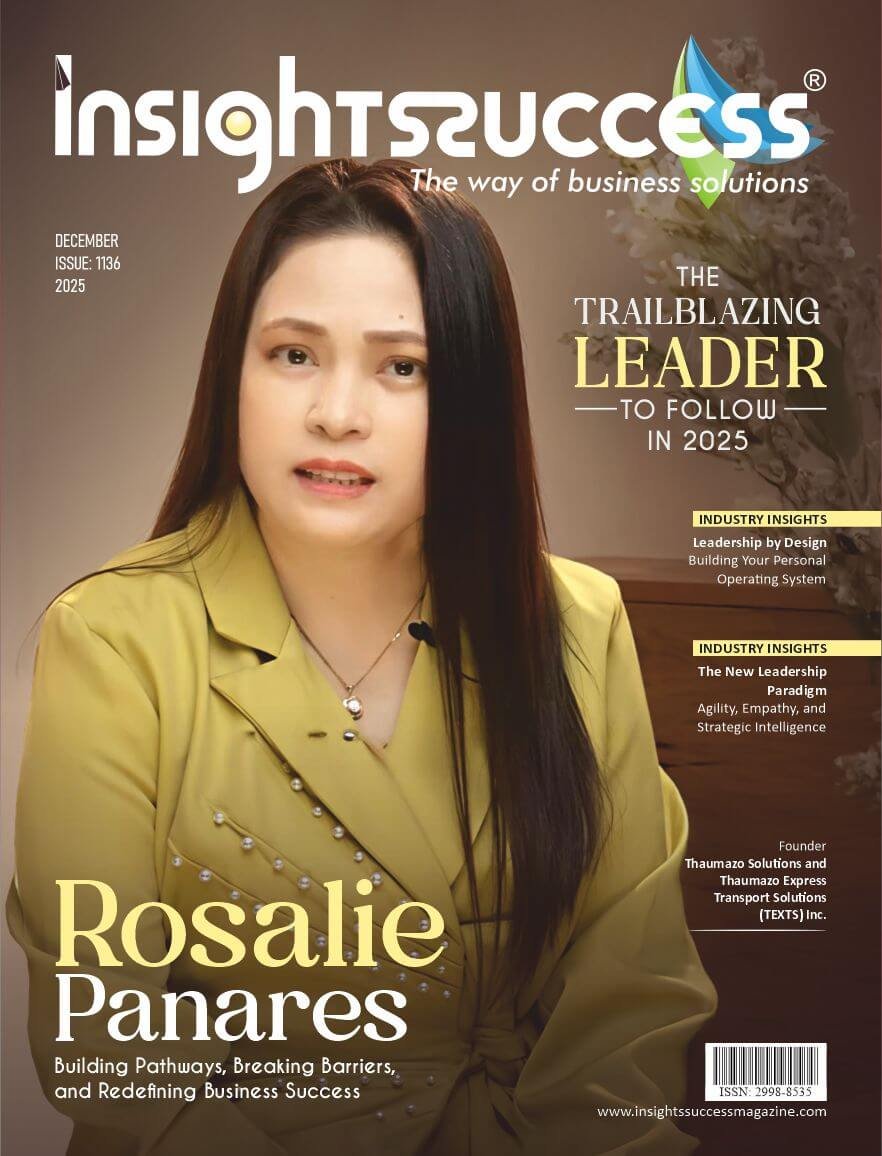
The Trailblazing Leader to Follow in 2025
The Trailblazing Leader to Follow in 2025 This edition spotlights Rosalie Pañares, a visionary redefining modern leadership through purpose, resilience, and innovation. Her transformative approach, commitment to empowering people, and ability to navigate complex challenges position her as a standout force shaping the future of business and inspired leadership in 2025. Quick highlights Quick reads Click here

Rosalie Panares: Building Pathways, Breaking Barriers, and Redefining Business Success
Thousands of people struggle every day in Metro Manila’s busy streets, and the majority witness unsolvable issues. Rosalie Panares believes there is unrealized potential- professionals just waiting to be discovered, futures just waiting to be rewritten. As the creator of Thaumazo Solutions and Thaumazo Express Transport Solutions (TEXTS) Inc., she has established businesses that demonstrate the revolutionary idea that “We can be profitable, but compassionate.” This is not rhetoric designed for boardrooms or polished for presentations. It’s an operational reality where transformation stories align with balance sheets, revenue and rewritten destinies are used to gauge success, and interventions that change lives coexist with quarterly goals. Her transformation from a graduate of mass communication to a social entrepreneur challenges all preconceived ideas about what businesses can be and who they can serve. She is demonstrating that, rather than merely controlling the market, the greatest competitive advantage stems from seeing human potential that others overlook. Foundation: Communication as Connection Rosalie’s Bachelor of Arts in Mass Communication gave her more than media theory. It taught her that communication transcends newsrooms. It’s the invisible thread binding teams, the catalyst transforming vision into action, and the foundation upon which trust is built. While classmates envisioned broadcasting careers, she understood something more profound: that every business interaction communicates, every process either facilitates or frustrates connection, and every leadership decision sends ripples through entire organizations. This early clarity became her secret advantage. She was learning to read the invisible languages that determine whether businesses merely function or truly flourish. The ability to convey messages clearly and connect with others, she realized, extends far beyond media. It’s vital in business operations, client relations, and organizational transformation. At the Lopez Group of Companies, particularly First Philippine Infrastructure Development Corporation (FPIDC), she immersed herself in information technology and systems management, a seemingly incongruous match that proved transformative. Rather than feeling displaced, she recognized opportunity. She wasn’t abandoning her foundation; she was expanding it, learning new vocabularies that would allow her to speak to both machines and the humans operating them. For eight years at Tollways Management Corporation (TMC), she moved from System Audit to Verifier to Operations Auditor, mastering technical skills while never losing sight of the humans within the systems. She gained hands-on experience in process analysis, performance improvement, and operational efficiency- skills that would later become instrumental in her entrepreneurial journey. Each role added new dimensions to her professional identity, creating a unique combination of capabilities that few business professionals possess. This dual vision, technical precision paired with human awareness, became her signature approach. She could dissect workflows with analytical rigour while simultaneously considering their impact on the employees navigating them. She was becoming fluent in what few professionals master: speaking both the dialect of efficiency and the language of empathy with equal command. The NLEX Chapter: Systems Meet Purpose At NLEX, Rosalie Panares became an Operations Auditor and a Verification Team member for one segment, placing her at the nerve center of one of the Philippines’ most critical infrastructure systems, where thousands of vehicles pass through daily and operations demand both precision and adaptability. She led initiatives that streamlined processes and boosted efficiency, but her deeper achievement was cultural: fostering an environment where analytical rigor and human consideration worked in harmony rather than in conflict. Under her leadership, the team didn’t just produce audit reports, they delivered solutions that honored both the mathematical demands of operations and the human realities of change. The numbers told one story: improved efficiency metrics, reduced redundancies, and enhanced system performance. But the story behind the numbers mattered more. She was building cross-departmental trust, creating communication channels that hadn’t existed before, demonstrating that operational auditors could be partners in improvement rather than enforcers of compliance. She was proving that the most sustainable improvements come not from imposed mandates but from collaborative understanding. Then came the mentor who crystallized her transformation. They provided entrepreneurship lessons that spoke to the questions she’d been asking herself, exposing an option she’d been considering but hadn’t yet named. She could construct something that refused to compromise on success and importance. This mentorship provided more than business knowledge. It provided permission to imagine a different path, to trust that her unusual combination of skills wasn’t random but purposeful, to believe that her vision of compassionate capitalism could actually work in the real world. The Entrepreneurial Vision: Building Different Thaumazo, from Greek meaning “to marvel”, signals her intention. These companies challenge assumptions, making people reconsider what businesses can achieve. She integrated communication expertise, operational knowledge, analytical capabilities, and social vision into something entirely new. The name itself reflects her purpose: to create organizations that make observers marvel not just at their efficiency but at their impact. She brought everything to this endeavour- her understanding of how to communicate with clarity and build relationships with authenticity, her expertise in designing and optimizing operational systems, her ability to analyze complex problems and craft strategic solutions, and most critically, her unwavering commitment to creating social impact. These weren’t separate competencies applied in isolation. They were integrated threads woven into a single, coherent approach where each element strengthened the others. The core idea driving her ventures has remained constant: combine human-centered communication with operational excellence to create sustainable value for all stakeholders. What began as a focus on improving internal business processes naturally expanded into comprehensive solutions across multiple industries- consulting, BPO services, and transport logistics. But more fundamentally, she operates in the business of transformation, where every client engagement serves a larger purpose. Her focus on street dwellers represents the most radical aspect of this integration. Where others see social problems requiring government intervention or charitable aid, she sees individuals with untapped capabilities waiting for the right support system. She doesn’t view them through the lens of deficiency- what they lack, what they need, what makes them victims. She views them through the lens of potential- what they could become with proper guidance, what skills they could develop with structured training,

Agility, Empathy, and Strategic Intelligence
The New Leadership Paradigm Leadership is experiencing a deep transformation. The essential qualities of leadership – power, decision-making, and operational control – are not sufficient to manage the complex and rapidly changing environment of today. The new leadership paradigm comes with a completely new set of capabilities, such as the agility to adapt quickly, the empathy to understand people deeply, and the strategic intelligence to link the decisions with the long-term purpose. It is rather the leadership model of tomorrow than a new trend. Agility: Leading in Motion Agile leaders know that change is a constant factor. Markets change, technologies develop, customers demand more, and disruptions come even without giving a hint. Instead of adopting traditional planning and slow decision-making methods, agile leaders are more flexible in their approach. They can react promptly, they can keep improving, and they can decide what is best even if they have partial information. Agility is not reckless – it is adaptability, but with a clear goal. It also involves wanting to adjust strategies, change the makeup of the team, or even alter the structure in order to fit with the new conditions. Leaders who are agile develop the kind of organizations that are sturdy, adaptable, and can even derive benefits from dark times. Empathy: Leading Through Human Understanding The world of automated, digitally transformed, and AI-powered systems is not one where human connection is less important than before, but rather the opposite. Empathy enables leaders to understand the motivations, the feelings, the outlooks, and the difficulties of others. It helps to gain trust, be inclusive, and let the teams be the source of further growth in the organization. Empathetic leaders are very attentive in listening, accurate in communication, and they build a culture where people see that they are important. They realize that the performance gets better when employees feel safe mentally and that being part of the group is a competitive advantage – not a soft skill. Empathy converts leadership from power into persuasion. Strategic Intelligence: Leading With Depth and Direction Strategic intelligence means having an overview as well as noticing details at the same time. Besides that, it also combines analytical insight, business acumen, systems thinking, and long-term vision. Leaders who have strategic intelligence do not just follow the trends – they understand them, they see far ahead, and they get ready early. They do the team-building based on the things that really matter; they make the decisions that serve both the short-term needs as well as the long-term goals; and, most importantly, they ensure that every single initiative is a step towards the mission. Strategic intelligence helps one to understand the complex issues and to convert that understanding into action. It is also the tool that allows leaders to connect agility and empathy with their influence in a purposeful way. The Interplay of the Three Agility without strategic intelligence will bring about disorder. Empathy without agility will result in inactivity. Strategy without empathy is likely to cause detachment. The new leadership paradigm requires the presence of all three traits – working together as an integrated system. Agility helps to be fast. Empathy helps to be connected. Strategic intelligence helps to be focused. The ones who have all three qualities in them are the leaders who create organizations that have the capacity to change, revolve around people, and are, from a strategic point of view, well-positioned for long-term success. Leaders Who Build the Cultures of Tomorrow Those leaders who embrace this paradigm lead the way in a culture that is characterized by cooperation, creativity, and learning. Rather than expecting perfection, they support the practice of trying out new things. They accept and encourage curiosity and the taking of initiative. For them, the diversity of viewpoints is an indispensable input for making strong decisions. Members of such cultures are driven not by the need to perform but by the belief in what they are co-creating. Leadership as a Discipline That Requires Constant Awareness The new model is dependent on qualities such as self-awareness, emotional regulation, and never-ending growth. Leaders need to have a good understanding of what triggers, strengths, limitations, and biases they have. They should also be learning from their mistakes, always looking for feedback, and changing their manner accordingly. Leadership turns into a conscious habit of reviewing, polishing, and re-inventing oneself. That control over oneself extends one’s authority, improves one’s way of communicating, and makes one’s influence deeper. Read Also : Lessons from Leading Healthcare Entrepreneurs

Building Your Personal Operating System
Leadership by Design Excellent leadership is not a matter of chance. It doesn’t come about naturally or depend solely on talent, charm, or luck. Rather, outstanding leaders function from a deliberately developed internal framework – a personal operating system that directs the way they think, act, decide, and develop. Their system not only nurtures their leadership identity but also specifies their priorities and guarantees that they remain consistent even under pressure. Leadership by design is a personality trait that is completely different from default leadership. It is deliberate, disciplined, and deeply connected with the kind of person you want to be. Defining Your Leadership Core Any leader must have a well-defined center – the principles and values that influence the decisions and behavior of that person. This core is like a compass that provides not only the light during the time of uncertainty but also the strength when there is a disruption. Leaders who intentionally define their operating principles are much more aligned, decisive, and trustworthy compared to those who only follow their instincts. Your personal operating system starts from knowing what you are made of: honesty, inquisitiveness, responsibility, empathy, resilience, or any other basis that represents your leadership identity. If your deeds constantly reflect your core, people will be able to rely on your leadership. Designing Your Decision Framework Leaders are in a position to decide on hundreds of issues every week, and if they do not have a decision-making framework, very soon they will be exhausted and incapable of making any more decisions. A deliberate operating system comprises a means of weighing the options in a logical manner – what is of the highest importance, what trade-offs are acceptable, how risk is evaluated, and how gut feeling is combined with logical thinking. This framework allows for a faster and clearer decision. Instead of giving in to an emotional (and sometimes inconsistent) reaction, leaders employ a repeatable process that is in line with the values, goals, and long-term strategy. They decision-making is no longer a gamble but a skill. Building Rituals That Reinforce Excellence The power of leadership comes from the leader’s consistent habits rather than from inspiration which does not come very often. Rituals which are done daily – reflection, planning, prioritization, learning, and wellness – can be considered as the code that runs your personal operating system. These ceremonies keep leaders grounded, productive, and conscious of their emotional and mental condition. Whether it is a morning alignment routine, a weekly strategy review, or a monthly learning sprint, these activities help to shape the performance and keep the leadership energy flowing. Rituals turn discipline into advantage. Managing Your Internal State The centre of a strong operating system is the ability to control one’s emotions. The leaders are always under the influence of pressure, ambiguity, and conflict. If they do not have a system in place to deal with the stress, then it is quite likely that the emotions will take over and the leaders will start making decisions impulsively. Self-awareness, mindfulness, and emotional intelligence are the qualities that make leaders able to keep their composure, to have a clear mind, and to respond by choice rather than by impulse. This inner calmness makes them more confident and at the same time increases their capability of leading other people in a calm manner. Creating Rules for How You Work with Others Leadership is all about relationships. The personal operating system contains the rules that govern your communication, empowering, listening, delegating, and supporting your team. These relational rules facilitate trust-building and set the expectations. They describe not only the way you create psychological safety but also how you handle disagreement and how you hold people accountable. When leaders sound out how they like to work and show respect for those commitments, consistency and clarity are experienced by teams, which in turn facilitates collaboration. Aligning Actions with Long-Term Identity Leadership by design entails looking beyond the short-term results. It is about making decisions which are consistent with the kind of leader you will be in the future. Every behavior – how you deal with the conflict, how you treat the people, how you face the uncertainty – either strengthens or weakens that identity. Continuous Upgrades and Refinement An operating system cannot be permanent. When leaders develop, situations change, and leaders’ duties get bigger, an operating system has to be changed too. Your leadership framework gets refined through reflection, feedback, coaching, and new experiences. Being adaptable means your system is still relevant, strong, and of high quality. It no longer has to be an occasional reset but rather a continuous process of growth. Leadership With Intention, Not Impulse Leadership by design provides an individual with a sense of direction rather than be at the mercy of circumstances. It does away with inconsistency, helps in the development of emotional resilience, speeds up decision-making and, thereby, increases one’s sphere of influence. Above all, it creates a definite internal blueprint that guides behavior in moments when, externally, there is a chaos of conflicting demands but internally, there is clarity. Your personal operating system is the most powerful leadership tool you possess. Say it, refine it, live it. Because leadership isn’t something you step into – it’s something you build, from the inside out. Read Also : Agility, Empathy, and Strategic Intelligence