





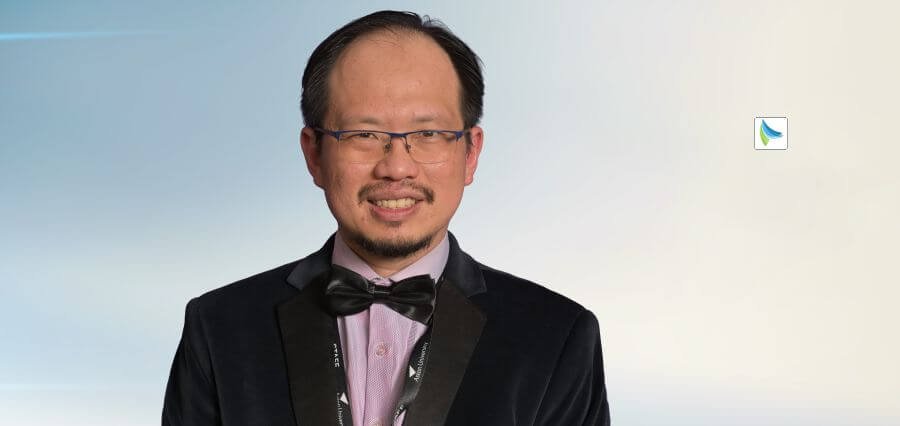
Professor Victor Chang: A Global Force in Business Analytics
We are on the verge of a new industrial era characterized by the sheer amount and speed of data. Intelligence is as much a part of this revolution as technology. Nowadays, the world is searching for visionaries who can decipher the intricate language of algorithms and turn it into real economic and social benefits. These leaders are today’s digital cartographers, charting the uncharted territories of data science, artificial intelligence (AI), and the Internet of Things (IoT). They strive to create a future in which technological advancement is ethical, safe, and accessible to all. This crucial role demands a rare and potent combination of deep technical mastery, strategic business insight, and a relentless commitment to institutional change. Professor Victor Chang embodies this ideal, consistently driving the essential work of transforming raw data into sophisticated foresight. He moves with purpose, actively engineering the future of business and technology across the globe. His career is a powerful narrative of interdisciplinary excellence. He does not simply study the future; he is actively building it. The Visionary at Aston University Professor Chang currently holds a pivotal position at the heart of technological and business synergy. He serves as a Professor of Business Analytics at the esteemed Aston Business School, part of Aston University, UK. He assumed this distinguished role in mid-May, 2022. His work resides within the Operations and Information Management section, a crucial hub for developing modern business strategy. He brings profound, specialized knowledge in AI-oriented data science, continually making significant contributions across multiple disciplines. Professor Chang’s vision for his current role is both strategic and action oriented. He focuses intensely on translating academic brilliance into real-world impact. He dedicates himself to the vital process of securing funding and forging powerful collaborative projects. These initiatives successfully bridge the gap between academic theory and industry applications. He possesses a proven ability to lead large-scale research, having successfully steered more than four major projects. He has led major projects worth over £3 million and has been involved in international collaborative projects totaling more than £14 million across Europe and Asia. This success demonstrates his exceptional skill in attracting investment and managing complex, high-stakes research agendas. Professor Chang is also actively preparing to take research leadership for Aston University. This future role will further cement his position as a primary force in institutional research leadership. The Architectural Blueprint of Expertise Professor Chang’s academic career reveals a deliberate, strategic pursuit of interdisciplinary knowledge. This foundation supports his comprehensive expertise in business analytics. His educational journey began with a dual focus at the University of Sydney, Australia. He achieved both a Bachelor of Engineering (Telecom) and a Bachelor of Science (Physics and Computing) between February 1996 and June 2000. He then refined his focus on technology and learning. Professor Chang completed an MPhil in Engineering, specializing in e-learning, at the Cambridge University Engineering Department. He earned this degree from October 2001 to September 2002. Recognizing that innovation requires strategic leadership, he pivoted to integrating business acumen with his technical depth. He successfully completed an MBA in Technology Management, studying from September 2002 to January 2004. This combined knowledge forms the unique blend he uses today in Business Analytics. He concluded his formal education with the highest academic honor. He completed his PhD in Computer Science at the University of Southampton. He undertook his doctoral work from October 2009 to September 2013. Demonstrating a truly remarkable drive, he concurrently pursued and completed a PGCert in Higher Education from the University of Greenwich, achieving Fellow status. He accomplished both his PhD and the PGCert in just four years, all while managing several major projects simultaneously. Before committing himself to academia, Professor Chang established a robust professional track record. He showed exceptional dedication to practical IT standards. He achieved an extraordinary average score of 97% across 27 different IT certifications. This feat proves his hands-on expertise with complex systems. His real-world experience includes a highly impactful role at the NHS (National Health Services). He served as the I&T Service Manager and IT Solutions Director from July 2008 to February 2011. Engineering Institutional Change and Global Collaboration Professor Chang’s career is not only about personal achievement; it is also about institutional transformation. Before joining Aston University, he was a Professor of Data Science and Information Systems at Teesside University, UK. In that role, he actively led the key research group focusing on Cybersecurity, Information Systems, and AI. He previously held senior leadership roles internationally. He served as a Senior Associate Professor at the International Business School Suzhou, part of Xi’an Jiaotong-Liverpool University (XJTLU) in China. During his tenure, he was the Director of both the PhD and MRes programs. He also acted as a very active, contributing member of the Research Institute of Big Data Analytics at XJTLU. Earlier in his academic journey, he made significant contributions as a Senior Lecturer at Leeds Beckett University. He maintains powerful ties to his academic roots. He served as a Visiting Scientist (non-stipendiary) at the University of Southampton from December 2013 to November 2021. He continues to serve as a Visiting Professor (non-stipendiary) at the university, a role he has held since December 2021. He consistently works to cultivate and strengthen active global research communities. He is the founding conference chair for several major, sponsored international conferences. These impactful platforms include the International Conference on Internet of Things, Big Data and Security (IoTBDS), COMPLEXIS, and the International Conference on Finance, Economics, Manahement and IT Business (FEMIB), which he founded in 2019. He also established Industrial Internet of Things, Big Data and Smart Cities (IIoTBDSC) in 2019 and a new conference, EMCAS in 2025. Stepping down chair roles for IoTBDS and COMPLEXIS in 2024, this allows him to channel his considerable energy into new strategic priorities. Since June 2015, he has actively guided others as an Advisory Board member for various research communities. His expertise is trusted globally, as evidenced by his role as a PhD examiner for more than 10 universities across the world since
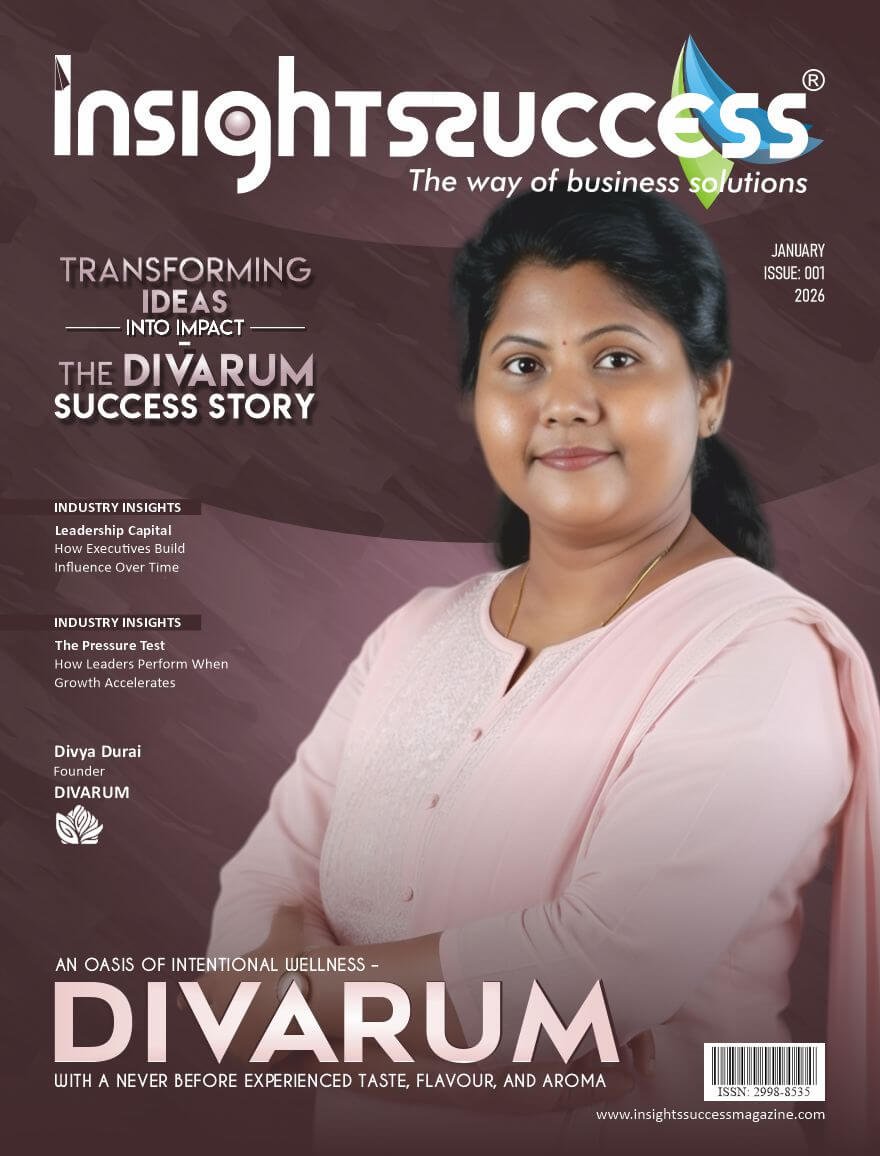
Transforming Ideas into Impact – The DIVARUM Success Story
Transforming Ideas into Impact – The DIVARUM Success Story This edition highlights Divya Durai’s journey in building DIVARUM, capturing how vision, consistency, and thoughtful execution turned ideas into measurable impact, shaping a purpose-driven enterprise with lasting influence across industries. Quick highlights Quick reads

An Oasis of Intentional Wellness – DIVARUM: Elevating Your Everyday with a Never Before Experienced Taste, Flavour, and Aroma
How healthy you are depends directly upon both the intent and content of your food, snacks, diet, and nutritional intake. And in these fast-paced times, finding intentionally well-curated original, quality, premium, and healthy food content is difficult. It is where DIVARUM makes all the difference. In the words of its Founder, Divya Durai, at DIVARUM, she dedicated to curating the world’s most exceptional and authentic ingredients, presenting them as a legacy of purity and refined taste. “Our collection is a tribute to the discerning palate, with each product sourced directly from its native land to offer an unparalleled experience.” Rejuvenate Your Senses The completely health-conscious brand specializes in a collection that includes ★ Exquisite Saffron – Hand-harvested from the pristine valleys of Kashmir, known for its rich color, aroma, and flavor. ★ Artisanal Filter Coffee – A fine blend from South India, crafted for a rich and aromatic brew. ★ Pure Iranian Pista – Premium pistachios from Iran with a perfect crunch and nutty flavor. ★ Superior Benin Cashews – W240 grade cashews from Benin, prized for their buttery taste and texture. ★ Rare Kashmiri Mamra – A unique almond variety from Kashmir, naturally sweet and highly nutritious. ★ Select Herbal Teas – Blends of hand-picked botanicals to relax and refresh the senses. ★ Gourmet Cranberries – Plump and vibrant cranberries with a balanced tart-sweet taste. Redefining Luxury Divya adds, “Beyond our exceptional products, we offer an opportunity to share this luxury through our thoughtfully curated Gift Hampers. Each hamper is a complete sensory experience, combining our gourmet goods with timeless artisanal pieces, such as our elegant brass tea pots and traditional brass filter coffee makers, perfect for gifting or personal indulgence. Divarum is for those who appreciate a legacy of quality—a celebration of nature’s bounty, presented with elegance and distinction. *DIVARUM Mission: to elevate the everyday through the art of exceptional sourcing and refined curation. “We travel the globe to hand-select the finest ingredients, ensuring every product is a testament to authenticity and profound quality,” informs Divya, who, along with her team of dedicated health experts, is committed to delivering not just individual items, but a complete, luxurious experience. “This includes providing meticulously crafted gift hampers that combine our gourmet products with exquisite, traditional brassware, such as tea pots and filter coffee makers. Our purpose is to connect you with the world’s most celebrated tastes and timeless traditions, making luxury accessible and enriching your life with every exquisite flavor and handcrafted detail.” *DIVARUM Vision: to redefine luxury by seamlessly blending the world’s most authentic and pure ingredients with the beauty of traditional craftsmanship. Divya says she envision a world where every product and gift tells a story of its origin and purpose. She strive to be the global destination for those who seek not just a product, but a complete and curated lifestyle. “We aim to build a legacy of trust and taste, setting a new standard for excellence by offering not only our gourmet goods but also the elegant, functional artistry of brass items like our teapots and filter coffee makers. Ultimately, our vision is to become synonymous with a holistic and sophisticated approach to wellness, flavor, and gracious living.” Reboot Your Story The journey of DIVARUM is deeply personal for Divya. “It was born from a truth that many of us are facing in our fast-paced world: our modern lifestyles, filled with stress, are leading to an increase in lifestyle-related health issues.” Divya’s own path was no different. She found herself navigating a challenging health journey, dealing with issues like PCOD, thyroid imbalances, and stress-induced insomnia. “I discovered that true, lasting recovery only began when I made fundamental modifications to my lifestyle and my daily rituals.” This personal transformation became a passionate mission when she looked at her children. “As a mother, I was determined to give them a foundation of wellness and provide them with the high-quality, nourishing food I believe is essential for a healthy life.” This is where she saw the gap. She was searching for products she could trust completely— “items that were not only premium and high-quality but also connected us to our roots and heritage. I wanted to bring back the wisdom of traditional daily rituals into our modern homes.” Bridging Your Divides DIVARUM is Divya’s answer to that gap. “I’m passionate about curating and bringing these high-quality, heritage-inspired products to families like yours. This journey is about providing the tools for a healthier lifestyle, reconnecting with authentic quality, and making wellness an accessible and beautiful part of your daily life.” Every startup begins with a defining idea or moment. The spark for DIVARUM came not just from one idea, but from a series of simple, honest reactions. In the very initial stages, when Divya was just sampling her first products, gave some of their curated nuts to a small group to taste. “The feedback we received was the true insight that shaped my entire direction.” The responses weren’t just positive; she were filled with surprise. Divya recalls, “I heard comments like, ‘I had never eaten such fresh nuts before’ and ‘I didn’t know this is what she were supposed to taste like.” This exact sentiment echoed when she sampled her teas. “She was told that from the very first sip, people knew she had found their new favourite tea.” That was the moment. Divya says she had realized the gap wasn’t just in the availability of these products, but in the experience of authentic quality. “What I considered a standard of freshness and flavor was, in fact, a rare luxury for many.” This overwhelming feedback became her core mission. It pushed DIVARUM’s direction from just selling products to becoming a dedicated curator, committed to delivering that “never eaten this before” experience across its entire collection. Distinctive Guiding Principles Also, Divya insists her guiding principles are what make them different from other premium e-commerce brands. Divya has built DIVARUM on a philosophy that blends radical transparency with a modern approach

How Leaders Perform When Growth Accelerates
The Pressure Test Every company dreams of fast growth. More customers, bigger revenue, new offices, and excited teams. It sounds perfect. But rapid growth is also one of the hardest tests a leader will ever face. When everything speeds up, small weaknesses become big problems. The same leader who built a steady business can suddenly struggle. This is the pressure test: how well do leaders perform when growth accelerates? What Rapid Growth Really Means Growth is not just bigger numbers. It means more decisions every day, more people to manage, more money to spend wisely, and more customers who expect perfect service. A company that doubles in size in one year must hire fast, build new processes, and often enter new markets. Everything stretches. Many leaders are great at running a small or medium business. They know everyone by name. The few layers allow them to fix problems in a short time. However, the same habits may be detrimental to performance when the company expands rapidly. There is the leader who attempts to keep up with every detail and he becomes the bottleneck soon. Teams wait for approval. Decisions slow down. Customers notice delays. The Common Traps Leaders Fall Into One common mistake is refusing to let go. Founders often feel the company is their baby. They want to control everything. During fast growth, this control becomes impossible and dangerous. Good leaders learn to trust their teams and delegate important work. Another trap is hiring too slowly or hiring the wrong people. When growth hits, companies need talent immediately. Some leaders hire friends or people who feel safe but lack the needed skills. Others wait too long to find the “perfect” person. Both choices create weak teams that cannot handle the new scale. Cash management is another pressure point. Fast growth eats money. You pay for new staff, offices, marketing, and inventory before the revenue arrives. Leaders who do not watch cash closely can run out of money even while sales are rising. This is one of the top reasons fast-growing companies fail. Finally, many leaders forget culture. When you add dozens or hundreds of new people quickly, the original values can fade. New employees do not know the old stories or the unwritten rules. If the leader does not repeat and protect the culture, the company can lose what made it special in the first place. Signs of a Leader Passing the Pressure Test Strong leaders adapt quickly. They build clear systems so the company can run without them making every choice. They create simple processes for hiring, spending, and solving customer problems. These systems let the business scale smoothly. Great leaders also hire ahead of need. They bring in experienced managers who have already worked in bigger companies. These people know how to handle scale. They free the founder to focus on vision and strategy instead of daily fires. Communication changes too. In a small company, a quick chat works. In a rapidly expanding business, the leaders have to repeat the same message with the help of various mediums numerous times. Everyone is on track with weekly updates, all-hands meetings, and written goals. Finally, the best leaders stay calm. Growth brings chaos. Deadlines slip, customers complain, and competitors attack. Leaders who panic make bad decisions. Leaders who stay steady give their teams confidence. Real-World Examples Leaders may pass or fail to pass this test as demonstrated by some companies. As Airbnb expanded at a rapid rate in the years post 2010, Brian Chesky remained culture oriented. He put down fundamental values and recited them over and over again. He employed old fashioned executives early as well. This assisted Airbnb in taking care of massive expansion without its identity. On the other hand, WeWork grew extremely fast in the 2010s. Founder Adam Neumann kept tight personal control and spent money freely. When problems appeared, the leadership style could not adapt. The company faced a dramatic fall. Another positive example is Shopify. Tobias Lütke built strong systems early. He hired talented people and gave them real responsibility. Even as Shopify became worth hundreds of billions, the company kept moving fast without breaking. How Leaders Can Prepare Nobody is prepared to grow at a fast rate. To prepare, the leaders can study companies that took off well. They are able to speak to mentors that have experienced it. They will be able to train in delegation even at an early stage of growth. Reading books like “High Output Management” by Andy Grove or “The Hard Thing About Hard Things” by Ben Horowitz helps. These books share honest stories about the pain of scaling. Most important, leaders must know themselves. They need to recognize their own weaknesses early. If they hate details, they should hire a strong operations person. If they love control, they must force themselves to delegate. Closing Thoughts Rapid growth is exciting and dangerous. It tests every part of a leader’s skill and character. Some leaders rise to the challenge and build lasting companies. Others hold on too tightly and watch their creation struggle. The pressure test separates great leaders from good ones. Those who pass it do not just survive growth—they use it to create something stronger. They let go of old habits, build better teams, protect culture, and stay calm under fire. When growth accelerates, the real question is not “Can the company handle it?” The real question is “Can the leader handle it?” The best leaders answer yes—and they prove it every day. Read Also : Purpose-Driven Innovation: Transformative AI Leadership for Modern Enterprises

How Executives Build Influence Over Time
Leadership Capital Leadership capital is defined as the built trust, credibility and relationships, and reputation that executives use to create influence and change. Leadership capital is not a positional authority, like a title. Unlike positional authority, leadership capital is gained through personal actions and interactions. It operates in the same manner as a bank account: deposits accumulate reserves, and bad decisions or missteps draw the money out. In the long run, strategic managers will make investments in such an intangible resource to succeed in the politics of the company, motivate staff, and realize long-term objectives. According to research material such as Echelon Front and Harvard Business Review, influence is based on leadership capital. It is a combination of relational equity (trust toward others), reputational strength (perceived competence and integrity), and results that can be shown. High leadership capital executives are capable of gathering the resources to support radical initiatives, notwithstanding unpredictable conditions. Understanding Leadership Capital At its core, leadership capital is the “currency of influence” in organizations. As described in frameworks from leadership experts, it encompasses three key components: Skills and Competence: Expertise and result delivery create credibility. Executives build wealth through the ability to resolve pressure or a complicated issue in a calm manner. Relationships and Trust: Strong relationships build a strong foundation. Listening actively, giving credit, supporting others, and being vulnerable are all some of the deposits. These small but consistent actions establish relational equity over time that can enable leaders to seek additional effort or bring change without opposition. Reputation and Perception: This is personal branding and perceived sincerity. The values and communication coherence reinforce trust, and transparency in making decisions reinforces it. Leadership capital is dynamic, unlike financial capital. It may be washed away through micromanagement or false commitments, but it will develop gradually through deliberate investments. Strategies for Building Leadership Capital Executives build influence incrementally through deliberate practices: Foster Genuine Relationships: To back up and educate the team requirements, have time. Studies indicate that good relations between employees and managers increase engagement. The networks are created through casual networks, mentoring, and coalitions, and the social capital is gained. Deliver Consistent Results: Success breeds trust. Positional leaders can develop reputational capital by backing the ideas with facts, fulfilling promises, and approving the projects in respect to organizational impact. Communicate Effectively and Authentically: The psychological safety is attained with the help of the straightforward and sympathetic communication, including acknowledging the mistakes. The executives that apply storytelling and reasoning to inspire and stay in an open way enjoy broader buy-in. Demonstrate Empathy and Resilience: During turbulent periods, the ability to remain composed and focus on individuals rather than procedures earns a fortune. Humility and power are indicated by such practices as asking for feedback and empowering others. Strategic Visibility: Experts are solidified through thought leadership, e.g., op-eds or internal advocacy. This builds up into a strong brand of leadership over the years. These are strategies that demand patience; influence compounds such as interest with initial deposits, giving exponential returns in the future. Real-World Examples Look at the case of Satya Nadella at Microsoft. Whereas the leadership capital was depleted in Microsoft because of the authoritative culture of the former leadership, the culture shifted to the learn-it-all culture that rebuilt the leadership capital under Nadella as the new CEO in 2014. He put his money on empathy and promoting growth mindsets and teamwork. This relational interest and transforming strategic swings to cloud computing rejuvenated confidence, and an upsurge in the market value at Microsoft. Similarly, Intuit, through its former CEO Brad Smith, encouraged innovation by making public appearances, reviews, and confessions. This openness brought in reputational capital, which made it possible to experiment and adopt design thinking. In contrast, leaders who overestimate their capital—assuming past successes suffice—often falter. Overdrawing through unilateral decisions depletes reserves, leading to resistance or isolation. Sustaining and Spending Leadership Capital High capital isn’t static; it must be managed wisely. Executives “spend” it on tough changes, like restructuring or bold innovations, but only after building reserves. Wise spending involves timing: use capital for high-impact initiatives when support is strong. To sustain it, regularly assess through feedback and reflection. Traps to avoid, such as the failure to maintain relationships in success or power plays that backfire. In modern organizations that seem to be fast-paced, leadership capital defines the capability of an executive to lead by disruption. People who consciously construct it step by step, not only by title but also by action, have a lasting impact and organizational influence. Read Also : Purpose-Driven Innovation: Transformative AI Leadership for Modern Enterprises
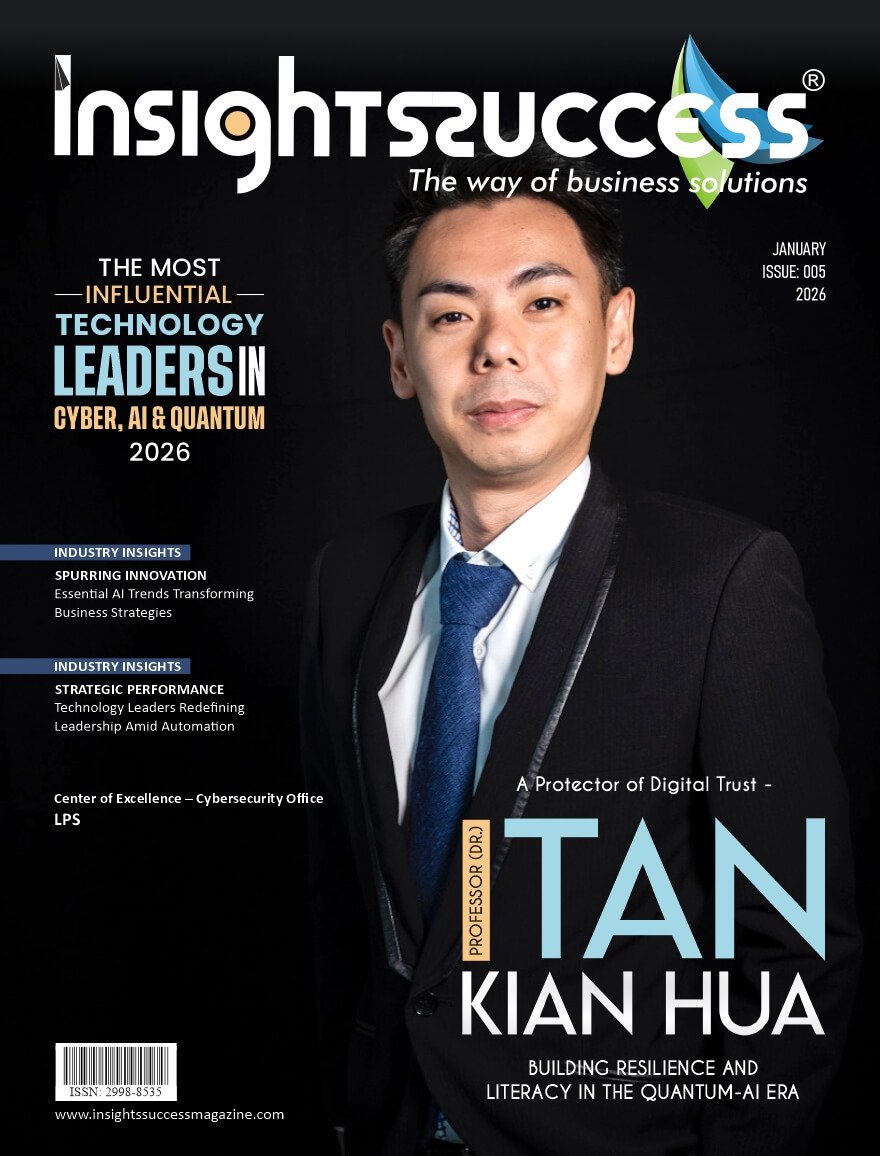
The Most Influential Technology Leaders in Cyber, AI & Quantum 2026
The Most Influential Technology Leaders in Cyber, AI & Quantum 2026 Professor (Dr.) Tan Kian Hua is a globally recognised leader in cybersecurity, AI governance, and quantum-era resilience. Bridging academia, industry, and public education, he advances ethical, human-centred technology, strengthening digital trust through governance-by-design, societal literacy, and responsible innovation in an increasingly complex digital landscape. Quick highlights Quick reads

A Protector of Digital Trust – Professor (Dr.) Tan Kian Hua: Building Resilience and Literacy in the Quantum-AI Era
In an era where digital trust has become the currency of global stability, few leaders embody the intellectual depth, technical mastery, and societal foresight of Professor (Dr.) Tan Kian Hua. Renowned as one of the most influential voices in cybersecurity, AI governance, and quantum-era resilience, Dr. Tan stands at the rare intersection of academic scholarship, enterprise leadership, national strategy, and public education. His career is defined not by a single domain of excellence, but by his unique ability to synthesize research, technology, and human understanding into frameworks that shape how societies navigate the accelerating complexities of the digital age. A recognized Global Excellence Award winner, Dr. Tan leads with a philosophy anchored in systems thinking and ethical intentionality. His leadership spans beyond defending infrastructure—he architecturally redesigns trust itself. Whether guiding enterprise AI risk programs, advising on national cybersecurity priorities, or preparing organizations for quantum disruption, his influence extends far beyond traditional security boundaries. He brings a professor’s analytical rigor to every boardroom, a practitioner’s realism to every innovation initiative, and an educator’s empathy to every public engagement. What distinguishes Dr. Tan is not only his technical authority but also his commitment to expanding societal digital literacy. His acclaimed YouTube channel demystifies scams, AI threats, and cyber risks for millions, while his original comic series, “Chicky Snake,” transforms cybersecurity education into accessible storytelling—proving that clarity, humor, and narrative can succeed where policy documents and advisories often fail. In the classroom, he is known for cultivating leaders who think deeply, act responsibly, and design systems that respect both technological potential and human dignity. Today, as the world enters an inflection point defined by quantum acceleration, hyper-automation, and AI ethics, Dr. Tan’s voice resonates with uncommon clarity. His work affirms a conviction that guides his leadership across all arenas: technology must advance, but humanity must never be left behind. The Technologist’s Evolution: From Flaws to Philosophy Professor (Dr) Tan Kian Hua’s journey was never a linear ascent through technical milestones, but a continuous deepening of perspective forged by confronting the fragility of digital infrastructure. Early in his career, a foundational realization cemented his systems-theoretic mindset: technology does not merely automate processes—it governs human lives. This forced him to view vulnerabilities not as isolated flaws, but as ecological disruptions threatening interdependent systems. This elevated cybersecurity from a purely defensive function to a civic responsibility and, increasingly, a philosophical pursuit. His academic path, culminating in a professorship, instilled the discipline of intellectual honesty, demanding that he defend assumptions and examine technology for what it implies, not just what it does. Parallel public education efforts, like the “Chicky Snake” series, taught him profound empathy: that people fear invisibility—systems they cannot understand. This convergence of strategy, scholarship, and societal communication defined his executive work, compelling him to bridge engineering with ethics and policy with practice. His ultimate influence is not measured by authority, but by his ability to elevate discourse, moving organizations from compliance thinking to responsible innovation thinking. Governance by Construction: Operationalizing Ethical AI As the key translator at the Center of Excellence Office, Dr. Tan’s primary role is converting conceptual ethics into operational discipline. His approach begins with a philosophical anchor: defining what it means for an AI system to behave responsibly within the enterprise mission. He views AI governance not as a regulatory checklist but as a function of organizational identity. MLOps pipeline. His core focus is on mitigating structural ambiguity, ensuring that AI systems become accountable by construction. For governance to be genuine, teams must internalize a different worldview, where the question shifts from “Is the model accurate?” to “Is the model appropriate, equitable, and safe?” This requires structural dialogues and cross-functional ethical simulations, cultivating trust that legitimizes technology and earns the organization its social license to innovate responsibly. The Epistemic Gap: Trust as an Engineering Challenge Dr. Tan views the current crisis of digital trust as a widening epistemic gap—a disconnect between user expectations and the unintelligible reality of digital systems. He asserts that digital trust cannot be treated as a marketing outcome or a communication strategy; it must be an engineering challenge and a design property. Many organizations fail because they publish compliance reports but build opaque systems, creating a structural contradiction. To bridge this, organizations must embrace behavioral integrity architecture: designing systems whose actions remain consistent with their stated intentions, even under stress and when interacting with complex AI components. Trust, derived from predictability and comprehensibility, cannot be derived from static compliance alone. It requires continuous verification—ongoing monitoring, drift detection, and systemic accountability loops, especially since AI systems often behave as black boxes. Dr. Tan’s frameworks implement explainability thresholds to constrain ungoverned autonomy, ensuring systems are intelligible in principle. The Integrated Architecture: Scholarship Meets Strategy Dr. Tan’s dual role—academic researcher and industry practitioner—provides a powerful lens for strategic leadership. Academia trained him to interrogate assumptions and defend hypotheses, providing the intellectual discipline to evaluate technologies like quantum resilience and AI interpretability. Industry exposed him to the brute realities of implementation, teaching him the discipline of prioritization and the necessity of humility when faced with human factors and legacy systems. Blending these two worlds yields a dual perspective that shapes his mentorship. He encourages young teams to understand the underlying theory and to operationalize their thinking, recognizing that a security control only has meaning when it can function under real-world pressure. His forward-looking cyber strategies are architected on three pillars: Future-state modeling (grounded in academic foresight), Operational realism (grounded in industry constraints), and Human-centered leadership (grounded in public education). This intellectual craft enables him to design frameworks that anticipate future risks, ensuring organizations move beyond reacting to present threats. Influence as Stewardship: The Ethos of Responsible Amplification For Dr. Tan, influence—validated by the Global Excellence Award and his status as a Top Voice in Cybersecurity—is fundamentally a form of stewardship carrying an ethical gravity. He views recognition not as a personal achievement, but as a reminder that his words have systemic consequences. Recognizing that public understanding lags technological acceleration, he

Strategic Performance: Technology Leaders Redefining Leadership Amid Automation
With the increasing pace of automation, artificial intelligence, and the implementation of digital tools in organizations, the position of technology leaders is changing to something that is not confined to the concept of management. Technology-based company leaders cannot merely control the operations or manage the workforce anymore, but they are the design of change. Robotization is transforming the processes, minimizing human interventions and opening new prospects of innovation, which requires the leaders to build a different range of skills including the ability to integrate both technology and people orientation in their leadership. Technology executives are now more than ever expected to juggle on operations efficiency and strategic foresight. This goes beyond the knowledge of emerging technologies but also shows the possibilities of those technologies to business models, workforce needs and organizational culture. With a positive attitude towards automation, leaders will have a chance to rethink the process, improve productivity and create the climate that promotes innovation. This change demands the abandonment of top-down management models in favor of more flexible, participative, and innovative leadership models. Human-Centric Leadership Automation has commonly led to fears of losing jobs to robots and the loss of the human talent. Skillful technology executives are responding to these fears by focusing on human-centricity. These leaders do not see automation as an employee-replacement tool, instead they present it as a supplement that improves human abilities. They are putting emphasis on reskilling programs, life-long learning, and the ability to solve problems creatively so that the employees are kept active, empowered, and embedded in the process of organizational change. This anthropocentric thinking is not limited to management of workforce, but also customer engagement and organizational culture. Empathy and active listening in digital strategy will help leaders to develop closer relationships with employees, clients, and stakeholders. They have acknowledged that the value of human judgment, creativity and interpersonal insight cannot be removed through automation, even though automation is efficient. These leaders are establishing a new standard of how organizations negotiate through the complex change and retain a committed and capable workforce by adding the technological skills and creating a sense of emotional intelligence. Tech-Driven Strategic Vision Effective leadership in the age of automation depends not on operational expertise but on strategic insight that drives technological innovation aligned with long-term business objectives. Technology executives are also becoming architects of change and determining which operations can be automated and where human control is essential. They use data analytics, predictive models, and AI-driven insights to make informed decisions to minimize risk, maximize performance, and develop competitive advantage. The strategic leaders are also establishing eco systems of cooperation within and outside their companies. They collaborate with technology suppliers, educational establishments and trade consortia to keep up with developing trends and obtain specialist knowledge. This will help to make sure that automation efforts are not realized out of the blue, as they will be combined with larger corporate goals, sustainability, and ethical principles. Through their forward-looking vision, technology leaders can predict disruptions and capitalize on opportunities and lead their organizations through uncertainty periods with both confidence and clarity to address them. Agile and Resilient Teams Automation increases the velocity of change, where organizations have to be quick to respond to fresh challenges and opportunities. Technology leaders are redefining their functions by ensuring they build nimble and strong teams that can adapt to changing business settings. They focus on cross-functional cooperation, iterative, and continuous feedback mechanisms that allow teams to experiment, learn, and innovate without being afraid of making mistakes. This will not only help improve productivity but will also help the organization to increase its capability in responding to changing market needs. The other aspect of leadership resilience is the development of a culture of embracing change as an opportunity and not a threat. Leaders are also promoting digital literacy, critical thinking, and problem-solving among the employees so that, the workforce can be diverse against technological disruptiveness. Through leadership by example, exemplifying flexibility, open expression, and responsibility, technology leaders establish the atmosphere of a culture built on innovation and at the same time anchored to the values. This dynamism and stability make organizations equipped to make use of automation as a source of efficiency but sustainable development. Conclusion The era of automation is changing the concept of leadership as technology giants introduce innovations into the system. They are reinventing leadership as both innovators and custodians of organizational culture by intertwining human-centered practices with a strategic forward-looking and developing agile and resilient teams. Automation is no longer a simple tool of operation but of transformation and those who lead its implementation are establishing new norms of what it takes to be a leader of the digital world. Leaders with this dual interest in technology and humanity are better placed to deal with the uncertainty, grab the opportunities and motivate their employees towards a new performance level. The ability to combine innovation, empathy, and strategy is becoming the new face of the leadership that will characterize the next generation of successful organizations that is changing as rapidly as the landscape. Read Also : Purpose-Driven Innovation: Transformative AI Leadership for Modern Enterprises

Spurring Innovation: Essential AI Trends Transforming Business Strategies
Artificial intelligence (AI) has emerged as one of the key strategic decision-making processes in businesses in all industries. AI technologies are changing the competitive landscape and the growth of companies in an ever more digital economy by optimizing operational efficiency and building personalized customer experiences. With the adoption of AI in organizations, it is necessary to learn the emerging trends and its strategic impacts in order to maintain a competitive advantage. Companies who are effectively using AI are no longer looking to automate or use analytics but are introducing intelligence into the nature of their business. AI has become a source of information in product development, customer interaction, supply chains and risk evaluation. Those firms that do not embrace AI will find themselves on the losing end as competitors who embrace the insight of predictability and adaptability systems. It is of vital importance that executives identify the newest trends in AI to secure the future of their business strategy by being able to derive maximum value out of digital investments. AI-Driven Personalization Among the most visible ones is the implementation of AI to customize customer experiences into hyper-personal. To provide personalized recommendations, targeted deals, and anticipatory customer services, companies are progressively using machine learning algorithms to analyze large volumes of customer data. The trend has been especially revolutionary in areas like the retail, banking, and media areas where knowing the preferences of people can greatly increase involvement and loyalty. Individual AI applications also go as far as dynamic pricing, real-time marketing campaigns and intelligent chatbots that deliver human-like interactions. In addition to enhancing the user experience, AI-based personalization provides a competitive edge to firms by boosting conversion rates and retention. With the help of behavioral analytics, a business may predict demand, prevent churn, and notice new trends in the consumer demand. The increasingly advanced AI models make it possible to ensure that companies transition toward the active approach, enabling them to stay on top of competition, and, therefore, maintain an active relationship with their customers on the long-term scale. AI for Operations Smart robots are replacing the manual processes in business through intelligent automation, which involves integration of AI and robotic process automation with advanced analytics. Businesses are also using AI to automate tedious processes, improve workflows, and decision-making processes in different departments. In manufacturing processes, AI can be used to reduce costs of operation and minimize error through the automation of the invoice processing or predictive maintenance. Enterprise resource planning and supply chain management are also enabling businesses to react faster to disruptions with the integration of AI, handle inventory, and increase productivity overall. Besides, smart automation would give organizations the ability to use data real-time to gain insights in operations. Predictive forecasts, scenario planning, and performance monitoring are some of the solutions that AI-powered analytics platforms can offer to managers to make well-informed decisions more quickly. This does not only increase speed of execution but also creates a culture of agility and innovativeness. Welcoming AI-driven business operations leads firms to gain a competitive advantage in growing and resilience amid uncertain business environments, thus intelligent automation is a significant part of the contemporary business strategy. Ethical AI Practices With an increasing use of AI, companies are paying more attention to ethical issues and responsible use. Companies are under pressure to make AI systems transparent, fair and accountable because regulatory frameworks, societal expectations, and even reputational risks are pushing companies toward that direction. To uphold the privacy and security standards, ethical AI practices entail bias detection, explainable decision-making, and strong data governance. Companies that are responsible in their AI endeavors can be much better placed to win the trust of their stakeholders and show that they are compliant in a world where AI application is increasingly being subject to public scrutiny. Responsible AI also helps companies to make technology reflect on the bigger business values and societal aims. Businesses can reduce risks through the application of governance systems and ethical standards, as well as, open up innovation. Open AI models also enable employees and customers to learn how the decisions are formulated, which increases the confidence in the technology. Since AI is still began to take its toll on essential business processes and even customer relations, there is a need to incorporate ethical implications into the strategy to grow sustainably and be credible over time. Conclusion Artificial intelligence is leading to a radical shift in business strategy that affects business-customer interaction, business operational efficiency, and business ethical responsibility. Some of the trends transforming competitive markets in various industries include hyper-personalization, intelligent automation, and responsible AI implementation. Companies that strategically adopt these trends can have actionable insights, agility in their operations and customer loyalty as well, which all leads to sustainable growth. In the future, organizations should appreciate the fact that AI is not a tool but a strategic facilitator. To achieve successful adoption, AI should be integrated into the processes, a culture of being data-driven should be established, and an ethical framework must be implemented that directs the decision-making process. With the new and emerging trends in AI, any company that predicts the future and positions its business plans accordingly with smart solutions will be in the best position of surviving in the dynamic international market. Read Also : Purpose-Driven Innovation: Transformative AI Leadership for Modern Enterprises
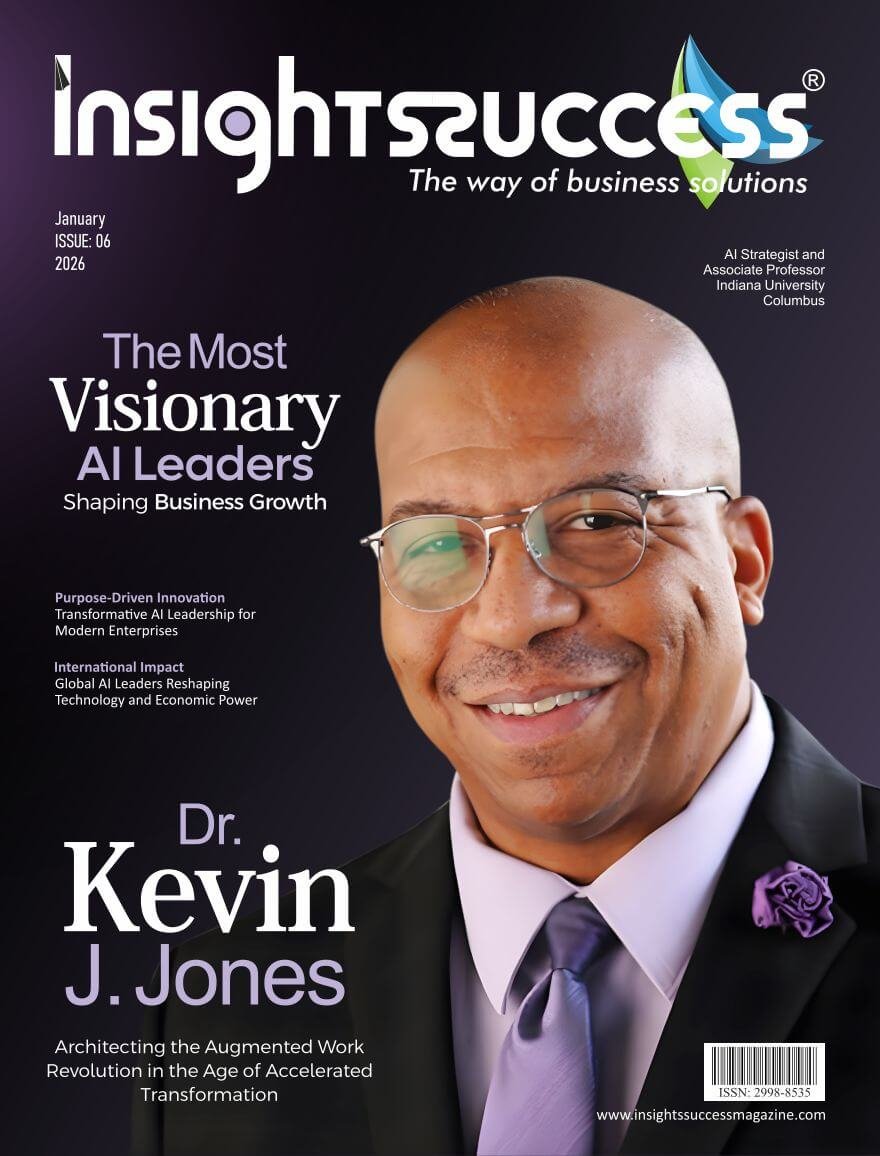
The Most Visionary AI Leaders Shaping Business Growth
The Most Visionary AI Leaders Shaping Business Growth Dr. Kevin J. Jones is an AI strategist and academic leader dedicated to advancing human-centred innovation in the Age of Accelerated Transformation. Bridging strategy, ethics, and technology, he champions augmented work frameworks that position AI as a force to enhance human capability, dignity, and purposeful organizational growth. Quick highlights Quick reads