






Srinivasarao Paleti: From Compliance Analyst to AI Enthusiast in Banking Domain
Srinivasarao Paleti’s professional story is not built overnight but shaped by steady growth, unwavering passion, and an insatiable hunger for knowledge. He dedicated over 15 years of his career to Tata Consultancy Services which carved a niche for himself in the Anti- Money Laundering (AML) and Compliance space within the banking industry. His ability to adapt to the evolving industry’s needs, while staying grounded in core values, is what sets him apart in a world characterized by constant change. His commitment to making financial systems more secure is more than just a job, it’s a purpose. With a Master’s degree from JNTUH, India, and a strong foundation in IT and analytics, he strives to enhance fraud detection mechanisms using cutting-edge technologies such as AI and ML. With the help of his experience he learned that technical excellence alone is not sufficient. It should be combined with vision, empathy, and perseverance. This narrative reflects his professional accomplishments and his views on work-life balance, leadership, and self-growth. It explores the experiences that have transformed his personality, the strengths and challenges that shaped his mindset, and the passion that fuels his ambition. Through this journey, Srinivas offers insights, lessons, and a path for aspiring leaders to follow. Early Life, Education & Career Roots Srinivas hails from India, where he completed his early education and later pursued a Master’s degree from Jawaharlal Nehru Technological University, Hyderabad. His academic journey, supported by a nurturing family and close-knit circle of friends, laid the groundwork for his foray into the world of Information Technology. The early years were not marked by privilege but by persistence and patience, values instilled by his family that would later become central to his professional outlook. “I joined Tata Consultancy Services and steadily climbed the ladder over a period of 15 years. Starting as an IT Analyst, I gradually immersed myself into the niche field of Anti-Money Laundering and Fraud Compliance. Recognizing that financial crimes not only threaten institutions but society at large.” he says He found a calling that was intellectually stimulating and socially meaningful. Over the years, he transitioned into the role of Assistant Consultant, becoming a vital asset in AML compliance strategy and risk mitigation. His role as a compliance analyst involves more than just data crunching; it requires foresight, attention to detail, and a proactive approach to government and international regulatory norms. He monitors daily operations, anticipates risks, and formulates strategies to control them, ensuring that the organizations he supports remain not only compliant but resilient. This drive and dedication have earned him recognition, appreciation, and most importantly, trust across his professional circles. Genesis of His Compliance Journey Srinivas’s entry into the Banking domain and AML sector was rooted with keen observation and a genuine desire to create solutions where challenges persisted. During his early days in IT, he noticed how traditional systems struggled with fraud analysis and compliance management. This inspired him to explore how technology—particularly AI—could be leveraged to bridge the gap between policy and execution. “The journey was not without setbacks. Case management was manual and time-consuming, fraud patterns were complex and evolving, and technological adoption in banking compliance was still nascent. I remained undeterred.” Says Srinivasrao. His approach was methodical—learn, iterate, improve. Over time, he introduced AI tools into fraud detection processes, transforming archaic workflows into intelligent systems capable of handling complex regulatory scenarios. Today, he continues to build on this foundation by exploring the potential of Machine Learning and AI in combating financial crime. His enthusiasm for innovation is matched only by his respect for compliance protocols, creating a balance between progress and protection. Srinivas believes that the future of banking lies in intelligent systems, and he’s committed to being part of that transformation. Managing Dual Roles With Discipline “Maintaining a healthy balance between personal and professional life is an ongoing pursuit. For me, work-life harmony isn’t a fixed formula but a dynamic rhythm that adapts to responsibilities and relationships.” As a high functioning professional in a demanding role, he has developed strategies to allocate time mindfully and prioritize well-being. He emphasizes setting clear boundaries between work and home. Conscious decisions—like not checking emails outside work hours or following a consistent morning routine—help him stay centered. He schedules breaks purposefully, ensuring they aren’t sacrificed at the altar of back-to-back meetings. These small but consistent practices allow him to remain productive without feeling burnt out. Srinivas also champions the importance of self-care. He invests time in physical activity, meditation, and most importantly, nurturing connections with his family and friends. This holistic approach ensures that his mental and emotional batteries are always charged, making him a more effective professional and a more present individual in his personal life. Driving Force Behind His Professional Appetite Srinivas’s business acumen lies in identifying gaps and designing risk-aware solutions. In the financial world, threats like money laundering and terrorism financing pose critical risks. His mission is to develop risk assessment frameworks that proactively detect vulnerabilities before they snowball into crises. His work not only reduces mismanagement of compliance activities but also strengthens organizational resilience. By integrating AI-driven assessments, he empowers organizations to make data-backed decisions swiftly and confidently. His appetite for excellence is not just about delivering outcomes—it’s about crafting frameworks that evolve with regulatory landscapes and technological shifts. With every project he undertakes, Srinivas aims to elevate standards in AML compliance. For him, every risk identified is an opportunity to build trust, and every solution created is a step toward a safer financial ecosystem. The Purpose That Fuels Passion What keeps Srinivas committed to his work is not just technical excitement but a deeper sense of purpose. “In my eyes, AML is not just another corporate division, it’s a societal safeguard. Every case I analyze, every pattern I deciphers contributes to the larger fight against financial crimes that can disrupt economies and lives.” he adds His motivation stems from intrinsic values. He finds joy in continuous learning, exploring new technologies, and witnessing how his work impacts financial

How AI in Banking Drives Competitive Advantage and Growth
In a global scenario where technology is re-defining all other sectors, finance has been at the forefront to go digital. The most revolutionary change is AI in banking, and it has progressed in a superlative manner from futuristic to an unstoppable force for fueling growth, innovation, and efficiency. Financial institutions are not only benefiting business with the implementation of artificial intelligence into the central bank process, but they’re also constructing a robust competitive advantage in an extremely crowded market space. What Does AI Have to Do with Banking AI banking encompasses a spectrum of technologies such as machine learning, natural language processing, robotic process automation, and predictive analytics. The technologies are revolutionizing banks from within and their customer transactions from outside. From anti-fraud measures to personalized customer service, AI is assisting banks in automating mundane processes, gaining more insight into customers’ behavior, and making improved decisions. Use of AI is now a question of “how quickly” and not “if.” Over 80% of banks already have some sort of AI in use, and the investment will grow over the next five years, based on several industry reports. All this adoption is spurred by the potential of AI to automate, save costs, and deliver services that were not possible before. Improving Customer Experience One of the biggest applications of AI in banking is customer experience optimization. AI-powered virtual assistants and chatbots today handle millions of customer interactions daily. These can respond, transact, and even provide investment guidance 24 hours a day, 7 days a week, and in different languages. By using machine learning algorithms, banks can handle vast amounts of data in hopes of making customer prediction and custom experience possible. From offering tailored investment plans to offering credit products based on one’s spending, AI is making banking a more convenient and consumer-centric experience. Improving Risk Management and Anti-Fraud Processes Risk management is the pillar of banking. Historically, it has been an event-driven process, depending greatly on past events and human intuition. With AI banking, however, this process is being turned into a real-time proactive process. Machine learning algorithms can detect patterns and outliers in real time, enabling banks to mark potential frauds even before they add up to unmanageable amounts. For instance, automated systems based on AI can scan millions of transactions at once, flagging suspicious ones based on behavior instead of rules. Not only is this safer, but human examination time and cost also decrease. Driving Operational Efficiency Operational effectiveness is the second where banking AI is yielding tangible benefits. RPA is being employed to automate rule-based processes like data entry, compliance checks, and account reconciliations. Banks will be able to preserve human capital for more strategic activities, minimize errors, and improve turnarounds by automating these processes. Secondly, AI can streamline internal processes like credit assessment and loan disbursement. Rather than being restricted to conventional credit scores, AI-driven evaluations can use other sources of information—like mobile usage, transaction patterns, and social media use—to enable more informed and comprehensive lending decisions. Empowering Data-Driven Decision Making Data has been known as the new oil, yet it is AI that turns the asset into usable insights. Banks handle huge amounts of structured as well as unstructured data, which without tools, can turn into a pain. AI banking enables real-time analysis, permitting institutions to take faster and quality decisions. For example, predictive analytics can help forecast market trends, evaluate credit risk, and support portfolio management. The analysis enhances decision-making as well as helping banks identify potential new sources of revenue and growth areas. Facilitating Regulatory Compliance Regulatory compliance is the most difficult and expensive problem for banking. As regulation changes, compliance must change on a continuous basis with developments reported. AI technology in the shape of natural language processing can assist banks by interpreting legal documents, monitoring regulatory changes, and maintaining compliance with minimal human interaction. By optimizing the compliance function, AI banking reduces the opportunity for non-compliance and resulting fines, in addition to trimming the expense of the compliance department at the same time. Enabling Innovation and Emerging Business Models Along with its operational efficiency, AI for banking is enabling the establishment of completely new business models. From robo-advisors powered by AI to API-supported open banking platforms, AI is enabling banks to innovate to an extent never seen before. Early adopters of AI are turning into digital banking heroes, with the ability to provide frictionless, omnichannel experiences. Fintech players have moved fast to capitalize on AI, but traditional banks are catching up rapidly, usually through strategic alliances, acquisitions, or innovation labs. As the market matures, collaboration between established banks and AI startups will drive the next wave of innovation. Conclusion: Getting Edge with AI With heightened competition and more demanding customers, banks have no choice but to transcend legacy systems and conventional thinking. AI in banking is not a technological upgrade—it’s a matter of strategy. Banks embracing AI are more capable of managing risk, getting closer to customers, streamlining operations, and generating new growth. The future will demand disciplined execution, sound data stewardship, and a culture of innovation. But for banks that decide to invest in AI capability, the reward is certain: sustainable competitive advantage and a path to long-term growth. Read Also: How Dynamic Leadership in Finance Drives Innovation

How Dynamic Leadership in Finance Drives Innovation
With this speeding-up age of financial transformation, innovation is no longer a choice—it’s a requirement. Financial technology disruption, changing customer expectations, and economic realignment on a global scale have pushed traditional finance institutions to change. At the forefront of the revolution is a powerful determining factor: Dynamic Leadership in Finance. Defining Dynamic Leadership in Finance Dynamic leadership is defined by flexibility, vision, emotional awareness, and a capacity to manage change in times of uncertainty. In banking, where for so long precision and risk management have been dominant, the injection of dynamism comes as a welcome relief. Dynamic leaders don’t just administer; they inspire, feel the rhythm of markets before their time, adopt new technology, and construct robust, forward-looking organizations. The Face of Financial Leadership Changes Those are bygone times when chief financial officers stayed inside spreadsheets and quarterly reports. Today, leaders need to decipher highly interactive global systems, steer the constantly evolving digital revolution, and battle constantly evolving intelligent cyber attacks. Such a transformation demands more than technical expertise—more than an ability to see it, learn it, do it. It demands flexibility, vision. Dynamic Leadership in Finance is all about finding the balance between tradition and innovation. They are brilliant at understanding the underlying principles of finance but are equally comfortable talking about artificial intelligence, blockchain, or the way that ESG standards affect investment planning. Driving Innovation Through Vision and Strategy One of the ways in which dynamic leaders stand out is that they can paint and talk a picture of living. For finance, it is not a question of just projecting profitability targets but aligning them with longer-term strategy on innovation. Whether it is launching an online version of banking, streamlining back-end operations, or excavating big data for tailored customer experience, the strategy hinges on a vision of a leader. Think about how some forward-thinking banks have welcomed open banking. This transformation, achieved through APIs and policy, needs to be broken by dismantling siloed infrastructure. Visionary leaders enable such initiatives through the achievement of cross-functional collaboration, regulatory support, and experimentation culture. Empowering Teams and Valuing Talent Diversity Innovation is rarely a solo activity. Contrarian thought, experience, and expert teams have been more innovative and effective. Dynamic Leadership in Finance is to construct such teams, to give them the authority to take calculated risks, and to free them from fear of failure. Managers who use open communication and distributed decision-making facilitate greater innovation. They realize that innovative ideas can come from junior analysts or cross-functional teams instead of the boardroom. By using feedback seeking, mentoring, and rewarding individuals for their contribution, good leaders take the extra step to create a culture where innovation comes naturally. Using Technology and Information Financial innovation today is very technology-driven. With robo-advisors and algorithmic trading on one side and fraud detection platforms with machine learning as their foundation, there’s just so much that’s possible. But it is technology alone that can’t make things happen—leadership can. Dynamic Financial Leadership is not just signing off on technology budgets. It is about leaders being at the forefront of the new tools, pushing their teams to come up with valuable uses in the real world, and having them integrate smoothly into current systems. They also value data as a strategic asset—keeping it clean, secure, and utilized ethically for insight and decision-making. Resilience Amidst Uncertainty If anything, the COVID-19 pandemic has taught us that uncertainty is unavoidable. The financial markets can be disrupted by global happenings, policy changes, or technology upsets. Under such circumstances, agile leaders are composed, centered, and nimble. Instead of relying on fixed protocols, they shift strategies in real time. They speak openly with stakeholders, calm investors, and make difficult decisions with compassion and vision. This type of leadership is not survival marketing but sows the seeds for long-term innovation and development. Building a Culture of Continual Learning With a finance sector as dynamic and ever-evolving as ours, to remain static is to regress. Visionary leaders place constant learning—a question of not only for themselves, but for their whole organizations—above everything else. They invest in re-skilling, throw open the doors to new market intelligence, and foster curiosity. This culture infuses at all levels, so innovation is everyone’s responsibility. Employees feel that they can push against the norm, propose change, and experiment with new ideas. This emphasis on learning as a way of life is a sustainable competitive advantage. The Ripple Effect: Impact Beyond the Organization The influence of Dynamic Leadership in Finance is not solely intra-innovation. It is prone to industry-wide transformation. Sustainable finance, for instance, was encouraged by pioneers who transcended quarterly returns and promoted long-term impact. The same applies to fintech alliances—once deemed risky—now trending main-stream due to trailblazing leaders who dared to jump out of comfort zones. These acts of boldness ushered ecosystem collaboration, customer-centricity, and access to finances. Final Thoughts Financial innovation does not occur overnight. It occurs due to deliberate, bold, and consistent leadership. Dynamic Leadership in Finance is an accelerator—bringing together vision, human resources, and technology to convert threats into opportunities. As the world of finances continues to change, here is something that is certain: the future is for those leaders who are not only reactive but proactive, not only strategic but visionary, and not only competent but dynamic. Read Also: Strategic Data Use: Empowering Directors to Make Informed, High-Impact Decisions
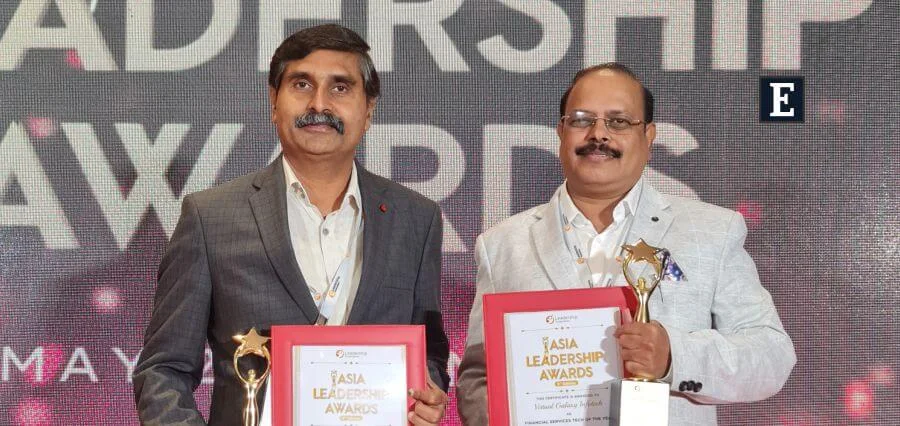
Redefining Digital Finance: VGIL Earns Acknowledgement in Enterprise Review as Shaping India’s Digital Future: Leading IT Solutions in 2025
The financial technology sector has experienced significant transformation in recent years, largely due to rapid advancements in digital solutions. At the forefront of this change are Mr. Avinash Shende and Mr. Sachin Pande, whose leadership at Virtual Galaxy Infotech Limited (VGIL) has redefined banking, fintech, and digital payments. Their innovative work in core banking, ERP, and e-Governance has positioned VGIL as a leader in the industry. Driven by a commitment to technology and financial inclusion, their AI-driven platforms and digital payment solutions have empowered businesses in India and Africa, setting new standards in the fintech space through continuous innovation and customer-centric strategies. Founded on September 12, 1997, Virtual Galaxy Infotech Limited (VGIL) has emerged as a leading force in IT and financial technology. Headquartered in Nagpur, with operations across Mumbai, Delhi, Pune, Bangalore, and Tanzania, VGIL delivers transformative digital solutions for banking, fintech, and government sectors. Leveraging cutting-edge technologies such as AI, blockchain, and cloud computing, VGIL empowers financial institutions to enhance operational efficiency, security, and accessibility. Under the visionary leadership of Mr. Avinash Shende (Chairman & Executive Director) and Mr. Sachin Pande (Managing Director & CTO), VGIL has built a robust suite of products, including the AI-driven core banking solution E-Banker and the secure digital payment platform V-Pay. Their strategic foresight and commitment to financial inclusion have enabled VGIL to serve over 200 institutions across India and Africa, driving innovation in ERP, e-Governance, and regulatory tech. VGIL continues to expand globally through strategic alliances. As the company transitions into a public limited entity, its focus on SaaS innovation and emerging technologies positions it for sustained growth. Driven by a culture of agility, empowerment, and continuous learning, VGIL is shaping the future of digital finance and inspiring the next generation of fintech leaders. Recognized by Enterprise Review as Shaping India’s Digital Future: Leading IT Solutions in 2025, VGIL is not only redefining the fintech landscape but also empowering financial ecosystems across geographies. Under the leadership of Mr. Avinash Shende and Mr. Sachin Pande, VGIL is well-positioned to lead the next wave of digital transformation in global financial services. Read Also: Rafael Soares | Top Legal Minds Influential Leaders in Law

Redefining Law: Rafael Soares Gains Prominence in CIOLook as 2024’s Top Legal Minds Influential Leaders in Law
The intersection of technology and law is increasingly vital, driving transformative changes in legal processes. By leveraging innovation, forward-thinking leaders are advancing greater accessibility and transparency in legal systems, empowering individuals and businesses in the digital age. Rafael Soares, CEO of Fluid HR, is a seasoned lawyer with over a decade of experience, committed to modernizing the legal landscape through technology. Originally from Rio de Janeiro and now based in Lisbon, his passion for tech and law has shaped his expertise in data protection and privacy. Rafael continues to support startups and develop solutions that align legal compliance with HR innovation. The convergence of technology and law is reshaping legal practices, enhancing accessibility and transparency in a fast-evolving digital landscape. Rafael Soares, CEO of Fluid HR, is a seasoned legal professional with over a decade of experience, dedicated to transforming the legal field through technology. Originally from Rio de Janeiro and now based in Lisbon, Rafael combines a deep understanding of legal systems with a passion for innovation. Specializing in technology law, he has played a key role in advancing data protection and privacy standards. His work includes pro bono support for startups and developing tech solutions that align HR management with legal compliance. At Fluid HR, Rafael Soares addresses the ethical integration of AI in human resources by ensuring all machine learning processes are guided by human oversight. The company’s AI is designed to support human decision-making, focusing on improving employee experiences through task automation and data-driven insights. Fluid HR also enhances recruitment by refining candidate evaluation while preserving traditional tools like CVs, ensuring fair and balanced job matching. Fluid HR is committed to transforming human capital management by optimizing recruitment, retention, and employee development. The company leverages technology to streamline workflows, enhance well-being, and drive sustainable organizational growth. Rafael currently balances his role at Fluid HR with consulting in digital law and serving as a Data Protection Officer. This dual focus offers financial stability and strategic flexibility, allowing him to align external projects with Fluid’s mission. Recognized by CIOLook as 2024’s Top Legal Minds Influential Leaders in Law, Rafael Soares exemplifies a new generation of legal and tech professionals redefining how organizations operate at the intersection of compliance, innovation, and human capital. Read Also: South Africa’s 10 Prominent Directors to Watch

South Africa’s 10 Prominent Directors to Watch
South Africa’s 10 Prominent Directors to Watch As South Africa continues to emerge as a hub of innovation and strategic growth across industries, a new generation of visionary directors is playing a pivotal role in shaping the nation’s corporate and economic future. This edition spotlights exceptional leaders who are driving transformation, steering their organizations through change, and setting new benchmarks in governance, sustainability, and operational excellence. Quick highlights Quick reads

Luka Kokot: Envisioning Innovations that Empower Business Transformations
Artificial Intelligence is fast becoming the strategic backbone of modern business, transforming not only operations but also leadership decision-making. Luka Kokot is at the forefront of this shift—bridging the gap between innovative AI solutions and real-world enterprise needs. From daily operations to long-term strategy, every aspect of any organization relies on IT systems that are secure, scalable, and aligned with business objectives. However, generic, off-the-shelf solutions often fall short of meeting the nuanced demands of modern enterprises. That’s where reliable and tailored IT solutions come into play. These solutions are designed with the purpose of offering a higher level of functionality and greater flexibility, allowing companies to adapt quickly to market changes and internal growth. As things stand, digital transformation is accelerating, and businesses can’t afford inefficiencies or vulnerabilities in their IT infrastructure. Behind the most effective tailored IT solutions is leadership that combines vision with technical depth. One such example is the development of AI-powered infrastructure designed not only to automate, but to intelligently inform business decisions at scale. Increasingly, this blend of automation and intelligence is being shaped by a new generation of technologists who understand how to bridge enterprise needs with cutting-edge AI—both practically and strategically. When businesses invest in bespoke IT solutions, it ensures seamless integration, optimized performance, and proactive support, ultimately driving productivity and innovation. Whether it’s cloud management, data analytics, system automation, or network security, having a reliable IT partner means having the confidence to move forward strategically. While large-cap organisations often have the resources to invest in cutting-edge technology and dedicated in-house IT teams, the real challenge lies with small and medium-sized enterprises (SMEs). These businesses typically operate with tighter budgets and leaner teams, making it harder to justify or implement large-scale IT investments. Yet, they face the same cybersecurity threats, data management needs, and customer expectations as their larger counterparts. For SMEs, tailored IT solutions are not just about optimization—they’re about survival and sustainable growth. Achieving this balance—especially for SMEs—is entirely possible with the right leadership approach. Forward-thinking leaders such as Luka Kokot comprehend that investing in technology is not just a cost—it’s a strategic decision. With a well-defined roadmap and the right mindset, even the most resource-constrained organisations can harness the full potential of tailored IT solutions and position themselves for long-term success. The right technology partner can help bridge the resource gap by delivering scalable, cost-effective solutions that meet immediate needs while laying the groundwork for future expansion. Reliable support, strategic planning, and access to modern tools empower SMEs to compete in a digital-first economy without overextending their resources. This is where BroadVision Technologies excels with its functionality. For the past 25 years, the company has been a leading provider of adaptive and customised solutions to meet the changing requirements of its clients. The distinct edge of BroadVision is its approach to collaborate with a carefully selected network of international and local partners who offer best practice models for meeting critical functional and operational requirements. Through such collaborations, the company aims to deliver high-tech solutions at a low cost while ensuring the best total cost of ownership for its clients. What started as a humble operation has today grown into a leading IT solutions provider, serving African and European conglomerates. Pioneering Applied AI: A Leadership Journey Luka Kokot’s academic and professional journey reveals a commitment to bridging advanced engineering and the practical use of AI. With a degree in Electrical Engineering and a Master of Science focused on the managerial applications of Artificial Intelligence, he exemplifies a new wave of technologists focused not only on technical implementation, but strategic business enablement through AI. His unique approach blends deep systems thinking with a practical drive to solve fragmentation across enterprise environments. Before joining BroadVision, he was involved in several high-impact projects across South Africa. He gained firsthand insight into the technological challenges businesses face, especially in navigating data fragmentation and underutilised digital systems. This experience, combined with his academic grounding, led to the conception of BroadVision’s AI-assisted middleware. Today, he continues to focus on advancing that technology, while driving BroadVision’s extensive mission of delivering innovative, future-ready IT solutions that empower businesses across the globe. Luka reflects on the journey: “BroadVision began 25 years ago with a mission to support SMEs in South Africa, providing reliable and tailored IT solutions. Over time, the company rapidly expanded its footprint across the African continent and globally, evolving into a strategic partner for enterprises with offerings like our 24/7/365 helpdesk, our highly regarded CIO-as-a-Service model, and now our unique middleware solution which continues to gain traction.” While BroadVision was on the verge of becoming a global strategic partner, Luka was appointed as Director of Business Innovation & Technology Investments in London—an intentional move to strengthen its presence in the UK and Europe. This role has been instrumental in introducing its AI-assisted middleware. Luka shares, “This solution is designed to tackle one of the most persistent challenges in today’s organisations: fragmented systems and siloed data. Our software ingests, consolidates, and distributes data across platforms, layering AI and analytics to deliver actionable insights via real-time dashboards. It’s a transformative tool that turns disconnected data into strategic intelligence.” Scalability is at the heart of BroadVision’s approach. As the clients’ businesses grow, its solution evolves with them—ensuring long-term value and adaptability. Ultimately, it empowers stakeholders to make more informed, data-driven decisions that move their organisations forward. Solutions Making a Global Impact BroadVision’s most recent—and arguably most impactful—innovation is its proprietary AI-assisted middleware platform. As the name suggests, it acts as a bridge between fragmented systems, consolidating data from across an organisation and transforming it into actionable insights through AI-powered analytics and dashboards. What sets this innovation apart is its foundation in applied research and original problem-solving. Luka and his team conducted structured interviews with SME leaders to uncover a recurring theme: while generative AI tools like ChatGPT were widely known, very few offered contextualised, organisation-specific insights. This informed the design of BroadVision’s AI platform, which goes beyond generic

Strategic Data Use: Empowering Directors to Make Informed, High-Impact Decisions
With complexity and uncertainty the new landscape, data is the new compass by which leaders navigate. Decision-making by directors no longer depends on gut feel—there’s more to it; it requires a deep, strategic alignment with data. The transition from reactive to proactive leadership is to use data not as a static asset, but as a dynamic source of knowledge, speed, and growth. Data as a Leadership Asset Those days are over when information was kept in the IT department or only utilized for quarter-end reporting. Directors no longer have the option of seeing information as a backroom function. Directors today need to see data as a strategic asset—something that is crucial to inform strategy, track performance, detect risk, and discover opportunity. From financial planning to customer insight to people analytics, data provides directors with the clarity they need to drive confidently in real-time. Strategic application of data enables leaders to transcend intuition-driven decision-making. It enables validation of assumptions, minimizes bias, and allows for forecasting consequences. When directors adopt a data-first strategy, they elevate not just their own performance but also the boardroom’s overall strategic capability. Driving Decision-Making with Real-Time Intelligence Velocity and precision are hallmarks of high-stakes decision-making. Directors who make decisions based on old or unfinished information risk getting left behind by quicker, more nimble competition. Real-time dashboards and embedded analytics solutions now provide directors with real-time insights into mission-critical metrics—facilitating quick changes, quicker approvals, and better decisions. This is not a matter of being buried beneath numbers. The key is identifying what data points are most critical to the health and development of the business. Directors need to keep quality above quantity, but this time they focus on the insights that most immediately impact strategic priorities—customer retention, efficiency of operations, expansion of margin, and speed of innovation. From Data Silos to Integrated Insight Most businesses continue to grapple with siloed data. Since departments collect, analyze, and report on data independently, it generates inconsistencies and blind spots. Directors need to be the drivers of data integration—promoting collaboration among finance, marketing, operations, and HR so that there is one version of the truth. Integrated information systems give business leaders a bottom-to-top view of performance. Directors can make better questions, find cross-functional trends, and guide strategy by means of the entire picture of the firm. Guiding this direction by taking out the silos implies that they are in a position to link insight and action with significantly more power. Aligning Data with Strategy The best directors utilize data to inform, improve, and execute the organization’s strategy. To illustrate, if growth in market share in a particular geography is one of the key strategies, then directors ought to be studying customers’ behavior, competitors’ position, and selling performance in that geography. This strategic alignment is merely to provide that data are not only used to track what is occurring but to inform on where the business is headed. Directors need to revisit data, regularly, against strategic KPIs and examine plans in return. In this way, they create a feedback loop whereby data and strategy refine each other endlessly. Enhancing Risk Management and Governance One of the most fundamental duties of a director is managing risk—and data is a key part of doing so. Predictive analytics, for example, can alert directors to rising threats before they become liabilities, from supply chain outages to cybersecurity intrusions. Through creating a risk management based on data, boards are able to break out of defensive damage control into proactive avoidance. Anomalies, trend, and compliance metric dashboards enable executives to stay ahead in monitoring the organizational health as well as sustaining the governance level. Establishing a Culture of Data-Driven Leadership Strategic use of data isn’t tool-oriented—it’s mentality. Executives need to lead data-driven thinking from the top, training teams to support proposals with facts and solve problems logically. This involves investing in data literacy, both in the boardroom and throughout the business. Directors must feel comfortable interpreting analytics, posing data-driven questions, and questioning assumptions. Similarly, they must promote training and resources enabling employees at every level to critically think with data. Navigating Ethical and Responsible Data Use As more data enter the equation when making decisions, so too does the obligation to apply it responsibly. Directors need to take the lead by establishing data governance rules concerning transparency, privacy, and compliance. This is a comprehension of how employee and customer data are gathered, stored, and utilized. It also encompasses having faith that decision-making AI models and algorithms used are equitable, transparent, and in accordance with company values. Data leadership is responsible for instilling faith, safeguarding brand reputation, and guaranteeing long-term sustainability. Conclusion: Leading with Confidence in the Age of Data In the current era of abundance of data, the work of directors is shifting from control to insight. Strategic use of data helps directors not only make prompt and informed decisions but also transformational decisions. It helps them create competitive advantage, protect the organization, and drive innovation. Finally, the best directors are those who move toward seeing data as a strategic imperative, not a technical hurdle. In doing so, they raise their leadership game and ensure that their organizations are not merely responding to change—but creating the future. Read Also: Balancing Strategy and Execution: The Director’s Guide to Leading Teams

Balancing Strategy and Execution: The Director’s Guide to Leading Teams
It is the way of business today to be rapid, and the leaders find themselves bogged down in the strategy-execution trap. It is not an elective skill for directors but a necessity to have the vision to keep things in perspective in the long term and still perform in the near term. Outstanding-performing directors are neither thinkers nor doers, but integrators who translate vision into outcomes by aligning people, processes, and priorities. Strategic Vision: Creating a Defining and Inspiring Direction Good strategy is where all great performance begins. Directors are responsible for looking where the business is headed and being able to articulate that in a way that inspires and motivates their teams. It’s a feel for the forces of the market, customers, competitors, and new opportunities emerging. But it must be clear. Vague objectives lead to fuzzy action. A vision of strategy that captures hearts and minds will answer three questions: Where are we going? Why should I care? And how do we get there? Once stated, that vision will be the strength of leadership that will propel decision making, investment, and culture. It has to be detailed enough to communicate, but bold enough to ignite to action. Execution Discipline: Translating Plans into Performance While a good strategy is where one begins, it is where follow-up is monitored that counts. Most companies fail not because their thinking is faulty, but simply because they lack systems and discipline to achieve on a regular basis. Directors must look to see the right frameworks get established—objectives, timelines, KPIs, and feedback loops. Structure is insufficient; accountability must be there. Leaders must provide teams with results ownership, empower autonomy but maintain alignment to strategic goals. Hard implementation also means eradicating blockages. There should be enough proximity to the work by the directors so they understand where blockages are felt and remove it in a rapid way. Leanness can be that which gives the difference between reaching a spot and missing a milestone. Alignment Across Teams: The Glue Between Strategy and Execution One of the most important responsibilities of the director is to make sure that there is alignment at all levels within the company. It doesn’t matter how good a strategy is if teams are working in silos or have opposite priorities. Which is why cross-functional teamwork must be intentional. Strategic objectives must cascade down clearly department by department, team and individual goals tied to broader business outcomes. Directors must regularly remind the “why” behind the work so employees know their work drives the mission forward. Regular check-in and goal-setting meetings, company-wide OKRs, and active performance dashboards can help drive alignment and keep teams on course. Empowering Execution Without Micromanagement Directors walk a thin tightrope: they must drive results without micromanaging. Effective leaders establish space for teams to be empowered with decision-making and creative action, but also with assistance when things go wrong. Empowerment starts with transparency—clear responsibilities, expectations, and outcomes. It’s supported with routine coaching, constructive feedback, and open-door policy. Directors must lead through influence, not control, creating psychological safety that leads to innovation and performance. When leaders trust people and systems, execution is less a matter of coercion and more a matter of intent. Measuring What Matters: Tracking Progress Strategically To bridge the gap between strategy and execution, directors must define and measure the right outcomes. That is, they must look at key performance indicators (KPIs) that not only track activity but also signal real progress toward strategic goals. Far too often, however, businesses are measuring easily measurable but useless vanity metrics instead of what truly drives value. Directors must look past vanity metrics and drill deeper into the top predictors that lead to success. Having the right information available, directors are then in a position to make real-time course corrections, rejoice on achievement, and adjust priorities as conditions change without ever losing sight of the long-range vision. Adaptability: Leading Through Uncertainty In today’s uncertain business environment, rigidity is the nemesis of execution. Strategies have to be adaptable, and boards are ready to shift gears when the marketplace dictates it. This does not mean constantly flipping. It is embedding adaptability in the strategy plan—through scenario planning, contingency resources, and open channels for input. The best directors know that speed never sacrifices discipline—it adds to it. Through the continuous assessment of what works, what doesn’t, and what has shifted, directors can keep the company moving forward even when the path is not a straight line. Directing by Example: The Director’s Influence Ultimately, directors set the tone. Their vision and intent to execute trickle down through the company. If they lead by example, with strategy, focus, tenacity, and integrity, those become the culture. This presence of leadership is most critical during times of change. A director who remains strategic, yet sensitive to the need for execution, gains trust, credibility, and team alignment. Conclusion: The Director as Strategist and Steward Finally, the best thing a director can do is find a way to connect action and vision. Strategy tells you where you’re headed; execution drives if you arrive or not. It’s not either/or—it’s both done in great way. By developing tangible strategies, motivating teams, driving alignment, and maintaining the discipline to hold themselves and others accountable, directors turn promise into progress. And in the process, they don’t just direct—sustainable influence ensues. Read Also: 5 Emerging Leadership Trends Reshaping Executive Development

Laura Rinnankoski: Giving Your Life a Purpose
What is the purpose of life if individuals cannot embrace its meaning? Life can be a beautiful journey, but it often comes with moments of confusion, self-doubt, and emotional roadblocks. We live in a fast-paced world, and it’s easy to lose sight of who we are and what truly matters to us. This is where the transformative power of life coaching comes into play—and at the heart of this transformation is Laura Rinnankoski, an International Transformational Life Coach who has been dedicating her life to helping others to rediscover theirs. With a deeply empathetic approach and years of experience across diverse cultures and backgrounds, she empowers individuals to peel back the layers, confront limiting beliefs, and reconnect with their authentic selves. Laura’s coaching isn’t about quick fixes or surface-level advice; it’s about sustainable inner growth and meaningful life change. Laura helps people to shift their mindset, break old patterns, and create a life aligning with their true purpose. What makes Laura’s work truly transformational is her ability to spark lasting change, not just in her clients’ goals or circumstances, but in their entire way of being. Today, she stands as a catalyst for transformation, inspiring others to rise into the fullest, most empowered version of themselves. She leads with cooperation, resourcefulness, empathy, and innovation – principles that guide both her coaching and speaking. She connects with audiences by speaking to their experiences and reminds them that even in the toughest times, there’s always a way forward. This deep inner work goes hand-in-hand with how Laura chooses to live. Her approach to well-being is not only something she teaches—it’s something she embodies every day. She nurtures relationships and seeks moments of laughter and joy. She believes in fully embracing life’s experiences, both smooth and challenging. Guided by Purpose, Grounded in Connection Laura decided to become a Life Coach because coaching combines three things that she considers most important. Her journey to becoming a Life Coach was driven by a desire to align her career with the core values. She is passionate about empowering individuals, fulfilling her life’s purpose, and connecting through meaningful communication. Being a life-coach on an international scale, Laura’s fluency in English, Spanish, Finnish, and Italian, coupled with her spiritual practice, which includes meditation and visualization, allows her to provide a uniquely holistic transformational coaching experience. Transformation is an integral part of life, a lesson she learned from her experiences. By aligning with change, we unlock greater potential. Laura’s personal growth has propelled her to connect with and serve a wider, global audience. Awakening Potential Through Purposeful Living and Coaching For Laura, the most fulfilling part of work is when a client finds their inner power and purpose. She opines, “We live in such a noisy world with so many distractions. When you tune into yourself and your inner knowing through meditation and visualizations, you start unlocking lots of hidden and dormant potential that you have within.” She loves reminding the clients of their inner power and letting go of limiting beliefs. When a person is aligned with mind, body and spirit, amazing things start happening in their lives. She underscores her message with a compelling thought, “Believing in yourself and your goals is crucial, and you have to believe that you are worthy of receiving good things as well. We have to have the courage to look at our stories and change the negative ones that are holding us back.” For Laura, her clients’ success is defined by their own felt experience. She monitors the progress by questioning herself, “Have they achieved their desired outcomes? Does their life now flow with greater ease? Do they feel more at peace with themselves? Is their self-talk more positive?” Guided by Ambition Laura stays ahead in the field by continuously investing in her growth and staying connected to evolving industry insights. She regularly attends seminars to deepen her knowledge, listens to thought-provoking podcasts that inspire fresh perspectives, and actively engages in meaningful conversations with fellow coaches. This commitment to lifelong learning not only sharpens her skills but also ensures she brings the most relevant, informed, and impactful guidance to those she supports. Her proactive approach keeps her aligned with the latest coaching practices and trends, reinforcing her role as a dynamic, forward-thinking professional in the coaching space. The most significant challenge in Laura’s coaching career came during a particularly difficult period when she had to learn to prioritize her health. However, this experience became a turning point, revealing that self-care is not a luxury but an essential foundation for sustainable impact. She understood that only by nurturing her physical, mental, and emotional health could she fully support others. This realization improved her personal resilience and deepened their effectiveness and empathy as a coach. From Challenge to Global Impact After overcoming significant health challenges, Laura emerged not only stronger but more aligned with her life’s purpose than ever before. Her resilience and commitment to transformation led her to receive six prestigious awards, grace the covers of three magazines, and contribute to two bestselling books. This media recognition expanded her platform, allowing her to connect with a broader global audience and inspire lasting change across cultures. Advice to the Budding Aspirants For those who feel called to become life coaches, Laura shares, “If you feel a genuine calling to coaching, motivational speaking, or personal development, I encourage you to pursue it with your whole heart. This path isn’t always easy—it requires courage, consistency, and a deep connection to your “why.” In a world where flashy trends and overnight success stories are everywhere, it’s easy to feel pressure to conform or chase quick wins. However, let your purpose be rooted in service, not in what’s trending.” She further expresses, “In my experience, when your work is fueled by love, authenticity, and a sincere intention to help others, the right opportunities and connections naturally follow. You don’t have to chase validation—your passion and integrity will speak for themselves. Stay grounded, stay true, and trust