






Dr. Eliud Urquidi: A Visionary Leader in Mexico’s Agricultural Renaissance
Mexico’s avocado industry, often referred to as “green gold,” has experienced remarkable growth over the past few decades. As the world’s leading producer, Mexico contributes approximately 45% of the global avocado supply. This surge has significantly bolstered the nation’s economy and positioned avocados as a staple in households worldwide. However, this fast growth has also created environmental challenges such as deforestation and water shortages, along with social challenges such as organized crime penetration in the sector. Solving these challenges requires innovative leadership and unwavering determination to sustainable approaches. This is where the prominent leaders in AgriTech step in. They drive innovation in farming and develop and deploy new technologies such as IoT, drones, AI, blockchain, and robotics. These leaders improve agricultural productivity through tools that help monitor crop health, automate irrigation, and optimize yields. The forerunners of the AgriTech industry minimize environmental footprint by encouraging wise use of water, fertilizer, and energy. They participate in climate adaptation by creating systems for drought-resilient plants, carbon agriculture, and regenerative farming. Furthermore, these leaders of the AgriTech industry responsibly carry out supply chain activities which include shipping of agricultural produce from farms to plate, while tracking the produce in order to waste less and engage in ethical activities. Dr. Eliud Urquidi: Championing Agricultural Transformation Leading this revolution is Dr. Eliud Urquidi, whose career is a testament to passion, determination, and a vision to transform the agri-food sector. This year, he was invited to participate alongside renowned and influential industry leaders at the Annual Global Summit on Food Science, Nutrition and Technology 2025, in Bern, Switzerland. As Chief Commercial and Strategic Development Officer of Avocados Aljoe, Founder and Owner of Agrocorp LE, and Founder of Bauer Commerce LLC, Dr. Eliud Urquidi has been at the forefront of change in Mexican agriculture. In recognition of his tireless efforts, he was awarded the title of Doctor Honoris Causa and honored in Dubai with the “Excellence in Leadership, Community Empowerment and Development in Recognition of his Contribution to the Agriculture Industry” by the AgriNext Awards. Early Ventures: Planting the Seeds Dr. Urquidi’s career started with Agrocorp LE, where he specialized in breaking into the local Mexican market. With trial boxes and client prospecting as a beginning, the company streamlined its business, steadily solidifying commercial relations and increasing sales. Seeing the promise of international markets, Dr. Eliud Urquidi led the company’s growth into Asia, Europe, South America, and the United States. This strategic step gave rise to the emergence of Avocados Aljoe, a brand that is a symbol of synergy and shared vision, setting the company on the path of international competitiveness. Innovations and Sustainable Practices The company has promoted innovative agricultural solutions. One of these is the creation of a biostimulant, which was the result of the effort and vision of one of its partners, who is deeply committed to sustainable development and environmental stewardship. Witnessing the growing problem of sargassum, he decided to take action and, using these marine algae, succeeded in improving plant health and fruit quality. On the other hand, the company also implemented the use of hypochlorous acid. A field development project was carried out to determine the effectiveness of the product in combating plant diseases, reflecting the company’s strong commitment to sustainable and eco-friendly practices. Expansion into the U.S. Market: Setting up Bauer Commerce LLC To establish the company’s foothold in the U.S. market, Dr. Eliud Urquidi established Bauer Commerce LLC in the United States. The venture enhanced logistics, lowered delivery times, and raised service standards, reiterating the company’s devotion to quality and efficiency. Core Values: Transparency, Quality, and Fair Trade At the heart of Dr. Urquidi’s business philosophy are transparency, quality, and fair trade. The firm endeavors to establish enduring relationships based on trust and mutual respect, with a view to establishing a strong network that is beneficial to both producers and consumers. This not only strengthens business operations but also benefits the involved communities, encourages sustainable development, and conducts ethical practices. Facing Industry Challenges: A Proactive Approach The Mexican avocado sector is facing a number of challenges, among them being environmental degradation and crime. In light of this, Dr. Eliud Urquidi has taken positive steps, for example, coming up with certifications that guarantee avocados are produced without engaging in illegal deforestation. This creates transparency and allows consumers to make informed decisions while supporting sustainable and ethical production processes. Strategic Alliances and Technological Integration Dr. Eliud Urquidi highlights strategic alliances and technological convergence as key drivers of business expansion. Strategic alliances with like-minded partners have been instrumental in overcoming industry challenges and capturing new opportunities. Additionally, the implementation of cutting-edge technologies, including traceability platforms and smart logistics systems, has streamlined processes, enhanced commercialization, and improved customer experiences, keeping the company ahead in a fast-changing market. Vision for the Future: Preserving Mexican Agricultural Heritage Going forward, Dr. Eliud Urquidi foresees stabilizing national operations and cementing a solid, strong position in the U.S. marketplace with Bauer Commerce LLC. Expansion of the commercial base, access to new international markets, and the sustenance of a fair-trade, people-based philosophy are planned objectives. Through such objectives, the vision seeks to make the company the benchmark of quality and service and showcase Mexican agriculture’s rich history and traditions worldwide. A Legacy of Dedication and Innovation Dr. Eliud Urquidi’s journey is a testament to his deep commitment not only to the transformation of Mexican agriculture through innovation, but also to human rights in vulnerable sectors, sustainability, business ethics, and fair trade. His leadership has enabled him to confront and address structural issues within the industry, which have translated into meaningful improvements for the communities he has worked with. By blending traditional values with modern strategies, Dr. Eliud Urquidi demonstrates the power of visionary leadership to drive profound change, ensuring that the fruits of his efforts continue to benefit the world while honoring Mexico’s rich agricultural heritage. An Impactful Forerunner Dr. Urquidi’s policies have had a chain reaction effect on the wider farming community. Through the introduction of sustainable

Igniting Development: How to Drive Leadership in Ag-Tech Innovation?
Ag-tech industry is the intersection of traditional agriculture and cutting-edge technology, at such a point where increasing global food security challenges and climatic pressures call for visioning leadership in ag-tech innovation. The need for such leadership has never gone that high, and effective leadership in this domain has to bring together the unique flavors of agricultural experience, technological acumen, and strategic foresight in a complex modern farming landscape. Leadership in ag-tech innovation extends beyond conventional management approaches, demanding leaders who can bridge the gap between Silicon Valley’s technological prowess and the practical realities of agricultural production. The sector’s transformation relies on individuals who understand both the intricacies of crop science and the potential of emerging technologies such as artificial intelligence, precision agriculture, and biotechnology. These leaders need to establish a context where Ag-Tech Innovation can flourish as well as address the overall needs of farmers and the entire agricultural sector. Establishing Cross-Functional Knowledge and Vision Effective ag-tech leadership starts with developing cross-functional knowledge within a broad range of disciplines. These leaders have to appreciate agricultural issues at a profoundly deep level, which go from sub-soil quality to crop yields, all the way up to supply chain and market forces. Such foundational knowledge helps them see the authentic pain points that technology can fix rather than seeks for solutions looking for a problem to apply them to. The most effective leaders will combine this agricultural insight with technological literacy to see how such emerging technologies can be applied practically to improve farm operations. Strategic vision formation requires leaders to anticipate future agricultural needs while considering current market realities. This keeps them informed on aspects of population growth, changing dietary preferences, and environmental regulations that would be the future of agriculture. Their leaders need also to appreciate the importance of sustainability and Ag-Tech Innovations that add value not only in productivity but also in improving the state of the environment. Innovation Culture and Stakeholder Engagement Building an innovation culture in ag-tech organizations calls for a conscious effort to foster experimentation and calculated risk-taking. The leaders need to create spaces where employees feel confident to try atypical solutions and learn from errors. This sets the stage for the iterative development process that allows for building effective agricultural technologies. Successful leaders understand that breakthrough Ag-Tech Innovations typically result from combinations of current technologies or new uses of established concepts. Stakeholder interaction is the second significant element of ag-tech leadership-its accomplishment is in the value chain coalition-building relationship. Leaders must be in constant communication with farmers, agronomists, distributors, and others in this value chain so that they know their needs and can take feedback on an evolving solution. It even extends to ongoing collaboration with research institutions, government agencies, and other technology companies to share collective expertise and resources. Regulatory Landscapes and Market Adoption The agricultural technology sector is complex, with different regulatory environments across regions as well as in various product categories. The leader must develop competencies to navigate the regulatory regime but sustain the Ag-Tech Innovation pace. This means on-time interactions with regulatory agencies, proactivity in compliance planning, and the ability to interpret what is safe and effective about new technologies for different stakeholders. Good leaders of the problems of regulations are able to organize dedicated teams that work on compliance and interact with regulatory organizations throughout the process of creating their product. Market adoption strategies in agriculture are highly responsive to the conservative nature of farming communities and the cyclical nature of agricultural decision-making. Leaders will thus need to develop patient capital investment strategies consistent with longer adoption cycles than in other technology industries. This includes elaborate demonstration programs that build trust through pilot projects and economic models that clearly articulate return on investment for the farmers. The best leaders recognize that successful market penetration often follows years of relationship building and proof of concept validation before widespread adoption occurs. Conclusion Agricultural innovation through technology is a special mix of agricultural knowledge, technological vision, and capabilities to execute strategically. The best leaders in this sector can successfully navigate intricate stakeholder dynamics, regulatory landscapes, and market forces while keeping their eyes resolutely fixed on real agricultural problems. As the industry evolves, effective leadership will increasingly depend on fostering collaborative systems of Ag-Tech Innovation that integrate diverse expertise and perspectives. The future of agriculture is in the hands of leaders who can leverage the potential of technology to solve the world’s most critical challenges, at the same time honoring ancient principles and practices that have supported farming societies for millennia. Through the development of these leadership capabilities in the context mentioned above, ag-tech entrepreneurs can create dramatic change to widen food security, environmental sustainability, and farmers’ livelihoods in a global context. Read More:
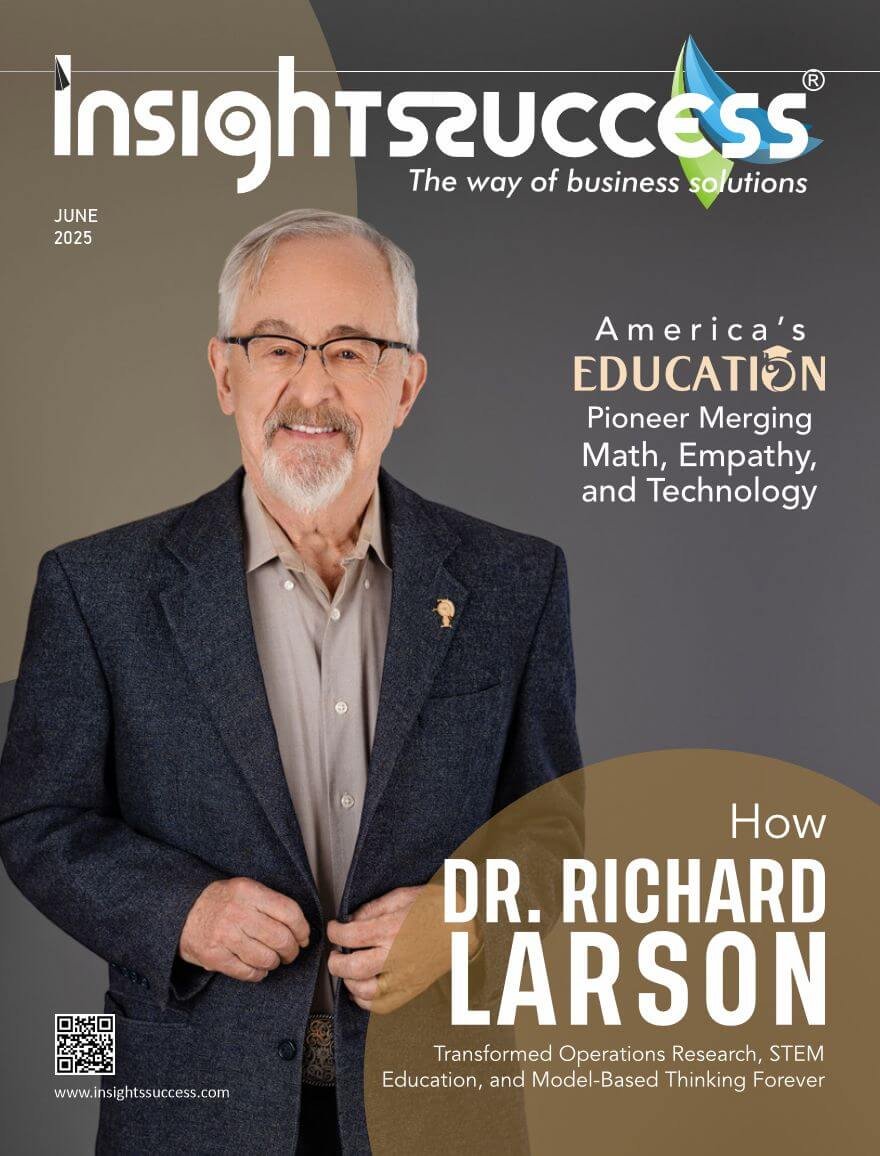
America’s Education Pioneer Merging Math, Empathy, and Technology
America’s Education Pioneer Merging Math, Empathy, and Technology This edition celebrates Dr. Richard Larson, an American educational visionary who revolutionized learning by integrating mathematical principles with empathetic teaching and cutting-edge technology. Discover how his pioneering approach fostered a deeper understanding of complex subjects while nurturing essential human connections, shaping the future of education. Quick highlights Quick reads

How Dr. Richard Larson Transformed Operations Research, STEM Education, and Model-Based Thinking Forever
Few individuals have had as enduring and interdisciplinary an impact as Dr. Richard Larson. A name synonymous with innovation, foresight, and intellectual rigor, Dr. Larson’s contributions span operations research, emergency response optimization, public service planning, and technology-enhanced education. His work has not merely improved existing systems—it has redefined how industries, governments, and academic institutions approach complex problems. With over five decades at the Massachusetts Institute of Technology (MIT), his journey embodies a deep-seated passion for making the abstract practical and the theoretical transformative. At the heart of his legacy lies a philosophy: that mathematics, when paired with real-world observation and critical thinking, can be a powerful tool for change. Dr. Larson’s groundbreaking creations like the Queue Inference Engine (QIE) and the Hypercube Queueing Model have had sweeping effects across sectors such as healthcare, urban planning, and public safety. Beyond numbers, he has stood firm in his commitment to hands-on learning and mentorship, deeply influencing both peers and proteges globally. Now semi-retired from research yet still actively shaping discourse, Dr. Larson continues to serve as a mentor, advisor, and thought leader. His legacy is not one of past glory but ongoing relevance—a blueprint for aspiring leaders who wish to blend deep domain expertise with practical social impact. Uncovering the World Through Queues Dr. Richard Larson has long been fascinated by the hidden mechanics behind everyday inefficiencies. His journey into the world of queues wasn’t incidental—it was intentional, driven by a desire to improve public services and system management. “Why do some lines seem to move at lightning speed, while others feel frozen in time?” he once pondered. That question led to the creation of the Queue Inference Engine (QIE), a tool that has since transformed industries from banking to healthcare. Through QIE, Dr. Larson gave organizations a powerful method to analyze customer flow, service rates, and wait times without intrusive observation. This data-driven approach has empowered decision-makers to predict and mitigate bottlenecks, making customer experiences smoother and more efficient. For instance, hospitals have adopted QIE to reduce patient wait times, and retail businesses have used it to improve staffing and resource allocation. In his words, “Queueing theory is not just about numbers. It’s about people—their time, their expectations, and their satisfaction.” This focus on human-centric problem-solving has been central to his work and a defining characteristic of his philosophy. The Accidental Professor with a Mission Interestingly, academia wasn’t Dr. Larson’s original career plan. “I never imagined I’d be a professor,” he recalls. As a young student at MIT, his love for physics and mathematics was clear, but it was only through real-world engagement that he discovered his calling. One pivotal moment came during graduate research on urban policing, where he spent over 200 hours riding in patrol cars to observe police response firsthand. This immersive experience led him to the President’s Crime Commission and eventually solidified his place in academia. His direct exposure to field operations shaped his lifelong belief that the best models emerge from firsthand observation. “Theory without reality is fiction,” he says. His early career laid the foundation for a style of research that is equal parts analytical and experiential. Since then, he has mentored countless students, many of whom have gone on to shape the very fields he helped define. His career reflects not just success, but an unyielding commitment to making academic knowledge practically relevant. Shaping Operations Research Across Industries Dr. Larson’s work in operations research is legendary. His Hypercube Queueing Model has revolutionized emergency response systems, optimizing how cities dispatch ambulances and police units. By applying this model, major cities worldwide have saved both lives and operational costs—proof of how mathematical rigor can deliver humanitarian outcomes. In addition, his co-authored book Urban Operations Research has become a cornerstone for practitioners and students alike. It bridges complex mathematics with real-world applications, making it a timeless resource. His consulting roles with organizations such as the U.S. Postal Service and World Bank further reflect the universal applicability of his expertise. But it’s not just about algorithms and equations. “Every number tells a story,” he often reminds students. His models are built not just to work on paper, but to serve communities, improve services, and optimize public policy outcomes. Rethinking Education Through Technology Beyond operations research, Dr. Larson is perhaps equally known for transforming global education. As the Founder of MIT LINC (Learning International Networks Consortium) and the Principal Investigator of MIT BLOSSOMS (Blended Learning Open Source Science or Math Studies), he has championed technology to democratize access to quality education. MIT BLOSSOMS, in particular, has empowered thousands of students worldwide by providing free, interactive STEM video lessons. These lessons are designed to complement, not replace, traditional classroom teaching, thereby enabling a hybrid, hands-on learning experience. His philosophy here is simple: “Knowledge should be free and universal. Once you own it, it can never be taken away.” Through BLOSSOMS and LINC, Dr. Larson has brought this belief to life, especially in underserved regions where quality STEM education can be a life-changing opportunity. On AI and the Importance of Human Thinking Dr. Richard Larson is both excited and cautious about the future of artificial intelligence. While he acknowledges its transformative potential, he warns against excessive reliance on machine learning without human oversight. In his book, MODEL THINKING For Everyday Life, he argues for a more deliberate, thoughtful approach to technology. “We are surrounded by smart systems, but they can still be stupid,” he says. He emphasizes the irreplaceable value of human intuition, experience, and critical thinking in making sense of data. His book has become a vital resource for those seeking to balance technological tools with human judgment. Rather than letting AI take the reins, Dr. Richard Larson encourages individuals to develop their own analytical skills. “Pick up a pencil,” he advises. “Work through a problem. That’s how real understanding begins.” Mentorship: The Heart of Leadership Perhaps the most impactful part of Dr. Larson’s legacy is his approach to leadership. A champion of mentorship, he believes that every great

How Empathy-Driven Technology is Reshaping Mathematics Classrooms?
The term “mathematics classrooms” can make people remember rules, silence, and end up with a little anxiety. Even so, new technologies with a caring touch are stirring a change and soon these rooms will be seen as open, supportive, and personable learning spaces. So, technology is not limited to number crunching but also lets people build a true interest in math. Beyond Rote Learning: The Age of Personalized Pathways Classical math teaching tends to be a “one-size-fits-all” process in which it is assumed that every learner takes the same amount of time and learns in the same manner. This process, however, leaves some students frustrated and behind while others are under-challenged. Technology based on empathy fixes this specifically by providing personalized learning pathways. Advanced algorithms in adaptive learning systems allow them to study students’ results and find out their strengths, gaps, and preferred methods of learning. With Khan Academy and Monster Math by its side, students can use various ways of learning, including study sessions and lessons that get tougher as they master the subject. Instead of going over another subject, the platform gives more on fractions if the student is having a hard time with them. Due to this empathetic method, all students are guided with the right help at the right time, which bolsters their self-confidence and helps ease their standard math anxiety. The purpose is to ease math challenges and help each student identify their own journey to learning. Constructing Connection: Technology as a Bridge Empathy in the math class is not just about one-on-one learning; it’s also about creating a supportive community. Technology can play an unexpected part in the creation of these connections. Collaborative websites and virtual whiteboards allow students to work together on problems, describe their thinking, and learn from each other’s perspectives. This can be especially useful for students who might otherwise not speak up in a lecture environment. Observing the way a peer works through a problem, albeit differently, can trigger new ideas and create a sense of shared discovery in place of isolated struggle. In addition, AI tutored systems are moving beyond the simple answer-giver. Some are being designed to adopt a Socratic questioning style, leading the student to find solutions for themselves, not merely hand them over. Although not a substitute for a human instructor, AI tutors can provide reliable, non-critical support, serving as a persistent friend that fosters critical thinking and perseverance. This can be especially effective for students who are afraid of getting things wrong, offering a place of security for experimentation and development in mathematics classrooms. Unpacking “Why”: Connecting Math to the Human Experience One of the largest challenges to math education is making it fun and relevant. Technology based on empathy is bridging this gap by connecting mathematical abstractness with everyday applications and human experience. Virtual and augmented reality (VR/AR) applications, for example, can immerse students in environments where mathematical principles are essential. Imagine exploring a virtual city where a grasp of geometry is essential to finding one’s way around, or constructing a bridge in a simulated world that requires exact measurement. In placing the students in “feel” of the mathematics context, the technologies facilitate richer, affective sense-making of the mathematics. It transforms math from a fragmented set of arbitrary rules to an empowering tool for knowing and relating to the world. Teachers themselves can use technology to better understand their students’ affective reactions to mathematics. Analysis of learning platform data can reveal patterns of frustration, engagement, or victory, allowing teachers to intervene with celebratory encouragement or support, making the personalized human touch more impactful in mathematics classrooms. The Changing Role of the Teacher: Enabler of Understanding This new scenario brings about a change in the role of the mathematics teacher from an information giver to an enabler of understanding and emotional well-being. With technology assistance in diagnosing and individualization, there will be more time for individualized mentoring from instructors, un-blocked emotional concerns that can get in the way of learning, and a collaborative, question-driven learning environment. They will also have data from those empathy-driven platforms, which provide them with a richer sense of each student’s path, so that they can have really substantial interactions as well as group discussions of the “why” behind the “how”. The addition of empathy-driven technology to math classrooms is not just about test results; it’s about building a generation of learners who see mathematics, instead of as a daunting subject, as an open and exciting terrain to explore. With the emphasis on one-on-one attention, genuine connection, and making the human usability of numbers come alive, these technologies are squarely transforming mathematics classrooms for a more empathetic and effective learning future. Read More: Transforming STEM Education Through Social-Emotional Learning Integration

Transforming STEM Education Through Social-Emotional Learning Integration
At such a time, when high technology advancement and complex global challenges are norms, there has never been greater demand for an extremely qualified workforce in science, technology, engineering, and mathematics. However, traditional approaches to teaching in STEM fields frequently forget to address the critical component: social-emotional learning. Integrating SEL into STEM education is not merely a pedagogical trend; it’s a transformative approach that equips students with the holistic skills necessary to thrive in both their academic pursuits and future careers. The Missing Piece: Why SEL Matters in STEM For far too long, STEM education has been seen as a domain of logical deduction and objective facts, with emotions and interpersonal skills lacking value. This narrow conception fails to realize the fact that STEM fields are fundamentally collaborative, problem-solving, and even iterative. For innovations generally do not spring from isolated geniuses; they are typically generated by diverse teams, good communication, critical reflection, and perseverance in the face of failure. In fact, such skills as self-awareness, self-management, social awareness, relationship skills, and responsible decision-making make an SEL comprehensive solution to these needs. Provided that a student can understand their learning style, manage frustration when performing cumbersome experiments, work well in the group, empathize with other viewpoints, and make a fair ethical choice for his scientific activity, engagement and success in the STEM fields explode. It is not a substitution of basic curricula but an enrichment of it. Here are some examples: Self-Awareness in Problem-Solving: When strapped on a difficult engineering problem, self-awareness would make the student realize she is at that moment experiencing frustration, confusion, and strategize how to work around it rather than resorting to giving away. She is made to realize how much strength she or he has in certain STEM subjects, hence she should learn more from there. Self-management in Experiments: Experiments involving hands-on science can be quite messy and unpredictable. For example, a good self-manager is he who can concentrate to coordinate the materials, keep trying through trial and error even when results coming out in the first few attempts end up being zero, to yield exact results. This is what scientific discovery calls for. Social Awareness in Team Projects: Many STEM careers involve interdisciplinary teams. SEL fosters social awareness, allowing students to understand and appreciate diverse viewpoints within a group, leading to more inclusive and effective collaboration on coding projects or design challenges. Relationship Skills in Team Work: From presenting research results to debating scientific theories, effective communication is the backbone of STEM. Excellence in relationship skills allows the students to express themselves effectively and listen carefully enough to provide constructive feedback to turn this chore into a powerful learning experience with the application of STEM education. Responsible Decision-Making in Design: When designing a new product or system, ethical considerations are crucial. SEL empowers students to think critically about the societal impact of their STEM innovations, ensuring responsible decision-making from concept to implementation. Practical Pathways: Implementing SEL in STEM Classrooms The integration of SEL doesn’t require a complete overhaul of STEM education. Small, intentional shifts can make a significant difference: Project-Based Learning with SEL Rubrics: Design STEM activities that require students to collaborate and problem-solve, and then apply SEL skills to the rubric used for grading. For example, determine not just the technical product but also whether students effectively communicated, resolved conflicts, or showed perseverance. Reflective Journaling: Ask that students keep reflective journals after experiments or challenging assignments. These may pose such questions as: “What was challenging about this assignment and how did you overcome it?” or “How well did your group work together (or not work together)?” This builds self-awareness and self-management. Collaborative Norms: Establish explicit norms of group work in STEM education that value respect, active listening, and honest criticism. Regular debriefing on how well the team adhered to these norms. Growth Mindset Promotion: Teach and emphasize explicitly the idea of a growth mindset – the idea that skills can be mastered with effort and perseverance. Praise effort and learning from failure, not merely flawless results, which is especially important in disciplines such as engineering where repeating is essential. Real-World Applications and Moral Dilemmas: Present real-world STEM problems that have ethical connotations. Talking about these dilemmas can promote responsible decision-making and social sensitization, illustrating the wider reach of their STEM education. The Future of STEM: Raising Innovators of Compassion By consciously integrating SEL into STEM education, we are not only creating technically competent people; we are developing well-rounded innovators, thoughtful thinkers, and compassionate leaders. These are the people who, by tomorrow, will solve these complexities with integrity and a mutual sense of collaboration and deep acknowledgment of the human element. Such STEM integration through SEL means to invest in that future where scientific advancement is paired with social accountability and moves us toward a more just and sustainable world. Read More: How Empathy-Driven Technology is Reshaping Mathematics Classrooms?
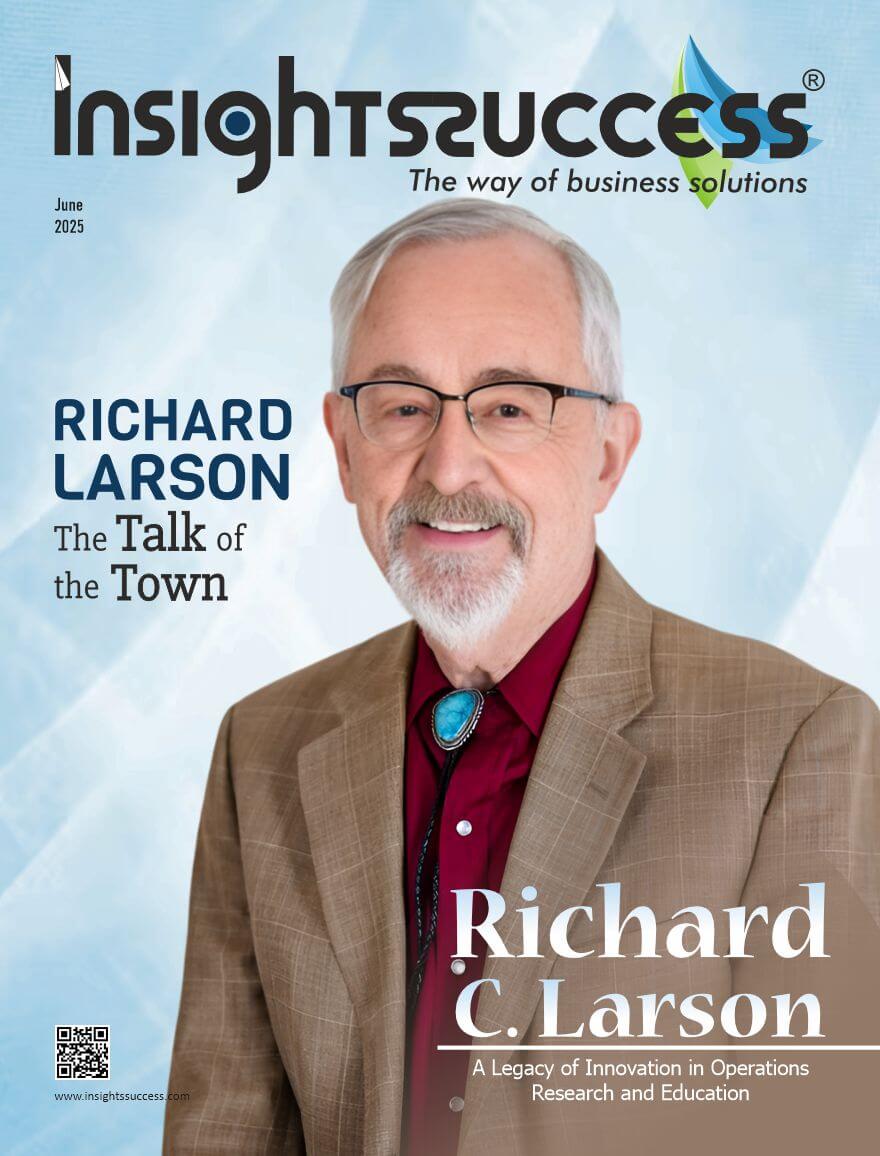
Richard Larson: The Talk of the Town
Richard Larson: The Talk of the Town Richard C. Larson’s pioneering career at MIT reflects a lifelong commitment to solving complex societal problems through operations research and educational innovation. Known as “Doctor Queue,” he seamlessly integrated theory with practice, shaping public systems, mentoring future leaders, and transforming global education through technology and service. Quick highlights Quick reads

Richard C. Larson: A Legacy of Innovation in Operations Research and Education
Before examining the distinguished career of Richard C. Larson, it is necessary to acknowledge the significant impact a committed individual can have on academic fields, public system change, and world educational technology. Richard’s path is a testament to the long-term power of inquiry, service, and the never-ending quest for pragmatic solutions to complex problems. Introduction Richard C. Larson, widely referred to as “Doctor Queue” due to his groundbreaking contributions to queueing theory, is a model of cross-disciplinary scholarship and public influence. For over half a century at the Massachusetts Institute of Technology (MIT), Richard has established himself as professor, researcher, inventor, mentor, and leader of thought. His distinctive combination of mathematical precision, field-based pragmatism, and forward-looking leadership has had a lasting impact on operations research, urban systems, and technology-facilitated education. Richard’s legacy is not only in terms of scholarly work and institutional innovations but in the myriad lives enriched by his dedication to bridging theory and practice. Early Life and Academic Foundations Richard C. Larson was born in 1943 in Bayside, Queens, New York City. He came from a family that prized education and curiosity, and Richard’s early life was characterized by intellectual curiosity and a desire to comprehend the systems governing everyday existence. Richard moved around a number of times as a child before graduating from Needham High School and then going on to attend MIT, where he received his Bachelor’s, Master’s, and Ph.D. degrees in electrical engineering in 1969. Richard’s years at MIT overlapped with an era of explosive innovation in applied mathematics and engineering. Guided by the best minds in operations research, he absorbed the value of closing the gap between academic theory and real-world application-a philosophy that would be the defining characteristic of his career. Operations Research: Theory Meets Practice The Essence of Operations Research Operations research (OR) is a field of study that draws on multiple disciplines to use mathematical models, statistical methods, and optimization procedures to address challenging decision-making problems. For Richard, OR was not merely a learned academic endeavor but an active approach for dealing with the “messy” issues of the real world. He characterized OR as “research on operations,” with a focus on the importance of working directly with real systems-public safety, transportation, health care, and education. Boots-on-the-Ground Approach Richard’s OR philosophy was characterized by an absolute commitment to fieldwork and actual-world involvement. Richard C. Larson was convinced that only good solutions could arise from a rich comprehension of operational realities, frequently demanding researchers to “get their boots muddy.” This philosophy found expression in his practice with public sector organizations, where he utilized OR principles to enhance emergency response systems, optimize urban infrastructure, and improve service delivery. One of Richard’s greatest achievements was helping to optimize New York City’s 911 emergency call system. Through the application of queueing theory and sophisticated scheduling models, Richard and his group cut response times by a huge margin and optimized resource use. Although it is impossible to measure the full extent of these gains, Richard was adamant that their efforts saved lives and raised the bar for public safety operations. Practitioner First, Academic Second During the course of his career, Richard C. Larsoninsisted that his success as a scholar lay in his status as a practitioner. Regularly, he worked with public agencies, non-profit organizations, and industry partners, making sure that his research was responsive to pressing social needs. This practitioner orientation shaped his instruction as well, as he advocated that students tackle problems directly and view theory and practice as inextricable parts of good problem-solving. Educational Philosophy and Mentorship Integrating Theory and Practice As a teacher, Richard was famous for combining tough theoretical training with practical, experiential learning. He eschewed a strictly “theorem-proof” pedagogy, believing that operations research students needed to gain an intuitive grasp of actual systems through experience. His own courses at MIT focused on field studies, case studies, and group projects that forced students to use analytical methods on messy, unstructured problems. Mentoring the Next Generation Richard’s impact was far-reaching beyond the classroom. Throughout his career, he guided many doctoral students, such as Kent W. Colton and Maia Majumder, who have gone on to notable careers in academia, industry, and public service. His mentorship was marked by a sincere interest in the professional and personal growth of his students and a dedication to developing intellectual curiosity and moral responsibility. Consulting and Real-World Impact Aside from his teaching duties, Richard C. Larson oversaw off-campus consulting companies like Public Systems Evaluations, Inc. and ENFORTH Corp. These firms gave students the chance to work on actual projects over their summer vacations, usually in tough urban settings like New York City. The exposure of working on field operational issues enriched students’ studies and motivated many to pursue meaningful careers in operations research and allied fields. Leadership in Educational Technology Vision for Technology-Enabled Learning Richard’s passion to enhance education did not stop at regular classrooms. In seeing the transformational potential of digital technology, he became an early and foremost champion for putting technology at the center of teaching and learning. His enthusiasm in educational technology started when he witnessed the good impacts of digital technologies on his own children’s education, and so he wanted to find means of scaling such effects to wider communities. Center for Advanced Educational Services (CAES) Between 1995 and 2003, Richard C. Larson was the director of MIT’s Center for Advanced Educational Services (CAES). During his tenure, CAES created and implemented technology-enabled learning solutions for students globally, overcoming geographical barriers and increasing access to quality education. The center’s work provided the foundation for future innovations in online and blended learning at MIT and elsewhere. Establishing the Learning International Networks Consortium (LINC) In 2002, Richard established the Learning International Networks Consortium (LINC), an international organization based at MIT that seeks to use technology to deliver quality education at scale. LINC united universities, policymakers, and practitioners from more than 25 nations to tackle the educational challenges of disadvantaged and remote communities. The consortium held international

From Proposal to Progress: How to Foster Innovative Education Leadership?
With times of accelerated technological change, changing societal expectations, and evolving student needs, Innovative education leadership must transcend mundane administrative functions. Today, educational leadership must do more than the effectiveness of management; it must be vision, imagination, and forward thinking for genuine change. As schools and institutions grapple with daunting problems and new opportunities, visionary leadership is no longer a choice but an imperative. Combined, these strategies form a model not only for advocating change, but for making long-term and meaningful headway in the classroom environment. This article demonstrates the key components that define and drive progressive leadership in education. Embracing a Culture of Change and Collaboration Innovative education leadership starts with the change of culture to innovation, collaboration, and creativity. Top-down leadership is generally not the kind that facilitates innovation since it tries to concentrate control and strangle experiments. Innovative educational leaders create open spaces in which teachers, students, staff, and citizens feel licensed to generate ideas and lead. This collective Innovative Education Leadership not only implants multiple thoughts but also creates ownership and responsibility. Empowering innovation requires leaders to model flexibility and openness. By articulating an openness to experiment with new processes, to welcome constructive feedback, and to learn from the outcomes, leaders set a model for continuous improvement. Further, investments in professional development and reflective practice allow teachers to become confident and capable enough to implement innovative teaching practices and transformative designs for learning. Infusing Technology and Equity into Educational Vision At the center of education today stands technology, yet innovation is not provided in the form of showering new tools in an automatic manner into classrooms. Innovative leaders’ subject new technologies to careful scrutiny to determine their utility and their potential to enhance learning. What that does is ensure that any imposition of technology will be in service to personalized learning, digital literacies, and alignment with overall goals of an organization. Notably, technology must be employed to bridge the gap of knowledge and not widen it. Innovation strategy must center equity. School leaders should be devoted to developing cultures where every kind of student has the opportunity to succeed. This includes a sense of and response to student diversity of needs, uprooting systematic barriers, and resource allocations that enhance fairness and access. By having innovation guide equity, leaders can ensure that educational transformation brings value for everyone to learn, not only the favored minority. Balancing Data-Driven Insights and Human-Centered Leadership Successful instructional innovation also relies on the ability to use data-driven decision making without ever forgetting the people component. Data-informed leadership allows instructors to identify trends, monitor progress, and make data-driven adjustments to teaching and learning strategies. Yet, when data are used in isolation or in their entirety, they can reduce teachers and students to numbers, stripping them of their personhood and richness and simplifying the wealth and variety of the learning process. There is a new kind of leader who blends analytics through empathetic listening in their communities. They use data as a tool for insight and progress, not surveillance. The people-centered approach prioritizes emotional well-being, social connectedness, and safety, so the schools are productive but also caring. It is through this that leaders cultivate spaces where innovation is both sustainable and significant: they balance performance and self-fulfillment. Visionary leadership that can Anticipate Future Trends One of the key characteristics of visionary education leaders is the ability to prepare and respond to emerging trends. This means embracing strategic foresight—the awareness of technological advancements, social transformation, and policy shifts that may possibly impact the education system. Their best opportunity to make anticipatory decisions, embrace new pedagogies, and create learning systems resilient enough to endure transformation relies on staying ahead. Innovation cannot ever be an end unto itself. Astute leaders intentionally assess new designs-such as hybrid learning, project-based learning, or competency-based education-to determine whether and how they might be utilized to further the mission of their organization and interests of their learners. Adoption is not implementation; it’s intentional implementation. By coupling innovation with context and purpose, leaders do change in ways that will flourish and be sustainable. Conclusion Innovative education leadership is a continuous, strategic endeavor, based on a tripod of vision, adaptability, and inclusivity. Education leaders must become not only administrators but also learners, facilitators, and change agents. This will foster a culture of collaboration, technology integration with equity, balancing data with humanity, and proactive steps to prepare for the future. Finally, they engineer systems not just more efficient but also fairer, more attractive, and more responsive. In the process, they redefine leadership for development and set education as the launching pad for a higher quality society. Read More: Transforming STEM Education Through Social-Emotional Learning Integration

Inspirational Icon To Look For In 2025- Vol-6
Inspirational Icon To Look For In 2025 This edition celebrates individuals who are redefining leadership, resilience, and innovation in their fields. This edition features Dana Hatch, a visionary leader whose impact and unwavering dedication continue to inspire others to reach greater heights and shape a brighter, more inclusive future. Quick highlights Quick reads