






Richard Larson: Transforming Education Through Mentorship, Innovation, and Lifelong Commitment
Education is the cornerstone of societal advancement and personal transformation. As a tool, it empowers individuals, breaks cycles of poverty, fosters equality, and creates a pathway for opportunity and innovation. Education isn’t just about textbooks and classrooms—it’s about nurturing minds, inspiring action, and shaping futures. In a world increasingly driven by knowledge, access to quality education is more important than ever. Among the stalwarts who have transformed the educational landscape, Professor Richard Larson stands tall. His life’s work is a testimony to what passion, commitment, and vision can accomplish. From shaping young minds to influencing large-scale policy decisions, Larson’s journey offers invaluable insights into how one individual can leave an indelible mark on the academic world. His career, spanning over five decades at MIT, has not only impacted the institution but has also touched countless lives around the globe. Professor Larson’s legacy is not merely in the volumes of scientific literature he has authored or the prestigious positions he has held. It is deeply rooted in his approach to mentorship, his teaching philosophy, and his relentless pursuit of educational innovation. This article explores his life, career, achievements, and enduring influence on the global educational community. Early Roots and Educational Foundations Born in 1943 in Bayside, Queens, New York City, Richard Larson’s early life took him through Pennsylvania and later to North Plainfield, New Jersey. These formative years laid the foundation for a lifelong pursuit of knowledge. After graduating from Needham High School in Massachusetts, he went on to attend the Massachusetts Institute of Technology (MIT)—a decision that would shape the rest of his life. At MIT, Larson’s academic journey saw him earn a Bachelor of Science, a Master’s degree, and ultimately a PhD in Electrical Engineering. These achievements were not just academic milestones; they were stepping stones in a career marked by interdisciplinary curiosity and intellectual versatility. Discovering a Passion for Teaching and Research Even as a school student, Richard Larson exhibited a strong affinity for physics due to its logical structure and practical application. He disliked chemistry and found biology challenging due to its memorization-heavy approach. His early academic preferences foreshadowed his future inclination toward operations research, a field that blended his analytical abilities with real-world applications. Professor Richard Larson never aspired to become a traditional physicist. He was driven by a desire to bridge multiple disciplines, an approach that would become a defining trait of his academic life. Rather than conforming to academic silos, he sought out intersections—between engineering and education, policy and science, technology and human development. An MIT Journey Spanning Five Decades Larson’s career at MIT is extraordinary by any measure. Over 55 years, he taught in five different academic departments, ranging from Electrical Engineering to the interdisciplinary Institute for Data, Systems, and Society (IDSS). His teaching methods combined rigorous analytical thinking with real world relevance, making his classes both challenging and inspiring. The path to MIT was not without its emotional moments. When Richard Larson received his acceptance letter, he initially believed it to be a mistake. This reaction, as he later learned, was quite common among high-achieving students and is referred to as the “Groucho Marx Syndrome.” Yet, this humble disbelief did not deter him. Once he joined MIT, he fully immersed himself in its intellectual culture and went on to shape it profoundly. Mentorship That Changed Lives One of the defining moments in Larson’s career occurred when a student came to his office, intent on dropping out due to a poor exam performance. Instead of letting the student walk away, Richard Larson engaged him in deep, focused conversations. By nurturing the student’s commitment and providing tailored mentorship, he transformed not just the student’s grade but also his confidence. Stories like this are countless and demonstrate Larson’s incredible ability to inspire and elevate his students. His mentorship has consistently produced A-grade scholars who went on to excel in academia, industry, and government. For Richard Larson, teaching was never a transactional job. It was a calling. A mission to shape minds and prepare students not only for exams but for life. Notable Achievements and Honors Larson’s achievements extend beyond the classroom. He served as president of the Operations Research Society of America (ORSA) from 1993 to 1994 and later as president of INFORMS, the Institute for Operations Research and the Management Sciences. For over 15 years, he was the co-director of MIT’s Operations Research Center. He was also the principal investigator of the MIT BLOSSOMS (Blended Learning Open Source Science or Math Studies) initiative, which aimed to enhance high school education worldwide. His active research in pandemic control, particularly during the COVID-19 era, has been groundbreaking. Richard Larson has often focused on systemic issues within the U.S. education system, using operations research as a tool to propose meaningful changes. Teaching Philosophy: Engaging Students Always Despite the evolution of educational platforms and curriculum structures over the years, Larson’s approach to teaching has remained grounded in one principle: engagement. His classes are not one-way lectures but interactive sessions designed to challenge, provoke, and inspire. He describes Operations Research as “the world’s most important invisible profession,” making it both an exciting and easy subject to teach. Subjects like Airline Scheduling and Queuing, with their practical relevance, have been favorites in his pedagogical toolkit. He continuously strives to make complex ideas accessible and relevant to his students. Defining a Visionary Leader in Education For Richard Larson, a visionary leader is one who cultivates critical thinking and nurtures responsible global citizens. He encourages students to question norms, challenge ideas, and embrace lifelong learning. He warns against blind conformity and praises those who chart new paths—even when those paths are uncertain or unpopular. In his view, education should not be about producing workers for the economy. It should be about shaping individuals who are intellectually curious, socially responsible, and personally fulfilled. This philosophy has guided not just his teaching, but also his administrative roles and research priorities. Legacy of a Mentor and Role Model Professor Larson hopes to be remembered

From Understanding to Action: Harnessing AI for Enhanced Learning Experiences
Artificial intelligence (AI) is revolutionizing the learning environment at a breakneck speed, providing unprecedented potential for personalized learning, educational equity, and more rational teaching. As schools and teachers look for out-of-the-box solutions to meet diverse learning needs and increase performance levels, AI can improve the process of teaching-learning. Through AI-driven platforms, analytics, and intelligent content creation, the education industry is capable of re-engineering the learning process to be responsive, interactive, and effective. It appears that the digital era unfolds before us every day. Adopting AI not only unleashes total intellectual potential but also gets the learners ready for an age where know-how of technology would prove to be the largest strength. This article highlights three major areas of artificial intelligence implementation in the education industry: intelligent learning pathways, AI-driven content and assessment, and teacher productivity and decision support. Individualized Learning Paths The greatest advantage AI can possibly provide to schools is individualized learning opportunities as per the requirement of one student. Traditional classroom teaching adopts a one-size-fits-all approach, which might or might not be flexible for different learners with diverse capabilities, interests, and learning speed. Artificial intelligence-based adaptive learning systems have the capability to monitor the performance of the learner in real time and modify the curriculum. This enables the learners to get customized content recommendations, feedback, and scaffolded assistance, which reflects in fast learning and recall. Second, AI personalization helps in engaging and motivating students. By creating more pertinent learning experiences based on the students’ strengths, and working on their own problems, AI applications can create more stimulating and motivating learning content. Learning content is more stimulating and motivational to the students when it is relevant and achievable. Also, these systems are able to detect learning gaps or causes of disengagement and plug or stop them early enough so that the teachers can act before. For instance, AI tools such as Carnegie Learning and DreamBox Learning learn math exercises or reading problems dynamically depending on a student’s response, with seamless continuity. Smart Content and Testing Tools Educational content development, dissemination, and testing are being transformed by artificial intelligence. Smart content software and intelligent tutoring systems can create high-quality learning content, including educational video, interactive simulations, and quizzes, that can be customized to the particular learning goals. They employ machine learning and natural language processing algorithms to make not just the content accurate but also standards-based and pedagogically robust. They enable content creation without compromising on instructional integrity. Consider Squirrel AI and Content Technologies, Inc., for example. Such AI platforms already exist that can create individualized textbooks and lesson plans in a matter of an eyeblink. One of the other primary fields in which AI has profound influence is grading. Automated graders from AI can conveniently grade all manner of assessments—e.g., essays, short answers, and even oral ones—to free the administrative workload from teachers and provide instant feedback to students. More sophisticated systems are even able to conduct formative testing that is longitudinal in its development and enables follow-up learning tasks to be suitably adjusted. With Grade scope or Century Tech at grade, teachers have a clearer vision of student development, while the students receive continuous feedback loops. The transition from static to dynamic assessment paradigms benefits the teacher with actionable data and benefits the student with increased understanding of the learning process, resulting in increased accountability and achievement. Enabling Educator Effectiveness and Decision Making Apart from student-facing solutions, AI also greatly enables teachers in the realm of robotic redundancy of routine tasks and assistance in evidence-based decision making. Administrative tasks like tracking attendance, timetabling, and report writing can be streamlined best by AI-based solutions to enable the release of teachers’ time so that they have more time for teaching and interaction with students. AI-powered LMS is also able to track class activity and give analytics for identifying trends, problems, and where it can improve. Google Classroom and Canvas are two of the numerous platforms that now have AI aspects integrated to scan students’ work and activity trends so teachers can make faster, better-informed decisions. Instructional design, AI helps instructors decide on what will be the most effective instructional methods for various learning groups. By adding test scores, engagement rates, and behavioral data, AI technology is able to propose specific interventions, differentiated instructional plans, and resource allocation enhancement. For example, AI dashboards will alert a teacher when a student subgroup is continually lagging behind on certain skills so remediation will be implemented immediately. Data instruction enables teachers to make smarter and more efficient decisions, ultimately resulting in enhanced student learning. While AI can never replace the human factor of judgment or people-to-people interaction of pedagogy, it may be a satisfactory peer in the dirty work of motivating and directing learners, an aid rather than a replacement for the instructor. Conclusion Education with AI is a paradigm shift towards more personalized, productive, and more equitable learning experience. From adaptive learning paths to automated marking and informing teacher planning, AI can be utilised to improve the quality of learning in a wide range of settings. It also prepares learners for a more automating, data-driven world. With technological capacity still expanding, educational institutions must invest in thoughtful, responsible utilization of AI capacity that expands and supports human instruction instead of compromising student privacy. Teachers, policymakers, and technology developers must collaborate so that AI will be a positive force in education—to assist educators, motivate students, and make high-quality learning accessible to everyone. With responsible and strategic application of AI, the future of education can be more adaptive, accessible, and empowering to all. Read More: Professional Development Models for Soul-Centered Education
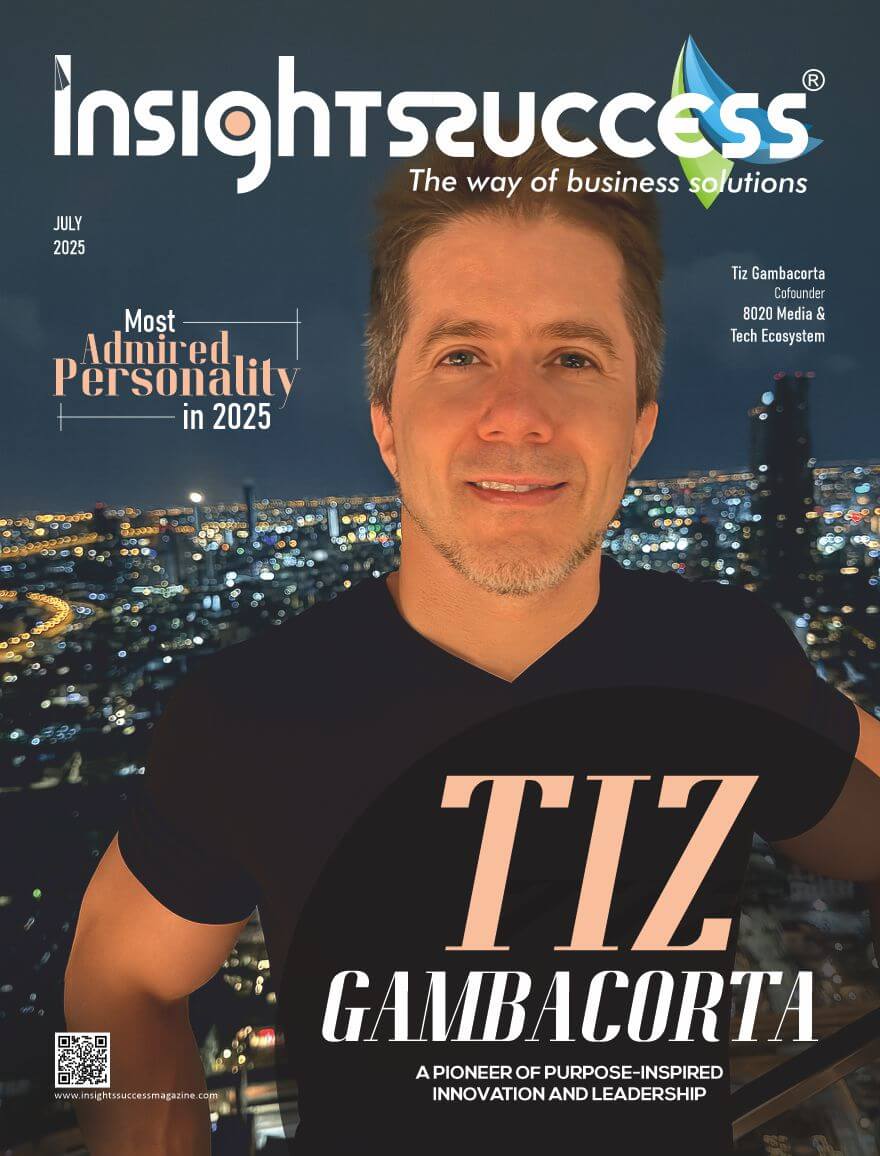
Most Admired Personality in 2025
Most Admired Personality in 2025 This edition honors Tiz Gambacorta, a visionary leader known for redefining digital entrepreneurship. Celebrated for his innovation, integrity, and impact, this feature delves into his journey, achievements, and the mindset that inspires thousands across the globe to lead with purpose and think beyond limits Quick highlights Quick reads

Tiz Gambacorta: A Pioneer of Purpose-Inspired Innovation and Leadership
In an era where change happens fast and competition is ever growing; a special breed of leaders stands out because of their ability to bring together financial acumen and a strong commitment to social purpose. Not only are they incredibly skilled at what they do, but they also redefine success by blending values, entrepreneurial action, and a deep commitment to service. Tiz Gambacorta is one such person— a living embodiment of purposeful leadership, illustrating how vision, perseverance, and compassion can define industries and motivate generations. Tiz Gambacorta was born in the early 1980s to an internationally experienced family. He led an unusual life in the early years. His father was a diplomat, and his mother was a United Nations interpreter. They created a world in which languages, cultures, races, and religions came together at the dinner table. Constant traveling between the continents gave him cosmopolitanism and flexibility since childhood. Life at home, though cosmopolitan, was humble. There were no crises or moments of drama—just the constant urging to adapt to a new country and culture as a result of Tiz’s dad frequent relocation requirements. His parents, though supportive, avoided the media frenzy over high-level academic success, instead keeping the achievement of a ‘simple’ college degree as a milestone to eventual success in life. This controlled mixture of freedom and limited expectations somehow enabled Tiz Gambacorta to find an inner natural motivation and hunger for achievement that would become the hallmark of his next few years. The Academic Journey: From Mediocrity to Mastery Tiz Gambacorta did not have an academic journey of precocious greatness. He was a run-of-the-mill school student, with no stellar grades that would normally lead to starry-eyed opportunities. However, during his early university years, there was one such turning point: he realized that to get into a coveted investment banking job, better study habits and less pursuit of extra-curricular activities were needed. Driven by this realization, Tiz Gambacorta rededicated himself as a scholar, studying harder than others through sheer effort and will. After graduating with top marks a year early from his cohort in Rome, he studied mathematics at Imperial College London, Business Administration at Oxford University and also Business Administration at Harvard Business School. His early successes laid the groundwork for a career rise that was meteoric in nature. This time of hard work and self-application yielded a principle that would serve him throughout his life—success is more a function of hard effort and prudent purpose than of native ability. The Pursuit of Fulfilment at the Highest Levels of Finance Tiz Gambacorta started his investment banking career at age 21, departing Rome for London. He soon made a name for himself in the delicate art of oil and gas derivatives trading, an extremely technical operation that requires analytical strength as much as the capacity to endure violent markets. Whereas others in the outside world once conjured banking as a staid career, Tiz flourished in the chaotic and loud worlds of the bank’s trading floors in London, New York, Singapore and Tokyo, dealing with huge sums and making risky but often profitable transactions. By his late twenties, he was one of the youngest Vice Presidents in his division, having managed just shy of $1 billion in customer assets. It was a testament to his readiness to take risks and fear no difficulties others would shy from. However, even amidst financial prosperity, Tiz Gambacorta felt the confines of a career lived out the limited spheres of tightly stacked computer screens and stock charts on a trading floor. The Turning Point: Navigating Crisis The watershed moment in Tiz’s career was the 2008–2009 global financial crisis. Amidst record losses for the banking industry, he saw the collapse of even the best-housed financial institutions like Lehman Brothers, firsthand. When his unit at Barclays was closed due to catastrophic losses in Spain, Tiz Gambacorta was forced to make a decision between returning to the comfortable lifestyle of finance or to traverse the untrodden path of entrepreneurship. Choosing the latter, he opted for the uncertainty of a new start, leveraging the experience and know-how gathered during years in banking to seek new frontiers. This phase of transition brought to light a prevailing trend in his life—the embracing of calculated risk and reinvention of the self-amidst adversity. The Entrepreneurial Leap: Building for Impact Unlike anything he was taught in business school, Tiz’s venture into entrepreneurship came by chance. A spur-of-the-moment invitation to an entrepreneurship seminar, which he went to unwillingly, exposed him to the realm of web content creation and monetization. Enchanted by the prospect of disseminating knowledge through new technologies, he started creating educational content for retail investors based on his extensive trading and risk management experience. The venture was grueling producing up to 12 articles a day, building up an audience from zero, dealing with the technical challenges of websites and riding out the initial challenges the nascent online commerce industry. But Tiz’s diligence was rewarded when his columns started gaining popularity, with increasing numbers of students packing in to acquire do-it-yourself insights and education on investing. Building this grassroots clientele laid the seedbed for his successful media and technology business of today. Eunice: Democratizing Investment Education At the heart of Tiz’s entrepreneurial ambition is Eunice, an organization dedicated to shaking up how individuals learn to invest and access investment opportunities. Seeing that there wasn’t a one-stop shop for learning about investing—similar to an Amazon or Alibaba for ecommerce—Eunice leverages technology to give users content and suggestions based on their interests. With a highly advanced recommendation algorithm powered by user behavior and machine learning, Eunice generates personalized educational content and newsletters that are specifically designed to address subscriber interests in stocks, commodities, or alternative investments. Not only does this enable investors to make informed choices, it also advances the wider issue of financial literacy in an increasingly competitive financial market. Tiz Gambacorta’s function within the company has changed over the years, from active management to the current strategic, vision-based function. His purpose

How Conscious Leadership Drives Sustainable Business Growth in the Digital Age?
In the fast-changing digital era, companies are presented with historic opportunities and challenges. Technologies such as artificial intelligence, blockchain, and big data analytics are revolutionizing industries, while consumers’ expectations for ethical behavior and transparency are at a record high. To thrive in this complicated ecosystem, there has arisen a new leadership model: Conscious Leadership. This approach, rooted in self-awareness, authenticity, and a commitment to the greater good, is driving sustainable business growth by aligning profit with purpose and fostering resilience in an era of constant change. Understanding Conscious Leadership The philosophy of Conscious Leadership attaches importance to self-reflection, ethical decision-making and stakeholder orientation. Unlike traditional leaders who are driven by the need to make immediate profits or top down control, conscious leaders lead out of the understanding of their own beliefs and the broader impacts of their decisions. They develop cultures of trust, inclusivity, and cooperation, and enable organizations to adapt to the challenges of the digital age without losing the human factor in the background. Conscious Leadership is a mixture of emotional and long-term thinking, which enables companies to excel sustainably. The Digital Age: A Change Catalyst Digital age has transformed the nature of business operations. Such breakthroughs as the use of AI-powered analytics and cloud computing provide efficiency and customer interaction never seen before. However, there are consequences to these developments, and they include the privacy and security of data, the displacement of workers due to automation, and intense competition in an international marketplace. The most effective leaders to tackle these complexities are self-aware, and they can use technology in a responsible manner, maintain their organizations agile, and focused on the mission. How Conscious Leadership Drives Sustainable Growth Developing a Purpose-Driven Culture Another peculiar feature of Conscious Leadership is the creation of a purpose-oriented culture. In the age of digitalisation, when customers and employees seek reasons beyond purchase, the clear mission forms loyalty and commitment. Conscious leaders spell out a profit-free vision that unites people in terms of values. Research demonstrates that purpose oriented companies are able to make employees 20 percent more productive, which is an invaluable resource in a digital office where working remotely and being innovators are key. Ethical Technology Integration The digital age demands fast adoption of technology, but good leaders ensure that such changes take place within the framework of ethical principles. In implementing the AI, e.g., they are transparent, fair, and accountable, so as no biases or privacy invasion are employed. This does not only mitigate risks but creates confidence among the constituents. In self-aware leaders, the balance between innovation and integrity leads to sustainable growth in a world of technology. Emphasizing Stakeholder Well-being Sustainable expansion is based on the welfare of all the participants of this process: employees, customers, communities, and the planet. The approach of flexible working and mental health support is pursued by responsible leaders to address issues of connected afflictions, and the burnout of constantly being online in the digital age. They also connect with customers in a meaningful way, using the digital media to listen to and take actions based on the feedback. This stakeholder-centric approach stimulates growth and resilience where the firms can survive economic or technological shocks and maintain trust. Constructing Adaptive and Resilient Organizations Digital age is marked with volatility including market change to disruptive innovation. The resilience is achieved by conscious leaders who encourage flexibility and continuous learning. They regard failure as a learning experience, make an investment in the skills of their workers and establish a culture of experimenting. When the remote work transition occurred in 2020, companies whose leaders are self-aware moved quickly to adapt to a remote environment by deploying digital solutions to maintain teamwork, demonstrating speed without the compromise of values. This kind of flexibility ensures sustainability and competitiveness in the long-term. The Greater Effect of Conscious Leadership Conscious Leadership does not apply to individual organizations but to industry and communities. By setting a high value on sustainability, such leaders encourage other people to follow them by adopting ethical practices, and this ripples to others. As an example, once a company talks publicly about its carbon footprint or promotes diversity, others will follow its example. With the age of information when word travels at a rapid speed, this effect is magnified and leads to a mass movement in favor of responsible business practices. Moreover, the conscious leaders apply the digital tools to ensure that they maximize their influence. Data analytics and social media will enable them to communicate freely with stakeholders, track the sustainability indicators and adjust strategies on the fly. This means that such a form of data-driven decision-making is informed and aligned with long-term goals and therefore makes sustainability even more embedded in business operations. Conclusion Conscious Leadership is not a fad but an imperative for sustainable business growth in the digital era. By promoting purpose-based cultures, responsible technology integration, stakeholder well-being, and resilience, conscious leaders develop companies that perform financially while contributing to the greater good. As the digital world keeps changing, this leadership strategy provides a roadmap for embracing complexity with integrity and vision. Firms that adopt Conscious Leadership are not only more likely to thrive amid change but also better positioned to guide the way toward a more sustainable, fair, and innovative world. In a world where purpose and trust hold such high value, Conscious Leadership is the path to enduring success. Read More: Professional Development Models for Soul-Centered Education

Professional Development Models for Soul-Centered Education
Within the changing, ever-faster world of education today, a movement is emerging to reclaim an intimate, whole-brained learning process—one that is mindful not just of intellect and success, but of emotional richness, creativity, and the human spirit. At the core of this burgeoning movement is soul-centered education, an educational model that redefines the very nature of teaching and learning. It’s not just a pedagogical method, it’s a philosophy that encourages teachers and learners to lead with purpose, compassion, and inner knowledge. To put soul-centered education into practice, we first need to train and empower teachers to act in its spirit. That means reimagined professional development—professional development that feeds the teacher as much as a teacher as a human being. The old model of professional development, skill-based and content-based, is not enough to create the presence and truth-telling required in a soul-centered classroom. The Call for a New Paradigm Soul-based teaching makes teachers question their work in a new manner than as bearers of information but as agents of change. The transition from performance to presence does everything differently. Teachers who adopt this vision are invited to envision their values, hear, and build learning spaces based on compassion and intention. That can’t happen in superficial workshops or check-box training. Professional development has to become a journey—a process of spiritual grounding and introspection. It’s a matter of reminding teachers why they became teachers in the first place and how they can live their inner truth by their outer behaviors. Reflective Practice as Foundation A widely used model for professional growth in this field is reflective practice. Through reflection—usually conducted in community with other teachers—teachers become more fully attuned to their experience, feeling, and understanding. These meetings are a place and space where teachers know they are safe and supported to share their failures, modest triumphs, and pose essential questions such as: Where am I growing? Where am I stuck? What is it that my soul yearns to bring to the classroom? Instead of being tested or graded, teachers are observed. That in itself is different. It provides a foundation of self-knowing and trust, two of the hallmarks of soul-centered education. The Mentorship and Inner Companionship Role A second critical element of professional development is mentorship—but not of the traditional top-down variety. In soul-centered education, mentorship is spiritual friendship. It requires collaborating with someone who has already walked in your direction and can contain both your questions and your expansion. These collaborations assist teachers in bridging pedagogical questions and reaching deeper into more personal questions: How do I keep my balance in stressful places? How do I get more integrityful and authentic for students? Such guidance honors the whole person and allows for growth that is professional but also profoundly personal. Experiential Learning Through Retreats In an arena where burnout has become a widespread issue, providing time and space for teachers to pull back is more important than ever before. Soul-centered teacher retreats offer an opportunity to step away from the noise and become quiet. Experience-rich, they are occasionally held in nature settings or tranquil environments where the pace of life is moved low enough to support genuine reflection. Here, through meditation, journaling, art, and silence, teachers access their inner life. They come back refreshed, but more profoundly, changed—ready to infuse their teaching with a deeper sense of peace, clarity, and inspiration. These retreats are not extras; they are foundational to the creation of a soul-based teacher. The Power of Creative and Embodied Learning Creativity is not reserved for the arts—soul-centered learning keeps it at its core. As teachers engage in professional learning through movement, story, music, or visual art, they are tapping into different ways of knowing that transcend rationality. These practices are not about creating something perfect but about tapping into the intuitive and bringing out what lies beneath. Embodied learning itself is necessary. Teachers are taught to pay attention to their bodies, hear what they feel, and employ breathing or movement as a grounding mechanism and an empathy tool. They become more present and responsive in their classroom tasks through these exercises. Mindfulness as a Core Practice At the heart of soul-based teaching is the cultivation of mindfulness. Mindfulness-based professional growth allows teachers to learn presence—not just in theory, but in the midst of classroom distractions, administrative demands, and personal worry. Breathing, body scan, and moment-to-moment awareness teach teachers to anchor themselves. Mindfulness programs like Mindful Schools or CARE (Cultivating Awareness and Resilience in Education) have already demonstrated that mindfulness can build teacher resilience, reduce burnout, and create more responsive learning environments. When teachers are present, students also are impacted by how they feel safe, heard, and understood. Challenges and Possibilities Soul-based learning in those systems is not an easy undertaking. It is compressed time, institutional resistance, and insufficient funding that can bring progress to a standstill. But more fundamentally, there is a value question: What are we building as learning spaces, and what does it mean to become a whole adult? The test is finding room for authenticity, empathy, and higher meaning. The greater that schools and organizations come to see the value in this path, the more professional development must adapt. A Return to the Heart Soul-centered education invites us to remember that teaching is a holy vocation. It is more than tests or grades—it is presence, meaning, and connection. Investing in professional growth that fuels the soul of the teacher starts us on the path of opening the door to the potential of classrooms as the place where transformation really can occur. When teachers are empowered to teach from the heart, students are empowered to do the same. Thus, soul-centered education is not merely a practice but a movement—a movement that can heal, inspire, and restore the very purpose of education itself. Read More: How Conscious Leadership Drives Sustainable Business Growth in the Digital Age?
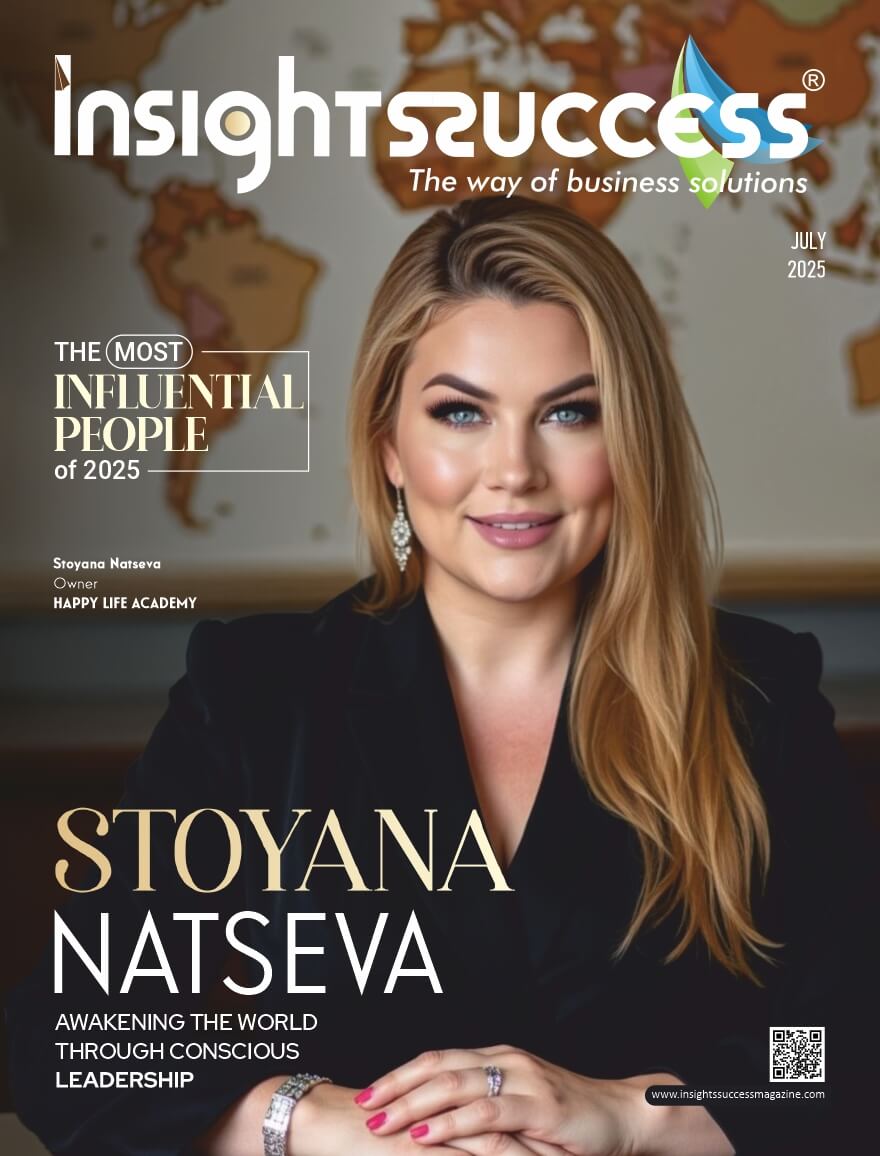
The Most Influential People of 2025
The Most Influential People of 2025 This edition spotlights visionary leaders who are redefining innovation, purpose, and global impact. At the forefront is Stoyana Natseva, celebrated for her transformative contributions and inspiring leadership, making her a beacon of progress in a world shaped by bold ideas and fearless execution. Quick highlights Quick reads

Stoyana Natseva: Awakening the World Through Conscious Leadership
In a society where titles and numbers are frequently used to define success, few people are redefining leadership by the extent of change they bring about. One such force and a visionary whose impact is going well beyond boardrooms and awards, is Stoyana Natseva. She discreetly is paving the way for something much more significant human awakening after starting her career in the regimented world of banking. The Founder of Happy Life Academy®, she has established a global platform devoted to soul- and purpose-driven leadership, emotional mastery, and conscious education. Her leadership style is characterized by presence rather than power. She is empowering over 100,000 people through her programs and impacted millions more through her digital footprint thanks to her unique combination of strategic rigor and emotional intelligence. At the core of each of the nine globally recognized MBA programs her Academy is currently offering a dedication to ethical influence, conscious decision-making, and inner clarity. She is a multi-award-winning changemaker, mother, and mentor who is demonstrating resilience in action by transforming personal setbacks into opportunities for development. Instead of hesitancy, she is responding to the worldwide pandemic with creativity, digitizing her offerings and giving hope to a society that needed inner strength. Stoyana Natseva’s tenet that leadership starts within remaining consistent whether she is mentoring aspiring leaders or guiding through crises. Her path is serving as a testament to the importance of maintaining one’s humanity in a world where connections are abundant and the power of purpose alignment. Stoyana Natseva is not just directing change, but also embodying it as she continues to influence global discussions on consciousness and leadership. From Balance Sheets to Life Balance Stoyana Natseva’s transition wasn’t born from corporate burnout or a dramatic epiphany. Instead, it emerged from a growing awareness of a pattern she observed across industries and cultures. “Through years of working with people from various walks of life—corporate professionals, entrepreneurs, creatives, parents, and young leaders, I noticed a recurring theme. Many have knowledge and experience but lack the tools to manage themselves their thoughts, emotions, direction, and inner clarity.” she explains. This observation, coupled with an increasing number of people seeking her guidance on overcoming internal blocks and finding their purpose, sparked the creation of what would become Happy Life Academy®. What began as a small community offering a single course has evolved into an internationally recognized platform delivering MBA programs, certification courses, and online resources to learners from around the world. The transition required more than just professional courage. As a mother of two children, one with special needs, Stoyana Natseva had to reimagine the very concept of balance of work life. “Balance doesn’t mean everything is perfectly divided. It means being present where I’m most needed, with full awareness and intention.” she reflects Building an Empire of an Awakening The numbers speak to the scale of Stoyana Natseva’s impact. Over 100,000 individuals have participated in her programs, with millions more engaging in her content across digital platforms. The Academy is offering nine internationally accredited MBA programs spanning coaching, psychology, and systemic consulting, creating a comprehensive ecosystem for professional and personal development. But beyond the statistics lies a philosophy that sets Natseva’s approach apart from conventional business education. “I created the Academy to offer something traditional education often misses skills for conscious living, mission-driven careers, and leadership built on ethics and soul,” she explains. This human-centered approach to business has earned her recognition far beyond Bulgaria’s borders. Her accolades include the Grand Prize Vienna 2022 for Mentorship and Personal Business Growth, multiple “Woman of the Year” awards in education and social impact, and three consecutive “Company of the Year in Education” honors. She is graced with the cover of Forbes three times, including their renowned “Women on Top” project. The Pandemic Pivot When COVID-19 disrupted traditional education models worldwide, many institutions struggled to adapt. For Stoyana Natseva, the pandemic became what she calls “a catalyst for digital transformation and opportunity.” Having already begun building an online presence, she made the strategic decision to digitize most of the Academy’s educational programs, investing heavily in platforms, video content, and global accessibility. The results exceeded expectations. This allowed the Academy to expand its reach far beyond national borders. During lockdowns, she hosted online marathons and free initiatives, engaging communities with messages of inner resilience during uncertain times. The key, she emphasizes, was “flexibility, fast adaptation, and staying human—even in digital space.” This digital transformation didn’t just sustain her business; it supported in amplifying its impact. The Academy’s reach expanded exponentially, touching lives across continents and establishing Stoyana Natseva as a global thought leader in conscious education. The Art of Conscious Leadership Natseva’s leadership philosophy challenges conventional notions of corporate authority. Drawing from her quarter-century in banking, she brings structural discipline to her mission-driven work, but with a distinctly human touch. “For me, business has never been an end in itself, but rather a vehicle to turn ideas, mission, and transformation into reality.” she explains. Her approach integrates what she calls “business discipline, psychological depth, and personal mission.” This synthesis has created what she describes as “markets with soul” environments where customers aren’t just buyers but partners in transformation. This philosophy extends to her leadership style. Among her greatest strengths, Stoyana Natseva identifies resilience in challenging times, strategic thinking, and the ability to turn setbacks into growth. However, she’s equally open about her vulnerabilities. “There was a time when I took on too much responsibility for outcomes, processes, and even other people’s emotions. This over-responsibility led to burnout.” she admits. The lesson learned that true support means holding space for others to access their own strength rather than carrying their burdens has become central to her teaching methodology. It’s an insight she believes every leader and coach can benefit from. Recognition and Impact on a Global Scale The wall of awards in Natseva’s office tells the story of sustained excellence across multiple domains. Recent honors include “Writer and Awakener of the Decade” and “Woman of
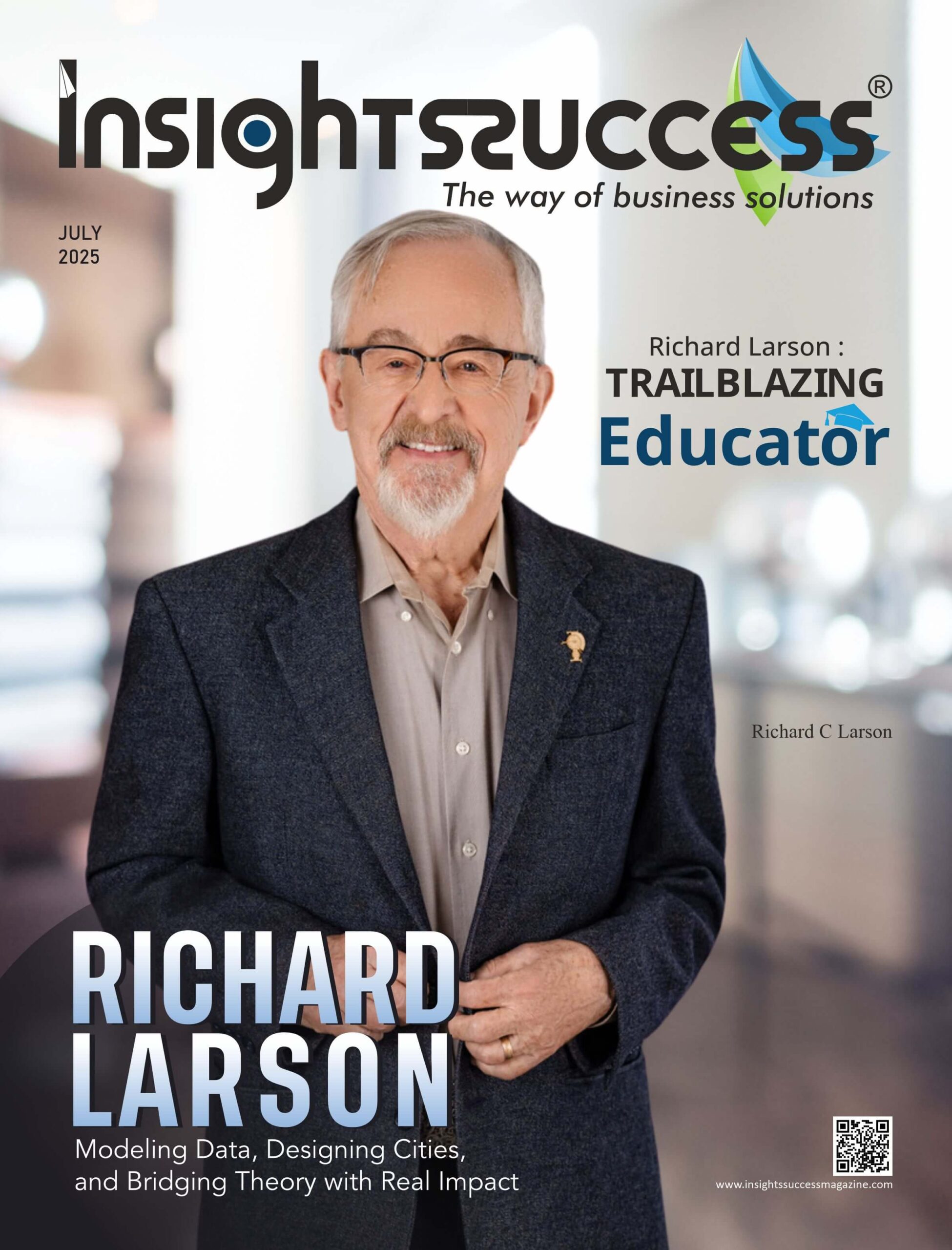
Richard Larson: Trailblazing Educator
Richard Larson : Trailblazing Educator Richard Larson is driving transformative change in the field of education. His innovative teaching methods and leadership are reshaping how we think about learning. This trailblazing educator is breaking barriers, leading with vision, and creating inclusive learning environments. The rise of influential educators like Richard Larson marks a new era of educational excellence. As a pioneer, Richard Larson continues to inspire the next generation of educators and learners alike. Quick highlights Quick reads

From Classroom to Culture: The Role of Influential Educators in Society
With your every stage of human advance, there has been one unchanging element: the incredible force of great teachers. From such ancients of philosophy to the dedicated teachers and professors of today, great teachers have served as catalysts of individual development, social transformation, and community improvement. Their contribution extends far beyond the classroom — they spark inquiry, kindle enthusiasm, and inflame generations to create a new tomorrow. Outside the Classroom: The Real Impact Excellent teachers do more than teach lessons or give homework. They are role models, guides, and learning champions. During the times of fast-paced technological evolution and changing social mores, excellent teachers equip students with the ability to think critically, be empathetic, and learn to bounce back. They create spaces where different perspectives are heard and valued, and each student matters. The strength of great teachers is that they recognize potential and develop it. They know that every learner is special with varying strengths and weaknesses. The growth mindset helps great teachers to make learners accept failure as a stepping stone to achieving mastery. This changed mindset triggers domino effects for society as a whole, turning learners into active citizens and creative problem solvers. Catalysts for Social Change Across history, the greatest teachers have led social change. They are advocates for equality, diversity, and access to quality education for everyone. In underrepresented communities, great teachers become agents of hope, closing opportunity gaps and changing lives. From fighting for underrepresented populations to introducing new models to serve diverse learners, great teachers lead one classroom at a time. In addition, effective teachers guide students through the toughest of life’s challenges. In a world that appears to be polarizing itself by the minute, they learn respectful dialogue and inquiring minds. They instill their students with the courage to query, the humility to hear other people out, and the integrity to lead with ethics. These are the kinds of societies cohesive and compassionate societies need. The Human Touch in the Digital Age As education becomes increasingly digitized, the work of good teachers can never be replicated. Sure, technology can deliver information well, but it cannot simulate the warmth, the instinct, and the human touch that good teachers provide. A comfort talk, a subtle push, or an exhortation to study harder – these small gestures being done out of concern make lasting impressions and instill trust. Influential teachers also have the heavy burden of assisting students in developing digital literacy and acting on the ethical aspects of the online environment. They teach students to navigate with the strengths of technology without eliminating the need for authentic human interaction, so they can flourish in an intricate global culture. Investing in Influential Educators Understanding the irreplaceable worth of such influential teachers is an investment in their happiness and development. Policymakers and communities are responsible for offering such influential teachers the training, support systems, and resources that make their success possible. Influential teachers, in turn, raise whole generations, driving innovation and prosperity. Communities and families also have an important role to play by collaborating with robust teachers to support home and neighborhood learning. Parents, caregivers, and teachers, when they work together, provide students with a consistent source of support and encouragement, which adds to the enabling influence of robust teachers. The Legacy Continues Good teachers don’t measure success by scores alone; they see how a once shy student gains confidence and finds their voice, or how a young child becomes resolute and has the courage to dream bigger. They touch lives long after students have left school behind, appearing in the typical workplace, the family living room, and community centers across the globe. In a hungry world for wisdom, compassion, and advancement, the work of great teachers has never been more vital. They teach us that education is not transmission but human capacity building and nurturing the values that benefit us. Conclusion The role of influential educators in society is nothing short of transformative. They shape futures, drive social progress, and keep the flame of hope burning bright for generations to come. As we navigate an uncertain world, one truth remains steadfast — influential educators are the guiding lights who help us all find our way.