






Sustaining a Legacy of Logic and Innovation: Richard Larson’s Endowment for Data, Systems and Society
For more than half a century, Richard Larson has been a guiding force at MIT, lending his expertise, passion, and forward-looking vision to some of the Institute’s most impactful academic initiatives. Now, his dedication has taken on a permanent form with the establishment of a new endowed faculty chair — the Distinguished Professorship in Data, Systems, and Society. This gift, announced by the MIT Institute for Data, Systems, and Society (IDSS), reflects Richard’s enduring belief in the transformative power of interdisciplinary thinking and problem-solving. More than just a financial endowment, the professorship is a gesture of intellectual continuity, aiming to empower future faculty leaders who operate at the convergence of data, systems, and societal impact. The inaugural holder of this prestigious professorship is Sasha Rakhlin, an acclaimed scholar and professor at IDSS and the Department of Brain and Cognitive Sciences. Rakhlin’s research spans machine learning, online prediction, and statistical theory — areas that precisely embody the ethos of the IDSS. By supporting Rakhlin and future faculty members, Richard’s gift ensures that MIT remains a fertile ground for interdisciplinary discovery, innovation, and mentorship. This endowed chair not only commemorates Richard’s multifaceted career at MIT but also projects his values into the Institute’s future. Richard, who has been affectionately called an “MIT lifer,” sees this professorship as an extension of his own academic journey. Having served in five different MIT departments over the decades, he found a lasting intellectual home in IDSS, an entity that harmoniously aligns with his interests in operations research, public systems, education, and policy. With this gift, Richard aims to preserve and propagate the interdepartmental and interdisciplinary approach that has defined his career and character. Honoring a Multi-Disciplinary Academic Journey The creation of the Distinguished Professorship in Data, Systems, and Society is not merely the act of philanthropic giving. According to Richard Larson, it is an embodiment of the ideas and principles that have driven his academic life. As he reflects on his decades at MIT, Richard acknowledges how the Institute not only tolerated but encouraged his several mid-career transitions — allowing him to shift his academic focus and explore emerging disciplines. Starting in what was then known as Electrical Engineering in the 1960s, Richard evolved with the times and ended his formal tenure in IDSS, a program tailor-made for someone whose career has intersected engineering, public systems, operations research, and education policy. Richard remarks that the three words — data, systems, society — capture the essence of his professional mission. Through his professorship, he hopes these words will continue to energize future scholars, inspiring them to conduct impactful research, deliver high-quality teaching, and engage meaningfully with society’s pressing challenges. Whether working on queueing theory or disaster planning, modeling energy consumption or developing online learning platforms, Richard has consistently applied a systems-thinking lens to real-world problems. This legacy is now institutionalized through a professorship that encourages the same kind of integrative academic pursuit. In keeping with his lifelong devotion to applied knowledge and education, Richard’s most recent book, Model Thinking for Everyday Life, bridges theory and practice by demonstrating how models can help people make smarter decisions in daily contexts. His other influential projects, like MIT BLOSSOMS (Blended Learning Open Source Science or Math Studies), reflect his unyielding commitment to spreading STEM education globally. The endowed professorship thus adds a new chapter to his story — one where the next generation can build upon his values and contributions. Supporting Future Generations of Thinkers and Leaders Appointed as the first holder of the newly created chair, Professor Sasha Rakhlin exemplifies the kind of scholar Richard hoped to support. A leader in machine learning and computational statistics, Rakhlin has pioneered tools for online prediction — a method of sequential learning with implications for real-time decision-making and adaptive systems. His research, grounded in theory yet resonant with practical applications, is precisely the kind of work that thrives in IDSS’s interdisciplinary ecosystem. Fotini Christia, Director of IDSS and the Ford International Professor of Political Science, sees Richard’s gift as both a tribute and a beacon. Richard has been making an impact at MIT for over half a century,” she notes. “This gift extends his already considerable legacy and ensures his impact will continue to be felt for many years to come.” Christia’s words underline the profound influence Richard has had, not just through his scholarship but through his vision for institutional excellence and renewal. The significance of the professorship also extends beyond IDSS. Michale Fee, head of the Department of Brain and Cognitive Sciences, praised Rakhlin’s work for bridging disciplines and uniting diverse areas of inquiry. “Sasha’s analysis of neural network complexity, and his work developing tools for online prediction, are perfect examples of research which builds bridges across disciplines,” he said. Such cross-pollination is central to both IDSS and Richard’s academic philosophy. Rakhlin, in accepting the honor, expressed gratitude and humility: “Professor Richard’s commitment to education and service to MIT both serve as models to follow,” he said. Data, Systems, Society: More Than Just Words To Richard, data, systems, and society is not just the name of an institute — it’s a philosophy of academic purpose. His own contributions to urban service systems, including emergency response modeling, pandemic planning, and workforce logistics, serve as foundational examples of this approach. From designing smarter cities to transforming how students learn globally, his work embodies a dedication to societal betterment via systemic thinking. This new professorship ensures that these ideas remain front and center at MIT. By funding a senior faculty position in IDSS, Richard is investing not only in academic talent but in the continuation of interdisciplinary dialogue that is essential in today’s complex, data-rich world. At a time when the boundaries between disciplines are increasingly blurred, this chair stands as a symbol of convergence — uniting engineering, policy, computation, and social science. Richard’s endowment also reflects a broader trend in higher education where faculty support is critical for attracting and retaining top academic talent. Such endowed chairs are key mechanisms through

Technology Adoption: Pioneering EdTech Solutions for Modern Classrooms
In an era being reshaped by digital disruption, the usage of Educational Technology (EdTech) has been at the forefront when it comes to being a platform through which the delivery, accessibility, and learning experience of education are being overturned in their very essence. This was the age of intense classroom settings; the new learning settings of the new age are now firmly defined by the effortless meshing of technology that assist the teacher and invigorates the student in a meaningful manner. From the elementary schools to the colleges and universities, the use of EdTech tools is no fad—it’s a sensible imperative to meet the changing requirements of 21st-century learners. The potential of EdTech is so much higher than merely digitizing content or substituting tablets for textbooks. This article outlines how cutting-edge EdTech solutions are transforming the classroom of today, equipping teachers and learners, and creating a more sustainable and equitable education tomorrow. Revolutionizing Classroom Learning with Innovation Adoption of Education Technology (EdTech) in the classroom of today is revolutionizing the traditional school layout and adopting a more interactive, dynamic, and student-learning focused space. With the age of digital evolution at schools’ doors at light speed, schools are adopting newer technologies for enhancing how teaching is performed and fulfilling rising demands for differential and adaptive learning experiences. This is due to the fact that today’s students need more than just memory-based rote learning—students need learning critical thinking, teamwork, creativity, and computer literacy to thrive in the global arena. One of the most spectacular success stories of EdTech is how it delivers personalized learning pathways that are customized according to the specific needs of every individual student. Unlike the classical pedagogy that used the principle of single-size-fits-all, emerging learning systems use data analytics and continuous testing to identify gaps in knowledge and accordingly modify content. Individualized support is provided to students, and they acquire learning at their own pace. Learning management software, learning software with game elements, and interactive whiteboards are integrated into the learning environment, synchronous and asynchronous capabilities. These systems allow instructors to deliver content in various modalities, accommodate more than one means of learning, and engage more emphatically with learners. Enabling Educators and Learners with New Technologies The speeding-up of development of new technologies such as artificial intelligence, machine learning, and virtual/augmented reality are also freeing EdTech potential. They should not substitute teachers but support them by freeing up time for duplicated work, enabling enhanced instruction, and enabling greater individualization. AI-driven tutor software, for example, can mimic one-to-one instruction by examining the pupils’ responses and offering personalized feedback. This form of individualization is especially useful to fast-track students or students requiring additional support. Speech and natural language processing technology are also being used in language and literacy acquisition to great effect. This kind of program can compare writing, reading, and speech at the same time and offer constructive feedback that enables learners to keep on improving. In science and mathematics, computer simulation software for problem-solving guides students through theoretical ideas by breaking them down into concrete steps, making abstract ideas concrete, and simplifying them to make them easy to grasp. And yet, another revolutionary aspect of modern EdTech is that it incorporates virtual reality (VR) and augmented reality (AR) in real-time learning. Building an Equitable and Balanced EdTech Future With the development of EdTech, technology should be used so that technology reaches all human beings regardless of whether he or she is poor or wealthy, abled or disabled. Either one of these products imposing a diverse, inclusive, and balanced classroom punishments. This is done through the development of digital materials consumed through the use of assistive technology, supporting a variety of languages, and being accessible on a variety of devices. Off-line support is primarily essential for students residing in regions where internet access is weak enough so they continue learning even when it is unavailable. Closing the digital divide will require collaborative effort from policymakers, instructors, and technology engineers to coordinate. Governments and schools will need to prioritize investment in infrastructure, provide access to low-cost hardware, and make policies favoring fair use of technology. Public-private sector collaboration through interagency action has the capacity to propel innovation and keep one’s eyes open for design ethics and user-centric development. Such collaborations also play a central role in setting guidelines for data privacy and ensuring that student data is processed with transparency and foresight. Sustainability is another key consideration for sustained EdTech use. Conclusion The advent of EdTech solutions is revolutionizing the learning process by enhancing the pedagogy and classroom teaching-learning of students and teachers, respectively. By leveraging the power of intelligent tools like artificial intelligence, virtual reality, and learning modules, schools are being customized to the unique needs of individual students, made interactive, and inclusive. These technologies are not an afterthought but a central part of a redesigned education system better able to prepare students to thrive in the new digital economy. But only if all these solutions are to be as close to optimum as is feasible will stakeholders have to adapt to accessibility, sustainability, and continued professional development. Read Also: Sustaining a Legacy of Logic and Innovation: Richard Larson’s Endowment for Data, Systems and Society

Instagram’s New Repost and Map Features Spark Copycat Criticism from Users
Prime Highlights: Instagram’s latest “Repost” and “Map” features are under fire as users blame it for duplicating TikTok, X, and Snapchat. The app is trying to boost social engagement, but others criticize that it is losing its uniqueness in the process. Key Fact: “Repost” allows users to repost others’ in a special section, whereas “Map” shows your latest location to choose friends. Both features are opt-in and permit controls over privacy, but consumers are still apprehensive about exposing themselves. Key Background: Meta-owned Instagram recently launched two of its largest updates — the “Repost” and “Map” features — that are receiving major backlash from users and critics alike. Despite the fact that the company says these features are intended to drive more user engagement and make it simpler to share content on an individual, open basis, users are labeling the updates as generic and privacy-focused. The inclusion of a “Repost” feature enables the reposting of other people’s Reels and posts onto one’s account within the specially designed “Reposts” tab. This has been viewed by many as Instagram attempting to play catch-up with other social media sites, including X (formerly Twitter), where the idea was popularized. The reposts are also published in followers’ feeds, providing original authors with increased visibility and visibility. The concept has been greeted with doubt regarding the extent to which it is similar to other products on other sites. Meanwhile, the new “Map” feature allows users to share where they are now or where they were last located with close friends or shared followers in direct messages. While the feature is opt-in only and disabled by default, some users are sounding alarms regarding matters of privacy and security. It is argued by its critics to be uncomfortably close to Snapchat’s Snap Map and easily manipulated unless properly managed, especially by teenagers. Part of the indignation is the introduction of the new “Friends” button in the Reels tab. It now shows what your friends like, save, and comment on — making Instagram more socially active and open. Although it is encouraging more interaction, most people believe that it encroaches on personal space. Overall, while Instagram is adamant about them making it possible to become more connected in a more genuine manner, the growing part of the community is seeing them as nothing more than another sign that the site is going too far away from its beginning of revolutionizing as much as possible in terms of features and instead is choosing to replicate. The response has been two-fold, with some being thankful for the newfound capability and others calling for more creative innovation. Read Also: Google DeepMind Unleashes Genie 3: A Major Leap Toward Human-Like AI

Dr. Stoyana Natseva: Inspiring & Leading People towards a Better Life
Global Mentor | MBA Creator | Bestselling Author | Founder of Happy Life Academy® Dr. Stoyana Natseva is an internationally recognized mentor in personal and business transformation, bestselling author of 15 books, and founder of Happy Life Academy® – one of the most successful coaching academies in Europe, with more than 100,000 graduates worldwide. She holds a Doctorate in Business Administration (DBA) and is currently pursuing a PhD in Psychology, combining academic depth with systemic and holistic methods. Dr. Stoyana is the creator of 9 internationally accredited MBA programs in coaching, holistic psychology, family constellations, and business consulting. Her academy has certified over 3,000 professional coaches and consultants across more than 30 countries. With over 30 international awards, including Writer of the Decade, Global Inspirational Leader, and Grand Prize Universe – Vienna 2022, Stoyana is widely recognized for her visionary work. Her global initiative “1 million Awakened Souls” empowers individuals to shift from victimhood to conscious creation and leadership. Through her books, retreats, MBA programs, and educational platform, she inspires people to awaken, transform, and lead with purpose. Read Also: Advisory Board
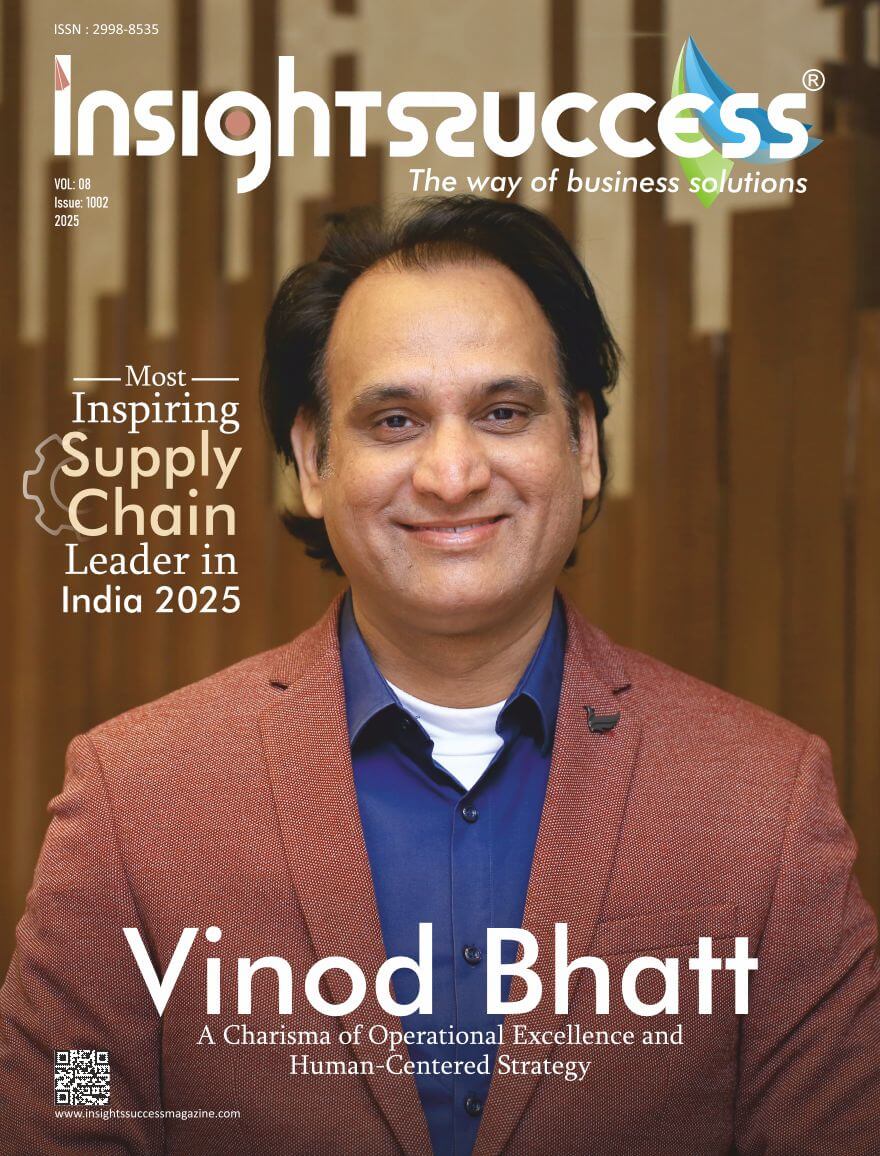
Most Inspiring Supply Chain Leader in India 2025
Most Inspiring Supply Chain Leader in India 2025 Vinod Bhatt, Head of Supply Chain at HP India, exemplifies strategic foresight, human-centered leadership, and operational agility. With a transformative approach grounded in resilience, sustainability, and customer-centricity, he has redefined supply chain management as a catalyst for growth, innovation, and long-term value creation across global business ecosystems. Quick highlights Quick reads

Advancing Operations: Mastering Supply Chain Leadership for Success
The widening, globalized enterprise economy has made supply chain leadership an ever more essential function than ever previously. Supply chains are no longer discrete operating processes but strategic assets that influence the performance, profitability, and resilience of the firm directly. As companies struggle to keep up with changing consumer trends, geopolitics, and accelerated technology revolutions, the demand for effective supply chain leaders has grown exponentially. Such managers need to not only oversee logistics and procurement but also lead innovation, sustainability, and digitalization in the value chain. Supply chain leaders are made by subjecting professionals to end-to-end thinking. It is a matter of comprehending end-to-end processes comprehensively, relocating interdepartmental and partnership cooperation, and constantly being in response mode for surfacing trends. Supply chain masters must balance strategic thinking and tactical excellence. They must be able to respond to surprise shocks, while setting up their organizations to be competitive in the long term. Creating Strategic Vision and Operating Excellence Perhaps the most critical of all the individual components of supply chain leadership is creating and communicating strategic vision. It involves knowledge of the overall company objectives and contribution of supply chain to their achievement. Effective leaders strike a balance between supply chain strategy and firm objectives, making the supply chain and firm goals converge through activities such as marketing, finance, and product development. Unshakeable vision is to inform decision-making, maximize resources utilization, and refocus marketing effort towards ultimate success. It also enables leaders to invest in capabilities that will be capable of maintaining competitive edge for upcoming challenges. Operation excellence, however, is the frontline building block on a daily basis to success in supply chains. It comprises ongoing delivery of processes, cost management, quality monitoring, and on-time delivery. Leaders must give their employees tools, training, and performance measures required for operating improvements. Leaders must ensure a culture of continuous improvement and innovation culture for everyone in the organization. Operating implementation and strategic vision must be harmonized. The organizations can therefore satisfy the customers’ needs, counter threats, and leverage opportunities in the market. Data-Driven Leadership and Digital Transformation Today, supply chain leaders must become data-driven decision-makers. Supply chains today are being reshaped with the help of digital technologies such as artificial intelligence, machine learning, blockchain, and predictive analytics. They provide increased transparency, enable real-time tracking, and generate actionable insights that drive improved forecasting, inventory, and supplier performance. High-performing data leaders have visibility beyond the bends, end inefficiencies, and create more responsive and adaptable supply chains. With all different systems and partners’ data in one place, they can make faster, better decisions that yield short-term payback and long-term innovation. Adoption of technology alone will not bring about transformation, though. Leadership intervenes to propel the organisational change through digitalization. This entails creating digital culture, cross-functional alignment creation, and talent building investments. Digital project worthiness is justified by leaders, and change resistance is overcome by them. Leaders engage in building competency with teams with a view to exploiting new technology. With technical and good change management capability, supply chain leaders are able to revolutionise legacy models into smart, customer-centric networks driving business growth and sustainability. Empowering Teams and Building Collaboration Ecosystems High-performance teams and partner relationships are also becoming a supply chain leader because these leaders should establish partner relationships and teams with internal and external partners. Supply chains cut across numerous functions and stakeholders, and great leaders understand the importance of collaboration and communication. They help build trust within departments, break silos, and get everyone aligned to similar objectives. This model brings in transparency, accountability, and collaborative responsibility for outcomes. It also enables the organization to come back from disruptions quicker, innovate quicker, and provide customer value more consistently. On the outside, leaders must extend to suppliers, logistics partners, and other business partners to build a strong and resilient system. This involves creating supplier relationship management programs, involvement in collaborative planning processes, and the meeting of some performance expectations. Joint systems also play a huge role in avoiding risk, continuity, and innovation. Non-transactional sellers but strategic partners suppliers will be more proactive on issues of quality, flexibility, and sustainability. Good leaders in creating such partnerships make their supply chains stronger and effective. Conclusion Leadership excellence in the supply chain is a combination of strategic thinkers, operations acumen, technical expertise, and man management. Having the right fit to run processes is not sufficient; the leaders must be change visionaries and coordination drivers along the value chain. As there is increasing volatility and complexity in global supply chains, leadership will be one of the differentiators. Those who will succeed to effectively link supply chain initiatives to business objectives, leverage innovation, and construct strong ecosystems will steer their organizations toward sustainable competitiveness and growth. Supply chain excellence is on a path, but with the right mindset and ability, leaders can design strong, flexible, and future-proof supply chains. Read Also: Vinod Bhatt: A Charisma of Operational Excellence and Human-Centered Strategy
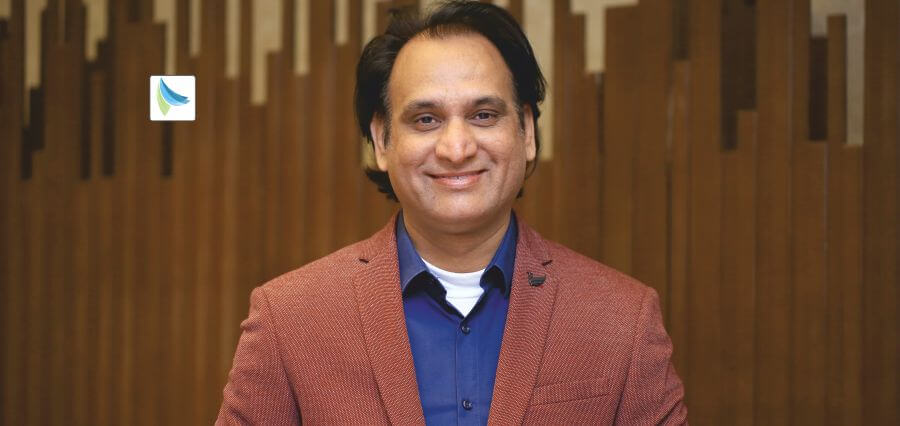
Vinod Bhatt: A Charisma of Operational Excellence and Human-Centered Strategy
The universal hum of ambition resonates within us all. From the first spark of an idea to the grandest aspirations, we as humans are propelled by the desire to climb, to achieve, to reach that shimmering horizon of success. Yet, for all the striving, only a select few truly make it to the pinnacle. What sets them apart? It’s more than just effort; it’s a profound commitment and the vision to develop powerful frameworks that transform dreams into tangible realities. This thought has been a catalyst for Vinod Bhatt, Head of Supply Chain, HP (India). Vinod’s career began in 1994 with a clear intent—to build operational frameworks that drive sustainable business advantage. He was drawn to operational disciplines because they have a unique ability to transform business strategy into real, measurable outcomes. Early experiences at Unilever, LG, Hughes Telecom, and Nortel Networks helped shape his understanding of end-to-end supply chain management in fast-paced, dynamic industries. The defining phase of his career began when he joined HP in 2007. Beyond the global scale and brand stature, what stood out immediately was HP’s deep-rooted culture of transformation. He shares, “I had the privilege of contributing to several pivotal milestones in HP’s history—from large-scale acquisitions and strategic integrations—reshaping our global supply chain from a regional construct to a market-centric model.” He drives HP India’s commitment to customer-centricity and operational excellence. The Ideology that Defines the True Meaning of Leadership More recently, Vinod has led teams through the transformation journey towards a digitally enabled, customer-first operating model anchored in resilience and sustainability—key pillars of HP’s growth strategy and competitive edge. He remains truly inspired by HP’s purpose-driven ethos and values-based leadership, committed not only to driving profitable growth but also to creating long-term value for the planet and people. In essence, these experiences reaffirmed Vinod’s belief that supply chain is far more than an operational backbone—it is a strategic engine powering resilience, growth, and customer experience. That belief continues to fuel his commitment to this profession. Vinod’s leadership philosophy emphasizes the fundamentals of Always Accountable Best in Class Competitive Spirit These principles serve as a compass that guides not only day-to-day operations but also drives tactical and strategic decisions to bring value to the business. Vinod reflects HP’s core leadership values: Start with the customer, develop the team, own the outcome. He expresses, “My leadership philosophy is rooted in transformation: not just setting the standard through personal example but cultivating leadership within the team. To me, true leadership transcends hierarchy; it’s about clarity of purpose, empowering individuals to take ownership of their journey, and fostering an environment where people can thrive.” Vinod is a firm believer in the ethos of “Doing it Right rather than Right Now.” He understands that thoughtful and integrity-driven decisions matter more than short-term wins. At HP, while the leadership structure has evolved, the behaviors and values remain enduring and ingrained in the company culture, which has profoundly shaped his career path. He has led pivotal initiatives such as driving HP India’s Customer-Centricity principle across the supply chain, embedding agility, responsiveness, and end-user alignment into core operations. Under his leadership, the supply chain has been positioned as a strategic growth enabler—through close collaboration with Sales to influence customer decision-making and drive business wins. He has also played a key role in enhancing customer visibility into HP’s global scale, operational resilience, and sustainability impact. “For us, it is not just about products, but how those products go into the hands of customers in a completely sustainable manner – via an entire sustainable supply chain of green warehouses and low carbon emission options,” shares Vinod. Throughout this journey, he has drawn inspiration from leaders who emphasized continuous learning, bold thinking, and the ability to convert operational capabilities into strategic advantage—principles that continue to inform his leadership approach today. Comprehensive Fundamentals Behind the Scenes From Vinod’s perspective, supply chain management has decisively transformed from being a traditional support function to a strategic differentiator in today’s business landscape, focusing on agility, resilience and sustainable value creation across the enterprise. In an environment marked by extreme volatility, geopolitical & macroeconomic challenges, and constantly evolving consumer expectations, an agile and resilient supply chain is essential to deliver on brand reliability, profitable growth, and best-in-class customer experience. He elaborates on the fact that, “At HP, the supply chain has played a pivotal role in sustaining operational continuity during global disruptions and overcoming those challenges to deliver on operational excellence and customer promise. Today, a high-performing supply chain isn’t one that merely responds to challenges; it’s one that anticipates risks, capitalizes on opportunities, and positions the organization to deliver consistently on its business priorities and customer commitments.” A Vital Leadership Trait “Resilience isn’t built overnight—it’s an intentional, structural commitment, and it cannot be improvised during a crisis, shares Vinod, and further adds, “Resilience frameworks pivot on several key strategies: De-risking geographical and supplier concentration to reduce over-reliance on specific nodes Balancing working capital efficiency with resilience — optimizing inventory buffers, strategic stocking, and agile inventory practices Building real-time e2e visibility through integrated data ecosystems connecting suppliers, logistics partners, and customers Forging strategic supplier partnerships for mutual resilience and collaborative crisis response Adopting agile fulfilment models, including regional hubs, cross-docking, and multi-modal options Embedding organizational resilience through structured crisis management frameworks, resilience KPIs, and business continuity playbooks.” HP’s leadership team embodies this ideology, enabling the company to proactively navigate volatility while ensuring operational continuity through a multi-layered strategy, driving agility and resilience as core levers of business impact. Leveraging the Emerging Trends of Technology Emerging technologies are fundamentally re-architecting how supply chains operate and create value. It’s no longer about incremental improvements—it’s about enabling structural shifts in resilience, agility, sustainability and customer-centricity. Key areas undergoing this significant transformation include optimizing resource management, where digital platforms help organizations use resources more efficiently and keep better track of products throughout the supply chain. Furthermore, the application of predictive analytics, heavily reliant on AI and machine learning, enables proactive risk management and
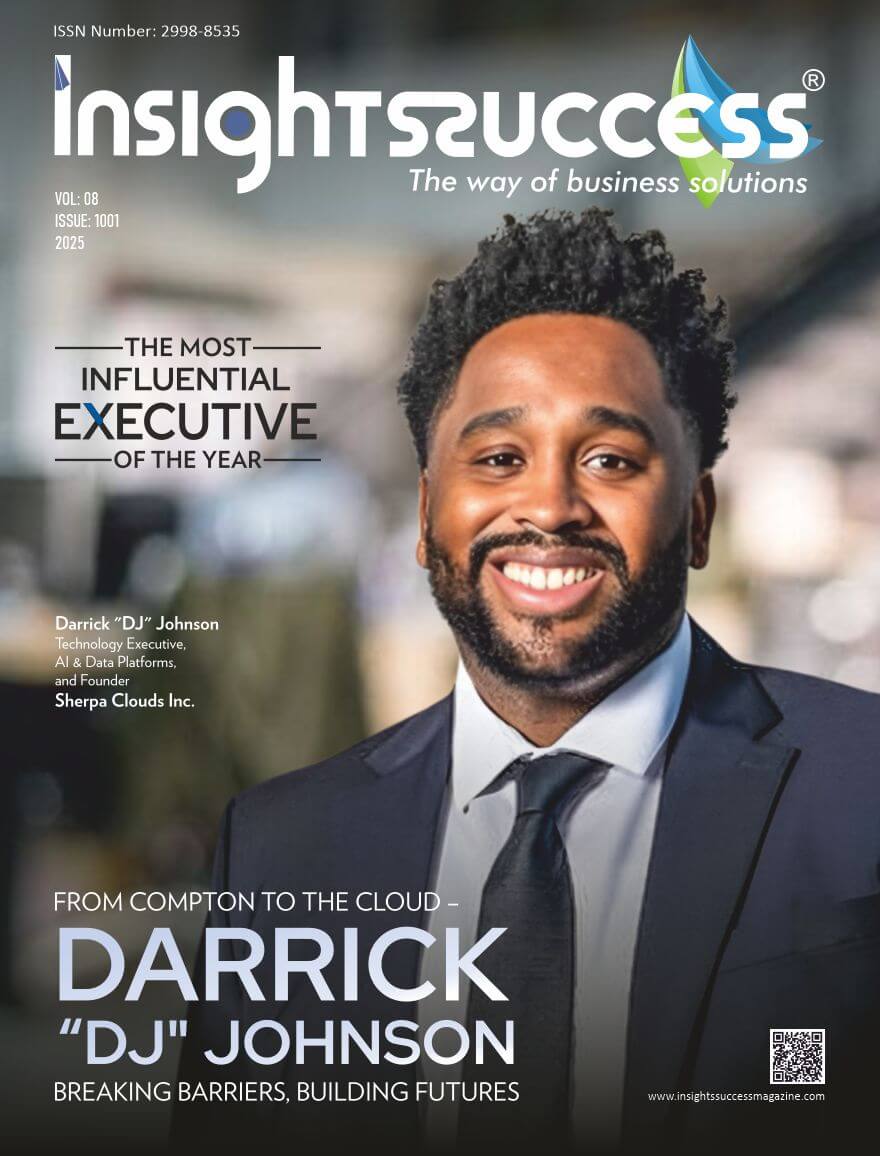
The Most Influential Executive of the Year
The Most Influential Executive of the Year This special feature highlights a visionary leader whose strategic impact, innovative thinking, and exceptional leadership have shaped industry trends, inspired growth, and set new benchmarks for success across the business landscape. Quick highlights Quick reads

From Compton to the Cloud – Darrick “DJ” Johnson: Breaking Barriers, Building Futures
Every successful human endeavor is a saga wherein inspiration is inbuilt at the very foundation of the journey, throughout. Like the quote in Darrick “DJ” Johnson’s email signature says: “The highest human act is to inspire.” — Ermias Asghedom. That is DJ’s mission—to inspire through action, access, and effort. “If I can do that, both professionally and personally, then I know I’m walking in purpose,” he insists. Because, when he thinks about his broader purpose, he always aspires to create the greatest possible positive impact, professionally and personally. For DJ, it’s always been bigger than just the job or the title — it’s about creating a legacy of access, belief, and opportunity. He’s from Compton, California, a place where the odds weren’t built in their favor. However, he made a promise early on: if he ever made it out, he’d reach back and build platforms, not just resumes. That mindset has shaped everything he does — from his work in big tech to founding Sherpa Clouds Inc., a software company built to empower sports agents and teams with data, insights, and tools that have traditionally been out of reach for so many. Divine Detour: From Cloud Sales to Calling When asked what drew him to focus on the intersection of data, AI, and human potential, DJ says, “To be honest, it wasn’t something I intentionally set out to pursue — it felt more like a divine detour than a carefully mapped-out plan.” Like many people in tech, he originally aimed to sell cloud infrastructure because that’s where the money was. But as the saying goes, ‘You make plans, and God laughs.’ DJ was fortunate enough to be one of the first AI-focused sellers hired at Microsoft, and that experience placed him right at the intersection of AI and data. He witnessed firsthand how emerging technology could transform industries, not just in theory, but in real-world use cases. That exposure pushed him to deepen his understanding: He went back to school, earned his master’s degree from Georgetown University, and even took computer science courses at Grand Canyon University to learn how to code. The Birth of Sherpa: Turning a Pivot into Purpose Those experiences sparked curiosity. DJ started wondering: “Why aren’t more people exploring the intersection of technology and sports? Why aren’t we equipping agents and teams with the tools they need to make smarter decisions for the players they serve?” That led him to build Sherpa, a modern CRM, or what DJ calls a PRM (Player Relationship Management System). After 15 years of playing football, running his own agency, and working with some of the biggest software companies in the world, he realized this wasn’t just a pivot — it was purpose. In DJ’s words, he didn’t find this path — it found him. And now he’s all in. Whether he’s mentoring, speaking, or building tech, he wants people to see what’s possible. “I want them to know that the journey from adversity to innovation is real. Or as I call it:” “From Compton to the Cloud: Breaking Barriers, Building Futures!” Being a Technology Executive, while learning and building AI & Data Platforms, DJ’s professional journey has spanned dynamic roles in technology and leadership. However, growing up playing sports taught him one lesson he’s carried into every stage of his career: effort is the one thing you can always control. In both sports and tech, there are plenty of uncontrollable — layoffs, office politics, product setbacks—but DJ has learned to focus on how he shows up. That means being on time, showing up as a true team player, never assuming he’s the smartest in the room, and always striving to be just 1% better every day. That mindset has taken him far, from roles at Dell, SonicWall, Cloudera, Apple, and Microsoft to now building his own SaaS company, Sherpa. “Effort got me here. And effort will keep me here,” he emphasizes. DJ has been in tech since 2012, right after returning from the CFL. “But the true turning point came when Jason Carter, now CRO at SonicWall, gave me my first real shot. He hired me as an ISR and later promoted me to Account Executive.” That role changed everything. DJ learned not just how to sell cybersecurity solutions, but how to think critically about how customers protect, store, and leverage their data. He shares, “Now, I’d be lying if I said I foresaw generative AI back in 2015 — but what I did recognize was that every customer cared deeply about three things: How will we protect our data? Where will we store our data? How can we do more with our data?” Fast forward to today — everyone’s talking about AI. But what people often overlook is this: AI is only as good as the data it’s built on. If AI is the quarterback of the team, data is the offensive line. And no matter how talented the quarterback is, they can’t operate without protection. That analogy has stayed with DJ throughout his career because in both football and tech, the fundamentals matter most. Leading with Faith, Anchored by Family DJ lives by four core principles: Faith, Family, Health, and Wealth — and he carries these with him in every decision he makes, especially as a leader. Faith is about believing — not just spiritually, but in the mission, in the people you lead, and in the vision you’re building toward. Leading in tech requires faith that what you’re working on will matter, and that your team will execute when it counts. Family has always been DJ’s anchor. He’s worked at some incredible organizations, and learned that what truly defines a company is its culture. He treats his team like family “because at the end of the day, we’re all more than just titles — we’re parents, sons, daughters, and friends.” Health keeps him grounded. If he’s not well physically, mentally, or emotionally, he can’t lead others. And Wealth to him isn’t just about money — it’s

How Strategic Business Influence Built a Legacy Leader
From Vision to Victory In a fast-paced corporate environment, an entrepreneur needs more than a well-run business to become a legacy leader in a company that impacts future generations through the advantages of a well-planned vision, a strong culture, effective relationships with stakeholders, and leadership agility. The Power of Strategic Business Influence The art of business influence is essentially the art of determining what an organization will be, architecting the necessary alignments to achieve it, and executing the long-term strategy and plan. The ways through which leaders infuse their influence in the culture, operations, and partnerships that sustain after their departure are how they make it. It all starts with powerful strategic insight, a clear, long-term roadmap consistent with mission and values, and enabled by activities like SWOT analyses, responsiveness to change, and scenario-based foresight. Visionary Leadership as a Catalyst for Legacy Great visionaries combine seeing the big picture and conveying values effectively. They instill trust by encouraging uniformity of message and strict adherence to execution. Patagonia, for example, has based its business on environmental conscience: its founder, Yvon Chouinard, has instilled environmental responsibility into all business functions, including sustainable suppliers and its recycling initiative, Worn Wear, thereby transforming a sense of belonging into legacy and business impact. Starbucks with Howard Schultz similarly focused on community and employee well-being in addition to expansion- a brand story that transcended its coffee cups. Culture, Influence & Organizational Alignment The core of a legacy leader depends on a permeable internal culture that transforms strategic business influence into daily actions. It has been repeatedly demonstrated that performance-driven cultures have been observed to encourage innovation and long-term prosperity. The 7S framework of McKinsey shows that there should be a focus on aligning strategy, structure, systems, skills, style, staff, and shared values, making sure that the decision made supports the overall purpose and does not weaken it. Ambidextrous leadership is important in helping legacy organizations explore and exploit opportunities. Flexible movement between exploration-driven (transformational) and efficiency-driven (transactional) leadership styles by CEOs maintains innovation and protects operational integrity. Strategic Partnerships & Stakeholder Influence Real business power is not limited to the enterprise. Capacity, reputation, and impact may be strengthened through strategic partnerships with NGOs, academic institutions, or industry allies. Partnerships allow businesses to enter new markets, exchange resources, and develop their ecosystems around their mission. Meanwhile, legacy relies on stakeholder management ranging from employees, investors, and the communities. Leaders who set out to welcome feedback, practice openness, and inspire faith through moral governance create resilience and enduring power. Ethics, CSR & Purpose-Driven Strategy The legacy building in the current era cannot be independent of the social and environmental impacts of a firm. CSR initiatives have become not only a philanthropic act but also a principal strategy that enhances credibility and sustainable brand strength. This is depicted by Indra Nooyi of PepsiCo through Performance with Purpose, the integration of health, sustainability, and social agendas into business strategies. Talent Development & Succession Planning A powerful tradition requires its posterity. Succession planning keeps leadership changes within the context of maintaining influence rather than destroying it. Effective programs help determine emerging talent, institutionalize organizational knowledge, and shape future leaders in line with the strategic vision. Firms unable to plan (particularly SMEs) may derail their long-term course. Innovation & Adaptive Strategy Legacy leaders are not vestiges of the past; they are future-proof. Adopting change adaptive structures, like continuous improvement, feedback loop, reinvestment in research and development, and scenario planning, becomes resilient. Companies such as IBM, Disney, or GE repeated the failure when they fell under the so-called short-term pressure to fall under the long-term influence (see the need to balance the investor demands and reinvestment in innovation). Measuring Influence & Growth The long-term impact cannot be left to chance. To measure cultural fit, brand perception, stakeholder confidence, and innovation adoption, legacy-driven leaders use indicators and governance models of progress. Annual audits, reprioritization discussions, and flexibility practices can also contribute to maintaining strategic influence intentionally rather than adrift. Case in Point: Toyota and Akio Toyoda Renowned automaker, Akio Toyoda, had led Toyota to survive through crises (recalls and world shocks), through engineering innovation and strategic thinking. His management style was all about strategic business influence: technical legitimacy (as the automotive alter ego Morizo) mixed with organization change heralding projects such as Woven by Toyota. He influenced Toyota to have a global name and strength, even with the changes in governance. Conclusion A strategic business influence on vision to victory is not about overnight success; it is about arranging a legacy through mindful decisions, alignment of stakeholders, culture creation, ethical intent, and future adaptability. The example of legacy leaders Patagonia, Starbucks, Toyota, and PepsiCo shows that a vision founded on values, told well, supported by culture, and implemented with strategic power can withstand the test of time. Read Also: Executive Leadership Trends Inspired by a Visionary Executive