






Engineering Excellence: Unveiling the Secrets of Aviation & Aerospace Technology
Aviation and aerospace have been the pinnacle of man’s aspiration to fly high for decades, transforming the way we travel, communicate, and explore the cosmos. From the historic giant leap of history’s first powered flight to our current attempts to lead ourselves to distant planets, the industry hurtles at breakneck speeds. The most sophisticated aeronautics and space technology are no engineering feats; they form the backbone of global connectivity, defence, scientific progress, and economic development. Aerodynamics and materials science merge with thrust, avionics, and information technology to propel flight, increase security, and increase efficiency. Evolution of Flight Development of flight was an initial process of crude imitations of nature. The pioneers were observing the flying of birds and trying some form of imitation of what they were trying to do but without or partly succeeding. The 1903 Wright brothers’ accomplishment was the impetus, and it proved that powered, controlled, and sustained flight was not only possible but also practical. They set the door open to a series of unparalleled improvement in power, material, and design. The half-century-by-half-century innovation observed ceromancy develop from aircraft constructed of wood to sturdy metal aircraft capable of crossing oceans and continents. Contemporary aviation was the result of half-century-by-half-century innovation, where each subsequent step was informed by the lesson of history. Jet engines, which were created during World War II, transformed speed and efficiency. Composite materials were used to decrease aircraft weight but provide it with additional strength. Advances in avionics gave more reliable navigation and communications aids that transformed flying by making air travel safe and dependable. Precision in science and engineering today characterize airliners that transport human beings thousands of miles across the globe in hours. Aerospace Innovation At the same time, space technology broke open the barriers. The launch of Sputnik in 1957 kicked off a space race that produced unprecedented miracles like the Apollo moon landing and constructing space stations. With each success, there was a technology jump, from rocket propulsion to life support. Aside from exploration, satellites went into communications, weather, navigation, and monitoring the Earth’s environment, transforming aerospace technology into daily living. Moonshot chase continues to spur innovation. The industry and government now collaborate to construct reusable rockets, and space travel is more affordable. Emerging propulsion technologies like nuclear propulsion and ion engines will double human and robot missions to Mars and beyond to double today’s distance. The use of artificial intelligence in space systems grows autonomy since spacecrafts can feel the surroundings and adapt to unforeseen challenges. Those are abilities which attest to the pioneering ability of aerospace technology for man’s progress in space. Future of Sustainable Flight and Space Exploration Presently, aviation and aerospace industries have a twin mandate: to provide more mobility and exploration demands while reducing their footprint on the environment. The war today is between innovation and sustainability. Electric propulsion, hydrogen fuel, and hybrid propulsion are being tested by engineers to reduce emissions from aircraft. Aerodynamics like blended wing body aircrafts are targeted towards making the plane efficient by reducing drag. Digital technologies like real-time flight optimization and predictive maintenance decrease operation cost and fuel consumption at the same time. Even space travel is changing with sustainability as one of the drivers. Off-spacecraft recycling of components, in-orbit fueling, and space construction of infrastructure on alien objects are ideas that encompass the industry’s historical emphasis on sustainability. Closed-loop life support will be applied whereby nothing is discarded and assets are reused to the maximum for enduring human presence on Mars or the Moon. Additive manufacturing, robotics, and frontier technologies enable habitats to be printed locally using indigenous materials and minimize ground-based supply chains’ reliance. Such technologies are dedicated to propelling man further to the responsible discovery where ambition will be ahead of stewardship. Conclusion Flight and aeronautics are human innovation’s never-say-die attitude. From infancy of a weak airplane to highly advanced spacecraft, each innovation opened new doors, inspiring generations of dreamers, scientists, and engineers. The industry began from raw utilitarian transportation commerce to the mechanism of global connectivity and unfurling the space secret. It is driven at its core by a combination of scientific gravitas, visionary imagination, and pragmatism that resists constraint militantly. Leading the advance to the future are exploration, digitalization, and sustainability that will be the center of the industry strategy. The synergistic power of cleaner engines, advanced materials, and artificial intelligence will define flying as cleaner and more efficient. In this venture, the quest for discovering and establishing colonies on other planets will carry human beings beyond the confines of Earth, penning new chapters of scientific attainment and technological advancement. In opening the mysteries of flight and the science of the universe, we don’t merely overcome flight but catch a glimpse of man’s endless potential to dream. Read Also: Mastering AI-Driven Product Leadership
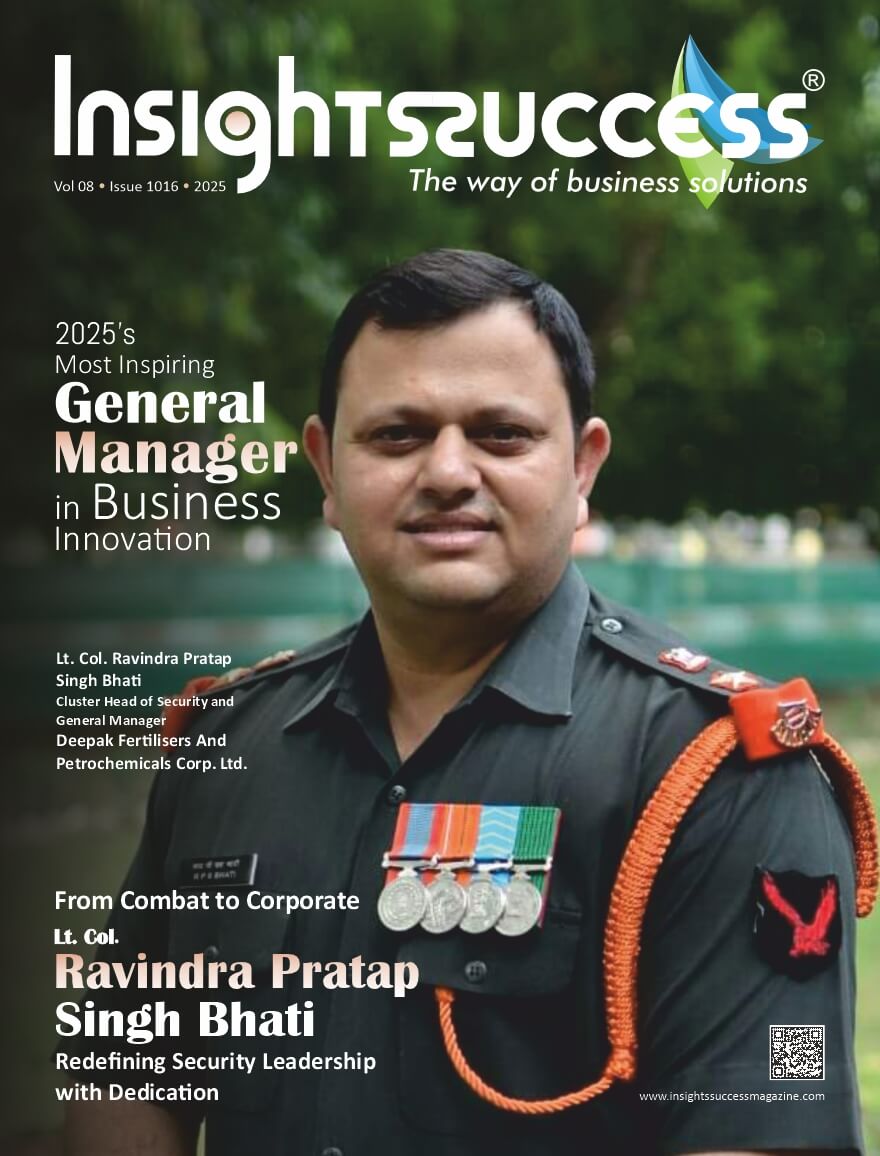
2025’s Most Inspiring General Manager in Business Innovation
2025’s Most Inspiring General Manager in Business Innovation Lt. Col. Ravindra Pratap Singh Bhati, Cluster Head of Security and GM at Deepak Fertilisers and Petrochemicals Corp. Ltd., exemplifies the seamless transition from military precision to corporate leadership. Leveraging disciplined risk management and innovative strategies, he redefines security as a business enabler, blending resilience, adaptability, and strategic foresight. Quick highlights Quick reads

From Combat to Corporate: Lt. Col. Ravindra Pratap Singh Bhati Redefining Security Leadership with Dedication
Few General Manager have the breadth of expertise that Lt. Col. Ravindra Pratap Singh Bhati possesses in the intricate web of India’s industrial sector, where security issues span from operational risk to cyber threats. He is the Cluster Head of Security and General Manager at Deepak Fertilisers And Petrochemicals Corp. Ltd., making him a new-generation business executive. Few people have accomplished what he has: he has turned exceptional military service into leadership for promoting innovation in business security management. The Transition: Military Precision to Corporate Adaptation It was challenging for Bhati to leave the strict discipline of military life and enter the corporate world. He confesses, “I was actually apprehensive about my transition initially,” with his usual candour. “I wanted to know how I would fit in with the corporate civilian population. Would the leadership style I’ve been aiming for in the military work here?” The majority of those military women and men who are adjusting to working in the civilian world end up failing because of their initial reticence. Additionally, there was the risk of coming across as rigid or controlling when making choices. “I wondered if the civil staff can welcome me in negative way as how can anyone take decision on his own and reach us like a bomb you like it or not,” Bhati speculates. But what makes Bhati unique is that he spent his entire life seeking knowledge and development. He discovered a vital idea that altered his leadership style by observing how people behave under pressure and how the team responds to different situations. “I understood that the most significant aspect is all about a human being’s honesty and his openness of intentions and expressing the same in fewer words and phrases,” he says. He had the idea to make this knowledge the cornerstone of his leadership philosophy. Bhati learnt how to transfer his war-tested skills to business culture rather than stifling them. “Since they were my elders, I started giving problem statements rather than giving them solutions,” he says. “This made them think about situational awareness, problem finding, exploring options and decision making.” Innovation in Security Management: A Multifaceted Approach Security within the fertilizers and petrochemicals industry is not just about protecting assets; it’s business continuity amidst prevalent threats. Bhati’s innovation in security testifies to a recognition of these nuances. “Every factory, every office or any other configuration has its own custom way of working, threats, process, and issues,” he repeats. “The Security design will be keeping all of these in mind while implementing the solution in the grid.” His revolutionary security management process entails a variety of primary areas: Design-Based Security Solutions Bhati emphasizes the need for logical and analytical thinking in security design. “Manpower or more technology is most commonly conceived as easy comfortable quick relief but rational and analytical thinking most commonly gives you solutions with less/no cost,” he rationalizes. His security solutions based on design, through physical permanent measures of channeling and funneling, show how strategic thinking can come up with a solution without added expenditure. Technology Integration Knowing that security in this day and age means much more than access control, Bhati suggests overall security management with surveillance and allied operations management. “Now security is not only about facilitating access to visitors and RM/FG but also monitoring, allied operation management and effectively deploying security umbrella while incurring less/no additional cost and achieving excellence with new tech & trends.” Balancing Operations with Security: Strategic Decision-Making as an Art Balancing operational demands and security and safety issues has been the biggest challenge in Bhati’s role. His method depends on what he terms “informed, disciplined decisions” supported by risk perception, leadership, human connection, resilient design, and sound feedback loops. “Operations are the fundamental grounds for all of us to exist and put in some efforts,” concedes Bhati. “But, at the same time, Safety & Security also are playing a similarly important role for the business to sustain.” His philosophy is to provide solutions that meet the operational urgencies at the expense of not sacrificing fundamentals of security. “There are always short-term operational needs to deviate from the basics of safety and security protocols. These priorities need to be kept but not at the risk of safety and security.” Bhati here offers an insightful security idea: “Even when deviation from SOP is so common, then it’s time to revise the SOP.” This would be a utilitarian approach that offers operational agility with security integrity through continuous process enhancement. Managing Security as an Enabler to Drive Business Outcomes The greatest contribution of Bhati is perhaps in bringing security back into the corporate psyche. Traditionally viewed as a cost center, security departments often can’t justify their spend downs in the form of payback on investment. “Security professionals have been wrestling with this problem for quite some time,” Bhati states. “It is sometimes assumed that the cost is an extravagant choice the Security professional is making.” His solution to combat this idea is correct consciousness in the sense of security’s broader implication on business activity. “In view of such compliances, Business continuity, goodwill, safe and secure work environment, loss of property cost through vandalism, thefts, unrest etc are not the only parameters which are addressed with monetary penalizations.” Bhati quotes the intangible but actual value proposition of security: “Negative impact of security incidents, losses and environment plays a very important role in setting up company’s bedrock in the market. A single incident plays an important role in getting the share prices down significantly and a sudden loss is booked.” Planning for Future Threats: An Overarching Risk Assessment As companies embrace digitalization and Industry 4.0 technology, Bhati identifies a range of emerging threats for which business leaders must set themselves up for 2025 and beyond. His comments indicate a very highly advanced sense of evolving threat landscapes. The Convergence Challenge “The production sector is facing an extremely complicated and dynamic cybersecurity landscape while undergoing digital transformation,” states Bhati. IT-OT system convergence is building an increasingly

Unlocking Possibility: Business Innovation Through Strategic Management
In today’s business world, innovation has become a component of competitiveness. Organizations that fail to innovate are referred to as failure organizations, but organizations that implement innovation as a strategic tool experience sustainable growth. Strategic management is central to starting and spearheading innovation in organizations. Strategic management forces innovation activities into conformity with company goals, maximizes resource allocation, and directs innovative approaches to long-term fulfillment. Entrepreneurial innovation is more than the development of products or the introduction of new technologies. It is a wider area that includes process innovation, business model change, and customer experience development. Strategic management offers the service of prospect scanning for innovation, identification of probable impact, and successful effort deployment. By integrating innovation with strategic planning, organizations build the ability to react, learn, and adapt to market needs. Aligning Innovation with Corporate Strategy Integrating innovation with corporate strategy means incorporating innovative projects into organizational objectives. Strategic innovation is needed in a bid to avoid piecemeal or inappropriate innovation projects, wasting precious time and resources. Strategic management enables leaders to prioritize clearly, make innovation objectives realizable, and cross-coordinate. Cross-coordination aids in getting all the departments under one umbrella to collaborate for common innovation objectives so that the opportunity is generated to build a platform to leverage creativity and channel it. Strategic coordination also facilitates easier diversion of resources, which allows companies to prioritize critical projects that are aligned with long-term vision and market positioning. Aside from that, strategic alignment helps in managing risk and managing performance. Companies utilize strategic models to gauge the investment value and feasibility of their innovation projects. Through that way, uncertainty is reduced and rational decision making. Visionary innovation may be counterbalanced by what works in real life by managers so that the firm remains competitive but not risky. Through regular review of strategy and feedback channels, businesses can revise their innovation priority according to changing internal and external factors. Through linking innovation to organizational strategy, managers can sustain growth as well as a favorable market position in the event of volatile economies. Leadership and Organizational Culture in Innovation Leadership determines organizational culture and inspires employees to trust and participate in innovative activity. Organizational culture is influenced by organizational leadership, which brings people into an experimental culture of learning and continuous improvement. Strategic managers form monumental roles to frame this culture by establishing communication, inspiring creative thinking, and assigning resources needed for innovation to dominate. Effective change leaders will engage more employees and have more cross-functional collaboration, thereby making innovation an organization process and not a function. Organizational culture accounts for the success of innovation programs. More adaptive cultures enable faster responses to new customer demands and market shifts. Authoritarian cultures steer clear of innovation due to fear of failure or being accustomed to doing things a certain way. Strategic management involves the establishment of structures and incentives that will inspire innovation behavior. Innovation laboratories, training courses, organizational incubators, and effort and accomplishment-stimulating performance metrics are illustrations. By embedding innovation into organizational DNA, organizations can build employee engagement, attract best talents, and build a solid foundation for long-term success. Innovation culture also makes the organization poised to get ready to spot early emerging opportunities ahead of other people, and this is the foundation for its market timeliness. Levelling with Technology and Market Intelligence Strategic management enables firms to utilize technology and market intelligence to point their innovation in the right direction. Technological innovation within the contemporary digital economy has immense capacity to create value and attain maximum effectiveness. Strategic managers recognize cutting-edge technologies that are appropriate for the company’s vision and watch them blend into core competencies. The strategy of anticipating provides companies with the ability to remain ahead of and react to disruption through technology with confidence. Using cloud, artificial intelligence, or analytics, strategic application of technology supports quicker, data-driven decision-making and scale-driven habits of innovation. Equally important is using marketplace insight to innovation strategy. Gaining insight into customer needs, future trends, market trends, and competitive forces allows organizations to develop products and services that are attractive to target markets. Strategic management offers tools for information gathering and data processing as well as for data transformation into intelligent insight. Findings are into innovation projects in order to make sure that new products not only innovate but also make business sense. Organisations that tie innovation to hard customer problems have higher take-up and customer retention. Firms that marry technology with market knowledge best utilise their innovation potential in the proper manner and for reasons, achieving maximum speed and relevance of payback from innovation. Conclusion Entrepreneurial innovation is fostered by the support of systematic and purposeful strategic management. By integrating innovation activities into business strategy, technology, effective leadership culture, and knowledge of markets, firms bring ideas into being. Strategic management is a precursor to productive innovation since it makes it possible for organizations to respond to uncertainty, capture opportunity, and become durable competitors. At a time of constant discombobulation and transition, it will be the firms that embrace innovation as an integral strategic process and not an indulgence that will be out front and not in their wake. Read Also: The Hidden Impact of Executive Coaching in 2025

UK’s Most Visionary Life Coaches to Follow
UK’s Most Visionary Life Coaches to Follow This edition celebrates the UK’s most visionary life coaches—professionals redefining what it means to lead, to grow, and to inspire. Their journeys and philosophies remind us that true transformation begins not with the world around us, but with the power within. Quick highlights Quick reads

Where Neuroscience Meets Soulcraft: Meryl Bengtsson’s ADHD Renaissance
One of the most empowering truths learned in the pursuit of productivity and success is that the most effective tools and systems are not one-size-fits-all; they simply should not be. Imagine realizing that you’re not the wrong shape for the system, but that the system simply wasn’t designed with your brilliance in mind. For many high-achieving, neurodivergent individuals, the journey begins not with fitting into a mold, but with creating a mold that allows their minds to shine. When we arrange our lives according to our unique wiring, we not only cope but we bloom. Meryl Bengtsson practices this philosophy. Being the founder of ADHD Life, she is not only an advocate but also a pioneer transforming the manner in which high-functioning entrepreneurs and business owners with ADHD harness their potential. She knows that feeling overwhelmed is not her weakness but an indication that the existing model does not match the functioning of the human mind. As a certified ADHD coach and previous corporate leader, Meryl has designed a special transformational framework blending the concepts of neuroscience, positive mindset, and practical tools that anyone with ADHD can use. Her practice transcends conventional coaching because she focuses on executive ability and transforming vague ideas into specific actions, developing structures that complement strengths rather than concealing them. To Meryl, ADHD is not a disability; it is a different line of thinking with untapped potential. With her direction, countless people have transformed frustration into clarity, stagnation into regular motion, writing their life story on terms. In a world that desperately wants one-size-fits-all answers, Meryl asks us to reconsider our understanding of success in terms of a mind-friendly innovation. What truly distinguishes Meryl is her unwavering commitment to meeting clients exactly where they are, empowering them to become architects of their own success. Rather than dispensing generic advice, she transforms complex neuroscience concepts into accessible, actionable strategies tailored to each individual. Her coaching extends far beyond improving productivity; it facilitates genuine transformation, helping people redefine what achievement can look like with ADHD. In today’s entrepreneurial landscape, Meryl’s approach serves as both a timely intervention and a revolutionary shift—inviting us to embrace our innate wiring as a source of strength, not something to be corrected. Her leadership exemplifies how thriving with ADHD is not about adapting to outdated molds, but about celebrating and harnessing our unique minds. From Puzzle Pieces to Purpose Diagnosed with ADHD later in life, Meryl gained profound clarity that illuminated years of unanswered questions and challenges. Alongside this insight came an urgent awareness of the substantial time spent navigating systems ill-equipped to support neurodivergent individuals. This dual recognition underscored both the impact earlier understanding could have had on her own journey and the critical need to bridge this gap for others. Driven by this mission, Meryl founded ADHD Life to advance science-backed strategies that promote personal and professional growth. The platform is designed to provide individuals with the clarity, practical tools, and authentic sense of belonging she once sought, fostering a supportive community that empowers neurodivergent entrepreneurs to thrive. Coaching That Blends Emotions and Neuroscience Meryl leads with a foundation of curiosity, compassion, and structure, recognizing that effective ADHD coaching demands a balance of emotional sensitivity and strategic accuracy. Her approach is firmly rooted in the latest neuroscience research, ensuring evidence-based guidance, while also staying deeply attuned to the unique lived experiences of everyone. This combination allows her to deliver coaching that is both scientifically informed and empathetically tailored. Meryl states, “I believe in co-creating solutions—honoring each person’s unique wiring while offering frameworks that translate insight into action. It’s not about fixing people; it’s about unlocking their edge.” The Neurodivergent Edge: Turning Insight into Advantage Meryl’s personal journey revealed a fundamental insight: ADHD is not a deficit but a distinct neurological operating system with unique strengths and challenges. This perspective underpins the mission of ADHD Life, which is committed to empowering entrepreneurs and their teams to leverage neurodivergence as a strategic advantage. Through a comprehensive suite of services, from tailored coaching to thoughtfully developed content, ADHD Life bridges the gap between cutting-edge neuroscience and practical application. Meryl emphasizes that while understanding brain function is essential, the true impact comes from learning how to effectively work with one’s neurological profile. This approach drives meaningful, sustainable transformation, enabling individuals and organizations to unlock their full potential and thrive in both professional and personal contexts. Strategic Self-Design for the Neurodivergent Mind One of the most significant shifts Meryl promotes is moving from “fixing dysfunction” to “activating strengths.” She guides clients to reframe impulsivity as rapid intuition, distractibility as expansive ideation, and emotional intensity as deep empathy. Her approach also challenges the conventional myth of consistency, acknowledging that ADHD brains thrive in natural cycles rather than linear patterns. By embracing these perspectives, Meryl helps clients unlock their unique potential and design systems that align with their neurological strengths. Meryl points out, “When clients stop chasing neurotypical benchmarks and start designing systems that align with how they naturally operate, everything begins to change.” The Thread Between Coaching, Teaching, and Telling the ADHD Story Each of Meryl’s roles feeds into the others. “Coaching gives me insight into real-world challenges, education allows me to translate neuroscience into usable tools, and authorship lets me scale those insights with clarity and impact,” Meryl shares. Whether delivering webinars, field guides, or one-on-one sessions, Meryl maintains a consistent approach rooted in science, emotional intelligence, and personalization. Her work is carefully tailored to the lived experiences of ADHD entrepreneurs and their teams, ensuring that every resource and interaction offers practical, evidence-based strategies that resonate deeply and support sustainable growth and success. The Kind of Clarity That Starts with Compassion Meryl’s approach to building trust and tailoring guidance begins with deep, intentional listening. She understands that ADHD manifests uniquely in each individual’s life and therefore never makes assumptions about anyone’s experience. Her method is inherently collaborative and feedback-driven, placing a strong emphasis on psychological safety throughout every stage of the coaching process. While

Redefining Success: Why Coaching Matters in Today’s Fast-Paced World
Success is becoming redefined. Once it was gauged in terms of material success, career success, and social status alone, but now success is more and more being equated with a mix of professional achievement, personal fulfillment, and well-being. But while pursuing these new standards, the pace at which the world is advancing nowadays means that conventional development and leadership practices can do better but can never do better at achieving. This is where coaching comes in—delivering guidance, insight, and transformation in a world needing resilience and adaptability. The Changing Terrain of Success Globalization, information revolution, and continuous connectivity have changed the life of individuals and the manner in which individuals work. Professionals are required to make rapid decisions, learn to transform day in and day out, and balance multiple tasks simultaneously. In such a situation, traditional success indicators like corporate ladder, money making, or becoming stable are no longer adequate. Success is today being redefined as thriving, rather than merely existing, in the state of complexity. It implies building resiliency, emotional intelligence, and purpose alongside professional ambition. Coaching provides the models and tools needed to address this new reality by allowing people to define what success will be for them and providing them with tools to make it happen. Coaching as a Catalyst for Growth Coaching at its most fundamental level is not about bringing pre-packaged solutions but is more about inquiry. The seasoned coach establishes a safe, judgment-free space in which clients find their own answers, test limiting assumptions, and pioneer new approaches. This creates elevated levels of self-awareness that initiate wiser decisions and more authentic action. In the workplace, coaching is focused on career, performance, and leadership. But its applications go far beyond the office. Working with personal and professional space, coaching builds resilience, confidence, and clarity—abilities needed in today’s fast-paced, high-pressure world. The Role of Coaching in Leadership Today’s leaders are not just decision makers. Leaders must energize, study, and give space for team development. Space for reflection that is not always available in the usual work has to be given. It is one-to-one training that enables the leaders to find blind spots, improve communication, and improve emotional quotient. The impact of leadership coaching is to cascade. Leaders, through greater self-awareness and empathy, create cultures of trust, cooperation, and innovation. Where there is change happening at the top of organizations, this type of leadership is priceless. Not only do leaders get better at what they are doing through coaching, but they are enabled to lead sustainably and authentically. Coaching for Individuals in Transition Career shift, entrepreneurship, and personal change are now not a fantasy with the age of speed. Coaching helps the process of transformation by making it easy for such individuals to find their vision, bring values and actions into alignment, and shatter fear of the unknown. For example, mid-career professional adults most typically grapple with issues of identity and purpose. A coach helps them turn their adversity into opportunity, and they make decisions that are lasting and meaningful. Entrepreneur also uses coaching to remain anchored while making huge leaps of faith so that innovation is not at the cost of being well. One of the largest issues of modern life is burnout and stress overtaking us. The relentless pressure to perform, and the blurring of boundaries between work and life, drains people. Coaching provides real tools to end stress, establish boundaries, and become resilient. By incorporating mindfulness, reflective practice, and goal-setting skills, coaching allows individuals to manage time and energy. This self-management strategy not only prevents burnout but allows people to excel in performance cultures that involve continuous delivery and resilience. Redefining Success Through Coaching The best value of coaching is the fact that it works to redefine success on your own terms. Instead of pursuing somebody else’s definition, individuals begin to match their goals with their strengths and values. Success then means purpose, fulfillment, and alignment instead of accomplishment. In this mad world with the perpetual screams of the external, coaching is a soothing voice reassuring us each time that success lies within. It enables you to not only be thinking “What do I want to do?” but also “Who do I want to be?” This change in approach changes lives on professional as well as personal fronts. Conclusion: A Path Forward Coaching is now not an executive privilege but a survival strategy for anybody who needs greater clarity, coping capacity, and guidance in our more complex world. Using facilitated reflection, reflective dialogue, and actionable tools, coaching enables people and organizations to define success on their own terms that are sustainable, authentic, and extremely rewarding. In some change and additional stress, coaching is not counseling—its metamorphosis. Coaching is a reminder that winning is not comparing to other runners in life’s race, but running to our place, boldly, in balance and with purpose. Read Also: Unlocking Possibility: Business Innovation Through Strategic Management

Digital Coaching: How Technology is Redefining Personal Transformation
At its core, coaching has always been the human touch—safe dialogue, facilitated reflection, and street smarts. And now, as the world goes virtual, the coaching skill is spilling over into the territory of live discourse. Technology is no longer a tool of conversation; it’s an energy propelling the manner in which people learn, develop, and change. Digital coaching covers this revolution through the combination of centuries-old practices of coaching with advanced technology to provide customized development in a flexible, scalable, and exceedingly powerful format ever achieved. Accessibility and Scalability Virtual coaching possesses one of the strongest strengths of accessibility. Coaching was previously a luxury for executive leaders or top government officials. Through digital platforms that now exist, coaching has been democratized by being offered at a lower cost and at a wider level. Organizations can offer employees at varying levels, from emerging talent through to experienced leaders, coaching support in attempting to make development culture pervasive. Scalability is a consistency issue. Online coaching platforms are able to provide context-aware program delivery, monitor progress, and provide evidence-based feedback at scale, so organizational goals can be aligned with development programs. For the individual, it is not only personalized but ongoing support, responsive to evolving needs. The Role of AI and Data in Coaching There is then an additional level of artificial intelligence added to coaching. AI programs learn tone, habit, and language and provide feedback, recognize patterns, and recommend areas for improvement. For instance, AI can leverage current patterns of communication such that one can become aware of blind spots or self-limiting beliefs. AI is further capable of monitoring progress over time and providing measurable results that augment accountability. Data analysis confirms the impact of coaching with tangible outcomes. Companies and managers can measure the success of coaching programs, detect areas of skill deficiencies, and refine programs to offer greater leverage. While AI cannot get close to human coaches’ emotional intelligence and intuitive hypotheses, it gives coaching substance, accuracy, and objectivity. Personalized Journeys of Transformation Personalization is the very spirit of online coaching. Sophisticated platforms use algorithms to align the individual with coaches most suitable for his or her objectives, personality, and passion. This way, the coaching process becomes personalized and significant. In addition, online tools allow for provision of constant support. Reflective exercises online, journaling exercise, or guided meditation can be accessed between sessions. Phone reminders and alarms keep them alert, and coaching is a constant learning and accountability process instead of an episodic one. The shift towards flexible and virtual working culture has created fresh challenges for managers and employees alike. Loneliness, blurring of professional and personal lives, and excessive expectations for flexibility have made the need for support painfully more pressing. E-coaching also presents them with direct challenges in the form of on-demand flexible options that might be customized in hectic and dispersed modes of work. For companies, digital coaching has similarly been a source of employee health and performance. CEOs can apply coaching as an instrument to build online leadership skills, and employees can apply it to receive support with work-life balance, resilience, and work performance. The advantage of being able to mobilize digital coaching at short notice is that it is particularly convenient in the situation of coping with the uncertainty that is characteristic of contemporary workplaces. Human Connection in Virtual Space Although it is technology-dependent, virtual coaching is grounded in human connection. Virtual spaces still maintain genuine conversation, understanding, and trust between the client and coach. Most of the time, the virtual space even promotes connection by making it accessible and eliminating barriers that otherwise might discourage people from seeking help. The balance is the secret. Technology gives the framework, the efficiency, and the data-driven insights, but human coaches bring the empathy, intuition, and creativity that cannot be replicated by machines. Combined, they offer a model of coaching that is scalable but personalized at the same time. The Future of Personal Transformation As digital coaching continues to develop, it will be guiding professional and personal growth in the future. With the ever-faster pace of development in artificial intelligence, virtual reality, and machine learning, coaching sessions will become predictive, personalized, and immersive. The future will be a realm in which virtual reality space enables leaders to rehearse high-stakes situations with live-coaching comments or in which AI-based tools ask them questions with interventions of popular behavior. But in all these new technologies, there will always be a fundamental nature of coaching that cannot ever be replaced: showing people their potential, aligning behavior with values, and experiencing real and sustainable change. Technology can never replace this nature—it can complement it. Digital coaching is changing people at scale by blending human know-how and technology. Digital coaching is taking coaching anywhere, at scale, and evidence-based without sacrificing the human touch of relationships. Digital coaching is offering the tools and expertise needed to navigate complexity with confidence in today’s high-stakes, highly dynamic world. Read Also: Redefining Success: Why Coaching Matters in Today’s Fast-Paced World

Databricks’ Valuation to exceed $100 Billion as the rate of Investment in AI increases
Prime Highlights • Databricks’ valuation to rise 61% to more than $100 billion in Series K round. • Fresh capital to fund AI product development and strategic acquisitions. Key Facts • Company serves 15,000 global customers, including Block, Shell, Rivian. • The latest round marks a 61% jump from its previous valuation of $62 billion Background Analytics and AI firm Databricks is preparing to secure a valuation exceeding $100 billion, marking a 61% jump from last year’s figure as investor demand for artificial intelligence companies continues to surge. The company announced on Tuesday that it has signed a term sheet for a Series K round, though financial details remain undisclosed. The recent valuation shows how the company is surging in the global technology industry. In 2023, Databricks raised $10 billion in one of the largest venture capital rounds ever, which valued it at $62 billion. Analysts say the fresh round demonstrates how capital is increasingly concentrating around market leaders in foundational technologies. “This valuation level indicates a concentration of late-stage capital into companies identified as market leaders in foundational technology sectors,” said Derek Hernandez, senior research analyst at PitchBook. The company counts more than 15,000 clients, including fintech, energy, and automotive companies. Major customers include Block, Shell, and Rivian. The company employs around 8,000 people worldwide. Funds from the new round will be used to accelerate product development and support mergers and acquisitions in the AI space. The company is under threat from Snowflake, a publicly traded data cloud service company with a valuation of approximately 66 billion dollars. Other AI companies, including OpenAI, creator of ChatGPT, are also gaining unprecedented valuations, recently completing an employee share sale that puts the company at a total valuation of nearly $500 billion. Analysts point out that a lot of startups are not going public yet and raise big late-stage rounds at that rather than proceed with IPOs in the face of volatile markets and high interest rates. This has been the pattern as the role of private capital as a source of funding, taking the form of public equity, is based. Read Also: Google Launches Pixel 10 Series with New AI Features

Google Launches Pixel 10 Series with New AI Features
Prime Highlights • Google launched its Pixel 10 line of smartphones on Wednesday • Pixel 10 ($799), Pixel 10 Pro ($999), and Pixel 10 Pro XL ($1,199) launched with upgraded display, storage, and performance. Key Facts • The devices heavily integrate Gemini AI features, including Magic Cue, Gemini Live, and Camera Coach. • The Pixel 10 Pro Fold features an 8-inch inner screen, a lifetime durability rating of over 10 years, and enhanced drop protection Background Google has launched its Pixel 10 smartphone series, making its newest devices centered around artificial intelligence. The launch took place on Wednesday, just weeks before Apple is expected to announce its new iPhones in September. The Pixel 10 family includes several models. Google has announced pricing for its upcoming Pixel 10 lineup. The Pixel 10 will start at $799, while the Pixel 10 Pro is set at $999. The top-end Pixel 10 Pro XL, which offers a bigger display and expanded storage, will be priced at $1,199. In addition, Google introduced the Pixel 10 Pro Fold, its next-generation foldable device, with a launch price of $1,799. The foldable features an 8-inch inside screen, extended drop protection, and a fold that will last a lifetime of over 10 years. The series highlights Google’s Gemini AI assistant, which powers many of the new features. Magic Cue helps by showing useful details automatically, such as flight information when calling an airline. Gemini Live allows users to talk in real time about what is on the screen. The new Camera Coach suggests angles and lighting for better photos and can merge several shots into one where everyone looks their best. The Pixel 10 Pro models also come with a free one-year subscription to Google’s AI Pro plan, normally $19 per month. This subscription offers extra Gemini features, early access to apps like NotebookLM and Veo 3, and more storage space. Although Google’s Pixel phones have a smaller market share compared to Apple and Samsung, analysts say these AI tools could attract new buyers. With Apple delaying big Siri updates until 2026, Google may gain an early lead in AI-powered smartphones.