






Jivi Saran: Leading Beyond Boundaries with Courage, Clarity, and Purpose
Leadership is being reinvented on a grand scale. The old playscripts of hierarchy, linear strategy, and transactional management no longer apply in a world that changes by the hour. Disruption is ever-present, complexity the new norm, and uncertainty the only certainty. Here, genuine leaders differentiate themselves not by authority, but by vision. They foster trust rather than fear, ignite innovation rather than compliance, and create impact that resonates well beyond the balance sheet. The future belongs to those who are able to convert volatility into opportunity and lead with courage, clarity, and purpose. Into this gap comes Jivi Saran, CEO of Quantum Business Growth and Founder of The CEO Whisperer. She takes her inspiration from the principles of quantum science and combines these with conscious capitalism, systems thinking, and many decades’ worth of real-world advisory experience. In the process, she’s reframing leadership as an energy field- one that impacts the very essence of organizational life. Her philosophy is courageous but profoundly human: leadership is not so much about control as it is about resonance, not so much about directing as it is about creating spaces where possibility can grow. From this perspective, she has helped executives throughout Canada and internationally transition from process management to energy stewardship, leading not only their companies but the way they live and lead. The Evolution of a Quantum Leader Jivi Saran’s journey was not marked by one sudden revelation but by years of observing what didn’t work. Early in her career as a CEO and senior advisor, she repeatedly saw how linear strategies buckled under the weight of complexity. Companies obsessed with quarterly numbers often missed opportunities for deeper innovation. Leaders who focused solely on processes neglected the subtle but powerful human energy shaping outcomes behind the scenes. “Leadership models were simply too narrow,” she reflects. “They didn’t account for interdependence, emergent possibilities, or the fact that people are not machines. They are energetic beings influencing everything around them.” Her curiosity led her into systems thinking, spiritual intelligence, and conscious capitalism, where she began noticing striking parallels with quantum science. Her experience was in line with the quantum principle that observation changes reality: when leaders changed their energy, entire organisational fields changed as well. Over time, she developed the conviction that leadership is less about hierarchy and more about coherence. It revolves around aligning intention, presence, and values in ways that ripple throughout the system. This became the seed of her quantum leadership model, a philosophy she has since refined through rigorous research and hands-on executive practice. The CEO Whisperer: Decoding Leadership at Its Core The moniker The CEO Whisperer did not come from a branding consultant; it emerged organically. Executives consistently turned to Jivi Saran not just for strategies but for clarity, often inviting her into the most private and high stakes conversations. She became the person leaders trusted when they felt most vulnerable- when the future of their organizations, and sometimes their careers, hung in the balance. Her role was never about providing quick answers. Instead, she listened deeply, sensed unspoken dynamics, and helped leaders uncover insights they already carried but could not articulate. The “whisperer” title reflects this subtle art of drawing out hidden wisdom, realigning leaders with their authentic selves, and creating space where transformation naturally unfolds. Unlike conventional executive coaching, her approach is rooted in quantum principles. She doesn’t start with KPIs or performance metrics; she begins with alignment. Once a leader’s inner state resonates with clarity and purpose, measurable results follow. This creates changes that ripple through culture, strategy, and systems without forcing compliance or artificial motivation. Transformational Leadership in Action The practical impact of Saran’s work is best illustrated through stories of transformation. One mid-sized technology company’s CEO approached her amid internal conflict and stalled innovation. His style was highly transactional, crisis-driven, and rooted in control. Employees felt like replaceable parts, and morale was sinking. Rather than focusing on operational fixes, Saran guided him toward inner recalibration. She introduced practices of stillness before decision-making, shifted his framing from control to trust, and encouraged him to view leadership as shaping energy rather than issuing commands. The effects were profound. Within months, cross-functional collaboration revived, innovation pipelines reopened, and employee retention soared. Most strikingly, profitability rose, not from cost-cutting but from a surge in creativity and discretionary effort. “When leaders elevate their consciousness,” Saran explains, “organizations reorganize around that frequency. It’s exponential.” Another case involved a healthcare executive who was resistant to stakeholder engagement. He was convinced it would dilute efficiency. Through resonance mapping, Saran showed him how mistrust and disengagement were slowing projects more than any regulatory hurdle. By aligning his presence with genuine openness, he transformed resistance into collaboration, cutting implementation timelines by nearly half. Conscious Capitalism as a Competitive Edge Saran champions conscious capitalism, but she does so strategically. She knows many leaders equate it with philanthropy or performance compromise. Conscious capitalism, she argues, is not charity; it is a superior operating system. Her evidence is compelling. She draws on case studies of organizations outperforming peers because they embedded purpose and stakeholder well-being into their core strategies. In her advisory sessions, she uses scenario planning and stakeholder mapping to reveal hidden risks in profit-maximisation-only models. Often, leaders’ breakthrough moment comes when they realize that aligning personal values with organizational goals not only feels right but also produces durable advantages: stronger brand loyalty, more engaged talent, and greater resilience during disruptions. “Purpose is not a cost center,” she insists. “It’s your competitive edge.” Bridging Theory and Practice Where Saran excels is in translation- taking complex ideas from academia and making them actionable for executives. Quantum concepts like non-linearity and interconnectedness may seem abstract, but she grounds them in practical rituals: Stillness before decisions as a method for accessing clarity. Scenario planning as probability mapping rather than prediction. Resonance mapping to assess alignment across stakeholders. These practices integrate seamlessly into governance and strategy, so leaders don’t see them as “extra work” but as smarter ways of operating.

Most Inspiring Leader Making A Difference In 2025
Most Inspiring Leader Making A Difference In 2025 Anne and Don Lakmanaarachchi are pioneering PhytoAR’s vision of decoding nature’s intelligence through advanced plant biotechnology. Blending scientific insight with entrepreneurial leadership, they transform molecular innovation into sustainable growth solutions. Their work bridges nature and technology, positioning PhytoAR as a leader in next-generation agricultural resilience and biotech innovation. Quick highlights

Anne and Don Lakmanaarachchi: Decoding Nature’s Intelligence and the Living Science Behind PhytoAR’s Vision
In a world where science is often expressed through equations and formulae, Anne and Don Lakmanaarachchi choose to tell their journey through awe and purpose. Together, they founded PhytoAR Biotechnologie GmbH, a company at the crossroads of nature and innovation, transforming the silent intelligence of plants into powerful instruments for the planet’s future. Anne, Chief Operating Officer and a scientist by heart and a business chemist by education, brings deep insights into the molecular language of life. Don, Managing Director and a seasoned global entrepreneur, contributes decades of experience in international leadership and agricultural innovation. Their paths could not have been more different, yet it was precisely this contrast that made their vision possible. From pioneering molecular plant research to building one of the most forward-looking biotechnology enterprises in Europe, they both are redefining how science and strategy intertwine. Guided by curiosity, courage, and compassion, they have transformed complex research into life-affirming innovation, leading a diverse team of experts who share a singular belief: that growth is more than a biological process, it is a concept, a mindset, and a shared responsibility. When Two Paths Converge Anne combined her fascination for life’s molecular beauty with business insight, earning a degree in Business Chemistry at Christian-Albrechts University in Kiel. At Bayer’s subsidiary Ehrfeld Mikrotechnik, she advanced to Head of Marketing, mastering the art of translating complex technologies into clear strategic visions—an ability that defines her leadership today. Thousands of miles away from where Anne’s story began in Northern Germany, Don grew up in Sri Lanka, attending Ananda College—the country’s premier institution where leadership and discipline became early cornerstones. His studies and career took him across continents, from Australia to global development projects funded by the World Bank, USAID, GTZ, and the European Union. He was among the early adopters of GIS-based decision systems to optimize agricultural practices, pioneering ideas that would later evolve into what we now call precision farming. His leadership in managing large, multimillion-dollar projects paved the way for his role as CEO. When Anne and Don met in Germany, their paths aligned as if by design. In their very first conversations, they recognized the same vision: that growth, whether of plants, people, or ideas, could be redefined. Out of loss and ambition, out of science and leadership, PhytoAR Biotechnologie was born. Decoding Nature’s Ancient Wisdom “The story of PhytoAR began not with a product, but with a question: what if the hidden intelligence of plants could be understood, captured, and shared?” Don reflects. Working alongside brilliant minds, including Dr. Dr. Dieter Mahr, a lifelong mentor whose doctorate roots include space science Don uncovered insights pointing to an astonishing truth: resilience and growth in plants are not accidents, but carefully orchestrated molecular strategies. What most people don’t realize is that chloroplasts, the tiny green engines in every leaf were once independent bacteria, ancient beings that entered into a pact with plants millions of years ago. Today, they still act like command centers of life, regulating not only energy but also growth, resilience, and survival. They function almost like miniature brains. The most fascinating discovery lies in the chloroplasts of seedlings. A seedling has no choice: it cannot move to a kinder place or wait for better weather. Where it falls, it must fight to live. In that struggle, nature has encoded a survival program more urgent and refined than at any other stage of life. Out of thousands of seeds, only the strongest endure and the chloroplasts hold the molecular script of this fight. At PhytoAR, the team found a way to capture this script. By extracting messenger RNA from seedling chloroplasts, they can transfer their survival code to other plants by granting them resilience, adaptability, and the power to grow against the odds. “It is less an invention than a revelation: the ancient wisdom of life itself, unlocked for the future of our planet,” Anne explains. This breakthrough not only opens new frontiers in agriculture on Earth but also holds transformative potential for future Moon and Mars missions. Interestingly, this brings Dieter’s career full circle: one of his doctoral theses was dedicated to space research, linking his early work on plant biology in microgravity directly to the cutting-edge innovations PhytoAR pioneers today. The Art of Balance Leading a pioneering biotechnology company while maintaining personal equilibrium presents constant challenges. Yet for Anne and Don, this balance gives their work meaning. PhytoAR is not simply a profession, it’s a mission. And missions require energy, focus, and the wisdom to pause. For her, balance has always been rooted in her connection to nature. She finds strength in small, quiet moments: the smell of freshly cut grass, the sound of leaves in the wind, the grounding presence of open landscapes. Although Don once bought beautiful garden chairs, Anne often prefers to lie directly on the grass, fully immersed in the earth’s rhythm. “Don sometimes jokes that he must be careful not to step on her as he walks by. These simple moments remind us both of the essence of our work: to give life, in its most natural form, a voice,” she laughs. For Don, perspective is key. Having lived and worked across continents, he knows that stress is inevitable, but resilience is a choice. Early in his career, when managing large projects, he learned to stay calm under pressure and focus on the bigger picture. Today, he brings that same clarity to PhytoAR, reminding the team that every challenge carries within it the seed of progress. When the day feels particularly overwhelming, he has a simple personal ritual: a glass of whiskey to pause, reflect, and reset. Together, they strive to create boundaries where possible—safeguarding time for themselves, for laughter, for the simple rituals that make life human. Yet they also accept that their professional and personal worlds blend seamlessly. Some of their most creative ideas have been born not in a boardroom, but during evening walks, lighthearted conversations in the garden, or quiet moments of reflection. “Our balance, in the end,
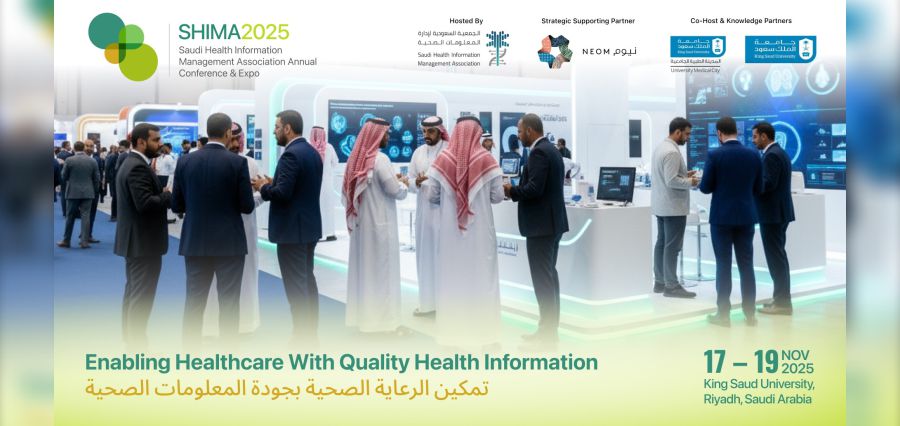
Saudi Health Information Management Association Annual Conference & Expo 2025
Riyadh, Saudi Arabia, 21st October — The Saudi Health Information Management Association (SHIMA) has announced the SHIMA Annual Conference & Expo 2025, the largest upcoming platform dedicated to advancing the adoption, innovation, and integration of healthcare information management systems in Saudi Arabia, the MENA region, and globally. The event will have King Saud University as Co-Host and Knowledge Partner, and will be supported by NEOM as a Strategic Partner. Saudi Health Information Management Association (SHIMA), a not-for-profit professional association, has been promoting and advancing the Health Information Management (HIM) and Health Informatics professions, building a robust ecosystem for future healthcare in the Kingdom of Saudi Arabia. The event aligns with Saudi Vision 2030, showcasing the Kingdom’s commitment to becoming a global leader in digital health innovation. The two-day conference will offer an exclusive platform for dialogue, thought leadership, and knowledge exchange in healthcare information management, providing attendees and participants with actionable knowledge and strategic connections. Our onboarded speakers so far, Hussein Albish – President, Saudi Health Information Management Association (SHIMA) Sallyanne Wissmann – Chief Executive Officer, HIMAA Dr Mahmoud Alyamani – Health, Wellbeing & Biotech Sector Head, NEOM Vicki Bennett, President – IFHIMA Dr Louise Schaper – Founder of HISA and the Digital Health Institute Dr Julia Rehman – Founder & Principal Consultant, Kota Kompany Dr Laila Yahya Alhubaishi – Consultant, United Arab Emirates University Jobin Jose – Co-founder, HealthOrbit AI Dr Waleed Al-Suhaymi – CDI Unit Supervisor, Dammam Health Network Atheer Alharbi – AI Expert – Ministry of National Guard Health Affairs, KSA Muhammad Mudassar – Head of Data & AI Health & Wellbeing, NEOM Numerous other distinguished speakers are expected to join us in the upcoming days. Furthermore, the event will also organise a one-day pre-conference workshop on November 17th, which will include topics like AI in Clinical Coding Guidelines, Role of Health Information Management (HIM) in Health Sector Transformation Program (HSTP), Clinical Documentation Improvement (CDI) Speciality Session, AI in Revenue Cycle Management (RCM), and When Care Stops: Cybersecurity, Trust, and the Future of Patient Safety. The exhibition will feature live demonstrations, pilot projects, and interactive showcases. Attendees will have the opportunity to experience the real-world performance of technologies within healthcare environments, providing solution providers with direct access to decision-makers and influencers. For leaders and purchasers in healthcare, it will serve as a marketplace to explore new innovations and contemporary systems. Event Highlights: Keynotes and interactive sessions involving top policymakers, healthcare executives, IT leaders, innovators, academics, and global and regional experts Expert panel discussions on ICD-11, revenue cycle management, AI, cybersecurity, virtual health records, and more Technical workshops and hands-on learning experiences Exhibition featuring Next-generation Health Information Systems (HIS), Electronic Medical Records (EMR), Advanced coding, documentation, and reimbursement solutions, Revenue cycle management (RCM) systems and other breakthrough innovations Exclusive networking and partnership-building opportunities with policymakers and decision-makers. The SHIMA Annual Conference & Expo 2025 is poised to be a significant event that enhances Saudi Arabia’s role as a hub for digital health excellence and innovation in the region. For media-related enquiries, please get in touch with: Ambreen Mir PR & Communications Manager amreen.mir@valiantbmedia.com Disclaimer – This article is a work of original content created for public relations and informational purposes only. It may be published across multiple digital platforms with the full knowledge and consent of the author/publisher. All images, logos, and referenced names are the property of their respective owners and used here solely for illustrative or informational purposes. Unauthorized reproduction, distribution, or modification of this article without prior written permission from the original publisher is strictly prohibited. Any resemblance to other content is purely coincidental or used under fair use policy with proper attribution. Also Read: Celebrating Healthcare Excellence & Leadership Awards 2025: Honoring Visionaries Shaping the Future of Global Healthcare
Celebrating Healthcare Excellence & Leadership Awards 2025: Honoring Visionaries Shaping the Future of Global Healthcare
Pune, India – October 2025 – Healthcare Excellence & Leadership Awards 2025 recognized and celebrated some of the most influential healthcare institutions, visionary leaders, and organizations making transformative contributions to the industry. The prestigious event brought together pioneers from across medical disciplines, hospitals, wellness centers, and healthcare enterprises, honoring their outstanding dedication to patient care, innovation, and community well-being. From Multispeciality hospitals redefining excellence to individuals pioneering breakthroughs in medical science, this year’s awardees represented the very best in healthcare leadership and humanitarian service in the presence of the chief guest of this event, Sonalee Kulkarni. Honorees of the Healthcare Excellence & Leadership Awards 2025 Noble Hospitals & Research Centre – Dr. Sanjay Pathare, CEO Pillar of Multispecialty Excellence Award Jehangir Hospital – Dr. Ranjeet Dalvi, Nephrologist & Sharyu Mohite, Reproductive medicine & assisted reproductive technology consultant Legacy of Patient Care Excellence Award Smile Foundation – Santanu Mishra, Co-founder Most Trusted NGO in Health & Education 2025 Galaxy Eye Hospital – Dr. Sandeep Dole, Medical Director Outstanding Contribution to Humanitarian Causes – 2025 Kovai Medical Center and Hospitals – Dr. Sivakumaran Janakiraman, Chief Operating Officer The Best Healthcare Inventory Controller of India – 2025 Hridayam Clinic – Ruby Hall – Dr. Rahul Patil, Interventional Cardiologist Excellence in Interventional Cardiology Award + Panel Discussion Iswarya Health Pvt. Ltd. (IHPL) – Dr. Reji Pillai, Interim COO & VP of Group Operations Healthcare Leadership Excellence Award for Operational Brilliance Kaayantar Healthcare LLP – Dr. Priyanka Sharma, Plastic Surgeon & Aesthetic Surgeon Pioneering Leadership in Plastic & Aesthetic Surgery – 2025 Essentia Healthcare Solutions – Vishwas Pingale & Jayashree Pingale, Founder & CEO, Chief Nursing Officer Pride of Pune 2025 – Excellence in Home Healthcare Jiwan Multispeciality Hospital – Dr. Lahu Khaire, Medical Director & Founder Visionary Healthcare Leader of the Year 2025 Sunburst Healthcare Pvt. Ltd. – Dr. Sujata Malik, CEO & Managing Director Swasthya Ratna Award for Lifelong Contribution to Healthcare Living With Diabetes, Your Sugar Clinic – Dr. Vaishali Kasare, Diabetologist & Founder India’s Most Trusted Diabetologist of the Year – 2025 Gufic Biosciences Ltd. – Dr. Rajeev Agarwal, President IVF Brand Building Excellence Award – 2025 Reborn Skin & Hair Clinic – Neeraj Bhargava, Director Advanced Aesthetic Clinic for Skin & Hair of the Year Ruby Hall – Dr. Sudheer Rai, Chief Operating Officer Best COO in Multispeciality Hospital Management 2025 Skin Bliss Clinic – Dr. Sapna Bumb, Founder & Owner Leader in Advanced Facial Aesthetic Treatments Sparkle Aesthetic & Wellness – Sheetal Tupe, Dr. Amit Ahire & Mr. Tanishq Tupe Trusted Partner in Skin Health and Transformation Cadila Pharmaceuticals Ltd. – Debesh Das, President Excellence in Pharmaceutical Leadership Award 2025 GB School of Neuro Rehab and Aquatic Therapy – Dr. Gajanan Bhalerao, Founder & Director Excellence & Innovation in Neuro and Aquatic Rehabilitation 2025 Vedgarbha Ayurveda Panchkarma & Fertility Clinic – Dr. Pallavi Chindhe, Director & Owner Inspiring Women Shaping the Future of Ayurveda, Fertility & Panchkarma Healthcare geneOmbio Technologies Pvt. Ltd. – Dr. Yashwant Chavan, Managing Director Excellence in Contract Research & Genomic Solutions 2025 Resilient Cosmeceuticals Pvt. Ltd. – Sachin Purohit, Founder & Managing Director Excellence in Dermatology & Gynaecology Healthcare 2025 Kids Dentistry Clinic – Dr. Abhay Bhosale, Pediatric Dentist & Tongue Tie Specialist Most Trusted Pediatric Dentist in Pune Dr. Mamta’s The Skin N Hair Clinic – Dr. Mamta Patil, Dermatologist, Cosmetologist & Trichologist Clinical Excellence in Dermatology Award – 2025 Devtaru Foundation – Dipika Khinvasara, Founder Outstanding Contribution to Public Health & Welfare 2025 Sahyadri Hospitals Pvt. Ltd. – Mr. Abhinav Joshi (Vice President – Operations Cluster Head) & Dr. Abhijit Shivankar (General Manager – Operations) Most Trusted Hospital Chain of the Year 2025 Sahyadri Hospitals MomStory – Ms. Rajani Mishra Iyer (Head – PR & Communication) & Mr. Shubham Wagh (Assistant Manager – Brand & Promotion) Best Healthcare Brand of the Year 2025 4S Diagnostic – Vikas Savata Adsul, Founder & Director Excellence in Portable X-Ray & Home Diagnostic Service – Pune & PCMC ZiffyHealth – Capt. Indra Kumar Jha, CEO The Visionary Healthcare Entrepreneur Award Accretion Nutraveda Pvt. Ltd. – Harshad Nanubhai Rathod, Founder Most Trusted Ayurvedic & Nutraceutical CDMO Partner 2025 Homeo Care Clinic – Dr. Vaseem Choudhary, Founder Most Trusted Centre for Autism and ADHD in India 2025 Scanodent Diagnostic and Research Center – Dr. Snehi S. Chopra, Founder & Director Best Dento-Maxillofacial Radiologist of the Year 2025 Healthcare Excellence & Leadership Awards 2025 stand as a tribute to the relentless spirit of innovation, compassion, and commitment within the healthcare sector. By spotlighting individuals and organizations driving excellence in patient care, research, and community service, the initiative aims to inspire a culture of continuous improvement and leadership in health and wellness. The Signatures of Success Behind Healthcare Excellence & Leadership Awards 2025 Insights Success is a leading global business media and B2B recognition platform committed to spotlighting trailblazers, innovators, and changemakers across industries. With a readership of over 500,000, a digital reach extending to more than 45 countries, and a subscriber community of 1.5 million professionals, Insights Success continues to amplify the voices of global leadership and enterprise excellence. Through its editorial features, digital campaigns, and leadership award initiatives, the platform connects business leaders, entrepreneurs, and professionals who are redefining excellence in their domains. Organized in association with Insights Care, a distinguished healthcare-focused publication, is dedicated to highlighting the stories of hospitals, medical institutions, healthcare leaders, and innovators who are driving transformation in patient care, medical technology, and wellness practices. Healthcare Excellence & Leadership Awards 2025 is part of the ongoing mission to honor outstanding achievements and inspire impactful growth across the healthcare ecosystem. Together, Insights Success and Insights Care aim to celebrate excellence, foster collaboration, and promote thought leadership within the global healthcare landscape. Also Read: Saudi Health Information Management Association Annual Conference & Expo 2025
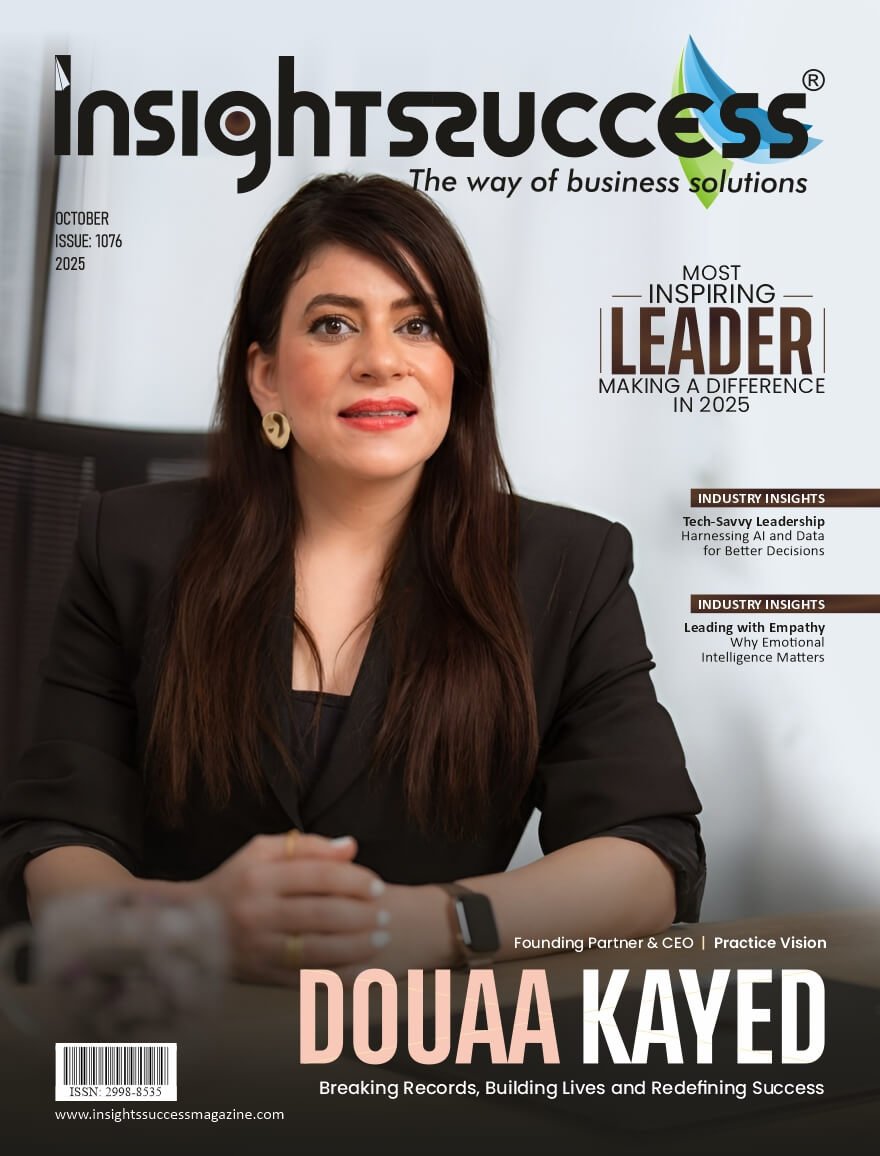
Most Inspiring Leader Making A Difference In 2025
Most Inspiring Leader Making A Difference In 2025 When the world paused during the pandemic, Douaa chose to move forward. What began as virtual exercise sessions in her Canadian basement evolved into DCoach, a thriving wellness brand rooted in balance, discipline, and human connection. Today, she stands as a Guinness World Record Holder, Master Trainer, Boxing Coach, and Harvard-certified Lifestyle and Wellness Coach, channeling her own strength to inspire transformation in others. Quick highlights

Douaa Kayed: Breaking Records, Building Lives and Redefining Success
Amidst life’s shifting landscapes and personal hardships, some people learn not only to adapt, but also to turn each struggle into fuel for purpose. Douaa Kayed is one name among them. From a vibrant upbringing in Abu Dhabi with a close-knit Palestinian family to a life that has included Dubai, Jeddah, Toronto, and now Riyadh, her tale is one of resilience, reinvention, and unwavering trust in movement, both physical and emotional. When the world slowed during the pandemic, she accelerated towards her destiny. What started as online exercise sessions in her Canadian basement has grown into DCoach, a thriving health firm founded on balance, discipline, and human connection. She is a Guinness World Record holder, Master Trainer, Boxing Coach, and Harvard-certified Lifestyle and Wellness Coach who has turned personal resilience into a global platform for empowerment. Her concept goes beyond fitness; it’s about leading oneself before leading others, using time as a currency for success, and putting health first. Her narrative is more than just lifting weights or setting records; it’s about elevating spirits, regaining confidence, and demonstrating that with focus and faith, life’s ceaseless motion can mold not only the body but also the soul. Roots and Resilience Born and raised in Abu Dhabi, Douaa grew up in a large Palestinian family that valued togetherness. She lived with her parents, seven sisters, and two brothers, experiencing the vibrant chaos and joy that comes with a big family. Her childhood sparkled with laughter and friendship until her father’s death shattered that security. The family persevered, each sibling finding their own path forward through the darkness of loss. Her path led through education and early marriage. At nineteen, she married, balancing university coursework with the responsibilities of a new wife. By twenty, she welcomed her daughter Tia while still pursuing her Bachelor’s degree in History at Beirut Arab University. She graduated in 2005, proving that young motherhood need not derail academic ambitions. The young family relocated to Dubai, where she gave birth to their first son, Marwan, in 2006. Life continued its pattern of movement and adaptation. Her husband’s career took them to Jeddah, Saudi Arabia, where they spent several years building their life. In 2014, they welcomed their second son, Omar, eight years after their first son’s birth. The constant relocations across countries and cities made maintaining friendships difficult. When the family returned to Dubai in 2015, she cherished the small circle of friends whose children attended the same school as her three kids. This stability lasted until 2019, when a career opportunity prompted another major transition and this time it was Canada. Finding Purpose in the Pandemic Summer 2019 marked a turning point. Arriving in Canada, Douaa Kayed launched her professional career in fitness and wellness. She pursued this new direction with characteristic determination, even as the COVID-19 pandemic complicated everything. While others saw lockdowns as obstacles, she recognized opportunity. She transformed her basement into a training studio, offering fitness sessions to neighbors. She conducted online classes for her sisters and extended family members. The pandemic gave her something invaluable: time to crystallize her vision, complete certifications, and map her professional trajectory. “COVID for me was not that bad; it was the beginning of my career in the field of health and fitness,” she reflects. She utilized every moment at home, completing course after course, attending workshops, and building expertise. By summer 2022, she had earned multiple certifications as a Master Trainer, Boxing Coach, and Personal Trainer. She worked at UFC Gym in Mississauga and several other Toronto facilities, constantly learning and refining her craft. The pandemic also witnessed something remarkable. She trained herself for a Guinness World Record attempt. On December 13, 2021, in Montreal, Quebec, she achieved the record for most full contact knee strikes using alternate legs in one minute by a female, 132 strikes, surpassing the previous record of 120. The achievement symbolized her approach to life: set ambitious goals, train relentlessly, execute flawlessly. The Coach Who Coaches Douaa Kayed’s passion centers on words like success, ambition, goals, and achievement. She channels this passion into fitness, health, wellness, and boxing and in fields where she helps others pursue healthy lifestyles. Her website, DCoach.me, synthesizes her diverse experiences into a comprehensive coaching platform. She also develops her own sportswear brand called YALLA, which expresses her fitness philosophy. The brand name itself, Arabic for “let’s go” which captures her energetic approach. YALLA embodies her belief that everyone deserves access to healthy living, regardless of background or circumstances. Her coaching philosophy emerges from personal experience. She watches her mother manage type 2 diabetes without medication, relying instead on healthy eating and walking daily to maintain blood sugar levels. Her mother grew up in a household that emphasized wellness, healthy nutrition, and herbal remedies. This example inspired her to explore nutrition and exercise more deeply, eventually committing herself to help others achieve similar wellness. “I love helping others live a healthy lifestyle and help them to achieve their goals,” she explains. She also draws satisfaction from her own self-realization as a successful woman who has overcome numerous obstacles. Yet she observes a critical gap in her industry. Many people lack awareness about coaching’s importance and the transformative role coaches play. She emphasizes that even coaches need coaches, everyone benefits from having someone who serves as a mirror, revealing blind spots and illuminating paths for growth. “Having a coach in your life is like having a mirror to help you see yourself correctly and to see what aspects you should work on improving,” she notes. This awareness helps individuals unleash potential and reach goals they might otherwise miss. Balancing Acts and Tough Choices Managing multiple roles of wife, mother of three, athlete, trainer, student, and business owner demands extraordinary discipline. Douaa Kayed acknowledges the difficulty frankly. She learned boxing, participated in marathons including the Los Angeles Marathon and four half-marathons in Toronto, worked as a trainer, and pursued continuous education simultaneously. The turning point came when she recognized the

The Most Influential Leaders Building Africa’s Future
The Most Influential Leaders Building Africa’s Future This edition celebrates visionary individuals driving transformative change across the continent. This edition highlights leaders reshaping industries, empowering communities, and fostering innovation, sustainability, and inclusive growth—each playing a pivotal role in crafting a brighter, more resilient, and self-reliant future for Africa. Quick highlights Quick reads

Emmanuel Morka: The Guiding Light Of Africa’s Financial Innovation
In Africa’s endless expanse, growth is drawn in every deal, every handshake, and every dream that challenges to remake what is possible. Even on congested streets of city thoroughfares and distant havens of rural villages, banking does not do business as impersonal figures on a page but as lifelines- for hope, for dignity, for tomorrow. Its pipes vibrate with possibility, carrying hope to millions whose lives it touches. But every innovation, and every breakthrough, beats a heart. Because the true story of Africa’s banking revolution isn’t in servers or code, but in people like Emmanuel Morka. He is a technology idealist who brings tech out of cold code and into living legacy. The financial history of this continent is a tapestry of disappointment and hope, one that has been sewn by people who find promise in every failure. Regulations change, walls groan, and hope is constantly reborn with every purchaser. It is this delicacy that is the backdrop on which the future is painted, not randomly but by hearts of bravery. Emmanuel Morka overmaps these waters; his existence is a passage containing each fleeting instant of possibility, bringing institutions across lines to a richer, human meaning. His strategy erases the distinction between innovation and humanitarianism, never satisfied to let advancement be reserved for the privileged few. Technology is a tool, modernization an adaptation, and each move, from placing next-generation leadership in position to soothing a customer’s anxiety, creates a legacy larger than quarterly objectives. And in every team training, every deployment rhythm, Emmanuel Morka’s testimony bears witness that change is never an individual drama. It’s a community beat that raises the entire community and lights bright skies. His style blurs the edge between innovation and empathy, never willing to sit idly by as progress is the privilege of the rich. Technology in his world is a servant, modernization a bridge, and every move, from mentoring the next generation’s chief to soothing a customer’s anxiety, creates a legacy above quarterly objectives. And in the beat of every team session, every deployment, Emmanuel’s tale testifies that change is never one man’s drama. It is a shared beat that lifts entire communities and lights up bright skies. A Catalyst of Change Emmanuel’s journey is coloured by both rigour and creativity. It’s an orbit where discipline meets imagination. As Regional Chief Information Officer at Access Bank, his presence is not just felt in projects completed but in futures awakened. His teams see him not only as a master of Oracle databases or project management but as the mind that helps them blend what is strict with what is swift. It is his influence that plants possibility in the cracks of old systems, nourishing new talent and leadership that refuses to stand still. Career spans are measured in years, but Emmanuel Morka’s impact ripples in moments- when a back-end engineer learns that compliance and invention are allies, when a rural entrepreneur finds banking tools at his fingertips, and when an aspiring technocrat finds a mentor who listens and accelerates potential rather than guarding it. Creating the Future: Rigour and Agility With more than 18 years of shaping Africa’s financial technology, Emmanuel Morka wields two powerful tools: technical rigour and creative speed. He designs teams like dual engines: one grounded in the security and reliability required by banks, the other fuelled by rapid prototyping and empathy for customers’ daily realities. His recipe is simple yet radical: stability is built at the core with agility on the surface; compliance is not repression, but the scaffolding for innovation. For foundational systems, Emmanuel Morka insists on precision. Yet he welcomes sprints and iterations for personal banking apps and solutions serving the self-employed or small businesses. His people learn to embrace DevSecOps, refusing to see rigidity and flexibility as enemies. When rolling out major features, Emmanuel drives the backend relentlessly while empowering the frontend team to co-create with users, proving every day that inclusion means involving people at every stage, not just at launch. His own argument is straightforward: significant change only happens when the most resilient core comes together with empowered, agile experts on the front line that interact with customers. This duality, the engineer’s discipline fused with openness to change, defines his hallmark. Leadership Beyond Borders and Barriers Emmanuel Morka’s vision is not constrained by geographical lines. His leadership thrives on adaptation, transforming with every market he serves. If the regulatory waters in the Gulf demand speed, he orchestrates compliance at a light pace. In Africa, where power can flicker and broadband is often fragile, he invents ways to centralize authority until local talent blossoms. He studies every market for its nuances, respects its limitations, and looks for opportunity in every constraint. His greatest innovation may be his human-centred philosophy. Emmanuel Morka knows the future is built on more than systems. It is carved by people who feel ownership, not just obligation. He makes it his mission to mentor and unleash talent, turning every hire into a possible leader and every setback into a lesson shared. His leadership is adaptive not just in policy, but in the hearts he cultivates. Colleagues often recall how his mentorship turns into an incubator for creativity. In markets where resources are limited, he teaches by rolling up his sleeves, working side by side, imparting resilience and grit to recruits. It is not uncommon for his mentees to rise, later leading their own projects across Africa’s technology corridors. Strategic Choices: Modernization That Matters Emmanuel Morka approaches modernization like an artist, making every upgrade count and every dollar matter. He judges legacy systems by how they touch lives: Do they fuel revenue? Improve experience? Free teams to innovate? If a system is a costly drain or a roadblock to genuine collaboration, it moves up the queue for transformation. In Ghana, he prioritizes middleware, a decision that unlocks easy mobile money and fintech partnerships, allowing rural women and small businesses to transact as easily as city executives. Long-term vision guides him, but each decision

Regulatory Frameworks and Financial Innovation in African Banking
Challenges and Opportunities African banking is evolving at lightening pace, touching lives in major cities to small towns. Computers and phones are revolutionizing the way individuals make money transactions. Savings, borrowing, and payment today have become simpler. It is all bringing a lot of individuals who never set foot in a bank into the world of money. To ensure that these changes are good and safe for all, it’s going to be extremely crucial to have good regulations. How Banking is Redone in Africa? A decade ago, if you visited an African bank, you likely saw plenty of paperwork. There weren’t that many branches, either. Nowadays, cell phones are capable of doing all manner of money stuff you never even heard of. Digital lenders and mobile wallets (image apps filled with your cash) are simplifying banking and making it easier and more convenient to get in on. Consider the case of Kenya. They have M-Pesa, which completely revolutionized the way Kenyans pay other than the conventional banks. And in Nigeria, start-ups are considering data to come up with methods of paying individuals quicker and providing investment advice. Regions like South Africa and Ghana are also developing improved digital forms of integrating traditional banking and emerging technology. What this means is that people now have instruments to lead them to flourish and do well for themselves. Why Regulations are Essential? When you begin bringing in new ideas, it becomes imperative that there be guidelines so that things stay stable and equitable. Central banks must establish the guidelines so that innovation can occur and problems that manifest can be addressed. Banks are considering how to fund new proposals but would prefer to make them secure and safe for customers, as well. These proposals will address significant issues such as licenses, computer security, and customer protection to serve them. Good regulation will make banks more trusted and enable banking to contribute to society in general. How Can Banks and Tech Companies Collaborate? One of the largest reasons that banking is happening so fast is because established banks and technology firms are collaborating. Banks are contributing to their solid reputations, built systems, and capital. Technology firms are bringing their speed, innovative ideas, and technology expertise. The majority of banks in Nigeria are aligning with technology firms to facilitate online payments to be easy and seamless. The banks in South Africa are contemplating what they can do with technology to speed up transactions and improve trading. The banks and the technology firms are improving banking by complementing each other’s strengths through collaboration. The rule-makers are creating special test environments where people can try out new technology without getting into trouble. That will enable individuals to tinker with new concepts in a safe manner. Issues Along the Way It is challenging to come up with the right rules for banking when everything is changing at such a fast rate. The rule-establishers in Africa must deal with some issues: The laws are not always equal from country to country. Computer security is becoming a bigger problem. There are some areas that are not very well connected to the internet. It’s difficult to accommodate new ideas while still having to meet all of the regulations. Areas like the African Union are attempting to implement similar rules in all of the countries. They are hoping to establish more trust and make it easier to grow. What’s Next for Banking? The regulators are also considering using technology in order to monitor the banking industry closer. Another point to consider is enabling customers to share their financial data with other companies securely. This will ensure there is more competition, and enable customers to handle money better, it also allows technology companies to devise and develop new ideas. People focus Ultimately, bank changes are about serving people. Millions of Africans are now banking on their phones. Farmers are taking loans online to enhance their farms. Women are using phone applications to run and expand their businesses. These are just but a few examples of the individuals are using technology to enhance their level of living. The regulators will have their work cut out by protecting customers and educating them on issues of money. This way, all can partake of the digital economy without owing anyone any concern. What the Future Holds? For banking to flourish in Africa, leaders and innovators must strike a balance between new thinking and doing the right thing. They must also be prepared and willing to adapt to developments in technology. The best banking institution will be one in which the ones generating new ideas and the ones setting the rules collaborate and work with each other to form trust and make individuals feel as if they are in control. The Bottom Line The history of the banking sector in Africa is one of all people uniting and meeting the challenge. It is a sign that with technology, sound rules, and a focus on people, banking in Africa can be modern and accessible to all. By adapting rules to accommodate new concepts, Africa is demonstrating that it is capable of extending and safeguarding individuals. They are setting the stage for a future in which banking is available to all.