






Building Culture Through Compassion
The Leader as Mentor In a world that is changing at a lightning speed, where technology disrupts everything and organizations become more and more complex, we see leadership as the last thing being left untouched. Commanding and controlling, the traditional way of leadership, is gradually being replaced by a new type of leaders, those who lead by example and who have empathy skills. Today’s leaders can be considered the most efficient; however, the leadership skills of strategizing and making decisions will only get them that far. They also have to be compassionate mentors who through love, care, and concern for the others, strengthen customer loyalty and staff commitment. Leadership Beyond Authority Leadership has been identified as a function of authority for years—when one obtained a position that enabled him/her to powerfully dictate and decide. However, as the evolvement of organizations and the transition of workplace dynamics continue, many are thinking that influence is the main factor that counts rather than authority. To the modern leader most power is not in commanding others what to do, but rather to encourage and empower their employees to develop themselves. Mentor-leader does not limit himself/herself to checking up on performance metrics only. On the contrary, they develop the people around them—unleashing possibilities, leading by example during trying times, and recognizing progress. The transition to mentorship as the main focus leads to the establishment of a stronger and more trusting relationship between members which again enhances better teamwork and innovation. In companies that are structured around people’s needs and that operate in a compassionate manner, kindness should not be considered a simple skill, instead, it is a competitive advantage. The Power of Compassion in Leadership Compassionate leadership does not imply that the leader should be soft or that the leader should lack discipline. It means understanding that employees are people with their own goals, problems, and dreams, and leading with empathy but at the same time being clear and demanding accountability. Leaders who show compassion are good listeners and they do so in order to understand. They identify problems, support, and encourage workers to overcome difficulties cheerfully with a sense of trust in their abilities. Once a leader embraces compassion as part of his/her perspective, the positive effects of this can be seen everywhere. Workers become more stable, secure from a psychological point of view, and thus put in more effort. As a result, creativity makes its way to the company; disputes get diminished and devotion to the company gets strengthened. The studies are quite convincing: employee engagement is at a higher level, employee turnover is at a lower level, and overall company performance is stronger in organizations headed by compassionate leaders. The different aspects of compassion all lead up to the building of a culture which then leads to a legacy. A leader who mentors with love, care, and concern for the others, thus strengthening the customer loyalty and staff commitment by which the organization survives the cycle of change. Mentorship as a Cultural Catalyst Mentorship has always been a powerful leadership tool; however, scarcely, it is used. It closes age differences, encourages the swapping of knowledge, and assists in making the leader this generation’s heir. Nevertheless, even after that, it is a process by which the corporate values and the sense of purpose become part of the organization’s genetic code. Once the leaders accept the responsibility of the mentors, they become the first to prove that achievements are best when they are a shared journey rather than a solo one. Their readiness to offer a helping hand when guiding others talks a lot about the trust and humility-the two theoretic pillars of the positive workplace culture. Besides that, following each other’s lead in personal and professional development becomes the reality of mentors who see their relationship as a learning circle and hence both of them grow. In organizations which focus on mentoring as a main approach, orders give way to discussions, and management through cooperation supplants rivalry. Workers in such organizations get recognition, support, and are motivated to take the role of mentors which consequently creates the empowerment cycle that determines the internal character of the enterprise from within. The Legacy of the Mentor-Leader The greatness of leaders cannot be measured only by the profits made in the quarters or the high-level titles attained, rather it can be measured by the people those leaders have helped raise and the tough cultures they have built. A mentor-leader’s heritage is not found through reports, but it is visible in the strength, self-assurance, and empathy of people who got support. During difficult times, people ask not only for direction but also for reassurance. What they want from leaders is not only intelligence but also heart – leaders who combine strategic foresight with true humanity. These leaders work consciously, talk empathetically, and act in such a manner that others are inspired to take the same path. In short, compassionate mentoring turns leadership from being a position of power to becoming a leader’s growth force. Such leadership shapes enterprises where empathy leads to excellent performance, connection becomes a source of creativity, and culture is the invisible thread that links success and humanity. Read Also : Leadership That Inspires True Growth
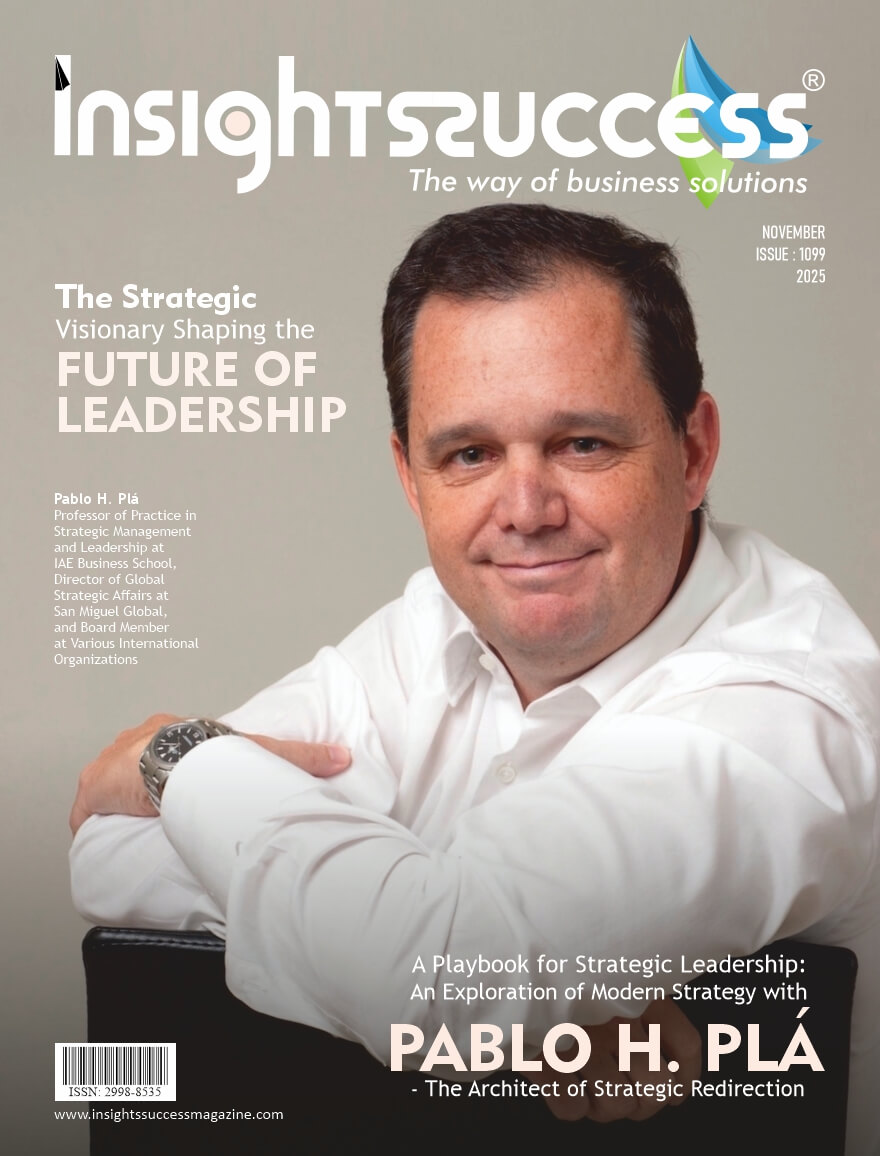
The Strategic Visionary Shaping the FUTURE OF LEADERSHIP
10 Best Logistics Companies to Watch in 2022 June2022 Lorem ipsum dolor sit amet, consectetur adipiscing elit. Ut elit tellus, luctus nec ullamcorper mattis, pulvinar dapibus leo. Lorem ipsum dolor sit amet, consectetur adipiscing elit. Ut elit tellus, luctus nec ullamcorper mattis, pulvinar dapibus leo. The Strategic Visionary Shaping the FUTURE OF LEADERSHIP Every challenge holds within it the seed of opportunity — and few leaders possess the foresight and courage to recognize it. Pablo H. Plá is one such visionary, redefining what it means to lead in a world shaped by disruption, innovation, and human connection. Quick highlights Quick reads Click here
A Playbook for Strategic Leadership: An Exploration of Modern Strategy with Pablo H. Plá – The Architect of Strategic Redirection
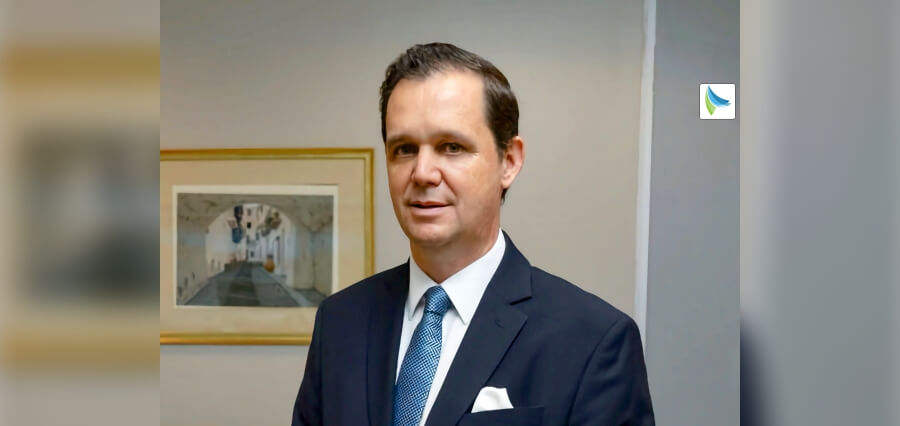
Every challenge contains an inherent opportunity within itself. Only a strategic visionary leader like Pablo H. Plá can seize the opportunity to shape a future that benefits everyone. According to Pablo, the leadership required for the future is one that combines intellectual rigor with deep human understanding. “It’s about having the vision to see what’s coming, the courage to act decisively, and the humility to build a team that is resilient, adaptable, and united by a clear and compelling purpose. That is the challenge, and the opportunity, that lies before us,” he states. How does he achieve it? The answer lies in his story— —A Journey Shaped with Discipline and Service Pablo’s illustrious career, far from being a simple progression through companies, has been a lifelong exploration of what he terms “strategic redirection”—the art and science of transforming an organization’s trajectory. His foundational experiences were forged outside the traditional corporate world, instilling in him critical lessons in structure, discipline, and human motivation under extreme pressure. His time in the Argentine Army provided his first immersion into organizational design and command. Even more profoundly, his volunteer work as a Patrol Leader for the American Red Cross in New York City, responding to emergencies in challenging urban environments, taught him “the power of a shared purpose to mobilize teams in chaotic environments.” He learned that “true leadership begins with a deep sense of service and commitment to your people.” Honing the Strategic Edge The second pillar of Pablo’s journey was built in the world’s best corporate proving grounds, where he meticulously honed his strategic toolkit. At Coca-Cola, he gained invaluable insights into brand building and agility, notably leading the launch of the Quatro brand in a mere 100 days—a testament to focused team achievement. Later, at Cervecería Quilmes (AmbevInbev), he navigated a “critical strategic moment” as global competitors simultaneously entered the Argentine market. This experience became “a masterclass in defensive strategy, competitive positioning, and navigating the turbulent ‘red oceans’ of established industries.” Mastering the Art of Transformation These experiences culminated in the third and defining pillar of his career: mastering the craft of transformation as a CEO. Over the past two decades, Pablo H. Plá has spearheaded five major strategic redirections at multinational companies, including General Mills, Ingredion, and most recently, San Miguel Global. These endeavors were never simply about improving performance; they aimed at fundamentally changing the core of the business to ensure its long-term survival and prosperity. These practical experiences are continuously refined through his academic work and teaching strategy at premier institutions. This dual role of practitioner and professor creates a powerful feedback loop, solidifying his philosophy: “Strategy is not just something you think about; it’s something you do.” Steering Through Crisis: The Ingredion Turnaround Leading a turnaround is one of the greatest tests of leadership, a challenge Pablo H. Plá embraced definitively at Ingredion’s Southern Cone business. Under his helm, a company facing an annual loss of approximately $17 million in EBITDA was transformed into a profitable operation with a positive $17 million EBITDA within three years. This remarkable feat involved managing a complex team of 900 employees across four countries, navigating intricate industrial and union structures. Pablo’s approach is a disciplined methodology built on three core pillars. The first is an Unflinching Diagnosis. He often asks two simple questions in Spanish: “¿La ves?”—” Do you see it? Do you truly understand the brutal reality of the situation?” and “¿La podés activar?”—” Can you activate it? Can you mobilize the will to change?” At Ingredion, this meant confronting deep-seated industrial inefficiencies and unsustainable labor agreements. He believes, “You cannot rally a team with false optimism. You must begin with a shared, honest assessment of the problem, no matter how difficult.” The second pillar is Mobilizing Leadership, which demands “cercanía,” or closeness. Pablo H. Plá insists, “You can never, ever be an absent leader.” During the intense Ingredion turnaround, he was consistently on the plant floor, engaging with union leaders, and maintaining constant communication across the region. This unwavering presence fostered the trust essential for navigating incredibly tough decisions, including a comprehensive restructuring of union agreements that involved reducing 160 positions. This was only possible through painstaking negotiations and paramount transparent communication. The third and final pillar is Coherent, Focused Action. For Pablo, “Strategy is the art of focus. In a crisis, you cannot do everything.” At Ingredion, this meant not just cutting costs but strategically investing $35 million in 2017 to modernize plants, generating $18 million in annual savings. The ultimate coherent action, however, was looking beyond the immediate crisis to create new, long-term value, culminating in the formation of Ingrear. This strategic joint venture transformed the business into a market leader, generating over $400 million in annual revenue. This playbook, he summarizes, is to “see the truth, lead from the front, and channel all your energy into a few decisive actions that not only steady the ship but set it on a new, more prosperous course.” Reinventing an Industry Leader: The San Miguel Transformation The transformation at San Miguel, the world’s largest industrial lemon processor, stands as a powerful testament to Pablo’s strategic acumen. He led a bold pivot from the company’s historical focus on fresh fruit to an emphasis on value-added lemon processing, turning a negative $24 million EBITDA in 2022 into a positive result by 2023. This strategic pivot perfectly illustrates his framework of Diagnosis, Guiding Policy, and Coherent Actions. First, the Diagnosis: Pablo H. Plá confronted the brutal reality that San Miguel’s historical core business was broken, and the company was dangerously over-leveraged. Despite being the global leader in fresh lemons, that market had become a commodity trap, with global oversupply causing prices to collapse. This volatile business accounted for 70% of revenue, resulting in a significant negative EBITDA. The diagnosis was clear: reliance on the fresh fruit market and a precarious financial structure posed an existential threat to long-term sustainability. Second, the Guiding Policy: Based on this diagnosis, a twofold policy was

Building Global Influence Through Connection
Leading Without Borders Leadership in a globalized, digitally connected, and culturally diverse world is no longer bound by geographical limitations. Leaders today who operate beyond borders i.e. those who go beyond the boundaries of nation, culture, and industry to affect others at the global level are the most successful ones. They see that leadership today is not about dominating or being close to those you lead but about creating links, working together and having the same aim with people from different parts of the world and various groups. The Global Context of Leadership Technology has eliminated numerous barriers that were traditionally in place in terms of communication and collaboration. Therefore, leadership is no longer about dealing with local teams or regional operations; it has become a global affair. Being a borderless leader entails knowing and being able to work in various cultural environments, different economic situations, and even distinct value systems. Also, such leaders have the necessary empathy, flexibility, and can rally a diverse group of people around a single objective. Those executives who effectively perform this function hence become influential well beyond the power structures of their organizations – they become key players in global dialogues, link up with other stakeholders, and generate international-level impacts. The Power of Connection Connection is what borderless leadership is all about. Communication gets facilitated through technology but trust, alignment, and influence are some of the fruits that connection yields. Leading worldwide at the highest level is synonymous with relationship-building. Connecting in teams made up of different cultures is a way of dealing with disparities in language, work style, and opinion. Leaders who promote inclusion and respect in their teams make the most of diversity – creative thinking, innovation, and the ability to bounce back from setbacks are some of the fruits resultant from this. They thereby create collaborative networks which in turn lead to further development and mutual achievement. Cultural Intelligence as a Leadership Advantage One of the major components that contribute to leaders going global is cultural intelligence (CQ). Besides conventional intelligence (IQ) and emotional intelligence (EQ), CQ is the one that puts most emphasis on comprehending and managing cultural differences properly. Leaders with high cultural intelligence exhibit great interest in other views, are willing to learn, and have the expertise to make adjustments in their way of communicating and leading accordingly for different contexts. Such leaders are aware that the factors that encourage a team in Tokyo might not be the same ones that motivate a team in Toronto or Dubai. They do not use force to make people accept that there is only one way of doing things rather they customize methods to fit in with local customs and at the same time remain consistent with the common values. It is this equilibrium of being both adaptable and truthful that allows leaders to be influential worldwide and have real followers across different countries. Building Trust Across Borders Trust is the most valuable asset that a leader can have on the global battlefield. Unfortunately, trust cannot be commanded – it has to be accrued through the repeated showing of one’s character such as being consistent, open, and respectful. Moreover, these traits become the more difficult to demonstrate in cross-border contexts, where differences in culture and communication norms complicate the process of building trust, which require intentional effort of those concerned. Global leaders prove that they are dependable by making sure that their statements are followed by their deeds, that they carry out their obligations, and that they make choices that are not only just but also embody the right moral principles. Also, they acknowledge local skills, give the frontier authorities more power, and engage in partnership with the perviousness. Over time, these activities will increase one’s recognition thus forming the base for a long-term global influence. Developing the Next Generation of Global Leaders Organizations that are geared towards the future put their money and effort into comprehensive leadership enhancement programs which accord foremost significance to awareness of culture, ethics on a global level, and collaborative problem-solving skills. These entities that have taken the step to engage and develop a diverse talent pool, secure a bright future for the coming generation who will be at the helm, hence, their ability to keep fostering relationships instead of raising barriers. The Human Side of Global Influence Though strategy, technology, and structure are necessary, the human side of leadership is still the most important one. Global influence is not about power; it is about understanding and relating. It is about knowing the hopes, difficulties, and dreams of people from different parts of the world and, at the same time, discovering the common ground that brings them together. Such leaders who mix one’s strategic foresight with the connecting to people on a human level, thus, become trustable figures across different cultures. They have, among other things, the traits of humility, curiosity, and inclusiveness – characteristics that help global leadership move from being just an idea to something real and tangible. Read Also : Leadership That Inspires True Growth

Defining Excellence in 2025
Defining Excellence in 2025 This edition celebrates the leader whose pursuit of perfection continues to raise the global standard for success. These individuals and organizations exemplify the spirit of excellence — where vision meets discipline, and achievement is measured not only in results, but in lasting impact. Quick highlights Quick reads
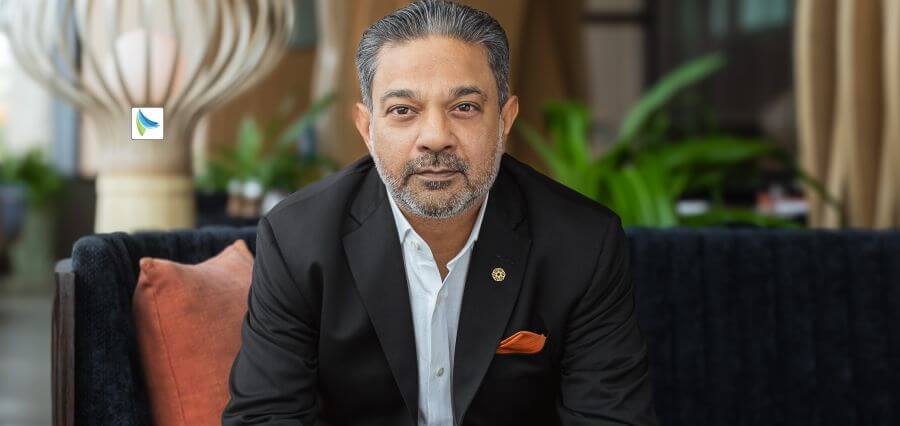
Ranjit Phillipose: The Accidental Hotelier Who Redefined Excellence
There are some professions which are painstakingly constructed, emerging like skyscrapers from meticulously designed blueprints. There are others that start with a whisper of chance, evolving in the easy, unhurried sense of a stream cutting its course. Ranjit Phillipose‘s life fits comfortably into the latter category. He is Senior Vice President Operations of Indian Hotels Company Limited (IHCL), Goa. What started as his mother’s offhand, lunchtime remark about going for an interview with Taj Hotels, a fork in the road, became an incredible three-decade sojourn that crisscrossed continents, cultures, and crises. He is now a giant in hospitality, with a titan portfolio of more than 30 hotels and nurturing 2,800 loyal associates through Goan tourism’s colorful and dynamic terrain. His life testimony is not simply a resume but a lesson in converting off-the-cuff moments of opportunity into meaningful action. It is an apt precedent of viewing opportunity, welcoming challenges with open arms, and having the inner tenacity to convert the common act of service into the extraordinary spirit of excellence. The Unplanned Beginning and the Apprenticeship of the Front Desk In 1993, fresh out of university, Ranjit Phillipose walked into the interview room at Taj Coromandel, Chennai, without an inkling that he was keeping a fateful appointment. There was no grand career roadmap, yet from that first day, the rhythm of hospitality- the bustling lobby, the genuine smile exchanged with a stranger, the quiet pride of creating an unforgettable experience, drew him in with an irresistible gravitational pull. Starting as a Front Office Executive, he was thrust into the crucible of service, a role where one must seamlessly balance being the first point of contact and the last line of defense for the guest. Those early years became his enduring foundation, etching the principle that true excellence in hospitality doesn’t rely on theatrical gestures but on countless small moments executed with surgical precision and genuine warmth. IHCL became more than just an organization. It was his rigorous school, his family, and his home, providing the essential space to grow, to lead, to stumble, and to rise again with renewed, focused purpose. Building Bridges Across Continents The trajectory that followed spoke volumes about his latent ambition and sheer versatility. After six successful years in Chennai, Ranjit Phillipose expanded his world map, venturing into international waters in 1999, joining St James’ Court in London. His global portfolio rapidly expanded, taking him to key positions in one of the world’s most demanding markets: the United States. He served as Director of Rooms at The Pierre in New York and later as Hotel Manager at Taj Boston. Each role offered a kaleidoscope of fresh perspectives, distinct operational challenges, and new dimensions to his fluency in hospitality’s universal language. Crucially, what distinguished him during these formative years was his strategic vision that extended beyond the daily operational reports. He became the go-to leader for establishing new frontiers, spearheading pre-opening task forces in challenging, high-stakes locations like Mumbai, Seychelles, and Mauritius. Opening a hotel is not a simple ribbon-cutting event; it is a complex symphony requiring meticulous financial planning, profound cultural sensitivity, and the rare ability to forge high-performing, cohesive teams from diverse, disparate backgrounds. Ranjit Phillipose mastered this intricate art early, setting an exemplary standard that would clearly define his later, more senior achievements. Palace Grandeur, Resort Idyllic, and the Pulse of Innovation The next phase of his career saw him transition into the delicate work of managing the brand’s most iconic assets. In 2009, he undertook what many regarded as his most ambitious assignment: General Manager of the majestic Taj Falaknuma Palace in Hyderabad. He oversaw the ambitious $50 million restoration of the brand’s fourth heritage hotel. The palace, a monument of opulence and royal history, demanded more than management; it required reverence, a historian’s vision, and the delicate managerial balance between preserving centuries-old heritage and meeting the absolute highest standards of modern luxury. Under his astute leadership, Falaknuma transformed into a vibrant, living testament to India’s regal past. Seamlessly pivoting from heritage management to luxury resort expertise, he moved to the idyllic shores of the Maldives in 2012 as General Manager of Taj Exotica Resort and Spa. Here, surrounded by turquoise waters and pristine isolation, Ranjit Phillipose sharpened his focus on creating deeply immersive luxury experiences, understanding that true luxury is as much about the precious commodities of space and silence as it is about impeccable service and physical splendor. His return to India brought him to Goa, where he served as Area Director and General Manager of Taj Exotica Resort and Spa, managing four properties. Goa, with its unique syncretic blend of Indian and Portuguese cultures, its laid-back charm, and its increasing tourism complexity, became the perfect ground for his evolving, comprehensive leadership philosophy. The Dubai Chapter: Crisis, Courage, and an Unwavering Conviction In 2016, Ranjit Phillipose embarked on what became his definitive chapter. Taking the helm as General Manager of Taj Dubai in the city’s prestigious downtown district, he faced the immediate challenge of establishing a distinctive Indian luxury brand in the notoriously competitive Middle Eastern market. He rapidly achieved this by successfully blending the brand’s profound Indian heritage and essence with essential Middle Eastern elements, transforming Taj Dubai into a true force. Its swift success earned significant recognition, including the title of Favourite Business Hotel at the Conde Nast Traveller Readers’ Choice Awards in 2017. He further cemented IHCL’s presence by playing a pivotal role in the opening of Taj Jumeirah Lakes Towers in 2019. But it was 2020 that truly tested his mettle. When the unprecedented silence of COVID-19 descended upon Dubai, the city’s hospitality sector staggered. Ownership wanted to shutter the doors, laying off staff, but for Ranjit Phillipose, the guiding principle was non-negotiable: protecting livelihoods came first. After intense, rigorous discussions, the owners agreed to stay open on a daunting condition: the hotel could not incur additional costs. Phillipose and his leadership teams worked tirelessly, dissecting every cost center, creating a sustainable operating model while prioritizing

Leadership That Inspires True Growth
Mind Over Metrics In today’s corporate landscape, success is mostly measured through figures— profit margins, quarterly reports, and performance indicators being the main topics of discussion in the boardrooms. Metrics are necessary for accountability and progress, but they don’t demonstrate leadership effectiveness entirely. In fact, leadership that is really transformative goes beyond numbers; it embraces people, purpose, and sustainable development. Mind over metrics is the belief that the most enduring outcomes are the ones where leaders facilitate meaning, engagement, and innovation instead of just running the business by the numbers. Beyond the Numbers It is true that metrics are needed; however, they are not enough. They only measure the results, not the reasons. Moreover, they portray performance, not potential. Leaders who are overly focused on numbers may lose sight of the human and cultural aspects that are crucial for their continued success. If decisions are based only on the rationale coming from the metrics, organizations might succeed in the short term, but creativity, morale, and trust will be their victims. One’s mind being over metrics does not entail the exclusion of data – rather, it provides the context for it. Numbers for such leaders are merely signs, not unchangeable truths. While dealing with data, they also look for the qualitative accompaniments. They understand that behind every percentage and productivity ratio there is a team of people whose motivation, well-being, and even sense of purpose are the decisive factors that determine the results. The Human Side of Growth Empathy is, undoubtedly, the cornerstone of leadership that can inspire real growth. The great leaders realize that the result of business comes from human performance, and human performance is always based on connection and, especially, meaning. Thus, when employees recognize that they are seen, heard, and valued, they can give nothing but their best to the organization. Such emotional involvement cannot be measured by any metric, yet it is, most of the time, the factor that differentiates good and outstanding results. A leader who emphasizes empathy, communication, and trust, sees the benefits not only of collaboration but also of problem-solving, change management, and collective innovation. Trusting in this process, they move from the stage of controlling results to that of creating conditions in which people are able to thrive, and, thus, the instinct and not effort, is performance. Purpose as a Catalyst Purpose is the feature that indicates direction in the world influenced by numbers. As the main decision maker, it goes beyond values and vision as it has the capacity to lead organizations through difficult times. Managers that effectively deliver the company’s mission are the ones who excite the people with the kind of dedication which is beyond the level of compliance. Employees perceive that instead of working for results they are making a contribution to the common mission. Redefining Success Most traditional leadership models consider success to be synonymous with scale—more revenue, more production, more market share. Nevertheless, the leaders who are the most effective are the ones that realize that sustainable growth is not merely about getting bigger but also about evolving. Real growth implies being flexible, learner, and tough. A mind over metrics leader would define success as the broadening of skills and the deepening of the culture. They ask questions like: Are our teams acquiring new skills? Are we encouraging innovation and diversity? Are we taking lessons from failures and making progress continuously? These questions bring to light aspects of growth which are beyond data’s reach. They point out that success in the long-term is less about the race for targets and more about the development of people and the creation of systems that support the continuous delivery of excellence. Balancing Intuition and Insight A modern leader is required to keep a balance between intuition and data, art and science. While metrics provide useful insights, it is the leader’s intuition which involves sensing, empathizing, and envisaging—that gives the insights a proper context. As a result judgment calls formed by the combination of analytics and human discretion are both logical and creative. This very point becomes even more crucial in situations of rapid change. The facts might show what is going on, but often only instinct can tell why—and it is the “why” that provides leaders with the ability to move quicker and with more determination. Conclusion Leadership that brings about genuine growth is not characterized by rejecting metrics but rather by surpassing them. The concept of mind over metrics tells us that while numbers do represent performance, they should not be seen as its definition. The most effective leaders treat data as a tool rather than the end—they put people, purpose, and progress first in every decision. When leaders prioritize mindset over measurement they open the gates to the full power of their teams which is the fosterage of innovation, trust, and resilience. What they accomplish by this is the building of companies that are not only financially sound but also purposeful—where growth is not solely quantified in numbers but also in the vigor, inventiveness, and human side of those who make it possible. Read Also : How Great Leaders Leave More Than Results

How Great Leaders Leave More Than Results
The Legacy Makers Leadership is typically quantified through one of the numbers – for example, revenue growth, market share, or shareholder value. However, the most exceptional leaders do not go down in history only because of the figures they have managed to achieve, but rather because of the people they developed, the things they made, and their contribution to the society which still exists after their departure. Their biggest contribution to society beyond the quarterly objectives and milestones is their legacy – the permanent effect they have on people, culture, and purpose. Leadership Beyond the Metrics In business world which is characterized by rapid changes, success is mainly measured by tangible results. Results matter and thus they should be taken into account, however, they are only a fraction of a leader’s story. Leaders with the highest impact understand that their sway goes further than just profits and performance graphs. Their priority is to influence the society’s values, develop people, and implement measures which will ensure continuity of their work after their departure. Legacy is definitely not something which leaders create through showing their power; rather it is grown through their being genuine, having compassion towards others, and getting supported by their foresight. More than being defined by how much leaders achieve during their time at the helm, it is actually defined through the extent to which their actions continue to influence the organization after their departure. Vision that Outlives Leadership The leaders who are referred to as “great” pave a way for a future that would be still there even after they cease their individual roles. They do not simply react to what is required here and now but they think ahead, visualizing what an organization might become and, at the same time, getting other people willing to walk that path with them. The future always remains in the present only if it is shared by all, everyone agrees with it, and it has its origin in something like a common purpose. Leaders who keep telling the same story over and over again create in others the feeling of a joint mission which cannot be abandoned. The vision they have becomes the organization’s DNA which then guides decisions and behaviors for a long time after they are no longer there. Empowering People as a Legacy Employees, if one can call it that, then definitely vision is the leader’s plan and people are the ones who with a leader’s heritage become the builders. Leaders who are great make it their business to develop others, enable groups of people to be self-reliant in their thinking and to carry out their activities without supervision. The future leaders whom they bring up are the ones who strongly resemble the values and principles of the leaders through whose mentorship they came to their own success. Power is not given to others by means of delegation rather it is given by showing one’s trust. Leaders who are successful in creation of an environment where employees feel comfortable mentally and emotionally support innovation, assistance, and development among the employees. Such groups of people constitute, in fact, the leaders’ most lasting heritage, which is proof that the true value of leadership is in the way most efficiently it can be multiplied. Mentorship: Passing the Torch Mentorship is another element that is crucial for leadership to be of long duration. The understanding that their greatest effect is very often in the success of other people is possessed by great leaders only. And thus, they share knowledge, give guidance, and through their own behavior demonstrate, thereby making excellence a tradition as well. Mentorship, the act of one being a mentor, completely changes leadership from a single to a collective issue, thereby the latter being passed down from one generation to another. It is an intergenerational link through which values, vision, and wisdom continue to guide the future of the organization. By mentoring, the leaders widen their sphere of influence so it is far beyond the time they are in power and hence they become the agents of long-term progress and stability. Conclusion Metrics may be the yardstick for success, but legacy is what determines the value of it. Leaders of outstanding caliber do not build companies that grow and prosper as a consequence of their being there, but because of the unchanging values, foresight, and ethos they have embedded. Apart from profits, they use other yardsticks to measure their success such as that of their people, the morality of their deeds, and the legacy of inspiration they create. In a nutshell, leadership is not about the good things you are remembered for having done, but the good things you enabled in other people. The real legacy creators do not only leave behind tangible results, but also a mode of thinking, a level of honesty, and a sense of purpose which keep on attracting even long after they have gone. Read Also : The Power of Empathy in Global Strategy

Most Transformational Leader Making An Impact In 2025
Most Transformational Leader Making An Impact In 2025 Bhaskar’s leadership blends analytical mastery with philosophical depth—a rare synthesis of accountant, strategist, and visionary thinker. In moments of crisis, he doesn’t react; he recalibrates. He transforms volatility into opportunity and disruption into direction, anchoring his decisions in timeless principles that outlast every economic cycle. Quick highlights Quick reads

The Power of Empathy in Global Strategy
Leading Across Cultures Leaders are not confined by borders in the age of a networked world. The effect of globalization is the fusion of diverse groups, markets, and mentalities, which makes cultural intelligence a necessary skill for leaders of today. Still, out of all the traits a leader can have—empathy is the one that, being the basis for all other cross-cultural traits, stands most prominently. The ability to apprehend, esteem, and bond with the persons who come from different milieus is no longer a mere ‘soft skill’—it is a strategic lever that is the main determinant of success in global business. Leadership in a Global Context Culture-based leadership is being able to weave the complicated interaction of languages, customs, values, and communication means. Different stimuli in one region may not motivate the same employees in another; that which builds confidence in one culture may not be felt by another. Global leadership, thus, is a double-edged sword: it has to recognize differences and still oversee transforming them into creative clout and the by-products of collaboration. Empathy empowers leaders to do so. Empathy makes them understand that it is others’ world, and to put themselves in others’ shoes is the only way true insight can be gained especially when it comes to the influence of culture on decision-making, behavior, and expectations. Inclusion results from this understanding, which in turn leads to conflict mediation and trust-building – the bricks and mortar of not just strong, but also stable, coherent global teams. Empathy is mostly spoken of as one of the elements of the broader emotional intelligence. However, it is, in fact, a real strategic tool as it improves global decision-making and facilitates the creation of relations with worker, customer, and partner groups. Empathetic leaders can easily spot local market subtleties, change their means of communication and coordination according to that, and in the same breath unite organizational goals with the regional outlooks. Consider, for example, an empathetic leader who makes an entrance in a market she hasn’t explored and is therefore obliged to listen first and then talk. The reason for success, she acknowledges, is very much hinged on thoroughly grasping local-wise issues, be it social norms, or buying habits, or even culturally unspoken but universally-deemed-true codes. All of this triggers and maintains a deep trust, which alongside authenticity are two of the greatest qualities that are indispensable for the success of any international operation and assure its longevity. Building Culturally Intelligent Organizations Empathy is the core of Cultural Intelligence—CQ-, the ability to perform effectively in different cultural contexts. Even though technical skills and global strategies play an important role, leaders with high CQ know that they need different methods of leadership for different teams and markets. They see differences not as something to be merged but respected. Culturally intelligent organizations have the skills to create an atmosphere where the different aspects of the human nature are not only accepted but also looked upon favorably. These firms turn the talents of the world’s workforce into a force to be reckoned with by sparking open debate, valuing the different points of view, and facilitating the involvement of all in the decision-making process. Balancing Global Strategy with Local Sensitivity Being empathic is not at all a reason for a leader to be un-strategic. Quite the opposite, an empathic leader is more strategically sound than a non-empathic one. The global leaders need to find a middle ground between leading the change and maintaining the stability of the vision and showing empathy to the locals and understanding them. For example, the public relations campaigns aimed at one demographic may be totally off if they target another. Similarly, brand messaging and leadership approaches utilized in one country might call for the rephrasing of new communication elsewhere. Empathy helps leaders to become very deliberate in the making of such changes—on the one hand, they get to keep the organization structurally correct and on the other hand, they respect and honor the culture of the people from whom they derive the distinctions. Consequently, the global strategy is a clear demonstration of inclusiveness, authenticity, and human-centering, which is capable of crossing borders. Conclusion Being in the world of businesses that extend across continents and where teams are spread over different time zones, leadership is triumphant of more than just technical knowledge or market insight. It calls for emotional intelligence and empathy. The key to leadership across cultures lies in the equal measure of understanding people and strategy. Empathetic leaders are the ones who bring together various teams, enhance collaboration, and, build trust, which is above and beyond geography. These leaders see global triumph as a consequence not of forcing similarity but of welcoming differences. By doing so, they convert diversity into a source of competitive advantage, which fuels innovation and the endurance of growth. As a matter of the fact, empathy is not simply the love that binds people—it is the core of global leadership. Leaders who operate on empathy don’t just manage on different cultures; rather, they inspire across them. Read Also : How Great Leaders Leave More Than Results