





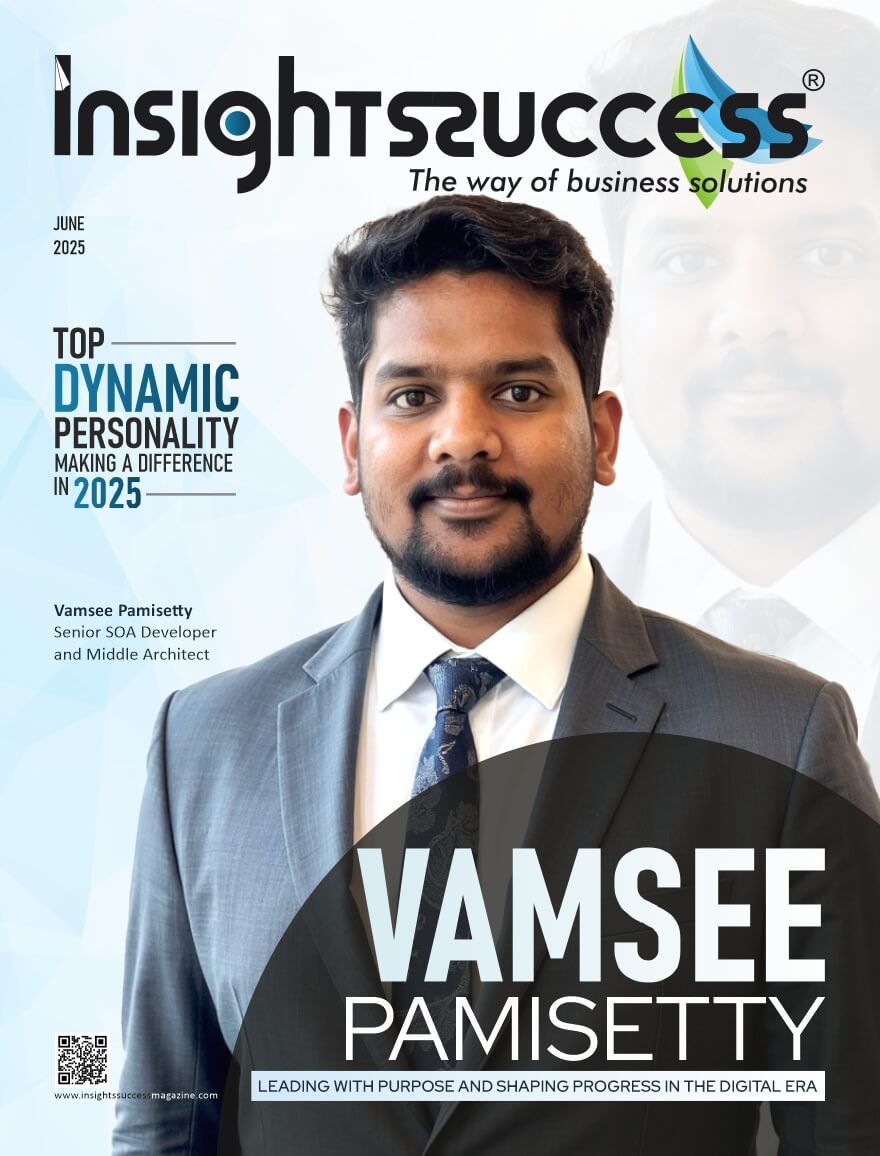
Top Dynamic Personality Making A Difference In 2025
Top Dynamic Personality Making A Difference In 2025 This edition showcases trailblazers who are redefining leadership through innovation, resilience, and purpose. This special edition features Vamsee Pamisetty, a visionary technologist whose impactful contributions in the software architecture domain continue to inspire transformation and excellence across industries on a global scale. Quick highlights Quick reads

Vamsee Pamisetty: Leading with Purpose and Shaping Progress in the Digital Era
Technology is the pillar of progress in this age of business excellence. Exceptional leaders are making a massive impact through their dedication and innovative approaches. They are not only characterized by their technical expertise but also by vision, flexibility, and unrelenting passion for perfection. Vamsee Pamisetty’s experience is that very exciting mixture of intelligence, determination, and mentorship a journey of continuous improvement and impactful contributions. Early Foundations: The Seeds of Ambition Vamsee’s life started in the Telangana backwaters of India, where the seed of technology interest was sown early. Having completed his early education at St. Alphonsus High School in Nalgonda, he went on to fare well at Nalanda Junior College in Hyderabad. They were impressionable years characterized by a sharp mind and an eagerness to learn the how’s and whys—a passion that would find its way into his professional ethos much later. His B. Tech from Cristu Jyoti Institute of Technology and Science, Jangaon, Warangal District, helped to further solidify his technical base. Here, Vamsee Pamisetty excelled both academically as well as through an active interaction with new-generation technologies, setting the stage for a global career. The quest for greatness took him to San Jose, California, to the International Technological University. Swept up in the culture of innovation that characterizes Silicon Valley, Vamsee Pamisetty broadened his vision, embracing cutting-edge technical principles as much as the collaborative ethos that is the signature of world-class engineering teams. Professional Ascent: From Code to Leadership Vamsee’s career has been a reflection of his dedication towards impact and growth. He started in 2011 as an SOA Developer in Chicago. Within no time, he was recognized for technical brilliance and solutioning attitude, driving mission-critical projects that demanded precision as much as imagination. Between 2012 and 2014, Vamsee Pamisetty refined his healthcare technology expertise, developing scalable solutions that propelled patient outcomes and operational effectiveness. The intricacy of healthcare systems demanded advanced treatment—regulatory compliance and innovation—something Vamsee Pamisetty addressed with his signature, rigor and creativity. The following chapter took place at an organization’s Mountain View campus, where Vamsee Pamisetty was a Senior SOA Developer from 2014 to 2017. During this time, he was immersed in a culture of constant innovation, collaborating with some of the most brilliant and talented minds in the field. His areas of contribution ranged from creating high-availability backend systems, performance tuning, and guiding junior developers. The experience not only improved his technical skill base but also deepened his respect for the strength of teamwork and visionary leadership. Between 2017 and present, Vamsee Pamisetty has spearheaded digital transformation as a Senior SOA Developer and Middle Architect at an organization in Washington, DC. There, he has been instrumental in designing and executing high-impact, large-scale projects that have supported in transforming operational efficiency and user experience for stakeholders in government. His technical expertise combined with strategic thinking has made him an extreme asset to the organization. Philosophy and Purpose: Something Greater than Code “Technology is not a profession it is a vocation for me. It was a calling that inspired me to become a software engineer: to help shape the future, to create systems that count, and to leave an indelible mark.” he says. Every problem, every line of code, is met with intent: to turn adversity into strength and to create solutions that last. Vamsee Pamisetty possesses an unquenchable hunger for learning. In a field that is in a state of constant change, he feeds on the excitement of learning new languages, paradigms, and tools. Every challenge is treated as a chance to learn, to innovate, and to expand the horizons of what is possible. This drive for excellence is not restricted to technology; it extends to self-growth, team building, and value creation for users and stakeholders too. Resilience in the Face of Adversity: The COVID-19 Pivot The COVID-19 pandemic was a trial by fire that tested the mettle of professionals worldwide. Vamsee Pamisetty embarked on a journey of reinvention during this period. When work stopped and uncertainty lingered in suspension, he used the opportunity to invest in self-leadership and up-skilling. He skilled up, acquired new certifications, and kept abreast of the latest trends in the industry so that his skills remained current and future ready. Realizing remote work as a challenge instead of an obstacle, Vamsee Pamisetty streamlined his workflow, built a productive home office, and became an expert at leading and working remotely. He also improved his professional experience by freelancing and side projects, gained flexibility, and diversified his skill set. Engaging with internet tech communities broadened his perspective even more, enabling him to work with peers from around the world and remain at the forefront of innovation. Strengths That Define Success Vamsee’s professional ascent is supported by a collection of core strengths that have defined his success: Adaptability: From weathering tech transitions, changing team compositions, or external shocks such as the pandemic, Vamsee Pamisetty quickly and boldly seizes change as opportunity. Problem-Solving: A seasoned troubleshooter, he is great at analyzing tough challenges and designing scalable, beautiful solutions, even under tight time pressure. Self-Discipline: Vamsee, who is highly personally accountable, manages his priorities and time with great accuracy, performing well both in virtual and hybrid work settings. Growth Mindset: He analyzes each experience—a failure or a success—through the perspective of learning and growth, building a culture of continuous improvement for himself and others. Lessons from Weakness: Growth Through Reflection Vamsee’s experience has not been easy. In the early days of his career, he used to have an issue with taking too much responsibility himself, seeing delegation as a loss of authority. Slowly, however, he understood that leadership is about trust and collaboration, something that transformed his team-working style and emphasis on projects. He also faced the trap of overwork, first confusing unlimited hustle with progress. Experience, and the lesson learned in periods of burnout, taught him strengths of balance and the need to establish firm boundaries. These have become mantras, informing his strategy to work and life. Achievements: Milestones of Impact Professional
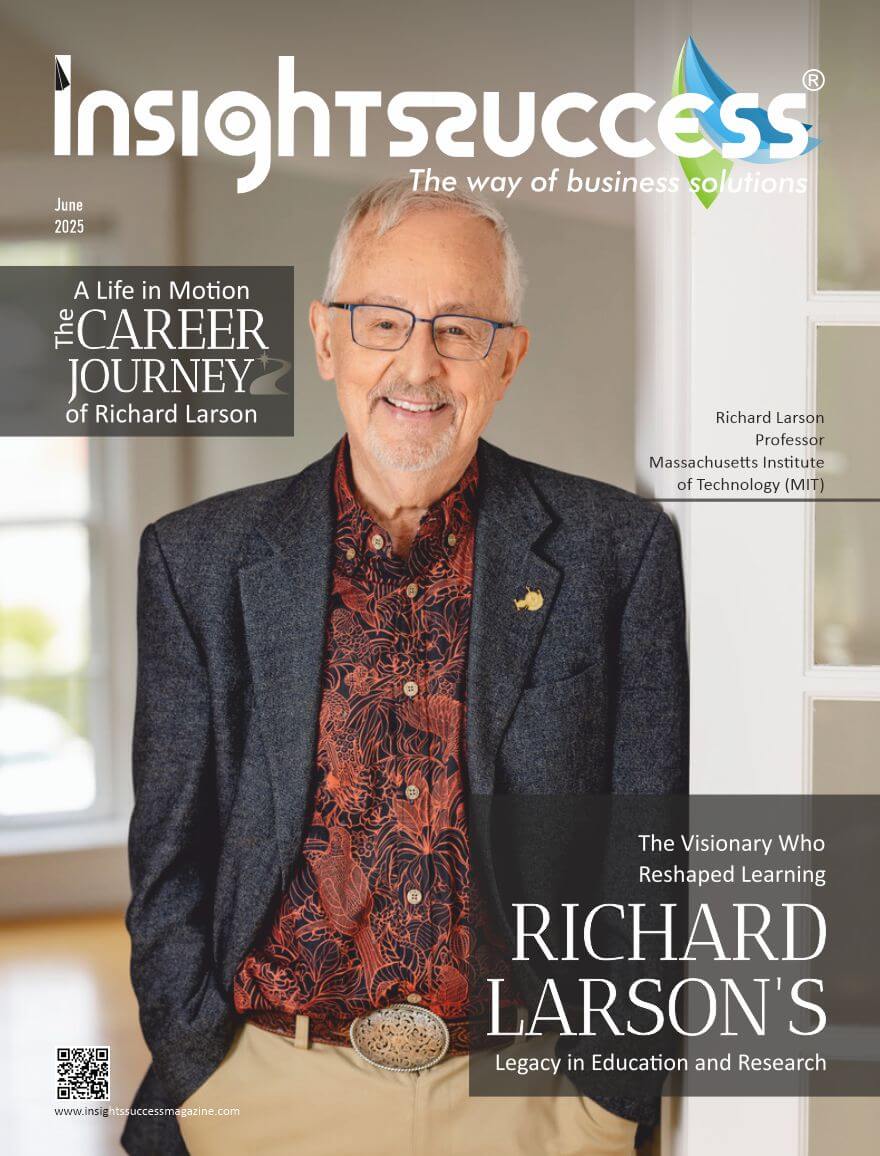
A Life in Motion: The Career Journey of Richard Larson
A Life in Motion The Career Journey of Richard Larson Dr. Richard Larson has redefined education through five decades of pioneering research, interdisciplinary teaching, and mentorship at MIT. A leader in operations research and global learning innovation, his legacy is marked by impact, integrity, and inspiration—transforming both individuals and institutions across the world through the power of engaged education. Quick highlights Quick reads
The Visionary Who Reshaped Learning: Richard Larson’s Legacy in Education and Research
Education stands as one of the greatest equalizers in society—a beacon that not only empowers individuals but uplifts entire communities. It is the very foundation upon which we build informed, healthy, and prosperous lives. From bridging social gaps to unlocking doors to opportunity, education’s importance cannot be overstated. But education in its truest form is more than books and classrooms; it is mentorship, vision, and the unwavering guidance of those who devote their lives to nurturing future generations. Among those few who have not just taught but transformed education itself is Dr. Richard Larson. His name is synonymous with innovation, dedication, and brilliance in both academia and applied sciences. With a tenure of over five decades at the Massachusetts Institute of Technology (MIT), Dr. Larson has been instrumental in reshaping how students engage with science, operations research, and interdisciplinary education. His journey is one that transcends titles and accolades—it is about impact, integrity, and inspiration. Through his pioneering research, unyielding commitment to students, and a vision for a more interconnected educational world, Richard Larson has become a towering figure in the academic landscape. This article offers a detailed view into his formative years, his work as a professor and mentor, and the indelible mark he continues to leave on both individuals and institutions alike. The Early Years of Curiosity and Commitment Born in 1943 in Bayside, Queens, New York City, Richard Larson’s path to academic greatness began early. When his family relocated to Pennsylvania and later to North Plainfield, New Jersey, young Richard developed a growing interest in how the world worked—particularly in science. His academic journey truly took shape during his high school years in Needham, Massachusetts, where his love for physics blossomed. The hills of Needham and the encouragement of devoted educators set the tone for what would become a lifelong commitment to learning. Though he had a natural inclination toward physics, Richard never confined himself to one rigid academic discipline. Chemistry held little interest for him, while biology proved daunting with its detailed memorization. His libertarian mindset led him away from traditional paths and into a more innovative, fluid approach to learning—crossing boundaries and disciplines to understand broader systems and create meaningful change. His journey took a pivotal turn when he applied to MIT. When his acceptance letter arrived, handed over by his mother, Richard Larson thought it was a mistake. It wasn’t. That moment marked the beginning of an extraordinary relationship with one of the world’s leading institutions—a relationship that would span over five decades and influence thousands of lives. Shaping Minds at MIT: A Career of Excellence As a professor at MIT, Dr. Richard Larson exemplified both academic excellence and adaptability. He taught in five different academic departments, reflecting his belief in interdisciplinary exploration. From Electrical Engineering to the Institute for Data, Systems, and Society (IDSS), Larson’s reach was broad and deep. He saw no reason to limit learning to one area of focus; instead, he encouraged students to view knowledge as a bridge, connecting silos of thought to create new pathways of innovation. His courses weren’t just lectures—they were experiences. He believed deeply in engaging students, making complex subjects like Operations Research (OR) not only accessible but enjoyable. According to Richard Larson, OR is one of the world’s most important but invisible professions. He used relatable examples like airline scheduling and queue modeling to demystify abstract concepts and help students see their real-world implications. For Richard Larson, education was more than delivering content—it was about inspiring critical thinking. He consistently prioritized mentorship, focusing on guiding students to become not just successful professionals but thoughtful, independent thinkers. Through this philosophy, he helped nurture countless bright minds, many of whom went on to successful careers in academia, government, and industry. A Defining Moment in Mentorship One of Richard Larson’s most poignant memories as a professor involves a struggling student who approached him with the intention of dropping out of class after receiving a low exam grade. Rather than accepting defeat, Richard Larson used this opportunity to mentor and guide the student. Through thoughtful discussion, encouragement, and personalized support, he helped the student rediscover his passion and improve academically. Stories like these are a testament to Larson’s belief in the potential of every learner and his role as a catalyst for their success. Such experiences defined his teaching career. He didn’t just deliver lectures—he invested emotionally and intellectually in his students’ journeys. The result? Transformative change, both in classrooms and in the lives of those he mentored. Champion of Operations Research and Innovation Beyond the classroom, Richard Larson has been an undeniable force in advancing operations research. He served as President of the Operations Research Society of America (ORSA) in 1993-94 and later as President of INFORMS—the Institute for Operations Research and the Management Sciences. He also co-directed the MIT Operations Research Center for over 15 years, further solidifying his role as a global thought leader in the field. Dr. Larson’s research includes contributions to disaster planning, pandemic response strategies, workforce optimization, and smart-energy homes. Notably, he was also the principal investigator of the MIT BLOSSOMS (Blended Learning Open Source Science or Math Studies) initiative, aimed at enhancing global education through engaging, interactive video lessons. During the COVID-19 pandemic, Richard Larson focused his expertise on modeling vaccine distribution and evaluating structural shifts in the U.S. education system. His work highlighted how Operations Research could be applied to real-time global challenges, proving that academic thought could have practical, even life-saving, outcomes. Teaching Principles That Withstood the Test of Time In an age of evolving curricula, technologies, and teaching platforms, Richard Larson’s foundational belief never changed: engage the student. Whether teaching in a traditional classroom or through digital platforms, his approach was always centered on the learner. He was passionate about ensuring that his students understood concepts deeply rather than memorizing facts for exams. He also believed in making education tangible. By incorporating relatable, real-life examples and interactive teaching methods, he transformed abstract theories into meaningful lessons. According

From Intuition to Insight: Unlocking the Power of Data-Driven Leadership
With the speed and complexity of modern-day business, experience and gut feel leadership simply won’t cut it. The digital era led businesses to a position where data is no longer an outcome of operations but a strategic asset. Data-driven leadership—timely, accurate, and pertinent data-driven decision-making—is the most critical ability of leaders who desire to push their organizations toward sustainable growth, innovation, and resilience. Data leadership is leveraging analytical thinking and visioning strategies so decisions at every level are being made on objective facts rather than opinion. It helps leaders to find trends, foresee the future, optimize performance, and deploy resources in a decision to support business goals better. Building a Culture of Data-Driven Decision Making Construction of a data-driven leadership model starts with creating an organizational culture that honors data as a strategic enabler. That cultural shift must begin at the top, as senior leaders by example demonstrate a commitment to making decisions with data. When the leaders at the top exemplify data literacy and analytical minds, it sends an incredibly strong message to the rest of the firm. It also forces the data culture into the DNA of the firm, so data is no longer an instrument but an attitude on the part of the leadership. It is not merely the technology adoption; it is a change in thinking, process, and ability. Leaders will need to lead by making transparency, curiosity, and reward evidence-based thinking their highest order. Of slightly lesser urgency is the silo-busting and data availability across functions. Data democratization makes it possible for more workers to gain access to insights and thus they enable collaboration and innovation. Data literacy education and analysis tool education can also even more empower teams’ ability to assist leaders with fact-based decision-making. Companies that spend money on employee upskilling for data analysis will probably experience real return in terms of better decision-making accuracy, faster responsiveness, and more strategy intent operational alignment. Applying Data for Strategic Clarity and Agility The primary advantage of data-driven leadership is the ability to deliver more strategic clarity. With access to real-time information, leaders are able to draw an updated picture of internal operations, trends in the market, customers’ feelings, and competitors. One can establish more precise goals, use resources more optimally, and avoid performance expectation drifts in a timely manner. Strategic planning is no longer a stagnant annual tradition—it’s been transformed into an energetic, fact-based process with the ability to modify responses to change. Furthermore, data-driven leadership ensures agility by virtue of quicker and better decisions. In uncertain or dynamic situations, intuition may not be a good source. Information enables leaders to possess the factual basis for testing options, anticipating dangers, and estimating the probable outcomes prior to making a move. With predictive analytics and scenario modeling, companies can forecast various scenarios of the future and act in advance rather than responding later. Such a proactive strategy enables companies to seize new opportunities and respond to threats more effectively. Secondly, managers who test assumptions against facts and track effect are more likely to be able to justify decisions honestly and openly and build organizational trust. People, Technology, and Strategy Aligned by Data To fully realize data leadership, organizations must have their people, technology, and strategic imperatives in position. It begins with empowering leaders and employees with the appropriate platforms and tools to access, understand, and act on data. As sophisticated as technologies such as advanced analytics, AI dashboards, and cloud data warehouses are, they are only a few among those that can facilitate data-driven leadership. But of greatest value is when the technologies are integrated into the workflow of the day and into strategic discussion. Of note too is how data work is aligned with organizational ends overall. Leaders must develop unambiguous metrics and KPIs that link data analysis to strategic priorities such as top-line growth, operational effectiveness, and customer satisfaction. This ensures the data is not analyzed in silos but are extremely close to performance and strategic priorities. With the creation of cross-functional teams and the breakdown of information silos, organizations ensure that information flows uninhibitedly and is an important determinant of decisions at all levels. Leaders must exercise utmost caution with data quality and governance since low-quality data has the potential to make key decisions less than optimal. Central data stewardship competence development and investments in data quality programs are the measures required in maintaining trust in the insights being used. Conclusion Embracing the potential of data-driven leadership is a process and not a one-off event, as it is an experiment in cultural evolution, capability building, and technology progress. Decision-making based on evidence, rather than instincts, visionary leadership, and curious mind are required. Data finds its place in the leadership practice DNA by organizations that are capable of increasing strategic clarity, boosting agility, and establishing a culture for continuous learning and improvement. Ultimately, data leadership is about making better, quicker, smarter decisions. It enables organisations not just to manage complexity, but to thrive in it—to use data as a strength and make leadership a source of inspiration and success. Read More: Pioneering Models: The Art of Transforming Education for Lifelong Learning
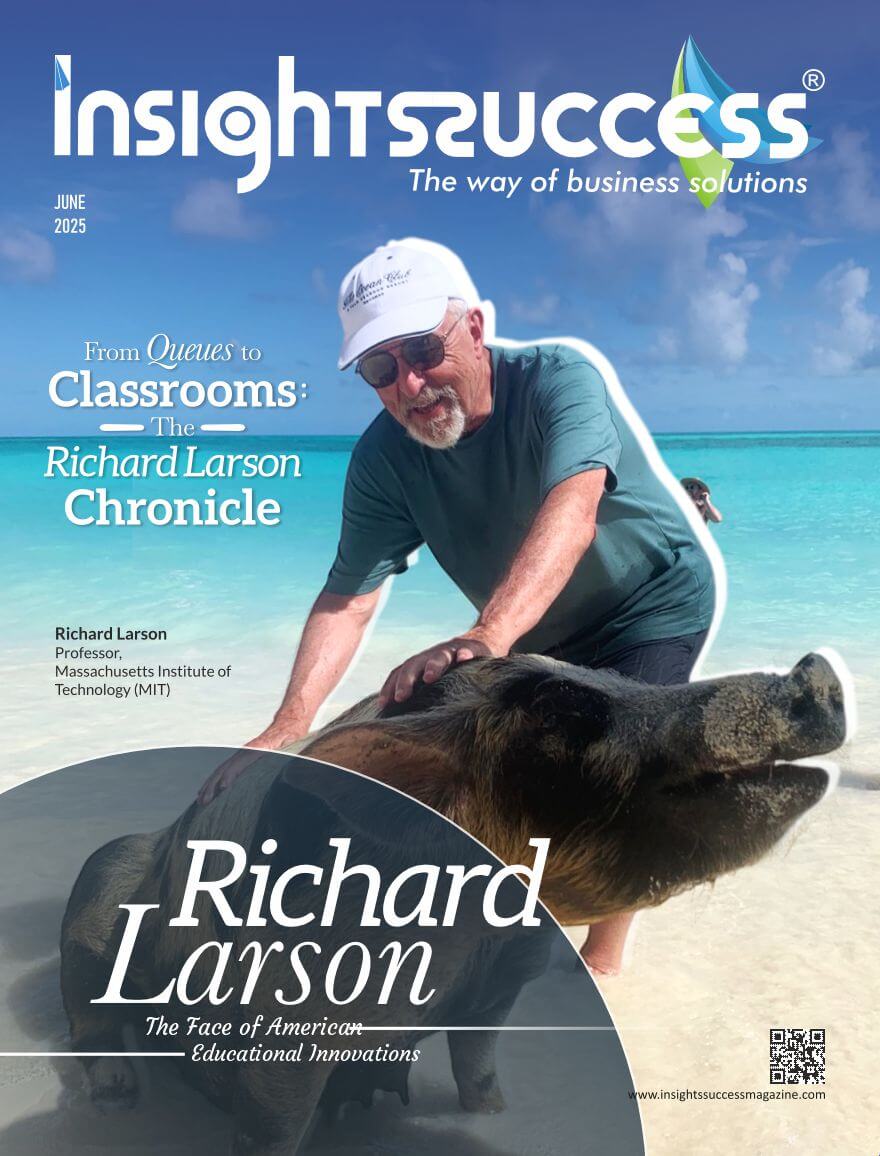
From Queues to Classrooms – The Richard Larson Chronicle
From Queues to Classrooms – The Richard Larson Chronicle Dr. Richard Larson has redefined education through five decades of leadership at MIT, integrating operations research with interdisciplinary teaching. His global impact, mentorship, and pioneering initiatives like MIT BLOSSOMS exemplify his belief in education as society’s most powerful investment and a lifelong catalyst for transformation. Quick highlights Quick reads

Richard Larson: The Face of American Educational Innovations
Education, at its core, is more than a method to transfer knowledge. It is the bedrock of transformation, the seed from which societies blossom, and the key to unlocking the true potential of individuals. Amidst the corridors of this vast system, very few have dared to reimagine it, and even fewer have succeeded in revolutionizing it. Among those rare trailblazers stands Dr. Richard Larson, an individual who didn’t merely work within the system—he redefined it. Richard Larson’s contribution transcends the classroom. He was a visionary who used his genius in operations research to solve real-world problems, from pandemics to smart cities. Over the course of 55 years at MIT, he inspired, mentored, and reshaped the way education is imparted. His work was not confined to academia but touched the lives of students, researchers, governments, and institutions across the globe. This article takes you through the transformative journey of Professor Richard Larson—from his early beginnings to his unmatched achievements, his vision as a mentor, and the legacy he leaves behind as a pioneer in education and operations research. Early Life and Academic Foundation Born in 1943 in Bayside, Queens, New York City, Richard Larson spent his formative years in Pennsylvania before relocating to North Plainfield, New Jersey. From an early age, his intellectual curiosity was evident. After completing his high school education at Needham High School in Massachusetts, he embarked on a remarkable academic journey at the Massachusetts Institute of Technology (MIT). At MIT, Richard Larson earned his Bachelor’s, Master’s, and Ph.D. in Electrical Engineering. However, his interests gradually began to stretch far beyond a single domain. His studies became a gateway into interdisciplinary exploration, ultimately setting the stage for a lifelong career that would blur the boundaries between engineering, education, and research. Discovering the Power of Interdisciplinary Thought During his school years, Richard Larson developed a keen interest in physics due to its logical elegance and structured learning. He found chemistry unappealing, while biology posed a challenge due to its rote memorization. This inclination led him to view himself as a libertarian learner, never confined by academic silos. He realized early on that traditional labels such as “physicist” or “engineer” could limit intellectual freedom. Instead, he envisioned a career that allowed him to traverse disciplinary borders. This dynamic vision came to define his academic path, making him a bridge between conventional departments. Larson’s passion lay in solving problems through the lenses of multiple disciplines, a trait that would make his work both impactful and enduring. A Distinguished Career at MIT Professor Richard Larson’s academic home was MIT, where he spent over five decades. His roles were as diverse as his ideas. He taught across five academic departments, beginning in Electrical Engineering and culminating in interdisciplinary groups like the Institute for Data, Systems, and Society (IDSS). His journey into MIT began with an unforgettable memory. As a high school student in Needham, Massachusetts, he received his acceptance letter in the schoolyard. Initially convinced that it was an error, Larson experienced what he later described as the “Groucho Marx Syndrome”—the disbelief that a prestigious institution would choose him. Yet, MIT had found a gem in Larson, and the academic world would soon recognize it. Education as the Ultimate Investment Dr. Larson passionately believed that education is the greatest investment a society can make. To him, it was not just a means to employment or financial success but a personal and societal asset that no one could ever take away. He likened education to a ladder to new worlds—not a static structure but an evolving, life-long journey. With this belief, he dedicated himself to ensuring that students did not just learn facts but became empowered individuals capable of transforming their surroundings. Influencing Students Beyond the Classroom One of the most memorable episodes from Professor Larson’s teaching career involved a student who came to him feeling defeated and ready to drop out due to a poor grade. Instead of letting the student give up, Larson engaged him in meaningful dialogue, rediscovering the student’s commitment and reigniting his enthusiasm. These one-on-one mentorships were not rare. Over the years, Richard Larson became known for his ability to inspire students, turning many into top achievers. His impact was often subtle but long-lasting, with numerous former students acknowledging his role in their personal and professional growth. Achievements and Professional Contributions Richard Larson’s career was adorned with leadership roles and landmark achievements. He served as president of the Operations Research Society of America (ORSA) from 1993 1994 and later as the past president of INFORMS (Institute for Operations Research and the Management Sciences) in 2005. He was the co-director of MIT’s Operations Research Center for over 15 years and led the MIT BLOSSOMS (Blended Learning Open Source Science or Math Studies) Initiative. This educational project focused on creating high-quality video lessons to improve STEM education worldwide, especially in underserved communities. Thought Leadership in Research and Policy Richard Larson’s scholarly output includes over 175 scientific papers and six books. His topics ranged widely, from urban policing systems to pandemic response mechanisms. During the COVID-19 pandemic, his research provided crucial insights into vaccine distribution logistics and healthcare system optimization. His work also delved deep into broader educational reforms, examining how operations research could be applied to restructure and improve public education in the United States. These contributions helped position operations research not just as a scientific field but as a tool for social innovation. A Consistent Teaching Philosophy Throughout his career, Dr. Larson’s teaching philosophy remains grounded in a simple but powerful goal: engage the student. Whether teaching airline scheduling models or queuing systems, he ensures that every lesson connects with real-world relevance. He refers to operations research as the “most important invisible profession in the world,” highlighting how its principles silently drive much of modern society’s logistics, technology, and infrastructure. By demystifying the subject, he makes it accessible, engaging, and transformative. Defining Visionary Leadership in Education For Professor Larson, a true visionary leader is someone who educates students to

Pioneering Models: The Art of Transforming Education for Lifelong Learning
Education today must extend beyond the traditional boundaries of the class environment. The technique of reframing education is to organize it in a manner that promotes lifelong learning, a mode of practice which prioritizes constant improvement, adaptability, and independent learning. As work shifts and the world continues to grow in complexity, individuals are being challenged to keep learning and adapting to new skills over a lifetime. It is a fact that requires education systems not just a matter of getting information across but also skepticism of minds, solving problems, and grit. It does not mean recruiting new technology or re-writing textbooks so that education can be transformative. Education is a cultural transformation in which learning is viewed as a continuous process throughout the entire human being’s life. It requires collective effort by institutions, governments, employers, teachers, and learners in developing inclusive and adaptable education systems that foster personal and professional development at all stages of life. Redesigning Curricula for Relevance and Flexibility The most important element in restructuring education for lifelong learning is the re-fashioning of curricula to make them relevant, responsive, and modular. Fixed-content curriculum that is conventional in orientation goes out of date quite quickly in a period of revolutionary change. To prepare the learners for day after tomorrow, future-proofing the educational content and inter-weaving it with cross-disciplinary competencies, digital literacy, and emotional intelligence will be in demand. Competency-based education is a more productive model that enables learners to complete courses at their own pace and demonstrate competence in real-to-life, real-world applications. Adaptive learning pathways like micro-credentials, certificates, and stackable degrees are more responsive and make it easier for students to accrete skills incrementally throughout their lifetimes. They are particularly valuable for working professionals, parents, and re-entry workers. By offering various options and formats, the learning process is made accessible and responsive to serve the multiple needs of the learners. In addition, these models ensure convergence of the learning experience with labor market needs, hence enabling the individual to acquire the desired skills so that they can remain competitive and employable. Apart from curricular flexibility, there is also a greater demand for content that fosters ethical reasoning, global awareness, and civic responsibility. Adopting Technology and Innovation Technology is at the core in enabling lifelong learning using tools that open doors, transform learning, and enable collaboration. Artificial intelligence, mobile applications, and learning management systems have transformed where, when, and how one learns. Students can learn whenever they want, receive real-time feedback, and learn from possibilities anywhere in the world. Adaptive technologies also convert content and speed based on learners’ learning style, engage learners with learning, and render learning productive. Technology also enables the new pedagogies such as project-based learning, gamification, and flipped classrooms. Web-based learning platforms also enable peer-to-peer learning and mentoring and extend the learning community beyond the classroom. But as schools begin to introduce digital technology, issues of digital access and literacy must be addressed. Providing all students with the help and resources they need is crucial not to allow existing educational disparities to grow. To fulfill the promise of technology, teachers themselves must be trained in digital pedagogies and encouraged to use new technology. Staff training must be institutionally funded so teachers can facilitate learners in digital settings. Building A Culture of Lifelong Learning Lifelong learning rests on a questioning, reflective, and continuous improvement culture. The education system must prioritize building an enthusiasm for learning and ownership in childhood. It is about getting kids to ask, question assumption, and take ownership of learning. Shifting to a student-centered education system reaffirms the teacher as facilitator and mentor in guiding students on their own journey. Non-school learning culture rests in great measure on employer, government, and community sponsorship. Organizations must cultivate the culture through investment in professional development activity, innovation, and informal learning crediting. Public institutions such as libraries, community centers, and websites have a significant function to play in making learning available to all. If the societal culture recognizes and supports lifelong learning, then the people will be empowered to prosper, develop, and thrive in the contemporary world. In order to ensure that there exists a culture of lifelong learning, social recognition of achievement in learning across the whole span of life is also essential. Conclusion It is a difficult but indispensable task to remake schooling so that it supports lifelong learning. This calls for refashioning the curriculum to emphasize productive and portable learning, thoughtful use of technology to improve access and individualization, and a spirit of continuous improvement. As society and technology develop at ever-accelerating velocities, lifetime learning is ever more essential and more global. If education is considered as a process, rather than a phase of one’s life, then it is a powerful driver of personal and community growth. It allows people to make intelligent decisions, learn how to live in different situations, and profit their communities. Read More: From Intuition to Insight: Unlocking the Power of Data-Driven Leadership

Lexus LFR Testing Spotted Against AMG on California’s Angeles Crest Highway
Key Highlights The Lexus LFR test vehicle was seen testing energetically on California’s Angeles Crest Highway next to a Mercedes-AMG GT R. It is said to employ a twin-turbo V8 hybrid configuration aiming for close to 900 horses. Key Facts The LFR is an all-new front-engine, rear-wheel-drive sports car that does not share the Lexus RC F platform. The powertrain will have a 4.0-liter twin-turbo V8 and a hybrid system with a combined output of approximately 900 horsepower. It’s expected to go into production at the tail end of 2025, with the price tag placed around $185,000. Key Background Lexus will be making a serious return within the high-performance sports car market with the new LFR, which will be the official replacement for the legendary LFA. Where the LFA boasted its naturally aspirated V10 and custom sound, the LFR adopts a more contemporary approach through the use of a hybrid powerplant. The car is going to come with a 4.0-liter twin-turbo V8 powerplant with around 720 horsepower, but it will also be equipped with an electric motor system that will contribute an additional 180 horsepower, making the total output very close to 900 horsepower. New spy photos taken while testing on California’s legendary Angeles Crest Highway indicate that the LFR is being compared against a Mercedes-AMG GT R in tests. Two Toyota Sequoias, which reportedly were support vehicles, followed behind the prototype as the prototype followed and pursued the AMG GT R along the mountain route. What this implies is that Lexus is testing the LFR against directly competing with one of Germany’s most high-performance offerings. Compared to the Lexus RC F, the LFR boasts a brand-new platform to its underpinnings. It takes styling cues from the Toyota GR GT3 concept’s long hood, wide body, and aggressive aero components and high rear wing. Dual exhaust tips and operational rear diffuser lay out its racing intentions. Lexus would be able to construct two variants of the LFR—a road-biased grand tourer, and a track-only one with additional aerodynamics and reduced components. Both would have dynamic performance at their core with the refinement for which Lexus has become famous. LFR will commence production in the second half of 2025, starting sales in Europe at approximately 200,000 euros. Japanese buyers will pay 30 million yen, while Americans will pay a starting price of approximately $185,000. LFR is Lexus’s bold comeback to the super-high-performance sports car segment, looking to compete on sales and reputation against the best European supercars. Read More: Federal Judge Sides with Meta in Copyright Lawsuit Over AI Training on Books
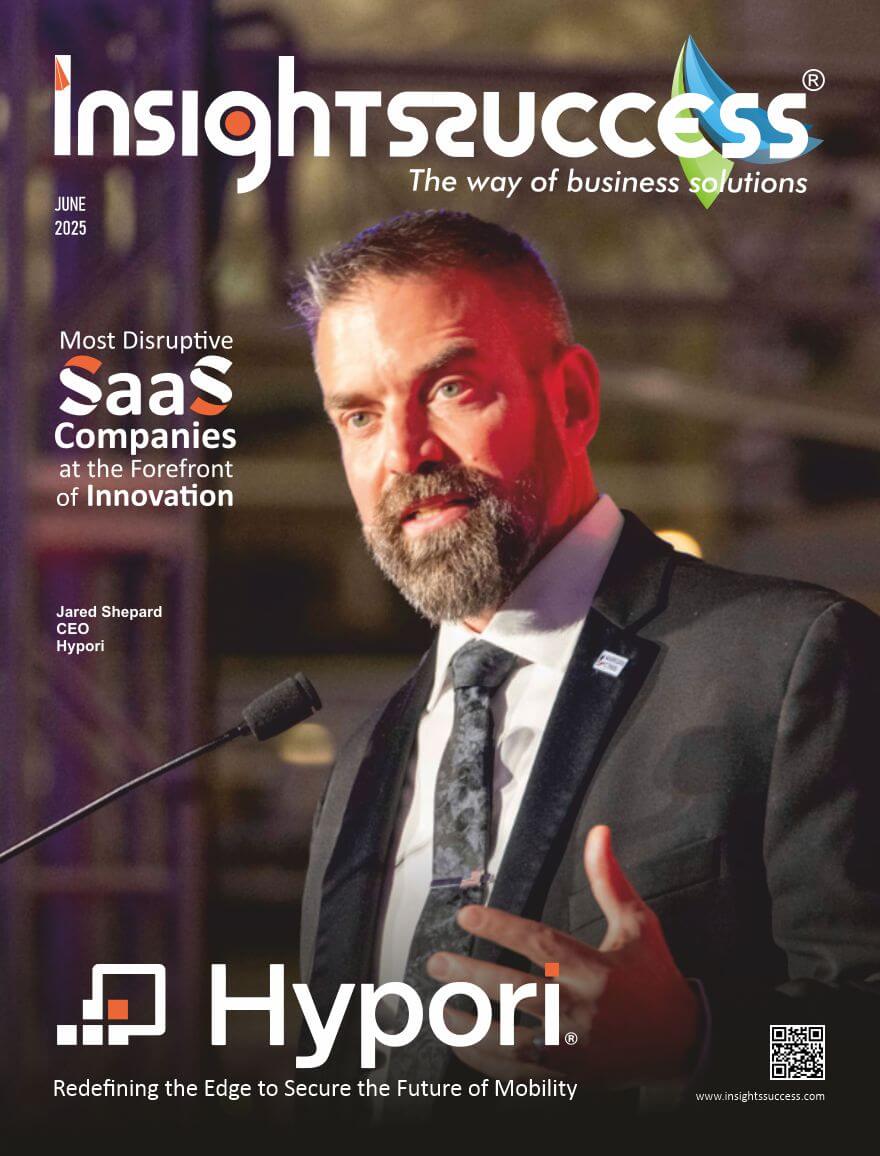
Most Disruptive SaaS Companies at the Forefront of Innovation June2025
Most Disruptive SaaS Companies at the Forefront of Innovation This edition showcases companies that go beyond incremental change. They’re reshaping industries, challenging legacy models, and setting new benchmarks for what’s possible in the software-as-a-service landscape. Whether it’s through cutting-edge user experience, enterprise-grade architecture, or groundbreaking integrations, these innovators are defining the next wave of digital success. Quick highlights Quick reads