






The Future of Digital Innovation
Standing at the threshold of a technology-based world, there is a power that is poised to transform every single way of our life digital innovation. Digital innovation is not just the implementation of new technologies; it is a revolution in the way we think, work, collaborate, and innovate. It is not just transforming industries but re-writing the social fabric. From connected homes to digital medicine, the depth and breadth of digital innovation are significant. But what is next? And how do we make this innovation human and impactful? What Is Digital Innovation? Digital innovation is merely the art of using technology to drive business models, services, operations, and experiences forward. But it is so much more than simply the digitization of what we currently do. True innovation shatters the box—it rebuilds the potential. Consider it: there is an established media world, and then there are streaming platforms that disrupted it, or telemedicine that brought medicine to far-flung places in the midst of global lockdowns. These are not enhancements—these are resurrections, the product of the convergence of human innovation and technological capability. The Momentum Behind Change This pace of digital transformation is fueled by several forces. One of them is the extremely high pace of technological development itself. Technologies like artificial intelligence, machine learning, and the Internet of Things are no longer fictional concepts—they’re pillars now. And user behavior has changed in between. Users now expect quick, seamless, and customized digital experiences when they’re shopping online, transacting money, or learning. Global interconnectivity has also rendered innovation more liquid and collective. With billions online, new concepts can be experimented with, iterated, and scaled in real-time. In addition, recent global catastrophes—COVID-19 included—have acted as unintentional accelerators. Companies that had been hesitant to use digital tools were compelled to do so overnight and proved that necessity remains a great motivator for the most impactful innovation. Industry Transformation in Motion Digital innovation is making its presence known in a variety of industries. Healthcare, for instance, is during a digital renaissance. Artificial intelligence-based diagnostics, wearables, and virtual consultations are enhancing patient care and health services reaching people like never before. In education, digital platforms are transforming the learning process. Personalized learning experiences, virtual classrooms, and game-based modules are engaging learners like never before. Finance is one of the sectors where digital disruption is making waves. Fintech websites, blockchain technology, and AI investment websites are revolutionizing saving, investment, and money-making. And the retail sector is revolutionizing customer experiences with immersive technology and product-based innovations. Even traditional manufacturing is being transformed by smart factories, robots, and real-time data analysis for peak performance. Overcoming the Challenges For all of its great potential, digital innovation has its own challenges. Cybersecurity threats, information privacy, and the digital divide are areas of concern. Technology is still not yet equally accessible to everyone, and these risks perpetually widening the gap between those who can ride the innovation wave and those which cannot. And then, of course, there is the human factor—change is frightening. For most companies, digitization is rewriting established systems and retraining workforces. Resistance to change, ignorance of the digital world, and ethical concerns over AI and machines must be addressed with care and together. The Human Element in a Digital World In all technology, remember that digital innovation is all about human beings. The most critical thing is something which solves real human needs. That is to say, making solutions which are not only useful but intuitive, accessible, and inclusive as well. Empathic design and human-centered development become more relevant. Technology is there to augment human capability, not replace it. As a case in point, AI can automate routine tasks, but creativity, emotional intelligence, and critical thinking are skills inimitably human. Good innovation is about finding that balance between the efficiency of the machine and the wisdom of humanity. Looking Toward the Future The coming years will witness even more revolutionary changes. Quantum computers, virtual reality, brain-computer interfaces, and decentralized technologies like Web3 will likely redefine how we access information and engage with each other. Sustainability too will become a much greater concern, with digital technologies helping to monitor energy use, reduce waste, and promote eco-friendly innovation. We can also expect digital innovation to shift from reactive to proactive. Technologies will anticipate user needs, offer predictive intelligence, and enable solutions ahead of problems emerging. This shift will usher in a smarter, more networked world. The future of digital innovation will also be massively collaborative. Inter-disciplinary collaboration between scientists, technologists, designers, educators, and policymakers will be essential in furthering solutions that are fair, moral, and effective. Adopting an Innovation Mindset It is not necessarily any technology, but attitude, that will define the future of digital innovation. Having the capacity to always be questioning, learn how to change and be open to being thoughtful in taking risks will be rewarded for individuals, and for businesses. In an era of change as the one and only constant, it will be those who view innovation as much philosophy, as mechanism, that will carry us forward. Digital innovation is not a trend, but a fresh worldview by which we conceive opportunity, solve issues, and construct the future. Through it, we can make the digital world we are building not just more intelligent, but more human. Read More: Ethical AI in Machine Learning Pipelines

Ethical AI in Machine Learning Pipelines
While artificial intelligence is reshaping industries and the game of decision-making, the role of ethics in the AI system is more crucial today than at any moment of human history. Machine learning (ML) pipelines—the regulated processes by which data moves, models learn, and predictions are generated—have emerged as the backbone of intelligent systems. Power so great, however, demands responsibility so great in like measure. Since these pipelines make increasingly autonomous decisions regarding healthcare, money, education, and crime, it is imperative that the systems align with society’s values. That is where ethical AI comes in. What Is Ethical AI and Why Does It Matter? Ethical AI is the rules and standards that oversee the deployment of artificial intelligence so that it is fair, clear, accountable, and compliant with human rights. It is not merely a matter of avoiding catastrophic failure—it’s about designing systems that are fair to humans, respect their privacy, and are audit-worthy. In the ML pipeline ecosystem, ethical AI would involve examining every step in the development process to seek out foreseeable harms before they cause damage. A creditworthiness forecast model, say, might discriminate against particular racial or socioeconomic communities unintentionally if it’s been trained on biased past data. A facial recognition program might perform well for lighter complexions but tank for darker complexions, bureaucratizing injustice under the guise of automation. These are the kinds of situations we are heading towards: in a new world, technological hegemony no longer guarantees social progress. Without an ethical foundation, even the most advanced algorithms can end up exacerbating inequality rather than eliminating it. Ethics Across the Whole Pipeline In order to fully incorporate ethical AI into ML pipelines, we must work alongside ethics as a priority, rather than an afterthought. All stages of the pipeline—data gathering right through to deployment—offer opportunity and risk. Data collection will likely be the first ethical issue. The old adage “garbage in, garbage out” is most accurate when applied to machine learning. If socially biased data are used for training, the resulting model will reflect those flaws. Ethical data practice begins with the guarantee that the process of selecting data ensures equity and inclusion. It might involve auditing the data sets for bias, demographic balancing, and transparency regarding what data are used and why. At the training and development phase of a model, ethical AI means choosing the algorithms that are amenable to fairness and interpretability. It is keeping in mind always the choice of features and how these could be proxies for sensitive attributes such as gender, age, or race. Developers need not just ask what can the model predict, but if it should predict anything. Validation and testing is not just about correctness—it’s about fairness. A model that is performing excellently overall may be performing badly for minority subpopulations. Ethical AI means models must be tested on the way they impact various sets of people. This isn’t just about testing technical performance, but social impact, harm, and differential treatment. With respect to deployment, the ethical imperative is transparency and accountability. Users must understand how and why a system is reaching its conclusions. Where a model does err—or does harm—there must be avenues for examining, explaining, and correcting the errors. Ethical deployment also requires monitoring over time. AI systems are dynamic; they learn from new information, and so too must the protections that operate around them. The Human Element to Ethical AI While much of the discussion around AI is about algorithms and data, ethical AI is all about people. What we build actually has real-world impact—whether a patient being diagnosed, a hiring candidate screened out by a resume filter, or a citizen tagged as suspicious by an observer system. That human impact can’t be dismissed with abstraction or left up to happenstance. Building ethical AI means involving multiple voices in the design. Engineers and data scientists will have to work with ethicists, social scientists, community organizers, and impacted users. This cross-disciplinary approach will not only make AI accomplish corporate or technical goals, but also an all-around public good. Moreover, accountable AI requires responsibility culture in business. That is to encourage openness, to inspire ethical consideration, and to reward those who raise hard questions. Rather than seeing ethics as the innovation killer, companies must see ethics as the force behind long-term and human-focused innovation. Governance and Accountability To give machine learning processes ethical integrity, there must also be governance architectures. Third-party audits, in-house ethics committees, and open documentation can all serve to give assurance that ethical standards are being put into practice in fact as well as in intention. Adherence to international best practices, e.g., the EU’s AI Act or the OECD AI principles, can similarly offer additional guidance and oversight. It is also critical that users are provided with recourse when something goes wrong. Ethical AI enables people to contest, challenge, or appeal algorithmic decisions made by machines that impact their lives. Transparency, explainability, and human governance are the keys to establishing trust in AI technologies. A Future Built on Trust Ethical AI is ultimately all about trust. People need to be able to trust that the technologies making life-changing decisions are doing so on their behalf. They need to be able to trust that those systems were developed with thoughtfulness, reviewed with integrity, and implemented with accountability. Trust is not created by announcing an AI system ethical—it is built with action, with transparency, and with showing a dedication to doing the right thing, even when the right thing isn’t necessarily the easiest thing. Short of it, applying ethical AI within machine learning processes isn’t a tech challenge—it’s an ethical necessity. Because machines are becoming larger and more active in nearly every aspect of existence, we must ensure that the systems are not only robust, but also equitable, just, and human. It is only when we do so that we can unwrap the true potential of AI—not as an engine of automation, but as a force for good.” Read More: The Future of Digital
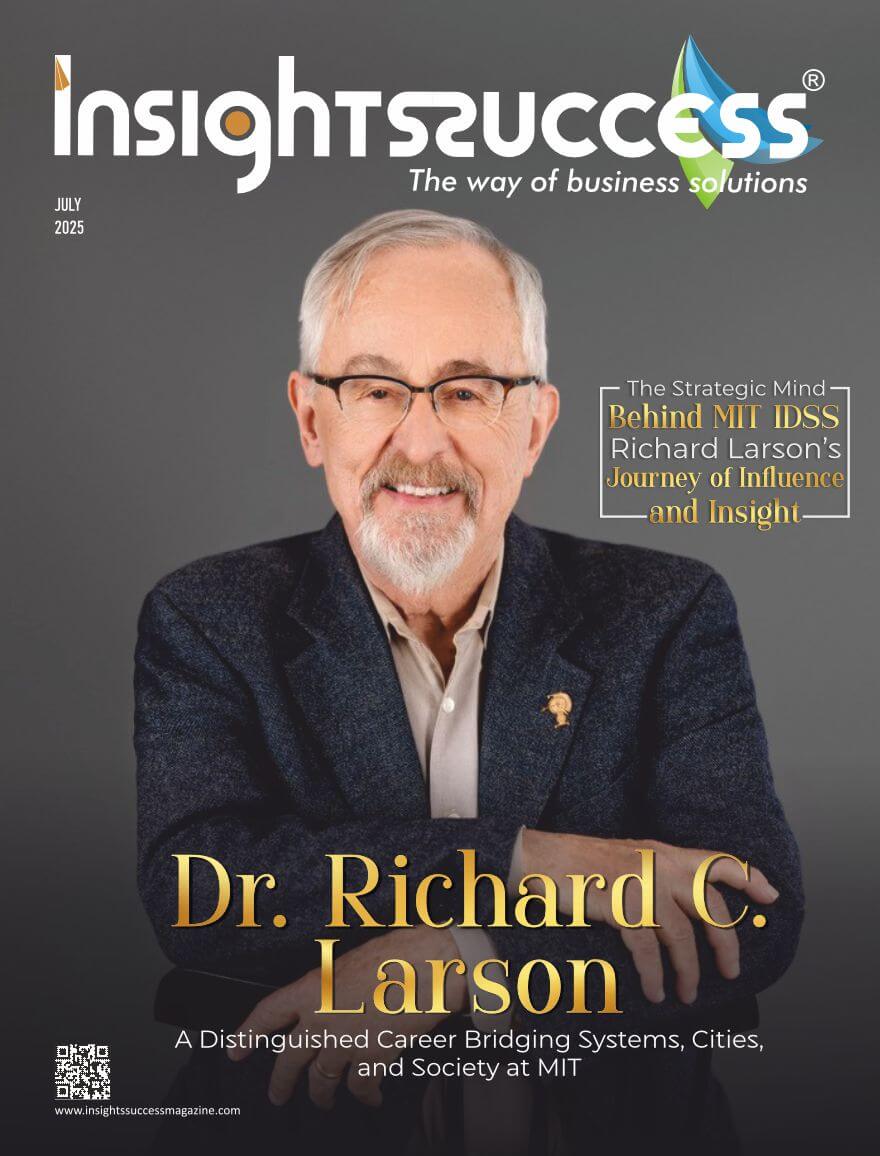
The Strategic Mind Behind MIT IDSS: Richard Larson’s Journey of Influence and Insight
The Strategic Mind Behind MIT IDSS: Richard Larson’s Journey of Influence and Insight Dr. Richard C. Larson’s distinguished MIT career spans five decades of innovation across engineering, urban systems, education, and public policy. Renowned for bridging technical expertise with societal impact, he has advanced interdisciplinary research, global education, and service science, leaving a transformative legacy of systems thinking and public-oriented problem-solving across generations. Quick highlights Quick reads

Dr. Richard C. Larson: A Distinguished Career Bridging Systems, Cities, and Society at MIT
Few academics can claim a career as multifaceted and enduring as that of Dr. Richard C. Larson. Spanning nearly five decades, Dr. Larson’s journey through academia illustrates the transformative impact one individual can have when engineering principles, public policy, and educational innovation intersect. From his earliest appointments in electrical engineering to his leadership roles in systems science and global education, Larson’s work has reshaped not only how we think about cities and technology but also how we prepare the next generation to solve the world’s most pressing problems. Born with an innate curiosity and a drive to improve systems, Dr. Larson’s academic voyage has traversed a unique combination of technical expertise and social consciousness. His early roles blended the rigor of electrical engineering with the practical complexities of urban planning, later evolving to encompass operations research, service science, and data systems. Alongside his deep technical scholarship, Dr. Richard C. Larson has been a tireless advocate for reforming education, embracing blended learning, and expanding global access through initiatives like MIT LINC. This profile traces the milestones of Richard Larson’s professional journey — as told by him — highlighting not just his numerous academic appointments and groundbreaking research, but also the enduring vision that connects them all: a commitment to systems thinking for societal betterment. Early Appointments in Engineering and Urban Systems Richard C. Larson began his academic tenure as an Assistant Professor of Electrical Engineering from July 1969 to June 1971. The role was the foundation of a career that would soon span disciplines and departments. From July 1971 to June 1972, he took on a joint appointment in Urban Studies & Planning and Electrical Engineering, setting the tone for his long-standing interdisciplinary approach. By July 1972, Dr. Richard C. Larson became an Associate Professor in Urban Studies & Planning, Electrical Engineering, and Computer Science. This combination represented a shift toward using quantitative methods to address urban and societal challenges. He was promoted to full Professor in July 1979, a role he held through 1988, in both Electrical Engineering and Urban Studies & Planning. As Dr. Richard C. Larson reflected, each transition represented not just a change in title but a deepening of his focus on applying rigorous engineering principles to real-world problems. Expansion into Systems and Interdisciplinary Leadership From 1988 to 2003, he served solely as a Professor of Electrical Engineering. Then, in a major pivot, he transitioned to the Department of Civil and Environmental Engineering and the Engineering Systems Division from 2003 to 2009. In 2004, Dr. Richard C. Larson was honored with the prestigious Mitsui Professorship, recognizing his exceptional contributions to interdisciplinary research. His leadership roles at MIT expanded as he became a Professor in the Engineering Systems Division (2009–2015), and later in the Institute for Data, Systems, and Society (IDSS) from 2015 to January 2018. Since then, Dr. Richard C. Larson has served as a Post-Tenure Professor at IDSS, continuing his scholarly pursuits while mentoring a new generation of systems thinkers. Reflecting on these roles, Dr. Richard C. Larson noted that the interdisciplinary nature of these appointments allowed him to think beyond silos and tackle problems holistically — from urban congestion to global pandemics. Visiting Professorships and International Collaboration In addition to his MIT commitments, Dr. Richard C. Larson held notable visiting appointments. In 1976, he served as Visiting Associate Professor of Operations Research at the University of California, Berkeley. In 1981, he spent half a year at the Technical University of Denmark, enriching his global perspective on operations research and public systems. These international experiences, according to Dr. Richard C. Larson, helped shape his later work in global education and information systems, particularly as he observed common challenges in urbanization, public health, and education across diverse geographies. Leadership in Educational Innovation Dr. Richard C. Larson’s influence extends well beyond traditional academic confines. From 1995 to 2003, he served as Director of the Center for Advanced Educational Services at MIT, where he focused on integrating technology into education. In 2001, he founded MIT LINC (Learning International Networks Consortium), which he led until 2015. This global initiative fostered collaboration among educators across continents to share best practices in online and blended learning. He also served as Co-director of the Operations Research Center (1977–1986, 1991–1995) and later founded the Center for Engineering Systems Fundamentals (2005–2016). These roles underscore his dedication to both operational excellence and systemic change. Larson frequently emphasized that education should not only disseminate knowledge but also empower students to become problem-solvers and innovators in their own right. Research Contributions: Urban Systems, Public Health, and Education Larson’s research has appeared in numerous high-impact journals over the decades, covering a spectrum of topics. Recent contributions include the strategic placement of sensors in sewer networks to detect COVID-19, demonstrating his continued relevance in real-world crises. His collaborative work in public health, such as analyzing preventive behaviors and vaccination perceptions, bridges engineering and epidemiology. One of his hallmark themes is identifying systemic inefficiencies in academia itself. His papers on postdoctoral queues, the STEM surplus vs. crisis debate, and academic job market mismatches highlight his commitment to reforming institutional structures. Dr. Richard C. Larson’s work also explores innovative models in blended learning, including the MIT BLOSSOMS project and ePortfolios for college admission. His diverse research topics, from congestion pricing to vaccine allocation, reflect a mind constantly seeking data-driven solutions to pressing societal issues. Service Science and Societal Resilience In the early 2000s, Dr. Richard C. Larson was one of the pioneers advocating for the field of service science, integrating engineering, social science, and management to improve service systems. His commentary in Service Science journals championed cross-disciplinary collaboration to address complex challenges like healthcare delivery and infrastructure design. Larson’s work on pandemic preparedness, including behavioral modeling and vaccine logistics, has been widely cited and used in policy discussions. These contributions have earned him accolades and speaking engagements at global platforms such as the American Association for the Advancement of Science (AAAS). His perspective remains that service systems — from healthcare to

From Intention to Achievement: Transforming Schools Through Educational Leadership
In today’s rapid, dynamic education environment, leadership is leading the charge in developing school culture, direction, and overall success. Educational leadership transcends process management and bureaucratic roles. It is the spark that moves school communities through challenges, ignites innovation, and makes quality education accessible to all students. Effective school leaders create climates for teaching and learning that support, motivate, and place students at the forefront of every decision. The world outside the classroom is changing at a pace never before experienced. As technology is changing, shifting societal needs, and mounting concern for educational disparities, schools must keep pace, quickly and intelligently. This article outlines the most significant areas in which educational leadership can create change: establishing visionary goals, creating collaborative cultures, and leading for equity and student-centered practices. Visionary Leadership and Strategic Planning A changing school is one that possesses a clear and compelling vision. Educational leaders must establish a long-term plan of action that not only is the result of the school community’s values but also aligns with the needs of an ever-changing world. The vision must inspire educators and students alike and be in line with the general school or district mission. Crafting a good vision requires input from stakeholders like students, parents, teachers, and community members. When people have a stake in a shared goal, they are that much more invested and engaged. Strategic planning is the key process that turns a vision into reality. School administrators must develop systematic plans which stipulate specific goals, allocate the appropriation of finances, and set milestones for achievement. This must be led by data and informed by ongoing feedback. Effective leaders continuously evaluate progress and flexible enough to alter when the situation calls for it. They also foster a climate of creativity by encouraging the adoption of innovative instructional tools and methods. Through visionary educational leadership and planning, schools can be responsive institutions that are able to transform without sacrificing a sense of direction. Creating Collaborative and Empowering School Cultures This kind of school culture is one that values collaboration, trust, and common purpose. It is the work of instructional leaders to design such environments, where teachers are motivated to share ideas, learn from one another, and work together towards common goals. Professional growth, teaching, and consistency in student experience are all promoted by such a culture. Morale among staff members, retention of staff, and student achievement are generally improved by leaders who support teacher collaboration. Educational leadership should also foster distributed or shared educational leadership models. Here, leadership is not confined to a particular position or department. Instead, responsibilities are shared among teachers, coordinators, and other staff who contribute different skills to the mix. Distribution helps build educational leadership capacity in the school and encourages shared ownership of school results. In addition, student voices may be involved in decision-making, encouraging their participation and sense of responsibility. A collaborative school culture is one in which all members of the community are respected, listened to, and invited to participate to build a better school. Apart from that, school administrators must possess effective conflict resolution and team-building skills. Creating professional learning communities, mentorship programs, and open forums can also help to promote teamwork. Since collaboration is deeply ingrained in the culture of the school, it fosters resilience and creativity even in times of transformation or uncertainty. Leading for Equity and Student-Centered Learning One of the major responsibilities of educational leadership is to provide all students with an equal opportunity to succeed. This requires a commitment to equity that transcends equal access to include fairness, inclusiveness, and responsiveness to different students’ individual needs. Leaders should identify and address systemic barriers that prevent particular student groups from thriving. These may be curriculum biases, technology access disparities, language concerns, or discriminatory discipline policies. Equity leadership is the utilization of data to identify disparities, listening to the voices of underrepresented populations, and applying targeted interventions that are tailored to particular needs. Alongside equity, there needs to be a shift towards student-centered learning in order to render school change meaningful. Student-centered learning recognizes that students themselves are active players in their learning processes. Educational leaders need to support instructional models that facilitate personalization, experiential education, and relevance to real-world settings. This can include project-based learning, adaptive measures for assessment, and integration of social-emotional learning. Leaders play a critical role in helping teachers take risks and experiment with new methods and reflect on what works best for their students. Conclusion School reform through educational leadership is done through long-term commitment, vision, collaboration, and a fierce passion for students’ success. Just maintaining the status quo or focusing on administrative efficiency is not enough. Instead, school leaders must be change agents who motivate, guide, and mobilize their communities to support collective goals. Whether through the creation of strategic direction, the development of collaborative cultures, or the provision of equity and student-centered learning, successful educational leadership can redesign schools in ways that work for all. As education evolves to address social, economic, and technological needs, the challenge for school leaders will rise. So too, however, will the promise. Through purpose and intentional leadership, schools can be vibrant, democratic, and forward-thinking places where all students can learn and thrive. Read More: Ethical AI in Machine Learning Pipelines

Most Innovative Founders Driving Global Energy Solutions
Most Innovative Founders Driving Global Energy Solutions As the world navigates a critical crossroads in climate, sustainability, and energy access, a bold new generation of founders is leading the charge. This edition celebrates the visionaries who are revolutionizing how the world powers homes, businesses, cities—and ultimately, the future. Quick highlights Quick reads

Powering the Future: How Baard Eilertsen is Rewiring the Global Energy Sector Through Digital Transformation
Without energy, there is nothing. Everything runs on energy. The modern world is the best example where its consumption and demand has been accelerating at a breathtaking pace. The sources of energy are numerous, though the energy generated is not enough. Yet, there is one particular aspect of energy limitation, which, if solved, might help the world transition to energy abundance, feels Baard Eilertsen, the Founder of Truebase AB. It is a leading management consulting firm specializing in the energy sector, with a strong focus on digitized energy trading and asset optimization. That aspect became Baard’s major inspiration. “I saw a gap in the energy industry where the industry did not understand digitalization.” This was a task he took upon himself to change and have a positive impact on the industry, leading to positive effects for society. When Passion Meets Precision: Aligning Data Analytics with Market Realities In his career, Baard Eilertsen led teams of seasoned experts in the energy sector, specializing in digitized energy trading and asset optimization. With over 30 years of experience, he has successfully navigated the unique challenges faced by energy companies, from fluctuating market dynamics to regulatory pressures and the urgent need for sustainability. The customer base ranges from SMEs to large-scale utilities and operates across Europe and North America. “I am passionate about innovation and data analytics, and I am always looking for new opportunities to grow and improve my services,” he asserts. 30 Years of Impact: Navigating Market Turbulence, Regulatory Shifts, and Global Challenges Talking about the early days of building your business — the challenges, milestones, and breakthrough moments, Baard Eilertsen says, “Obviously, it is a tough decision to start on your own with no guarantees that the company will make it, but in all honesty, I think I was lucky as I came out from exiting a PE-owned company which meant I had some financial freedom to venture into something new.” He thinks that the breakthrough came naturally as he has spent years in the industry creating a network of C-levels that he could reach out to. The major challenges he met were more concerning how much work was involved in starting a company from scratch with finance, taxes, regulations, etc. Building the Digital Backbone of Energy Trading Across Europe and North America Today, team Truebase comprises seasoned experts with deep industry knowledge, data analytics capabilities, and a passion for innovation. “We understand the unique challenges faced by energy companies, from fluctuating market dynamics to regulatory pressures and the urgent need for sustainability,” adds Baard Eilertsen. Truebase is located in Stockholm, Sweden, but works across Europe and North America, and its customer base ranges from SMEs to large-scale Utilities. Digital Disruption with Purpose: Bridging the Energy Industry’s Greatest Gap Speaking further, when asked how important it is for entrepreneurs to start with a strong sense of purpose and how they can keep that alive throughout their journey, Baard Eilertsen thinks that if you see a gap where you can fill the void, then the purpose becomes very important. As an entrepreneur, you will be driven either by innovation, freedom, or even by money. However, the purpose must be strongly linked to what you are trying to achieve for yourself, your customers, or society at large. Your purpose will be strengthened over the years, and it can even change as your learning curve increases by interacting with industrial people through your journey and what you deliver. “I always go back to my first few months and think about how my purpose has changed over the years and how I have let others influence how I view my business, which is good and should be a natural part of any business.” Don’t be afraid of questioning your purpose; embrace the opportunity to excel instead. Inclusive Leadership in Action: Empowering Experts to Lead the Change Thus, in essence, Baard’s leadership style has always been very inclusive. He strongly believes that he will always be the “dumbest person” in the room. “Joke aside, surround yourself with brilliant people who have a strong integrity and who dare to challenge your thinking.” Sometimes, he must cut through and decide, even if everybody does not agree, but over the years, it has become more seldom as he has matured and has found how he can articulate better. How he sees the future and, through this, makes others understand his strategy and viewpoints from an early stage. Cultural Fluency, Global Foresight: Crafting Region-Specific Strategies That Work As a global entrepreneur, Baard Eilertsen tailors his strategies to suit different regional energy markets and regulatory landscapes. According to him, every market and culture is different. “I have been lucky that I have been able to travel extensively over the past 30 years, and even as a kid, I was able to live in different countries with my family.” This has given him an understanding of cultural differences and a deep respect for diverse cultures. He says that this is the first rule of thumb. Secondly you must read up on the markets, its participants, regulations, financials, competitors etc. It also helps to use your network to get a better understanding but at last you will have to decide, based on knowledge and sometimes mixed with gut feeling how your strategy will be entering new markets. Just be aware that it will cost more than anticipated and take twice the time you thought it would take to get there. Digitizing Without Disrupting Integrity: The Human Side of Energy Innovation Based on all these experiences, Baard Eilertsen says that translating his vision into actionable strategies and measurable outcomes has been easy. His vision is to help the energy industry understand digitalization and how it can gain positive effects by digitizing parts of or all its core processes. To make this actionable, he has been active in dialogues with industrial players to understand their pain points and to see where he can assist the best. The measurable outcome is not money; it is

The Digital Powerhouse: How Tech is Transforming Energy Systems
The energy world is at the crossroads. As nations compete to reach net-zero, the business is being compelled to shed its legacy, centralized approach and adopt smart, decentralized, and decarbonized models instead. At the forefront of this shift is a force of untold strength: technology. Artificial intelligence and IoT to blockchain and edge computing, digital technology is no longer an add-on to energy policy—it is policy. Technology is not just revolutionizing how we use and produce energy; it’s remaking the very infrastructure, smarts, and interactive modes that comprise the new grid. The dawn of the digital energy age is a revolution—from reactive to predictive, adaptive, and self-optimizing systems. This is the era of the digital powerhouse—where wisdom begets impact, and knowledge is as valuable as fuel. Smart Grids: The Nervous System of New Energy At the core of this revolution is the advent of smart grids—electricity infrastructure with digital technologies that use real-time data to match supply and demand, detect faults, and integrate distributed energy resources like solar, wind, and storage. Smart grids differ from traditional grids in that they are dynamic, interactive, and fault-tolerant. They enable two-way energy transfers, converting consumers into prosumers who use and generate electricity. Smart sensors, AI analytics, and AMI enable utilities to predict usage patterns, peak load reduction, and anomaly detection prior to causing outages. Smart grids also allow for easy integration of renewable energy, which is just as variable as timing. With predictive control and automation, they offer stability, reliability, and responsiveness—crucial qualities in an increasingly dependent world on clean power. AI and Analytics: The Digital Brainpower The energy sector is generating more data than ever—through sensors, meters, equipment, and weather forecasts. Data isn’t, or shouldn’t be, transformational—insight is. Machine learning and artificial intelligence are making the capability of this vast stream of information a reality by discovering patterns, optimizing performance, and automating choices. In generation and transmission, AI enables energy demand forecasting, maintenance planning, and system inefficiency detection. In renewables, it can better predict wind and solar power. In retail, it supports customized pricing, usage monitoring, and customer engagement. To that end, AI-enabled systems are revolutionizing the operation of grids—detect faults in milliseconds, reroute energy flows automatically, and model grid response to different situations. Such capability converts energy systems from reactive to predictive, self-healing systems. IoT and Edge Computing: Real-Time, Real-World Impact While cloud computing has emphasized data concentration processing, edge computing and IoT are decentralizing intelligence—locating data analysis close to the location where energy is literally being produced and consumed. IoT appliances such as smart thermostats, EV charging points, and home batteries produce granular usage and performance data. Edge computing channels such data through computations on-site so that real-time decision without delay is possible. This is particularly helpful in far-flung locations, microgrids, or mission-critical facilities where timely response is the case. Together, edge computing and IoT allow hyper-local energy optimization. Consider a smart building maximizing in real-time HVAC systems based on weather and occupancy and working with the grid to sell surplus during peaks. Real-time response, as well as efficiency, also gives energy democratization—people, communities, and cities having access to own the energy future. Blockchain: Building Trust and Transparency Energy markets are being revolutionized as they shift from the centralized utilities to networked systems of consumers, producers, and intermediaries. Blockchain technology’s distributed paradigm introduces the trust, transparency, and traceability that will enable new business models. Blockchain can be used for peer-to-peer energy trading, carbon credit verification, and open billing systems. Blockchain enables consumers to sell surplus solar power to the neighbors in a straightforward manner, securely store renewable energy certificates, and make payments automatically through smart contracts. This builds a more open, participatory energy economy—where trust is built into the infrastructure and innovation is not fenced off by incumbent middlemen. Cybersecurity: The Silent Imperative As digitization speeds up at a faster pace, so also does the susceptibility to cyber attacks. As grids are increasingly interconnected and data-driven, cybersecurity is no longer an IT issue but part of energy resiliency. Leaders in digital energy are plowing billions into multi-layered cybersecurity infrastructure, in-real-time threat detection, and incident response. They are also creating security by design—designing devices, applications, and networks secure by design. Protection of critical infrastructure from disruption is not an option. With a world where energy powers all industries, from healthcare and finance to defense and mobility, digital trust is today the currency of choice for operational continuity. The Future is Smart, Inclusive, and Connected They’re not viewing it as a technology thing, but as a means by which we’re starting to rethink how we design, operate, and interact with energy. The participants in this new game will be the people who see that digital technologies are a means to an end: sustainability, equity, access, and resilience. Governments, utilities, entrepreneurs, and citizens will all have to get in the game. But it will be digitally savvy leaders who will take the lead—leaders who can bridge the engineering-ethics gap, the data-decision gap, and the innovation-inclusion gap. Conclusion: Powering Tomorrow Technology is converting energy systems into flexible utilities into smart ecosystems—responsive, efficient, and human-needs- and globally-constrained-adaptive. From blockchain to AI, IoT to edge computing, digital technologies are not only optimizing systems—they’re rewiring what energy leadership entails. At the beginning of the era of the digital force, success will no longer be a function of capacity but of agility, intelligence, and impact. And as we continue to electrify the world, one thing is clear: purposeful digitization will energize the future. Read More: Power with Purpose: The New Age of Clean Energy Leadership

Power with Purpose: The New Age of Clean Energy Leadership
The world of energy is in the midst of a seismic shift. As the planet transitions from fossil fuels to clean technologies, energy leaders must not only transform but rebirth leadership for a low-carbon world. It is not merely an economic or technological shift; it is a strategic and moral imperative. At the center of this transformation lies new leadership that will wed innovation and integrity, scale and sustainability, and power and purpose. These next-generation clean energy visionaries are not just infrastructure stewards or utility providers—they are futurists. They must reconcile decarbonization, digitization, and democratization, and navigate regulatory pressure, geopolitics, and changing public sentiment. It is a challenging mandate. But it is also a powerful chance to build a cleaner, more just, more resilient world. Purpose-Driven Innovation Successful clean energy leaders are aware that purpose isn’t a tagline—its a plan. Purpose informs investment decisions, defines technology deployment, and accelerates stakeholder trust. For the clean energy industry, purpose generally centers on three interlinked pillars: environmental footprint, energy equity, and economic prosperity. This is where purpose meets innovation. From floating solar farms to battery storage, green hydrogen to AI-optimized grids, clean energy businesses are unleashing solutions that lower emissions but also common opportunity. These leaders are no longer simply pursuing megawatts—only megawatts with purpose. By infusing purpose into the core of business models, clean energy pioneers are drawing top talent, building public trust, and standing out in an increasingly crowded field. Crossroads Leadership: Addressing Compound Risks Clean energy transformation is not a tech issue—it’s a system issue. Leaders need to manage compound risks: supply chain exposure, shifting policy environments, climate uncertainty, and workforce reskilling. It takes a new spirit of leadership—one that is systems-oriented, digitally connected, and intensely collaborative. The clean energy industry needs leaders who can look over walls, collaborate across industries and governments, and mobilize coalitions that drive change. Today’s leadership is, in almost every sense, less about ordering people around—it’s more about co-creating ecosystems. That involves engaging with local communities up front, gaining trust with regulators, and investing in partnerships that create shared value. From Risk to Resilience Clean energy leadership is about having a double mandate: leading change at pace and building resilience and reliability. The stakes are high. With increasingly interconnected grids bringing more variable renewables like wind and solar, stability, storage, and smart infrastructure come to the fore. This is where leaders lead—not just in bringing innovation, but in leading transition with integrity. They are creating power systems that are not only clean, but affordable, secure, and fair. It takes foresight, awareness of risks, and long-term thinking. All in all, clean energy leaders today are planet and performance stewards. They recognize that operating excellence must accompany climate ambition—and that change towards sustainability rests on trust at every level. People at the Core of the Transition Though technology and infrastructure are crucial, people make the clean energy revolution go. Whether educating technicians for emerging grid technologies or upskilling incumbent energy industry staff, leadership is about investing in human capital. It applies to workers to communities where clean energy initiatives become based. Leaders must see to it that the value of the transition is distributed to all on an equitable basis. Equally important is distributing benefits to historically disinvested or fossil fuel-baseloaded communities. This social-first strategy isn’t good enough—it’s necessary. A fair transition is a successful transition. By pushing for greater social inclusion in energy planning, leaders are granted more permission to act, cut resistance, and construct movements—not merely markets. Transparency, Accountability, and Trust In an era of more outspoken stakeholders, clean energy leadership needs to be transparent, evidence-driven, and accountable. Investors are requiring ESG disclosures. Consumers are probing for greenwashing. Governments are strengthening compliance requirements. And workers want to work for firms with a similar set of values. This requires leaders to lead with integrity and authenticity. They need to talk not only of success, but of failures and what they have learned. They need to be loud and clear in declaring action, and reporting honestly on progress. And they must commit to sustainability promises being followed up with action—and not rhetoric. Those who achieve it well do not merely comply—but build credibility. And in a profession where trust is as fundamental as technology, credibility is the most powerful competitive edge. The Road Ahead: Leading with Courage and Conviction The journey to a net-zero world isn’t linear. It’ll be messy, evolutionary, and full of difficult decisions. But full of unprecedented possibility for those who are willing to lead with courage and conviction. They won’t be measured by how fast they grow—by how deeply they lead. By how they build sustainability into strategy, equity into action, and humaneness into innovation. They will pose tough questions: Who gets left behind? What are the unforeseen consequences? How do we move faster—together? And they will respond to them not in words, but in outcomes. Conclusion: Power with Purpose Leadership must change because the world stands at the threshold of an energy revolution. The era of clean energy demands more than optimism—it demands tangible, system-wide change driven by purpose. Because at its essence, the transition to clean energy is not about watts and gigawatts. It’s about who we decide to be, what we care most about, and how we live—centuries down the line. Read More: The Digital Powerhouse: How Tech is Transforming Energy Systems

The Most Inspiring Leader To Look For In 2025
The Most Inspiring Leader To Look For In 2025 Muhammed Rafeeque Alampady, a pioneering force behind Ever Broadcast, is one such leader—earning the spotlight as The Most Inspiring Leader to Look For in 2025. With a career rooted in passion and innovation, Rafeeque has built a legacy that transcends the ordinary. Under his leadership, Ever Broadcast has become synonymous with bold creativity and global recognition—winning major accolades including the IBC Rising Star Award (2016), the Middle East Transformation Award, and a prestigious Guinness World Record for organizing the Longest Underwater Radio Show. Quick highlights Quick reads