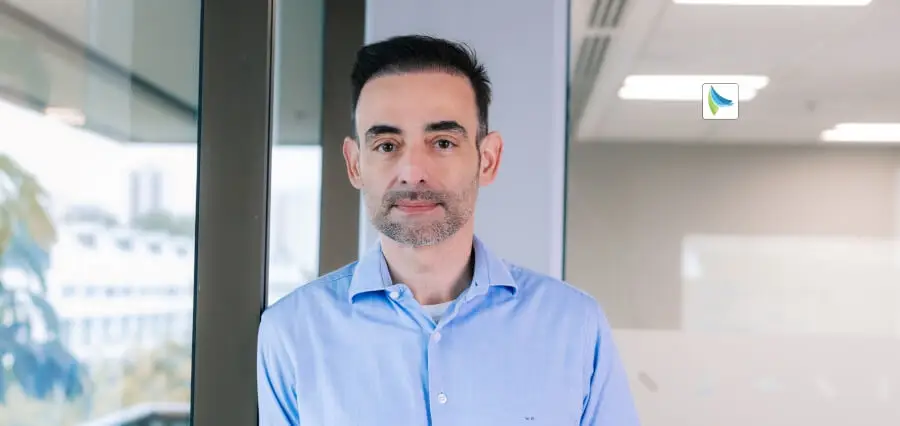





The marketing world has no shortage of people who talk about disruption. What it has considerably fewer of are leaders who demonstrate it through the consistency and clarity of their actual work. Khilola Shukurova belongs firmly in the second category. As Vice President of Marketing for EMEA at Align Technology, the USA-headquartered global leader in digital orthodontics, established in 1997, and best known for the Invisalign® system, she leads one of the most strategically complex marketing remits in the medical technology space. Her territory spans markets with distinct regulatory environments, clinical cultures, consumer behaviors, and competitive landscapes. Her mandate is to ensure a sophisticated clinical innovation is clearly understood for its clinical value and trusted in practice. The views that follow reflect Khilola’s personal leadership perspective, informed by her experience at Align Technology and across her career.
She brings to that mandate a career built across boutique consulting, pharmaceutical, and medtech environments, each of which sharpened a different dimension of what she now describes as her core belief: that real growth happens when clinical evidence, human insight, and commercial execution come together into one coherent system.
A Foundation Built on the Right Question
Khilola’s early career in a boutique consulting firm gave her something that many senior executives credit as foundational, but few actually carry through their entire professional lives: the discipline of learning quickly from unfamiliar challenges. Working across a range of complex client projects before she had the protection of institutional expertise forced her to build a strong analytical toolbox and the intellectual flexibility to apply it across entirely different contexts.
The transition into pharma and later into medtech sharpened a conviction that now sits at the centre of everything she does. She observed two fundamentally different approaches to customer strategy in those environments. The first tried to fit customers into pre-defined solutions, working backwards from the product to find justification for its existence. The second started with a deep and genuine understanding of customer needs and built everything from there.
She mentions, “Starting with a deep understanding of customer needs and building from there is a sustainable path to growth.”
She chose the second approach and has held it with consistency ever since. In healthcare, customer-centric orientation must be anchored in clinical credibility. It is not optional. She believes it is the foundation upon which every piece of marketing strategy is built, and without it the entire structure can lack the integrity that professional audiences require before they extend their trust.
Underlying that consistency is a mindset she considers essential: humility and continuous learning. In fast-evolving industries, she sees expertise as fluid, requiring constant questioning of assumptions and openness to new perspectives. For Khilola, humility is not a soft trait but a strategic discipline that keeps decisions grounded and thinking sharp.
Marketing as a Trust Engine
In a category where innovation is constant and the audience is highly educated and professionally accountable, the conventional marketing playbook runs out of useful pages very quickly. Khilola’s approach to crafting strategy at Align Technology reflects what she believes is a more sophisticated understanding of how influence actually works in clinical environments.
She describes her personal approach to healthcare marketing as a ‘trust engine’, a framework she uses to think about how marketing influences professional decision-making. The distinction between its three components matters enormously in practice. Education is the entry point: it creates awareness and establishes the cognitive framework within which a clinical professional evaluates a solution. Trust is the currency: it is earned through evidence, consistency, and the demonstrated understanding that the brand’s interests and the clinician’s interests are genuinely aligned. Differentiation is the outcome: it is what happens when education and trust have done their work, and the solution becomes not just understood but preferred and ultimately indispensable.
For Khilola, the implication is significant. She argues that marketing efforts which stop at education alone fall short of what professional audiences increasingly expect. One that builds trust at scale and uses that trust to create genuine differentiation in a crowded and technically sophisticated market is operating at a fundamentally different level. She asserts, “The most effective strategies don’t just explain innovation; they are grounded in evidence, shaped by customer insight, and designed to support relevance in day-to-day practice.”
Digital Transformation as Intelligence, Not Infrastructure
Khilola’s perspective on digital transformation is one of the clearest expressions of how her thinking differs from the conventional framing that dominates most marketing conversations. Where many leaders approach digital transformation as a channel question, she approaches it as an intelligence question.
She highlights, “Digital transformation is not about channels. It’s about intelligence. It’s the shift from static campaigns to adaptive ecosystems that learn and respond.”
The shift she describes is from static campaigns to adaptive ecosystems: marketing environments that learn from every interaction and use that learning to increase the relevance of the next one. The goal is not a reach alone. It is a model where engagement compounds over time, where each customer interaction makes the next one more valuable, and where the brand experience feels genuinely tailored rather than broadly targeted. To keep that ambition grounded in reality, she uses a discipline she describes as actively putting herself in the customer’s shoes and asking honestly whether what is being delivered truly adds value. It is a habit developed early in her career and maintained consistently, and it produces the kind of internal quality check that no analytics dashboard can replicate.
Storytelling as Translation
One of the most persistent challenges in marketing a technically sophisticated healthcare solution is the gap between what science demonstrates and what the audience actually absorbs and acts on. Khilola’s approach to that challenge is grounded in a concept she calls translation: the art of turning data into insight and turning innovation into adoption.
The instinct in technically complex categories is often to simplify science, to reduce it to a message that can be communicated quickly. She argues that this misses the point entirely. The goal is not to make science simpler but to elevate its meaning, to help every customer understand not just how a solution works but why it matters and why it matters now. That emotional dimension, connecting the clinical evidence to the human reality of what better outcomes mean for a practitioner and a patient, is what drives genuine connection and ultimately action.
She states, “Storytelling is translation. The challenge is not simplifying the science but elevating its meaning. The emotional dimension is what drives connection and action.”
Alignment as Shared Ambition
Leading marketing across EMEA requires Khilola to align cross-functional teams among different geographies, functions, and organizational priorities simultaneously. Her philosophy on alignment is refreshingly direct: it does not come from the process. It comes from shared ambition and a clear sense of ownership.
Her approach is to build a compelling narrative of where the organization is going, why it matters, and how each team’s contribution connects to that direction. When people feel genuinely part of something meaningful, they do not merely coordinate. They commit. That shift from coordination to commitment is where silos begin to dissolve, and execution begins to accelerate.
She reflects, “When people feel part of something meaningful, they don’t just coordinate. They commit. That’s when silos break down and execution accelerates.”
Scaling Without Losing Relevance
Every marketing leader who operates across multiple markets encounters the same foundational tension: the pull toward standardization on one side and the demand for local relevance on the other. Khilola’s insight into this challenge reframes from the problem in a way that makes it considerably more solvable.
She notes, “The real challenge is not geography, but mindset. Scaling fails when we impose one size that fits all instead of enabling relevance.”
She observes that markets often feel more different than they actually are, particularly early in the scaling process. Over time, the commonalities become visible. Customer needs, at their most fundamental level, to provide a universal language that translates across geographies in ways that geography-specific assumptions do not. Her solution is to build strong strategic anchors and then build flexibility into the execution layer so that markets can activate strategies in locally relevant ways rather than simply adopting them wholesale. The distinction matters enormously for ownership, engagement, and ultimately performance.
Leading Teams That Create and Perform
High-performing teams, Khilola argues, do not choose between creativity and performance. They combine both, and the conditions for that combination are created by leaders who provide clarity on outcomes while giving teams genuine space to challenge how those outcomes are achieved. That balance between freedom and focus is where the most impactful ideas emerge. It is also where trust between a leader and a team is built and demonstrated most clearly.
She affirms, “I focus on clarity around outcomes and impact, and then give teams the space to challenge how we achieve them. That’s where the most impactful ideas emerge.”
Her approach to team leadership reflects the same integration of apparent opposites that characterizes her broader marketing philosophy, and it produces teams that are genuinely invested in the work rather than merely executing instructions handed down from above.
What Maverick Actually Means
Being described as a marketing maverick is a label that many leaders would accept without examining too closely. Khilola examines it carefully and redefines it on her own terms. For her, it is not about disruption as a performance or differentiation as a brand positioning exercise. It is about having the courage to redefine what good looks like, specifically for the purpose of creating meaningful impact rather than generating noise.
She embodies that in her daily work by challenging legacy approaches, resisting the pull of incremental thinking, and building marketing strategies that are as innovative in their conception as the clinical solutions they are designed to represent. She reminds me, “To me, being a maverick is about having the courage to redefine what good looks like, not for disruption, but for meaningful impact.”
She is equally clear that her leadership has been shaped by the mentors and leaders she has worked with over the past two decades. Their influence continues to inform how she thinks, leads, and develops teams, reinforcing her commitment to creating the same environment of trust and growth for others.
Three Priorities for What Comes Next
Looking ahead, Khilola identifies three themes she believes are increasingly shaping how marketing is evolving across industry.
The first is radical personalization. Customer expectations are moving decisively from broad segmentation toward individual relevance, and marketing must move with them, delivering experiences that feel tailored, timely, and genuinely useful at the individual level.
The second is elevating customer experience into a genuine differentiator. In healthcare, this means making complex solutions simpler, more intuitive, and more immediately impactful in daily clinical practice. Across many sectors, product excellence alone is often no longer seen as sufficient on its own; instead the overall experience increasingly shapes how brand value is perceived.
The third is continuous reinvention. The pace of change, accelerated significantly by developments in artificial intelligence, is prompting many organizations, and the marketers within them, to continuously reassess how they operate. This means that what works today will require rethinking tomorrow, and they should build the genuine capability to evolve constantly, not as a crisis response but as a structural operating mode.
She reflects, “Marketing is evolving from a function into a force that shapes how innovation is understood, adopted, and experienced.”
Khilola is not waiting for the future of marketing to arrive. She is actively shaping what it looks like from one of the most demanding and consequential positions in the industry. In a world of relentless change, that is precisely the kind of leadership that matters.