




Prime Highlights :
- SpaceX targets its next Starship flight to attempt the first land recovery of the rocket’s upper stage.
- The mission will also carry the first batch of upgraded V3 Starlink satellites into orbit.
Key Facts :
- SpaceX plans to catch the upper stage using mechanical arms on its Texas launch tower.
- Musk says flight timing and the land-catch attempt depend on regulatory approval.
Background :
SpaceX aims to launch its next Starship flight test soon, sending its first upgraded Starlink satellites into orbit and attempting to return the rocket’s upper stage to land for the first time, CEO Elon Musk said during the company’s first earnings call.
The goals for Starship’s 14th test flight mark a major step forward from its previous flight, when the upper stage showed improved landing performance over the Indian Ocean.
Musk had earlier indicated SpaceX could attempt an upper-stage land recovery this year, with the timing depending on how the 13th flight performed.
Successfully returning the ship stage to land plays a central role in SpaceX’s push to build a fully reusable orbital launch system, a capability Musk wants to use to expand the Starlink broadband network. NASA is also watching the landing test closely, given its interest in using the rocket as a lunar lander.
SpaceX is currently recovering the 13th test’s rocket stage from the ocean for inspection. Musk noted that the exact timing of the next flight, along with any land-return attempt, depends on regulatory approval, and said he expects Starship’s launch frequency to increase rapidly once approved.
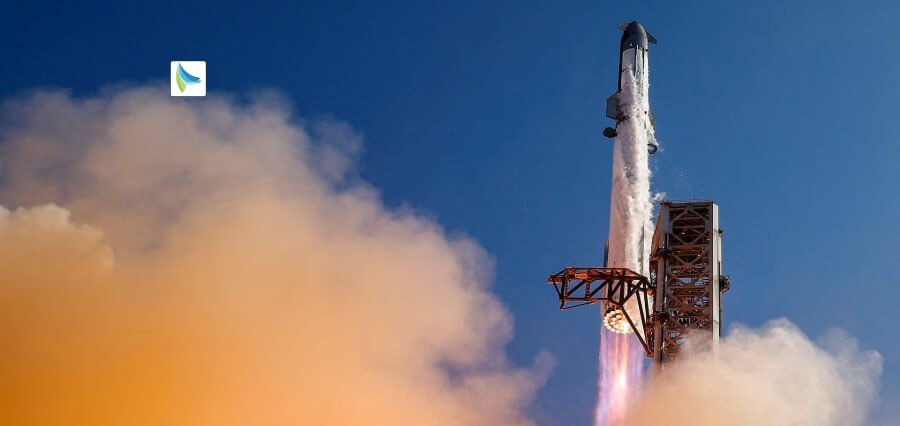
A land return would involve catching the upper stage using mechanical arms mounted on the launch tower in Texas, a method SpaceX has already used three times to recover its Super Heavy booster.
The 14th flight will also aim to deliver the first batch of V3 Starlink satellites, which Musk said would offer significantly greater broadband capacity than earlier versions. SpaceX ultimately plans to launch dozens of Starship missions carrying batches of these satellites into orbit.