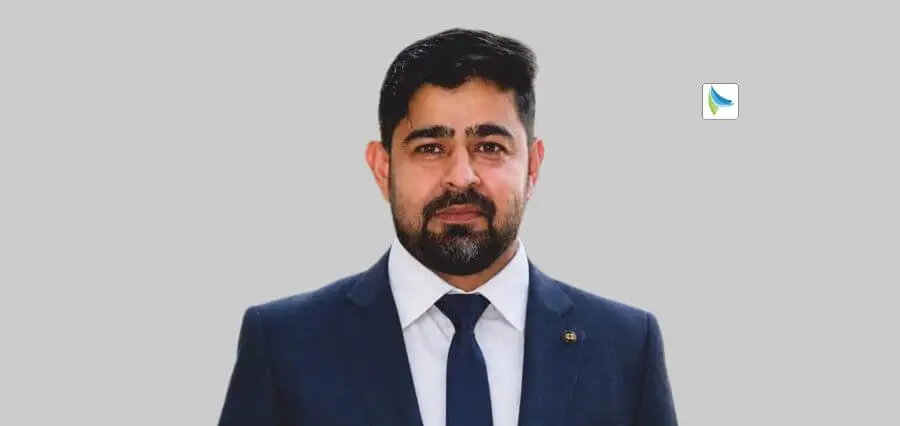





In enterprise technology, the leaders who create the most lasting impact are rarely those who moved fastest or collected the most credentials. They are those who stayed curious long after the external pressure to keep learning had diminished, who built communities around their knowledge rather than hoarding it, and who never confused the sophistication of a system with the value it creates for the people depending on it. Kingson Jebaraj Paul has built his career around exactly that distinction, and the organizations that have shaped him along the way read like a map of enterprise technology’s most consequential developments over the past fifteen years.
There is a metaphor he uses to describe his own journey, and it is more precise than the usual language of professional development allows. He compares it to sculptures. Every role, every challenge, every organization he has worked with has contributed to shaping who he is today. Not sequentially, as if each experience replaced the previous one, but cumulatively, the way a sculptor works, adding definition, revealing form, and gradually producing something that could not have been planned in advance but makes complete sense in retrospect. Microsoft taught him the power of community and the discipline of continuous learning.
G42 expanded his perspective on enterprise AI. Spektra Systems gave his passion for enabling people its fullest expression as Chief Technology Officer of CloudLabs. And Moro Hub, the Dubai-based digital transformation company and subsidiary of Digital DEWA, is where he now works at the intersection of cloud, cybersecurity, AI, sovereign infrastructure, and national-scale digital transformation. Each environment taught him something the previous one could not. Together, they produced a technology leader whose most consistent conviction has nothing to do with technology at all.
He reflects, “Technology changes every day, but curiosity, continuous learning, and the ability to empower others are what truly define a technology leader.”
The Recognition That Reframed Recognition
In a career defined by continuous learning and genuine contribution, two milestones stand above the others. The first was receiving the Microsoft MVP award, a recognition that validated not just technical expertise but the commitment to community that had shaped his approach from the beginning. The Microsoft MVP program recognizes professionals who share knowledge, support peers, and contribute to the broader technology ecosystem rather than accumulating expertise privately. For Kingson Jebaraj Paul, the award confirmed something he had long believed: that impact is measured not by what you know but by how many other people you help to know it.
The second milestone built on the first in a way that no career plan could have predicted. He became the first professional in the world to hold both Microsoft MVP and Alibaba Cloud MVP recognitions simultaneously, a distinction that reflected not merely the breadth of his technical knowledge, but the consistency of a philosophy applied across very different technological ecosystems. Two of the world’s most significant cloud platforms, each with its own community, its own standards, and its own criteria for recognizing exceptional contributors, had both concluded independently that he was someone worth honoring for the value he created for others.
He notes, “Recognition is not something you chase. It is something you earn by consistently creating value for others.”
Innovation With a Question Before It
One of the most common and most costly failures in enterprise technology is the adoption of new tools because they are new rather than because they solve a problem worth solving. Kingson Jebaraj Paul’s framework for evaluating emerging technology is direct and deliberately resistant to the pressure of trends. Every innovation, in his assessment, should be preceded by three questions. What business problems are being solved? Why is this particular technology the right solution? And how will success be measured?
The framework is especially relevant in the context of artificial intelligence, where the enthusiasm for implementation often runs well ahead of the clarity about what is being implemented and why. Not every business problem requires AI, and not every AI solution delivers the commercial value that justified the investment in developing it. Organizations that treat AI as a category of solution to be adopted rather than a tool to be applied to specific and well-understood problems tend to accumulate impressive pilot programs and struggle to justify their scale-up.
His experience across Moro Hub’s portfolio, which serves critical government and enterprise clients across the UAE, has reinforced this conviction with force. When the systems you build and operate support national-scale infrastructure, the discipline of asking the right questions before making technology commitments is not merely a best practice. It is a professional responsibility.
He states, “Innovation succeeds when it solves real business problems, not when it follows industry trends.”
The Technology That Will Reshape the Next Five Years
When Kingson Jebaraj Paul identifies the technology, he believes will have the greatest influence on enterprise transformation over the next five years, his answer is precise and grounded in current research rather than in the promotional language that tends to surround frontier technology. Agentic AI, he argues, will be the most transformative development in enterprise technology within that horizon.
The distinction he draws is important and worth stating clearly. The AI that most organizations have encountered so far responds to questions, generates content, and supports specific analytical tasks. Agentic AI operates differently. It plans, reasons, collaborates with other AI systems, and executes complex multi-step business workflows with human oversight rather than requiring human initiation of each step. The transition from AI as a productivity tool to AI as an intelligent digital workforce represents a genuine shift in what enterprise technology can accomplish and what governance frameworks are needed to ensure it accomplishes the right things safely.
The organizations that will gain the most from this transition, in his assessment, are those that invest in strong governance, security, and human oversight frameworks now, before the technology becomes ubiquitous and before the pressure to deploy it quickly creates the conditions for misuse or failure.
He affirms, “Organizations that build strong governance, security, and human oversight around Agentic AI will gain a significant competitive advantage.”
People First, Systems Second
The challenge that Kingson Jebaraj Paul considers most consequential for enterprises today is not a technical one. It is the gap between AI experimentation and measurable business value. Organizations across every sector have invested in AI pilots and proof-of-concept programs. Relatively few have successfully converted those experiments into secure, governed, production-ready solutions that demonstrably improve business outcomes.
His approach to closing that gap rests on three pillars that he applies consistently regardless of the organization or sector involved. The first is a clear AI strategy explicitly aligned with specific business objectives rather than with a general aspiration to become an AI-driven organization. The second is responsible for AI governance that encompasses security, compliance, fairness, and transparency from the beginning of implementation rather than as a layer added afterward. The third is a scalable cloud-native AI platform designed to support continuous improvement, monitoring, and outcome measurement rather than demonstrate capability at a single point in time.
The sequence matters as much as the components. Governance built after a platform has been deployed is governance that is already catching up to risks that have already been taken. Strategy developed after technology has been selected is strategy shaped by the capabilities of a solution rather than by the requirements of a business problem. Getting the order right is one of the most practical and consistently undervalued contributions a technology leader can make.
He notes, “Technology alone is never enough. Success comes from combining strategy, governance, people, and execution.”
The Leadership Lesson That Changed Everything
The most valuable professional lesson Kingson Jebaraj Paul has absorbed across his career did not arrive through a technical challenge or a strategic decision. It arrived through repeated personal experience of what happens when difficult conversations are avoided rather than addressed.
He describes the pattern directly. Challenges rarely improve on their own. Problems identified and addressed early remain problems. The same issues left unaddressed become crises, and the cost of dealing with them compounds with every week they are allowed to develop. The leadership instinct he developed in response to this pattern is one that runs counter to the natural desire to avoid discomfort: address challenges proactively, communicate transparently, and focus the energy that would otherwise go into assigning blame into learning, continuous improvement, and enabling teams to grow stronger through every difficulty they encounter.
That mindset shift has shaped not only how he leads through challenges but how he evaluates them afterward. His standard self-assessment after any significant difficulty involves three questions that mirror the innovation framework he applies to technology decisions. What could have been done better? What did this experience teach? How can this challenge be prevented from recurring?
He reflects, “I focus less on assigning blame and more on learning, continuous improvement, and enabling my teams to grow stronger through every challenge.”
Responsible Innovation as a Non-Negotiable Standard
As AI systems become part of everyday business operations and increasingly personal, the responsibility carried by the technology leaders who design, deploy, and govern those systems has grown commensurately. Kingson Jebaraj Paul’s position on this is not hedged by the usual acknowledgment that these are complex issues requiring careful consideration. It is direct.
Strong governance, responsible AI principles, cybersecurity, privacy controls, and ethical frameworks are no longer optional features of a well-designed AI program. They are foundational requirements for sustainable innovation. Organizations that treat governance as a constraint on innovation, rather than as its enabler, are building on a foundation that will eventually produce the kind of failure that damages not just a single program but an organization’s entire relationship with the technology and the people it affects.
The parallel he draws to the information environment that children now navigate is illuminating. Young people today have access to more information than any previous generation, with limited structural support for evaluating its quality, verifying its accuracy, or understanding its implications. Organizations face the equivalent challenge with AI systems accessing sensitive enterprise knowledge at a scale. The governance frameworks that protect both contexts share the same underlying principles: transparency, accountability, fairness, and genuine respect for the people whose information and decisions are involved.
He states, “The future belongs to organizations that innovate responsibly.”
A Vision Built Around People
When Kingson Jebaraj Paul considers the legacy, he is building through his work in cloud, AI, and digital transformation. The language he reaches for has nothing to do with technology. It has to do with people.
The greatest satisfaction across his career, he says, has never come from awards or titles, meaningful as those milestones have been. It has come from watching people discover their potential, grow into leaders, and create impact of their own. His vision is to build technologies that empower people and, simultaneously, to build people who will shape the future of technology. The two ambitions are not in competition. They are approached in two directions.
That vision is sustained; he acknowledges openly, by the people closest to him. His wife Ramya, whose support through every challenge and period of uncertainty, has been the foundation on which everything else was built. His sons Aadarsh and Aadarv, whose futures provide the motivation and the meaning behind every professional milestone. No journey, as he puts it, is ever walked alone, and no story of individual achievement tells the whole truth without naming the people who made it possible.
He says, “Innovation is not measured by the systems we build. It is measured by the lives we help transform.”
In Dubai’s rapidly evolving technology landscape, and across the national-scale digital transformation work that defines Moro Hub’s mission, Kingson Jebaraj Paul is doing precisely that, one system, one team, and one person at a time.