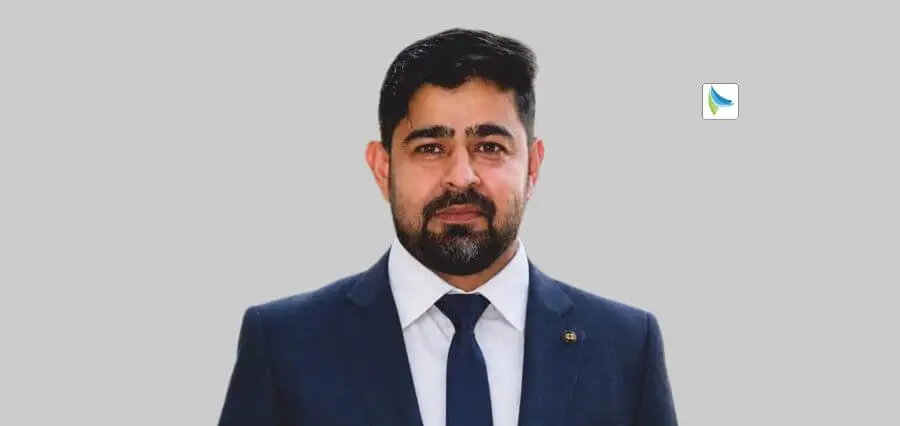





In early 2000s, joining MTN in Cameroon was considered a questionable career decision. Orange held nearly 80 percent of the market, the established European operators had resources and brand recognition that an African startup from South Africa could not plausibly match, and the colleagues who went to Orange were not shy about saying so. Like other young talents who got the opportunity, Cyrille Lavoisier Kemayou joined happily. Few years thereafter, MTN had overturned the market entirely and claimed leadership. That early experience did not just build his career. It built his worldview: that Africa’s potential is consistently underestimated, that local knowledge and genuine conviction outperform brand advantage when applied with discipline, and that the people who bet on the continent before the consensus catches up are the ones who end up shaping it. He has been making that bet, in different sectors and different countries, ever since.
From pioneering pay-as-you-go internet access in Central Africa, to leading Procter and Gamble’s distribution push across seven nations, to helping build IHS Towers into the largest Tower company on the continent, to uplifting business at Cameroon’s national electricity utility, and now to serving as CEO Africa Services at Vanu, Inc., a technology company dedicated to bringing connectivity to the continent’s most underserved communities, his career reads less like a resume and more like a map of Africa’s economic evolution. He is a man of mixed European and African heritage, a father of four, a Christian whose faith sits at the center of his identity, and a leader who has never separated his professional mission from his personal commitment to the continent he calls home.
A Career Built on Unlikely Bets
Cyrille Lavoisier Kemayou did not take the expected path. He came from a family of lawyers and notaries where legal studies were the default, but marketing captured his attention instead, specifically advertising, and he joined Young & Rubicam, then the largest advertising network in the world, in the late 1990s. What followed was a series of deliberate moves into emerging spaces before most people recognized them as opportunities. When MTN entered Cameroon as its first Francophone market, many of his peers were openly dismissive. Orange held close to 80 percent of the market, and an African company challenging the established European giants seemed, by the prevailing wisdom of the time, unlikely to survive. Those who joined Orange looked across at their MTN colleagues with something between surprise and amusement.
Cyrille Lavoisier Kemayou joined MTN, and within two and a half years the market had been completely overturned. The lesson embedded itself permanently: African companies with right vision, led by people (investors, staffs) who understood the continent at its roots and complexity, and genuinely believed in its capacity to compete, could build success stories that the wider world had not anticipated and was not prepared for. That conviction has never left him.
The ISP venture that followed reinforced the same instinct. Working with Chinese technology partners and collaborating with Motorola and Microsoft, his team developed the first pay-as-you-go internet access solution in Central Africa, bringing connectivity to ordinary users at a time when data access remained a corporate privilege. Each subsequent role added a new dimension to his understanding of what Africa’s development actually requires at the ground level, and what sustained commitment costs in practice when the market is complex, and the regulatory environment is still being written.
He reflects, “Those of us who have had the opportunity to reach high levels of education and be exposed to the best in the world have a mission to come back and contribute to the development and uplifting of the continent.”
The P&G Chapter: Local Knowledge as Competitive Strategy
When Procter and Gamble established its Central Africa Distribution Hub covering seven countries including the Democratic Republic of Congo, Cyrille Lavoisier Kemayou joint the Team ExCo ending at the Deputy CEO role. The DRC assignment alone illustrated something his entire career had been quietly proving local knowledge, cultural fluency, and the willingness to do the work that large organizations typically find impossible are more powerful competitive advantages than brand name or corporate resources.
The P&G corporate affairs team based in South Africa had spent two years and considerable resources, including coordination with the US Embassy’s economic team, attempting to secure a license to run Point of Entry Market Programs in the DRC without result. Using his large network and stakeholder engagement skills, Cyrille Lavoisier Kemayou have been able to establish the connection with patience and genuine respect, and secured licenses in DRC and other Markets across the Hub in eight months.
The average turnaround time for that process had historically been one to two years. He received a formal recognition award from the company’s African director for what was considered an extraordinary outcome. The recognition mattered less to him than what it confirmed: authenticity, persistence, and stakeholder understanding built on real respect are not soft skills. They are the execution capabilities that determine whether deals close or stall indefinitely.
He states, “You should master the environment, be intuitive in building stakeholder engagement matrix, involve people at the appropriate level of governance. It is about your aura, the way you engage, and how you vary & sustain your relationships capital over years. A right mix includes being persistent, rigorous, respectful of culture, loyal, straight in business ethics; and then it happens.
IHS Towers and the Infrastructure Revolution
The move to IHS Towers as Deputy CEO in Cameroon placed Cyrille Lavoisier Kemayou at the frontier of a segment of the telecommunications industry that barely existed as a legal or commercial category when he joined. Tower companies were separating the passive infrastructure layer from the traditional mobile network operator model, purchasing towers from the MNOs, and operating them as shared infrastructure businesses.
Regulatory frameworks for this model did not yet exist in most African markets, and the opposition from governments was serious, particularly around the national security implications of a private company controlling the telecommunications tower infrastructure of an entire country. Cyrille Lavoisier Kemayou and the IHS Group leadership team had to engage at the highest levels of government, including with heads of national security and parliamentary committees, to explain the model, demonstrate its commercial and public benefit, and earn the mandate to proceed in segments where no one had done it before.
He moved 7 years after to Rwanda as CEO, where he contributed to the consolidate the growth of business and had what he qualifies at wonderful experience with his Team. IHS Towers has since grown into the largest tower company in Africa and one of the largest in the world, a trajectory that traces back to precisely the kind of patient, high-stakes groundwork that Cyrille Lavoisier Kemayou had by then spent a decade learning to navigate.
Vanu and the Last Mile Imperative
After four and a half years collaborating as an Executive, Special Advisor at the Cameroon National Electricity Utility overseeing digital business transformation – marketing & CX, Cyrille Lavoisier Kemayou was recruited by Vanu, Inc. to serve as CEO Africa Services. The alignment between Vanu’s mission and his own conviction is precise. Africa remains a continent where roughly 40 percent of the population still lacks access to broadband connectivity, and where major operators consistently prioritize urban densification over rural expansion because traditional network deployment economics make remote coverage financially unviable.
Vanu’s technology addresses this constraint directly: the company has engineered and licensed a solution specifically designed for last-mile deployment, paired with a revenue-sharing business model that removes the capital investment risk from the operator entirely. The result is a commercially sustainable path to connecting communities that the major operators have consistently passed over.
For Cyrille Lavoisier Kemayou, this is not just a business opportunity with good unit economics. It is the technological expression of the same conviction that took him to MTN 25 years ago: the people in the mainstream market overlook represent both the greatest unmet need and the greatest unrealized potential on the continent. When a remote community gets connectivity for the first time, he notes, it frequently arrives alongside solar energy infrastructure, and both begin transforming what that community can build for itself economically and socially.
He affirms, “When people for the first time are able to make a call or build a small economy out of having access to telecommunications, you witness how you are transforming life. That is what keeps me focused.”
Africa’s Inevitable Future
Cyrille Lavoisier Kemayou’s view of Africa’s trajectory is built on evidence rather than sentiment. By 2050, the continent is projected to hold the world’s largest young population and with the capacity to supply a significant portion of global (eco)food production. Its untapped mineral and resource wealth remains the most substantial of any region on earth. Meanwhile, margins in mature markets across the United States, Europe, and Asia are narrowing; potential of profitability in Africa remains high. Some Telco Groups from other continents are getting most of their Global Profit from Operations in Africa, and very proudly, MTN has surpassed 300 million users with room still to grow. The competitive logic for any organization with a genuinely long-term orientation points consistently toward the continent, despite the acknowledged complexity and risk coming along with venturing in the Continent. The companies and countries that recognize this early, as China has done through sustained diplomatic and infrastructure investment, will capture the compounding advantage that early positioning in a growing market always produces.
The Legacy He Carries
When recognition arrives, Cyrille Lavoisier Kemayou receives it with genuine surprise. He describes himself as low profile by nature, someone who keeps his focus on the work and is genuinely moved when external observers notice what he is building. The legacy he cares about most is not measured in deal values or titles. It is the message his career communicates to his four children: that working with integrity, persistence, and commitment to something larger than personal advancement produces outcomes that endure and matter beyond the individual.
The continent he has dedicated himself to developing both his professional purpose and his personal obligation. Those of his generation who were given world-class education and cross-cultural exposure, he argues, have a specific responsibility to channel that back into Africa rather than simply building careers elsewhere. At Vanu, leading the company’s entire Africa Services which included several active operations (Nigeria, South Africa, Cote d’Ivoire, Benin, Rwanda), one remote tower at a time, one community connected for the first time, he is doing exactly that.
He envisions, “The message I want to leave for my kids is that if you work hard and drive your path sticking to your life principles, there is always a reward – consider failures part of the way but never compromise to others or the common trend. I want them to know that what we are building here is real, and it matters.”