


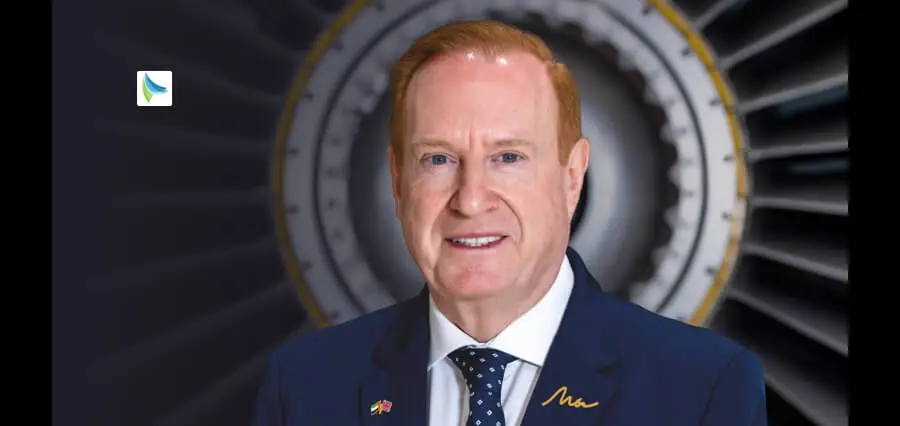
At Dubai South, IER MRO Industries is backing a bold ambition with a US$ 1.5 billion investment: to build an intelligent, highly automated aerospace engineering operation from the ground up, rather than adapting yesterday’s factories to tomorrow’s technology. Guided by its NextGen AI vision, the company is not asking how to add AI to an industrial business. It is asking how an industrial business should be built when AI is its foundation.
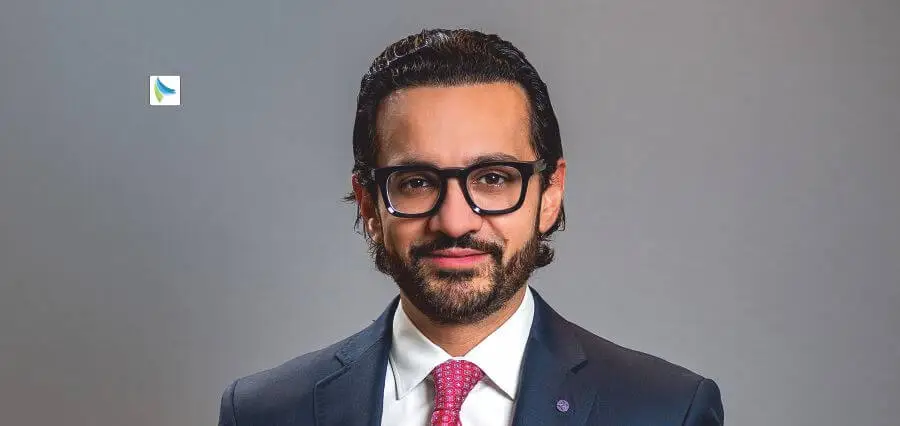
For Lawrence J. Howie, Founder, Chairman and CEO of IER MRO Industries, the artificial intelligence revolution is a once-in-a-generation chance to rethink how industrial businesses are built, managed and operated. The company is committing significant capital to prove it through its NextGen AI aviation engine maintenance, repair and overhaul (MRO) development at Mohammed Bin Rashid Aerospace Hub, Dubai South.
This is not another conventional MRO, and it is not another smart factory. IER MRO is developing a fundamentally different, AI-driven greenfield facility that brings together artificial intelligence, intelligent automation, robotics, digital twins, advanced engineering and connected industrial processes in a single design. The ambition is not simply to build a new factory, but to establish a different operating model for the global MRO industry.
A Once-in-a-Generation Industrial Opportunity
Industrial history is shaped by moments when technological advances change far more than the tools people use. The transition from the nineteenth-century world of horses, candles and timber to one increasingly powered by electricity, railways and steel fundamentally changed how societies produced, transported and consumed goods. Blackstone President Jon Gray recently used that historical transformation to describe the scale of the opportunities now emerging around artificial intelligence.
Across the world, investment is accelerating in artificial intelligence, computing power, data centres and digital infrastructure. Governments are introducing national AI strategies, and major technology companies are committing billions of dollars to new facilities. IER MRO is committing its own capital to carry that momentum onto the industrial floor.
For Lawrence, the greatest opportunity lies in industrial engineering, particularly for companies prepared to redesign their operations rather than introduce technology incrementally. He explains, “We are entering a period when technology will change the economics and operating models of entire industries. For us, the opportunity is to build for that future now, rather than wait for it to arrive.”
His position is that AI should not be treated as a software upgrade. It must shape the entire structure of a business, from the physical movement of components to the availability of technical information and the way critical decisions are supported.
That distinction is central to NextGen AI. By designing around AI from day one, IER MRO can build an operating model for a more connected and automated industrial environment, rather than retrofitting one.
Why Starting from Zero Changes Everything
Many industrial companies are investing heavily in digital transformation, but introducing new technologies into facilities, systems and procedures developed over decades is expensive, complicated and disruptive. Departments may operate on separate software platforms, while historical processes often depend on manual intervention, fragmented data and systems that were never designed to communicate with one another.
IER MRO is approaching the challenge from the opposite direction.
Its NextGen AI greenfield development allows the physical factory, digital infrastructure, equipment, logistics, workflows and information systems to be designed as one integrated whole. Instead of adapting an established facility to accommodate new technology, the company can decide how every element works together before the operation exists.
As Lawrence explains, “If you have the opportunity to build a new industrial business today, why would you copy the operating model of a factory designed thirty years ago? That would be missing the opportunity entirely.”
For him, the advantage is not simply access to new technology. It is the freedom to rethink the entire process before legacy systems and practices become embedded.
The facility is being designed as a highly automated environment in which people, equipment, processes and data work together. Decisions on connectivity, data architecture, workflows, cybersecurity, robotics and technical controls are made during design, not added after a facility has already opened.
The objective is to make intelligence part of the factory’s foundations, not an expensive addition later. It also means the business can absorb further advances in technology as they mature.
From Smart Factory to Intelligent Industrial Ecosystem
A smart factory is often associated with robots, automated machinery and computer-controlled production lines. NextGen AI goes much further. IER MRO is building a different kind of facility, an AI-driven MRO in which information generated throughout the maintenance and engineering process is connected, analysed and used to improve decisions across the operation.
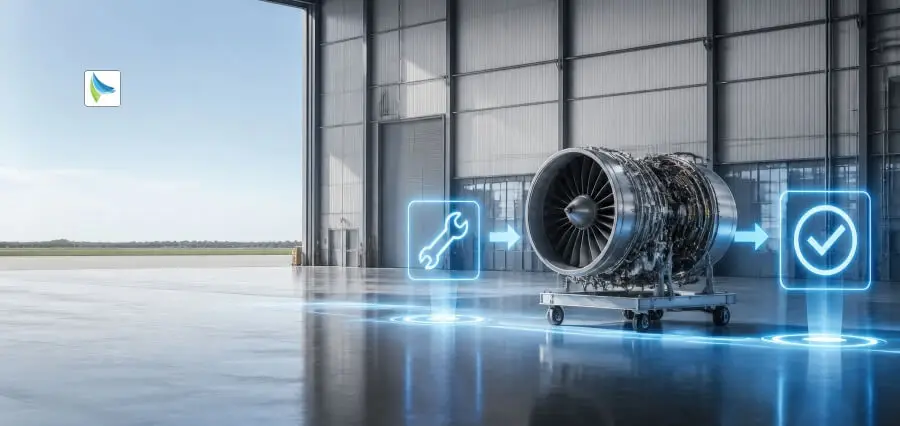
An engine entering an MRO facility generates a substantial volume of information, including its maintenance history, configuration, technical requirements, inspection results, component condition, material requirements, work progress and eventual release documentation. In a conventional operation, these activities may be managed across multiple departments, systems and manual processes.
IER MRO’s intended digital architecture is designed to connect these activities into a coherent information environment.
The potential applications extend across AI-supported inspection and engineering, intelligent production planning, robotics and automation, digital twins, smart material management, and connected quality and traceability. Advanced imaging, data analysis and machine learning can assist qualified personnel in identifying conditions that require technical attention. Intelligent planning systems can support scheduling, resource allocation, workload management and the identification of potential delays.
Robotics and automation can support material handling, logistics, repetitive activities and technicians working in demanding industrial environments. Digital twins can create connected digital representations of facilities, assets and processes to improve planning, simulation, monitoring and operational decision-making.
At the same time, smart material management can improve visibility of inventory, component movements and availability, while connected quality systems can maintain a more complete digital record of work performed, technical decisions and controlled processes.
These technologies are at different stages of evaluation, planning and development. The direction, however, is clear: a facility designed to operate as one connected system rather than a collection of independent departments.
This integrated approach is what separates NextGen AI from a conventional smart factory, and what makes the greenfield opportunity strategically significant. It places people, processes and information at the centre of the operating model.
Building a Factory That Can Think Ahead
For Lawrence, the most valuable applications of AI in an industrial environment may not be the most visible. A robot moving a component across a workshop is easy to recognise as automation. Less visible, but potentially more important, is an intelligent planning system identifying a possible shortage of materials before it interrupts production.
Similarly, a connected workflow could highlight an inconsistency in technical information before it becomes a costly delay, while an inspection system could help an engineer focus attention on areas that warrant closer examination.
IER MRO wants to build these capabilities into its future operations. The goal is to move beyond recording what has happened towards using reliable operational information to anticipate what might happen next.
This changes the emphasis from reacting to problems to identifying and addressing them earlier. It also changes how management can understand the business. Rather than waiting for periodic reports, a connected digital environment has the potential to provide a more immediate view of work progress, operational constraints, equipment availability and material requirements.
For customers, the long-term objective is improved predictability, transparency and responsiveness. For the business, it is stronger control over the factors that influence quality, efficiency and turnaround time. For the people working inside the facility, it means better information and tools to support their work.
The UAE Is Building the Infrastructure for an AI Economy
IER MRO’s ambitions are developing alongside the expansion of the UAE’s artificial intelligence ecosystem. The country has placed AI at the centre of its future economic development through its National Artificial Intelligence Strategy 2031, while Dubai’s Universal Blueprint for Artificial Intelligence is intended to accelerate adoption across economic sectors.
This ambition is backed by substantial infrastructure investment. The UAE and the United States announced a planned 5-gigawatt AI infrastructure development in Abu Dhabi, including the Stargate UAE initiative with major international technology partners. Microsoft has separately announced plans to invest a total of US$15.2 billion in the UAE between 2023 and 2029, including substantial expenditure on AI and cloud infrastructure.
These developments illustrate the scale of the UAE’s commitment to becoming a global centre for computing, digital services and artificial intelligence. For Lawrence, however, the bigger question is how those investments translate into real industrial capability.
Building data centres creates access to computing infrastructure. Developing AI technologies creates new capabilities. Applying that intelligence successfully in complex industrial operations is where another important part of the economic transformation takes place.
IER MRO’s NextGen AI investment is its contribution to that next stage. He explains, “The UAE is making major investments in the infrastructure that will support the AI economy. Our ambition is to demonstrate what that transformation can look like inside a real industrial operation, where technology has to deliver measurable results.”
The distinction matters. Artificial intelligence will ultimately be judged not only by the scale of the infrastructure built to support it, but also by the improvements it delivers in productivity, quality, competitiveness and industrial capability.
In the UAE, IER MRO sees an opportunity to connect the country’s technology ambitions with advanced aerospace engineering, in an industry where the value of technology must be proven through operational performance.
The Real Measure of AI Is Operational Performance
For Lawrence, AI must deliver more than impressive demonstrations. In a high-value, safety-critical industry such as aviation maintenance, its benefits must translate into practical improvements.
These could include reducing avoidable delays, improving planning accuracy, shortening administrative processes, strengthening material traceability or giving engineers more reliable information when they need it. Other potential benefits include better utilisation of equipment, more efficient movement of material and greater transparency for customers.
However, technology must operate within the industry’s established requirements for safety, quality, certification and technical accountability. AI-supported inspection does not remove the need for approved inspection methods. Automated analysis does not replace authorised engineering decisions, and digital systems cannot bypass the controls required for the release of aviation products.
IER MRO intends to combine advanced technology with the competence, judgement and accountability of qualified engineering personnel. As Lawrence emphasises, “AI should make experienced people more effective. It should give them better information, reduce unnecessary work and help them make stronger decisions. In aviation, the responsibility for safety and technical integrity remains fundamental.”
This philosophy is also reflected in the company’s plans for technical training and its Centre of Excellence. IER MRO wants future engineers and technicians to work confidently with advanced diagnostic systems, digital processes, robotics and data-driven tools, alongside the established technical disciplines on which aviation depends.
The future workforce will need both. Technology can provide additional information and support more efficient processes, but qualified people remain essential to interpreting findings, making technical decisions and maintaining the standards required in aviation.
A US$ 1.5 Billion Investment in NextGen AI
At the heart of Lawrence’s strategy is long-term competitiveness, backed by a US$ 1.5 billion investment in IER MRO’s NextGen AI development. A traditional industrial development is designed around the equipment and operating practices required at the time of construction. IER MRO is building an operation capable of incorporating further advances in automation, software, sensors, AI and industrial technology as they mature.
This means viewing digital infrastructure as a strategic asset, alongside buildings, equipment and engineering capability. It also means thinking carefully about how new technologies can be introduced without disrupting established quality systems or undermining operational reliability.
The ambition is for the business to become progressively more intelligent as experience, validated data and capabilities develop. This is not a claim that every process will be fully automated from day one. It is a deliberate strategy to create the conditions for continuing transformation.
For an investor, that represents a different proposition from building a conventional facility and attempting to modernise it later. The opportunity is to design the business for the operating environment of the coming decades, with the flexibility to improve its capabilities over time.
Why the Next Generation Must Be Built Differently
IER MRO’s greenfield development at Dubai South brings together several conditions that rarely align: a major industrial investment, a clean-sheet design opportunity, proximity to a leading international aviation hub, access to global engineering expertise and a national environment committed to AI and advanced industry. The ambition is a fundamentally different facility: an AI-driven greenfield MRO rather than another conventional smart factory.
The company has already progressed its development through major construction and industry partnership milestones, while continuing the planning and engineering work behind its broader digital and industrial operating model.
The Next Challenge Is Execution
Turning ambitious designs into a safe, efficient and commercially successful operation will require disciplined engineering, strong implementation partners, regulatory approvals, capable people and sustained investment.
Lawrence recognises that the real achievement will not be the installation of advanced technology, but the creation of a business that uses it effectively.
That is what makes the project more interesting than a conventional capacity expansion. IER MRO is looking beyond the next generation of aircraft engines to shape the future of industrial operations.
The Future Is Being Designed Now
The world is investing enormous resources in the infrastructure required to power artificial intelligence. The next major question is what industries will do with that capability.
For IER MRO, the answer begins with NextGen AI: a different approach to designing and operating an aerospace engineering business. The vision is an intelligent factory where information moves as effectively as physical components, a connected operation where digital systems support engineers, technicians and management across the entire workflow, and an industrial platform designed to become progressively smarter, more efficient and more capable as technology evolves.
The project is also intended to demonstrate how the UAE’s ambition in AI can extend beyond data centres and digital services into advanced industrial applications. Backed by this investment, IER MRO is seeking to build an operation that can respond to changing technological capabilities while maintaining the safety, quality and technical accountability the industry demands.
For Lawrence J. Howie, the opportunity is worth pursuing because it begins with a fundamental question about how industrial businesses should be built for the future. Rather than treating AI as an addition to an established model, IER MRO is working to make it part of the design from the outset.
He concludes, “We are not investing in a factory for yesterday’s industry. We are building the foundations of an industrial business for the next generation. If we get the design and execution right, the technology will keep moving us forward long after the first facilities become operational.”
Backed by a US$ 1.5 billion investment, IER MRO’s NextGen AI vision is about far more than building a modern MRO facility. It is about defining what the next generation of intelligent aerospace industry will become.