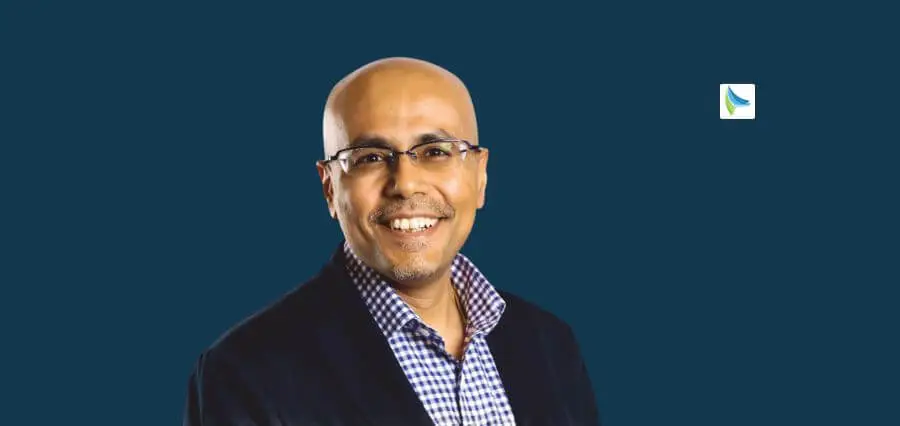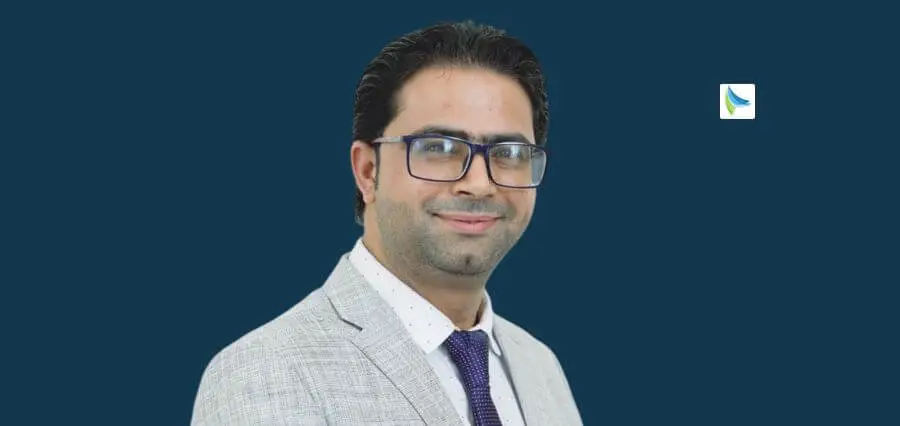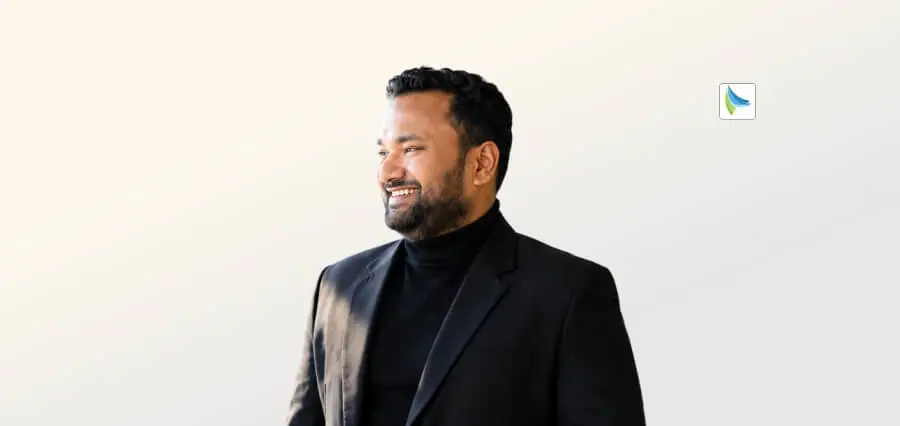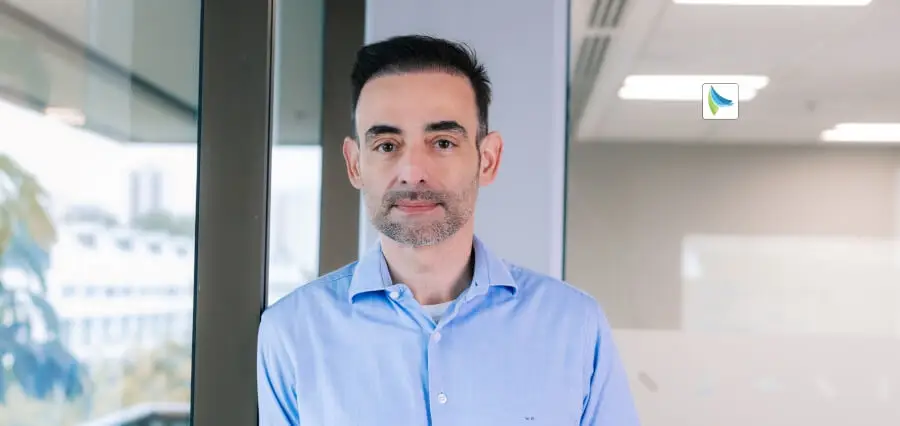




There are people who are indispensable to the operations of the energy industry. These are not the most vocal or attention-seeking people in the field. Instead, they are the people who can navigate into complexity, who can spot things that other people fail to notice, and who are already formulating plans even as the challenges emerge. Dr. Ali A. Chowdhury, PhD is one such person.
Over the past few decades, Dr. Ali, PhD has been operating behind the scenes to ensure that the energy infrastructure of the United States works as well as it does today, while making sure that energy remains affordable for everyone, and reliable. Even when the rest of the world is still trying to figure out how to use renewable sources of energy, Dr. Ali had been busy bringing clean energy into reality.
Today, as Senior Vice President at Avantus LLC, one of America’s foremost utility-scale solar and storage developers, he sits at the centre of an industry remaking itself at extraordinary speed. Dr. Ali’s fingerprints are on California’s transmission grid, on federal reliability standards, on the planning methods used by utilities across North America, and on a body of scholarly work spanning over 150 peer-reviewed papers and several authored and co-authored books that engineers on four continents reach for when they need answers. This is the story of how he got here, and why it matters.
From Minsk to the Mojave: An Education Without Borders
Every great career begins somewhere, and Dr. Ali’s began in the lecture halls of the Belarus Polytechnic Institute in Minsk, where a young student with an exceptional academic record earned his first Master of Science degree in Electrical Engineering with honours in 1980. Dr. Ali had arrived there on a competitive talent scholarship, a recognition that would follow him at every stage of his academic life. It was the first of many such honours, and the first signal that he was not an ordinary student.
Dr. Ali did not settle there. He crossed the Atlantic and made his way to the University of Saskatchewan in Saskatoon, Canada, where he spent the next several years earning a second Master of Science and then a Doctor of Philosophy, both in Electrical Engineering, with a focus on power systems reliability and security. The University of Saskatchewan funded his doctoral years through a competitive talent scheme scholarship from the University of Saskatchewan and Canada’s Natural Sciences and Engineering Research Council. He completed his PhD in 1988.
Years later, Dr. Ali earned a Master of Business Administration from St. Ambrose University in Davenport, Iowa, in 2002. It was a deliberate choice. He understood that the most complex problems in energy are never purely technical. They sit at the crossing of engineering, economics, and regulation, and Dr. Ali wanted to be fluent in all three languages. That decision, to seek business literacy alongside technical depth, says something important about how he thinks. He has always prepared for the problem ahead, not just the one in front of him.
Learning the Industry from the Inside Out
Dr. Ali began his professional life in a field most engineers never touch: nuclear power. From 1987 to 1990, he worked as a Principal Reliability Engineer at Atlantic Nuclear Services in Fredericton, Canada. He redesigned critical systems at the Point Lepreau Nuclear Generating Station and helped develop Basic Safety Principles for Nuclear Power Plants through a project for the International Atomic Energy Agency in Vienna, Austria. That document became the global standard for nuclear reactor safety design. It was an early indication of what would become a recurring theme in Dr. Ali’s career: his work tends to set the standard, not just meet it.
In 1990, he joined Alberta Power Limited in Edmonton, Canada, eventually leading the Division of Reliability Planning and Analysis. Over nine years, Dr. Ali managed transmission capital projects worth between fifteen and sixty million dollars annually, built the first reliability data collection schemes in Alberta’s history, and helped shape the province’s transition to a deregulated electricity market.
The next chapter took Dr. Ali to MidAmerican Energy Company in Davenport, Iowa, from 1999 to 2007. This was where his value-based reliability work came fully into its own. He designed and conducted a customer interruption cost survey across more than 10,000 MidAmerican customers, spanning every segment from residential households to large industrial operations. From that data, Dr. Ali built customer damage functions, tools that gave the utility a rigorous basis for deciding which infrastructure projects were genuinely worth their cost. Unnecessary projects were cancelled, ratepayers kept money in their pockets, and reliability did not dip. Dr. Ali also created the company’s first transmission reliability database and developed planning standards that the utility still uses today.
California Calls: A Turning Point at CAISO
In 2007, Dr. Ali moved to the California Independent System Operator, known as CAISO, stepping into one of the most consequential infrastructure roles in the United States. As Director of Infrastructure Development and Operations, he managed a team of system planning and operations engineers responsible for operating and planning the future of California’s electricity grid with emerging renewable energy technologies.
The job demanded everything he had. Dr. Ali oversaw transmission expansion planning, generation interconnection studies for both large and small projects, renewable energy integration, grid asset management, voltage and stability assessments, and the development of planning policy submitted to the Federal Energy Regulatory Commission. He represented CAISO at the Department of Energy, FERC, NERC, the Western Electricity Coordinating Council, and the California Public Utilities Commission.
Dr. Ali’s tangible legacy at CAISO is measured in infrastructure. He led the planning and board approval of more than six billion dollars in extra-high-voltage and high-voltage transmission projects, covering 500 kilovolt and 230 kilovolt infrastructure designed to carry California’s growing share of renewable power to the people who need it. Projects that advanced under Dr. Ali’s watch include the Tehachapi Renewable Transmission Project, the Sunrise Power Link, the Colorado River-Devers-Valley transmission line, the Eldorado-Ivanpah Transmission Project, and the WECC Path 42 interconnection between the Imperial Irrigation District and CAISO. He also managed more than three billion dollars in transmission reliability investments to keep pace with load growth, and oversaw more than 80,000 megawatts of renewable generation interconnection applications that eventually brought over 30,000 megawatts of clean generation onto the California grid.
Avantus: Where Engineering Meets Enterprise
In 2010, Dr. Ali joined 8minute Solar Energy, a company that has since grown into Avantus LLC following a major investment from KKR.
At Avantus, he directs all transmission and utility interconnection work, from renewable interconnection processes and resource adequacy planning to power purchase agreement negotiations and full project development from concept to construction. Dr. Ali manages relationships with investor-owned utilities, the California ISO, the California Public Utilities Commission, the California Energy Commission, the Federal Energy Regulatory Commission, and the North American Electric Reliability Corporation, among many others.
The commercial record Dr. Ali has built at Avantus speaks clearly. He manages a portfolio of approximately 35,000 megawatts of solar photovoltaic and 75 GWh of energy storage projects. He has secured more than 15,000 megawatts in Generation Interconnection Agreements and contributed to power purchase agreements for thousands of MW of solar and battery energy storage projects.
A Career the Profession Has Repeatedly Honoured
The recognition Dr. Ali has received reflects the breadth and depth of what he has contributed. In 2005, the IEEE elected him as a Fellow for his contributions to power system reliability techniques, one of the highest distinctions in global engineering. He received his Fellowship from the Institution of Engineering and Technology in the United Kingdom in 1994. He holds registration as a Professional Engineer in the United States and Canada, and he is a Chartered Engineer in the United Kingdom.
In 2022, the IEEE Power and Energy Society awarded Dr. Ali with the Roy Billinton Power System Reliability Award, a prize that carries particular weight in the reliability engineering community. He is a nominee for the Probabilistic Methods Applied to Power Systems Merit Award in 2026. He received the IEEE Region 4 Outstanding Engineer of the Year Award in 2003 and the IEEE Technical Working Group Recognition Award in 2005. The IEEE Regional Activities Board presented him with its Achievement Award in 2005 for leadership across multiple IEEE programmes.
Dr. Ali served as Chairman of the IEEE Iowa-Illinois Section from 1999 to 2002, during which time the section received the IEEE Region 4 Exemplary Section Award in 2003. He also chaired the Mid-Continent Area Power Pool’s Composite System Reliability Working Group from 1999 to 2007, the Reliability Planning Task Force of the Alberta Electric Utility Planning Council from 1990 to 1995, and the Coordination of Reliability Information Group at the Grid Company of Alberta from 1996 to 1999. The International Biographical Center in Cambridge named Dr. Ali among its 2004 Living Legends, and he appears in multiple editions of Marquis’s Who’s Who in America, Who’s Who in the World, Who’s Who in Finance and Business, and Who’s Who in Science and Engineering.
Beyond his peer-reviewed papers, Dr. Ali has authored and co-authored several books that have carried his methods from journals into classrooms and control rooms. Chief among them is Power Distribution System Reliability: Practical Methods and Applications, co-authored with D. O. Koval and published by Wiley-IEEE Press. The book has drawn widespread interest from the engineering community and is today used as a core textbook in electrical engineering programmes at universities across the world — a testament to the practical clarity and lasting relevance of the methods Dr. Ali has spent his career refining.
The Work Continues
Numbers tell part of the story. More than five billion dollars in societal savings. Over thirty billion dollars in transmission projects planned and approved. A 50,000-megawatt development pipeline. More than 150 scholarly papers. Several authored and co-authored books, including Power Distribution System Reliability: Practical Methods and Applications — now a standard textbook in electrical engineering programmes at universities around the world. Four graduate degrees. Awards from three continents. Four decades in the field.
But the numbers do not quite capture what makes Dr. Ali exceptional. It is the consistency. Across nuclear plants, investor-owned utilities, a state grid operator, and a private solar developer, he has brought the same thing every time: rigorous thinking, practical judgment, and a refusal to accept that a difficult problem has no good solution. Dr. Ali has operated in some of the most complex institutional environments in the global energy sector and left each one measurably better than he found it.
The grid still has enormous work ahead of it. Interconnection queues remain long. Transmission infrastructure lags behind the pace of renewable development. The clean energy targets that states and utilities have committed to will not meet themselves. These are the defining challenges of this decade, and they are precisely the kind of problems that Dr. Ali has spent his career solving.
At Avantus, he continues to do what he has always done: read the grid more carefully than anyone else in the room, find the path that others miss, and build toward an energy future that works for everyone. In a field that needs both science and strategy, few people carry both as naturally, or as effectively, as he does.