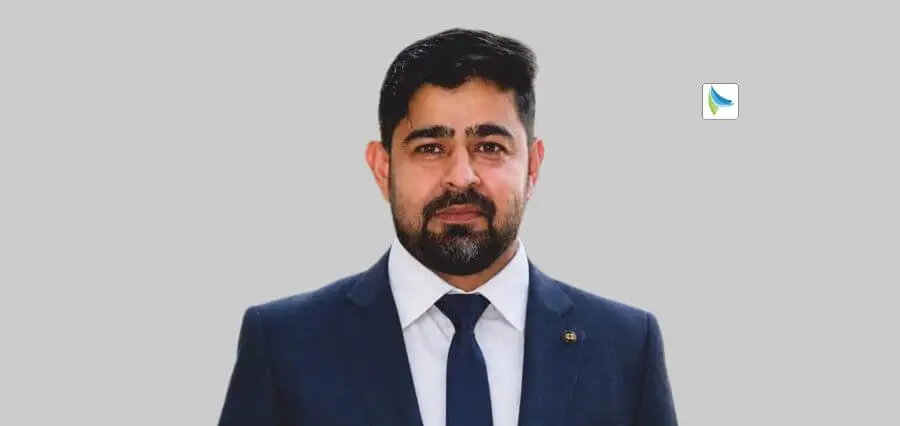




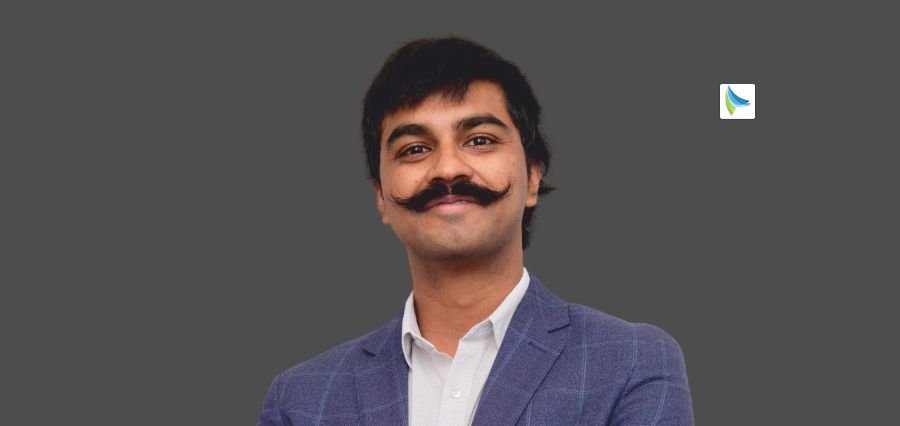
At the age of 33, Vishaylin Jivan Mahadeo has made the kind of career leap many spend decades working toward. He joined the Research Institute for Innovation and Sustainability (RIIS) as an intern. From there, he progressed through the ranks — Analyst, Senior Analyst, Management Consultant, Engagement Manager and now Acting Mining Practice Lead in approximately eight years. Not only has he grown quickly, but he has also done so by learning how to lead clients and team members through complexity.
What makes that rise especially compelling is the route he took to get there. Before consulting, his academic foundation was in Physiology and Psychology — disciplines that taught him how people and systems respond, adapt, and grow. Today, that background shapes a leadership style built not on hierarchy, but on purpose, empathy, and the mission to solve problems that matter.
Vishaylin’s work sits at a critical intersection: strategy and human behavior. He understands that organizations, like living systems, do not change through logic alone. They change when people understand the purpose, trust the direction, and begin to practice new behaviors until they become part of how the organisation works. For a young leader, that insight has helped him move with unusual pace.
In 2026, as Africa’s innovation landscape accelerates and the demand for authentic, adaptive leadership intensifies, Vishaylin Mahadeo embodies a new kind of young leader and compelling example of what the next generation of leaders can look like: intellectually rigorous, deeply human, and unwaveringly purposeful.
The Making of a Consultant: An Unconventional Beginning
Vishaylin Mahadeo did not enter consulting through the usual route. His foundation was not finance, engineering or economics, but Physiology and Psychology — the study of people, systems, behavior, and adaptation.
That background has become one of his strongest advantages.
Studying living systems taught him to pay attention to how things respond under pressure. Studying psychology taught him that performance is shaped by more than intelligence or process. People need clarity, trust, and the right conditions to do their best work.
After completing his studies at the University of Witwatersrand, he enrolled in a Postgraduate Diploma in Business Administration at the Gordon Institute of Business Science. The pivot emphasized his adaptability and strengthened his foundation in business acumen, opening the door to the consulting industry.
“The opportunity to challenge myself through client issues and expose myself to different industries immediately became an environment that resonated with me,” he says about the consulting industry
At RIIS, the pace of his growth accelerated. What began as an internship became a career path shaped by responsibility, delivery, and leadership. He later pursued an Executive MBA at Henley Business School, along with executive education in neurostrategy and digital transformation — not as credentials for their own sake, but as tools to help him lead in environments where strategy, technology and human behavior are inseparable.
Servant Leadership: The Philosophy Behind Practice
Ask Vishaylin Mahadeo to define his leadership philosophy, and he does not hesitate. Servant leadership, he says, is the principle that has consistently guided him, not as a concept borrowed from a business school curriculum, but as a lived commitment shaped through years of complex projects in mining, energy, and marine industries with multidisciplinary teams, and honest reflection on what it actually means to lead.
For him, this does not mean soft leadership. It means taking responsibility for creating the conditions in which others can perform. It means putting people, growth and purpose ahead of ego or control.
“If a thing is worth doing, it is worth doing badly,” he says, referencing G.K. Chesterton’s idea that imperfect beginnings are often part of meaningful work.
That belief has shaped how he leads.
For Vishaylin Mahadeo, leadership is fundamentally non-linear, and uncertainty is not a failure of preparation but an invitation to adaptability. Growth demands a particular kind of humility, one that is comfortable with imperfection as a stage of development rather than a sign of inadequacy. Trust, the currency that makes leadership real, is earned not through authority but through consistency and genuine care, established by listening and recognition.
Building Alignment: The Art of Managing Both Sides
One of the defining challenges of Vishaylin’s role is one that every seasoned consultant eventually faces: how do you honor the expectations of the client while protecting the integrity and well-being of the team? His answer is built on three foundations: clarity, alignment, and situational awareness. He begins every engagement by investing deeply in understanding the client’s context, what they are trying to achieve, what constraints they face, and what success practically looks like. Simultaneously, he invests equal attention in understanding his team, their strengths, working styles, development needs, and capacity at any given moment. This dual awareness allows him to set ambitious expectations while remaining cognizant of the team’s capabilities and time constraints.
By addressing root causes rather than symptoms and maintaining open communication channels, risks surface early, before they become crises. The result, consistently, is not just a satisfied client but a team that has grown in capability and confidence.
“When alignment between client needs and team capabilities is achieved, the focus naturally shifts from managing tension to delivering exceptional value, resulting in client expectations being exceeded in both relevance and impact,” he says.
Under Pressure: How a Leader Holds the Line
“Attitude, not just aptitude, elevates performance. While technical capability is essential, trust, psychological safety, and a growth-oriented mindset enable teams to perform under pressure.”
In consulting, pressure is not occasional. It is built into the work. Deadlines move. Stakeholders change direction. New information arrives late. Expectations grow.
How a leader responds in those moments, not when things are going well but when they are not, is the true measure of their character. Vishaylin Mahadeo establishes clear standards and communicates expectations transparently from the outset. He prioritizes continuous, real-time feedback over episodic reviews, building in the micro-adjustments that prevent small issues from compounding. And he makes recognition visible and meaningful, reinforcing the behaviors that sustain team performance throughout a project, not only at its conclusion.
The teams that deliver in difficult conditions are not always the most experienced. They are the ones who feel safe enough to speak honestly, challenge respectfully, and stretch beyond what they thought they were capable of. When projects deviate, his role is to help the team respond rather than react: to recalibrate with intention, recommit to the shared vision, and move forward without losing focus or morale.
Deciding in the Dark: Leadership When Certainty Is Absent
Ambiguity is part of consulting. Vishaylin Mahadeo does not treat it as an obstacle to avoid, but as a condition to manage.
His first move is structure. He separates what is known from what is assumed. He looks at the issue from several perspectives, including clients, direct and indirect stakeholders, and the overarching strategic objectives. Then he brings the right people into the decision-making process so that assumptions can be tested before action is taken.
That collaboration improves both the decision and the commitment behind it.
“Rather than seeking perfection, I focus on making informed, timely decisions that align with the larger goal and can be adjusted as new information emerges,” he says.
When a team has helped shape the thinking, the quality of the decision and the collective commitment to execution are stronger.
The Development of People: A Leader’s Most Lasting Work
Vishaylin Mahadeo speaks with conviction about developing people. For him, this is not separate from delivery. It is what makes delivery sustainable.
He starts by understanding each person: their strengths, ambitions, areas for growth, and the conditions under which they work best. He then tries to match responsibilities to opportunities for stretching. The goal is not to overwhelm people, but to help them build confidence through meaningful responsibility.
He also encourages questions and constructive disagreement. A team that can challenge an idea early is more likely to produce comprehensive, relevant outputs later.
“By fostering psychological safety and recognizing progress, I enable individuals to step outside their comfort zones, take initiative, and realize their full potential.”
ForVishaylin Mahadeo , this is where leadership becomes visible over time: not the projects, but the people who go on to shape industries beyond his immediate team.
A Test of Leadership: Navigating Scope Creep with Integrity
One of the most instructive engagements in Vishaylin’s career involved significant scope creep, a situation that tested not only project management capabilities but also integrity, empathy, and the willingness to hold difficult conversations without sacrificing the relationship. From the outset, he carefully defined and validated the scope, building alignment on objectives and critical success factors. As the project evolved and new requests emerged, he consistently revisited the agreed priorities with the client, using them as an anchor to assess what was essential and what could reasonably be deferred.
“I approached difficult conversations with empathy through placing myself in the client’s position to understand their drivers, while ensuring decisions remained grounded in data and project realities.”
The outcome was mutually beneficial: value delivered, quality protected, and a client relationship strengthened by the difficulty of the conversation rather than strained by it.
About RIIS: Building What Is Next, Together
Vishaylin Mahadeo believes that the right environment fosters personal and professional development, a concept derived from his psychological studies. The Research Institute for Innovation and Sustainability (RIIS) has been this environment for him. RIIS is an innovation-focused advisory firm committed to guiding innovation that matters, helping clients create sustainable, long-term impact across Africa and beyond.
“RIIS is more than an innovation advisor. We serve as a compass, catalyst, and trusted guide through complexity. We build with our clients, not just for them, turning their vision into sustainable impact.”
Operating across five core practice areas: Space, Mining, Energy, Health, and Financial Services. RIIS designs and delivers impact-based strategic projects that build resilience across economies, industries, and communities. What distinguishes RIIS is not only the breadth of its expertise but the nature of its engagement: grounded, practical, and always in service of outcomes that last.
A Future Still Being Written
Vishaylin Mahadeo is still early in his leadership story, which is why the pace of his rise matters. From intern to Acting Mining Practice Lead, he has built his career by taking on responsibility quickly and carrying it out with purpose.
His legacy is not something he claims to be complete. It is something he builds through the people he develops, the teams he leads, and the work he helps deliver. It will be found in the people he has developed: the analysts who became consultants, the consultants who became leaders, and the leaders who went on to achieve more with a philosophy of service and purpose they first encountered on his team.
“Lead with authenticity and intent,” he says. “Leadership is not about having all the answers but having the courage and curiosity to discover them with others.”
That is the quiet ambition of a genuine servant leader. Not the need to be the most visible person in the room, but the commitment to helping the room produce something extraordinary that no one person could have achieved alone.