

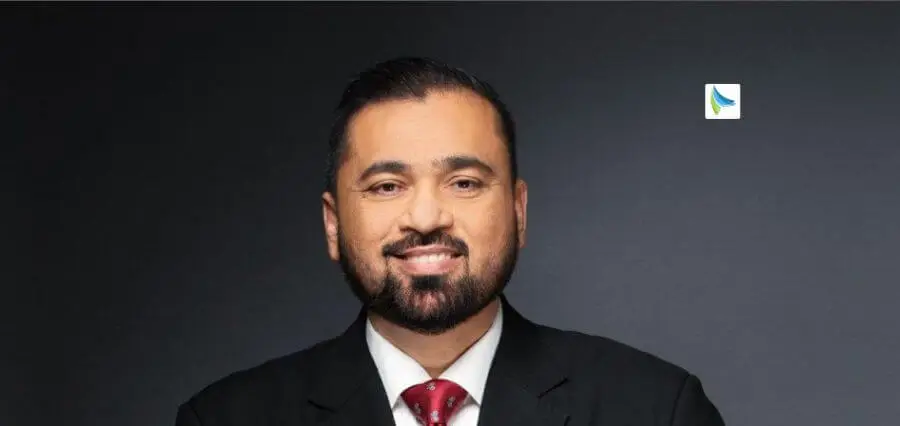
The insurance distribution business runs on a currency that does not show up on any balance sheet: trust, built slowly and lost quickly, across markets that rarely operate by the same rules. Few leaders have tested that currency across as many borders and regulatory regimes as the person now occupying one of the GCC’s most demanding distribution roles.
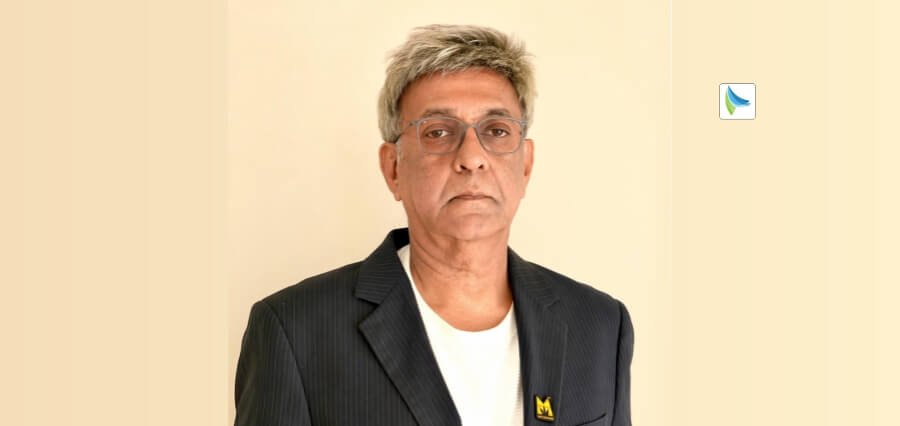
Iftikhar Shaikh did not begin his career in insurance. He began it in motor oil. In 1996, his first job was Sales Supervisor for Pennzoil Quaker State’s Car Care division in Mumbai, a role that taught him something the insurance industry would later confirm repeatedly: selling is selling, but trust is the only currency that genuinely compounds.
By 2003, he moved into life insurance with ICICI Prudential, then Max Life, before entering banking distribution at HDFC Bank and asset management at Nippon Life India. By the time he joined a leading multinational insurer in the Gulf in 2011, he had sold tangible products, financial products, and investment products, and chosen insurance deliberately, a breadth of experience that continues to shape how he leads today.
He mentions, “Selling is selling, but trust is the only currency that compounds.”
Protect First, Then Build
The principle Iftikhar repeats most often, on stage and on LinkedIn, is deceptively simple: protect first, then build. Wealth accumulated without protection is a house without a foundation. Two decades of compounding can be undone by a single uninsured event, and yet the asset that funds both wealth and protection, income itself, is frequently the one left unprotected while portfolios and properties are insured as a matter of routine.
That conviction filters into every commercial decision he makes. Every P&L choice gets tested against one question: does this make the advisor’s conversation with a customer more honest, or simply more efficient?
He asserts, “Efficiency without honesty is how this industry loses trust. I’d rather build slower and keep it.”
Reading the Shift from Product-Push to Advice-Led Distribution
Over three decades across six markets, Iftikhar has watched the industry’s sales model invert. For decades, insurance was sold first and explained later. That model is reversing, and the advisors building books that last are those leading with education rather than pitch.
He stayed ahead of that shift by treating governance as a growth lever rather than a compliance tax. Sitting on a steering committee aligning regional operations with new UAE Central Bank governance regulations taught him that regulatory change typically signals where customer expectations are heading before customers can articulate it themselves. When his organization’s regional agency was recognized for three consecutive years for sales excellence, including the highest internal audit rating in its network, the achievement directly funded the trust that allowed expansion into a new Gulf market and sustained double-digit growth for five consecutive years.
He highlights, “Regulatory change usually signals where customer expectations are heading before customers can name it themselves.”
Standardize the Values, Localize the Execution
Running agency, broker, and bancassurance channels across the UAE, Kuwait, Qatar, Bahrain, Oman, and India cannot be governed by a single playbook. Regulation, culture, and customer psychology shift at every border. Iftikhar’s first operating principle reflects that reality: standardize the values, localize the execution. Accountability and customer-centricity remain non-negotiable everywhere, but how those values are built looks different in Doha than in Manama.
Leading more than 350 advisors across five markets works, in his experience, only because the network trusts the architecture itself, not simply the individual leader at its top.
He states, “You cannot run agency, broker, and bancassurance channels across six markets with one playbook. Accountability and customer-centricity are non-negotiable everywhere, but how you build them looks different at every border.”
Where Digital Tools Belong, and Where They Don’t
Iftikhar’s view on digital transformation rejects the framing of technology versus human advisors as competitors for the customer’s trust. They are, in his analysis, competing for budget instead. Every digital initiative he has led across the regional model had to pass one test: does this make the advisor’s next conversation better, or does it simply make the dashboards look better?
The right use of digital tools closes the information gap, placing clearer, personalized coverage information in front of customers before they sit down with an advisor. What digital should never attempt is replacing the one conversation that happens in a moment of genuine uncertainty: illness, death, a child’s future.
He reflects, “No dashboard closes that moment of real uncertainty. A trusted human does.”
The Discipline of Running Two Clocks at Once
Among the most demanding tests of Iftikhar’s career was securing regulatory approval and licensing for a new Kuwait branch while simultaneously holding his primary regional responsibilities across the rest of the Gulf. There is no shortcut through a foreign regulator. He spent over a year building credibility from zero, market by market, while running day-to-day distribution across four other countries simultaneously.
The lesson that experiences left him with has become his template for every subsequent market entry: resilience is not pushing harder. It is running two clocks at once without letting either one slip.
He affirms, “We got the license. The discipline that process forced on me is now my template for every new-market entry.”
Measuring What Actually Compounds
Most people do not realize they are underinsured until they file a claim, by which point there is nothing left to fix. The same dynamic plays out inside a distribution business. Short-term growth chases new sales, but long-term value protects retention and persistency, because a policy that lapses in year two is not growth. It is a refund waiting to happen and a customer who now distrusts the entire category.
Life changes, income rises, dependents increase, and liabilities grow, but if coverage and service stay static, the gap between what is protected and what is actually at risk widens without anyone noticing.
He notes, “Coverage gaps compound the same way returns do. My teams are measured on retention and persistency as much as new business, because that’s the only way to compound an asset instead of just renting growth one quarter at a time.”
Mentorship and the Next Generation
Early exposure to global leadership development programs in Romania and Greece taught Iftikhar that good judgment travels better than good scripts. He tells the professionals he mentors to get comfortable being the least experienced person in the room, because of that discomfort signals, they are in the right room. Measure yourself against who you were six months ago, not against where someone else currently stands. Treat feedback as acceleration rather than criticism.
He reminds, “The next generation of insurance leaders won’t be defined by how well they sell. They’ll be defined by how fast they adapt.”
What’s Next
Looking ahead, Iftikhar identifies four forces shaping the industry’s next decade. Embedded and bancassurance models will keep deepening across the GCC as banking penetration outpaces insurance penetration. A generational shift in customer trust is underway, as customers who grew up watching institutions fail can spot a sales agenda instantly; the distributors who win them will out-educate rather than out-sell them. Takaful and Sharia-compliant protection remain nowhere near saturated relative to GCC demographics. And governance and ESG discipline are moving from a back-office function to a board-level priority, which is why he has spent the past year building credentials in this space, including an Independent Director certification recognized by India’s Ministry of Corporate Affairs.
Thirty years after selling motor oil in Mumbai, he describes himself at a deliberate inflection point, evaluating where his experience can create the most value next, whether inside a forward-thinking organization, on a board as an independent director, or in a venture of his own.