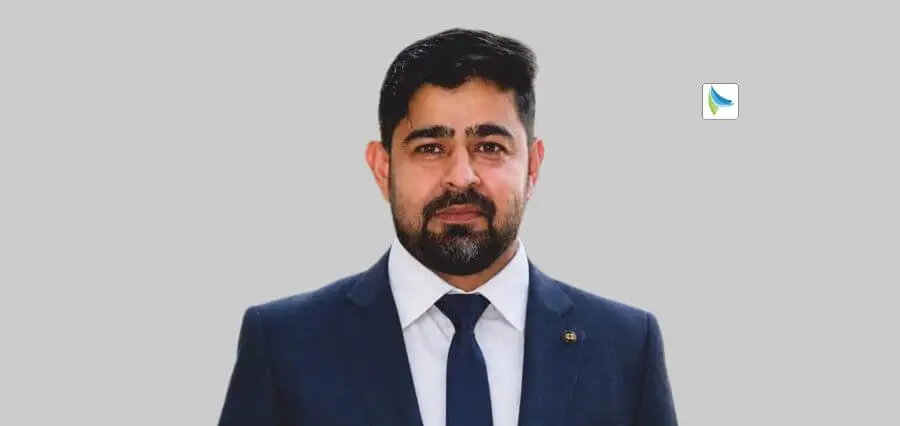





From the lending floor to the boardroom, one executive’s rise shows why credibility, not charisma, remains the true currency of leadership.
Leadership within financial services industry is held up to a tougher standard compared to many other industries. Every suggestion has its repercussions in the life of another individual, be it their family or their business, while every broken commitment chips away at something which took years to build up. At a time when technological advancements have led to instantaneous processes like lending algorithms, those who make it to the top are more likely to be distinguished not because of speed, but by the fact that what they say counts after the transaction is completed. Speed can now be bought, but credibility can no more and is what distinguishes a good manager from a true leader.
As a Loan Consultant at Auto Approve, with broader experience as an entrepreneur, banker, and internet personality, Jahmil Watkins has fashioned an image for himself that is much more than just his deals and his transactions. Instead, he uses his platform to deconstruct the world of loans for people who usually come into these decisions with a certain amount of uncertainty or fear. Being included in the list of the most iconic business leaders that people will watch in 2026 is not a single accomplishment but a combination of achievements in fintech, banking and entrepreneurship.
Foundations: Lessons from the Lending Floor
His rise through lending, banking and fintech was not built on a single breakthrough moment, but on a discipline he traces back to the fundamentals of his early career. Working directly with consumers and business owners on decisions that shaped their financial futures taught him, he has said, that leadership begins long before results are visible.
“Leadership begins with trust, active listening, and clear communication. People need to know you understand their goals and remain accountable,” he explains.
That conviction runs through nearly everything he describes about his approach to leading others. He points to the competitive, performance-driven environment of financial services as the forge that strengthened his discipline and his ability to perform under pressure, and to his years supporting hundreds of business owners as proof that leadership cannot follow a single formula. Every client, he has explained, arrives with different goals, different challenges and different motivations, which means an effective leader must understand people individually rather than apply a standard playbook. The result, by his own account, is a results-oriented, people-centered style built on high standards, consistent action and measurable outcomes.
Decision-Making Under Pressure
That same grounding shapes how Watkins makes decisions when the path forward is unclear. Rather than waiting for certainty that rarely arrives, he separates what is urgent from what is genuinely important, weighs the facts and the risks, and determines which outcome best serves the people and the organization involved. Financial services, he notes, trains a leader to make timely calls as priorities shift, and he is deliberate about not allowing emotion to outweigh sound judgment. He is equally deliberate about not mistaking collaboration for weakness, seeking insight from people whose experience might reveal something he has missed before committing to a course of action. Once a decision is made, he takes ownership of it fully, aware that not every call will be perfect but that hesitation carries its own cost.
“Indecision carries its own risk.” he asserts.
Balancing Conviction and Flexibility
What distinguishes his approach, colleagues and clients alike have observed, is the balance he strikes between conviction and flexibility. Watkins does not treat a decision as final simply because it has been made; he monitors outcomes closely and remains willing to adjust course as new information surfaces, describing effective leadership as being decisive without becoming rigid, confident without becoming careless, and accountable regardless of how a decision ultimately plays out.
Trust, Transparency, and Empathy
Trust, transparency and empathy form the connective tissue between Watkins’ philosophy and his daily practice. He describes transparency as presenting information people can genuinely understand, without retreating into industry terminology or highlighting only the appealing parts of an opportunity, and he would rather deliver an unwelcome answer directly than allow confidence to be built on incomplete information. Credibility, in his framing, is not won through a single persuasive conversation but earned incrementally, through commitments kept and follow-through delivered even when circumstances change and the news is not what a client hoped to hear.
“Trust cannot be demanded by a title or established in one conversation; it is earned through repeated actions,” he amplifies.
Empathy, for him, is inseparable from that same discipline. He has learned to read what sits beneath a client’s hesitation or resistance often a previous negative experience rather than a lack of interest and to respond with understanding rather than assumption. Crucially, he does not treat empathy as an excuse to soften expectations or avoid difficult conversations; instead, he pairs it with clear standards, arguing that leaders can hold people accountable while still recognizing the challenges they face. That combination, he believes, is what allows people to feel valued and supported while still being pushed toward their full potential.
Mentorship Philosophy
The same philosophy extends to how Watkins mentors and develops the people around him. His stated goal is not to make others dependent on his direction, but to help them build the confidence and judgment to succeed independently an approach that begins with understanding an individual’s strengths, ambitions and challenges rather than applying a one-size-fits-all method. He sets high standards, offers constructive feedback, and takes care to explain the purpose behind a goal so that people understand not just what they are working toward but why it matters. Patience, consistency, accountability and the ability to listen are, in his view, the essential qualities of a mentor who knows when to guide, when to encourage, and when to step back entirely.
Innovation and Technology
Innovation and technology occupy a similarly grounded place in his leadership approach. Watkins treats innovation not as change for its own sake, but as a discipline of noticing where friction exists a recurring client concern, an inefficient process, an unmet need — and testing whether a better way genuinely exists, drawing on performance data, direct feedback and personal observation before committing to an idea. He credits his years across lending, banking and entrepreneurship with teaching him that the people closest to a process often understand its weaknesses best, which is why he encourages colleagues to challenge established methods and contribute ideas regardless of their position. New ideas, in his framing, still have to clear a bar: impact, scalability, risk and alignment with long-term objectives all factor into whether an opportunity is worth pursuing.
Technology, meanwhile, has reshaped nearly every dimension of how Watkins operates, from the real-time data and digital lending platforms that let him identify patterns and make faster, better-informed decisions, to the social media and virtual communication tools that have let him build professional relationships far beyond his immediate market. But he is careful to draw a line between tools that extend a leader’s reach and the human connection that ultimately sustains a client relationship. Speed and access can be manufactured by software; trust, in his account, still has to be built the old way through authenticity, responsiveness and follow-through.
Navigating Setbacks and Resilience
None of this, Watkins is candid about, has come without setbacks. He describes periods when progress slowed, strategies stopped working, and confidence was tested by circumstances outside his control moments that forced him to evaluate himself honestly rather than let a temporary setback define his potential. Those experiences taught him not to measure himself solely by immediate results, rankings or recognition, but by the factors within his control: preparation, consistency and the quality of his decisions. Adversity, in his telling, did not make him more cautious so much as more adaptable, more self-aware, and more willing to treat a setback as information rather than a verdict.
“Resilience is not simply enduring difficulty; it is using difficulty to become more disciplined, capable, and prepared for what comes next,” he says.
Redefining Success
That perspective also shapes how Watkins defines success itself. Income, titles and public recognition, he says, represent progress but not the full measure of a meaningful career; success, to him, is the freedom to build a life with purpose, create lasting financial security, and use his position to open doors for others. He measures the accomplishments that matter most not by personal advancement but by moments of impact helping someone make a confident financial decision, encouraging a colleague to recognize their own potential, creating an opportunity that did not exist before. As his influence has grown, he has been deliberate about holding on to the values he considers non-negotiable: integrity, faith, humility, discipline and accountability, particularly in the moments when no one else is watching.
Legacy and Vision
With the future in mind, Watkins talks about aspirations that go far beyond his own personal achievements. His aim is to start companies, create opportunities, and make people aware of the possibilities that they never thought of before, which, as he puts it, means more than being successful oneself, but also making other people ready and enabled to follow. This is his approach that directly targets young professionals and entrepreneurs who, according to him, do not know that there is no particular label of success.
“I want to be remembered not simply for what I achieved, but for helping others believe that greater possibilities were within their reach,” he states.
The Credibility That Outlives the Transaction
It is appropriate to state the essence of the kind of leadership which has led Jahmil Watkins to go from the lending desk to join the ranks of the most prominent business leaders in 2026: technologically savvy, results-oriented and not willing to dissociate ambitions from responsibility. Where technology renders speed obsolete in the field, Watkins’ success has always rested on the only aspect of the job which cannot yet be automated.