



Science does not make headlines through the daily act of showing up. It makes headlines through discoveries, breakthroughs, and moments that compress years of patient work into a single announcement. What rarely gets examined is the accumulation that makes those moments possible: the decades of teaching curious students, building collaborative relationships across institutions and continents, writing manuscripts that are rejected and revised and resubmitted, and choosing, repeatedly and without fanfare, to keep going. Dr. Dinesh Kumar Chellappan has built his career on exactly that kind of accumulation, and the numbers that now describe his output reflect it with a clarity that speaks for itself.
More than 400 published papers. An h-index exceeding 70. More than 27,000 citations were received from researchers around the world who have found his work useful enough to build on. Four books published internationally reputed by publishers including Springer and Elsevier. Consecutive inclusion in the Stanford University and Elsevier global database of the world’s top 2 percent of researchers from 2020 through 2025. A PCT patent granted in 2024 for a nanoemulsion incorporating agarwood oil as a potential treatment for lung cancer. And a string of institutional recognitions from the International Medical University (IMU University) in Kuala Lumpur that reflect the consistency with which he has led on research productivity year after year.
He reflects, “These numbers are personally gratifying, but I regard them as a success only if these achievements benefit common human beings and the wider scientific community.”
From Tamil Nadu to Kuala Lumpur
The distance between a small town in India and the research laboratories of an international university is not only geographical. It is a particular kind of distance that involves leaving behind familiar structures, building new ones, and finding the discipline to keep learning in environments that do not offer the comfort of the familiar.
Dr. Chellappan grew up in Tamil Nadu in a family that placed genuine value on education, discipline, and the relationships that sustain a person through difficulty. Those values were not abstract. They were practiced: in how he was encouraged through school, in how he understood the role of teachers and mentors, and in how he eventually came to think about his own responsibility toward the students and early-career researchers who would later look to him for guidance.
His academic career began at Manipal University (presently, MAHE) in India, where the responsibilities and rewards of university life became visible for the first time in their full scope. Teaching was not simply delivering information. It was designing learning experiences that built curiosity and independent thinking. Research was not simply executing experiments. It was asking questions that mattered and pursuing them with enough persistence to produce answers worth sharing. Those early years planted the convictions that have sustained his career ever since.
He mentions, “Moving from a small town in Tamil Nadu to an international academic environment was an important transition. Like any career journey, mine has included periods of progress as well as setbacks, uncertainties, and learning experiences. Each of these experiences has strengthened my resilience.”
The move to Malaysia and to the International Medical University brought a different kind of challenge: building credibility and relationships in an international academic environment, navigating the particular complexity of a diverse and multilingual institution, establishing a research identity in a competitive field, and building partnerships with researchers across the globe. That challenge, as he describes it, was one of the most important transitions of his professional life.
The Two Pillars That Define the Work
Ask Dr. Chellappan to describe what he does, and he reaches for two words that, for him, are not separate activities but deeply interconnected ones: teaching and research. Both feed each other in ways that make the combination more valuable than pursued in isolation. Research keeps teaching current, grounding it in the actual state of a rapidly evolving field rather than in what was true a decade ago. Teaching keeps research honest, forcing the kind of clarity that makes a complex finding accessible, and the kind of questioning that tests assumptions before they become entrenched.
“Research satisfies my curiosity and my desire to explore unanswered questions. I enjoy identifying meaningful scientific problems, developing ideas, working with collaborators, mentoring young researchers, and communicating our findings through publications,” he states.
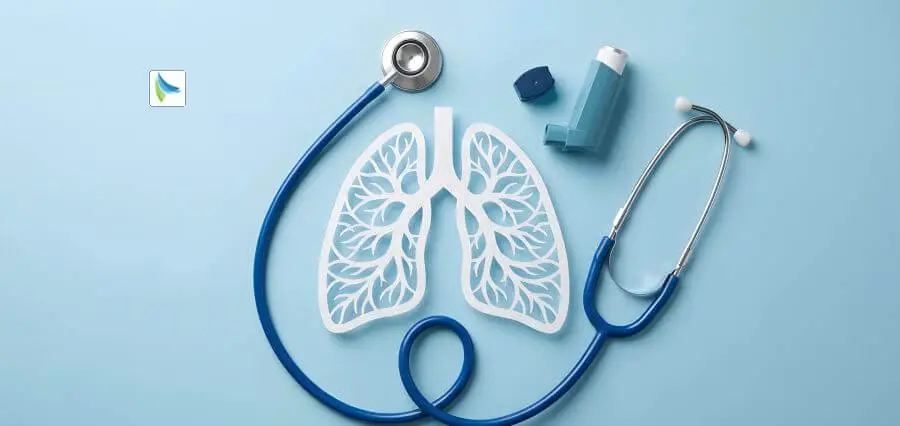
His research focus has crystallized over the years around pharmacy, drug delivery, and respiratory diseases. These are not peripheral areas of health science. Respiratory conditions including asthma, chronic obstructive pulmonary disease, and lung cancer collectively represent some of the most significant disease burdens in the region and globally, and the question of how to deliver therapeutic agents more effectively to the lungs sits at the intersection of pharmaceutical innovation and clinical urgency. His sustained output in this field, measured not only in volume but in citation impact, reflects both the quality of the questions he has pursued and the collaborative networks he has built to pursue them.
Collaboration as Scientific Infrastructure
One of the most consistent features of Dr. Chellappan’s career is the breadth and depth of his collaborative relationships. He has built working partnerships with researchers at the University of Technology Sydney, the University of Newcastle, Western Sydney University, Queensland University of Technology, and the University of Tasmania in Australia, as well as Lovely Professional University and Chitkara University in India, among others.
These are nominal affiliations. They are active research collaborations that have produced joint publications, co-supervised students, and multidisciplinary projects that cross the boundaries of what any single researcher’s expertise can address. The nanoemulsion patent that emerged in 2024, developed in collaboration with De’Aurora Pty Ltd in Australia and led by Professor Kamal Dua at Western Sydney University, is the most tangible recent example: a piece of research that began in a laboratory and arrived at a PCT patent with potential therapeutic applications in lung cancer, COPD, and allergic airway disease.
“What excites me most about collaboration is that science has no geographical boundaries. I see collaboration not merely as a means of increasing research output, but as an opportunity to build lasting academic relationships and create a culture of shared learning,” he affirms.
For Dr. Chellappan, collaboration is not a strategy for increasing research output, though it has that effect. It is a philosophy about how knowledge actually advances. Science has no geographical boundaries. A good research question can bring together people with different expertise, experiences, and perspectives, and the collective effort that results can achieve things that no individual researcher working alone could produce. That belief, consistently acted across his career, is a significant part of why his research network has become both so wide and so productive.
Navigating the Pandemic Without Losing Momentum
When COVID-19 arrived and disrupted the operational rhythms of academic life, Dr. Chellappan’s response reflected the same adaptability that has characterized his career through other transitions. Teaching moved to online platforms. Laboratory access became restricted. International travel and in-person conferences were suspended. The immediate effect was a significant disruption to the normal machinery of academic productivity.
His response was to treat the constraints as information about what was possible rather than as limits on what could be achieved. Virtual collaboration tools that had been used occasionally became central infrastructure for maintaining international research partnerships. The reduction in commuting and conference attendance freed time for academic writing, manuscript preparation, and literature review. Activities that did not require laboratory access continued to progress, and the discipline of working productively without the usual environmental cues turned out to be a capability that has remained useful long after the pandemic ended.
“Rather than viewing COVID-19 only as a setback, I chose to treat it as a period of adaptation and learning. It strengthened my ability to work independently, collaborate virtually, manage uncertainty, and identify opportunities even during challenging circumstances,” he notes.
Strength, Weakness, and the Discipline of Honest Self-Assessment
Among the qualities Dr. Chellappan identifies as central to his professional journey, perseverance, curiosity, adaptability, discipline, and the willingness to collaborate are the ones he names most consistently. These are not abstract virtues. Each one describes a behavioral pattern that can be observed in how he works: the persistence that produces over 400 publications over a career, the curiosity that sustains interest in new research questions rather than simply refining existing ones, the adaptability that allowed him to thrive through institutional transitions and a global pandemic.
Equally revealing is his honesty about the limitations that have required active management. The tendency to accept too many opportunities is because each one seems genuinely interesting. The perfectionism that can slow progress by setting standards that practical timelines cannot always accommodate. These are not confessions of failure. They are the kind of grounded self-awareness that separates leaders who keep growing from those who plateau because they have stopped examining their own patterns.
He adds, “Recognizing weaknesses, learning from them, and making conscious adjustments can become an important part of personal and professional growth. Strengths should be developed, but weaknesses should not simply be hidden.”
The lesson he draws from both his strengths and his weaknesses is consistent: success in academia is not built on exceptional talent alone. It is built on the daily discipline of showing up, the intellectual honesty to recognize when something needs to change, and the patience to trust that sustained effort produces results that short-term thinking cannot.
The Recognition That Accumulates Through Consistency
The awards and recognitions that mark Dr. Chellappan’s career read as a record of sustained institutional excellence rather than a sequence of individual breakthrough moments. The IMU Achievement Award for Leadership in Research and Publications, received consecutively from 2018 through 2023. The School of Pharmacy Research Excellence Award for highest individual total impact factor, awarded in 2019, 2020, 2021, 2022, 2023, and 2024. The Investigator Award recognizes leadership in research and publications across multiple years. Best oral presentation and best poster awards at international conferences including the Pharmacy and Pharmaceutical Sciences Conference 2015 and the Asian Young Pharmacists Group Leadership Summit.
Placed alongside the consecutive Stanford and Elsevier top 2 percent global researcher recognition from 2020 to 2025, these awards describe a researcher whose productivity and impact have remained consistently high across an extended period. That consistency is, in many ways, more significant than any single achievement.
His biography has been included in Successful People in Malaysia and Singapore (6th Edition, 2024) and in Marquis Who’s Who in the World across seven editions from 2010 to 2017. These are not self-nominated recognitions. They are the accumulated consequence of a body of work that others have judged to be worth documenting.
“I consider my greatest accomplishment to be the opportunity to contribute to knowledge, mentor students and young researchers, build meaningful collaborations, and see my work create an impact beyond publications and awards,” he states.
What He Would Tell the Next Generation
When Dr. Chellappan offers advice to aspiring researchers and leaders, his guidance is grounded in the specific experience of building a sustained academic career rather than in the generic encouragement that fills most commencement addresses. Build a strong foundation in your area of expertise while remaining open to interdisciplinary ideas. Develop collaborative relationships based on mutual respect and transparency and understand that the collective effort of well-chosen collaborators consistently outperforms individual brilliance. Cultivate resilience, because rejection, failed experiments, and professional setbacks are not exceptions to an academic career but recurring features of it.
On mentorship, he is particularly direct. A successful academic leader should not focus only on personal achievement but should actively create opportunities for students and junior colleagues to grow. The true measure of leadership in research is not the h-index or the citation count of the person at the top. It is the careers of the people who developed under their guidance.
“True leadership is about creating lasting impact, developing people, sharing knowledge, and leaving behind a stronger academic or professional community than the one we inherited,” he says.
His mantra, expressed with the same quiet conviction that characterizes everything about how he talks about his work, is both simple and demanding: keep learning, remain consistent, embrace challenges, and never stop believing in the value of your efforts.
From Tamil Nadu to Kuala Lumpur, from a first paper to more than four hundred, from a first international collaboration to a PCT patent and a global research network, Dr. Dinesh Kumar Chellappan has built his career one consistent decision at a time. The work, as he would be the first to say, continues.