



Prime Highlights
- Huawei introduced the Tau Scaling Law and LogicFolding architecture to create chips with performance equivalent to a 1.4nm process by 2031.
- The company stated that its new Kirin chips launching later this year will be the first to adopt the new architecture.
Key Facts
- Huawei is a Chinese technology company that develops telecommunications equipment, smartphones, processors, and AI computing solutions.
- The company said it has already used the new scaling method in the design and mass production of 381 chips over the last six years.
Background
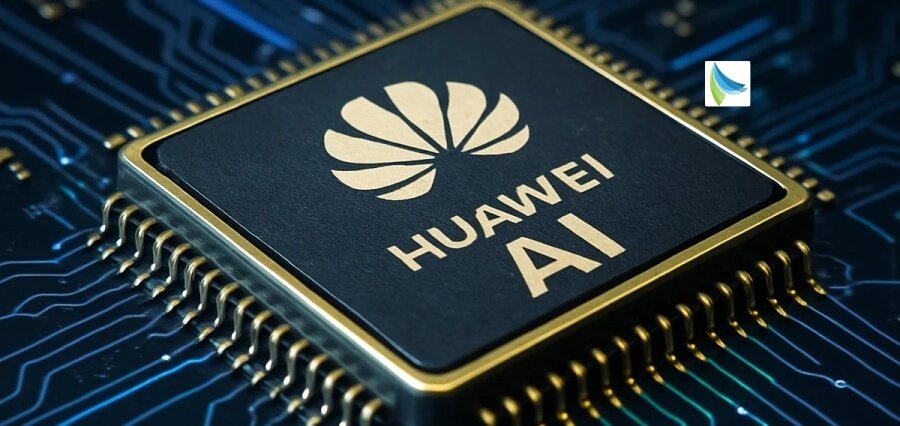
Huawei has introduced a new chip scaling principle and architecture that it says could help its processors reach performance equivalent to a 1.4-nanometre process node by 2031. The announcement marks a major step in the company’s efforts to build an independent semiconductor ecosystem and reduce dependence on foreign technologies.
The company presented its new Tau (τ) Scaling Law during an international semiconductor event in Shanghai this month. Huawei explained that the new principle changes the traditional approach to chip development. Instead of focusing only on shrinking transistor size, the method uses time-based scaling to improve performance and efficiency.
Huawei also introduced its LogicFolding architecture, a technology designed to reduce resistance and signal load inside chips. The company said this approach can improve transistor density and boost chip performance.
According to Huawei, it has already applied the new scaling method to develop and mass-produce 381 chips during the past six years. The company stated that its upcoming Kirin processors, expected later this year, will become the first products to use the LogicFolding design.
The company also indicated that it expects future developments to move from local chip optimisation to wider full-stack improvements across devices and systems over the next decade. Huawei further stated that its next-generation chips would continue improving transistor density and operating speeds.
The move highlights Huawei’s strategy to overcome technology restrictions and continue competing in advanced computing and AI chips through in-house innovation.