



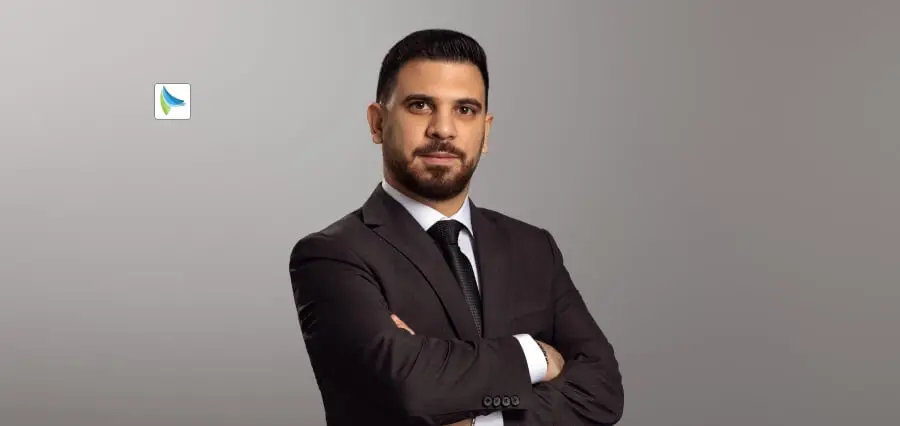
George Karam, Head of Project Management Office at AICC – AlJammaz Group, that journey began in a close-knit town in North Lebanon, where people knew one another well, and conversations flowed naturally across family and community ties. Long before he was given a leadership role, this environment instilled in him characteristics that would later define his style of leadership: listen before passing judgment, build trust through genuine connections, and unify people behind a single objective. These early lessons formed the basis of a leadership approach built on connection, respect, and a deep understanding of people.
George uses his abilities to tackle some of the region’s most difficult infrastructure projects. He has developed a leadership philosophy that blends humility, strategic thinking, discipline, and empathy with experience managing massive construction projects like the Riyadh Metro. His journey offers a candid perspective on how effective leadership is shaped through lived experience. His current leadership style has been shaped by his involvement in sports, mentorship, family obligations, and the realities of working on some of the most difficult project sites in the region.
Leadership Built on Responsibility
As the eldest son in his family, George took on a guiding role from an early age. He often mediated disagreements among his siblings, organized household responsibilities, and set an example for his younger brother and sisters. This strong sense of duty remained with him throughout his youth. He coached a children’s football team, captained his village football side, and later became part of a diverse university community in Lebanon. These experiences taught him how to collaborate with people from different backgrounds and perspectives.
His father’s local business provided another important learning experience. Although modest in size, the business required discipline, planning, accountability, coordination, and sound decision-making. George supported financial planning, calculated profit and loss, and coordinated with suppliers and vendors. These responsibilities taught him an early lesson that continues to guide him: every decision has consequences. “Every decision has consequences. I take ownership of my choices and remain mindful of how they affect others,” he says.
Wisdom Through Experience
George’s career took a defining turn when he moved to Saudi Arabia to work on major construction projects. One of the most significant was the Riyadh Metro, one of the largest infrastructure projects in the region. He started as a site engineer and gradually took on wider site management responsibilities. His role required him to coordinate people from dozens of nationalities and different technical disciplines, often under significant time pressure.
This experience changed the way he understood leadership. He learned that technical instructions alone are not enough to move a project forward. Trust, clear communication, and mutual understanding are equally important. He saw that even the strongest technical plan can fail without effective communication between teams. The experience also taught him humility. He learned as much from experienced site foremen as he did from formal training. “Technical expertise can move a project forward, but trust and communication are what bring people together,” he says.
Mentorship also played an important role in his professional development. George credits Wael Allan, whom he describes as a true veteran of the construction industry, as an important influence. Allan helped strengthen his technical judgement and shaped the way he works with teams and clients.
Two books also had a lasting influence on his approach to leadership. Unlocking Leadership Mindtraps by Jennifer Garvey Berger made him more aware of the mental shortcuts that can affect good judgment. The Three Deadly Sins: Three Conditions You Need to Avoid to Be Successful in Construction by Stuart E. Graham remains a practical reference that he continues to consult.
These experiences and influences have reinforced a belief that George holds strongly. Leadership is earned, not given. A title does not make someone a leader. The way a person treats others does. He believes in treating everyone with the same respect he would expect for himself, regardless of their position or rank. Today, he sees leadership not as a position, but as an ongoing practice of listening and adapting every day.
Building Alignment Through Purpose
George compares his role to that of a ship’s captain. A successful team must understand its destination, trust the route, and work together toward a common goal. On complex projects, individuals can become focused on their own responsibilities and lose sight of the broader objective. To maintain alignment, he establishes clear and measurable priorities for each phase of the project. These priorities are reinforced through kickoff sessions, daily coordination meetings, and transparent progress tracking. “Teams perform at their best when everyone understands the destination and takes responsibility for reaching it,” he says.
He also believes that teams should have a voice in shaping priorities rather than simply receiving instructions. Team members are encouraged to participate in decision-making discussions, not only meetings focused on reporting results. Each workstream has a clearly defined owner, deliverable, and timeline. This approach reduces uncertainty, strengthens accountability, and ensures that everyone understands their role in achieving the wider objective.
These principles are also reflected in the organization’s core values of safety and quality, integrity, client focus, and collaboration. The company is strengthening its commitment to environmental responsibility and sustainability, while maintaining zero-harm safety as a non-negotiable standard. For him, these principles provide a strong foundation for delivering projects responsibly, effectively, and with a clear sense of shared purpose.
Decisions with Foresight
When priorities compete, timelines become tighter, or requirements change, George focuses on what is urgent and what is truly important. He bases every decision on safety, quality, and delivery commitments. He believes that effective leadership goes beyond solving problems quickly. It also requires proactive risk management. This means identifying potential supply chain disruptions, technical conflicts, and commercial challenges well before they affect the project.
This discipline begins before construction starts. George places strong emphasis on due diligence when selecting clients, subcontractors, and vendors. He recognizes that attractive financial terms can be tempting in the short term. However, a poor partnership can create long-term problems. He also believes that rushed cost-cutting decisions can lead to greater financial losses over time.
George is particularly firm when dealing with counterparts who do not act in good faith. He does not compromise his own standards in response. Instead, he applies what he describes as “smart aggression.” This means remaining firm, holding partners accountable to their contractual obligations, and defending his position with facts rather than hostility.
He compares a project to a football match. Scoring goals is important because it helps the team win. In the same way, resolving daily challenges matters because it moves the project closer to overall success. For George, every decision and action must contribute to that wider objective.
Trust Through Transparency
For George, trust begins with transparency. His approach is simple. Leaders should communicate bad news as openly as good news. Anyone can lead when things go well. The real test comes when something goes wrong. In such moments, taking ownership and addressing the issue directly is essential. Leaders should not allow their teams to hear important information from others first.
This openness can also address a common challenge in the construction industry. Some individuals may withhold information because they see it as a form of job security. Rather than simply punishing this behavior, the focus is on understanding its underlying cause. Team members are encouraged to see that long-term security comes from shared success, not from controlling information.
He also develops what he calls “T-shaped” professionals. These individuals have strong expertise in their own areas while also having the skills and knowledge to support other workstreams. Regular opportunities are created for people to share ideas and concerns. These include toolbox talks and informal check-ins. Such forums encourage people from different disciplines and backgrounds to communicate openly without unnecessary hierarchy.
Mistakes are treated as opportunities for coaching and learning. A supportive approach creates greater ownership than a culture based on fear. Trust grows when people feel safe to communicate, take responsibility, and contribute to the success of the wider team.
Navigating Change and Crisis
Change is a constant part of George’s work. Design revisions, weather disruptions, supply delays, and changing client requirements are common on complex projects. He understands that people can naturally resist change because it creates uncertainty. To manage this, he explains the reasons behind each change and involves his team in shaping the response.
During a crisis, his central rule is to never let emotions drive decisions. This does not mean suppressing passion. It means ensuring that fear, anger, or panic do not influence important choices. When a disruption occurs, he sets a calm and factual tone. He knows that teams often take their cue from their leaders.
He then brings together the right people, considers the potential impact, and evaluates the options carefully. This allows the team to respond with clarity and make decisions with confidence, even under pressure.
Talent Shaped by Accountability
George adjusts his level of supervision based on a person’s experience and ability rather than their job title. Newer team members and those working in unfamiliar areas receive closer guidance. Experienced performers are given greater independence, with support available when needed. His approach is firm but fair. He maintains consistent standards while recognizing genuine effort and strong results.
This approach also shapes how he develops talent. “Giving people responsibility, supporting their growth, and holding them accountable is how I help them become stronger professionals,” he says.
Strong performers are recognized and rewarded. Those who face challenges receive coaching and support to help them improve. However, leadership sometimes requires difficult decisions. If someone continues to disrupt the team’s collaborative culture after receiving clear feedback and support, removing that person may be necessary.
When identifying future leaders, George looks beyond technical skills. He values integrity, sound judgment under pressure, strong cross-cultural communication, and genuine care for people.
He takes particular pride in giving young Saudi engineers meaningful exposure and responsibility. He sees this as an important way to develop their skills and confidence. More importantly, he views it as a meaningful contribution to building the next generation of construction leaders in the Kingdom.
Creating a Culture of Inclusion
Working across different nationalities and cultures, often alongside colleagues who were far from home and working long hours in challenging conditions, taught George the importance of diversity, equity, and inclusion. He believes these principles must be part of everyday practice, not simply written policies. Every team member, regardless of nationality, background, or experience, should have a safe platform to share ideas and concerns. Diversity brings different perspectives to problem-solving, while equity ensures those perspectives are heard and valued.
He applies the same level of empathy to external relationships. Before entering a negotiation, he takes time to understand the position of subcontractors, consultants, and clients. He considers their commercial constraints, priorities, and challenges. This approach helps resolve disagreements more effectively and reduces the risk of conflicts developing into legal or operational disputes.
Turning Ideas into Impact
George evaluates new technology by first understanding the problem it needs to solve. Before adopting new tools, he asks whether they address a genuine challenge. He considers whether the technology can save time, reduce risk, or improve quality onsite. In his view, adopting software is the easy part. The greater challenge is creating a digital mindset across a workforce that spans different generations and nationalities.
He usually tests new tools on a limited scope with the people who will use them. He believes teams are more likely to embrace change when they have helped test and improve a solution. This approach is more effective than introducing changes without their involvement.
Every project and client has different needs. George therefore considers the learning curve and potential disruption of each new tool against its expected benefits. For him, innovation must have a clear purpose. It should contribute to safer sites, more reliable project delivery, and better decision-making.
A Legacy of Purpose and Growth
George’s career has been shaped by several defining experiences, with the Riyadh Metro standing out as the most influential. The project challenged him to grow from a hands-on engineer into a broader site leader. It taught him how to coordinate teams from different nationalities while working under significant pressure. Seeing a project of such scale and complexity come together remains a clear example of the value of honest communication.
Looking ahead, project leadership is moving toward a model that combines advanced technology with strong human skills. Tools such as predictive analytics can support better decision-making. At the same time, skills such as conflict resolution, negotiation, and relationship building will become increasingly important. His current focus is on succession planning. He aims to build a strong talent pipeline that can continue beyond his own tenure. He is also committed to passing on technical discipline and commercial judgment to the next generation, particularly the young Saudi engineers he continues to mentor.
The culture he hopes to leave behind is built on a few simple principles. Communication, transparency, and collaboration are essential. Everyone should understand the common goal and their role in achieving it. He wants his teams to work as one unit. Individual achievements and daily progress should always contribute to a larger objective. “The legacy that matters most to me is the people I have helped grow into stronger professionals and future leaders,” he says.
For him, the most meaningful measure of his career will be the people he has helped develop. If they go on to lead their own teams with the same openness, responsibility, and care, he will consider that his most lasting achievement. That legacy will matter more than any structure he has helped build.