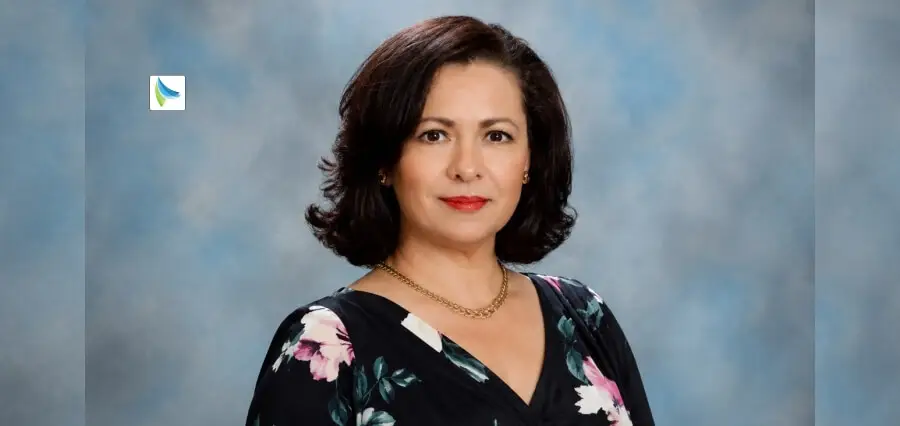





What does it mean to choose the woman you become?
For Rizvana Abdul Reman, that question has become increasingly important — not only in her work as an educational leader, but in how she understands culture, identity, ambition and leadership. With more than sixteen years of experience across UK and international education, Rizvana has built her career around questioning what she already knows. As Head of Maths & Science Departments at Nun Academy Primary School in Jeddah, a Chartered Teacher and NPQSL-qualified leader, her work spans curriculum, assessment, teacher development and school improvement.She has also been recognised with the Education Leadership Impact Award and the Transformational Education Leader Award in 2026.
Yet the professional titles tell only part of the story.
Her more recent writing has taken her thinking beyond the classroom and into questions of culture, agency, choice and women’s leadership. Her latest published article, The Woman We Were Taught to Be: Culture, Choice and the Courage to Redefine Ourselves, explores how women can absorb expectations about who they should be long before they are old enough to question them.
For Rizvana, this has become an important part of understanding leadership — because before we can lead others, we must be willing to examine the assumptions that have shaped us.
A Career Built on Questioning What She Already Knew
Rizvana traces much of her development not to moments of certainty, but to experiences that unsettled what she thought she already understood.
Beginning her career in the UK across English, Maths and Science, she developed a strong foundation in curriculum and classroom practice before moving into international education. Working across different cultural contexts reshaped her thinking.
Strategies that succeed in one school do not necessarily succeed in another, even when the curriculum remains familiar. Expectations around behaviour, communication, relationships and what constitutes “good teaching” can vary considerably.
She says, “There is rarely one right answer in education, we need evidence and strong principles, but we also need to understand the people and the context in which we are applying them.”
That lesson became central to her leadership.
Over time, her focus shifted from becoming a better teacher herself to helping other teachers grow. She began to see leadership less as having the answers and more as creating the conditions in which other people can develop the confidence and competence to find their own.
But questioning assumptions did not stop with education.
When Culture Becomes an Invisible Curriculum
Rizvana’s experience of international education led to her article When Great Teachers Move Abroad: Why Culture Matters More Than Curriculum, exploring why strong teaching does not always translate directly from one cultural context to another. Culture matters in schools because it shapes behaviour, expectations and relationships. But Rizvana has increasingly become interested in what happens when culture shapes people in ways that are much less visible.
Her latest article, The Woman We Were Taught to Be, explores the invisible curriculum that girls can experience as they grow up. They learn what is expected of them through language, observation, relationships and the behaviour of the people around them. They absorb messages about how ambitious they should be, how agreeable they should remain, what responsibilities should come first and which choices may be considered unacceptable.
The difficulty is that expectations can become so familiar that we stop recognizing them as expectations.
We simply accept them as truth.
Rizvana’s reflections on culture are not about rejecting culture. Nor does she believe that women’s empowerment requires women to reject faith, family or community. Instead, she argues for the freedom to examine what we have inherited and distinguish genuine belief from cultural interpretation. That distinction matters.
When social expectations are presented as unquestionable — particularly when they are presented as religious obligation — questioning them can feel disobedience.
For Rizvana, questioning is not rejection. It is agency.
The Courage to Choose
Courage is often associated with taking risks, speaking up or trying something new.
For Rizvana, courage can mean something more personal: having the courage to question what you have inherited, to make choices that may not always be understood by others and to accept that the person you once thought you had to become may not be the person you ultimately choose to be.
Her own journey has reinforced this understanding.
She has experienced the assumptions that can surround women and the expectations attached to identity, relationships and age. She has also experienced what it means to make choices that may not fit comfortably within other people’s expectations. Those experiences have shaped her thinking, rather than defined it.
At fifty, she is particularly conscious of the tendency to treat age as a boundary for women’s ambition. She rejects that idea.
“There is no expiry date on ambition.”
For Rizvana, reaching a certain age should not mean reaching the end of possibility. Experience can bring greater clarity about what matters, what no longer matters and what we still want to become. Choosing who we become is therefore not necessarily about rejecting the past. It is about deciding what we carry forward, what we question and what we leave behind.
From Achievement to Agency
This idea of agency also runs through Rizvana’s educational leadership.
As Head of Maths & Science Departments, she is deeply interested in the difference between pupils appearing successful and genuinely learning. Her work and writing around assessment challenge the assumption that strong results automatically mean deep or secure understanding.
The Illusion of Achievement explores that gap between attainment and learning.
For Rizvana, curriculum sequencing, assessment and teacher development are inseparable from pupil outcomes. Learning walks, pupil voice and work scrutiny are not intended simply to evaluate teachers, but to understand where support is needed and where effective practice can be developed more widely.
“Achievement and teacher development are not competing priorities,” she argues. “They are two sides of the same commitment.”
The same principle applies to how she develops teachers. Her approach rests on a simple belief: support and accountability must operate together. She rejects both extremes — leadership that simply leaves people to work things out for themselves and leadership that dictates every step. Instead, she models practice, asks questions, creates opportunities for rehearsal and provides honest feedback. The aim is confidence with competence.
“I can, I will, and I know how to.”
For Rizvana, that sentence represents more than teacher development. It represents agency.
People need opportunities to act, but they also need the knowledge, confidence and support to do so.
Leadership Is More Than Having a Seat at the Table
Her thinking about agency has also influenced how she views women’s leadership.
Representation matters and having a seat at the table matters but presence does not always mean influence. A woman can be in the room and still not be heard. She can hold a position and still find that her knowledge or authority is questioned differently from others.
That is why Rizvana believes leadership must go beyond simply creating opportunities for women to be present. Women need mentors, but they also need sponsors. They need opportunities, but they also need people willing to open doors. Someone opened a door for Rizvana. She now sees part of her responsibility as a leader as doing the same for others. The question she increasingly asks is: Who am I willing to open the door for? That question connects her personal understanding of agency with her professional approach to leadership. Leadership is not simply about what we achieve ourselves. It is about what becomes possible for other people because we were there.
Leading Across Cultures
Working internationally has made Rizvana a more reflective leader because it has continually forced her to confront assumptions. Teachers and leaders often carry expectations from previous schools, systems and cultures. What worked before may not work again in exactly the same way. Rather than discarding previous experience, Rizvana believes leaders need to understand a new context before attempting to change it.
That means listening, observing and resisting the urge to intervene before understanding why people behave as they do. Culture cannot simply be written into policy. It is reinforced through daily behaviour, consistency and whether leaders follow through on what they say.
The same principle applies to leadership more broadly. People do not simply respond to what leaders say. They respond to what leaders consistently do.
Leadership That Develops People
Rizvana’s approach to leadership is therefore rooted in people.
She believes professional development should not be experienced as an admission that someone is inadequate. Learning should be normal. Leaders should be willing to acknowledge uncertainty, reflect on failure and remain open to changing their minds.
Her interest in educational research and cognitive science reflects this same curiosity. She is interested in evidence, but skeptical of adopting strategies simply because they are new.
Being evidence-informed, in her view, is not about expecting research to provide perfect answers. It is about being willing to question, adapt and continue learning. She also recognizes that leadership can become reactive when leaders attempt to solve every problem themselves. “A leader who becomes the answer to every problem has not really developed a team.”
For Rizvana, developing people means giving them both support and responsibility; it means creating space for professional judgement rather than creating dependence on the leader.
Recognition as Responsibility, Not an Endpoint
The recognition Rizvana received in 2026 has provided another opportunity to reflect on what achievement means. The Education Leadership Impact Award and Transformational Education Leader Award are significant professional milestones, but she does not see recognition as a conclusion. For her, it creates responsibility.
Her deepest sense of achievement still comes from moments that are harder to formalize: seeing a teacher become more confident, watching a team raise its expectations or seeing someone begin to believe they are capable of more. That is part of why writing has become increasingly important to her. Writing allows her to explore ideas beyond the immediate demands of her role — from curriculum and assessment to culture, leadership, women and agency.
It has also given her a platform to ask questions that are not always comfortable.
The Woman We Choose to Become
The professional journey and the personal journey are not separate. The same woman who encourages teachers to question practice has had to question some of her own assumptions.
The same leader who believes agency should be created for others has had to recognise the importance of claiming agency for herself. And the same educator who believes people should not be defined by a single measure of achievement has come to understand that women should not be defined by a single role, relationship or stage of life. For Rizvana, empowerment is not about someone giving women permission. It is about recognizing that they already have agency.
It is the confidence to question. The courage to choose. The freedom to distinguish what is genuinely believed from what has simply been inherited. That does not mean every woman should make the same choices. Quite the opposite. It means women should have the freedom to make choices that are genuinely their own.
Looking Ahead
Rizvana’s ambitions now extend beyond one institution or one department.
She wants to continue contributing to conversations around education, leadership, culture and women’s agency through leadership, writing and speaking.
Her idea of legacy is also changing.
It is not simply about the positions she holds or the recognition she receives. It is about the confidence and competence she leaves behind in other people. The teachers she has helped develop. The colleagues she has encouraged to find their voice. The children who have learned to believe they are capable of more. And the people for whom she may one day be the person who opens the door.
That, ultimately, is the leadership she wants to practice. Not simply walking through the door but holding it open for someone else.
And perhaps the most important question is not who we were taught to be but who we now choose to become There is no expiry date on ambition. “Do your best, have the courage to try, and leave the outcomes to God.”