




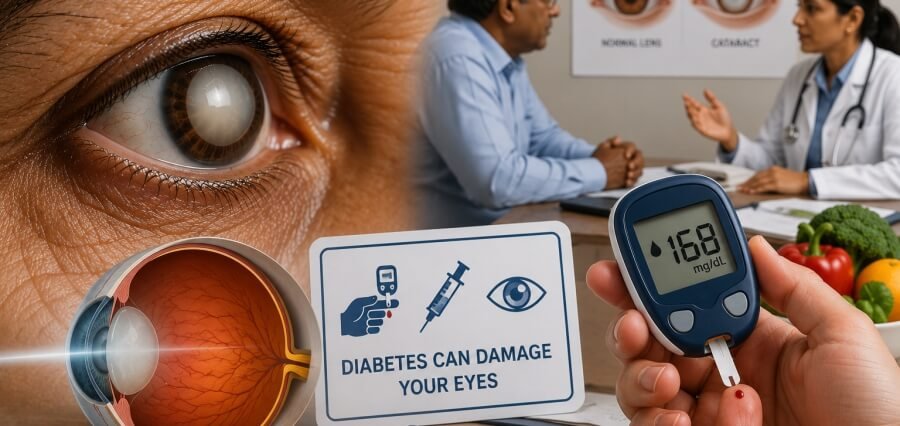
Ophthalmologists report an increasing number of adults in their 40s and 50s developing cataracts as diabetes and metabolic disorders continue to rise
Mumbai, India: (June 26, 2026) Ophthalmologists across India are reporting a growing incidence of cataracts among adults in their 40s and 50s, with diabetes increasingly being identified as a significant underlying risk factor. As the prevalence of diabetes continues to climb nationwide, eye specialists say persistently elevated blood glucose levels are accelerating changes in the eye’s natural lens, resulting in earlier onset and faster progression of cataracts.
Medical experts caution that cataracts can no longer be regarded solely as an age-related condition. The increasing burden of diabetes, obesity, hypertension, and other metabolic disorders is contributing to a noticeable shift in the age profile of patients requiring cataract treatment, highlighting the need for greater awareness, routine eye examinations, and effective management of chronic health conditions.
Growing Diabetes Burden Raising Concerns for Eye Health
India is home to more than 101 million adults living with diabetes and an estimated 136 million individuals with prediabetes, according to the International Diabetes Federation. Healthcare experts expect these numbers to continue rising over the coming years, increasing the risk of diabetes-related complications affecting multiple organs, including the eyes.
While diabetic retinopathy remains one of the most widely recognized vision-threatening complications associated with diabetes, ophthalmologists say cataracts are emerging as another significant concern. Long-term exposure to elevated blood sugar levels can alter the structure of the eye’s natural lens, leading to clouding that develops earlier than typically expected and progressively impairs vision.
Cataracts Increasingly Affecting the Working-Age Population
According to specialists, the impact of early cataracts is becoming more pronounced among working professionals whose daily routines rely heavily on digital devices, prolonged screen exposure, and activities such as driving.
Common symptoms include blurred or cloudy vision, increased sensitivity to glare, reduced contrast sensitivity, difficulty reading digital screens, and frequent changes in spectacle prescriptions. Left untreated, these symptoms can significantly affect productivity, mobility, and overall quality of life.
Commenting on the trend, Dr. Mubashir Parkar Mohammed, Consultant Ophthalmologist at Dr. Agarwal’s Eye Hospital, Vashi – Sector 12, said:
“Diabetes is increasingly being recognized as a major contributor to early cataract development. We are seeing a growing number of patients in their forties and fifties presenting with cataracts, particularly those with poorly controlled blood sugar levels. Lens changes often develop gradually, but they can substantially affect vision during an individual’s most productive years. Regular comprehensive eye examinations are essential for detecting these changes early and enabling timely treatment before vision loss becomes more significant.”
Misconceptions Continue to Delay Treatment
Despite advances in cataract surgery and growing public awareness about eye health, specialists say misconceptions surrounding cataract treatment continue to delay timely medical intervention.
According to Dr. Mohammed, many patients continue to believe that cataracts should only be removed after they have “matured” or assume that declining vision is simply an unavoidable part of ageing. Others mistakenly expect medications or eye drops to reverse cataract formation, despite there being no clinically proven non-surgical treatment capable of restoring lens clarity.
“Delaying surgery based on these misconceptions can result in more advanced cataracts that may be technically more challenging to treat and could potentially influence visual recovery. Seeking medical evaluation as soon as symptoms develop allows patients to receive appropriate guidance and treatment at the right time,” he said.
Early Detection Remains Key to Preserving Vision
Ophthalmologists recommend that adults over the age of 40, particularly those living with diabetes, hypertension, obesity, or other metabolic conditions, undergo regular comprehensive eye examinations even in the absence of noticeable symptoms.
Early diagnosis enables clinicians to monitor cataract progression, assess overall eye health, and determine the most appropriate timing for treatment. Modern cataract surgery is widely regarded as a safe and highly effective procedure, with early intervention often contributing to improved visual outcomes and faster recovery.
To encourage greater awareness and promote early diagnosis, Dr. Agarwal’s Eye Hospital has announced complimentary cataract eye evaluations for members of the public until July 15, 2026. Interested individuals can register by calling 95945 86999.
About Dr. Agarwal’s Health Care Limited
Dr. Agarwal’s Health Care Limited is one of India’s leading eye care providers, delivering comprehensive ophthalmic services across a broad network of hospitals and vision centers. The organization currently operates more than 285 facilities across 80 cities and four Union Territories in India, in addition to 16 centers across nine countries in Africa.
Its clinical services include cataract surgery, refractive surgery, retina care, glaucoma treatment, corneal services, pediatric ophthalmology, oculoplasty, and other specialized eye care solutions. The organization also offers optical products, contact lenses, diagnostic services, and ophthalmic pharmaceutical products, serving millions of patients annually through its integrated eye care network.
For more information, visit www.dragarwal.com.