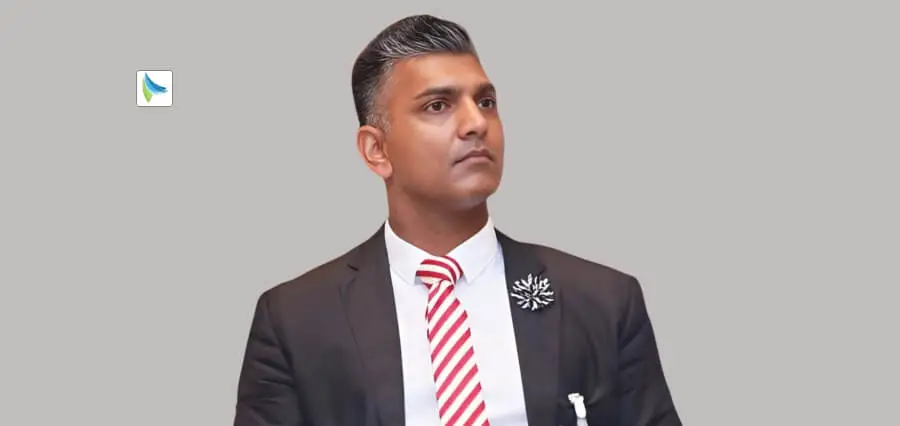





Finance is often described as the language of business, but the leaders who use it best treat it as more than a record of what has already happened. They read it for what it says about where a business can grow, where it quietly loses value, and which decisions deserve backing. That calls for sound judgement, trust with colleagues, and the confidence to speak candidly. Nishit Surana, Senior Finance Business Partner at Al Tayer Group, brings that outlook to a diversified group, helping business heads turn financial insight into decisions that strengthen performance and develop the people behind it.
Understanding the Language of Business
Finance connects every part of a business, from daily operations to long-term investment decisions. For Nishit, this connection initially drew him to the profession. He sees numbers as stories that reveal where a business performs well, where it loses value and where it can invest in the future. Qualifying as a Chartered Accountant gave him financial rigour, while his early experience in internal audit with a large, diversified Indian conglomerate helped him understand how businesses function.
His career soon expanded beyond traditional finance. After gaining an enterprise-wide view through internal audit, he managed commercial, procurement and stores operations across a manufacturing network, handled treasury, and then led finance for a multi-country consumer business in the Middle East. Today, he applies that combined financial and operational perspective while partnering with businesses across warehouse automation, real estate, construction, hospitality and family investments.
Each role offered a different perspective on business performance. These experiences taught him that strong results rarely happen by chance and that business failure is seldom sudden. Financial outcomes are connected to data-backed operational decisions basis market conditions, relationships and the people responsible for execution. This shaped his belief that “finance earns its seat at the table not by reporting the past, but by shaping the future.”
His varied responsibilities have also reinforced the importance of understanding how decisions in one function affect the wider organisation. Capital allocation decisions, supply chain arrangements, Sales, Marketing, Procurement, Human Capital and technology investments cannot be viewed in isolation. They influence one another and ultimately shape business performance. This wider perspective helps him connect financial insight into business decisions that enable sustainable growth.
Leadership Built on Integrity and Ownership
Four values anchor Nishit’s leadership philosophy: integrity, curiosity, ownership and generosity. Integrity allows a finance leader to raise uncomfortable issues in the right setting. Curiosity keeps him asking why, even when performance indicators appear positive. Ownership means treating every business he supports as if his own capital were at stake. Generosity, expressed through time, credit and knowledge, helps people learn and grow.
Early in his career, he believed leadership meant being the smartest person in the room. Experience taught him it is about making the room smarter. He measures himself by the leaders his team develops, whether business heads seek his view before decisions, and whether people feel safe disagreeing with him.
Building Trust Through Consistent Actions
Nishit believes trust rests on three habits: saying what one will do, doing what one has said and accepting responsibility when one falls short. Trust grows through flagging risks early, sharingfinancial insights to chart a way forward, crediting the team and owning challenges.
He extends trust first, delegates meaningful responsibilities and lets people stretch beyond their comfort zones. When colleagues know he will be fair, candid and consistent, difficult conversations become easier and better decisions follow.
Balancing Financial Rigour with Human Judgment
Nishit believes data shows what is happening, judgment helps determine what to do, and empathy reveals how a decision will affect people. He builds models, stress-tests assumptions and examines the full range of possible outcomes rather than relying only on the base case.
Yet a spreadsheet cannot capture the morale of a sales team, the strength of a distributor relationship, or the cost of a decision to the people who must execute it. He considers who will be affected, what they need to understand and what might otherwise be overlooked.
During commodity volatility, currency swings, or changing distribution channels, he uses the best available information, defines what would change his mind and communicates his reasoning. People may disagree with an outcome but still support it when they trust the process. As he says, “Rigour earns the right to be heard, empathy earns the right to be followed.”
Finding Innovation Beyond Traditional Boundaries
For Nishit, innovation means questioning a settled answer and testing a better one. He learned that valuable innovation can emerge from finance and back-office operations, not only research and development or marketing.
Examples include rethinking working capital, making corporate payments generate value, redesigning channel margins and pricing, and simplifying holding structures. He encourages small experiments, accepts intelligent failure and recognises people who question existing processes. His role is to protect curiosity from the pressure to continue doing things simply because they have always been done that way.
Using Technology to Improve Finance
Nishit’s view of technology has shifted from speeding up reporting to redesigning business operations.
He has led treasury automation, large enterprise resource planning transformations and fintech payment modernisation. Technology amplifies existing processes. Automating a broken process creates errors faster, adoption depends on people, and data creates value only when trusted, timely and connected to a decision.
AI and advanced analytics can free professionals from repetitive work so they can focus on insight, business partnering and judgment. He believes finance leaders must remain curious, maintain strong fundamentals and use technology to become more human, not less.
Learning from a Business Turnaround
A formative experience came while he led finance for a consumer goods business in the Middle East. The company had a brand portfolio, multiple channels and markets with different economic conditions. Profitability had to be rebuilt while the business continued to pursue growth.
The work required renegotiating trade terms, changing a distributor, redesigning supply chain flows and redirecting marketing spend. Nishit learned to break complexity down by product, channel and customer to identify the real drivers of performance.
He also learned that pressure is best managed through clear priorities, ownership and communication. A business cannot be optimised from a spreadsheet alone. Leaders must sit with sales teams, distributors and customers who experience the business and its numbers every day.
Achievements That Create Lasting Value
One of Nishit’s most meaningful achievements was helping deliver a profitability turnaround that earned him the organisation’s “Changemaker” recognition. The result came from cross-functional teamwork: finance worked shoulder to shoulder with commercial, sales, marketing and supply chain colleagues to uncover value in places the business had not previously considered. For Nishit, the recognition mattered because it validated a central belief—finance creates its greatest impact when it solves business problems with the people closest to them.
He is proud of treasury programmes that improved working capital and payments, turned a cost centre into a source of value and earned CXO recognition. More recently, he has helped scale an industrial business, simplify a group structure and lead digital transformation. He believes finance should create value, not just measure it.
Advice for Future Leaders
Nishit offers three principles. First, protect integrity. Careers are long, while reputations built over decades can be lost in minutes. Before a significant decision, he recommends asking whether one would be comfortable explaining it to the team, senior leaders and the board, in that order.
Second, stay authentic. Leaders should understand their strengths, acknowledge their gaps and work with people whose abilities complement their own.
Third, remain calm in difficult moments, challenge respectfully, admit when an answer is not known and change one’s mind when facts change. Decisions are not always popular, but they should reflect clear thinking, good counsel and consideration for everyone affected. Nishit believes a leader’s title will eventually change, but how people felt working with that leader will remain with them.
Building a Legacy Through People
For Nishit, legacy is what remains when a leader is no longer in the room: the capabilities, culture and confidence left behind in others. He measured it through milestones such as transformations, value unlocked, structures simplified and systems implemented. Experience shifted his focus towards people, who carry lessons forward even as systems and strategies change.
He has led teams of qualified finance professionals, including CAs, CPAs and MBAs from different backgrounds and nationalities. He finds particular satisfaction in seeing former team members lead business functions. He supports their development through stretch assignments, honest feedback, sponsorship in rooms they are not yet in and permission to fail safely.
His desired legacy is to help people become sharper, braver and kinder professionals and leave businesses stronger.